Research Articles
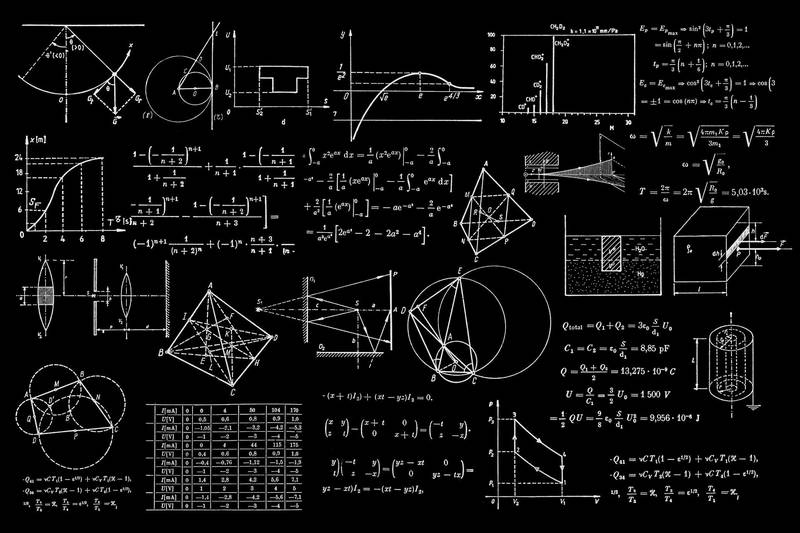
The Colorful Code of Terthiophenes: How Computer Simulations Decode Light-Matter Interactions
Explore how computational methods like DFT and TD-DFT are revolutionizing our understanding of terthiophene compounds and their light-interaction properties.
The Invisible Fingerprint: How a DNA Base's Stickiness Unlocks Secrets of Life and Disease
Explore how computational chemistry reveals the partition coefficients of methylated DNA bases and their implications for epigenetic regulation and disease research.
MoSGrid: Bringing Supercomputing Power to Molecular Science
Explore how MoSGrid revolutionizes molecular science by providing user-friendly access to powerful computational simulations through grid computing.
Unfolding the Universe: How Tensor Decomposition Solves Chemistry's Most Complex Puzzles
Explore how tensor decomposition revolutionizes computational chemistry by solving previously intractable chemical problems through multidimensional data analysis.
The Radical Heartbeat of Life: How Computational Chemistry Reveals DNA and RNA's Hidden Dance
Discover how computational chemistry reveals the hidden role of nucleotide radicals in DNA and RNA synthesis, with implications for evolution, medicine, and nanotechnology.
MoSGrid: Democratizing Molecular Simulation for Scientific Discovery
MoSGrid provides a user-friendly, web-based portal that allows researchers to submit, monitor, and analyze complex molecular simulations on distributed computing infrastructures.
The Geometry of Life: How AI is Solving Chemistry's Shape-Shifting Puzzle
Discover how AGDIFF, an AI-powered diffusion model with attention mechanisms, is revolutionizing molecular geometry prediction in computational chemistry and drug discovery.
The Invisible Glue: How a Single Atom Sticks to a Wonder Material
Explore how computational chemistry reveals how boron atoms bind to graphene, transforming this wonder material's properties for advanced applications.
Catching Molecules in Motion: How Computers Reveal Nature's Hidden Light Show
Explore how non-adiabatic molecular dynamics simulations reveal the femtosecond-scale transformations of molecules after light absorption, with applications from solar energy to medicine.
Decoding Rust at the Atomic Level: How Computational Science is Revolutionizing Corrosion Prevention
Explore how molecular modeling is transforming corrosion science, enabling atomic-level insights into prevention strategies with significant economic impact.