Molecular Dynamics Simulation: A Comprehensive Guide to Applications in Drug Discovery and Biomedical Research
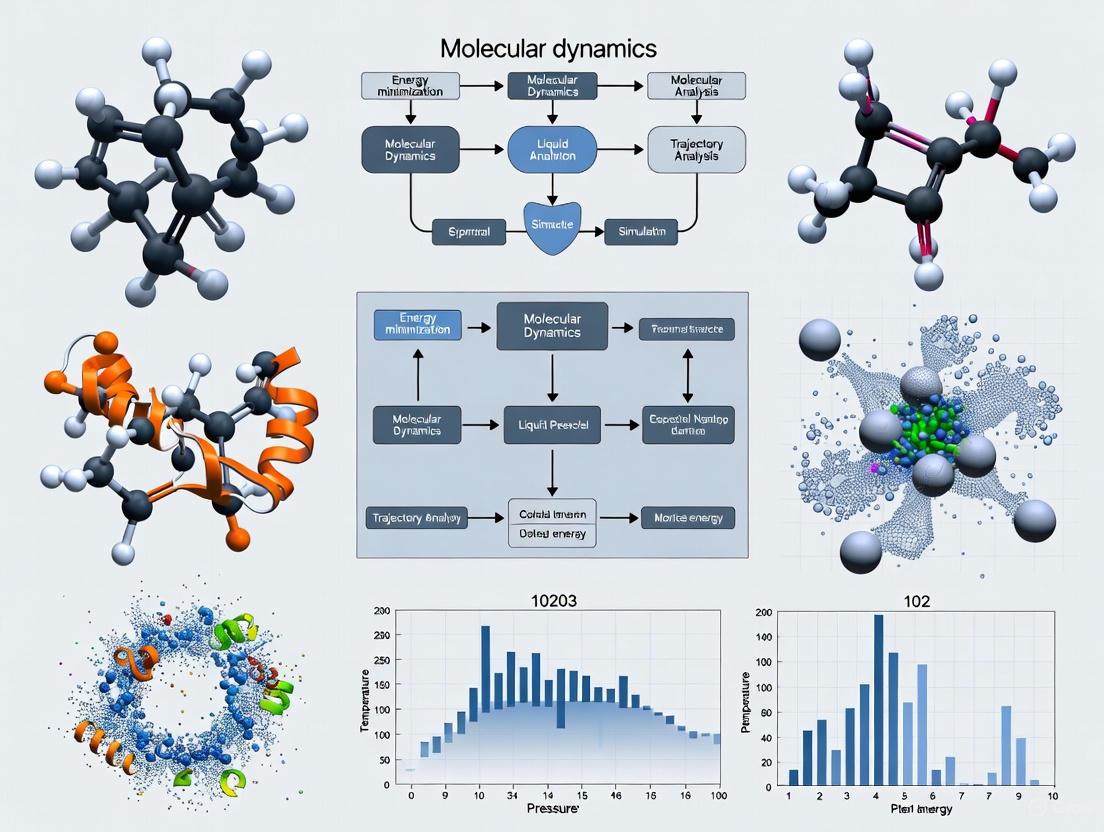
Molecular dynamics (MD) simulation has become an indispensable computational microscope, providing atomic-level insights into biomolecular processes that are often impossible to observe experimentally.
Molecular Dynamics Simulation: A Comprehensive Guide to Applications in Drug Discovery and Biomedical Research
Abstract
Molecular dynamics (MD) simulation has become an indispensable computational microscope, providing atomic-level insights into biomolecular processes that are often impossible to observe experimentally. This article explores the foundational principles, diverse methodological applications, and current challenges of MD simulations, with particular emphasis on their transformative role in drug discovery, including protein-ligand binding, membrane permeability, and allosteric modulation. We examine how machine learning and advanced sampling techniques are addressing longstanding limitations in force field accuracy and conformational sampling, while also discussing validation frameworks that ensure computational findings translate to real-world biomedical breakthroughs. For researchers and drug development professionals, this review offers a comprehensive understanding of how MD simulations accelerate therapeutic design and fundamental biological discovery.
The Atomic-Level Microscope: Understanding the Core Principles of Molecular Dynamics
Molecular dynamics (MD) simulation represents a cornerstone computational technique in modern scientific research, enabling the investigation of biological and chemical systems at an atomic level of detail. Fundamentally, MD solves Newton's equations of motion for a system of interacting atoms, tracing their trajectories over time to reveal dynamic processes that are often inaccessible to experimental observation. This "computational microscope" has become indispensable across numerous fields, particularly in drug discovery and materials science, where it provides insights into molecular mechanisms, binding interactions, and thermodynamic properties. The power of MD lies in its foundation in statistical mechanics, which bridges the gap between atomic-level simulations and macroscopic observables, allowing researchers to predict system behavior and properties from first principles. As computational resources have expanded and algorithms have matured, MD has evolved from studying small proteins in vacuum to simulating complex biological machines in physiologically realistic environments, making it an essential tool for researchers seeking to understand and design molecular systems.
Theoretical Foundations: From Newton to Statistical Mechanics
The theoretical framework of molecular dynamics rests upon established physical principles that connect microscopic behavior to macroscopic observables. At its core, MD utilizes classical mechanics to describe atomic motion, though modern implementations often incorporate elements from quantum mechanics and statistical physics to enhance accuracy and interpretation.
Fundamental Equations of Motion
The molecular dynamics approach is fundamentally built upon Newton's second law of motion, expressed as Fᵢ = mᵢaᵢ, where Fᵢ is the force acting on atom i, mᵢ is its mass, and aᵢ is its acceleration. This differential equation is solved numerically for all atoms in the system through finite difference methods, with the force calculated as the negative gradient of the potential energy function: Fᵢ = -∇ᵢU. The potential energy function U, known as the force field, mathematically describes the dependence of energy on nuclear positions and comprises both bonded and non-bonded interaction terms [1] [2].
The integration of Newton's equations proceeds through small, discrete time steps (typically 1-2 femtoseconds), with each step calculating new positions and velocities for all atoms. This iterative process generates a trajectory - a chronological series of atomic positions that documents the system's evolution through phase space. From these trajectories, macroscopic properties are calculated using the principles of statistical mechanics, which establish that the time average of a molecular property equals its ensemble average (the ergodic hypothesis) [2].
Force Field Components
The mathematical representation of interatomic interactions is encapsulated in the force field, which typically includes these components:
- Bonded interactions: Chemical bonds are treated as harmonic springs (Ebond = kb(r - r₀)²), with similar harmonic terms for bond angles (Eangle = kθ(θ - θ₀)²) and dihedral angles (Edihedral = kφ(1 + cos(nφ - δ)) that describe torsional rotations around bonds.
- Non-bonded interactions: These include van der Waals forces, typically modeled with a Lennard-Jones potential (ELJ = 4ε[(σ/r)¹² - (σ/r)⁶]), and electrostatic interactions described by Coulomb's law (Eelec = (qᵢqⱼ)/(4πε₀r)).
The parameters for these functions (force constants, equilibrium values, partial charges, etc.) are derived from both experimental data and high-level quantum mechanical calculations, with different force fields (CHARMM, AMBER, GROMOS) optimized for specific classes of biomolecules [3] [2].
Table 1: Core Components of a Molecular Mechanics Force Field
| Interaction Type | Mathematical Form | Physical Description | Parameters Required |
|---|---|---|---|
| Bond Stretching | Ebond = kb(r - r₀)² | Energy required to stretch/bond from equilibrium length | k_b (force constant), r₀ (equilibrium bond length) |
| Angle Bending | Eangle = kθ(θ - θ₀)² | Energy required to bend bond angle from equilibrium | k_θ (force constant), θ₀ (equilibrium angle) |
| Torsional Rotation | Edihedral = kφ(1 + cos(nφ - δ)) | Energy barrier for rotation around a bond | k_φ (barrier height), n (periodicity), δ (phase angle) |
| van der Waals | E_LJ = 4ε[(σ/r)¹² - (σ/r)⁶] | Short-range repulsion and London dispersion attraction | ε (well depth), σ (collision diameter) |
| Electrostatics | E_elec = (qᵢqⱼ)/(4πε₀r) | Coulombic interaction between charged atoms | qᵢ, qⱼ (partial atomic charges) |
Statistical Mechanics Foundation
The connection between MD trajectories and thermodynamic observables is established through statistical mechanics. The microscopic states sampled during a simulation are used to calculate macroscopic properties through ensemble averages. For instance, the temperature of the system is calculated from the average kinetic energy (⟨∑(1/2)mᵢvᵢ²⟩ = (3/2)Nk_BT), while free energy differences - crucial for understanding binding affinities and conformational changes - can be determined through specialized methods such as free energy perturbation or umbrella sampling [3].
This theoretical foundation enables MD to serve as a computational bridge between the atomic world and experimentally measurable quantities, providing a powerful framework for predicting system behavior and interpreting experimental results.
Methodological Framework: A Practical Implementation Guide
The successful execution of a molecular dynamics simulation requires careful attention to multiple preparatory and analytical steps. The general workflow proceeds through system setup, energy minimization, equilibration, production dynamics, and trajectory analysis, with each stage serving a distinct purpose in ensuring physical relevance and numerical stability.
System Setup and Preparation
The initial stage involves constructing a biologically relevant simulation environment starting from an atomic structure:
- Structure Preparation: Molecular dynamics simulations begin with obtaining atomic coordinates, typically from the Protein Data Bank (PDB). The structure must be processed to add missing hydrogen atoms, assign protonation states to ionizable residues, and handle any missing loops or residues. Tools like
pdb2gmxin GROMACS convert PDB files to MD-ready formats while assigning force field parameters [2]. - Solvation and Ionization: The protein is placed in a simulation box surrounded by explicit water molecules (e.g., TIP3P, SPC models) using commands like
solvate. The system is then neutralized by adding counterions (e.g., Na⁺, Cl⁻) viagenionto mimic physiological ionic strength, replacing solvent molecules at optimal positions [2]. - Periodic Boundary Conditions: To eliminate edge effects and simulate a continuous environment, periodic boundary conditions (PBC) are applied. The simulation box (typically cubic, dodecahedral, or octahedral) is replicated infinitely in all directions, with particles exiting one side re-entering the opposite side [2].
Energy Minimization and Equilibration
Before production dynamics, the system must be relaxed to remove steric clashes and unfavorable interactions:
- Energy Minimization: Using algorithms like steepest descent or conjugate gradient, the system's potential energy is minimized to achieve a stable starting configuration. This step resolves atomic overlaps that would cause numerically unstable forces during dynamics [2].
- System Equilibration: The minimized system is gradually brought to the target temperature and pressure through a series of controlled simulations. Typically, the system is first equilibrated with position restraints on heavy atoms (NVT ensemble) to allow solvent relaxation, followed by unrestrained equilibration (NPT ensemble) to achieve correct density [2].
Production Dynamics and Analysis
The equilibrated system then proceeds to production simulation, where trajectory data is collected for analysis:
- Integration Algorithms: Equations of motion are solved using numerical integrators such as the leap-frog algorithm or Velocity Verlet, which update positions and velocities at discrete time steps while conserving energy [2].
- Temperature and Pressure Control: Thermostats (e.g., Nosé-Hoover, velocity rescaling) and barostats (e.g., Parrinello-Rahman) maintain constant temperature and pressure by adjusting velocities and box dimensions [2].
- Trajectory Analysis: The saved trajectory is analyzed to extract biologically relevant information, including root mean square deviation (RMSD) for structural stability, root mean square fluctuation (RMSF) for residue flexibility, radius of gyration for compactness, and hydrogen bonding patterns for interaction networks [2].
Diagram 1: MD simulation workflow
Research Applications: From Molecular Design to Chemical Kinetics
Molecular dynamics simulations have become indispensable across numerous scientific domains, providing atomic-level insights that complement experimental approaches. The applications span drug discovery, materials science, and chemical kinetics, with each field leveraging MD's unique capability to resolve temporal processes and molecular interactions.
Biomolecular Simulations and Drug Discovery
In pharmaceutical research, MD simulations provide critical insights for structure-based drug design:
- Protein-Ligand Binding: MD reveals the dynamic process of ligand binding to biological targets, capturing induced fit conformational changes and calculating binding free energies through methods like free energy perturbation (FEP) and thermodynamic integration (TI). BIOVIA Discovery Studio implements these approaches for lead optimization in drug discovery programs [3].
- Allosteric Mechanism Elucidation: Long-timescale simulations can identify allosteric networks and cryptic binding pockets that are not evident in static crystal structures, providing opportunities for novel therapeutic intervention strategies [3].
- Antibody Design: MD facilitates the design and screening of antibody libraries by predicting stability and binding characteristics, accelerating the development of biologic therapeutics [4].
The OpenEye software platform demonstrates the industrial application of these methods, using physics-based design for hit identification, hit-to-lead optimization, and affinity predictions through advanced MD simulations [4].
Enhanced Sampling and Free Energy Calculations
Conventional MD faces limitations in sampling rare events due to the short timescales accessible to simulation. Enhanced sampling methods address this challenge:
- Gaussian Accelerated MD (GaMD): This method adds a harmonic boost potential to smooth the energy landscape, enabling simultaneous unconstrained enhanced sampling and free energy calculations without predefined reaction coordinates. BIOVIA Discovery Studio has implemented GaMD for studying complex biomolecular processes [3].
- Steered Molecular Dynamics (SMD): By applying external forces, SMD accelerates processes like ligand unbinding, allowing estimation of binding free energies and identification of dissociation pathways [3].
- Multi-Site Lambda Dynamics (MSLD): This approach efficiently calculates relative binding free energies for combinatorial libraries of ligands, significantly accelerating lead optimization in drug discovery [3].
Reactive MD and Chemical Kinetics
Beyond biomolecular applications, MD provides insights into chemical reactivity and reaction networks:
- Combustion Chemistry: The recently developed ChemXDyn framework represents a significant advancement for analyzing reactive MD simulations in combustion systems. This dynamics-aware methodology integrates temporal interatomic distance analysis with valence and coordination consistency to reliably detect bond formation, dissociation, and molecular connectivity [5].
- Kinetic Parameter Extraction: ChemXDyn overcomes limitations of traditional frame-by-frame analysis methods (e.g., ChemTraYzer, ReacNetGenerator) that often misinterpret vibrational fluctuations as chemical events. It enables reliable extraction of rate constants from MD trajectories, as demonstrated in hydrogen oxidation systems where it corrected key reactions in established combustion mechanisms [5].
- Nonequilibrium Chemistry: MD simulations can probe systems under vibrational nonequilibrium conditions, revealing how mode-specific excitation reshapes radical chemistry and accelerates processes like ignition [5].
Table 2: Key Software Platforms for Molecular Dynamics Simulations
| Software Platform | Specialized Capabilities | Noteworthy Features | Application Domains |
|---|---|---|---|
| GROMACS | High-performance MD, Free energy calculations | Open-source, Extensive analysis tools, GPU acceleration | Academic research, Biomolecular simulations [2] |
| BIOVIA Discovery Studio | CHARMm, NAMD, GaMD | GUI-driven workflow, Comprehensive molecular design | Pharmaceutical drug discovery [3] |
| OpenEye Applications | Virtual screening, Free energy predictions | High-throughput molecular docking, Cloud-native | Drug discovery, Formulations [4] |
| Schrödinger Platform | Desmond MD, FEP, QM/MM | Integrated drug discovery platform, Machine learning | Therapeutics development, Materials science [6] |
| ChemXDyn | Reactive MD analysis, Kinetic parameter extraction | Dynamics-aware species identification, Combustion chemistry | Chemical kinetics, Combustion research [5] |
Advanced Techniques and Future Directions
As molecular dynamics continues to evolve, several cutting-edge methodologies and emerging trends are expanding its capabilities and applications. These advancements address fundamental challenges in sampling, accuracy, and scalability while opening new frontiers in molecular design and prediction.
Multiscale and Hybrid Approaches
No single computational method can efficiently address all aspects of complex molecular systems, leading to the development of multiscale strategies:
- QM/MM Methods: Quantum mechanics/molecular mechanics approaches combine the accuracy of quantum chemical calculations for the reactive region with the efficiency of molecular mechanics for the environment. DMol3/CHARMm implementations in Discovery Studio enable these hybrid simulations for studying chemical reactions in biological systems [3].
- Machine Learning Potentials: Neural network potentials trained on quantum mechanical data are revolutionizing MD by enabling ab initio level accuracy at classical MD costs. ChemXDyn has demonstrated applications to methane oxidation using machine-learned potentials, successfully reconstructing the complete CH₄ → CO₂ oxidation sequence [5].
- Markov State Models: These approaches combine many short MD simulations to construct kinetic networks that describe slow conformational processes, effectively extending the accessible timescales for studying biomolecular dynamics [7].
Machine Learning Integration
The integration of machine learning with molecular dynamics represents one of the most promising frontiers in computational molecular design:
- Enhanced Sampling: ML approaches can identify collective variables and develop biasing potentials to accelerate sampling of rare events, addressing timescale limitations in conventional MD [1].
- Analysis Automation: Unsupervised learning methods can automatically identify metastable states and conformational clusters from high-dimensional trajectory data, replacing laborious manual analysis [1] [7].
- Property Prediction: Neural networks can learn structure-property relationships from MD data, enabling rapid prediction of molecular characteristics without explicit simulation [1].
Future Research Directions
The field of molecular dynamics is rapidly advancing toward several key objectives that will expand its capabilities and applications:
- Multiscale Simulation Methodologies: Future research will focus on developing robust frameworks that seamlessly connect electronic, atomic, mesoscopic, and continuum scales for comprehensive system modeling [1].
- High-Performance Computing: Exploiting emerging computing architectures, including exascale systems and specialized hardware, will enable longer timescales and larger systems [1] [4].
- Experimental-Simulation Integration: Developing systematic approaches for combining experimental data (e.g., from smFRET, cryo-EM) with simulation results will enhance validation and provide a more complete understanding of molecular systems [7].
- Environmental Impact Assessment: MD will increasingly be applied to assess the environmental impact of chemicals and polymers, fostering the development of sustainable technologies [1].
Diagram 2: MD conceptual framework
Successful molecular dynamics simulations require both specialized software tools and carefully parameterized molecular components. This toolkit encompasses the essential resources researchers employ to set up, execute, and analyze MD simulations across various application domains.
Table 3: Essential Research Reagents and Computational Resources
| Resource Category | Specific Examples | Function/Purpose | Implementation Notes |
|---|---|---|---|
| Force Fields | CHARMM36, AMBER, GROMOS, CGenFF | Define potential energy functions and parameters for different molecule types | Selection depends on system composition; CGenFF specialized for drug-like molecules [3] [2] |
| Solvation Models | TIP3P, SPC, implicit solvent | Represent aqueous environment around solutes; balance accuracy vs. computational cost | Explicit water more accurate but computationally demanding; implicit solvent faster for screening [2] |
| Ion Parameters | Sodium, chloride, potassium, calcium | Neutralize system charge; mimic physiological ion concentrations | Parameters must match chosen force field for consistency [2] |
| Lipid Membranes | POPC, DPPC, membrane builder tools | Model membrane environments for transmembrane proteins | Specialized setup required for membrane-protein systems [3] |
| Software Suites | GROMACS, NAMD, CHARMm, Desmond | MD simulation engines with varying algorithms and capabilities | GROMACS popular in academia; commercial suites offer GUI workflows [3] [2] |
| Analysis Tools | MDTraj, VMD, ChemXDyn, custom scripts | Extract biologically relevant information from trajectory data | ChemXDyn specialized for reactive MD in combustion chemistry [5] |
| Enhanced Sampling | GaMD, FEP, MSLD, metadynamics | Accelerate rare events; improve conformational sampling | GaMD implemented in Discovery Studio for unconstrained enhanced sampling [3] |
Molecular dynamics simulation has matured into an indispensable methodology that bridges theoretical physics with practical applications in drug discovery, materials science, and chemical engineering. From its foundation in Newton's equations of motion, MD has evolved to incorporate statistical mechanics, quantum chemistry, and increasingly, machine learning approaches. The technique continues to advance through developments in multiscale modeling, enhanced sampling algorithms, and high-performance computing, progressively expanding the temporal and spatial scales accessible to simulation. As MD frameworks like ChemXDyn demonstrate the extraction of chemically accurate kinetics from atomistic simulations [5], and platforms from OpenEye and Schrödinger enable the screening of billions of molecules [4] [6], the impact on molecular design continues to grow. By providing atomic-level insights into dynamic processes that remain challenging for experimental observation, molecular dynamics serves as a computational microscope that will undoubtedly continue to drive innovation across scientific disciplines, from developing sustainable energy solutions to designing novel therapeutics.
Molecular dynamics (MD) simulation has undergone a profound evolution, transforming from a theoretical tool for studying simple gases into an indispensable method for modeling the complex molecular machinery of life. This article traces the technical journey of MD, detailing its foundational principles, key methodological advancements, and its critical role in modern research, particularly in drug development and structural biology.
The Foundational Journey: From Atoms to Cells
The genesis of molecular dynamics simulation dates back to the late 1950s, with the first simulations focused on the behavior of simple gases [8]. These early studies provided proof-of-concept that the physical movements of atoms and molecules could be predicted using computational algorithms based on Newtonian mechanics [9]. A significant milestone was reached in the late 1970s with the first MD simulation of a protein, marking the technique's entry into the biological sciences [8]. The foundational work enabling these simulations was later recognized by the 2013 Nobel Prize in Chemistry [8].
For decades, performing biologically meaningful simulations required supercomputing resources, limiting their accessibility. A major shift occurred with the adoption of Graphics Processing Units (GPUs) for molecular computing, which allowed powerful simulations to be run locally at a modest cost, dramatically broadening the tool's user base [8]. This increased accessibility coincided with an explosion in experimental structural data for complex biological targets, such as membrane proteins, providing high-quality starting points for simulations and solidifying MD's role as a bridge between static structural snapshots and dynamic biological mechanism [10] [8].
Table 1: Key Historical Milestones in Molecular Dynamics
| Time Period | Simulation Focus | Typical System Size & Timescale | Key Hardware & Software Advancements |
|---|---|---|---|
| Late 1950s [8] | Simple Gases [8] | Dozens of atoms; Nanoseconds | Basic computational algorithms |
| Late 1970s [8] | First Protein [8] | Thousands of atoms; Picoseconds to Nanoseconds | Supercomputing resources |
| Early 2000s | Biomolecules in Solvent | Hundreds of thousands of atoms; Nanoseconds | Improved force fields; Particle Mesh Ewald method [10] |
| ~2010s Onward [8] | Complex Cellular Environments (e.g., proteins in membranes) [8] | Millions of atoms; Microseconds to Milliseconds | GPU computing [8]; Specialized hardware (e.g., Anton) [8] |
Methodological Foundations and Protocols
At its core, an MD simulation predicts the trajectory of every atom in a system over time. The process begins with an initial atomic-level structure, often derived from X-ray crystallography, NMR, or cryo-EM [8]. The fundamental procedure involves calculating the force on each atom based on a molecular mechanics force field and then using Newton's laws of motion to update the atom's position and velocity. This process is repeated for millions or billions of time steps, each typically a few femtoseconds (10⁻¹⁵ seconds), to capture biochemical events [8].
Explicit Solvent MD Protocol using AMBER
A common protocol for simulating RNA nanostructures or other biomolecules using the AMBER MD package involves several key stages [10]:
- System Preparation: The target structure (e.g., an RNA duplex) is placed in a box of explicit water molecules, with ions added to neutralize the system's charge and mimic physiological ionic strength.
- Energy Minimization: The system undergoes energy minimization to remove any steric clashes introduced during the solvation process, resulting in a stable starting configuration.
- System Equilibration: A two-phase equilibration is performed:
- The system is heated to the target temperature (e.g., 300 K) while applying positional restraints on the solute atoms, allowing the solvent to relax around the structure.
- Restraints are gradually released, and the system density is adjusted under constant pressure (NPT ensemble) conditions to achieve a stable, equilibrated system [10].
- Production Simulation: Unrestrained MD is run for the desired timescale, generating the trajectory data used for subsequent analysis. Long-range electrostatic interactions are typically handled using the Particle Mesh Ewald (PME) method [10].
- Post-Simulation Analysis: The trajectory is analyzed to characterize dynamics, using methods like Principal Component Analysis (PCA) to identify major motions, or MM-PB(GB)SA to estimate binding free energies [10].
The Scientist's Toolkit: Essential Research Reagents and Materials
Successful MD simulations rely on a suite of software, hardware, and analytical tools.
Table 2: Key Research Reagent Solutions in Molecular Dynamics
| Item/Reagent | Function/Purpose | Examples & Notes |
|---|---|---|
| Force Fields | Provides the mathematical model for interatomic forces, governing simulation accuracy. | AMBER force fields for nucleic acids [10]; Continuous refinement based on quantum chemical calculations [10]. |
| MD Software Packages | The core engine that performs the simulation calculations. | AMBER [10], NAMD [10], GROMACS [10], CHARMM [10]. |
| High-Performance Computing (HPC) | Provides the computational power required for simulating large systems over long timescales. | GPU clusters [8]; Specialized hardware (e.g., Anton) [8]. |
| Visualization & Analysis Tools | Enables researchers to view trajectories, measure distances, angles, and perform quantitative analysis. | VMD, PyMOL; Integrated with packages like AMBER for analysis [10]. |
| Solvation Models | Mimics the aqueous or membrane environment of a biomolecule. | TIP3P water model (explicit solvent); Generalized Born (implicit solvent) [10]. |
Diagram 1: MD Simulation Workflow
Research Applications: From Drug Design to Cellular Mechanics
MD simulations provide a detailed, time-resolved perspective that is often difficult or impossible to obtain through experiments alone [8]. Their applications span a wide range of biomedical research.
Drug Discovery and Design
In pharmaceutical research, MD simulations are used to identify how potential drug molecules interact with their target proteins, such as G protein-coupled receptors (GPCRs) and ion channels [8]. Simulations reveal critical details about binding affinities, conformational changes induced upon ligand binding, and the stability of the complex over time [9]. This allows for the refinement of drug compounds before costly laboratory testing, increasing virtual screening hit rates and reducing failure rates in clinical trials [9].
Protein Folding and Misfolding
Understanding how proteins fold into their functional three-dimensional structures is a central problem in biology. MD simulations can reveal folding pathways, stability, and interactions with other molecules [8]. This knowledge is crucial for identifying disease mechanisms, such as those involving misfolded proteins linked to neurodegenerative disorders like Alzheimer's disease [8].
RNA Nanostructure and Nanotechnology
In the field of nanotechnology, MD simulations are used to fix steric clashes in computationally designed RNA nanostructures, characterize their dynamics, and investigate interactions with delivery agents and membranes [10]. Simulations have been instrumental in studying the self-stabilization phenomena of RNA rings and in coarse-graining approaches to model larger nanostructures [10].
Chemical Reaction and Enzyme Catalysis Modeling
For processes involving changes to covalent bonds, more advanced simulation techniques are employed. Quantum Mechanics/Molecular Mechanics (QM/MM) simulations model a small, reactive part of the system with quantum mechanics while treating the surroundings with molecular mechanics [8]. This allows researchers to study chemical reaction mechanisms, optimize catalysts, and elucidate the dynamics of enzyme-substrate interactions, informing the design of more efficient biocatalysts [11].
Diagram 2: Key Research Applications
The trajectory of MD simulation points toward a future of increased power and accessibility. By 2025, the integration of artificial intelligence and machine learning is expected to enhance predictive accuracy and speed, potentially enabling real-time simulations [9]. Cloud computing will further reduce hardware barriers, allowing more research groups to leverage this technology [9]. Emerging trends also point toward increased integration with experimental data, more user-friendly interfaces, and broader adoption in personalized medicine and sustainable technology development [9]. As MD simulations continue to evolve from modeling simple gases to capturing the complexity of entire cellular environments, they will remain a cornerstone tool for unraveling the mysteries of biological function and driving innovation in drug development.
Molecular dynamics (MD) simulation has become an indispensable tool in computational chemistry, materials science, and drug discovery, providing atomic-level insights into the dynamic behavior of biological and chemical systems over time. By numerically solving Newton's equations of motion for all atoms in a system, MD simulations reveal structural changes, binding processes, and functional mechanisms that are difficult or impossible to observe experimentally [12] [13]. The integration of MD with machine learning approaches and advanced hardware acceleration has recently expanded its applications, enabling researchers to study increasingly complex systems with greater accuracy and efficiency [14] [12]. In pharmaceutical research specifically, MD simulations help overcome the limitations of static structure-based drug design by accounting for full protein flexibility and capturing pharmacologically relevant conformational changes that impact drug binding [15] [12].
Fundamental Principles of Molecular Dynamics
At its core, molecular dynamics simulation computes the temporal evolution of a molecular system by calculating the forces acting on each atom and updating their positions accordingly. The global MD algorithm implemented in packages like GROMACS follows a consistent workflow [13]:
- Input initial conditions including potential interactions, atomic positions, and velocities
- Compute forces on atoms based on the potential energy function
- Update configuration by numerically solving Newton's equations of motion
- Output step writing positions, velocities, energies, and other properties at specified intervals
The force calculation represents the most computationally intensive step, requiring evaluation of both bonded interactions (bonds, angles, dihedrals) and non-bonded interactions (van der Waals, electrostatic) between atoms [13]. Modern MD implementations employ sophisticated neighbor-searching algorithms with buffered pair lists that are updated periodically to efficiently handle these calculations, particularly for large systems [13].
Step-by-Step Molecular Dynamics Workflow
System Preparation and Building
The initial step in any MD simulation involves constructing the atomic system that will be simulated. For drug discovery applications, this typically begins with obtaining a protein structure from experimental sources like the Protein Data Bank or predicted models from AlphaFold, which has provided over 214 million unique protein structures [15]. The BuildSystem functionality in MD packages enables automated construction of simulation systems either as a sphere (for nanoreactor simulations) or a cubic box (for periodic boundary conditions) [16]. Key parameters include:
- System Composition: Defined through molecule blocks containing SMILES strings or system references with respective mole fractions
- Density: Typically ~1.0 g/cm³ for aqueous biological systems
- Number of Atoms: Often set to ~200 atoms for efficient sampling, adjustable based on system complexity and computational resources [16]
This stage may include adding solvent molecules, ions, and other cofactors to create a biologically relevant environment, potentially using tools like PackMol [16] [17].
Force Field Selection and Parameterization
The choice of force field fundamentally influences simulation accuracy, as it determines how potential energies and atomic forces are calculated. Force fields approximate atomic interactions using mathematical functions with empirically derived parameters [12]. Popular force fields include CHARMM, AMBER, and GROMOS, each with specific strengths for different biomolecular systems [18] [17]. The GROMOS 54a7 force field, for instance, was used in a recent drug solubility study to model neutral conformations of drug molecules [18]. Emerging approaches integrate machine learning interatomic potentials (MLIPs) trained on quantum mechanical calculations to enhance accuracy while maintaining computational efficiency [14] [12].
Energy Minimization and Equilibration
Before production MD, systems must undergo energy minimization to remove steric clashes and bad contacts, followed by equilibration to stabilize temperature and pressure. A short 250 fs equilibration simulation is often sufficient for packmol-generated structures [16]. Equilibration typically employs:
- Thermostats: Berendsen or Nosé-Hoover algorithms to maintain target temperature
- Barostats: Parrinello-Rahman method for pressure control
- Ensembles: NVT (constant Number, Volume, Temperature) followed by NPT (constant Number, Pressure, Temperature) to achieve experimental conditions [19]
This step ensures the system has reached appropriate thermodynamic conditions before data collection begins.
Production Simulation
Production MD involves running the fully parameterized and equilibrated system for extended timescales to collect statistical data on structural and dynamic properties. Integration algorithms like Verlet (particularly the leap-frog variant) numerically solve equations of motion with typical timesteps of 0.5-2.0 fs, constrained by the fastest vibrational frequencies (typically C-H bonds) [16] [19]. Critical considerations include:
- Simulation Length: Determined by the biological processes of interest
- Frame Saving Frequency: Often 10-100 fs intervals, balancing resolution and storage requirements
- Number of Replicas: Multiple simulations (recommended: 4+) improve statistical significance [16]
Advanced methods like accelerated MD apply boost potentials to smooth energy landscapes, enhancing conformational sampling [15]. Specialized non-equilibrium methods like the Nanoreactor and Lattice Deformation actively promote chemical reactions through compression-expansion cycles, useful for reaction discovery [16].
Analysis and Trajectory Processing
The final workflow stage involves extracting biologically or chemically relevant information from simulation trajectories. Modern analysis encompasses both traditional and machine-learning enhanced approaches:
- Structural Metrics: Root Mean Square Deviation (RMSD), Radius of Gyration, Solvent Accessible Surface Area (SASA)
- Dynamic Properties: Hydrogen bonding, coordination numbers, distance fluctuations
- Energetics: Binding free energies via MM/GB(PB)SA or alchemical methods
- Machine Learning: Automated detection of states and transitions [18] [12] [17]
For drug solubility studies, key analyes include Coulombic and Lennard-Jones interaction energies between solutes and water, SASA, and solvation shell properties, which can be used as features in machine learning models [18].
Advanced MD Applications in Drug Discovery
Ensemble Docking and the Relaxed Complex Method
The Relaxed Complex Method addresses a fundamental limitation of traditional docking by incorporating protein flexibility through MD-generated conformational ensembles [15]. This approach involves:
- Running MD simulations of the target protein
- Clustering trajectories to identify representative conformations
- Docking compound libraries against multiple structural snapshots
- Ranking compounds using ensemble-average or ensemble-best scores
This method effectively captures cryptic pockets that appear during dynamics but are absent in crystal structures, significantly expanding druggable target space [15]. An early application successfully identified the first FDA-approved inhibitor of HIV integrase by revealing flexibility in the active site region that informed drug design [15].
Binding Free Energy Calculations
MD simulations provide the foundation for rigorous binding free energy calculations through either MM/GB(PB)SA methods or more computationally intensive alchemical approaches like free energy perturbation (FEP) [12]. These methods:
- Estimate binding affinities by calculating energy differences between bound and unbound states
- Account for solvation effects and entropy contributions
- Can prioritize compounds for synthesis and testing
Machine learning enhances these approaches by guiding simulation-frame selection, refining energy term calculations, and reducing required sampling [12]. AlphaFold-predicted models now provide sufficiently accurate structures for FEP calculations, expanding applications to targets without experimental structures [12].
Machine Learning-Enhanced Workflows
Integration of machine learning with MD simulations has created powerful synergies for drug discovery. A recent TGR5 agonist study demonstrated a comprehensive workflow combining Random Forest classification with MD simulations to identify potential type 2 diabetes treatments [20]. Similarly, ML analysis of MD-derived properties (SASA, Coulombic interactions, LJ energies, DGSolv, RMSD) achieved accurate prediction of drug solubility (R²=0.87) using Gradient Boosting algorithms [18]. These integrations allow researchers to:
- Screen ultra-large chemical libraries (billions of compounds) efficiently
- Extract meaningful patterns from high-dimensional MD data
- Predict complex physicochemical properties from simulation trajectories
- Focus experimental resources on most promising candidates [18] [20]
Experimental Protocols: Key Methodologies
Nanoreactor Simulations for Reaction Discovery
The Nanoreactor method implements special non-equilibrium MD to promote chemical reactions through compression-expansion cycles [16]:
Protocol Setup:
- Set
MolecularDynamics%Type = NanoReactor - Define cycle parameters:
NumCycles(default: 10),DiffusionTime(default: 250 fs),Temperature(default: 500 K) - Specify compression intensity:
MinVolumeFraction(default: 0.6)
Execution Phases:
- Pre-compression: 25 fs, volume fraction 1.05, thermostat 250 K
- Compression: 25 fs, minimum volume fraction, thermostat 250 K
- Post-compression: 100 fs, volume fraction 1.05, thermostat 250 K
- Diffusion: DiffusionTime, Temperature setting
The radius during each phase is calculated as: r_nanoreactor = (volume fraction)^1/3 × InitialRadius [16]
Solubility Prediction Workflow
The ML-driven solubility analysis protocol demonstrates how MD properties can predict pharmaceutical relevant properties [18]:
System Preparation:
- Conduct MD simulations in NPT ensemble using GROMACS
- Employ GROMOS 54a7 force field
- Use cubic simulation box with appropriate dimensions
- Neutralize system with counterions if needed
Property Extraction:
- Calculate SASA (Solvent Accessible Surface Area)
- Compute Coulombic and Lennard-Jones interaction energies (Coulombic_t, LJ)
- Determine Estimated Solvation Free Energies (DGSolv)
- Extract RMSD (Root Mean Square Deviation)
- Calculate Average number of solvents in Solvation Shell (AvgShell)
- Incorporate experimental logP values
Machine Learning Implementation:
- Split dataset: 80% training, 20% validation
- Test multiple algorithms: Random Forest, Extra Trees, XGBoost, Gradient Boosting
- Evaluate using R² and RMSE metrics
- Identify most predictive features through feature importance analysis [18]
Free Energy Perturbation (FEP) Protocol
Alchemical methods like FEP provide rigorous binding free energy estimates [12]:
System Setup:
- Prepare protein-ligand complex structure
- Solvate with explicit water molecules
- Add ions to physiological concentration
Simulation Parameters:
- Run equilibration with position restraints on heavy atoms
- Use 2 fs timestep with bonds to hydrogen constrained
- Maintain temperature with Nosé-Hoover thermostat (298 K)
- Control pressure with Parrinello-Rahman barostat (1 atm)
FEP Specifics:
- Define λ values for alchemical transformation (typically 12-16 windows)
- Run each window for sufficient equilibration and production
- Use overlap sampling methods to ensure proper phase space coverage
- Analyze using MBAR or TI methods for free energy estimation [12]
The Scientist's Toolkit: Essential Research Reagents and Software
Table 1: Essential Software Tools for Molecular Dynamics Simulations
| Tool Name | Type | Primary Function | Research Application |
|---|---|---|---|
| GROMACS | MD Engine | High-performance MD simulations | Production simulations with excellent performance [18] [13] |
| AMBER | MD Engine | Biomolecular simulations | Force field development and drug binding studies [17] |
| OpenMM | MD Engine | GPU-accelerated MD | Rapid sampling and algorithm development [17] |
| LAMMPS | MD Engine | Materials simulation | Nanoreactor and materials properties [21] [14] |
| CHARMM | Force Field | Biomolecular force field | Protein-ligand interaction studies [17] |
| GROMOS | Force Field | Biomolecular force field | Drug solubility and solvation studies [18] |
| PackMol | System Building | Initial system construction | Solvation and mixture preparation [16] [17] |
| MDTraj | Analysis | Trajectory analysis | RMSD, SASA, and geometric calculations [17] |
| DeePMD | ML Potential | Machine learning force fields | Accurate quantum-mechanical properties [21] [14] |
| ML-IAP-Kokkos | Interface | ML potential integration | Connecting PyTorch models with LAMMPS [14] |
Table 2: Key MD-Derived Properties for Drug Solubility Prediction
| Property | Description | Computational Method | Predictive Importance |
|---|---|---|---|
| SASA | Solvent Accessible Surface Area | Geometric calculation from trajectory | High - measures solvent exposure [18] |
| Coulombic_t | Coulombic interaction energy | Non-bonded energy calculation | High - electrostatic interactions with solvent [18] |
| LJ | Lennard-Jones interaction energy | Non-bonded energy calculation | High - van der Waals interactions [18] |
| DGSolv | Estimated Solvation Free Energy | Free energy calculations | Medium - thermodynamic driving force [18] |
| RMSD | Root Mean Square Deviation | Structural alignment and comparison | Medium - conformational stability [18] |
| AvgShell | Average solvents in Solvation Shell | Radial distribution analysis | Medium - local solvation environment [18] |
| logP | Octanol-water partition coefficient | Experimental or predicted | Very High - established solubility correlate [18] |
Emerging Trends and Future Directions
The field of molecular dynamics continues to evolve rapidly, with several trends shaping its future research applications. Automated workflow systems like MDCrow leverage large language models to streamline simulation setup, execution, and analysis, making MD more accessible to non-specialists [17]. Specialized hardware including GPUs, ASICs, and FPGAs dramatically accelerate calculations, enabling millisecond-scale simulations of complex biological processes [12]. The integration of AlphaFold-predicted structures with MD simulations addresses initial model limitations by correcting side chain placements and generating conformational ensembles [15] [12]. Multi-scale simulations now routinely handle systems with 100+ million atoms, providing realistic subcellular environments that capture macromolecular crowding effects [12]. Finally, AI-driven approaches like DeePMD and ML-IAP-Kokkos combine the accuracy of quantum mechanics with the speed of classical simulations, particularly for modeling chemical reactions and complex materials [21] [14].
These advancements collectively enhance the role of MD simulations as a bridge between static structural information and dynamic biological function, solidifying their position as essential tools in modern drug discovery and materials research. As simulations continue to increase in temporal and spatial scale while improving in accuracy, they will provide increasingly insightful predictions to guide experimental research across the chemical and biological sciences.
Molecular dynamics (MD) simulation is a computational method that analyzes the physical movements of atoms and molecules over time [22]. By predicting the trajectory of every atom in a system, MD simulations provide atomic-level insight into biomolecular processes—such as conformational change, ligand binding, and protein folding—that are critical for research in drug discovery, neuroscience, and structural biology [8]. This technical guide details the core components that enable these simulations: the force fields that define potential energy, and the integration algorithms that solve the equations of motion.
Force Fields: The Mathematical Heart of Molecular Dynamics
In MD, a force field refers to the combination of a mathematical formula and associated parameters that describe the potential energy of a molecular system as a function of its atomic coordinates [23]. Force fields are built on the molecular mechanics approach, which uses classical physics to approximate the energy landscape, thereby making simulations of large biomolecules computationally feasible.
The total potential energy of a system is typically calculated as the sum of several bonded and non-bonded interaction terms [8] [24]:
[ E{\text{total}} = E{\text{bond}} + E{\text{angle}} + E{\text{torsion}} + E{\text{electrostatic}} + E{\text{van der Waals}} ]
The following table summarizes these key components of a standard molecular mechanics force field.
Table 1: Core Components of a Molecular Mechanics Force Field
| Energy Term | Mathematical Form (Representative) | Description | Physical Basis |
|---|---|---|---|
| Bond Stretching | $E{\text{bond}} = \sum{\text{bonds}} kb (r - r0)^2$ | Energy required to stretch or compress a covalent bond from its equilibrium length. | Treats bonds as harmonic springs. |
| Angle Bending | $E{\text{angle}} = \sum{\text{angles}} k{\theta} (\theta - \theta0)^2$ | Energy required to bend the angle between three bonded atoms from its equilibrium value. | Treats bond angles as harmonic springs. |
| Torsional Dihedral | $E{\text{torsion}} = \sum{\text{dihedrals}} \frac{V_n}{2} [1 + \cos(n\phi - \gamma)]$ | Energy associated with rotation around a central bond, defining the conformational preferences of the molecule. | Models the periodicity of rotational barriers. |
| Van der Waals | $E{\text{vdW}} = \sum{i |
Models short-range repulsion and long-range dispersion (London) forces between non-bonded atoms. | Typically uses the Lennard-Jones potential [22]. |
| Electrostatic | $E{\text{elec}} = \sum{i |
Models the Coulombic attraction or repulsion between partial atomic charges. | Critical for simulating hydrogen bonding, salt bridges, and solvation effects [22]. |
Several widely used biomolecular force fields have been developed, each with specific parameterization protocols and target applications. The choice of force field is a critical decision in simulation design.
Table 2: Comparison of Widely Used Protein Force Fields
| Force Field | Functional Form & Coverage | Parameterization Philosophy | Common Use Cases |
|---|---|---|---|
| AMBER | Includes bond, angle, torsion, electrostatic (partial charges fitted to HF/6-31G* ESP), and van der Waals terms. Covers proteins, nucleic acids, lipids, carbohydrates [23]. | Parameters derived to reproduce experimental data and quantum mechanical calculations for small molecule analogs [23]. | Simulation of proteins, DNA, RNA; often used in drug discovery. |
| CHARMM | Comprehensive energy terms similar to AMBER. Includes specific parameters for lipids and carbohydrates [23]. | Empirical fitting to experimental data for crystal structures, vibrational frequencies, and liquid-state properties [23]. | Studies of membrane proteins, lipid bilayers, and biomolecular complexes. |
| GROMOS | Uses a united-atom approach (hydrogens on carbon atoms are implicit). Parameterized for consistency with thermodynamic properties [23]. | Parameterized for consistency with free enthalpies of hydration and apolar solvation, and thermodynamic properties [23]. | Efficient simulation of proteins in aqueous or non-polar solutions. |
| OPLS-AA | All-atom force field. Functional form similar to AMBER and CHARMM [23]. | Parameters optimized to reproduce experimental densities and enthalpies of vaporization for organic liquids [23]. | Protein-ligand binding, condensed-phase simulations. |
Integration Algorithms: Propagating the System Through Time
The core of an MD simulation is the numerical integration of Newton's equations of motion for every atom in the system [8] [22]. The fundamental equation is F = ma, where the force F is the negative gradient of the potential energy defined by the force field (F = -∇E). Given the force on an atom, its acceleration is calculated, and its position and velocity are updated forward in time by a small timestep, typically on the order of 1-2 femtoseconds (10⁻¹⁵ s) [22]. The most common integration algorithm is the Verlet algorithm and its variants, such as the Leap-frog and Velocity Verlet methods [22].
The following diagram illustrates the logical workflow of a molecular dynamics simulation, from initialization to production trajectory.
Advanced Methodologies: Implicit Solvent and Free Energy Calculations
For many research applications, such as rapid sampling or calculating binding affinities, explicit solvent models can be prohibitively expensive. Implicit solvent models, like the Poisson-Boltzmann/Surface Area (PBSA) model, offer an alternative by representing the solvent as a continuous medium rather than explicit water molecules [24].
In the MM/PBSA approach, the free energy of a solvated system is given by: [ G{\text{total}} = E{\text{MM}} + G{\text{polar}} + G{\text{non-polar}} - TS ] where ( E{\text{MM}} ) is the molecular mechanics gas-phase energy, ( G{\text{polar}} ) is the polar solvation free energy computed by solving the Poisson-Boltzmann equation, ( G_{\text{non-polar}} ) is the non-polar solvation contribution (proportional to the solvent-accessible surface area), and ( -TS ) is the entropic term [24].
Table 3: Research Reagent Solutions for Molecular Dynamics Simulations
| Tool / Reagent | Function / Role | Example Application in Research |
|---|---|---|
| Biomolecular Force Fields (AMBER, CHARMM) | Provides the physics-based potential energy functions and parameters for atoms in the system [23]. | Essential for all-atom simulations of protein folding, ligand binding, and conformational changes. |
| Explicit Solvent Models (TIP3P, SPC/E) | Represents water molecules individually, capturing specific solute-solvent interactions and hydrodynamics [22]. | Studying processes where water structure is critical, such as ion permeation through channels or protein-ligand recognition. |
| Implicit Solvent Models (MM/PBSA, GB/SA) | Approximates solvent as a dielectric continuum, drastically reducing the number of particles and computation time [24]. | Rapid binding affinity calculations, protein folding studies, and long-timescale conformational sampling. |
| Specialized Hardware (GPUs, Anton) | Provides the massive computational power required to integrate millions of equations of motion for millions of time steps [8]. | Enables simulations on biologically relevant timescales (microseconds to milliseconds) for complex biomolecular processes. |
The workflow for an MM/PBSA calculation to estimate protein-ligand binding free energy, for instance, often involves running an explicit solvent MD simulation to generate conformational snapshots, which are then post-processed using the implicit solvent model.
Force fields and integration algorithms form the essential foundation of molecular dynamics simulations. The continued improvement in the accuracy of force fields and the efficiency of integration methods, coupled with advances in computational hardware, has dramatically expanded the impact of MD in molecular biology and drug discovery [8]. By providing atomic-level insight into dynamic processes that are often difficult to observe experimentally, MD serves as a powerful tool for deciphering functional mechanisms of proteins, uncovering the structural basis of disease, and aiding in the design of small molecules and therapeutics [8] [22].
Molecular Dynamics (MD) simulation has become an indispensable computational tool for investigating material and biological phenomena at the atomic scale. By numerically solving Newton's equations of motion for a system of atoms over time, MD allows researchers to study dynamical processes, calculate a broad range of properties, and gain insights that are often difficult or impossible to obtain experimentally [25]. This technical guide focuses on three fundamental analysis techniques in MD simulations: radial distribution functions for structural characterization, diffusion coefficients for transport properties, and stress-strain analysis for mechanical behavior.
The power of MD lies in its ability to provide atomic-level visualization and quantification of system evolution under predefined conditions such as temperature, pressure, and external forces [25]. The interactions between atoms can be calculated using various methods, from classical force fields to more sophisticated quantum mechanical approaches, depending on the system size and properties of interest [26] [25]. The resulting trajectories—series of snapshots describing system evolution in phase space—serve as the foundation for extracting meaningful physical properties through various analytical methods.
This guide provides researchers, scientists, and drug development professionals with a comprehensive technical reference for implementing these essential analysis methods, complete with quantitative benchmarks, experimental protocols, and practical implementation tools.
Radial Distribution Functions: Analyzing Atomic-Scale Structure
The Radial Distribution Function (RDF), denoted as g(r), is a fundamental measure in statistical mechanics that describes how the density of particles varies as a function of distance from a reference particle [26]. It provides crucial insights into the structure and organization of materials at the atomic scale, revealing characteristic distances between atom types, coordination numbers, and phase identification.
Theoretical Foundation and Calculation
Mathematically, the RDF is calculated as:
[ g(r) = \frac{\langle \rho(r) \rangle}{\rho} ]
where (\rho(r)) is the local density at a distance (r) from the reference particle, and (\rho) is the average density of the system [26]. In practice, RDFs are computed from MD trajectories by counting atomic pairs within specific distance bins and normalizing by the expected number for a uniform distribution.
The RDF has profound significance in structural analysis. For crystalline materials, it exhibits sharp peaks at well-defined distances corresponding to lattice coordination shells. In liquids and amorphous systems, it typically shows a characteristic splitting of the second peak, indicating short-range order but long-range disorder. The coordination number—the number of particles within a specific cutoff distance—can be obtained by integrating the RDF up to the first minimum.
Practical Applications and Research Insights
In applied research, RDFs have proven invaluable for understanding material behavior. A study on radiation-grafted fluorinated ethylene propylene (FEP) membranes as proton exchange membranes utilized RDFs to investigate the microstructure and transport behavior of water molecules and hydronium ions [27]. The research revealed that with increasing side chain length in sulfonated styrene grafted FEP membranes, the average sulfur-hydronium ion separation slightly increased, while the coordination number of H3O+ around sulfonic acid groups decreased, indicating changes in the local environment that affect proton conductivity [27].
Another study demonstrated the use of RDFs in analyzing hydrogen-induced healing of cluster-damaged silicon surfaces [25]. By comparing the RDF of a damaged silicon surface after hydrogen exposure with the RDF of bulk crystalline silicon, researchers confirmed that the surface had regained its crystalline structure, with silicon atoms from deposited clusters becoming incorporated into the repaired substrate lattice [25].
Table 1: Key RDF Features and Their Structural Significance
| RDF Feature | Structural Significance | Example System |
|---|---|---|
| First Peak Position | Most probable interatomic distance | Si-Si in silicon (≈2.35Å) |
| First Peak Height | Strength of local ordering | Higher in crystals than liquids |
| First Minimum Position | First coordination sphere cutoff | Used for coordination number |
| Second Peak Splitting | Evidence of amorphous structure | Observed in glasses and liquids |
Diffusion Coefficients: Quantifying Atomic Transport
Diffusion coefficients are crucial transport properties that quantify the rate at which particles (atoms, molecules, ions) spread through a material due to random thermal motion. In MD simulations, diffusion coefficients are primarily calculated from mean squared displacement or velocity autocorrelation function analysis.
Calculation Methods and Theoretical Background
The most common approach for calculating diffusion coefficients in MD simulations is through the Mean Squared Displacement, defined as:
[ MSD(t) = \langle [\textbf{r}(0) - \textbf{r}(t)]^2 \rangle ]
where (\textbf{r}(t)) is the position of a particle at time (t), and the angle brackets denote an average over all particles and time origins [28]. For normal diffusion, the MSD increases linearly with time, and the diffusion coefficient (D) is obtained from the Einstein relation:
[ D = \lim_{t \to \infty} \frac{\langle \Delta r^2(t) \rangle}{6t} ]
in three dimensions [26] [28]. The factor 6 becomes 4 in two-dimensional systems.
An alternative method uses the Velocity Autocorrelation Function, where the diffusion coefficient is calculated as:
[ D = \frac{1}{3} \int{t=0}^{t=t{max}} \langle \textbf{v}(0) \cdot \textbf{v}(t) \rangle \rm{d}t ]
with (\textbf{v}(t)) being the velocity of a particle at time (t) [28]. The VACF approach sometimes offers better convergence for certain systems but requires storing velocity data at high frequency.
Practical Implementation and Considerations
A tutorial on calculating diffusion coefficients of lithium ions in a Li(_{0.4})S cathode highlights several practical considerations [28]. The MSD should be calculated only from the production phase of the simulation after the system reaches equilibrium. The diffusion coefficient is determined from the slope of the MSD versus time plot in the linear regime, avoiding short-time ballistic and long-time saturation regions.
Recent research emphasizes that uncertainty in MD-derived diffusion coefficients depends not only on simulation data but also on the analysis protocol, including statistical estimators and data processing decisions [29]. Different regression methods (ordinary least squares, weighted least squares) applied to the same MSD data can yield different diffusion coefficients with varying uncertainties.
For systems with limited diffusion on practical simulation timescales, researchers often calculate diffusion coefficients at elevated temperatures and extrapolate to lower temperatures using the Arrhenius equation:
[ D(T) = D0 \exp{(-Ea / k_{B}T)} ]
where (Ea) is the activation energy, (kB) is Boltzmann's constant, and (T) is temperature [28]. This approach requires simulations at multiple temperatures to determine (Ea) and (D0).
Table 2: Experimentally Derived Diffusion Coefficients from MD Studies
| System | Temperature (K) | Diffusion Coefficient (m²/s) | Method | Reference |
|---|---|---|---|---|
| Li(_{0.4})S | 1600 | 3.09 × 10⁻⁸ | MSD | [28] |
| Li(_{0.4})S | 1600 | 3.02 × 10⁻⁸ | VACF | [28] |
| Binary Lennard-Jones mixtures | Various | Within 10-20% of experimental | Penetration lengths | [30] |
Stress-Strain Analysis: Probing Mechanical Properties
Stress-strain analysis in MD simulations provides insights into the mechanical behavior and deformation mechanisms of materials at the atomic scale. While direct simulation of stress-strain curves is computationally demanding, MD offers unique advantages for studying fundamental deformation mechanisms and extracting elastic constants.
Fundamentals of Mechanical Properties from MD
In continuum mechanics, the fundamental equations governing stress-strain relationships begin with the equilibrium equation:
[ \nabla\cdot\sigma + f = 0 ]
where (\sigma) is the Cauchy stress tensor, and (f) is the body force per unit volume [31]. The strain tensor (\varepsilon) is derived from the displacement field (u):
[ \varepsilon = \frac{1}{2}[\nabla u + (\nabla u)^\top] ]
In MD simulations, the atomic-level stress tensor for a group of atoms is calculated using the virial formula, which includes both kinetic energy contributions from atomic velocities and potential energy contributions from interatomic forces. Strain is typically applied by deforming the simulation cell, and the resulting stress is measured to construct stress-strain curves.
For linear elastic materials, Hooke's law governs the stress-strain relationship:
[ \sigma = C : \varepsilon ]
where (C) is the fourth-order elasticity tensor [31]. For nonlinear materials, more complex constitutive models are required:
[ \sigma = F(\varepsilon, \dot{\varepsilon}, p) ]
where (\dot{\varepsilon}) is the strain rate and (p) represents internal state variables [31].
Integration with Data-Driven Approaches
Recent advances combine MD with data-driven methods for enhanced mechanical property prediction. The Stress-Strain Adaptive Predictive Model integrates multi-sensor image fusion with domain-aware deep learning, bridging physics-based modeling and machine learning for more robust stress-strain prediction [31]. This hybrid approach embeds physics-informed constraints and uses reduced-order modeling for computational scalability.
Another innovative methodology called 'Brilearn' leverages machine learning and finite element analysis to predict stress-plastic strain curves of metallic materials from Brinell hardness tests [32]. This data-driven approach uses a novel model for predicting hardening curves, the classical Tabor model for yield stress prediction for materials with yield stress lower than 100 MPa, and an XGBoost model for metals with higher yield stress [32]. Validated against experimental data, this model achieves error predictions of 8.4 ± 8.5% for yield stress and 3.2 ± 4% for complete curves, demonstrating the powerful synergy between simulation and machine learning.
Integrated Workflow and Experimental Protocols
Successfully implementing MD simulations with RDF, diffusion coefficient, and stress-strain analysis requires careful attention to workflow and protocols. This section outlines standardized methodologies for these computational experiments.
General MD Workflow
The following diagram illustrates the comprehensive workflow for MD simulations incorporating the three analysis methods discussed in this guide:
Diagram 1: Comprehensive MD Analysis Workflow
Protocol: Diffusion Coefficient Calculation
This protocol details the steps for calculating diffusion coefficients of lithium ions in a Li(_{0.4})S cathode material, as presented in an MD tutorial [28]:
System Preparation: Import the crystal structure from a CIF file. Insert 51 Li atoms into the sulfur system using builder functionality or Grand Canonical Monte Carlo for more accurate placement.
Geometry Optimization: Perform geometry optimization including lattice relaxation using the ReaxFF force field with the LiS.ff parameter set. Verify the unit cell volume has increased significantly (e.g., from 3300 ų to 4400 ų).
Simulated Annealing for Amorphous Structure:
- Set up MD simulation with 30,000 steps.
- Configure temperature profile: 300 K for first 5,000 steps, heat from 300 K to 1600 K over next 20,000 steps, cool to 300 K over final 5,000 steps.
- Use Berendsen thermostat with damping constant of 100 fs.
- Relax the resulting amorphous structure with geometry optimization including lattice relaxation.
Production Simulation for Diffusion Analysis:
- Run MD at target temperature (e.g., 1600 K) with 100,000 production steps after 10,000 equilibration steps.
- Set sampling frequency to 5 steps (writing positions and velocities every 5 steps).
- Use Berendsen thermostat with appropriate damping constant (100 fs).
Diffusion Coefficient Calculation:
- For MSD method: Calculate MSD for Li atoms, set appropriate time range (e.g., 2000-22001 steps), use maximum MSD frame of 5000. Determine D from slope of MSD versus time: ( D = \text{slope(MSD)}/6 ).
- For VACF method: Compute velocity autocorrelation function for Li atoms with same parameters, integrate to obtain D.
Multi-Temperature Extrapolation:
- Repeat simulations at multiple temperatures (e.g., 600 K, 800 K, 1200 K, 1600 K).
- Create Arrhenius plot of (\ln(D(T))) against (1/T).
- Extract activation energy (Ea) and pre-exponential factor (D0).
- Extrapolate to lower temperatures using Arrhenius equation.
Protocol: RDF Analysis for Membrane Structure
This protocol outlines RDF analysis for studying hydrated sulfonated styrene grafted fluorinated ethylene propylene membranes based on published research [27]:
Membrane Model Construction:
- Build atomistic models of radiation-grafted FEP membranes with different sulfonic styrene side chain lengths.
- Hydrate the membrane models with water molecules and hydronium ions at appropriate concentrations.
Equilibration Procedure:
- Perform energy minimization using steepest descent or conjugate gradient algorithm.
- Equilibrate system in NVT ensemble for 100-500 ps at target temperature.
- Further equilibrate in NPT ensemble for 100-500 ps to achieve correct density.
Production Simulation:
- Run production MD simulation for sufficient duration to capture structural properties (typically 1-10 ns).
- Save trajectory frames frequently enough to capture structural fluctuations (every 1-10 ps).
RDF Calculation:
- Calculate sulfur-sulfur RDFs to understand membrane backbone structure.
- Compute sulfur-hydronium ion RDFs to characterize ionic coordination.
- Determine sulfur-water oxygen RDFs to analyze hydration structure.
- Integrate RDF peaks to obtain coordination numbers.
Cluster Analysis:
- Identify water clusters using clustering algorithms based on oxygen-oxygen distances.
- Analyze cluster size distribution and percolation pathways.
Validation:
- Compare simulated RDFs with experimental data where available.
- Relate structural features to experimental proton conductivity measurements.
Research Reagent Solutions: Computational Tools
The following table details essential software tools and computational resources that form the modern "reagent solutions" for MD simulations and analysis.
Table 3: Essential Research Reagent Solutions for MD Simulations
| Tool/Resource | Type | Primary Function | Application Example |
|---|---|---|---|
| ReaxFF | Force Field | Reactive force field for chemical reactions | Lithiated sulfur cathode materials [28] |
| UFF | Force Field | Universal force field for various elements | Methane system simulations [33] |
| VMD | Visualization | Molecular visualization and trajectory analysis | Studying motion of atoms over time [26] |
| PyMOL | Visualization | Molecular visualization and rendering | Gaining insights into reaction mechanisms [26] |
| AMS | MD Engine | Advanced molecular simulation platform | Li-ion diffusion calculations [28] [33] |
| PLAMS | Scripting | Python library for automated simulations | Running complex simulation workflows [33] |
| Denoising Diffusion Probabilistic Models | AI Method | Generative AI for enhanced sampling | Predicting membrane partitioning of drugs [34] |
Radial distribution functions, diffusion coefficients, and stress-strain analysis represent three cornerstone analysis methods in molecular dynamics simulations, each providing unique insights into material behavior at the atomic scale. When implemented with careful attention to the protocols and considerations outlined in this guide, these methods enable researchers to establish robust structure-property relationships that bridge computational predictions and experimental observations.
The continuing evolution of MD methodology, particularly through integration with machine learning and enhanced sampling approaches, promises to further expand the capabilities of these computational techniques. For researchers in drug development, materials science, and chemical engineering, mastery of these fundamental analysis methods provides a powerful toolkit for investigating and designing novel materials with tailored properties.
From Theory to Therapy: Key Applications Driving Drug Discovery and Materials Science
Protein-ligand interactions represent a fundamental cornerstone in biochemical processes and pharmaceutical development, governing cellular signaling, metabolic pathways, and therapeutic interventions. These interactions occur when a small molecule (ligand) binds to a specific site on a protein, modulating its activity, stability, or localization [35]. Understanding the precise mechanisms and binding affinity—the strength of interaction between protein and ligand—is crucial in drug discovery, as it directly correlates with drug efficacy and specificity [36]. Molecular dynamics (MD) simulations have emerged as a transformative computational methodology that provides atomistic insights into these interactions, overcoming limitations of experimental approaches by capturing the dynamic nature of biomolecular systems and accurately predicting binding affinities [37] [38]. This technical guide explores how MD simulations, particularly when integrated with machine learning and quantum computing, are revolutionizing the study of protein-ligand interactions and accelerating rational drug design.
Molecular Dynamics Simulations: From Static Structures to Dynamic Processes
Fundamental Principles and Methodologies
Molecular dynamics simulations computational technique that applies Newton's laws of motion to simulate atomic-level movements in biomolecular systems over time [39]. Unlike static experimental structures from crystallography, MD simulations capture the dynamic behaviors of proteins and their interactions with ligands, providing in-depth insights into conformational changes, binding pathways, and mechanisms underlying protein-ligand interactions [36]. The simulations employ mathematical force fields—empirical functions describing potential energy based on atomic parameters—to model interactions between atoms, with popular families including CHARMM, AMBER, GROMOS, and OpenFF [39]. Through numerical integration of equations of motion, MD generates trajectories that reveal how proteins and ligands structurally evolve over time, offering critical information about binding kinetics and thermodynamics that static structures cannot provide [35].
Technical Advancements Enabling Drug Discovery Applications
Recent technological advancements have significantly expanded MD capabilities in drug discovery. High-throughput MD (HTMD) approaches now enable screening multiple small molecules in parallel, dramatically increasing efficiency in assessing potential drug candidates [39]. Enhanced sampling techniques, increasingly refined by artificial intelligence and machine learning, allow researchers to explore vast conformational spaces of biological molecules and capture dynamic behaviors over biologically relevant timescales [40]. The integration of machine learning algorithms with MD simulations has revolutionized the field by rapidly processing complex simulation data, identifying patterns, and predicting binding affinities with remarkable accuracy [40]. Furthermore, emerging quantum computing applications promise to overcome classical computing limitations, particularly for simulating quantum mechanical phenomena and enabling more accurate simulations of larger systems over extended timescales [40].
Quantitative Binding Affinity Prediction: MM/PBSA and Large-Scale Datasets
Molecular Mechanics with Poisson-Boltzmann Surface Area (MM/PBSA)
The Molecular Mechanics/Poisson-Boltzmann Surface Area (MM/PBSA) method has become a widely adopted approach for calculating binding free energies from MD trajectories [37] [38]. This method estimates binding affinity by combining molecular mechanics energy calculations with implicit solvation models:
where:
- ΔEMM represents the gas-phase molecular mechanics energy (sum of electrostatic ΔEele and van der Waals ΔE_vdw interactions)
- ΔGsolv constitutes the solvation free energy (sum of polar ΔGpol and non-polar ΔG_np contributions)
- TΔS accounts for the entropy change upon binding [37]
MM/PBSA provides not only overall binding affinities but also individual energy components, offering valuable insights for lead optimization and target-specific drug design [38]. The method has demonstrated superior correlation with experimental binding affinities compared to traditional docking scores, making it particularly valuable in virtual screening for identifying potential lead compounds [37] [38].
Large-Scale MD Datasets for Machine Learning Applications
The development of large-scale MD datasets has catalyzed advances in binding affinity prediction through machine learning. The following table summarizes key datasets enabling ML applications in drug discovery:
Table 1: Large-Scale MD Datasets for Protein-Ligand Binding Affinity Prediction
| Dataset | Size | Simulation Details | Key Features | Applications |
|---|---|---|---|---|
| PLAS-5k [38] | 5,000 PL complexes | 5 independent simulations per complex | Binding affinities + energy components (electrostatic, vdW, polar/non-polar solvation) | Baseline ML models (OnionNet retraining) |
| PLAS-20k [37] | 19,500 PL complexes | 97,500 independent simulations | Extended heterogeneity of proteins/ligands, classification of strong/weak binders | Enhanced ML accuracy, drug-likeness assessment (Lipinski's Rule) |
| Protocol [37] [38] | AMBER ff14SB/GAFF2 fields | OpenMM 7.2.0, MMPBSA | TIP3P water model, 300K, 1 atm pressure | High-throughput screening, lead optimization |
These datasets address a critical gap in traditional machine learning models that relied predominantly on static crystal structures, enabling the incorporation of dynamic features essential for understanding biomolecular processes like protein folding, conformational changes, and ligand binding [37]. The PLAS-20k dataset has demonstrated particular utility in classifying strong and weak binders and assessing drug-likeness according to Lipinski's Rule of Five [37].
Experimental Protocols: Comprehensive Workflow for Binding Affinity Studies
System Preparation and Parameterization
The preparation of protein-ligand systems for MD simulations follows a rigorous protocol to ensure accurate and reliable results:
Structure Retrieval and Preparation: Experimental protein-ligand complex structures are obtained from the Protein Data Bank (PDB). Proteins with missing residues are completed using modeling tools like MODELLER or UCSF Chimera, followed by protonation at physiological pH (7.4) using servers such as H++ [37] [38].
Force Field Selection: Proteins are typically parameterized using specialized force fields like AMBER ff14SB, while ligands and cofactors employ the General AMBER Force Field (GAFF2) with AM1-BCC charges assigned via the Antechamber program [37] [38].
Solvation and Neutralization: The complex is solvated in an orthorhombic TIP3P water box with a 10Å buffer from the protein surface. Counter ions (Na+/Cl-) are added to maintain charge neutrality [37] [38].
Simulation Protocol
A typical MD simulation protocol comprises multiple stages of minimization, equilibration, and production:
Energy Minimization: The system undergoes minimization using the L-BFGS algorithm with harmonic restraints on protein backbone atoms (force constant: 10 kcal/mol/Ų), gradually reducing restraints over 1000-4000 steps [37].
Equilibration Phases:
- The system is gradually heated from 50K to 300K (increasing 1K per 100 steps) with position restraints on backbone atoms.
- NVT ensemble equilibration is performed at 300K for 1ns.
- NPT ensemble equilibration follows at 300K and 1 atm pressure using a Langevin thermostat and Monte Carlo barostat for 2ns [37] [39].
Production Simulation: Multiple independent simulations (typically 5) are conducted in the NPT ensemble for 4ns each, with trajectories saved every 100ps for subsequent analysis [37]. This multi-trajectory approach decreases uncertainty in predicted binding affinities compared to single long simulations [38].
Binding Affinity Calculation and Analysis
The binding affinity calculation using MM/PBSA employs a single-trajectory approach where receptor and ligand contributions are computed from individual trajectories [37]. The analysis includes:
- Decomposition of energy components to identify major binding contributors
- Calculation of correlation coefficients between computed and experimental affinities
- Classification of compounds as strong or weak binders based on binding affinity thresholds
- Assessment of drug-likeness properties, including Lipinski's Rule of Five compliance [37]
Diagram 1: MD Simulation Workflow for Binding Affinity Studies
Table 2: Essential Tools for Protein-Ligand MD Simulations and Binding Affinity Studies
| Tool Category | Specific Tools/Solutions | Function/Purpose |
|---|---|---|
| MD Software | GROMACS [39], AMBER [41], NAMD [41], OpenMM [37] [41] | Simulation engines for running MD calculations |
| Force Fields | AMBER ff14SB [37] [38], CHARMM36 [42], GAFF/GAFF2 [37] [38] | Empirical parameters defining atomic interactions |
| Topology Generation | Acpype [39], Antechamber [37] [38], tleap [37] | Generate molecular topologies and parameters |
| System Preparation | H++ Server [37] [38], MODELLER [38], UCSF Chimera [37] | Protein protonation, missing residue modeling |
| Binding Affinity Calculation | MMPBSA [37] [38], Thermodynamic Integration [35], Free Energy Perturbation [35] | Calculate binding free energies from trajectories |
| Workflow Platforms | Galaxy [39], COMSOL [40] | Streamlined, reproducible simulation workflows |
| Analysis & Visualization | VMD [41], Biovia Discovery Studio [42] | Trajectory analysis, visualization, interaction mapping |
Case Study: MD Simulations in Antidiabetic Drug Discovery
A recent investigation demonstrated the practical application of protein-ligand molecular dynamics simulation (PL-MDS) in discovering novel antidiabetic agents from Aloe vera phytochemicals [42]. Researchers employed molecular docking to screen 103 phytochemicals against alpha-amylase (PDB: 3BAJ), followed by ADMET profiling to assess pharmacokinetic properties. The most promising leads—hecogenin, chlorogenic acid, and 5-coumaroylquinic acid—underwent comprehensive MD simulations using GROMACS with the CHARMM36 force field [42].
The simulation protocol involved system solvation in a cubic box with TIP3P water molecules, ion addition for neutralization, energy minimization using the steepest descent algorithm, and equilibration through NVT and NPT ensembles. Production simulations revealed stable interactions between the lead compounds and the enzyme's active site, with binding modes and affinity calculations corroborating initial docking results [42]. This integrated approach successfully identified novel alpha-amylase inhibitors with favorable drug-likeness and ADMET properties, showcasing MD simulations' crucial role in validating and optimizing potential therapeutic compounds.
Future Directions: AI and Quantum Computing Integration
The next revolution in computational simulations centers on harnessing artificial intelligence and quantum computing to overcome current limitations in molecular dynamics [40]. Machine learning algorithms are increasingly being employed to automate complex data analysis from MD simulations, rapidly identifying patterns and relationships that might elude traditional analytical approaches [40]. AI-enhanced sampling techniques introduce adaptive algorithms that automatically identify and focus computational resources on relevant regions of the free energy landscape, significantly improving sampling efficiency [40].
Quantum computing promises to address fundamental scalability limitations of classical MD simulations, particularly for accurately simulating quantum mechanical phenomena and enabling the study of larger systems over longer timescales [40]. The integration of these technologies is facilitating the development of more accurate force fields, enhanced conformational sampling, and reduced computational costs—ultimately accelerating drug discovery timelines and expanding the scope of addressable biological questions [40].
Diagram 2: AI and Quantum Computing Integration in MD
Molecular dynamics simulations have fundamentally transformed the study of protein-ligand interactions, evolving from a specialized computational technique to an indispensable tool in modern drug discovery. By capturing the dynamic nature of biomolecular systems and providing accurate predictions of binding affinities, MD simulations bridge critical gaps between static structural information and functional understanding. The integration of high-throughput approaches, machine learning algorithms, and large-scale datasets like PLAS-20k has further enhanced the precision and efficiency of binding affinity studies. As emerging technologies like artificial intelligence and quantum computing continue to converge with traditional simulation methodologies, the future promises unprecedented capabilities for exploring complex biological processes and accelerating the development of novel therapeutics. For researchers and drug development professionals, mastering these computational approaches is no longer optional but essential for remaining at the forefront of pharmaceutical innovation.
The biological function of a protein is intrinsically linked to its unique three-dimensional structure. The process by which a polypeptide chain folds into this functional native conformation—and the potential for it to misfold—is a fundamental area of biophysical research. Protein misfolding is directly implicated in the pathogenesis of severe diseases, including Parkinson's disease, Alzheimer's disease, and mad cow disease [43]. Understanding the intricacies of protein folding pathways, the conformational changes proteins undergo, and the origins of misfolding is therefore critical for advancing drug development and therapeutic interventions.
Molecular dynamics (MD) simulation has emerged as an indispensable tool for elucidating protein behavior at an atomic level of detail. While experimental techniques can detect the presence of folding intermediates, they often struggle to characterize these transient states structurally. MD simulations, in contrast, provide a dynamic, atomistic view of the folding process, offering insights that are often inaccessible to experiments [44] [43]. This whitepaper explores how MD simulations, particularly advanced sampling methods, are used to investigate protein folding pathways, misfolding, and conformational changes, framing this within the broader utility of MD simulation in scientific research.
The Computational Challenge of Studying Large Proteins
Although all-atom MD simulations in explicit solvent are highly accurate, they are computationally demanding. Simulating the folding of large proteins, which often occurs on timescales from microseconds to minutes, remains a formidable challenge [44]. The median protein length is 532 amino acids in eukaryotes, far beyond the capabilities of standard, unbiased MD simulations for folding studies [44]. Furthermore, large proteins often fold via long-lived, partially folded intermediates that represent deep local energy minima. In simulations, a protein can become trapped in these minima, making it difficult to observe complete folding transitions [44].
To overcome these limitations, researchers have developed enhanced sampling methods that accelerate conformational changes without sacrificing atomic detail. These methods make the simulation of large protein folding practically feasible and provide valuable, testable data on folding and misfolding pathways [44].
Native-Centric Simulation Methods
A powerful approach for simulating large proteins leverages the "principle of minimal frustration," which states that the sequences of natural proteins have evolved so that the native structure is at the bottom of a funnel-like energy landscape [44]. This principle provides a justification for native-centric or structure-based models, where the force field is biased towards the known native contacts of the protein.
Table 1: Key Native-Centric Simulation Methods
| Method | Spatial Resolution | Key Features | Primary Applications | Example Use Case |
|---|---|---|---|---|
| Gō Models / Structure-Based Models (SBMs) [44] | Coarse-grained (e.g., Cα beads) | Potential energy encodes native structure; non-native interactions largely ignored. | Predicting effects of native structure on folding mechanisms, intermediate populations, and kinetics. | Simulating the folding of large proteins like adenylate kinase and serpins [44]. |
| All-Atom-Based Methods with Native Bias [44] | All-atom | Includes side-chain chemistry and physical force fields in addition to native bias. | Predicting how mutations and disease-associated variations impact folding and misfolding. | Studying the effects of point mutations on serpin folding and misfolding [44]. |
Gō Models and Structure-Based Models (SBMs)
Gō models are simplified representations of proteins that use the native structure to define favorable interactions. These models are often coarse-grained, representing each amino acid with only one or a few beads, which drastically reduces computational cost [44]. This simplification enables extensive sampling of the energy landscape and makes it possible to study folding mechanisms, intermediate populations, and folding kinetics for large, topologically complex proteins like serpins, adenylate kinase, and GFP [44].
All-Atom-Based Methods with Native Bias
For investigations where chemical detail is critical, all-atom-based methods can be used that incorporate a biasing term based on the native structure. These methods retain the realistic empirical force fields of all-atom MD, allowing researchers to predict how specific mutations, including those linked to disease, might alter the folding energy landscape and lead to misfolding [44]. The application of this approach to the serpin α1-antitrypsin (AAT) has provided insights into how point mutations enhance misfolding propensity [44].
Accelerated Molecular Dynamics (AMD)
Accelerated Molecular Dynamics (AMD) is another powerful enhanced sampling method that does not require predefined reaction coordinates or knowledge of the native state [43]. Instead, AMD adds a non-negative boost potential to the true potential energy, which effectively reduces the heights of energy barriers. This allows the protein to escape local energy minima more easily and explore conformational space more efficiently while still retaining the important details of the underlying energy landscape [43].
AMD has proven highly effective in folding simulations using explicit solvent models, which are more accurate but computationally expensive than implicit solvent models. A study of eight helical proteins demonstrated that AMD could fold all of them into their correct native structures within 40–180 nanoseconds at room temperature, a feat that traditional MD simulations failed to accomplish [43]. The efficiency of AMD was found to be higher than traditional MD across various temperatures, with 300 K being the most suitable for folding studies [43].
Table 2: Summary of Enhanced Sampling Methods for Protein Folding
| Method | Requires Predefined Reaction Coordinates? | Relies on Native Structure? | Key Advantage | Computational Cost |
|---|---|---|---|---|
| Gō Models / SBMs [44] | No | Yes | Computationally inexpensive; good for predicting structure-dependent folding mechanisms. | Low |
| All-Atom with Native Bias [44] | No | Yes | Includes atomic-level chemical detail to study effects of mutations. | Medium to High |
| Accelerated MD (AMD) [43] | No | No | Does not require prior knowledge of native state or pathways; works with explicit solvent. | Medium |
| Replica Exchange MD (REMD) [43] | No | No | Efficiently overcomes large free energy barriers by running parallel simulations at multiple temperatures. | High |
The following diagram illustrates the conceptual workflow and logical relationship between different molecular dynamics approaches for studying protein folding:
Case Study: The Folding and Misfolding of Serpins
Serpins (serine protease inhibitors) serve as an exemplary model for studying the folding of large, complex proteins. The canonical inhibitory serpin, α1-antitrypsin (AAT), is a 394-amino acid protein whose functional conformation is a kinetically trapped metastable state, not the global free energy minimum [44]. This inherent metastability makes serpins highly prone to misfolding, which is the root cause of several diseases associated with specific point mutations [44].
Both Gō models and all-atom-based methods with native bias have been applied to simulate AAT folding. These synergistic computational approaches have successfully predicted folding pathways and identified intermediate states that agree with experimental data [44]. The simulations provide hypotheses on how folding proteins interact with cellular quality control machinery and how disease-associated mutations can disrupt the delicate folding energy landscape, leading to the formation of toxic oligomers or polymers [44].
Analysis of Simulation Data
Interpreting the vast data generated from MD folding simulations requires robust analytical metrics. The following methods are commonly used to track the folding process and characterize states:
- Root Mean Square Deviation (RMSD): Measures the average distance between the atoms of a simulated structure and a reference native structure, providing an overall measure of structural similarity [43].
- Native Contacts: The fraction of contacts present in the native state that are formed during a simulation. This is a more sensitive measure of folding progress than RMSD [43].
- Radius of Gyration: Describes the overall compactness of the protein structure [43].
- Free Energy Landscape (FEL): Constructed by projecting simulation trajectories onto one or two reaction coordinates (e.g., RMSD and native contacts). The FEL reveals the stable states (deep minima), intermediate states (shallower minima), and the energy barriers between them [43].
- Cluster Analysis: Used to group similar conformations from a simulation trajectory, helping to identify the most populated states and intermediates [43].
Table 3: Key Analytical Metrics for Protein Folding Simulations
| Metric | Description | What It Reveals About Folding |
|---|---|---|
| RMSD [43] | Root Mean Square Deviation from native structure. | Global structural convergence to the native state. |
| Native Contacts (Q) [43] | Fraction of native atomic contacts that are formed. | Progress in forming the specific interactions that stabilize the native fold. |
| Radius of Gyration [43] | Measure of the overall compactness of the protein. | Collapse of the chain into a dense, native-like globule. |
| Free Energy Landscape [43] | Landscape of stable states, intermediates, and barriers. | Thermodynamics of folding, including the presence of metastable intermediates and folding pathways. |
The Scientist's Toolkit: Research Reagent Solutions
The following table details key computational tools and resources essential for conducting research in protein folding and molecular dynamics.
Table 4: Essential Research Reagents & Tools for Computational Protein Folding
| Tool / Resource | Type | Function in Research | Example / Source |
|---|---|---|---|
| Force Fields | Software Parameter Set | Defines the potential energy function and atomic interactions for MD simulations. | AMBER14SB [43], AMBER99 [43] |
| Specialized Supercomputers | Hardware | Enables long-timescale all-atom MD simulations (microseconds to milliseconds). | ANTON [44] |
| Distributed Computing | Software/Hardware | Leverages idle computing power from thousands of volunteers for massive simulation projects. | Folding@home [44] |
| Enhanced Sampling Algorithms | Software Method | Accelerates conformational sampling to overcome rare events and energy barriers. | AMD [43], REMD [43], SBMs [44] |
| Colorblind-Friendly Palettes | Design Resource | Ensures scientific visualizations are accessible to all researchers, including those with color vision deficiency. | Dalton Collection [45], ColorBrewer [46], Paul Tol's Palettes [47] |
Molecular dynamics simulation is a powerful and versatile research tool for elucidating protein behavior. The development of advanced sampling methods, such as native-centric models and Accelerated Molecular Dynamics, has made it possible to overcome historical computational barriers and simulate the folding of large, biologically relevant proteins. These simulations provide unprecedented atomic-level insight into folding pathways, the structural nature of intermediates, and the mechanisms of misfolding that underlie human disease. As computational power continues to grow and algorithms are further refined, MD simulations will play an increasingly vital role in informing experiments, interpreting experimental data, and driving drug discovery efforts aimed at manipulating protein folding for therapeutic benefit.
Molecular dynamics (MD) simulation has emerged as a transformative computational technique, enabling researchers to probe biological phenomena at unprecedented atomic-scale spatial and temporal resolution. Within this broad field, a critical application lies in constructing and simulating realistic models of biological membranes. These complex, heterogeneous systems are fundamental to cellular life, and their accurate representation is paramount for studying integrated membrane protein function, permeability, and intermolecular interactions. This whitepaper provides an in-depth technical guide to the development and simulation of native-like membrane models for eukaryotic, prokaryotic, and archaeal systems. It details the key lipid components, presents validated compositional data, outlines robust simulation protocols, and visualizes the underlying workflows. By framing this discussion within the essential context of what MD simulation is used for in research, this document serves as a critical resource for scientists and drug development professionals aiming to bridge the gap between simplified in silico models and the exquisite complexity of biological membranes.
Molecular dynamics simulation is a computational technique that models the physical movements of atoms and molecules over time, leveraging the principles of classical mechanics to predict how particles interact [9] [11]. For membrane systems, this provides a powerful tool to observe dynamics and processes that are often impossible to capture through experimental means alone. The core strength of MD is its capacity to deliver a time-resolved, atomic-level perspective on molecular behavior, facilitating the exploration of transient states, reaction pathways, and the intricate balance of forces that govern membrane structure and function [11].
The traditional view of membranes as simple homogeneous lipid bilayers has been obsolete for decades. Biomembranes are now understood to be spatially and temporally heterogeneous, densely packed with proteins, and composed of hundreds of different lipid species that actively influence protein oligomerization, structure, and function [48] [49]. The drive toward more realistic membrane models in MD simulations is therefore not merely an academic exercise; it is a necessary step to accurately complement in vitro experiments and to provide molecular details that can inform drug discovery and design, where membrane proteins are prominent targets [9].
Core Lipid Compositions of Biological Membranes
The lipid composition of a membrane is tailored to its biological function and organism-specific physiology. Realistic modeling requires a move beyond single-component bilayers to incorporate the main lipid classes and their specific tail variations.
Domain-Specific Lipid Profiles
Table 1: Characteristic Lipid Compositions of Prokaryotic, Archaeal, and Eukaryotic Membrane Models.
| Domain / Membrane Type | Key Lipid Headgroup Types | Representative Lipid Tails & Modifications | Notable Model Features |
|---|---|---|---|
| Prokaryotic (Bacterial)e.g., E. coli Inner Membrane | Phosphatidylethanolamine (PE), Phosphatidylglycerol (PG), Cardiolipin (CL) [49] | Varying lengths; unsaturation at different positions; cyclopropanation (e.g., cy17:0) [48] [49] | 14-lipid component model reflects "log stage" growth; anionic lipids (PG, CL) crucial for protein function and division [49]. |
| Archael | Glycerol dialkyl glycerol tetraethers (GDGTs) | Isoprenoid chains; often contain cyclopentane rings [48] | Monolayer structure; exceptional stability to extreme temperatures and pH [48]. |
| Eukaryotice.g., Plasma Membrane | Phosphatidylcholine (PC), Phosphatidylethanolamine (PE), Phosphatidylserine (PS), Cholesterol | Saturated and unsaturated chains of varying lengths; high cholesterol content [48] | Asymmetry in leaflet composition; cholesterol modulates fluidity and mechanical properties [48]. |
Table 2: Quantitative Lipid Composition of a Realistic E. coli Inner Membrane Model (AA: CHARMM36).
| Lipid Headgroup | Lipid Species (Example) | Percentage in Bilayer (%) | Primary Biological Role |
|---|---|---|---|
| Phosphatidylethanolamine (PE) | PE (16:0, 18:1) | ~65-70% | Major non-lamellar lipid; determines topological organization and functionality of membrane proteins [49]. |
| Phosphatidylglycerol (PG) | PG (16:0, 16:1) | ~20-25% | Anionic lipid; significant stabilizing effect on many membrane proteins and complexes [49]. |
| Cardiolipin (CL) | CL (4x16:1) | ~5-10% | Strongly charged, conic lipid; segregates to areas of curvature; stabilizes protein oligomers and regulates function [49]. |
The Critical Role of Lipid Tail Complexity
The exact structure of lipid hydrocarbon tails is as important as headgroup diversity. The presence, position, and stereochemistry of double bonds and cyclopropane moieties are key to maintaining realistic membrane properties across a range of physiologically relevant temperatures [49]. For instance, in E. coli, cyclopropanation of lipid tails provides membranes with resistance against acids, heat, and high pressure [49]. Comparative studies of simple 3-component models versus complex 14-lipid component models have revealed that this lipid tail complexity is essential for reproducing experimental values for lipid mobility, membrane area compressibility, lipid ordering, and bilayer thickness [49]. A model lacking this diversity may capture some structural properties but can fail to accurately represent functional characteristics like the activation energy of water permeation.
Computational Methodologies and Experimental Protocols
Workflow for Building and Simulating Realistic Membranes
The process of creating and analyzing a realistic membrane model follows a structured workflow, from system construction to trajectory analysis.
Detailed Protocol for a ComplexE. coliMembrane Simulation
This protocol is adapted from studies that created validated all-atom models of E. coli polar lipid extract [49].
1. System Building and Parameterization:
- Membrane Assembly: Utilize a tool like CHARMM-GUI to build the asymmetric membrane bilayer based on the target composition. Input the specific lipid types and their respective ratios in each leaflet. For the E. coli model, this includes PE, PG, and CL species with tail variations like 16:0, 16:1, 18:1, and cy17:0 [48] [49].
- Force Field Selection: Employ the CHARMM36 all-atom force field for lipids and proteins. This force field has been extensively parameterized and validated for a wide range of lipid species, including bacterial lipids [48] [49].
- System Setup: Embed the membrane in a rectangular water box with a margin of at least 15 Å of water on either side of the bilayer. Solvate the system using the TIP3P water model. Add ions to neutralize the system's net charge and subsequently add more salt to achieve a physiological concentration (e.g., 0.15 M NaCl).
2. Equilibration and Production:
- Energy Minimization: Run a steepest descent energy minimization (5,000-10,000 steps) to remove any steric clashes introduced during system building.
- Membrane Equilibration: This is a critical, multi-stage process conducted in the NPT ensemble.
- Stage 1: Restrain the lipid headgroups and water, allowing the lipid tails to melt. Run for 1-5 ns.
- Stage 2: Restrain only the lipid backbone (e.g., C2 atoms of the glycerol). Run for 5-10 ns.
- Stage 3: Release all restraints or keep only minimal restraints on proteins (if present). Run until the system area per lipid and membrane thickness stabilize (~50-100 ns). Monitor the potential energy and density for stability.
- Production Simulation: Run a long-timescale, unrestrained simulation. For all-atom systems, this often requires microsecond-scale runs to observe biologically relevant phenomena. Use a 2-fs integration time step. Maintain temperature at the target (e.g., 310 K) using a Nosé-Hoover thermostat and pressure at 1 bar using a semi-isotropic Parrinello-Rahman barostat.
3. Trajectory Analysis and Validation:
- Structural Properties: Calculate the area per lipid, membrane thickness, and lipid order parameters (SCD). Compare these values to experimental data or neutron scattering studies where available.
- Dynamics: Compute the lateral lipid diffusion coefficients and compare them to fluorescence recovery after photobleaching (FRAP) or NMR data.
- Energetics: Analyze the energy profile for water permeation through the lipid bilayer to validate the model's permeability properties [49].
The Scientist's Toolkit: Essential Research Reagents and Solutions
Table 3: Key Research Reagent Solutions for Realistic Membrane Simulation.
| Reagent / Resource | Function / Description | Example / Source |
|---|---|---|
| Lipid Force Fields | Pre-parameterized molecular potentials defining interactions for lipids. | CHARMM36 (All-Atom), Slipids, Martini 3 (Coarse-Grained) [48] [49] |
| Membrane Building Tools | Web servers/software for automated construction of complex membrane systems. | CHARMM-GUI Membrane Builder [49] |
| Natural Lipid Extracts | Complex lipid mixtures derived from biological sources for experimental validation. | E. coli Polar Lipid Extract (Avanti Polar Lipids) [49] |
| Simulation Software | High-performance computing engines for running MD simulations. | GROMACS, NAMD, AMBER [9] |
| Trajectory Analysis Suites | Software packages for processing and analyzing MD trajectory data. | VMD, MDAnalysis, GROMACS analysis tools |
| Coarse-Grained Models | Simplified representations that group multiple atoms into beads, enabling longer timescale simulations. | Martini Force Field (Version 3) [49] |
Visualizing Membrane-Protein Interactions
Realistic membrane models reveal how proteins interact with their local lipid environment, leading to the formation of a unique lipid shell that can stabilize specific protein conformations and oligomeric states.
A prime example is the interaction of Aquaporin-1 (AQP1) with a complex E. coli polar lipid extract membrane. MD simulations show that AQP1 attracts and temporarily binds negatively charged lipids, particularly cardiolipins (CL). A distinct CL binding site is identified in the crevice at the contact site between two monomers, an interaction that most probably stabilizes the tetrameric protein assembly [49]. Furthermore, the protein causes partial lipid ordering and membrane thinning in its immediate vicinity, demonstrating the bidirectional nature of membrane-protein interactions [49].
The construction and simulation of realistic models of eukaryotic, prokaryotic, and archaeal membranes represent a significant advancement in the application of molecular dynamics to biological research. By moving toward complex, multi-component lipid compositions that reflect biological reality, scientists can now obtain deeper, more accurate insights into the structural and functional dynamics of membrane systems. These models have proven essential for understanding fundamental processes such as water permeation, the stabilization of membrane protein oligomers, and the mechanistic roles of specific lipids.
Looking forward, the integration of machine learning and AI with MD simulations promises to enhance predictive accuracy and speed, potentially enabling real-time simulations and smarter sampling of molecular events [9] [11]. The increasing use of cloud computing will also lower the barrier to entry for these computationally intensive studies. As these tools become more accessible and powerful, their impact will grow in drug discovery, personalized medicine, and the design of advanced biomaterials. For researchers in drug development, leveraging these validated, realistic membrane models can de-risk the early stages of discovery by providing more accurate predictions of compound binding and mechanism of action, ultimately streamlining the path from the lab to the clinic.
Molecular dynamics (MD) simulation has emerged as an indispensable computational technique for the design and characterization of advanced materials at the atomic and molecular levels. As a powerful numerical method, MD enables researchers to investigate the time-dependent behavior of molecular systems by solving Newton's equations of motion for all atoms within the system [50] [51]. This approach provides unprecedented insight into the dynamic evolution of materials structure, enabling the prediction of properties and behavior that are often difficult or impossible to ascertain through experimental means alone. The foundational principle governing MD simulations is the use of empirical force fields—mathematical representations of the potential energy of a system as a function of atomic coordinates [52] [53]. These force fields encompass various energy contributions, including chemical bonds modeled as simple virtual springs, angular deformations, torsional rotations, van der Waals interactions described by Lennard-Jones potentials, and electrostatic interactions governed by Coulomb's law [53]. The parameterization of these force fields against quantum-mechanical calculations and experimental data ensures their ability to reproduce the physical behavior of real molecular systems with remarkable accuracy.
The application of MD simulations to nanotechnology and polymer engineering represents a paradigm shift in materials design methodology. By providing atomic-level resolution of structural rearrangements, interfacial interactions, and dynamic processes, MD simulations facilitate a fundamental understanding of structure-property relationships in advanced materials [54]. This computational approach has become particularly valuable for investigating polymer-based nanocomposites—multifunctional condensed materials that combine organic polymers with inorganic or carbon-based nanofillers to achieve superior properties [54]. The successful implementation of MD in this domain has revealed the physics behind previously unpredictable material behaviors, including size-dependent properties, polymer sheathing phenomena, intrinsically weak adhesion between nanocarbon and polymer matrices, and the dispersion and agglomeration characteristics of nanofillers [54].
Core Methodologies in Molecular Dynamics Simulations
Force Fields and Potential Energy Functions
The accuracy and predictive capability of molecular dynamics simulations fundamentally depend on the choice and parameterization of the force field. A force field comprises a collection of mathematical functions and parameters that describe the potential energy of a molecular system as a function of atomic coordinates [53]. The general form of this potential energy function can be represented as:
[ E{\text{total}} = E{\text{bond}} + E{\text{angle}} + E{\text{torsion}} + E{\text{electrostatic}} + E{\text{van der Waals}} ]
Where (E{\text{bond}}) represents energy contributions from chemical bond stretching, (E{\text{angle}}) accounts for angular deformations, (E{\text{torsion}}) describes torsional rotations around chemical bonds, (E{\text{electrostatic}}) captures Coulombic interactions between charged atoms, and (E_{\text{van der Waals}}) encompasses dispersion and repulsion forces modeled using the Lennard-Jones potential [53]. Several well-established force fields have been developed for specific classes of materials, including AMBER, CHARMM, and GROMOS for biomolecular systems, and DREIDING for more general materials applications [52] [53]. The parameterization of these force fields involves meticulous fitting to quantum-mechanical calculations and experimental spectroscopic data to ensure accurate reproduction of molecular geometries, interaction energies, and vibrational frequencies [53].
Integration Algorithms and Simulation Protocols
The temporal evolution of a molecular system in MD simulations is achieved through numerical integration of Newton's equations of motion. The most widely used integration algorithms include the velocity-Verlet and leap-frog methods, which update atomic positions and velocities in discrete time steps typically ranging from 1 to 2 femtoseconds (10⁻¹⁵ seconds) [52]. These algorithms ensure numerical stability while conserving energy in microcanonical simulations. To mimic realistic laboratory conditions, most simulations employ statistical ensembles such as the NVT ensemble (constant number of particles, volume, and temperature) or NPT ensemble (constant number of particles, pressure, and temperature), maintained through coupling to thermostats and barostats [52]. For simulating extended systems without artificial boundaries, periodic boundary conditions (PBC) are implemented, wherein the central simulation box is surrounded by an infinite number of replica boxes [52]. Special techniques such as Ewald summation or particle-mesh Ewald methods are employed to handle long-range electrostatic interactions under PBC [52].
Table 1: Classification of Molecular Dynamics Simulation Methods
| Simulation Type | Spatial Resolution | Time Scale | Key Applications | Representative Force Fields |
|---|---|---|---|---|
| Classical Atomistic | Atomic-level | Nanoseconds to microseconds | Drug-receptor interactions, protein folding, polymer dynamics | AMBER, CHARMM, GROMOS, OPLS |
| Coarse-Grained | Mesoscopic | Microseconds to milliseconds | Polymer nanocomposites, lipid membranes, large biomolecular complexes | MARTINI, SIRAH, SDK |
| Reactive MD | Atomic-level with bond formation/breaking | Picoseconds to nanoseconds | Chemical reactions, degradation processes, cross-linking | ReaxFF, COMB, AI-REAX |
| Accelerated MD | Atomic-level | Enhanced sampling of rare events | Conformational transitions, ligand binding/unbinding | AMBER, CHARMM with aMD modifications |
Enhanced Sampling Techniques
A significant challenge in conventional MD simulations is the adequate sampling of conformational space, particularly for processes involving high energy barriers or rare events. To address this limitation, several enhanced sampling methodologies have been developed. Accelerated molecular dynamics (aMD) reduces energy barriers artificially, allowing proteins and materials to transition between conformational states that would be inaccessible within conventional simulation timescales [53]. Free energy perturbation (FEP) methods provide a framework for calculating binding free energies and relative stabilities of different molecular configurations [52]. Other advanced techniques include metadynamics, which applies a history-dependent bias potential to discourage the system from revisiting previously sampled states, and replica-exchange molecular dynamics (REMD), which runs multiple simulations at different temperatures and exchanges configurations between them to enhance conformational sampling [53]. These methods have proven particularly valuable for investigating phenomena such as protein folding, ligand binding, and phase transitions in polymeric materials.
Computational Workflow for Materials Modeling
The standard workflow for molecular dynamics simulations in materials science encompasses several sequential stages, each requiring specific computational tools and methodological considerations. The diagram below illustrates this comprehensive process:
The process initiates with system setup, where the initial atomic coordinates are obtained from experimental sources such as X-ray crystallography, nuclear magnetic resonance (NMR) spectroscopy, or from theoretical modeling approaches [51]. For polymer nanocomposites, this typically involves constructing a simulation box containing polymer chains, nanofillers, and any additional components. The system is then solvated with water or other solvents, and ions may be added to achieve physiological or specific ionic concentrations [53]. The selection of an appropriate force field is critical at this stage, with choices including AMBER, CHARMM, GROMOS, or specialized force fields for nanomaterials [52] [53].
Following system preparation, energy minimization is performed to remove any steric clashes or unphysical geometries that might have been introduced during the setup process. This is accomplished using algorithms such as steepest descent or conjugate gradient methods to find the nearest local energy minimum [53]. The minimized system then undergoes equilibration through a series of simulations with progressively relaxed constraints. Initial equilibration typically occurs in the NVT ensemble (constant Number of particles, Volume, and Temperature) to stabilize the temperature, followed by NPT equilibration (constant Number of particles, Pressure, and Temperature) to achieve the correct density [52]. During these phases, harmonic restraints are often applied to the solute or material components and gradually released to prevent large-scale structural distortions.
The production phase follows equilibration, during which the system evolves without restraints while atomic coordinates and velocities are recorded at regular intervals to generate a trajectory for subsequent analysis [52]. The duration of production simulations depends on the phenomena of interest, ranging from nanoseconds for local structural relaxations to microseconds or longer for large-scale conformational changes or phase transitions [53]. Finally, the saved trajectories are analyzed to extract structural, dynamic, and thermodynamic properties relevant to material performance, such as mechanical strength, thermal conductivity, interfacial adhesion, and diffusion characteristics [54].
Application to Polymer Nanocomposites
Interfacial Phenomena and Interphase Characterization
Molecular dynamics simulations have revolutionized our understanding of interfacial phenomena in polymer nanocomposites, particularly revealing the critical role of the interphase region—a zone of altered polymer structure and properties surrounding nanofillers [54]. MD studies have demonstrated that the properties of this interphase differ significantly from the bulk polymer due to interfacial interactions, molecular ordering, and restricted chain mobility near filler surfaces [54]. For instance, simulations of carbon nanotube-polymer composites have revealed the phenomenon of "polymer sheathing," where polymer chains adopt elongated conformations and preferentially align along the nanotube axis [54]. This molecular-level restructuring directly influences stress transfer efficiency and interfacial strength, ultimately determining the macroscopic mechanical performance of the composite.
The characterization of interphase properties through MD simulations has led to the development of "interface/interphase models" that have revisited traditional composite micromechanics [54]. These models account for the gradient of properties across the interphase region and its dependence on factors such as filler curvature, polymer-filler chemical compatibility, and entanglement density. MD simulations have quantitatively shown that the interphase thickness can extend several nanometers from the filler surface, representing a substantial volume fraction in nanocomposites with high specific surface area [54]. This understanding has enabled more accurate predictions of composite properties and guided the strategic design of interfaces to achieve desired material characteristics.
Dispersion and Agglomeration Dynamics
The dispersion state of nanofillers within a polymer matrix profoundly influences nanocomposite properties, and MD simulations have provided fundamental insights into the thermodynamic and kinetic factors governing filler dispersion and agglomeration [54]. Simulations have revealed that the tendency for nanoparticle agglomeration arises from a complex balance between filler-filler interactions, polymer-filler adhesion, and entropic factors associated with chain conformation [54]. For carbon-based nanofillers such as graphene and carbon nanotubes, MD studies have demonstrated that the strong van der Waals attractions between filler particles can lead to agglomeration unless counterbalanced by sufficient polymer-filler adhesion or functionalization of the filler surface [54].
Through free energy calculations and potential of mean force determinations, MD simulations have quantified the strength of filler-filler interactions and the energy barriers to dispersion [54]. These insights have guided the development of surface modification strategies to improve compatibility, including chemical functionalization with groups that form favorable interactions with the polymer matrix [54]. Simulations have further elucidated how factors such as filler aspect ratio, curvature, and surface roughness influence dispersion behavior. The dynamic process of agglomeration has been directly observed in MD trajectories, providing temporal information about aggregation kinetics that complements experimental observations [54].
Table 2: Key Research Reagents and Computational Tools for MD Simulations of Nanocomposites
| Component Type | Specific Examples | Function/Role | Simulation Considerations |
|---|---|---|---|
| Polymer Matrices | Polycarbonate, Epoxy resins, Polyethylene, Polypropylene | Continuous phase providing structural integrity and processability | Chain length, degree of cross-linking, tacticity, force field parameterization |
| Nanocarbon Fillers | Single-walled carbon nanotubes, Multi-walled carbon nanotubes, Graphene, Fullerenes | Reinforcement, electrical and thermal conductivity | Chirality, diameter, functionalization, van der Waals parameters |
| Inorganic Nanoparticles | TiO₂, SiO₂, Clay nanoparticles, Quantum dots | Reinforcement, barrier properties, specialized functionalities | Crystal structure, surface chemistry, ionicity parameterization |
| Solvents | Water, Toluene, Chloroform, Dimethylformamide | Processing medium, simulation environment | Polarity, dielectric constant, evaporation dynamics |
| Force Fields | AMBER, CHARMM, DREIDING, ReaxFF | Define interatomic interactions and system energetics | Compatibility with all components, transferability, computational efficiency |
Mechanical Properties and Deformation Mechanisms
MD simulations have enabled detailed investigation of the deformation mechanisms and mechanical reinforcement in polymer nanocomposites at the atomic scale. By applying virtual strain and monitoring stress development, simulations can directly compute elastic constants, yield strength, and fracture behavior [54]. These studies have revealed that mechanical enhancement arises from multiple mechanisms: (1) the inherent high stiffness and strength of nanofillers; (2) the altered properties of the interphase region; (3) filler-induced constraint on polymer chain mobility; and (4) stress transfer through the interface [54]. Simulations have quantitatively demonstrated the size-dependent mechanical properties of nanocomposites, showing enhanced reinforcement with decreasing filler size due to increasing specific surface area [54].
The molecular origins of property improvements have been elucidated through analysis of chain conformation, entanglement density, and load distribution during deformation. For example, MD simulations have shown that well-dispersed carbon nanotubes can act as cross-linking points in the polymer network, effectively increasing the entanglement density and restricting chain mobility [54]. Under tensile deformation, simulations have visualized the sequential processes of matrix yielding, interfacial debonding, filler rearrangement, and eventual fracture [54]. These insights have guided the optimization of filler aspect ratio, orientation, and interfacial strength to achieve specific mechanical performance targets.
Advanced Simulation Approaches
Multiscale Modeling Framework
The comprehensive understanding of polymer nanocomposites requires bridging length and time scales from molecular interactions to macroscopic material behavior. Multiscale modeling approaches address this challenge by hierarchically coupling information across different scales [54]. The diagram below illustrates this integrated multiscale framework:
At the most fundamental level, quantum mechanical (QM) calculations describe electronic structure and chemical bonding with high accuracy but are limited to small systems (typically hundreds of atoms) and short timescales (picoseconds) [53]. QM approaches are essential for parameterizing force fields, studying chemical reactions, and characterizing specific interactions at filler surfaces [53]. Atomistic MD simulations bridge to larger scales, modeling explicit atoms with classical force fields to access nanosecond to microsecond timescales and systems containing millions of atoms [52] [54]. This level captures molecular packing, interfacial adhesion, and local dynamics relevant to nanocomposite behavior.
Coarse-grained (CG) MD simulations extend the accessible scales further by grouping multiple atoms into effective interaction sites or beads, dramatically reducing the number of degrees of freedom [54]. This simplification enables the simulation of microsecond to millisecond dynamics for systems spanning hundreds of nanometers, capturing mesoscale phenomena such as phase separation, filler network formation, and long-wavelength polymer dynamics [54]. The parameterization of CG models typically leverages data from atomistic simulations to ensure consistency across scales. Finally, continuum models employ constitutive equations with parameters informed by lower-scale simulations to predict macroscopic material behavior and performance in engineering applications [54]. This hierarchical multiscale approach enables the efficient translation of molecular-level insights into predictions of technologically relevant properties.
Reactive Molecular Dynamics for Chemical Processes
Traditional classical MD simulations employ fixed bonding patterns and cannot model chemical reactions where bonds form and break. Reactive force fields, most notably ReaxFF, overcome this limitation by describing bond formation and dissociation through bond-order potentials that smoothly transition between bonded and non-bonded states [54]. This capability has opened new avenues for investigating chemical processes in materials synthesis, degradation, and functionalization. In the context of polymer nanocomposites, ReaxFF has been applied to study the polymerization of matrix resins in the presence of nanofillers, interfacial covalent bonding, thermal degradation, and oxidative processes [54].
For example, ReaxFF simulations have revealed the atomistic mechanisms of cross-linking reactions in epoxy-based nanocomposites, showing how the presence of functionalized graphene or carbon nanotubes can catalyze or inhibit specific reaction pathways [54]. Similarly, simulations of thermal degradation have provided molecular-level insight into decomposition initiation sites and the propagation of chain scission events [54]. These capabilities make reactive MD particularly valuable for studying processing-structure relationships in nanocomposites, where chemical transformations during synthesis or processing ultimately determine the final material structure and properties. The integration of ReaxFF with traditional MD and QM methods provides a comprehensive toolkit for investigating both physical and chemical aspects of nanocomposite behavior across multiple time and length scales.
Experimental Protocols and Validation
Protocol for Interface Characterization
The characterization of polymer-nanofiller interfaces represents a fundamental application of MD simulations in nanocomposite design. A comprehensive protocol for interface characterization begins with the construction of a bicomponent system containing the nanofiller (e.g., graphene, carbon nanotube, or nanoparticle) embedded in a polymer matrix [54]. The initial configuration should ensure sufficient separation between periodic images to minimize artificial interactions. After energy minimization using the steepest descent algorithm, the system undergoes stepwise equilibration: first in the NVT ensemble for 100-500 picoseconds to stabilize temperature, followed by NPT equilibration for 1-5 nanoseconds to achieve equilibrium density [54]. Production simulations typically extend for 10-100 nanoseconds, with trajectory frames saved every 1-10 picoseconds for analysis.
Key analysis metrics include the interfacial adhesion energy, calculated as the difference between the total energy of the composite system and the sum of energies for separated components; the density profile of polymer segments as a function of distance from the filler surface; the polymer orientation parameter; and the radial distribution function between filler atoms and polymer functional groups [54]. For mechanical characterization, the potential of mean force (PMF) can be computed using umbrella sampling or steered MD approaches to quantify the work required to separate the filler from the matrix [54]. Validation against experimental measurements, when available, might include comparison with interfacial strength determined from single-fiber pullout tests, glass transition temperature shifts from differential scanning calorimetry, or chain mobility data from nuclear magnetic resonance spectroscopy [54].
Protocol for Mechanical Property Prediction
The prediction of mechanical properties through MD simulations involves a systematic approach to simulating material response under deformation. The protocol initiates with a thoroughly equilibrated system, as described in Section 6.1. For elastic constant determination, the simulation box is subjected to small strain deformations (typically ≤1%) in different directions, and the resulting stress tensor is computed from the virial expression [54]. The elastic stiffness tensor is then obtained from the linear relationship between stress and strain. For larger deformations, continuous strain can be applied at a constant rate (typically 10⁷-10⁹ s⁻¹) while monitoring the stress response until yield and failure occur [54]. Although these strain rates are substantially higher than experimental conditions, studies have shown that the deformation mechanisms remain qualitatively similar.
The analysis of mechanical behavior extends beyond bulk property calculation to include investigation of molecular-level deformation mechanisms. This involves monitoring changes in chain conformation, end-to-end distance, radius of gyration, and chain orientation during deformation [54]. The distribution of stress between matrix and filler can be analyzed by computing per-atom stress tensors, revealing load transfer efficiency and stress concentration sites [54]. For viscoelastic characterization, stress relaxation or creep simulations can be performed, followed by time-domain analysis to extract relaxation spectra [54]. Validation of simulated mechanical properties typically involves comparison with experimental nanoindentation, tensile testing, or dynamic mechanical analysis data, with appropriate consideration of the differences in strain rate and system size between simulation and experiment [54].
Future Perspectives and Challenges
The continued advancement of molecular dynamics simulations in nanotechnology and polymer engineering faces both exciting opportunities and significant challenges. With the exponential growth in computational power, particularly through specialized hardware such as graphics processing units and dedicated MD processors like Anton, simulations are approaching increasingly relevant biological and technological timescales [53]. Recent achievements include millisecond-scale simulations of protein folding and microsecond-scale investigations of drug-binding events, suggesting that comparable advances will soon be possible for materials systems [53]. The integration of machine learning approaches with MD simulations represents another promising direction, with potential applications in force field development, analysis of high-dimensional simulation data, and enhanced sampling [50].
Despite these advances, several challenges remain. The accuracy of force fields, particularly for heterogeneous interfaces and non-equilibrium processes, requires continued refinement [53]. The development of polarizable force fields that account for electronic polarization effects represents an important frontier, though generally accepted implementations have yet to emerge despite decades of development [53]. The bridging of time and length scales, while addressed through multiscale approaches, still involves significant approximations in the coupling between different levels of description [54]. Finally, the validation of simulation predictions against experimental data remains essential for establishing credibility and identifying areas for methodological improvement [54] [53].
As these challenges are addressed, molecular dynamics simulations will play an increasingly central role in the rational design of advanced materials, enabling researchers to explore compositional and structural parameter spaces in silico before committing resources to synthesis and characterization. The integration of MD with emerging experimental techniques and data-driven approaches promises to accelerate the development of next-generation nanomaterials with tailored properties for specific technological applications.
The successful development of new pharmaceutical agents depends critically on overcoming two fundamental biopharmaceutical barriers: adequate aqueous solubility and sufficient membrane permeability. These properties govern a drug's absorption, distribution, and overall bioavailability, often determining clinical success or failure [55] [56]. Inadequate solubility can lead to insufficient therapeutic concentrations, while poor permeability prevents molecules from reaching their intracellular targets [57]. Traditionally assessed through resource-intensive experimental methods, the prediction of these properties has been revolutionized by computational approaches, particularly molecular dynamics (MD) simulations.
Molecular dynamics simulation serves as a powerful computational microscope in drug discovery research, enabling researchers to model and analyze the behavior of drug molecules in physiologically relevant environments at atomic resolution and with high temporal precision [52]. By solving Newton's equations of motion for all atoms in a system, MD simulations provide unprecedented insights into molecular interactions, conformational dynamics, and thermodynamic processes that underlie solubility and permeability phenomena [52] [57]. This technical guide examines how MD simulations, often coupled with machine learning, are used to predict these critical properties, thereby facilitating more efficient drug design and optimization.
Molecular Dynamics Simulations in Drug Discovery
Fundamental Principles
Molecular dynamics is a computational technique that aims to derive statements about the structural, dynamical, and thermodynamical properties of a molecular system [52]. In atomistic "all-atom" MD (AAMD), the model system consists of a collection of interacting particles represented as atoms, describing both solute and solvent, placed inside a sufficiently large simulation box, where their movements are described by Newton's laws of motions [52]. The forces acting on particles are computed from an empirical potential energy function ("force field"), which includes both bonded interactions (bonds, angles, dihedrals) and non-bonded interactions (electrostatic and van der Waals forces) [52].
Modern MD simulations of biomolecular systems are typically conducted under conditions of constant temperature and pressure to mimic laboratory conditions, employing periodic boundary conditions to simulate a continuous system [52]. With advances in computational power, MD can now simulate systems ranging from hundreds of nanoseconds to microseconds, capturing critical molecular processes relevant to drug behavior [52] [57].
Applications in Pharmaceutical Research
The applications of MD simulations in drug discovery extend beyond solubility and permeability prediction to include detecting protein druggable sites, validating drug docking outcomes, exploring protein conformations, and investigating the influence of mutations on protein structure and function [58]. MD excels in focusing on the dynamical aspects of a given protein or enzyme in relation to its function, providing insights that static structures cannot reveal [52]. The technique is particularly valuable for studying membrane proteins such as GPCRs and ion channels, which represent important drug targets but pose challenges for experimental structural biology [52] [15].
Predicting Aqueous Solubility
Molecular Determinants of Solubility
Aqueous solubility is a pivotal physicochemical property in drug discovery that significantly influences a medication's bioavailability and therapeutic efficacy [55]. Solubility is typically measured as the logarithmic value of aqueous solubility (logS) in moles per liter (mol/L) [55]. The molecular properties influencing solubility are multifaceted, comprising thermodynamic factors related to crystal lattice energy and solvation energetics [55].
MD simulations can model the interactions between drug molecules and water at atomic resolution, providing insights into the solvation process and enabling the calculation of properties correlated with experimental solubility [55]. Through statistical analysis and machine learning, researchers can identify which MD-derived properties most significantly impact solubility predictions.
Key MD-Derived Properties for Solubility Prediction
Recent research has identified several MD-derived properties that exhibit strong correlations with experimental solubility data:
- Solvent Accessible Surface Area (SASA): Represents the surface area of a molecule accessible to a solvent probe, providing insights into hydrophobic and hydrophilic interactions [55].
- Coulombic and Lennard-Jones (LJ) Interaction Energies: quantify electrostatic and van der Waals interactions between solutes and water molecules [55].
- Estimated Solvation Free Energy (DGSolv): A critical thermodynamic property determining the spontaneity of solvation [55].
- Root Mean Square Deviation (RMSD): Measures conformational stability of molecules in solution [55].
- Average Number of Solvents in Solvation Shell (AvgShell): Describes the local solvent environment around a solute molecule [55].
Table 1: Key MD-Derived Properties for Solubility Prediction
| Property | Description | Relationship with Solubility |
|---|---|---|
| logP | Partition coefficient (octanol/water) | Inverse correlation with solubility |
| SASA | Solvent Accessible Surface Area | Direct correlation for polar surfaces |
| Coulombic_t | Total Coulombic interaction energy | Stronger interactions increase solubility |
| LJ | Lennard-Jones interaction energy | Contributes to overall solvation energy |
| DGSolv | Estimated Solvation Free Energy | More negative values favor solubility |
| RMSD | Root Mean Square Deviation | Molecular flexibility impacts solubility |
| AvgShell | Average solvents in solvation shell | Hydration capacity indicator |
Machine Learning Integration for Enhanced Prediction
Machine learning algorithms significantly enhance the predictive power of MD-derived properties for solubility assessment. A recent study demonstrated that ensemble methods including Random Forest, Extra Trees, XGBoost, and Gradient Boosting can achieve impressive predictive accuracy when trained on MD simulation data [55]. The Gradient Boosting algorithm achieved particularly strong performance with a predictive R² of 0.87 and an RMSE of 0.537 on test data, demonstrating the power of combining MD with machine learning [55].
The general workflow involves:
- Conducting MD simulations for a diverse set of drug molecules
- Extracting relevant physicochemical properties from trajectories
- Applying feature selection to identify the most predictive properties
- Training machine learning models on the selected features
- Validating models against experimental solubility data
Predicting Membrane Permeability
Physicochemical Principles of Permeability
Membrane permeability is crucial for oral bioavailability as molecules must cross gastrointestinal tract membranes to reach their targets [57]. The most common mechanism for absorption of small neutral molecules is passive transcellular diffusion, driven by concentration gradients across lipid bilayers [57]. This process depends on key physicochemical properties including lipophilicity, molecular size, charge, and hydrogen bonding capacity [57].
Quantitatively, lipophilicity is often described by the partition coefficient (log P) for neutral compounds or the distribution coefficient (log D) for ionizable compounds, which accounts for pH-dependent ionization [57]. According to Lipinski's "Rule of 5," drug candidates generally should have a log P ≤ 5 for acceptable permeability, though many successful drugs violate this rule [57].
MD Approaches for Permeability Assessment
MD simulations enable direct observation of permeation events through lipid bilayers at atomic resolution [57]. Unlike experimental methods like PAMPA or Caco-2 models, MD provides detailed mechanistic insights into the permeation process, including:
- Free Energy Profiles: Calculating potential of mean force along the permeation pathway
- Permeation Pathways: Visualizing specific routes molecules take through membranes
- Kinetic Parameters: Estimating translocation rates and energy barriers
- Membrane Perturbation: Assessing how permeants affect membrane structure
Advanced sampling techniques such as umbrella sampling, metadynamics, and replica-exchange MD enhance the efficiency of permeability calculations by accelerating rare events like membrane crossing [57]. Constant-pH MD simulations further allow researchers to study pH-dependent permeability, crucial for understanding drug behavior in different physiological environments [57].
Table 2: MD Methods for Membrane Permeability Studies
| Method | Application | Key Outputs |
|---|---|---|
| Equilibrium MD | Direct observation of permeation | Permeation pathways, timescales |
| Umbrella Sampling | Free energy calculations | Potential of mean force, energy barriers |
| Metadynamics | Enhanced sampling of permeation | Free energy landscapes, kinetics |
| Constant-pH MD | pH-dependent permeability | log D predictions, ionization effects |
| Coarse-Grained MD | Longer timescale simulations | General permeation tendencies |
Permeability Prediction Workflow
The standard workflow for MD-based permeability prediction involves multiple stages, each contributing to an accurate assessment of a compound's membrane crossing potential.
Experimental Protocols and Methodologies
MD Simulation Setup for Solubility Assessment
A typical MD protocol for solubility prediction involves these key steps [55]:
System Preparation:
- Obtain molecular structure in neutral conformation
- Generate topology files using appropriate force fields (e.g., GROMOS 54a7)
- Place molecule in cubic simulation box (e.g., 4×4×4 nm dimensions)
- Solvate with water molecules (e.g., SPC water model)
Simulation Parameters:
- Conduct simulations in isothermal-isobaric (NPT) ensemble
- Maintain constant temperature (e.g., 300 K) and pressure (1 bar)
- Use periodic boundary conditions
- Employ particle mesh Ewald method for long-range electrostatics
Simulation Execution:
- Energy minimization using steepest descent algorithm
- Position-restrained equilibration for solvent relaxation
- Production MD simulation for data collection (typically 50-100 ns)
- Save trajectory frames at regular intervals for analysis
Property Extraction:
- Calculate SASA using geometric algorithms
- Compute interaction energies from trajectory frames
- Analyze solvation shell composition and dynamics
- Derive conformational stability metrics (RMSD)
Advanced Permeability Assessment Protocol
For membrane permeability studies, the protocol includes membrane-specific steps [57]:
Membrane System Construction:
- Build realistic lipid bilayer (e.g., POPC, DOPC, or mixed lipid compositions)
- Hydrate bilayer with appropriate water molecules
- Add ions to physiological concentration (e.g., 150 mM NaCl)
Permeant Placement:
- Position drug molecules in water phase adjacent to membrane
- Use multiple starting orientations for statistical robustness
- Replicate simulations for enhanced sampling
Enhanced Sampling Techniques:
- Implement umbrella sampling with reaction coordinate normal to membrane
- Use multiple windows spanning water phase to water phase through bilayer center
- Apply harmonic restraints with sufficient overlap between windows
- Employ weighted histogram analysis method (WHAM) to reconstruct free energy profile
Permeability Calculation:
- Extract position-dependent diffusion coefficients from MD simulations
- Apply inhomogeneous solubility-diffusion model
- Integrate free energy profile and position-dependent diffusivity
- Calculate membrane permeability coefficient
Table 3: Essential Computational Tools for Solubility and Permeability Prediction
| Tool Category | Specific Examples | Application and Function |
|---|---|---|
| MD Software | GROMACS [55], AMBER [52], NAMD [52], CHARMM [52] | Core simulation engines for running MD calculations |
| Force Fields | GROMOS [55], AMBER FF, CHARMM FF [52], GAFF [52] | Empirical potential functions defining molecular interactions |
| Analysis Tools | GROMACS analysis suite, VMD, PyMOL, MDAnalysis | Trajectory analysis, property calculation, and visualization |
| Machine Learning Libraries | Scikit-learn, XGBoost, TensorFlow, PyTorch | Building predictive models from MD-derived data |
| Enhanced Sampling | PLUMED, COLVARS | Implementing advanced sampling algorithms |
| Chemical Databases | PubChem [59], DrugBank [59], ChEMBL | Source of experimental data for validation |
Interplay Between Solubility and Permeability
The relationship between solubility and permeability is complex and often involves trade-offs in drug design [60]. While increasing lipophilicity generally enhances membrane permeability, it typically reduces aqueous solubility [56] [60]. This solubility-permeability interplay must be carefully balanced during drug optimization.
Classification systems like the Biopharmaceutics Classification System (BCS) and Biopharmaceutics Drug Disposition Classification System (BDDCS) provide frameworks for understanding this relationship and predicting in vivo performance [60]. These systems categorize drugs based on their solubility and permeability characteristics, guiding formulation strategies and regulatory decisions.
MD simulations offer a unique advantage in studying this interplay by simultaneously modeling solvation behavior and membrane interaction, providing molecular insights that inform rational design strategies to optimize both properties [57] [60].
Molecular dynamics simulations have transformed the prediction of membrane permeability and drug solubility from empirically guided estimations to computationally driven insights based on atomic-level understanding. By providing detailed molecular views of solvation processes and membrane permeation events, MD simulations help researchers overcome critical delivery barriers in drug development.
The integration of MD with machine learning approaches further enhances predictive accuracy, enabling more efficient lead optimization and reducing reliance on resource-intensive experimental screening. As force fields continue to improve and computational power grows, MD simulations will play an increasingly central role in rational drug design, ultimately accelerating the development of effective therapeutics with optimal biopharmaceutical properties.
For researchers, the current state of MD-based property prediction offers powerful tools for navigating the complex balance between solubility and permeability, supporting the design of drug candidates with enhanced developability profiles and increased likelihood of clinical success.
Overcoming Computational Hurdles: Advanced Sampling, Machine Learning, and Performance Optimization
Molecular dynamics (MD) simulations provide atomic-level insight into the properties of chemical and physical systems, making them powerful tools in computational research, particularly in drug discovery [61] [52]. However, a significant limitation known as the "timescale problem" hinders their broader application: the atomic resolution inherently limits standard MD simulations to processes shorter than a few microseconds [61]. Many biologically critical processes, such as protein folding, crystal nucleation, and conformational changes in drug targets, occur on timescales vastly longer than what conventional MD can efficiently sample [62] [15]. This problem arises because these processes involve crossing high free energy barriers, causing the simulation to become trapped in local energy minima [63]. Enhanced sampling methods were developed to overcome this challenge, and this guide focuses on two powerful families of techniques: Metadynamics and Replica Exchange.
Core Theory and Concepts of Enhanced Sampling
The Free Energy Landscape
The behavior of a molecular system can be described by its free energy surface (FES), where local minima correspond to metastable states and the heights of the barriers between them determine the transition rates [63]. The probability of observing the system at a specific point in a space defined by Collective Variables is proportional to exp(-F(z)/kB T), where F(z) is the free energy, kB is Boltzmann's constant, and T is the temperature [63]. The core idea of enhanced sampling is to modify the simulation to encourage the system to overcome these barriers and explore the FES more thoroughly.
The Role of Collective Variables
Collective Variables (CVs) are low-dimensional functions of the atomic coordinates that describe the slowest modes of the system and are critical for many enhanced sampling methods [61] [64]. Effective CVs distinguish between relevant metastable states and capture the transition pathways. Examples include distances, angles, dihedral angles, or more complex metrics like root-mean-square deviation (RMSD) or coordination numbers. The choice of CVs is paramount; poor CVs can lead to inefficient sampling or incorrect results [61] [64].
Metadynamics: Filling the Free Energy Wells
Fundamental Principles
Metadynamics (MetaD) is an adaptive method that enhances sampling by discouraging the system from revisiting previously explored states [64]. It achieves this by adding a history-dependent bias potential, typically composed of repulsive Gaussian functions, to the underlying potential energy of the system along selected CVs [61] [64]. Informally, this process is described as "filling the free energy wells with computational sand" [64]. As the simulation progresses, Gaussians are periodically added at the current location in CV space, which gradually fills the free energy minima and pushes the system to explore new regions.
The following diagram illustrates the core workflow of a Metadynamics simulation:
Algorithm and Implementation
In its original formulation, the bias potential ( V_{\text{bias}} ) at simulation time ( t ) is a sum of Gaussians deposited at intervals along the trajectory in CV space [64]:
( V{\text{bias}}(\vec{s}, t) = \int0^t \omega \, \delta(|\vec{s} - \vec{s}(t')|) \, dt' \approx \tau \sum{j=0}^{\left\lfloor t/\tau \right\rfloor} \omega \, \exp\left(-\frac{1}{2} \left| \frac{\vec{s} - \vec{s}j}{\vec{\sigma}} \right|^2 \right) )
where:
- ( \vec{s} ) is a point in CV space.
- ( \vec{s}_j ) is the CV value at time ( j\tau ).
- ( \omega ) is the Gaussian height.
- ( \tau ) is the deposition stride.
- ( \vec{\sigma} ) is the Gaussian width.
Once the bias potential fills the free energy wells, it flattens the FES, and the free energy can be estimated as ( F(\vec{s}) = -\lim{t \to \infty} V{\text{bias}}(\vec{s}, t) + C ) [64].
Advanced Metadynamics Variants
Several refinements have been developed to improve the efficiency and accuracy of metadynamics:
- Well-Tempered Metadynamics: This variant gradually reduces the height of the added Gaussians as the simulation proceeds, leading to a more rigorous convergence to the free energy [64].
- Bias-Exchange Metadynamics: Multiple replicas of the system run in parallel, each with a metadynamics bias applied to a different CV. Replicas are periodically swapped, allowing efficient exploration of a high-dimensional CV space [64].
- OPES (On-the-fly Probability Enhanced Sampling): A recent evolution that converges faster than standard metadynamics and has a more straightforward reweighting scheme [64].
Replica Exchange Molecular Dynamics
Fundamental Principles
Replica Exchange Molecular Dynamics (REMD), also known as Parallel Tempering, tackles the sampling problem from a different angle [62]. Instead of applying a bias potential, multiple independent replicas of the system are simulated in parallel at different temperatures or with different Hamiltonians [62] [63]. High-temperature replicas can overcome large energy barriers more easily, while low-temperature replicas provide a correct Boltzmann distribution. Periodically, exchanges between neighboring replicas are attempted and accepted based on a Metropolis criterion, which ensures detailed balance [62].
The following diagram illustrates the replica exchange process:
Algorithm and Implementation
In temperature-based REMD, the acceptance probability for a swap between replica ( i ) (at temperature ( Tm )) and replica ( j ) (at temperature ( Tn )) is derived from the Metropolis criterion [62]:
( w(X \rightarrow X') = \min(1, \exp(-\Delta) ) )
where ( \Delta = (\betan - \betam)(V(q^{[i]}) - V(q^{[j]})) ), ( \beta = 1/k_B T ), and ( V ) is the potential energy. The momenta are rescaled upon acceptance to maintain proper sampling of the kinetic energy at the new temperature [62].
Comparative Analysis of Techniques
The table below summarizes the key characteristics of Metadynamics and Replica Exchange for easy comparison.
| Feature | Metadynamics | Replica Exchange (REMD) |
|---|---|---|
| Core Principle | Applies a history-dependent bias potential along Collective Variables (CVs) to discourage revisiting states [64]. | Simulates multiple replicas at different temperatures; configurations are swapped with a Metropolis probability [62]. |
| Key Output | Time-dependent bias potential converges to the negative free energy surface: ( F(s) \approx -V_{bias}(s) ) [64]. | Ensemble of configurations at the temperature of interest, allowing reconstruction of equilibrium properties and free energies [62]. |
| Computational Cost | Lower per-replica cost than REMD, but cost scales with the number of CVs and grid size for bias potential [64]. | High, as it requires running multiple (often many) replicas in parallel. Cost is largely determined by the number of replicas needed to span the temperature range [62]. |
| Dimensionality Limit | Practical for a small number of CVs (typically 1-4). High-dimensional variants using machine learning (e.g., NN2B) are emerging [64]. | Not directly limited by CVs, as it enhances global sampling. However, the number of required replicas grows with system size, indirectly limiting scalability [62]. |
| Strengths | Provides a direct estimate of the free energy. Excellent for studying specific, well-defined reaction pathways described by good CVs [61] [64]. | More "automatic" as it does not require pre-defining CVs. Provides enhanced global sampling and is good for exploring unknown conformational landscapes [62] [63]. |
| Weaknesses | Performance is highly sensitive to the choice of CVs. Poor CVs can lead to inaccurate results and inefficient sampling [61]. | Does not directly provide a free energy estimate as a function of CVs (requires post-processing). The computational cost can be very high for large systems [62]. |
Synergistic Combinations and Recent Advances
Hybrid Methods
Recognizing the complementary strengths of different methods, researchers have developed powerful hybrid approaches. A prominent example is the combination of Metadynamics with Stochastic Resetting [61]. In this approach, simulations are periodically stopped and restarted from their initial conditions. This is particularly beneficial when using suboptimal CVs in MetaD, as it prevents the system from getting "lost" in high-energy regions for extended periods. Research has shown that this combination can accelerate MetaD simulations by more than two orders of magnitude, even with poor CVs, and provides a better tradeoff between speedup and accuracy [61].
Other combinations include Bias-Exchange Metadynamics, which is itself a hybrid of the replica exchange and metadynamics concepts [64].
Recent Developments
The field of enhanced sampling continues to evolve rapidly:
- OPES: The On-the-fly Probability Enhanced Sampling method is a recent evolution beyond well-tempered metadynamics, developed by Michele Parrinello's group. It features faster convergence and fewer parameters [64].
- High-Dimensional Bias Potential: Methods like NN2B use machine learning, specifically neural networks, to represent the bias potential, overcoming the traditional limitation of MetaD to a small number of CVs [64].
- Experiment-Directed Metadynamics: This method allows experimental data, such as from scattering or spectroscopy, to shape the simulation and guide it towards conformations consistent with empirical observations [64].
Practical Protocols and the Scientist's Toolkit
Example Protocol: REMD Simulation of Peptide Dimerization
The following protocol, adapted from a study on the hIAPP(11-25) fragment, outlines the key steps for running a REMD simulation using GROMACS [62]:
- System Preparation: Construct the initial configuration of the molecular system (e.g., a peptide dimer in a solvated box). Generate the topology file using an appropriate force field.
- Energy Minimization: Perform energy minimization of the starting structure to remove any steric clashes or unrealistic geometry.
- Equilibration: Run short MD simulations in the NVT (constant Number of particles, Volume, and Temperature) and NPT (constant Number of particles, Pressure, and Temperature) ensembles to equilibrate the solvent and ions around the solute and achieve the correct density.
- Replica Setup: Generate M input configuration files (e.g.,
conf1.gro,conf2.gro, ...) for the M replicas. These can be identical or from different points of a prior simulation. Prepare a single molecular dynamics parameter (mdp) file that defines the conditions for all replicas, specifyingld-tempsto set the different temperatures. - REMD Simulation Execution: Launch the multi-replica simulation using GROMACS with MPI. For example:
mpirun -np 16 mdrun_mpi -s topol.tpr -multidir conf1 conf2 ... conf16 -replex 1000. The-replexflag defines the number of steps between replica exchange attempts. - Analysis: Analyze the results to check for convergence, calculate free energy landscapes, and examine structural properties. This can include:
- Verifying replica exchange rates and random walk in temperature space.
- Using the weighted histogram analysis method (WHAM) or similar to reconstruct the free energy profile at the temperature of interest.
- Clustering structures and analyzing representative conformations.
The table below lists key software and tools essential for implementing these enhanced sampling methods.
| Tool / Resource | Type | Primary Function |
|---|---|---|
| GROMACS [62] [41] | Software Package | A high-performance MD engine widely used for running both conventional and enhanced simulations, including REMD. |
| AMBER [62] [41] | Software Package | A suite of biomolecular simulation programs that support various enhanced sampling methods. |
| PLUMED [64] | Library / Plugin | A versatile, community-developed library for enhanced sampling, collective variable analysis, and free energy calculations. It interfaces with many MD codes like GROMACS and AMBER. |
| VMD [62] | Visualization Software | Used for molecular modeling, constructing initial configurations, and visualizing simulation trajectories. |
| High-Performance Computing (HPC) Cluster [62] | Hardware Infrastructure | Essential for running computationally demanding enhanced sampling simulations, which are highly parallelizable. |
| Force Fields (e.g., AMBER, CHARMM, GROMOS) [52] | Parameter Set | Empirical potentials that describe the interatomic interactions for proteins, lipids, nucleic acids, and small molecules. |
Enhanced sampling techniques like Metadynamics and Replica Exchange are indispensable for addressing the fundamental timescale problem in molecular dynamics simulations. By enabling the efficient exploration of complex free energy landscapes, these methods provide atomic-level insights into slow biological processes that are critical for research, especially in structure-based drug discovery [15] [52]. While Metadynamics excels at calculating free energies along predefined reaction coordinates, Replica Exchange offers a more global sampling strategy. The future of enhanced sampling lies not only in the continual refinement of these individual methods but also in their intelligent combination and integration with machine learning and experimental data, promising to unlock even more challenging biological questions in the years to come.
Molecular dynamics (MD) simulations provide dynamic insights into atomic-level processes, serving as an indispensable tool in computational chemistry, biophysics, and materials science [65]. These simulations are crucial for understanding the properties of materials and biological systems, with applications ranging from drug discovery to nanotechnology [65]. However, traditional MD simulations face three fundamental challenges: the inadequate accuracy of atomistic force fields, insufficient sampling of conformational space, and difficulties in analyzing high-dimensional, noisy molecular trajectories [65]. The integration of machine learning (ML) is heralding a new developmental phase for MD, directly addressing these limitations by creating more accurate and computationally efficient potentials that bridge the gap between quantum mechanical accuracy and classical mechanical speed [65] [40].
Traditional Force Fields and Their Limitations
In classical MD, forces acting on individual atoms are calculated using molecular mechanics force fields (FF), which define a system's potential energy through contributions from bonded interactions (chemical bonds, valence angles, dihedral angles) and non-bonded interactions (van der Waals and Coulomb forces) [65]. This approach reduces the computational complexity that would otherwise arise from solving the time-dependent many-body Schrödinger equation for all electrons and nuclei [65].
Despite their utility, standard force fields involve significant approximations. They typically neglect physical effects such as electronic polarization, charge transfer, and many-body dispersion [65]. Although polarizable force fields have been developed to provide more accurate treatment of atomistic structures, they come with increased computational costs [65]. The accuracy of MD simulations is fundamentally constrained by the accuracy of the underlying force field and its parameters, which are calibrated to reproduce quantum mechanical calculations and experimental data [65].
The Machine Learning Solution: Neural Network Potentials
Machine learning potentials (MLPs), particularly neural network potentials (NNPs), represent a paradigm shift. Instead of relying on pre-defined physical equations with fixed parameters, MLPs learn the relationship between atomic configurations and potential energies (and forces) directly from reference data, typically generated by high-accuracy but computationally expensive quantum mechanical (QM) methods like density functional theory (DFT) [65] [66].
Core Architecture and Principles
Modern MLPs often employ E(3)-equivariant deep neural networks [66]. E(3)-equivariance ensures that the model's predictions (e.g., energy, forces) transform correctly under rotations, translations, and inversions in 3D space—a fundamental requirement for consistent physical predictions regardless of the coordinate system. This architecture has proven to be state-of-the-art for representing the mapping from atomic structure to interatomic forces and the DFT Hamiltonian [66].
Frameworks like N²AMD (Neural-Network Non-Adiabatic Molecular Dynamics) demonstrate the power of this approach. They use a deep neural Hamiltonian to boost the accuracy and efficiency of non-adiabatic MD (NAMD) simulations, which study excited-state dynamics where electronic and nuclear motions are coupled [66]. These models can achieve the accuracy of hybrid functionals—which are often prohibitively expensive for conventional NAMD—at a fraction of the computational cost, enabling large-scale simulations of processes like carrier recombination in semiconductors [66].
Direct Trajectory Prediction: A Further Leap
A more radical innovation involves using AI to bypass the iterative integration of Newton's equations entirely. Architectures like MDtrajNet are pre-trained foundational models that directly generate entire MD trajectories across chemical space [67]. This approach can accelerate simulations by up to two orders of magnitude compared to traditional MD, even those enhanced by machine-learning interatomic potentials, while maintaining errors close to those of conventional ab initio MD [67]. This overcomes the intrinsic speed barrier imposed by sequential numerical integration.
Quantitative Performance of ML Potentials
The following table summarizes key performance metrics and characteristics of ML potentials compared to traditional methods.
Table 1: Comparative Analysis of Molecular Dynamics Simulation Methods
| Feature | Classical Force Fields | Ab Initio MD (AIMD) | Machine Learning Potentials (MLPs) |
|---|---|---|---|
| Computational Speed | Fastest | Slowest (by orders of magnitude) | Near-classical speed [67] |
| Accuracy Basis | Parameterized empirical functions | First-principles QM calculations | Trained on QM reference data |
| Accuracy Level | Low to Medium | Highest | Near-ab initio accuracy [67] |
| System Size Limit | Very Large (Millions of atoms) | Small (Hundreds of atoms) | Large (100M atoms reported) [40] |
| Handling Electronic Effects | Poor (requires polarizable FF) | Excellent | Excellent (via training data) |
| Acceleration Factor | - | 1x (Baseline) | 10x to 100x [67] |
Table 2: Key Software and Hardware for ML-Enhanced MD Simulations
| Component | Example | Role in ML-MD Workflow |
|---|---|---|
| Software Frameworks | N²AMD [66], MDtrajNet [67], SchNet/SPAINN [66] | Implements neural network architectures for energies, forces, and Hamiltonians. |
| ML-Integrated MD Suites | QwikMD (integrates NAMD & VMD) [68], PyRAI2MD [66] | Provides user-friendly interfaces and streamlined workflows for running simulations. |
| Critical Hardware (GPU) | NVIDIA RTX 6000 Ada, RTX 4090 [69] | Accelerates training and inference of ML models and MD calculations via CUDA cores. |
Experimental Protocols for Developing and Validating ML Potentials
Implementing a robust MLP requires a meticulous workflow to ensure accuracy and generalizability.
Protocol 1: Developing a Neural Network Potential
Reference Data Generation:
- Perform high-level ab initio (e.g., DFT with hybrid functional) calculations on a diverse set of atomic configurations [66].
- The dataset must comprehensively sample the relevant conformational space, including pristine and defective systems for materials [66].
- Key outputs: Total energy, atomic forces, and Hamiltonian matrices for each configuration.
Model Training:
- Choose an E(3)-equivariant architecture (e.g., a Graph Neural Network) [66].
- The model learns to map the atomic structure (represented as a graph) to the total energy of the system. Atomic forces are obtained as the negative gradients of the energy with respect to atomic coordinates.
- The loss function is a composite of energy and force errors compared to the QM reference data.
Validation and Testing:
- Validate the trained model on a held-out set of configurations not seen during training.
- Metrics include Root Mean Square Error (RMSE) in energies and forces.
- The ultimate test is running MD simulations and comparing properties (e.g., radial distribution functions, diffusion coefficients) against experimental data or direct ab initio MD results [18].
Protocol 2: ML-Driven Property Prediction in Drug Discovery
This protocol demonstrates a key application, combining traditional MD with ML for property prediction [18].
System Setup and MD Simulation:
Feature Extraction:
- From each MD trajectory, extract dynamic molecular properties. The critical features identified for predicting aqueous solubility (logS) include:
- logP: Octanol-water partition coefficient (from experiment).
- SASA: Solvent Accessible Surface Area.
- LJ & Coulombic_t: Lennard-Jones and Coulombic interaction energies.
- DGSolv: Estimated Solvation Free Energy.
- RMSD: Root Mean Square Deviation of the structure.
- AvgShell: Average number of solvents in the solvation shell [18].
- From each MD trajectory, extract dynamic molecular properties. The critical features identified for predicting aqueous solubility (logS) include:
Machine Learning Modeling:
- Use ensemble ML algorithms (e.g., Random Forest, XGBoost, Gradient Boosting) to train a model that predicts logS from the extracted MD features [18].
- The Gradient Boosting algorithm achieved a predictive R² of 0.87 and an RMSE of 0.537, demonstrating performance comparable to structure-based models [18].
Visualizing the ML Potential Workflow and Impact
The following diagram illustrates the comparative workflow and scaling relationship of traditional MD versus the MLP approach.
Table 3: Essential Research Reagents and Tools for ML-MD
| Item | Function | Specific Examples |
|---|---|---|
| Reference Data | Serves as the "ground truth" for training MLPs. | Ab initio calculations (DFT, CCSD(T)) [66]; Experimental solubility data (logS) [18]. |
| ML-MD Software | Provides the algorithms and architecture to build and deploy MLPs. | N²AMD [66], MDtrajNet [67], SchNet/SPAINN [66]. |
| High-Performance Computing (HPC) | Accelerates training of ML models and execution of large-scale simulations. | NVIDIA GPUs (RTX 6000 Ada, RTX 4090) for parallel processing [69]; High-clock-speed CPUs (AMD Threadripper) [69]. |
| Integrated MD Suites | Streamlines the entire simulation workflow, from setup to analysis. | QwikMD (integrates NAMD & VMD) [68]. |
| Enhanced Sampling Algorithms | Improves exploration of conformational space when combined with MLPs. | Metadynamics, Umbrella Sampling, Replica Exchange MD [65]. |
Machine learning potentials have fundamentally altered the landscape of molecular dynamics by successfully bridging the long-standing divide between computational efficiency and quantum mechanical accuracy. They enable researchers to simulate larger systems for longer timescales with unprecedented fidelity, as demonstrated by breakthroughs in simulating carrier dynamics in semiconductors and predicting critical drug properties like solubility [66] [18]. The field is rapidly evolving with the advent of direct trajectory prediction models and the integration of equivariant neural networks, which promise even greater gains in speed and generalizability [67]. As these tools become more integrated into user-friendly platforms and supported by powerful hardware, their impact is poised to grow, transforming MD from a specialized technique into a more routine, yet profoundly powerful, component of the scientific toolkit for research and drug development.
Molecular dynamics (MD) simulations have become an indispensable tool in scientific research, providing critical insights into the physical movements of atoms and molecules over time. These simulations are pivotal in fields such as computational chemistry, biophysics, and materials science, enabling researchers to study complex molecular interactions at an atomic level [69]. The growing importance of MD is particularly evident in drug discovery, where simulations help identify druggable sites on proteins, validate docking outcomes, explore protein conformations, and investigate how mutations influence protein structure and function [58]. As research questions have grown more complex, investigating larger biological systems and requiring longer simulation times to capture rare events, the computational demands have increased exponentially.
This escalating computational need has catalyzed a fundamental shift toward high-throughput MD approaches. High-throughput MD involves running numerous simulations simultaneously—whether screening multiple drug candidates, exploring different protein conformations, or testing various environmental conditions [70]. This parallel approach dramatically accelerates research timelines but demands specialized hardware architectures capable of processing massive amounts of data concurrently. The emergence of GPU-accelerated computing has proven transformative in this context, making high-throughput MD workflows feasible for research laboratories and pharmaceutical companies. By leveraging the massive parallel architecture of modern GPUs, researchers can now run simulations that were previously impractical, opening new frontiers in understanding molecular behavior and accelerating scientific discovery across multiple domains [71].
GPU Fundamentals for Molecular Dynamics
Architectural Advantages for Scientific Computing
The exceptional performance of GPUs in molecular dynamics simulations stems from their fundamental architectural differences from traditional CPUs. While CPUs consist of a few cores optimized for sequential serial processing, GPUs contain thousands of smaller, efficient cores designed for massively parallel processing [72]. This architectural distinction originated from their respective purposes: CPUs were designed as general-purpose computing devices for diverse tasks, while GPUs were originally graphics accelerators purpose-built for mathematically intensive operations involved in rendering images [72]. However, the same mathematical operations required for graphics rendering—particularly linear algebra and floating-point arithmetic—are remarkably similar to those needed for MD simulations.
For molecular dynamics, this parallel architecture enables simultaneous calculation of forces across thousands of atom pairs, dramatically accelerating the most computationally intensive aspects of simulations. A typical MD simulation involves iteratively solving Newton's equations of motion for each atom in the system across millions of time steps, with non-bonded force calculations between atom pairs representing the primary computational bottleneck [52] [53]. GPU architecture excels at precisely this type of problem, where the same mathematical operations can be applied concurrently across numerous data elements. The computational advantage is substantial; simulations that would require months or years on CPU clusters can now be completed in days or hours using GPU acceleration [53].
Precision Considerations for Scientific Accuracy
A critical consideration when selecting GPUs for MD simulations is precision formatting, which directly impacts both performance and scientific accuracy. Most consumer-grade GPUs prioritize single-precision (FP32) operations as this suffices for graphics rendering, while scientific applications often require double-precision (FP64) for numerically sensitive calculations [71]. Fortunately, most mainstream MD software packages including GROMACS, AMBER, and NAMD have matured to utilize mixed-precision calculation pathways effectively [71]. These implementations strategically balance performance and accuracy by performing the most computationally intensive segments in FP32 while maintaining critical calculations in FP64.
This mixed-precision approach allows researchers to leverage cost-effective consumer GPUs without sacrificing scientific rigor. However, certain specialized computational chemistry codes, particularly those for quantum mechanics and ab initio calculations (such as CP2K, Quantum ESPRESSO, and VASP), often mandate true double precision throughout their computation pipelines [71]. For these specific applications, consumer GPUs with intentionally limited FP64 throughput may create performance bottlenecks, making data center-grade GPUs with robust double-precision capabilities necessary. Researchers must therefore match their GPU selection to their specific software requirements and precision needs.
Hardware Selection for MD Workstations and Servers
GPU Selection Guide
Selecting the appropriate GPU requires balancing performance, memory capacity, and budget considerations while aligning with specific MD software requirements. The current GPU landscape offers distinct options tailored to different research scenarios:
Table: GPU Recommendations for Molecular Dynamics Simulations
| GPU Model | CUDA Cores | VRAM | Precision Support | Best Use Cases |
|---|---|---|---|---|
| NVIDIA RTX 4090 | 16,384 | 24 GB GDDR6X | Excellent FP32, Limited FP64 | Individual researchers; AMBER, GROMACS with single GPU [69] [73] |
| NVIDIA RTX 6000 Ada | 18,176 | 48 GB GDDR6 | Strong FP32, Professional Features | Large-scale systems; Memory-intensive simulations [69] [74] |
| NVIDIA RTX 5000 Ada | ~10,752 | 32 GB GDDR6 | Balanced Performance | Multi-GPU setups; Cost-effective scalability [74] [73] |
| NVIDIA RTX 4500 Ada | ~7,680 | 24 GB GDDR6 | Solid FP32 Performance | Budget-conscious multi-GPU configurations [74] |
For most researchers, the NVIDIA RTX 4090 offers an exceptional price-to-performance ratio, particularly for standard MD workloads using mainstream software packages [73]. Its high CUDA core count and memory bandwidth deliver outstanding performance for single-GPU configurations. However, its physical size and cooling challenges can complicate multi-GPU deployments in standard workstations.
For large-scale simulations requiring extensive memory, the NVIDIA RTX 6000 Ada stands out with its 48 GB VRAM capacity, making it suitable for simulating massive molecular systems that exceed the memory limitations of consumer cards [69]. For research groups requiring multiple GPUs, the RTX 5000 Ada and RTX 4500 Ada offer compelling options with their standardized form factors and professional-grade drivers, enabling dense multi-GPU configurations in both workstations and servers [74] [73].
It's worth noting that NVIDIA's flagship H100 GPU, while exceptional for AI training, is generally unnecessary for traditional MD workloads due to its optimization for lower-precision operations (FP16, FP8) and significantly higher cost [73]. The substantial price premium is difficult to justify for most molecular simulation applications where FP32 performance is typically the primary bottleneck.
CPU, RAM, and Complementary Components
While GPUs handle the computationally intensive force calculations, appropriate CPU and RAM configuration remains essential for optimal system performance:
CPU Selection: Unlike traditional high-performance computing workloads that benefit from high core counts, MD simulations prioritize processor clock speeds over excessive core counts [69] [74]. A mid-tier workstation CPU with 32-64 cores, such as the AMD Threadripper PRO 5995WX or Intel Xeon W-3400 series, typically provides the ideal balance [74]. Processors with too many cores (like 96-core variants) often leave cores underutilized in typical MD workflows. For software packages like AMBER that perform all calculations on the GPU, the CPU primarily manages simulation coordination, requiring only 2 cores/4 threads per GPU [74].
System Memory: For most MD workloads, 64GB-256GB of RAM sufficiently handles simulation data, with larger configurations beneficial for extremely large systems or high-throughput workflows running multiple concurrent simulations [74]. A practical approach involves populating all DIMM slots with 32GB modules, providing 128GB-256GB in typical workstation configurations—adequate for the vast majority of research scenarios.
Storage and Power: High-speed NVMe storage (2TB-4TB) dramatically reduces simulation load times and accelerates trajectory analysis [74]. Robust power supplies and advanced cooling systems are equally critical, as sustained computational workloads generate substantial heat that can throttle performance if not properly managed [69].
Multi-GPU Configurations for Scaling Performance
Multi-GPU configurations offer two distinct advantages for molecular dynamics research: running multiple independent simulations simultaneously (task parallelism) or accelerating single simulations across multiple GPUs (data parallelism). The optimal approach depends on the specific MD software and research requirements:
Table: Multi-GPU Configuration Strategies
| Software | Multi-GPU Scaling | Recommended Configuration | Key Consideration |
|---|---|---|---|
| AMBER | Task Parallelism | 2-4x RTX 4090 or RTX 5000/6000 Ada | Runs separate jobs simultaneously [69] [74] |
| GROMACS | Task Parallelism | 2x RTX 4090 or 4x RTX 5000 Ada | Ideal for high-throughput ligand screening [69] [74] |
| NAMD | Data Parallelism | 4x RTX 5000/4500 Ada | Single simulations scale across multiple GPUs [69] [74] |
For task-parallel workloads (AMBER, GROMACS), the strategy involves executing independent simulations on separate GPUs, dramatically increasing overall throughput for screening applications [69] [74]. This approach is particularly valuable for drug discovery, where researchers need to test numerous ligand candidates against a target protein. For data-parallel applications like NAMD, single simulations distribute across multiple GPUs, reducing time-to-solution for large, complex systems [74].
Professional GPUs like the RTX 5000/6000 Ada series offer practical advantages in multi-GPU configurations due to their standardized form factors and optimized cooling designs [74]. While RTX 4090s deliver exceptional single-GPU performance, their physical size and thermal output complicate multi-GPU deployments in standard chassis, often requiring custom cooling solutions and specialized cases [73].
Cloud Computing Alternatives
Economic and Flexibility Advantages
Cloud-based GPU computing has emerged as a compelling alternative to on-premises hardware investments, particularly for research groups with fluctuating computational needs or limited capital budgets. The cloud GPU market has grown significantly, projected to expand from $3.16 billion in 2023 to $25.53 billion by 2030, reflecting rapid adoption across scientific computing [72]. This growth stems from several key advantages:
Cost Efficiency: Cloud providers offer pay-per-use pricing models, eliminating substantial upfront capital expenditure and converting it to operational expense [72]. For example, some providers offer GPU instances starting at approximately $0.43 per hour, making high-performance computing accessible without significant initial investment [72].
Resource Flexibility: Researchers can dynamically scale resources to match project requirements, deploying multiple high-end GPUs for intensive simulation periods and scaling down during analysis phases [71] [72]. This elasticity prevents hardware underutilization and ensures access to appropriate resources throughout the research lifecycle.
Access to Latest Hardware: Cloud platforms provide immediate access to current-generation GPU architectures without continuous capital investment in hardware upgrades [72]. This is particularly valuable in the rapidly evolving GPU landscape, where new architectures deliver significant performance improvements every 1-2 years.
Implementation Considerations for Cloud Deployment
Successfully leveraging cloud resources for MD simulations requires careful planning and execution. Key implementation strategies include:
Precision Matching: Confirming that cloud GPU instances provide the appropriate precision support (FP32/FP64) for specific MD applications, as some cloud offerings may feature GPUs optimized for AI/ML workloads with limited double-precision capabilities [71].
Containerized Workflows: Using container technologies (Docker, Singularity) with version-pinned software stacks to ensure computational reproducibility across different cloud environments [71]. This approach encapsulates dependencies and maintains consistent simulation conditions.
Data Management: Implementing efficient data transfer strategies using tools like
rcloneorrsyncwith checksum verification, coupled with intelligent storage tiering that keeps active datasets on high-performance storage while archiving results to cost-effective cold storage [71].Licensing Compliance: For commercial MD software, ensuring proper license compliance in cloud environments, typically through license server configurations secured via VPN or SSH tunnels rather than exposing license ports directly to the internet [71].
When evaluating cloud versus on-premises deployments, researchers should benchmark representative workloads using cost metrics relevant to their research outcomes, such as €/ns/day for molecular dynamics or €/10k ligands screened for virtual screening [71]. This quantitative approach enables informed decisions based on actual research efficiency rather than abstract performance metrics.
Experimental Protocols and Workflows
Standardized High-Throughput MD Protocol
High-throughput molecular dynamics requires systematic approaches to screen multiple molecular systems efficiently. The following workflow, adapted from a Galaxy platform tutorial for studying Hsp90 protein-ligand interactions, provides a robust framework for reproducible results [70]:
Diagram: High-Throughput Molecular Dynamics Workflow. This standardized protocol ensures reproducible results across multiple simulation runs.
The protocol begins with structure acquisition from the Protein Data Bank (PDB), followed by separation of protein and ligand coordinates, as they require distinct parameterization approaches [70]. Proteins, composed of standardized amino acid building blocks, can be parameterized using established force fields like AMBER99SB [70]. Small molecule ligands, with their diverse chemical structures, necessitate specialized treatment using tools like acpype with the General AMBER Force Field (GAFF) [70]. Critical steps include adding hydrogen atoms appropriate for physiological pH (7.0) and assigning partial atomic charges using methods like bond charge correction (BCC) [70].
Following topology generation, the system undergoes solvation in explicit water models (such as TIP3P), ion addition for neutralization, and careful equilibration through energy minimization and gradual heating to the target temperature [70]. The production phase then collects trajectory data for analysis, with the entire process optimized for parallel execution across multiple GPUs to maximize throughput.
Research Reagent Solutions: Computational Tools
Table: Essential Software and Force Fields for MD Simulations
| Tool/Component | Function | Application Context |
|---|---|---|
| GROMACS | MD simulation software | High-performance MD engine with strong GPU acceleration [70] |
| AMBER | MD simulation suite | Specialized for biomolecular simulations [69] |
| NAMD | MD simulation package | Scalable parallel simulations [69] |
| AMBER99SB | Force field | Protein parameterization [70] |
| GAFF | Force field | Small molecule ligand parameterization [70] |
| TIP3P | Water model | Solvation environment [70] |
| acpype | Topology tool | Ligand topology generation [70] |
Emerging Trends in GPU-Accelerated Simulations
The landscape of GPU computing for scientific simulations continues to evolve rapidly, with several emerging trends shaping future research capabilities. Architectural advancements like NVIDIA's Hopper architecture demonstrate remarkable improvements in AI training speeds while delivering twice the performance per watt, paving the way for more sustainable and scalable computational infrastructure [72]. The growing adoption of cloud-native GPU resources is democratizing access to cutting-edge computing power, particularly benefiting research institutions without dedicated high-performance computing facilities [71] [72].
The integration of machine learning with molecular dynamics represents perhaps the most transformative trend. Recent research has demonstrated that ML models trained on high-throughput MD simulation data can accurately predict material properties and accelerate formulation design by two to three times compared to random screening [75]. These hybrid approaches leverage GPU acceleration for both traditional MD simulations and neural network training, creating powerful synergies that extend beyond what either method could achieve independently.
Advancements in specialized hardware continue to address current limitations in simulation timescales. While conventional simulations typically reach microsecond timescales, specialized systems like the Anton supercomputer have enabled millisecond-scale simulations, capturing rare events like protein folding and drug-binding events that were previously inaccessible to computational study [53]. As these technologies mature and become more widely accessible, they will further expand the frontiers of molecular simulation.
Strategic hardware selection for molecular dynamics simulations requires careful consideration of research objectives, software requirements, and budget constraints. For most research scenarios, GPUs like the NVIDIA RTX 4090 (for individual researchers) or RTX 5000/6000 Ada series (for multi-GPU laboratory setups) provide the optimal balance of performance, memory capacity, and cost-effectiveness [69] [74] [73]. These solutions deliver exceptional performance for the mixed-precision calculations that dominate mainstream MD software packages.
The integration of GPU computing with high-throughput simulation methodologies has fundamentally transformed computational molecular research. What was once limited to specialized research centers with massive computational resources is now accessible to individual laboratories and research groups [71] [72]. This democratization of computational power, combined with robust experimental protocols and emerging machine learning approaches, positions molecular dynamics as an increasingly central methodology across drug discovery, materials science, and fundamental biological research [75] [58]. As hardware continues to evolve and algorithms become more sophisticated, the role of GPU-accelerated simulations in scientific discovery will undoubtedly expand, enabling researchers to tackle increasingly complex questions about molecular behavior and interactions.
Molecular dynamics (MD) simulations have become an indispensable tool in computational chemistry, biophysics, and drug discovery, enabling researchers to study the physical movements of atoms and molecules over time. By numerically solving Newton's equations of motion for a system of interacting particles, MD simulations provide insights into dynamical processes at an atomic scale that are often inaccessible to experimental techniques [53]. The technique has evolved dramatically since its first application to a biomolecule (bovine pancreatic trypsin inhibitor) in 1977, which spanned just 9.2 picoseconds [52]. Today, with advances in computing power and algorithms, simulations can reach microsecond to millisecond timescales and system sizes of hundreds of millions of atoms [52] [53].
In the context of drug discovery, MD simulations provide critical insights into the dynamic behavior of drug targets, the essence of protein-ligand interactions, and the mechanisms of drug resistance [76]. They have proven particularly valuable for understanding protein flexibility, identifying cryptic or allosteric binding sites, and enhancing virtual screening methodologies [58] [53]. As computational resources continue to grow and force fields become more refined, the application of MD simulations in pharmaceutical research is projected to expand significantly [52] [58].
This review provides a comprehensive technical comparison of four prominent MD software packages—GROMACS, NAMD, AMBER, and CHARMM—focusing on their respective software ecosystems, performance characteristics, and applicability to drug discovery research.
Methodology of Molecular Dynamics Simulations
Fundamental Principles
Molecular dynamics simulations approximate the behavior of molecular systems using empirical force fields rather than computationally intensive quantum mechanical calculations [53]. The general process involves preparing a computer model of the molecular system from experimental (e.g., crystallographic or NMR) data or homology modeling, then calculating the forces acting on each atom based on a mathematical description of molecular interactions [53]. These forces are then used to propagate the system forward in time according to Newton's laws of motion, typically using time steps of 1-2 femtoseconds (10⁻¹⁵ seconds) [52].
The potential energy function used in most biomolecular force fields includes terms for both bonded and non-bonded interactions [53]:
- Bonded interactions: Chemical bonds and atomic angles are modeled using harmonic potentials, while dihedral angles employ sinusoidal functions
- Non-bonded interactions: Van der Waals forces are modeled using the Lennard-Jones potential, and electrostatic interactions are calculated using Coulomb's law
To emulate laboratory conditions, simulations are typically conducted under constant temperature and pressure (NPT ensemble), with special algorithms maintaining these conditions. Periodic boundary conditions are commonly employed to simulate an effectively infinite system, with special techniques like Particle Mesh Ewald summation handling long-range electrostatic interactions [52] [77].
Standard MD Protocol and Workflow
The following diagram illustrates a generalized workflow for setting up and running molecular dynamics simulations, integrating steps common across various software packages:
Diagram 1: Generalized workflow for molecular dynamics simulations.
This workflow is implemented through various software tools, with CHARMM-GUI providing a standardized approach for generating input files for multiple MD packages [77]. The optimal simulation protocol must maintain consistency with the force field parametrization, particularly in the treatment of nonbonded interactions, which has been shown to significantly affect simulation accuracy, especially for lipid bilayer systems [77].
Comparative Analysis of MD Software Ecosystems
GROMACS
GROMACS (GROningen MAchine for Chemical Simulations) is renowned for its exceptional performance and efficiency, particularly on homogeneous hardware. Recent versions have incorporated significant performance enhancements, including GPU acceleration for the update step by default, which provides substantial performance improvements with a single MPI rank [78]. The software has also increased default temperature and pressure coupling intervals from 10 to 100 steps, improving performance for both GPU and parallel runs [78].
A notable recent development is GROMACS's support for multiple programming models, including SYCL, enabling execution on diverse hardware platforms from NVIDIA, AMD, and Intel [79]. Experimental features in the 2025 release include PME decomposition support with CUDA and SYCL backends (requiring GPU-aware MPI and cuFFTMp or heFFTe libraries) and CUDA Graphs for GPU-resident steps, which reduces scheduling overheads [78]. For AMD GPUs, VkFFT integration provides performance improvements for non-decomposed PME simulations [78].
NAMD
NAMD (NAnoscale Molecular Dynamics) is specifically designed for high-performance simulation of large biomolecular systems and has been optimized for parallel execution across thousands of processors [77] [53]. It excels in scaling efficiently on parallel systems and has been used for some of the largest MD simulations performed to date [52]. NAMD supports the force-based switching function for Lennard-Jones interactions, making it compatible with the CHARMM36 force field [77]. Its integration with the VMD visualization package facilitates simulation analysis and trajectory visualization.
AMBER
AMBER (Assisted Model Building with Energy Refinement) refers to both a molecular dynamics package and a family of force fields. The software is particularly optimized for biomolecular simulations, with specialized functionalities for free energy calculations, NMR refinement, and quantum mechanics/molecular mechanics (QM/MM) simulations [53]. AMBER has demonstrated excellent performance on NVIDIA GPUs, with the RTX 6000 Ada and RTX 4090 showing particularly strong results for AMBER simulations [69]. Earlier versions used hard truncation for Lennard-Jones potentials, which could produce artifacts in membrane simulations, though this has been addressed in more recent releases [77].
CHARMM
CHARMM (Chemistry at HARvard Macromolecular Mechanics) is both a comprehensive molecular simulation program and a force field. The CHARMM program is particularly noted for its extensive functionality and flexibility, while the CHARMM force fields have been carefully optimized for proteins, nucleic acids, lipids, and carbohydrates [77] [53]. The CHARMM-GUI interface provides a web-based environment for setting up complex simulation systems, including membrane proteins and heterogeneous cellular environments, and can generate input files for multiple MD packages including CHARMM, NAMD, GROMACS, and AMBER [77]. This significantly streamlines the process of ensuring consistent simulation protocols across different software.
Table 1: Comparative Features of Major MD Software Packages
| Feature | GROMACS | NAMD | AMBER | CHARMM |
|---|---|---|---|---|
| Primary Focus | High performance on homogeneous systems | Scalability on parallel systems | Biomolecular simulations | Comprehensive molecular modeling |
| Force Fields | GROMOS, AMBER, CHARMM, Martini | CHARMM, AMBER, GROMOS | AMBER, Lipid14, Slipids | CHARMM |
| GPU Support | CUDA, OpenCL, SYCL (NVIDIA, AMD, Intel) | CUDA, HIP | Extensive CUDA optimization | Limited GPU acceleration |
| Performance Features | GPU-resident steps, CUDA Graphs, VkFFT for AMD | Efficient parallel scaling | Optimized for NVIDIA GPUs | CHARMM/OpenMM for GPU acceleration |
| Non-bonded Treatment | Shift and switch cutoff methods | Force-based switching function | Hard truncation (older), switching (newer) | Force-based switching |
| Specialized Features | Multi-level parallelism, SYCL support | Integration with VMD | Free energy perturbation, QM/MM | CHARMM-GUI input generator |
Performance Considerations and Hardware Selection
Hardware Selection for Optimal Performance
Selecting appropriate hardware is crucial for maximizing MD simulation efficiency. Recent benchmarks indicate that:
CPUs: For molecular dynamics workloads, clock speeds often take precedence over core count. Mid-tier workstation CPUs with balanced base and boost clock speeds, like the AMD Threadripper PRO 5995WX, typically offer better performance than extreme core-count processors, as many MD algorithms cannot efficiently utilize very high core counts [69]. Dual CPU setups with server-class processors (AMD EPYC, Intel Xeon Scalable) may be beneficial for workloads requiring extensive parallelization.
GPUs: NVIDIA's Ada Lovelace architecture GPUs demonstrate strong performance across MD packages. The RTX 4090 (16,384 CUDA cores, 24 GB GDDR6X) provides excellent price-to-performance ratio for standard simulations, while the RTX 6000 Ada (18,176 CUDA cores, 48 GB GDDR6) is preferable for memory-intensive systems [69]. The high CUDA core count of the RTX 4090 makes it particularly effective for GROMACS, while the extensive memory of the RTX 6000 Ada benefits large-scale AMBER simulations [69].
Multi-GPU Configurations: Multi-GPU setups can dramatically accelerate simulation times for all major packages through increased throughput, enhanced scalability, and improved resource utilization [69]. AMBER, GROMACS, and NAMD all support multi-GPU execution, enabling simulation of larger systems or concurrent execution of multiple simulations.
Table 2: Recommended Hardware Configurations for MD Simulations
| Component | Standard System | High-Performance System | Memory-Intensive System |
|---|---|---|---|
| CPU | AMD Ryzen Threadripper PRO 5995WX | AMD Threadripper PRO 7995WX | Dual AMD EPYC or Intel Xeon Scalable |
| GPU | NVIDIA RTX 4090 (24 GB) | Multiple NVIDIA RTX 4090 | NVIDIA RTX 6000 Ada (48 GB) |
| RAM | 128-256 GB DDR4/5 | 256-512 GB DDR4/5 | 512 GB - 1 TB+ DDR4/5 |
| Storage | High-speed NVMe SSD | Multi-drive NVMe RAID array | Enterprise-grade NVMe array |
| Use Cases | Most standard simulations | Large systems, high throughput | Very large complexes, membrane systems |
Performance Benchmarks and Cross-Platform Compatibility
Recent performance comparisons of GROMACS implemented in SYCL and CUDA programming models show that both approaches deliver competitive performance across NVIDIA GPU architectures (P100, V100, A100), with variations depending on specific hardware and system size [79]. The development of SYCL support in GROMACS represents a significant step toward hardware-agnostic MD simulations, potentially reducing vendor lock-in and enabling execution on emerging accelerator architectures [79].
Community benchmarks highlight the importance of CPU single-core performance for maximizing GPU utilization, with recommendations favoring consumer-grade CPUs like the AMD 7950X and Intel 13900KF over traditional server CPUs for single-node workstations [80]. This reflects the observation that the single-core performance of modern CPUs can become a limiting factor for GPU-accelerated simulation performance.
Specialized Applications in Drug Discovery
Key Applications in Pharmaceutical Research
MD simulations play multiple roles throughout the drug discovery pipeline:
Target Identification and Validation: MD simulations help characterize the dynamics and function of potential drug targets, including intrinsically disordered proteins, RAS proteins, and sirtuins [52]. They can reveal transient binding pockets and allosteric sites not evident in static crystal structures [53].
Binding Site Characterization: Simulations can identify cryptic or allosteric binding sites that emerge due to protein flexibility, expanding the druggable proteome beyond what is apparent from static structures [53]. The example of the acetylcholine binding protein demonstrates how binding pocket conformations can vary significantly depending on the bound ligand [53].
Binding Energetics and Kinetics: MD simulations, particularly free energy perturbation (FEP) methods, enable quantitative evaluation of binding energetics and kinetics for ligand-receptor interactions, guiding lead optimization [52] [76]. Enhanced sampling techniques like Gaussian accelerated MD (GaMD) help overcome time-scale limitations in capturing binding and unbinding events [81].
Membrane Protein Simulations: Proper treatment of membrane environments is crucial for simulating targets like G-protein coupled receptors, ion channels, and drug-metabolizing cytochrome P450 enzymes [52] [77]. The choice of Lennard-Jones treatment and simulation parameters significantly impacts the accuracy of membrane properties [77].
Drug Formulation Development: MD simulations assist in studying crystalline and amorphous solids, amorphous drug-polymer formulation stability, and drug solubility, supporting pharmaceutical development beyond target engagement [52].
Parameterization Challenges for Specialized Systems
The accurate simulation of metalloproteins presents particular challenges due to the complex electronic structure of metal ions. Two primary approaches address this:
Bonded Models: Utilize tools like MCPB.py, a Python-based software that facilitates parameter construction for over 80 metal ions across different force fields [81].
Non-bonded Models: Employ 12-6 or 12-6-4 Lennard-Jones potentials to model metal interactions, suitable for divalent, trivalent, and tetravalent metals [81].
Recent force field developments like AMBER FF19SB, FF14SB, CHARMM36, and CHARMM-Metal have improved capabilities for modeling metalloproteins [81]. Hybrid quantum mechanics/molecular mechanics (QM/MM) approaches can provide even more accurate treatment of metal centers involved in catalysis [53].
The following diagram illustrates the parameter selection process for specialized systems like metalloproteins:
Diagram 2: Parameter selection workflow for specialized simulations like metalloproteins.
Experimental Protocols and Methodologies
Standardized Simulation Protocols
Consistent simulation protocols are essential for reproducible results, particularly when using the same force field across different MD software. A systematic study of the CHARMM36 force field across multiple MD programs established optimized parameters for each package to ensure consistent bilayer properties [77]. Key considerations include:
Non-bonded Interactions: Treatment of Lennard-Jones interactions significantly impacts results, particularly for lipid bilayers. Force-based switching functions (used in CHARMM, NAMD, GROMACS) generally provide better agreement with experimental data compared to hard truncation [77].
Temperature and Pressure Control: The choice of thermostat and barostat algorithms can affect simulation outcomes, with different programs employing distinct default implementations.
Integration Algorithms: While most packages support similar integration methods (leap-frog, velocity Verlet), specific implementations and default parameters vary.
Table 3: Optimal Simulation Protocols for CHARMM36 Force Field Across MD Packages
| Parameter | CHARMM | NAMD | GROMACS | AMBER |
|---|---|---|---|---|
| LJ Cutoff | 10-12 Å with force-based switch | 10-12 Å with force-based switch | 10-12 Å with force-based switch | Shift function (newer versions) |
| Electrostatics | PME with 1.0 Å grid spacing | PME with 1.0 Å grid spacing | PME with 1.0 Å grid spacing | PME with 1.0 Å grid spacing |
| 1-4 Interactions | No scaling | No scaling | No scaling | No scaling |
| Integration | Leap-frog with 2 fs time step | Leap-frog with 2 fs time step | Leap-frog with 2 fs time step | Verlet with 2 fs time step |
| Temperature Control | Langevin thermostat | Langevin thermostat | Velocity rescaling | Langevin thermostat |
| Pressure Control | Nosé-Hoover barostat | Langevin piston | Parrinello-Rahman | Monte Carlo barostat |
Enhanced Sampling Methods
To overcome the time-scale limitations of conventional MD, several enhanced sampling techniques have been developed:
Accelerated MD (aMD): Artificially reduces energy barriers to accelerate conformational transitions [53].
Gaussian Accelerated MD (GaMD): Adds a harmonic boost potential to smooth the energy landscape [81].
Steered MD (SMD): Applies external forces to facilitate specific transitions, useful for studying ligand unbinding [81].
Umbrella Sampling: Uses biasing potentials to enhance sampling along defined reaction coordinates [81].
These methods enable investigation of processes that occur on time scales beyond the reach of conventional MD, such as large-scale conformational changes in proteins, ligand binding/unbinding events, and protein folding [53] [76].
Essential Research Reagents and Computational Tools
The following table outlines key "research reagents" in computational form—software tools, libraries, and resources essential for modern molecular dynamics research:
Table 4: Essential Research Reagents and Computational Tools for MD Simulations
| Tool/Resource | Type | Primary Function | Compatibility |
|---|---|---|---|
| CHARMM-GUI | Web-based interface | System setup, membrane building, input generation | GROMACS, NAMD, AMBER, CHARMM |
| MCPB.py | Python package | Parameter building for metal ions | AMBER, compatible with other force fields |
| VMD | Visualization software | Trajectory analysis, molecular visualization | NAMD, supports multiple formats |
| cuFFTMp | Library | PME decomposition on NVIDIA GPUs | GROMACS (CUDA) |
| heFFTe | Library | Fast Fourier Transform for exascale computing | GROMACS (CUDA, SYCL) |
| VkFFT | Library | Fast Fourier Transform for AMD GPUs | GROMACS (hipSYCL) |
| AMBER Tools | Software suite | System preparation, analysis, and utility programs | AMBER |
| CHARMMing | Web-based interface | Setup and analysis of CHARMM simulations | CHARMM |
The four MD software ecosystems—GROMACS, NAMD, AMBER, and CHARMM—each offer distinct strengths and capabilities tailored to different research requirements. GROMACS excels in raw performance and emerging hardware support through SYCL, making it ideal for high-throughput simulations. NAMD provides exceptional parallel scaling for very large systems. AMBER offers sophisticated tools for biomolecular simulations and free energy calculations, while CHARMM delivers comprehensive modeling flexibility supported by extensive force field development.
Current trends point toward increasing hardware diversity, with SYCL and other vendor-agnostic programming models enabling performance portability across different accelerator architectures [79]. Integration of machine learning approaches, continued force field refinement, and increasingly sophisticated enhanced sampling methods will further expand the applications of MD simulations in drug discovery [58] [76]. As these tools become more accessible and accurate through platforms like CHARMM-GUI, MD simulations are poised to play an increasingly central role in pharmaceutical research and development.
For researchers selecting an MD platform, considerations should include target system characteristics, available computational resources, specific research questions, and the need for specialized force fields or sampling methods. With ongoing developments in performance, accuracy, and usability, molecular dynamics simulations will continue to provide unprecedented insights into the atomic-scale mechanisms underlying biological processes and therapeutic interventions.
Molecular dynamics (MD) simulation has become an indispensable tool in computational biology and chemistry, providing atomic-level insights into the behavior of biomolecular systems. It serves as a computational microscope, allowing researchers to observe molecular interactions, folding pathways, and dynamic processes that are often difficult to capture experimentally [82]. Within the broader thesis of what molecular dynamics simulation is used for in research, its applications span drug discovery, materials science, protein folding analysis, and chemical reaction modeling [9]. However, traditional MD faces significant challenges, including high computational demands that limit the timescales and system sizes that can be practically simulated [82].
The emergence of artificial intelligence has initiated a paradigm shift in computational molecular biology. AI, particularly deep learning models, can now predict protein structures with remarkable accuracy and generate novel molecular sequences with desired properties [83] [84]. This capability creates both an opportunity and a challenge: while AI can rapidly generate numerous candidate structures, the dynamic behavior and functional validity of these structures remain uncertain. This whitepaper addresses this critical intersection by presenting modern workflows that integrate AI-generated structures with MD validation, providing researchers with a comprehensive framework for leveraging both technologies effectively.
AI-Generated Structures: Capabilities and Limitations
AI Methods for Structure Generation and Prediction
Artificial intelligence has demonstrated transformative potential in predicting and generating molecular structures. Deep learning architectures, particularly recurrent neural networks (RNNs) and transformer-based models, can learn from existing molecular databases to create novel sequences with specified characteristics [83]. For instance, in the development of cell-penetrating peptides, researchers have employed RNNs with gated recurrent units trained on known peptide sequences to generate new candidates with potential membrane permeability [83].
Beyond sequence generation, AI systems like AlphaFold have revolutionized structure prediction by accurately determining protein tertiary structures from amino acid sequences [84]. These systems typically incorporate MD-inspired metrics in their training, enabling them to predict folded states that correspond to global energy minima [84]. The resulting structures provide excellent starting points for further computational and experimental investigation.
Limitations and the Need for Validation
Despite these advances, AI-generated structures present significant limitations that necessitate empirical or dynamical validation:
- Static Snapshots: AI-predicted structures typically represent single, low-energy conformations, missing the ensemble of states that characterize biological function [84].
- Limited Context: Most AI models do not fully incorporate environmental factors such as membrane interactions, solvent effects, or macromolecular crowding [83].
- Training Data Biases: Models may reproduce biases present in their training data and struggle with novel structural motifs not well-represented in databases [83].
- Uncertain Dynamic Behavior: A stable predicted structure does not guarantee functional dynamics or desired molecular interactions [83].
These limitations highlight the critical need for validation methods that can assess the dynamic behavior and functional properties of AI-generated structures, creating a natural synergy with molecular dynamics simulations.
Molecular Dynamics as a Validation Tool
Traditional and Enhanced Sampling Methods
Molecular dynamics serves as a powerful validation tool by simulating the time-dependent behavior of molecular systems based on physical principles. Traditional MD applies Newton's laws of motion to atoms in a system, numerically integrating equations of motion to generate trajectories [82]. However, conventional MD faces sampling limitations for rare events or complex conformational changes.
Enhanced sampling techniques have been developed to address these limitations:
- Metadynamics: Uses a history-dependent bias potential to push systems away from already sampled states [84].
- Parallel Tempering: Simultaneously simulates multiple copies of a system at different temperatures to enhance barrier crossing [84].
- Steered MD: Applies external forces to guide systems along specific reaction coordinates, useful for studying processes like ligand unbinding or membrane penetration [83].
These methods are particularly valuable for validating AI-generated structures by exploring their stability, conformational landscapes, and functional dynamics beyond single static snapshots.
Quantifying Validation Metrics
MD simulations provide quantitative metrics for validating AI-generated structures:
- Structural Stability: Root-mean-square deviation (RMSD) and radius of gyration assess whether structures maintain their fold during simulation.
- Interaction Free Energies: Molecular Mechanics Poisson-Boltzmann Surface Area (MM-PBSA) or umbrella sampling calculate binding affinities [83].
- Mechanistic Scores: For specific applications like membrane permeability, steering forces in SMD can quantify functional properties [83].
Table 1: Key MD Validation Metrics for AI-Generated Structures
| Metric | Description | Application Example |
|---|---|---|
| RMSD | Measures structural deviation from reference | Fold stability of AI-predicted proteins |
| RMSF | Quantifies residue flexibility | Identifying unstable regions in AI designs |
| Interaction Energies | Calculates binding free energies | Validating AI-predicted protein-ligand complexes |
| Steering Forces | Measures resistance in guided simulations | Membrane permeability of AI-generated peptides [83] |
| Solvent Accessibility | Assesses surface exposure | Validation of protein-protein interfaces |
Integrated Workflows: Case Studies and Protocols
Case Study: AI-Generated Cell-Penetrating Peptides
A compelling example of integrated AI-MD workflows comes from the development of novel cell-penetrating peptides (CPPs) [83]. Researchers created a computational pipeline combining deep learning generation with MD validation:
- Sequence Generation: An RNN with GRU units was trained on 16,648 known CPP sequences to generate novel candidates [83].
- Initial Filtering: A permeability predictor neural network and synthesizability assessment selected 24 peptides from 107 generated sequences [83].
- Structure Prediction: I-TASSER homology modeling generated five initial structures for each peptide to account for structural uncertainty [83].
- MD Validation: Steered MD simulations quantified membrane permeability using maximum steering force as a metric [83].
- Prioritization: A mechanistic score incorporating both mean steering force and variance across simulations identified top candidates [83].
This workflow culminated in Pep-MD, a novel peptide that showed better permeability and lower toxicity than the clinically used TAT peptide in experimental validation [83].
Case Study: Accelerated Sampling with AI-Derived Collective Variables
Another innovative approach combines AI with enhanced sampling techniques. Researchers have developed AlphaFold-derived collective variables (CVs) that can guide MD simulations more efficiently [84]. In one implementation:
- The AlphaFold CV is combined with parallel tempering metadynamics to explore protein conformational landscapes [84].
- This approach enabled exploration of Trp-cage and β-hairpin structures in under 100 ns, saving microseconds of simulation time compared to conventional MD [84].
- The method requires complementary CVs to prevent unphysical configurations but demonstrates how AI can enhance sampling efficiency [84].
Experimental Protocol: Steered MD for Permeability Assessment
For researchers implementing similar workflows, the following detailed protocol for steered MD validation of membrane-permeating peptides is provided:
System Preparation:
- Construct a membrane model (e.g., 200 POPC lipids + 50 cholesterol molecules) in the x-y plane [83].
- Place the peptide structure approximately 1-2 nm above the membrane surface.
- Solvate the system with appropriate water models and neutralize with ions.
Equilibration:
- Run energy minimization (5,000-10,000 steps) using steepest descent.
- Equilibrate with positional restraints on peptide and lipid headgroups (100 ps, NVT ensemble).
- Conduct unrestrained equilibration (100 ps, NPT ensemble) to achieve proper density.
Steered MD Production:
Analysis:
- Identify maximum steering force during penetration process.
- Calculate mechanistic score: (m+\lambda \sqrt{v/n}) where (m) is mean force, (v) is variance, (n) is sample size (typically 5), and (\lambda) is 2.5 [83].
- Rank candidates based on mechanistic score (lower values indicate better permeability).
Visualization and Analysis of Large MD Systems
Advanced Visualization Tools
The integration of AI and MD often generates massive datasets requiring specialized visualization tools. VTX represents a significant advancement in this area, specifically designed for large molecular systems [85]. Key features include:
- Meshless Representations: Uses impostor-based techniques with implicit quadrics (spheres, cylinders) instead of memory-intensive triangular meshes [85].
- Adaptive Level-of-Detail: Dynamically adjusts rendering complexity based on system size and viewing distance [85].
- Screen-Space Ambient Occlusion: Enhances depth perception for complex molecular architectures [85].
- Free-Fly Navigation: Enables intuitive exploration of large-scale systems beyond traditional trackball interfaces [85].
Performance benchmarks demonstrate VTX's capability to handle systems like the 114-million-bead Martini minimal whole-cell model while maintaining interactive frame rates where traditional tools (VMD, PyMOL, ChimeraX) struggle or fail [85].
Table 2: Performance Comparison on 114-Million-Bead System [85]
| Software | Loading Success | Loading Time | Frame Rate | Interactive Manipulation |
|---|---|---|---|---|
| VTX | Yes | ~2 minutes | ~15 fps | Yes |
| VMD | Yes | ~2 minutes | <1 fps | Limited |
| ChimeraX | No (Crash) | - | - | - |
| PyMOL | No (Freeze) | - | - | - |
Workflow Visualization
The following diagram illustrates the integrated AI-MD validation workflow, showing the sequential steps from AI generation through MD validation to experimental prioritization:
AI-MD Validation Workflow
AI-Augmented MD Techniques
Beyond validation, AI is transforming how MD simulations are conducted. Novel architectures like MDtrajNet demonstrate how AI can directly predict MD trajectories, bypassing traditional force calculations and integration steps [67] [86]. This approach can accelerate simulations by up to two orders of magnitude while maintaining accuracy close to conventional ab initio MD [86]. The transformer-based architecture achieves strong transferability across chemical space, enabling accurate predictions for both known and unseen molecular systems [67].
Implementing integrated AI-MD workflows requires specific computational tools and resources. The following table catalogs essential components for establishing these pipelines:
Table 3: Research Reagent Solutions for AI-MD Workflows
| Tool Category | Examples | Function |
|---|---|---|
| AI Structure Generation | RNNs with GRU units, Transformer models, AlphaFold | Generate novel molecular sequences and predict 3D structures [83] [84] |
| Structure Prediction | I-TASSER, MODELLER, Rosetta | Homology modeling and structure prediction from sequences [83] |
| MD Simulation Engines | AMBER, NAMD, GROMACS, OpenMM | Run molecular dynamics simulations with different force fields [83] [87] [88] |
| Enhanced Sampling | PLUMED, COLVARS | Implement metadynamics, umbrella sampling, and other advanced techniques [84] |
| Visualization | VTX, VMD, ChimeraX, PyMOL | Visualize molecular structures and trajectory data [85] |
| Analysis Tools | MDTraj, PyEMMA, LOOS | Process trajectory data, calculate metrics, and perform statistical analysis [87] |
| Force Fields | CHARMM, AMBER, Martini | Provide parameters for calculating potential energies and forces [85] [84] |
Emerging Technologies
The integration of AI and MD continues to evolve with emerging technologies that promise to further transform the field:
- Quantum Computing: Quantum algorithms are being developed to simulate quantum mechanical phenomena in molecular systems, potentially overcoming exponential scaling limitations of classical MD [40].
- AI-Augmented Force Fields: Machine-learned potential terms can improve accuracy for specific systems, such as incorporating nuclear quantum effects in water models [84].
- Adaptive Sampling: AI-driven sampling algorithms can automatically identify under-sampled regions and focus computational resources more efficiently [40].
- Real-Time Visualization and Analysis: Tools like VTX will continue to evolve with capabilities for interactive exploration of increasingly large and complex systems [85].
The integration of AI-generated structures with MD validation represents a powerful paradigm shift in computational molecular research. This whitepaper has outlined frameworks and methodologies that leverage the complementary strengths of both approaches: AI's powerful pattern recognition and generation capabilities with MD's physics-based validation of dynamic behavior. As these technologies continue to converge and advance, they will enable increasingly accurate predictions of molecular behavior, accelerating discovery in drug development, materials science, and fundamental biology. The workflows presented here provide researchers with practical roadmaps for implementing these cutting-edge approaches in their own investigations, contributing to the ongoing transformation of computational molecular science.
Ensuring Real-World Relevance: Validating Simulations Against Experimental and Clinical Data
Molecular dynamics (MD) simulations have emerged as an indispensable tool in biomedical research, providing a dynamic view of biomolecular processes that complements static experimental snapshots [8] [89]. These simulations predict how every atom in a protein or other molecular system will move over time based on the physics governing interatomic interactions, effectively creating a "three-dimensional movie" of molecular behavior with femtosecond temporal resolution [8]. The integration of MD simulations with experimental structural biology techniques—including x-ray crystallography, cryo-electron microscopy (cryo-EM), nuclear magnetic resonance (NMR), electron paramagnetic resonance (EPR), and Förster resonance energy transfer (FRET)—has created a powerful synergy that accelerates research across molecular biology and drug discovery [8]. This technical guide examines the methodologies, applications, and validation frameworks for correlating MD simulations with structural and biophysical data, providing researchers with practical protocols for bridging the computational-experimental divide.
Theoretical Foundation of Molecular Dynamics in Structural Biology
Basic Principles of Molecular Dynamics Simulations
At its core, an MD simulation calculates the force exerted on each atom in a biomolecular system by all other atoms, then uses Newton's laws of motion to predict atomic positions over time [8]. Simulations proceed through discrete time steps, typically a few femtoseconds each, repeatedly calculating forces and updating atomic positions and velocities. This approach captures a wide spectrum of biomolecular processes, including conformational changes, ligand binding, and protein folding, while allowing researchers to precisely control simulation conditions—including initial protein conformation, bound ligands, mutations, post-translational modifications, environmental factors, protonation states, temperature, and membrane voltage [8].
The forces in MD simulations are calculated using molecular mechanics force fields, which incorporate terms for electrostatic interactions, preferred covalent bond lengths, and other interatomic interactions [8]. These force fields are fit to quantum mechanical calculations and experimental measurements, and while they have improved substantially over the past decade, they remain approximate and introduce uncertainty that must be considered when analyzing results [8]. For processes involving covalent bond changes, quantum mechanics/molecular mechanics (QM/MM) simulations model a small part of the system using quantum mechanical calculations while treating the remainder with MD [8].
Advancements Enabling the MD Revolution
The dramatically expanded role of MD simulations in recent years stems from convergent technological and methodological advancements. Breakthroughs in structural biology techniques—particularly crystallography and cryo-EM (recognized by Nobel Prizes in 2013, 2017, and beyond)—have produced an explosion of high-resolution structures for previously challenging targets like membrane proteins, including ion channels, neurotransmitter transporters, and G protein-coupled receptors (GPCRs) [8]. These experimental structures provide essential starting points for MD simulations.
Simultaneously, MD methodologies have become substantially more powerful and accessible. The adoption of graphics processing units (GPUs) has enabled powerful simulations to run locally at modest cost, making biologically meaningful timescales accessible to more researchers [8] [90]. Software packages have improved usability with better support for non-experts, and physical models underlying simulations have become more accurate [8]. Recent developments like the STORMM (Structure and TOpology Replica Molecular Mechanics) libraries create frameworks for organizing and managing molecules and simulations with flexible memory management for both CPU and GPU, enhanced speed, and user-friendly design that allows developers to create and test new simulation methods without extensive reprogramming [90].
Table 1: Key Force Fields and Their Applications in MD Simulations
| Force Field | Strengths | Primary Applications | Compatible Software |
|---|---|---|---|
| AMBER | Accurate for proteins and nucleic acids | Drug discovery, conformational studies | AMBER, GROMACS, NAMD |
| CHARMM | Optimized for membranes and lipids | Membrane protein simulations | CHARMM, NAMD, GROMACS |
| GROMOS | Parameterized for condensed phases | Biomolecular systems in solution | GROMACS |
| OPLS | Optimized for liquid properties | Protein-ligand binding, drug design | DESMOND, GROMACS |
Methodologies for Integrating MD with Experimental Data
Correlation-Driven Molecular Dynamics (CDMD) for Cryo-EM Refinement
Correlation-driven molecular dynamics (CDMD) represents an advanced methodology for automated refinement of atomistic models into cryo-EM maps at resolutions ranging from near-atomic to subnanometer [91]. This approach utilizes a chemically accurate force field and thermodynamic sampling to improve the real-space correlation between the modeled structure and the experimental cryo-EM map. The CDMD framework employs three key parameters that vary during the MD run to overcome sampling issues in rugged density regions: (1) gradual increase in resolution of the simulated density from very low to the maximum available from cryo-EM data, (2) gradual increase in the relative weight of the fitting potential over the force field via a force constant, and (3) high-temperature simulated annealing to enhance local map-model agreement [91].
The CDMD method demonstrates particular value for refining distant starting models of diverse quality against cryo-EM densities, performing effectively across resolutions from 2.6-7 Å while maintaining stereochemical accuracy and avoiding overfitting [91]. In comparative assessments against established methods including Phenix real-space refinement, Rosetta, and Refmac, CDMD performed best in most cases, successfully handling systems with significant initial structural errors and deviations from the target state [91].
Diagram 1: CDMD refinement workflow for cryo-EM maps. The process iteratively increases resolution and force constants while employing simulated annealing to achieve optimal model refinement.
Interactive Visualization of Complex MD Data
The analysis of MD simulations is crucial for interpreting structural and dynamic data to gain insights into biological processes, but this becomes increasingly challenging with complex systems involving numerous trajectories [92]. Effective visualization techniques play a vital role in facilitating the analysis and interpretation of MD simulations, with recent approaches including interactive visual analysis systems for embeddings of MD simulations, web-based molecular visualization tools, virtual reality (VR) visualization, and deep learning integration [92] [93].
Novel visualization frameworks address specific challenges in analyzing molecular interactions. For protein-lipid interactions, researchers have developed abstract interaction spaces that map lipid-constituents onto protein interaction space with multiple levels of detail for lipid molecules and protein interactions [93]. Hybrid visualization approaches combine protein-lipid and protein-protein interactions in unified coordinate systems, employing visually separable designs that enable researchers to study interactions separately or together in an integrated visual analysis framework [93]. These approaches typically include multiple linked views: time-dependent 3D views, novel hybrid views, clustering timelines, and details-on-demand windows [93].
Advanced Sampling and Free Energy Calculations
Advanced sampling techniques enhance the efficiency of MD simulations by focusing computational resources on biologically relevant regions of conformational space. These methods are particularly valuable for calculating free energy differences—essential quantitative metrics for understanding molecular recognition, ligand binding, and conformational changes.
Table 2: Advanced Sampling Methods in Molecular Dynamics
| Method | Principle | Best Use Cases | Key Advantages |
|---|---|---|---|
| Umbrella Sampling | Biasing potential along reaction coordinate | Energy landscapes, barrier crossing | Direct free energy calculation |
| Metadynamics | History-dependent bias potential | Conformational transitions, binding | Explores unknown energy landscapes |
| Replica Exchange | Multiple temperatures run in parallel | Protein folding, structural sampling | Improved conformational sampling |
| Adaptive Sampling | Machine learning-guided sampling | Large-scale conformational changes | Optimized resource allocation |
Quantitative Validation Frameworks
Validation Metrics and Standards
Robust validation is essential for establishing the reliability of MD simulations correlated with experimental data. Multiple metrics assess different aspects of simulation quality, with specific thresholds indicating acceptable performance.
Table 3: Key Validation Metrics for MD Simulations
| Validation Category | Specific Metrics | Target Values | Experimental Correlation |
|---|---|---|---|
| Geometric Quality | Ramachandran outliers, Rotamer outliers, Clashscore | <0.5%, <1%, <2% | X-ray crystallography statistics |
| Dynamic Properties | RMSD, RMSF, Radius of gyration | System-dependent, consistent trends | NMR relaxation, B-factors |
| Energy Conservation | Total energy drift, Potential energy fluctuation | <0.01% per ns | N/A (theoretical requirement) |
| Map Correlation | Cross-correlation coefficient, Fourier shell correlation | >0.8 for high-res maps | Cryo-EM map quality indicators |
Case Study: CDMD Performance Across Resolution Ranges
Comprehensive validation of the CDMD method across eight test cases at various resolutions (2.6-7.1 Å) demonstrated its effectiveness compared to alternative approaches [91]. The method consistently improved model quality from diverse starting points while maintaining proper stereochemistry. Importantly, CDMD showed reduced overfitting compared to other methods, as evidenced by better performance on validation maps withheld during the refinement process [91].
For the β-galactosidase test case at 2.6 Å resolution, CDMD refinement improved the cross-correlation coefficient from 0.73 to 0.89 while reducing Ramachandran outliers from 3.1% to 0.4% and improving clashscores from 12 to 4 [91]. Similar improvements were observed across other systems including the 20S proteasome (3.8 Å), RNA polymerase (3.8 Å), and TRPV1 ion channel (4.2 Å), demonstrating the method's robustness across varying system sizes and resolutions [91].
Experimental Protocols
Protocol for Cryo-EM Map Refinement Using CDMD
Purpose: To refine atomistic models into cryo-EM maps using correlation-driven molecular dynamics while maintaining stereochemical quality and avoiding overfitting.
Materials:
- Experimental cryo-EM map (MRC/CCP4 format)
- Initial atomistic model (PDB format)
- High-performance computing resources (GPU-enabled)
- GROMACS MD suite with CDMD implementation
- Validation software (MolProbity, EMRinger)
Procedure:
- System Setup:
- Prepare the initial model using standard molecular dynamics setup procedures (solvation, ionization, energy minimization)
- Split the experimental cryo-EM map into training (90%) and validation (10%) subsets
- Configure initial simulation parameters: low resolution (8-10 Å), low force constant (100-500 kJ/mol/nm³)
Initial Refinement Phase:
- Run CDMD simulation with blurred simulated density (8-10 Å resolution)
- Gradually increase the force constant from initial to intermediate values (100-1000 kJ/mol/nm³)
- Monitor global correlation coefficient and coordinate drift
High-Resolution Refinement:
- Increase simulated map resolution to match experimental data
- Further increase force constant to high values (1000-5000 kJ/mol/nm³)
- Apply simulated annealing cycles (300-500 K) to optimize side-chain placement
Validation and Iteration:
- Calculate correlation with validation map withheld during refinement
- Assess stereochemical quality using MolProbity
- If validation metrics are unsatisfactory, return to step 3 with adjusted parameters
Final Model Preparation:
- Perform brief unrestrained simulation to relax any strained coordinates
- Calculate final validation metrics against both training and validation maps
- Prepare final model for deposition with appropriate metadata
Troubleshooting:
- Poor correlation improvement may indicate insufficient sampling; increase simulation time
- High energy or stereochemical violations suggest excessive force constants; reduce maximum force constant
- Regional fitting issues may require targeted refinement of specific domains
Protocol for Interactive Visualization of Protein-Lipid Interactions
Purpose: To visualize and analyze time-dependent interactions between proteins and lipid molecules from MD simulation trajectories.
Materials:
- MD simulation trajectory (XTCOO/TRR format)
- Protein and lipid topology files
- Visualization framework (custom or available tools like UnityMol, MegaMol)
- GPU-accelerated visualization hardware
Procedure:
- Data Preparation:
- Preprocess trajectory to ensure consistent framing and coordinate integrity
- Identify protein and lipid residues of interest
- Calculate contact maps and interaction energies across trajectories
Interaction Space Construction:
- Create abstract protein interaction space based on solvent-accessible surface area
- Map lipid constituents onto the abstract protein interaction space
- Implement level-of-detail (LoD) representations for lipid molecules (6 LoD levels)
Visualization Configuration:
- Set up linked views: 3D temporal view, hybrid 2D abstraction, clustering timeline, details-on-demand
- Configure unified coordinate system for both protein-lipid and protein-protein interactions
- Implement interactive filtering based on path length, edge length, curvature, and combinations
Analysis and Interpretation:
- Identify persistent interaction sites and transient binding events
- Correlate interaction patterns with functional states observed in simulation
- Export quantitative interaction data for statistical analysis
Table 4: Essential Resources for MD-Experimental Correlation Studies
| Resource Category | Specific Tools/Solutions | Function/Purpose | Key Features |
|---|---|---|---|
| MD Simulation Software | GROMACS, AMBER, DESMOND, STORMM | Molecular dynamics engine | GPU acceleration, force field implementation, enhanced sampling |
| Visualization & Analysis | UnityMol, MegaMol, NGL Viewer | Trajectory visualization and analysis | Interactive exploration, multiple representations, measurement tools |
| Specialized Refinement | CDMD, MDFF, Rosetta, Phenix | Experimental data integration | Cryo-EM/X-ray map fitting, model optimization, validation |
| Force Fields | AMBER, CHARMM, GROMOS, OPLS | Interatomic interaction potentials | Protein, nucleic acid, lipid parameters, solvent models |
| Validation Tools | MolProbity, EMRinger, VMD | Model quality assessment | Geometry, contacts, map-model fit, dynamics validation |
The integration of molecular dynamics simulations with experimental structural and biophysical data has created a powerful paradigm for understanding biomolecular function. Correlation-driven approaches like CDMD for cryo-EM refinement demonstrate how physically realistic simulations can enhance model quality while maintaining stereochemical accuracy [91]. Advanced visualization frameworks enable researchers to extract meaningful insights from complex, time-dependent interaction data that would otherwise remain hidden in massive trajectory datasets [92] [93]. As MD simulations continue to benefit from improvements in computing hardware, force field accuracy, and sampling algorithms, while experimental techniques provide increasingly detailed structural information, the synergy between computation and experiment will undoubtedly yield deeper understanding of biological mechanisms and accelerate the development of novel therapeutic interventions.
Free energy calculations represent a cornerstone of molecular dynamics (MD) simulations, providing the quantitative thermodynamic data essential for predicting molecular behavior in research and development. These computational methods enable researchers to calculate key thermodynamic properties, most notably binding affinities and solvation free energies, which are critical for advancing drug discovery, materials science, and biochemical studies. This technical guide details the core methodologies—including MM/PBSA, MM/GBSA, and alchemical transformation techniques—their underlying theoretical frameworks, practical implementation protocols, and applications within modern research contexts. By integrating these calculations into broader MD frameworks, scientists can bridge the gap between atomic-level simulations and experimentally observable phenomena, facilitating more predictive and efficient design cycles.
Molecular dynamics simulation serves as a fundamental computational technique for studying the physical movements of atoms and molecules over time, providing atomic-resolution insights into the structural dynamics and thermodynamic properties of biological systems [94]. Within this expansive field, free energy calculations hold a special significance as they translate the complex, time-resolved trajectories generated by MD into quantitative, experimentally testable predictions of thermodynamic stability and binding strength [95].
The accuracy of free energy calculations makes them indispensable for research applications where relative affinity predictions are crucial. This is particularly true in structure-based drug design, where predicting the binding strength of a small molecule ligand to a protein target can prioritize synthetic efforts and explain the structural origins of efficacy [96] [9]. Similarly, in materials science and nanotechnology, solvation free energies determine how molecules will behave in solution or at interfaces, influencing the design of novel materials with tailored properties [9] [11]. These methods occupy a middle ground in the accuracy-efficiency trade-off: they are more rigorous and accurate than empirical scoring functions but less computationally demanding than strictly exact alchemical perturbation methods [96].
Theoretical Foundations of Free Energy
Free energy is a central concept in thermodynamics, determining the direction of biological processes and the relative probabilities of molecular states [97]. In the context of MD simulations, the binding affinity between a receptor (e.g., a protein) and a ligand is governed by the binding free energy (ΔGbind). Similarly, the tendency of a molecule to dissolve in a solvent is determined by its solvation free energy (ΔGsolv) [97].
Key Thermodynamic Relationships
The relative probability of two states A and B is exponentially related to their free energy difference:
[\frac{pA}{pB} = \exp\left(\frac{FB - FA}{k_B T}\right)]
where (pA) and (pB) are the probabilities of states A and B, (FA) and (FB) are their respective free energies, (k_B) is Boltzmann's constant, and (T) is the temperature [97]. For binding affinities, this relationship implies that a free energy difference of approximately 6 kJ/mol corresponds to an order of magnitude change in binding affinity at room temperature.
Table: Key Free Energy Types and Their Research Significance
| Free Energy Type | Molecular Process | Research Significance |
|---|---|---|
| Binding Free Energy (ΔG_bind) | Association of two molecules to form a complex [96] | Quantifies drug-receptor affinity, protein-protein interaction strength [9] |
| Solvation Free Energy (ΔG_solv) | Transfer of a molecule from vacuum into solvent [97] | Predicts solubility, partition coefficients, solvent effects on molecular stability [11] |
End-Point vs. Pathway Methods
Free energy calculation methods fall into two primary categories:
- End-Point Methods: These approaches, such as MM/PBSA and MM/GBSA, estimate free energy differences by considering only the initial and final states of a process (e.g., the bound and unbound states in binding). They are computationally efficient but rely on approximations that can affect accuracy [96] [98].
- Pathway Methods: Also known as alchemical methods, these approaches compute free energies by simulating a pathway of intermediate, non-physical states between the two end states. Methods such as Free Energy Perturbation (FEP) and Thermodynamic Integration (TI) are considered more rigorous and potentially more accurate but require significantly more computational resources [97].
Methodological Approaches
MM/PBSA and MM/GBSA
The Molecular Mechanics Poisson-Boltzmann Surface Area (MM/PBSA) and Molecular Mechanics Generalized Born Surface Area (MM/GBSA) methods are among the most popular end-point techniques due to their favorable balance of accuracy and computational cost [96].
Theoretical Framework
In MM/PBSA and MM/GBSA, the binding free energy is calculated as follows [96] [98]:
[ΔG{bind} = ΔE{MM} + ΔG_{solv} - TΔS]
where:
- (ΔE_{MM}) represents the change in molecular mechanical energy in the gas phase (including bonded, electrostatic, and van der Waals interactions)
- (ΔG_{solv}) represents the change in solvation free energy upon binding
- (TΔS) is the entropy contribution at temperature T
The solvation term is further decomposed into polar and non-polar components:
[ΔG{solv} = ΔG{polar} + ΔG_{non-polar}]
The key difference between MM/PBSA and MM/GBSA lies in how they calculate the polar solvation contribution ((ΔG_{polar})). MM/PBSA employs the Poisson-Boltzmann equation for this purpose, while MM/GBSA uses the computationally faster Generalized Born approximation [98]. The non-polar component is typically estimated from the solvent-accessible surface area (SASA) [96].
Practical Implementation Considerations
Two primary approaches exist for ensemble averaging in MM/PBSA/GBSA:
- One-Average (1A) Approach: Only the complex is simulated. The unbound receptor and ligand are created by separating the complex in each snapshot. This approach benefits from error cancellation and is computationally efficient [96].
- Three-Average (3A) Approach: Separate simulations are run for the complex, receptor, and ligand. While potentially more accurate, this method suffers from significantly larger statistical uncertainties due to imperfect convergence across the three independent simulations [96].
Entropy estimation remains a particular challenge, often calculated through normal-mode analysis of a limited set of snapshots, which is computationally demanding and can introduce substantial error [96].
Alchemical Free Energy Methods
Alchemical methods compute free energy differences by defining a pathway connecting the two states of interest through a series of non-physical intermediate states. This is controlled by a coupling parameter λ, which smoothly transforms the system from one state to another [97].
Theoretical Basis
For a ligand-binding calculation, the Hamiltonian of the system is made dependent on λ such that [97]:
[E{total} = E{ligand-ligand} + E{rest-rest} + λE{ligand-rest}]
When λ=1, the ligand interacts fully with the system (bound state), and when λ=0, the ligand is decoupled (unbound state). The free energy difference is computed by integrating over the λ pathway. For solvation free energy, this involves decoupling the solute from the solvent [97].
Bennett Acceptance Ratio
The Bennett Acceptance Ratio method is a powerful technique for computing the free energy difference between two adjacent λ states using data from simulations at both states. It provides an optimal estimate by matching the Monte Carlo acceptance probabilities for transitions between the states [97]. The accuracy of BAR depends on sufficient overlap in the phase space sampled by the two states, which necessitates careful selection of intermediate λ values.
Experimental Protocols
MM/GBSA Protocol for Protein-Ligand Binding Affinity
The following protocol outlines the standard procedure for calculating protein-ligand binding free energies using the MM/GBSA method.
MM/GBSA Binding Affinity Workflow
System Preparation
- Structure Preparation: Obtain the 3D structure of the protein-ligand complex from crystallography, docking, or MD-based refinement. Ensure proper protonation states of ionizable residues using tools like H++ or PROPKA, considering the physiological pH [95].
- Topology Generation: Use a compatible force field (e.g., AMBER, CHARMM, OPLS-AA) to generate topology files for the protein, ligand, and complex. For non-standard ligands, parameters may be developed using programs like GAUSSIAN or antechamber [99] [95].
Molecular Dynamics Simulation
- Solvation and Ion Addition: Solvate the complex in an explicit water box (e.g., TIP3P, SPC/E) with a minimum distance of 10-12 Å between the protein and box edge. Add ions to neutralize the system and achieve physiological concentration (e.g., 150 mM NaCl) [95].
- Energy Minimization: Perform steepest descent or conjugate gradient minimization to remove bad contacts and steric clashes.
- Equilibration: Conduct gradual equilibration in stages:
- Position-restrained NVT equilibration to stabilize temperature.
- Position-restrained NPT equilibration to stabilize density and pressure.
- Production MD: Run an unrestrained MD simulation in the NPT ensemble (typically 310 K, 1 atm) for a duration sufficient to achieve convergence (often 50-100 ns). Use a time step of 2 fs with constraints on bonds involving hydrogen atoms [95].
MM/GBSA Calculation
- Trajectory Preparation: Strip water molecules and ions from the production trajectory. Extract snapshots at regular intervals (e.g., every 100 ps) for energy calculation.
- Energy Calculations: For each snapshot, calculate:
- Gas-phase molecular mechanical energy ((ΔE{MM}))
- Solvation free energy ((ΔG{solv})) using the GB model for polar contributions and SASA for non-polar contributions
- Entropy Estimation: Perform normal mode analysis on a subset of snapshots (e.g., 50-100) to estimate the conformational entropy change ((-TΔS)). This step is computationally intensive and is sometimes omitted for high-throughput screening [96].
- Averaging: Average the energy components over all snapshots to obtain the final estimate of (ΔG_{bind}).
Alchemical Free Energy Protocol for Solvation
This protocol describes the calculation of solvation free energy for a small molecule (e.g., ethanol) using alchemical transformation and the BAR method in GROMACS [97].
Alchemical Solvation Free Energy Workflow
System Setup and λ Definition
- Topology Preparation: Prepare the topology of the solute molecule using an appropriate force field. For ethanol in the OPLS-AA force field, parameters can be borrowed from the threonine side-chain which has the same chemical structure [97].
- Solvation: Place a single solute molecule in the center of a cubic box and solvate with water models. For ethanol, a box of ~1000 water molecules is typically sufficient [97].
- λ Schedule: Define a series of intermediate λ values that connect the coupled (λ=1) and decoupled (λ=0) states. A typical schedule for simultaneously scaling both electrostatic and van der Waals interactions might be: λ = [0, 0.2, 0.4, 0.6, 0.8, 0.9, 1.0]. More windows provide better convergence but increase computational cost [97].
Simulation and Analysis
- Window Simulations: Run independent MD simulations at each λ value, including appropriate energy minimization, equilibration, and production phases. For production, 1-5 ns per window is often sufficient for small molecules [97].
- Soft-Core Potentials: Enable soft-core potentials for van der Waals interactions to avoid singularities when particles are nearly decoupled [97].
- BAR Analysis: Use the
gmx bartool in GROMACS to perform Bennett Acceptance Ratio analysis between each pair of adjacent λ windows. This calculates the free energy difference for each step [97]. - Total Free Energy: Sum the free energy differences across all λ windows to obtain the total solvation free energy:
[ΔG{solv} = \sum{i=1}^{n-1} ΔG(\lambdai \to \lambda{i+1})]
Data Presentation and Analysis
Quantitative Comparison of Methods
Table: Comparison of Free Energy Calculation Methods
| Parameter | MMPBSA/MMGBSA | Alchemical (FEP/BAR) |
|---|---|---|
| Theoretical Basis | End-point method [96] | Pathway method [97] |
| Computational Cost | Moderate (1-3 simulations) | High (multiple λ windows) [97] |
| Typical Accuracy | 1-3 kcal/mol for relative affinities [96] | 0.5-1.5 kcal/mol for relative affinities [97] |
| Key Advantages | Fast; good for screening; provides energy decomposition [96] | High accuracy; theoretically rigorous; better convergence [97] |
| Key Limitations | Crude entropy treatment; continuum solvent; conformational sampling [96] | Computational cost; setup complexity; requires overlap between states [97] |
| Ideal Use Cases | Virtual screening; ranking congeneric series; rationalizing binding [96] [9] | Lead optimization; accurate prediction of absolute binding affinities [97] |
The Scientist's Toolkit: Essential Research Reagents
Table: Key Computational Tools for Free Energy Calculations
| Tool Name | Type/Function | Specific Application |
|---|---|---|
| GROMACS | MD Simulation Package | High-performance MD engine for running simulations prior to MM/PBSA or for alchemical calculations [97] |
| AMBER | MD Simulation Suite | Includes MMPBSA.py for integrated end-point calculations; force field development [96] |
| CHARMM | Force Field & MD Program | Provides parameters for proteins, nucleic acids, lipids, and carbohydrates [99] |
| GAUSSIAN | Quantum Chemistry Software | Parameterization of non-standard ligands for force fields [95] |
| MDsrv | Web-Based Visualization Tool | Interactive visualization and sharing of MD trajectories for analysis and collaboration [100] |
| VMD | Molecular Visualization | Trajectory analysis, visualization, and plotting [99] |
Free energy calculations have evolved from theoretical novelties to essential tools in the molecular simulator's toolkit, providing critical quantitative predictions for binding affinities and solvation thermodynamics. When properly implemented and validated against experimental data, these methods can significantly accelerate research in drug discovery and materials science by providing atomic-level insights into thermodynamic driving forces.
The field continues to advance rapidly. Future developments are likely to focus on improving the accuracy of entropy calculations and implicit solvent models in MM/PBSA/GBSA [96]. For alchemical methods, increased integration with machine learning approaches may help accelerate convergence and reduce computational costs [11]. Furthermore, the development of more automated and user-friendly workflows—such as web-based platforms like MDsrv for visualization and sharing—will make these powerful techniques accessible to a broader community of researchers [100]. As these computational methodologies become more integrated with experimental biophysics, they will further solidify their role as indispensable tools for quantitative molecular research.
Molecular dynamics (MD) simulations have emerged as a powerful computational technique for studying biological membranes at atomistic resolution. This whitepaper synthesizes findings from comparative MD simulation studies to elucidate the structural and mechanical properties of eukaryotic, prokaryotic, and archaeal membranes. Through systematic analysis of 18 distinct biomembrane systems incorporating 105 lipid types, researchers have identified fundamental correlations between lipid composition and membrane properties, including thickness, compressibility, lipid ordering, and water permeation. These findings provide critical insights for drug discovery efforts targeting membrane-associated proteins and pathogens. The simulations reveal how sterol content and lipid unsaturation produce opposing effects on key membrane characteristics, offering a mechanistic understanding of membrane organization across evolutionary domains.
Molecular dynamics simulations serve as a computational microscope, enabling researchers to observe atomic-level interactions and dynamics in biological systems that are inaccessible to experimental techniques. In the context of membrane studies, MD simulations have proven particularly valuable for understanding how lipid composition influences membrane organization, dynamics, and function [53]. By applying Newtonian physics to calculate forces and movements of all atoms within a system, MD simulations can track membrane behavior over time scales from nanoseconds to microseconds, capturing essential molecular "jiggling and wigglings" that govern membrane properties [53].
The importance of MD simulations in membrane research stems from their ability to model complex, heterogeneous lipid mixtures that mirror native membrane environments. Unlike simplified model systems, realistic membranes contain diverse lipid species with varying headgroups, acyl chain lengths, saturation degrees, and specialized moieties that collectively determine membrane behavior. Comparative MD studies allow researchers to systematically analyze how these compositional differences affect membrane properties across species, providing insights that bridge structural biology, biophysics, and drug discovery [48].
Key Findings from Comparative Membrane Simulations
Recent comparative MD simulation studies have yielded significant insights into the relationships between lipid composition and membrane properties across evolutionary domains. A comprehensive study investigating 18 biomembrane systems with compositions corresponding to eukaryotic, bacterial, and archaebacterial membranes revealed several fundamental principles governing membrane organization and behavior [48].
Structural and Mechanical Property Correlations
Analysis of the simulation data revealed consistent correlations between membrane composition, structural properties, and mechanical characteristics:
- Sterol-content correlation: Membrane sterol fraction positively correlates with membrane thickness and area compressibility modulus, while inversely correlating with area per lipid and sterol tilt angles [48].
- Lipid ordering: Lipid order parameters show positive correlation with both membrane thickness and area compressibility modulus across all 18 biomembrane systems studied [48].
- Opposing effects: Sterols and lipid unsaturation produce counteracting effects on membrane thickness, with sterols increasing and unsaturation decreasing thickness values [48].
- Water permeation: Only sterols significantly influence water permeation into the membrane hydrocarbon core, while lipid unsaturation shows minimal effect on this property [48].
Table 1: Structural Properties of Representative Membrane Types from MD Simulations
| Membrane Type | Average Thickness (Å) | Area Compressibility Modulus (mN/m) | Area Per Lipid (Ų) | Water Permeation |
|---|---|---|---|---|
| Eukaryotic | Variable (sterol-dependent) | High (sterol-dependent) | Low (sterol-dependent) | Reduced by sterols |
| Prokaryotic | Lower than eukaryotic | Moderate to low | Higher than eukaryotic | Higher than eukaryotic |
| Archael | Intermediate | Variable | Intermediate | Variable |
| Single-component bilayers | Composition-dependent | Composition-dependent | Composition-dependent | Composition-dependent |
Force Field Dependencies in Membrane Simulations
The accuracy of MD simulation outcomes depends critically on the force fields employed. A comparative force field study of phosphatidylcholine membranes revealed that:
- Force field sensitivity: Certain bilayer properties exhibit pronounced force field dependence, while others remain relatively consistent across parameter sets [101].
- Parameter recommendations: The study identified specific force field and parameter combinations that should be avoided when simulating particular membrane types, such as GROMOS 53A6 POPC parameters which show substantial discrepancies with experimental data [101].
- Validation necessity: Deuterium order parameters and lipid diffusion rates vary significantly across force fields, emphasizing the importance of validating simulation outcomes against experimental data [101].
Table 2: Comparison of Force Field Performance for Membrane Simulations
| Force Field | Membrane Thickness Accuracy | Order Parameters | Lipid Diffusion Rates | Recommended Use |
|---|---|---|---|---|
| CHARMM36 | High agreement with experimental data | Accurate for most lipid types | Slightly underestimated | Recommended for DPPC and POPC |
| GROMOS 43A1-S3 | Moderate agreement | Variable accuracy | Moderate accuracy | Use with validation |
| GROMOS 53A6 | Significant discrepancies | Inaccurate for POPC | Poor accuracy for POPC | Not recommended for POPC |
| Berger | Generally accurate | Good agreement | Good agreement | Recommended with modified parameters |
Methodological Protocols for Membrane Simulations
System Preparation and Simulation Parameters
Successful membrane simulations require careful system preparation and parameter selection:
Membrane Modeling: Construct membrane systems with lipid compositions matching biological realities of eukaryotic, prokaryotic, or archaeal membranes. The CHARMM-GUI Archive provides publicly accessible templates for 18 biomembrane systems [48].
Force Field Selection: Select appropriate force fields (AMBER, CHARMM, or GROMOS) based on the specific membrane system, avoiding parameter sets with known discrepancies for certain lipid types [101] [53].
Solvation and Ions: Hydrate membrane systems with explicit water models (TIP3P, SPC/E) and add physiological ion concentrations (0.15M NaCl) to mimic biological conditions [101].
Equilibration Protocol: Implement multi-step equilibration using gradual release of position restraints on lipid headgroups and tails, typically over 50-100 nanoseconds [48] [101].
Production Simulation: Run simulations with a 2-femtosecond time step using constraints on hydrogen-heavy atom bonds. Maintain constant temperature (303K) and pressure (1 atm) using Nosé-Hoover thermostat and Parrinello-Rahman barostat [101].
Simulation Duration: Extend simulations to at least 100 nanoseconds, with longer timescales (microseconds) preferred for capturing complex membrane remodeling events [53].
Enhanced Sampling Techniques
To overcome limitations in sampling biologically relevant timescales, implement advanced sampling methods:
- Accelerated MD (aMD): Apply a positive bias potential to reduce energy barriers, enabling enhanced conformational sampling of membrane remodeling events [53].
- Replica Exchange MD: Run parallel simulations at different temperatures and exchange configurations periodically to improve sampling efficiency [101].
- Quantum Mechanics/Molecular Mechanics (QM/MM): Combine quantum mechanical treatment of specific regions (e.g., reaction centers) with classical MD for the remaining system to model electronic polarization effects [53].
Diagram 1: MD Simulation Workflow for Comparative Membrane Studies
Property Relationships in Membrane Organization
The structural and mechanical properties of biological membranes emerge from complex interactions between their lipid components. Comparative MD simulations have elucidated key relationships between composition and physical properties:
- Sterol-content correlation: Higher sterol concentrations promote membrane thickening and increase compressibility modulus while reducing the area per lipid [48].
- Lipid unsaturation: Double bonds in acyl chains introduce kinks that increase membrane fluidity and compressibility while reducing thickness [48].
- Lipid ordering: The degree of lipid acyl chain order correlates positively with membrane thickness and compressibility modulus across diverse membrane types [48].
- Water permeation: Sterol content significantly reduces water penetration into the membrane hydrophobic core, while lipid unsaturation has minimal impact [48].
Diagram 2: Property Relationships in Membrane Organization
Table 3: Essential Research Reagents and Computational Resources for Membrane Simulations
| Resource Category | Specific Tools/Reagents | Function/Purpose |
|---|---|---|
| Simulation Software | CHARMM, NAMD, GROMACS, AMBER | MD simulation engines with specialized force fields for lipid systems [101] [53] |
| Force Fields | CHARMM36, SLIPIDS, Berger, GROMOS | Parameter sets defining atomic interactions, charges, and bonding relationships [101] |
| Membrane Templates | CHARMM-GUI Membrane Builder | Pre-equilibrated membrane systems with realistic lipid compositions [48] |
| Analysis Tools | MDAnalysis, VMD, GROMACS tools | Trajectory analysis for calculating membrane properties and dynamics [48] [101] |
| Enhanced Sampling | PLUMED, aMD, Replica Exchange | Algorithms for improving conformational sampling efficiency [53] |
| Specialized Hardware | GPU clusters, Anton supercomputer | Accelerated processing for microsecond-to-millisecond timescales [53] |
Applications in Drug Discovery and Development
The insights gained from comparative membrane studies have significant implications for drug discovery and development:
- Membrane-protein interactions: Understanding native membrane environments enhances studies of drug binding to membrane-embedded targets, including G-protein-coupled receptors (GPCRs) and ion channels [58].
- Antimicrobial development: Comparative studies of bacterial vs. mammalian membranes facilitate design of selective antimicrobial agents that target pathogen-specific membrane components [48].
- Drug permeation prediction: Membrane property data improves predictions of drug permeability and absorption, critical factors in pharmaceutical development [58].
- Mimetic system validation: MD simulations help validate experimental membrane mimetics (bicelles, nanodiscs) by comparing their properties to native bilayers [102].
Advanced simulation approaches address current limitations in membrane modeling, including the development of polarizable force fields to better represent electronic interactions and specialized hardware enabling millisecond-scale simulations [53]. As these methodologies mature, MD simulations will play an increasingly central role in rational drug design targeting membrane-associated proteins and pathways.
Molecular dynamics (MD) simulation is an indispensable computational tool for studying the physical movements of atoms and molecules over time, with critical applications in drug discovery, materials science, and structural biology [82] [9]. The reliability of insights gained from these simulations—such as understanding drug-target interactions or protein folding—is entirely dependent on the rigorous validation of the simulation data [103] [104]. This guide details the core metrics and methodologies researchers use to assess energy conservation, convergence, and physical plausibility, ensuring that MD simulations produce accurate and biologically meaningful results.
Core Principles of MD Validation
Validation ensures that an MD simulation is a physically realistic representation of the molecular system. A simulation that fails these checks may produce artifacts and misleading data.
- Energy Conservation: In a closed system with conservative forces (e.g., NVE ensemble), the total energy should fluctuate minimally around a constant value. A significant drift in total energy indicates inaccurate integration of Newton's equations of motion or inadequate force field parameters [90] [103].
- Convergence: A simulation must run long enough to sample a representative set of molecular conformations. A property is considered "converged" when its running average remains stable with only small fluctuations over a significant portion of the trajectory [103]. Without convergence, calculated averages may not reflect the true equilibrium properties of the system.
- Physical Plausibility: The simulated structures and interactions must conform to known physical and chemical principles. This includes avoiding unphysical atomic clashes, maintaining proper stereochemistry, and demonstrating dynamics consistent with experimental observations [105] [103].
Key Validation Metrics and Assessment Methods
Assessing Energy Conservation
Monitoring the stability of the total energy is a fundamental check for the thermodynamic integrity of a simulation.
Experimental Protocol for Energy Drift Calculation:
- Run Simulation: Perform an MD simulation in the NVE (microcanonical) ensemble.
- Extract Data: Output the total energy (sum of kinetic and potential energy) at each time step.
- Calculate Drift: Perform a linear regression on the total energy time series. The slope of this regression line represents the energy drift.
- Normalize: Express the drift as a normalized value by dividing the slope by the average total energy, often reported as drift per nanosecond [90].
Table 1: Metrics for Assessing Energy Conservation and Stability
| Metric | Description | Interpretation | Calculation Method | ||
|---|---|---|---|---|---|
| Total Energy Drift | The rate of change of the total system energy over time in an NVE simulation. | A small, random drift indicates good integration and energy conservation. A significant systematic drift signals problems. | Linear regression of the total energy time series, normalized by the mean total energy [90]. | ||
| Potential Energy Stability | The stability of the potential energy during the production phase of a simulation (in any ensemble). | Should reach a stable plateau during equilibration. Continued drift suggests the system has not equilibrated. | Visual inspection of the potential energy time-series plot after equilibration [103]. | ||
| Root-Mean-Square Deviation (RMSD) | Measures the average displacement of atom positions relative to a reference structure. | Reaching a stable plateau suggests the protein has relaxed into a stable conformational state. | \(RMSD(t) = \sqrt{\frac{1}{N} \sum_{i=1}^{N} | \mathbf{r}i(t) - \mathbf{r}i^{ref} | ^2}\) [103]. |
Diagram 1: Workflow for Energy Drift Analysis
Establishing Convergence
Convergence analysis determines if the simulation has sampled a sufficient portion of the conformational space to yield statistically meaningful results.
Experimental Protocol for Running Average Analysis:
- Select Property: Choose a property of interest (e.g., radius of gyration, solvent accessible surface area).
- Calculate Running Average: For a trajectory of length T, compute the average of the property from time 0 to t for all t ≤ T.
- Plot and Inspect: Plot the running average against time. The property is considered converged once the running average plateaus and fluctuates around a stable value for a significant portion of the trajectory [103].
Table 2: Metrics for Assessing Simulation Convergence
| Metric | Description | Interpretation | Calculation Method |
|---|---|---|---|
| Running Average | The average of a property calculated from the start of the simulation up to a given time t. | A plateau in the running average suggests convergence for that property. | \( \langle A \rangle(t) = \frac{1}{t} \int_0^t A(\tau) d\tau \) [103]. |
| Block Averaging | A method to estimate the statistical error of a computed average by dividing the trajectory into blocks. | When the calculated error becomes independent of block size, the simulation is likely converged. | Calculate the average for each block, then the variance of these block averages as a function of block size. |
| Autocorrelation Function (ACF) | Measures how a property at one time is correlated with the same property at a later time. | A rapid decay of the ACF indicates faster dynamics and easier convergence. | \( C_{AA}(\tau) = \frac{\langle A(t)A(t+\tau) \rangle}{\langle A^2(t) \rangle} \) [106] [103]. |
Diagram 2: Running Average Convergence Check
Ensuring Physical Plausibility
This involves checking that the simulated structures and trajectories do not violate fundamental physical laws.
Experimental Protocol for Morse Potential Validation: A physics-informed approach can be used to penalize unphysical atomic configurations. The Morse potential is a simple model for the potential energy of a diatomic molecule, but it can inform pair-wise atomic interactions.
- Calculate Interatomic Distances: For all or selected pairs of atoms, compute distances over the trajectory.
- Apply Morse Potential: The Morse potential is given by \( V(r) = De [ 1 - e^{-a(r-re)} ]^2 \), where \( De \) is the well depth, \( re \) is the equilibrium bond distance, and \( a \) controls the well width.
- Penalize in Loss Function: During machine-learning accelerated MD, a penalty term based on the Morse potential can be added to the loss function to discourage unphysically small interatomic distances [105].
- Correct in Inference: A similar correction can be applied during the prediction (inference) step to adjust atomic displacements and prevent overlaps [105].
Table 3: Metrics for Assessing Physical Plausibility
| Metric | Description | Interpretation | Calculation Method | ||
|---|---|---|---|---|---|
| Root-Mean-Square Fluctuation (RMSF) | Measures the fluctuation of each residue around its average position. | Helps identify flexible and rigid regions; should be consistent with protein function and known B-factors from crystallography. | \( RMSF(i) = \sqrt{\frac{1}{T} \sum_{t=1}^{T} | \mathbf{r}i(t) - \langle \mathbf{r}i \rangle | ^2 }\) |
| Ramachandran Plot | Scatter plot of protein backbone dihedral angles φ (phi) against ψ (psi). | Reveals the stereochemical quality of the protein structure. Most points should be in favored and allowed regions. | Calculate φ and ψ angles for each residue over the trajectory; plot density. | ||
| Morse Potential Penalty | A penalty term based on pair-wise atomic distances to prevent unphysical atomic clashes. | Lower penalty scores indicate more physically realistic structures without atomic overlaps. | \( \sum{pairs} max(0, V{Morse}(r) - threshold) \) [105]. |
A Researcher's Toolkit for MD Validation
The following tools and libraries are essential for implementing the validation protocols described above.
Table 4: Essential Tools for MD Simulation and Validation
| Tool / Library | Primary Function | Key Features for Validation |
|---|---|---|
| GROMACS | A widely used, open-source MD simulation package [107] [108]. | Highly optimized for performance; includes a comprehensive suite of built-in analysis tools for energy, RMSD, RMSF, and more [107]. |
| CHAPERONg | An automation tool for GROMACS-based simulation pipelines and trajectory analyses [108]. | Automates post-simulation validation, offering up to 20 different trajectory analyses, streamlining the workflow for experts and beginners alike [108]. |
| MDAnalysis | A Python library for the analysis of MD trajectories [107]. | Provides a flexible framework to read, write, and analyze trajectory data; integrates with NumPy and SciPy for custom analysis scripts [107]. |
| MDTraj | A Python library for fast and efficient analysis of MD trajectories [107]. | Known for its speed in processing large datasets; supports calculations for RMSD, hydrogen bonds, and distances [107]. |
| CPPTRAJ | The main analysis program in the AmberTools suite [107]. | Offers extensive analysis and data manipulation functions for MD trajectories, supporting a wide range of input formats [107]. |
| PLUMED | A plugin for enhanced sampling and free energy calculations [107]. | Includes versatile tools for analyzing collective variables and free energy, crucial for assessing convergence in complex processes [107]. |
| STORMM Library | A next-generation molecular mechanics engine [90]. | Optimized for GPUs; features novel implementations that optimize numerical precision and energy conservation [90]. |
| PhysTimeMD Framework | A physics-informed time-series forecasting framework for MD [105]. | Incorporates physical constraints like the Morse potential directly into the loss function to enforce physical plausibility in predicted trajectories [105]. |
Diagram 3: Integrated MD Validation Workflow
Rigorous validation using these metrics and tools is not optional but a fundamental requirement for producing trustworthy MD data. As simulations grow in scale and complexity, integrating these validation checks—particularly physics-informed machine learning approaches—will be crucial for advancing the role of MD in scientific discovery and drug development [105] [90].
Molecular dynamics (MD) simulations have evolved from a specialized research tool into a critical component of the modern drug development pipeline, offering unprecedented capabilities for predicting molecular behavior and interaction mechanisms. This technical guide examines the expanding role of MD in supporting regulatory compliance within pharmaceutical development, focusing on established applications, methodological protocols, and emerging frameworks that facilitate the integration of computational data into regulatory submissions. By providing atomic-level insights into drug-target interactions, stability, and safety profiles, MD simulations enable more efficient and evidence-based regulatory decisions while reducing the reliance on extensive laboratory and animal testing. The whitepaper further explores how MD-generated data contributes to satisfying regulatory requirements through well-validated computational models that align with evolving regulatory science paradigms.
Molecular dynamics simulations capture the physical movements of atoms and molecules over time based on computational algorithms that predict particle interactions governed by physical laws such as Newtonian mechanics [9]. These simulations generate detailed data on molecular conformations, interactions, and dynamics that provide critical insights often impossible to obtain through experimental methods alone [9]. In pharmaceutical development, this capability has transformed MD from a purely research tool into a valuable asset for regulatory strategies.
The foundational principle underlying MD's regulatory utility is its ability to provide mechanistic understanding of drug behavior at atomic resolution, complementing traditional experimental data [109]. Whereas conventional approaches rely heavily on empirical observations, MD simulations can reveal the underlying physical principles governing drug-target interactions, conformational stability, and binding affinities with femtosecond temporal resolution [8]. This level of detail supports more informed regulatory assessments of drug efficacy and safety.
Regulatory agencies increasingly recognize the value of computational evidence in pharmaceutical submissions. As noted in recent literature, "Regulatory agents will need to adapt to these new technologies. Regulatory processes may become more streamlined, using adaptive clinical trials, accelerating pathways, and better integrating digital data to reduce the time and cost of bringing new drugs to market" [110]. This shift reflects a broader transition toward model-informed drug development, where computational approaches like MD provide substantiating evidence for regulatory compliance across multiple development stages.
Regulatory Frameworks and Computational Guidance
Evolving Regulatory Landscapes for Computational Data
Regulatory frameworks internationally are adapting to accommodate computational modeling and simulation data in pharmaceutical submissions. The Model Master File (MMF) concept has emerged as a potential framework for organizing and submitting computational models to regulatory agencies [111]. This approach aims to standardize how model validation, context of use, and application specifics are documented for regulatory review, particularly for complex drug products where traditional bioequivalence assessments are challenging.
The European Medicines Agency (EMA) has established a formal Qualification of Novel Methodologies program that provides pathways for regulatory endorsement of innovative computational approaches [111]. This program offers two primary feedback mechanisms: the CHMP Qualification Opinion for public regulatory endorsement of a specific context of use based on available data, and CHMP Qualification Advice for confidential feedback on emerging methods [111]. These pathways enable early alignment between developers and regulators on the evidentiary standards required for computational models, including MD simulations.
In the United States, the Food and Drug Administration (FDA) has shown increasing openness to computational data, particularly for applications where direct experimental measurement is impractical. As acknowledged in recent publications, "In regulated sectors, MD simulations support compliance by providing detailed, reproducible data for product validation. For example, in pharmaceuticals, MD helps demonstrate the stability of formulations under various conditions, satisfying regulatory requirements" [9]. This acceptance is particularly evident for locally acting drug products, where mechanistic models can quantify drug delivery to the site of action more reliably than indirect experimental measures [111].
Standards for Model Validation and Context of Use
A critical aspect of regulatory acceptance for MD simulations is establishing robust validation protocols that demonstrate predictive accuracy for the specific context of use. Regulatory assessments typically focus on whether computational models are "fit for purpose" for their intended application in decision-making [111]. This requires demonstrating that MD simulations can reliably reproduce experimental observations and have sufficient predictive capability for the specific regulatory question.
International Organization for Standardization (ISO) standards provide important benchmarks for validating computational models used in regulatory submissions. For example, ISO 10993-5 serves as the standard for assessing material cytotoxicity and provides a foundation for validating computational models within a regulatory framework [110]. Adherence to such standards helps establish the credibility of MD-generated data for specific applications, such as demonstrating biocompatibility in lieu of certain experimental tests.
The context of use (COU) specification is essential for regulatory acceptance of MD simulations. The COU clearly defines the specific role and limitations of the computational model within the regulatory decision process [111]. For MD simulations, this typically includes specifications regarding the specific molecular system being modeled, the simulation conditions, the specific parameters being predicted, and the boundaries of applicability. Well-defined COU statements enable regulators to assess whether the validation evidence presented adequately supports the proposed use in regulatory decision-making.
Key Applications of MD in Regulatory Compliance
Drug Stability and Formulation Validation
MD simulations provide critical insights into drug stability under various conditions, supporting regulatory requirements for formulation validation. By modeling molecular interactions in pharmaceutical formulations over time, researchers can predict degradation pathways, conformational stability, and excipient compatibility with atomic-level resolution [9]. This application is particularly valuable for demonstrating stability under stressed conditions and establishing shelf-life claims in regulatory submissions.
For biologics and complex drug products, MD simulations help characterize higher-order structure and dynamics that impact stability and biological activity [112]. This capability addresses increasing regulatory scrutiny of biosimilarity and manufacturing changes for biological products, where even minor structural variations can significantly impact safety and efficacy. MD-generated data can provide evidence of structural equivalence or identify potentially impactful differences that require further experimental characterization.
The pharmaceutical industry increasingly employs MD to optimize drug delivery systems and demonstrate their performance to regulators. As noted in recent research, "MD simulation has been applied widely and successfully in each step of modern drug discovery" [76]. This includes simulating nanoparticle drug carriers, polymer-based delivery systems, and targeted therapeutics to characterize their behavior in biological environments and provide mechanistic evidence of delivery efficiency for regulatory review [109].
Toxicity and Safety Assessment
MD simulations contribute significantly to safety assessment by predicting potential toxicity pathways and off-target interactions. By modeling how drug molecules interact with anti-targets (proteins associated with adverse effects), researchers can identify potential safety issues early in development [110]. This application supports the ICH M7 guideline for assessing mutagenic impurities by providing computational evidence of DNA-reactive potential when experimental data are limited.
A prominent application in regulatory safety assessment is the use of MD for biocompatibility evaluation according to ISO 10993-5 standards [110]. By simulating molecular interactions between drug substances, materials, and biological systems, MD can provide evidence of cytotoxicity potential, reducing the need for certain animal tests while satisfying regulatory requirements for biocompatibility. This approach aligns with the 3Rs (Replace, Reduce, Refine) principles in toxicology testing that regulators increasingly encourage.
MD simulations also help elucidate drug resistance mechanisms and metabolic pathways that impact drug safety [76]. By simulating how mutations in target proteins affect drug binding, researchers can anticipate resistance development and design drugs with improved resistance profiles. Similarly, modeling metabolic transformations provides insights into potential toxic metabolites that might not be detected in standard experimental screening approaches but could raise safety concerns during regulatory review.
Bioequivalence and Complex Generics
For generic drug products, MD simulations provide mechanistic evidence to support bioequivalence determinations, particularly for complex generics where traditional approaches are insufficient. For locally acting drugs such as orally inhaled drug products (OIDPs) and topical formulations, MD can model drug delivery to the site of action, bridging in vitro characterization and in vivo performance [111]. This application addresses a significant challenge in generic development, where direct measurement of local concentrations is often impossible.
Regulators have acknowledged the potential of computational approaches for establishing biorelevant bioequivalence limits for complex generics. As noted in recent publications, "The purposes for modeling of generic OIDPs were identified as acceleration of product development and justification of biorelevant bioequivalence (BE) limits for relevant in vitro studies" [111]. MD simulations, particularly when combined with computational fluid dynamics, can predict regional deposition in anatomical structures based on in vitro particle size distribution, providing a mechanistic basis for setting clinically relevant equivalence margins.
For ophthalmic drug products, MD-enhanced physiologically based pharmacokinetic (PBPK) modeling enables virtual bioequivalence simulations in target eye tissues [111]. This approach helps address the challenges of measuring drug concentrations in ocular tissues and supports the development of generic ophthalmic products by establishing equivalence through computational models that integrate formulation properties with physiological parameters.
Table 1: Quantitative Applications of MD in Pharmaceutical Regulatory Submissions
| Application Area | Key Regulatory Benefit | Typical Simulation Metrics | Supporting Regulatory Standards |
|---|---|---|---|
| Drug Stability | Reduced stability testing requirements | Conformational energy, Root mean square deviation (RMSD), Solvent accessibility | ICH Q1A-R2, ICH Q5C |
| Toxicity Assessment | Reduced animal testing | Binding affinity to anti-targets, Metabolic transformation pathways | ISO 10993-5, ICH M7, ICH S6 |
| Bioequivalence for Complex Generics | Alternative pathway for BE demonstration | Binding free energy, Residence time, Membrane permeation | FDA Product-Specific Guidance, EMA Bioequivalence Guidelines |
| Protein Aggregation | Mitigation of immunogenicity risk | Free energy landscapes, Protein-protein interaction maps | ICH Q5C, ICH Q6B |
| Formulation Quality | Design space justification | Excipient interaction energy, Diffusion coefficients, Spatial distribution | ICH Q8, ICH Q9 |
Methodological Protocols for Regulatory-Quality MD
System Preparation and Simulation Parameters
Regulatory-quality MD simulations require meticulous system preparation to ensure biological relevance and technical accuracy. The initial step involves obtaining high-quality structural data from experimental methods such as X-ray crystallography, cryo-electron microscopy, or nuclear magnetic resonance spectroscopy [8]. When experimental structures are unavailable, validated homology models or AlphaFold-predicted structures may serve as starting points, though with appropriate caveats regarding accuracy limitations [12].
Force field selection represents a critical methodological choice that significantly impacts simulation reliability. Modern force fields such as CHARMM, AMBER, and OPLS provide parameter sets optimized for specific biomolecular classes, with continuing improvements enhancing their accuracy [8]. The selection should be justified based on the specific system being modeled, with special considerations for membrane proteins, nucleic acids, or unusual cofactors that may require custom parameterization [112]. Validation against available experimental data is essential to establish force field appropriateness for the specific regulatory context.
Simulation duration and sampling adequacy are crucial considerations for regulatory applications. As noted in methodological reviews, "Short simulations primarily capture rapid molecular events such as local fluctuations, surface sidechain rotations, and fast loop reorientations. In contrast, longer simulations show how slow loop reorientations, buried sidechain rotations, and some allosteric transitions impact binding-pocket geometries" [12]. Multiple independent simulations from different initial conditions are recommended to assess convergence and obtain statistically robust results [113], with advanced sampling techniques such as replica exchange molecular dynamics often employed to enhance conformational sampling within practical computational constraints.
Validation and Statistical Analysis Protocols
Validation protocols for regulatory MD applications must establish both accuracy in reproducing experimental observations and precision through statistical analysis of multiple independent simulations. A recommended approach involves comparing simulation-derived parameters with experimental data such as small-angle X-ray scattering profiles, NMR relaxation measurements, or crystallographic B-factors [113]. Quantitative agreement with experimental benchmarks increases confidence in the simulation's predictive capability for unobservable phenomena.
Statistical analysis of multiple independent simulations is essential to account for the inherent variability in MD results due to incomplete conformational sampling [113]. As demonstrated in studies of calmodulin dynamics, "when repeated from slightly different but equally plausible initial conditions, MD simulations of protein equilibrium dynamics predict different values for the same dynamic property of interest" [113]. Applying statistical tests such as t-tests for global properties and non-parametric methods for non-normal distributions provides a quantitative basis for assessing the significance of observed differences and the reliability of predictions.
Convergence assessment represents a critical component of validation for regulatory applications. Multiple metrics should be employed to evaluate whether simulations have adequately sampled relevant conformational states, including analysis of root mean square deviation (RMSD) plateauing, potential energy stability, and essential dynamics convergence [12]. For binding free energy calculations, convergence should be demonstrated through time-decay of statistical error and consistency between forward and transformation pathways in alchemical simulations.
Diagram 1: MD for Regulatory Submissions Workflow. This diagram illustrates the systematic workflow for generating regulatory-quality MD data, highlighting the iterative validation and statistical assessment phases essential for regulatory acceptance.
Integration with Experimental Data and Regulatory Submissions
Correlative Experimental-Computational Approaches
The strongest regulatory applications of MD combine computational predictions with experimental validation in an iterative framework that strengthens both approaches. MD simulations can guide experimental design by identifying critical residues for mutagenesis studies, suggesting potential binding sites, or predicting structural motifs that impact function [8]. Conversely, experimental data provide essential validation for computational models, creating a cycle of refinement that enhances predictive capability and regulatory confidence.
Hybrid methods that integrate MD with experimental structural biology techniques have proven particularly valuable for regulatory applications. As noted in recent literature, "MD simulations are often used in combination with a wide variety of experimental structural biology techniques, including x-ray crystallography, cryo-electron microscopy (cryo-EM), nuclear magnetic resonance (NMR), electron paramagnetic resonance (EPR), and Förster resonance energy transfer (FRET)" [8]. These integrated approaches can resolve ambiguities in experimental data, such as modeling flexible regions missing from electron density maps, or interpreting spectroscopic data within a structural context.
For drug delivery systems, MD simulations complement experimental characterization techniques by providing mechanistic insights into observed behavior. For example, MD can model drug loading and release from nanocarriers, polymer corona formation in biological fluids, or interactions with membrane barriers [109]. These insights help establish the mechanistic basis for product performance claims in regulatory submissions, particularly when direct experimental measurement is challenging.
Documentation and Submission Strategies
Comprehensive documentation is essential for regulatory acceptance of MD-based data. Submission packages should include detailed descriptions of simulation methodologies, force field parameters, simulation length and conditions, validation protocols, and statistical analyses [111]. Transparency regarding model limitations and assumptions is critical, as is a clear statement of context of use that defines the specific regulatory question addressed by the simulations.
The Model Master File (MMF) concept provides a potential framework for organizing computational models in regulatory submissions [111]. An MMF would contain "information related to model validation as well as selection of physical models, model inputs such as in vitro realistic APSD and plume geometry data, mesh density and time step duration, and the human airway geometry" [111]. This approach enables efficient reuse of validated model components across multiple submissions while maintaining appropriate boundaries for applicability.
Cross-referencing established computational methodologies can strengthen regulatory submissions. When possible, applicants should reference qualified drug development tools, pharmacopeial methods, or previously accepted computational approaches in analogous contexts [111]. This strategy builds on established regulatory comfort with computational methods while extending applications to new compounds or formulations, potentially accelerating review and acceptance of MD-generated evidence.
Table 2: Research Reagent Solutions for Regulatory-Quality MD Simulations
| Reagent Category | Specific Examples | Regulatory Application | Technical Considerations |
|---|---|---|---|
| Force Fields | CHARMM36, AMBER ff19SB, OPLS-AA/M | All applications; selection must be justified for specific molecular systems | Accuracy for specific biomolecule classes; parameterization for unusual cofactors |
| Solvation Models | TIP3P, TIP4P, GBSA, PBSA | Solubility prediction, formulation development, membrane partitioning | Balance between accuracy and computational efficiency; compatibility with force field |
| Enhanced Sampling Methods | Replica Exchange MD, Metadynamics, Accelerated MD | Protein folding, rare events, binding/unbinding kinetics | Proper selection of collective variables; demonstration of convergence |
| Membrane Bilayers | POPC, DPPC, CHARMM36 lipid library | Membrane protein simulations, drug permeation studies | Proper hydration; equilibrium before production simulation |
| Quantum Mechanics/Molecular Mechanics (QM/MM) | CP2K, Gaussian, ORCA | Reaction mechanism analysis, covalent binding, electronic properties | QM region size; method and basis set selection; energy convergence |
Future Directions in Regulatory Science
The integration of artificial intelligence and machine learning with MD simulations represents a transformative direction for regulatory science. Machine learning potentials trained on quantum mechanical calculations can dramatically improve simulation accuracy while maintaining computational efficiency [12]. Similarly, AI-driven analysis methods can extract more information from simulation trajectories, identifying biologically relevant conformational states that might be overlooked through conventional analysis approaches.
Quantum computing promises to overcome current computational limitations in simulating quantum effects in large molecular systems [110]. As noted in recent perspectives, "Traditional computing methods struggled to accurately simulate quantum effects in huge molecules. Computational methods for quantum computing allow more detailed simulations of molecules' behavior and their interaction with potential drug compounds" [110]. While still emerging, this technology may eventually enable first-principles prediction of drug properties with unprecedented accuracy, potentially reducing regulatory reliance on experimental data for certain applications.
Regulatory frameworks continue to evolve toward greater acceptance of in silico evidence as a complement to traditional experimental approaches. Initiatives such as the EMA's Qualification of Novel Methodologies and FDA's Model-Informed Drug Development Pilot Programs signal increasing regulatory comfort with computational data [111]. As these frameworks mature, MD simulations are poised to play an expanding role in regulatory submissions, potentially supporting entirely computational approvals for certain manufacturing changes or formulations with well-established validation histories.
Diagram 2: Integrated Evidence Generation Framework. This diagram illustrates the synergistic relationship between experimental data, MD simulations, and machine learning in generating regulatory-grade evidence, highlighting how each component strengthens the overall evidence package.
Molecular dynamics simulations have matured into indispensable tools for supporting regulatory compliance across the pharmaceutical development lifecycle. By providing atomic-level insights into drug behavior, stability, and safety, MD complements traditional experimental approaches and enables more efficient, evidence-based regulatory decisions. The ongoing development of regulatory frameworks such as the Model Master File concept and qualification pathways for novel methodologies provides a structured approach for integrating computational data into regulatory submissions. As MD methodologies continue advancing through integration with machine learning and potential quantum computing applications, their role in regulatory science will expand, ultimately accelerating the development of safe and effective pharmaceutical products while maintaining rigorous regulatory standards.
Conclusion
Molecular dynamics simulations have evolved from a specialized computational technique to a cornerstone of modern molecular research, providing unprecedented atomic-level insights into biological processes and drug action. By integrating foundational physical principles with cutting-edge machine learning and enhanced sampling methods, MD is effectively overcoming traditional limitations in accuracy and sampling efficiency. The continued convergence of AI with MD, development of more sophisticated force fields, and increased accessibility through cloud computing and user-friendly interfaces are poised to further transform biomedical research. These advancements promise to accelerate the discovery of novel therapeutics, enable personalized medicine approaches through patient-specific simulations, and deepen our fundamental understanding of complex biological systems. For researchers and drug development professionals, mastering MD methodologies is no longer optional but essential for driving the next generation of biomedical innovation.
References
- 1. Frontier advances in molecular for the design... dynamics simulations [https://pubs.rsc.org/en/content/articlelanding/2025/ra/d5ra00059a]
- 2. for Protocol Simulations of Proteins Molecular Dynamics [https://bio-protocol.org/en/bpdetail?id=2051&type=0]
- 3. Molecular Dynamics Simulations | BIOVIA - Dassault Systèmes [https://www.3ds.com/products/biovia/discovery-studio/simulations]
- 4. Molecular Modeling Software | OpenEye Scientific [https://www.eyesopen.com/]
- 5. Ph.D: Thesis Colloquium: 102 : CDS: 28, November 2025 ... [https://cds.iisc.ac.in/events/ph-d-thesis-colloquium-102-cds-28november-2025-chemxdyn-dynamics-aware-methodology-for-chemically-accurate-species-identification-and-kinetic-analysis-from-atomistic-simulations/]
- 6. Schrödinger - Physics-based Software Platform for Molecular Discovery & Design [https://www.schrodinger.com/]
- 7. [2107.14791] Unraveling multi-state molecular in... dynamics [https://arxiv.org/abs/2107.14791]
- 8. for all - PMC Molecular dynamics simulation [https://pmc.ncbi.nlm.nih.gov/articles/PMC6209097/]
- 9. Software in the Real World: 5 Uses... Molecular Dynamics Simulation [https://www.linkedin.com/pulse/molecular-dynamics-simulation-software-real-6faqf]
- 10. for Protocols of RNA Nanostructures Molecular Dynamics Simulations [https://experiments.springernature.com/articles/10.1007/978-1-4939-7138-1_3?error=cookies_not_supported&code=1beea1bd-19d5-4baf-9e98-3f253418d201]
- 11. : Unraveling the Complexities of... Molecular Dynamics Simulations [https://sciencepublishinggroup.com/article/10.11648/j.ajpa.20251303.11]
- 12. From byte to bench to bedside: molecular dynamics simulations and drug discovery | BMC Biology | Full Text [https://bmcbiol.biomedcentral.com/articles/10.1186/s12915-023-01791-z]
- 13. - GROMACS Molecular .1 documentation Dynamics 2025 [https://manual.gromacs.org/2025.1/reference-manual/algorithms/molecular-dynamics.html]
- 14. Enabling Scalable AI-Driven Molecular Simulations Dynamics [https://developer.nvidia.com/blog/enabling-scalable-ai-driven-molecular-dynamics-simulations/]
- 15. Structure and dynamics in drug discovery | npj Drug Discovery [https://www.nature.com/articles/s44386-024-00001-2]
- 16. — Molecular .1 documentation dynamics Workflows 2025 [https://www.scm.com/doc/Workflows/ReactionsDiscovery/MolecularDynamics.html]
- 17. MDCrow: Automating Molecular with Large... Dynamics Workflows [https://arxiv.org/html/2502.09565v1]
- 18. Machine learning analysis of molecular dynamics properties influencing drug solubility | Scientific Reports [https://www.nature.com/articles/s41598-025-11392-1]
- 19. — ASAP User Manual Molecular .0 documentation Dynamics 2025 [https://docs.simuneatomistics.com/workflows/molecular-dynamics.html]
- 20. Frontiers | Machine learning and molecular dynamics simulations predict potential TGR5 agonists for type 2 diabetes treatment [https://www.frontiersin.org/journals/chemistry/articles/10.3389/fchem.2024.1503593/full]
- 21. DeePMD ( molecular ) - Mat3ra Documentation dynamics [https://docs.mat3ra.com/tutorials/ml/deepmd-mlff-with-espresso-cp-and-lammps/]
- 22. Molecular dynamics - Wikipedia [https://en.wikipedia.org/wiki/Molecular_dynamics]
- 23. Comparison of protein force for fields ... molecular dynamics [https://pubmed.ncbi.nlm.nih.gov/18446282/]
- 24. Protocol for MM/PBSA Molecular Dynamics Simulations of Proteins - PMC [https://pmc.ncbi.nlm.nih.gov/articles/PMC1303073/]
- 25. Molecular Dynamics Simulations - Laboratoire de Physique des... [https://lpicm.cnrs.fr/expertise/molecular-dynamics-simulations/]
- 26. Mastering Molecular Dynamics for Inorganic Chemistry Research [https://www.numberanalytics.com/blog/mastering-molecular-dynamics-inorganic-chemistry-research]
- 27. Molecular dynamics simulation of radiation grafted FEP films as... [https://orbit.dtu.dk/en/publications/molecular-dynamics-simulation-of-radiation-grafted-fep-films-as-p]
- 28. — Tutorials Diffusion .1 documentation coefficient 2025 [https://www.scm.com/doc/Tutorials/MolecularDynamicsAndMonteCarlo/BatteriesDiffusionCoefficients.html]
- 29. Uncertainty in MD -Derived Diffusion Depends on... Coefficients [https://chemrxiv.org/engage/chemrxiv/article-details/68e65856bc2ac3a0e0e6c7fa]
- 30. Molecular dynamics simulations of the penetration lengths... [https://orbit.dtu.dk/en/publications/molecular-dynamics-simulations-of-the-penetration-lengths-applica]
- 31. Research on Structural Mechanics Stress and Strain Prediction Models Combining Multi-Sensor Image Fusion and Deep Learning [https://www.mdpi.com/2076-3417/15/7/4067]
- 32. A Data-Driven Methodology for Obtaining the Stress–Strain Curves of Metallic Materials Using Discrete Indentation Tests [https://www.mdpi.com/2075-4701/15/1/40]
- 33. Molecular Dynamics with Python — Tutorials .1 documentation [https://www.scm.com/doc/Tutorials/MolecularDynamicsAndMonteCarlo/MDintroPython/intro.html]
- 34. of Generative Artificial Intelligence in Predicting Membrane... Application [https://pubmed.ncbi.nlm.nih.gov/38942732/]
- 35. Mastering Protein - Ligand Interactions [https://www.numberanalytics.com/blog/mastering-protein-ligand-interactions]
- 36. : Insights into Molecular and dynamics ... simulations protein protein [https://pubmed.ncbi.nlm.nih.gov/40175039/]
- 37. PLAS-20k: Extended Dataset of Protein-Ligand Affinities from MD Simulations for Machine Learning Applications | Scientific Data [https://www.nature.com/articles/s41597-023-02872-y]
- 38. PLAS-5k: Dataset of Protein - Ligand from Affinities ... Molecular [https://www.nature.com/articles/s41597-022-01631-9?error=cookies_not_supported&code=e32b928c-376e-45f7-a43b-fc6110c8f6da]
- 39. Intuitive, reproducible high-throughput molecular dynamics in Galaxy: a tutorial | Journal of Cheminformatics | Full Text [https://jcheminf.biomedcentral.com/articles/10.1186/s13321-020-00451-6]
- 40. The next revolution in computational simulations: Harnessing AI and quantum computing in molecular dynamics - ScienceDirect [https://www.sciencedirect.com/science/article/abs/pii/S0959440X24001465]
- 41. Molecular Dynamics Simulation Software Market Set to Boom: Strategic Insights and Growth Opportunities with Key Players like Schrödinger • Accelrys • AMBER [https://www.openpr.com/news/4278383/molecular-dynamics-simulation-software-market-set-to-boom]
- 42. – Protein (PL-MDS), ADMET... ligand molecular dynamics simulation [https://link.springer.com/article/10.1007/s44371-025-00130-1]
- 43. Frontiers | Accelerated Molecular Dynamics Simulation for Helical... [https://www.frontiersin.org/journals/chemistry/articles/10.3389/fchem.2019.00540/full]
- 44. Successes and challenges in simulating the folding of large proteins ... [https://pmc.ncbi.nlm.nih.gov/articles/PMC6952611/]
- 45. Is there a color palette designed for color blindness? - Technical Tips & Tricks - Google Developer forums [https://discuss.google.dev/t/is-there-a-color-palette-designed-for-color-blindness/121123]
- 46. Colorblind-friendly palette? [https://groups.google.com/g/ggplot2/c/ORcSFEYPJtA]
- 47. Palette generator demo - Google [https://google.github.io/palette.js/]
- 48. Comparative Molecular Dynamics Simulation Studies of Realistic... [https://pubmed.ncbi.nlm.nih.gov/35167752/]
- 49. Native-like membrane of E. coli polar lipid extract shed light on... models [https://bmcbiol.biomedcentral.com/articles/10.1186/s12915-020-00936-8]
- 50. From complex data to clear insights: visualizing molecular dynamics trajectories - PMC [https://pmc.ncbi.nlm.nih.gov/articles/PMC11043564/]
- 51. : Concept, Methods... | SpringerLink Molecular Dynamics Simulations [https://link.springer.com/chapter/10.1007/978-3-030-94651-7_7]
- 52. Molecular Dynamics Simulations in Drug Discovery and Pharmaceutical Development [https://www.mdpi.com/2227-9717/9/1/71]
- 53. Molecular dynamics simulations and drug discovery | BMC Biology | Full Text [https://bmcbiol.biomedcentral.com/articles/10.1186/1741-7007-9-71]
- 54. Classical, Coarse-Grained, and Reactive Molecular ... Dynamics [https://link.springer.com/article/10.1007/s42493-022-00086-9]
- 55. Machine learning analysis of molecular properties... dynamics [https://www.nature.com/articles/s41598-025-11392-1?error=cookies_not_supported&code=73b337fd-a75b-497c-8349-481146fdd866]
- 56. Solubility and permeability measurement and applications in drug discovery - PubMed [https://pubmed.ncbi.nlm.nih.gov/20053165/]
- 57. Recent advances on molecular -based techniques to... dynamics [https://pmc.ncbi.nlm.nih.gov/articles/PMC10477461/]
- 58. Applications of Molecular Dynamics Simulations in Drug Discovery - PubMed [https://pubmed.ncbi.nlm.nih.gov/37676596/]
- 59. Computational Tools for Solubility Prediction | SpringerLink [https://link.springer.com/chapter/10.1007/978-981-96-4154-3_11]
- 60. Solubility-Permeability Interplay in Facilitating the Prediction of Drug Disposition Routes, Extent of Absorption, Food Effects, Brain Penetration and Drug Induced Liver Injury Potential - PubMed [https://pubmed.ncbi.nlm.nih.gov/37429358/]
- 61. Combining stochastic resetting with Metadynamics to speed-up... [https://communities.springernature.com/posts/combining-stochastic-resetting-with-metadynamics-to-speed-up-molecular-dynamics-simulations]
- 62. : A Practical Replica ... Exchange Molecular Dynamics Application [https://pmc.ncbi.nlm.nih.gov/articles/PMC6484850/]
- 63. Enhanced Sampling in Molecular Dynamics Using Metadynamics, Replica-Exchange, and Temperature-Acceleration [https://www.mdpi.com/1099-4300/16/1/163]
- 64. Metadynamics - Wikipedia [https://en.wikipedia.org/wiki/Metadynamics]
- 65. Machine learning heralding a new development phase in molecular dynamics simulations | Artificial Intelligence Review [https://link.springer.com/article/10.1007/s10462-024-10731-4]
- 66. Advancing nonadiabatic molecular dynamics simulations in solids with E(3) equivariant deep neural hamiltonians | Nature Communications [https://www.nature.com/articles/s41467-025-57328-1]
- 67. [2505.16301] Artificial Intelligence for Direct Prediction of Molecular Dynamics Across Chemical Space [https://arxiv.org/abs/2505.16301]
- 68. QwikMD — Integrative Molecular Dynamics Toolkit for Novices and Experts | Scientific Reports [https://www.nature.com/articles/srep26536]
- 69. Best CPU, GPU, RAM for Molecular in 2024 [ Updated ] Dynamics [https://bizon-tech.com/blog/best-cpu-gpu-ram-for-molecular-dynamics]
- 70. Hands-on: High and Analysis... Throughput Molecular Dynamics [https://training.galaxyproject.org/training-material/topics/computational-chemistry/tutorials/htmd-analysis/tutorial.html]
- 71. Scientific modeling on cloud GPUs : fit guide for 2025 | Hivenet [https://compute.hivenet.com/post/scientific-modeling-cloud-gpus-fit-guide]
- 72. How GPUs Impact Cloud Computing in 2025 [https://www.hyperstack.cloud/blog/case-study/how-gpus-impact-cloud-computing]
- 73. Which GPU for MD Simulations? | SabrePC Blog [https://www.sabrepc.com/blog/life-science/best-gpu-for-md-simulations]
- 74. Best CPU, GPU, RAM for Molecular Dynamics | SabrePC Blog [https://www.sabrepc.com/blog/life-sciences/best-cpu-gpu-and-ram-for-md-workstation-server]
- 75. Leveraging high - throughput and machine... molecular simulations [https://www.nature.com/articles/s41524-025-01552-2?error=cookies_not_supported&code=26fd6919-82fd-438d-aa5e-cdf850257818]
- 76. Molecular dynamics simulations and novel drug discovery - PubMed [https://pubmed.ncbi.nlm.nih.gov/29139324/]
- 77. CHARMM-GUI Input Generator for NAMD , GROMACS , AMBER ... [https://pmc.ncbi.nlm.nih.gov/articles/PMC4712441/]
- 78. improvements - Performance .1 documentation GROMACS 2025 [https://manual.gromacs.org/2025.1/release-notes/2023/major/performance.html]
- 79. [2406.10362] A Comparison of the Performance of the Molecular... [https://arxiv.org/abs/2406.10362]
- 80. A series of performance benchmarks for MD... - GROMACS forums [https://gromacs.bioexcel.eu/t/a-series-of-performance-benchmarks-for-md-apps-including-gromacs/7078]
- 81. Metalloprotein parameters in molecular dynamics... [https://journals.innovareacademics.in/index.php/ijap/article/view/51513]
- 82. What Role Does Molecular Dynamics play in Drug Discovery? [https://www.azolifesciences.com/article/What-Role-Does-Molecular-Dynamics-play-in-Drug-Discovery.aspx]
- 83. Using molecular dynamics simulations to prioritize and understand AI-generated cell penetrating peptides | Scientific Reports [https://www.nature.com/articles/s41598-021-90245-z]
- 84. Editorial: Combined artificial intelligence and molecular dynamics (AI-MD) methods - PMC [https://pmc.ncbi.nlm.nih.gov/articles/PMC9583246/]
- 85. Frontiers | Interactive visualization of large molecular systems with... [https://www.frontiersin.org/journals/bioinformatics/articles/10.3389/fbinf.2025.1588661/full]
- 86. Artificial Intelligence for Direct Prediction of Molecular Dynamics Across Chemical Space | Theoretical and Computational Chemistry | ChemRxiv | Cambridge Open Engage [https://chemrxiv.org/engage/chemrxiv/article-details/68282c4850018ac7c5a92eed]
- 87. - molecular - dynamics · GitHub Topics · GitHub simulation [https://github.com/topics/molecular-dynamics-simulation?l=python&o=asc&s=forks]
- 88. From Structure to Dynamics : Running & Simulation MD... Visualizing [https://video.chemcomp.com/watch/pw897CpWqzoZkRwVwtabVc]
- 89. of proteins: an in-depth review of... Molecular dynamics simulations [https://pubmed.ncbi.nlm.nih.gov/41003729/]
- 90. Advancements in Molecular for Simulations Discovery Drug [https://scisimple.com/en/articles/2025-11-04-advancements-in-molecular-simulations-for-drug-discovery--ak2zgwn]
- 91. Automated cryo-EM structure refinement using correlation -driven... [https://elifesciences.org/articles/43542]
- 92. Frontiers | From complex data to clear insights: visualizing molecular... [https://www.frontiersin.org/journals/bioinformatics/articles/10.3389/fbinf.2024.1356659/full]
- 93. (PDF) Interactive Visualization of Molecular Dynamics Simulation Data [https://www.academia.edu/73632397/Interactive_Visualization_of_Molecular_Dynamics_Simulation_Data]
- 94. A Comparison of Multiscale Methods for the Analysis of Molecular... [https://pmc.ncbi.nlm.nih.gov/articles/PMC3406285/]
- 95. Best Practices for Foundations in Molecular Simulations [Article v1.0] - PMC [https://pmc.ncbi.nlm.nih.gov/articles/PMC6884151/]
- 96. The MM/PBSA and MM/GBSA methods to estimate ligand- binding ... [https://pmc.ncbi.nlm.nih.gov/articles/PMC4487606/]
- 97. Calculating free energy — GROMACS tutorials https://tutorials.gromacs.org documentation [https://tutorials.gromacs.org/docs/free-energy-of-solvation.html]
- 98. Frontiers | Recent Developments and Applications of the MMPBSA... [https://www.frontiersin.org/journals/molecular-biosciences/articles/10.3389/fmolb.2017.00087/full]
- 99. | PDF MD Simulation [https://www.slideshare.net/slideshow/md-simulation/26689539]
- 100. MDsrv: visual sharing and analysis of molecular dynamics simulations - PMC [https://pmc.ncbi.nlm.nih.gov/articles/PMC9252803/]
- 101. (PDF) Molecular of Phosphatidylcholine... Dynamics Simulations [https://www.academia.edu/20842610/Molecular_Dynamics_Simulations_of_Phosphatidylcholine_Membranes_A_Comparative_Force_Field_Study]
- 102. Bicelles and Other Membrane Mimics: Comparison of Structure ... [https://pubmed.ncbi.nlm.nih.gov/26610232/]
- 103. and equilibrium in Convergence molecular dynamics simulations [https://www.nature.com/articles/s42004-024-01114-5?error=cookies_not_supported&code=2e427955-90c8-43df-861b-283a1e4af0bb]
- 104. Current Tools and Methods in Molecular Dynamics (MD) Simulations for Drug Design - PubMed [https://pubmed.ncbi.nlm.nih.gov/27237821/]
- 105. Accelerating Long-Term Molecular with Dynamics -Informed... Physics [https://arxiv.org/html/2510.01206v1]
- 106. Analysis Tools for MD Simulations [http://www.ks.uiuc.edu/Research/MMTools/]
- 107. List of widely used MD Simulation Analysis Tools. — Bioinformatics Review [https://bioinformaticsreview.com/20240729/list-of-widely-used-md-simulation-analysis-tools/]
- 108. CHAPERONg: A tool for automated GROMACS-based molecular dynamics simulations and trajectory analyses - PMC [https://pmc.ncbi.nlm.nih.gov/articles/PMC10579869/]
- 109. Frontiers | Mechanistic Understanding From Molecular Dynamics... [https://www.frontiersin.org/journals/molecular-biosciences/articles/10.3389/fmolb.2020.604770/full]
- 110. Harnessing AI and Quantum Computing for Revolutionizing Drug ... [https://pmc.ncbi.nlm.nih.gov/articles/PMC12306909/]
- 111. Regulatory and Industry Perspective on the Model Master File Framework for Locally Acting Drug Products - PMC [https://pmc.ncbi.nlm.nih.gov/articles/PMC12158826/]
- 112. Current Trends and Changes in Use of Membrane Molecular ... [https://pmc.ncbi.nlm.nih.gov/articles/PMC9961006/]
- 113. A statistical approach to the interpretation of molecular dynamics simulations of calmodulin equilibrium dynamics - PMC [https://www.ncbi.nlm.nih.gov/pmc/articles/PMC2253239/]