Mastering MLIP Training Set Generation: Strategies for Accurate Drug Discovery & Materials Science
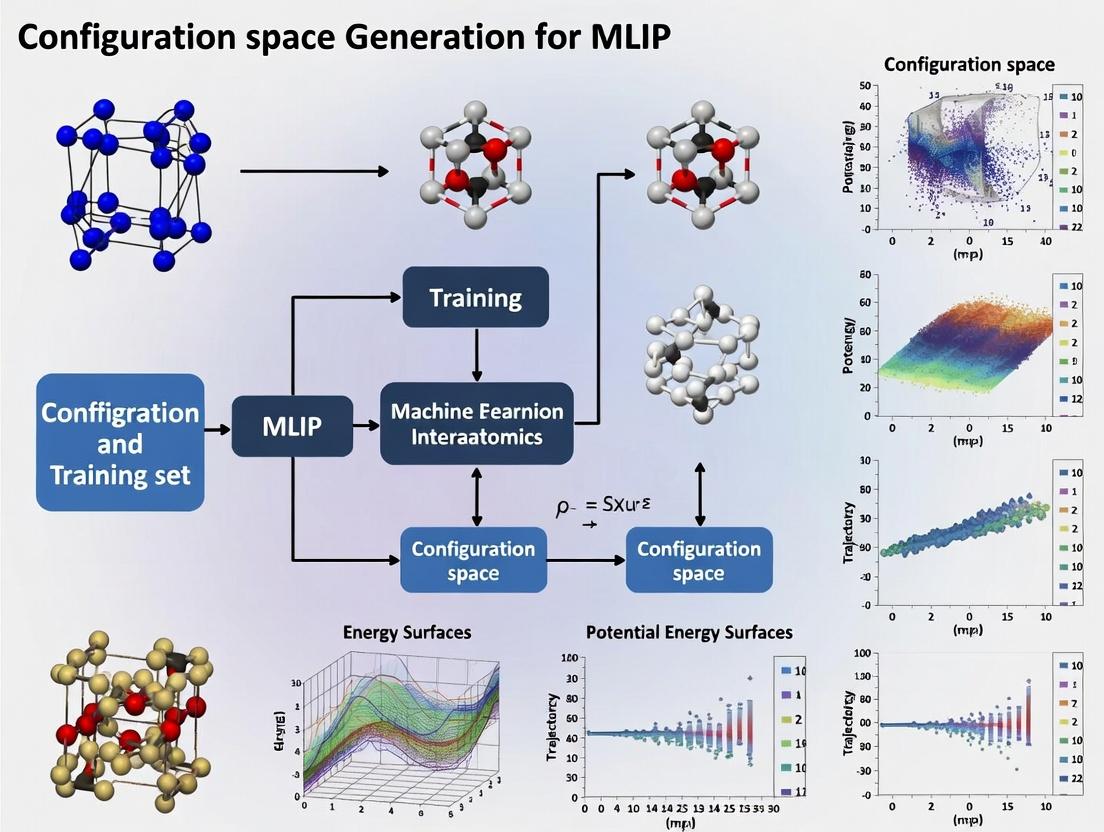
This comprehensive guide explores the critical process of configuration space generation for Machine Learning Interatomic Potentials (MLIPs).
Mastering MLIP Training Set Generation: Strategies for Accurate Drug Discovery & Materials Science
Abstract
This comprehensive guide explores the critical process of configuration space generation for Machine Learning Interatomic Potentials (MLIPs). Aimed at computational researchers, materials scientists, and drug development professionals, we detail foundational concepts, advanced methodological workflows, optimization strategies for common pitfalls, and rigorous validation techniques. The article provides a practical roadmap to build robust, data-efficient, and physically accurate training sets that power reliable MLIPs for biomedical simulations and materials discovery, enabling faster innovation cycles.
Understanding MLIP Training Sets: Why Configuration Space is Everything
Within the broader thesis on Machine Learning Interatomic Potential (MLIP) training set generation, the configuration space is the foundational set of all atomic configurations used to train, validate, and test the potential. It defines the scope of the potential's applicability (its transferability) by encompassing the relevant geometries, elemental compositions, energies, and forces that the MLIP must learn. A poorly sampled configuration space leads to unreliable extrapolation and poor performance in production simulations, such as drug discovery workflows involving protein-ligand dynamics or material stability.
Definition and Quantitative Dimensions
A configuration space for an MLIP is a high-dimensional manifold defined by atomic coordinates, cell vectors, and chemical species. Its sampling is characterized by key quantitative descriptors.
Table 1: Core Dimensions of an MLIP Configuration Space
| Dimension | Description | Typical Metric/Data Type |
|---|---|---|
| Structural Diversity | Coverage of relevant bond lengths, angles, dihedrals, polyhedra. | Radial Distribution Function (RDF), Angle Distribution Histograms. |
| Compositional Diversity | Range of chemical elements and stoichiometries. | Elemental pair counts, stoichiometry distribution. |
| Energy Range | Span of potential energies per atom (or relative energies). | min/max/mean/std of energy/atom (eV). |
| Force Range | Span of interatomic force magnitudes. | min/max/mean/std of force components (eV/Å). |
| Phase Space Coverage | Inclusion of different phases (crystalline, amorphous, liquid), surfaces, defects. | Classification label per configuration. |
| Temporal/Disorder | Sampling from molecular dynamics (MD) trajectories at various temperatures. | Temperature (K), root-mean-square displacement (Å). |
Table 2: Source Data for Configuration Space Generation (Comparative)
| Source Method | Data Produced | Computational Cost | Relevance to Drug Development |
|---|---|---|---|
| Ab Initio MD | Accurate energies/forces for small systems. | Very High | Benchmarking, small ligand/active site. |
| Density Functional Theory (DFT) | Single-point calculations for diverse geometries. | High | Ligand conformation, protein-ligand binding poses. |
| Active Learning | Iteratively selected configurations from candidate explorations. | Medium (focused) | Efficiently exploring reaction pathways or free energy landscapes. |
| Classical MD with Legacy FF | Large volumes of structural data (forces are less reliable). | Low | Initial sampling of large biomolecular systems (e.g., protein folding). |
Experimental Protocols for Configuration Space Generation
Protocol 3.1: Active Learning Loop for MLIP Training Set Curation
Purpose: To iteratively build a minimal yet comprehensive configuration space that targets the MLIP's error.
Materials: Initial ab initio dataset, pre-trained MLIP (seed model), candidate pool generator (e.g., high-T MD, random structure search), Quantum Mechanics (QM) calculator (DFT).
Procedure:
- Initialization: Train a seed MLIP on a small, diverse ab initio dataset (Protocol 3.2).
- Candidate Generation: Run exploration simulations (e.g., MD at relevant temperatures, metadynamics) using the current MLIP to generate a large pool of candidate atomic configurations not present in the training set.
- Uncertainty Quantification: For each candidate, compute MLIP's predictive uncertainty (e.g., using the variance from a committee of models
(ΔE)or single-model deviation metrics). - Selection: Rank candidates by uncertainty and select the top N (e.g., 10-100) configurations that exceed a predefined uncertainty threshold
(σ_threshold). - QM Calculation: Perform high-fidelity QM single-point calculations (or short MD) on the selected configurations to obtain target energies and forces.
- Augmentation: Add these new {configuration, energy, forces} data points to the training set.
- Retraining: Retrain the MLIP on the augmented dataset.
- Convergence Check: Evaluate MLIP performance on a held-out validation set. If error metrics are satisfactory and no new high-uncertainty configurations are found, stop. Otherwise, return to Step 2.
Protocol 3.2: Generating a Foundational Dataset viaAb InitioMolecular Dynamics (AIMD)
Purpose: To create an initial training set with accurate thermodynamic sampling for a specific chemical composition.
Materials: DFT software (e.g., VASP, CP2K), structure file for initial configuration.
Procedure:
- System Setup: Define initial atomic coordinates, periodic boundary conditions, and simulation cell size. Select appropriate DFT functional (e.g., PBE) and pseudopotentials.
- Equilibration: Run AIMD in the NVT ensemble (using a Nosé-Hoover thermostat) at the target temperature (e.g., 300 K or elevated for faster sampling) for 5-10 ps until properties (temperature, potential energy) stabilize.
- Production Run: Continue AIMD in the NVE or NVT ensemble for a duration sufficient to sample relevant dynamics (e.g., 20-100 ps). The timestep is typically 0.5-1.0 fs.
- Configuration Sampling: Extract atomic snapshots (frames) from the trajectory at regular intervals (e.g., every 10-100 fs). The interval should be longer than the correlation time of the fastest vibrations.
- Data Curation: For each snapshot, store atomic positions, cell vectors, species, total energy, and atomic forces (directly from the DFT calculation).
- (Optional) Augmentation: Apply symmetry operations (e.g., rotation, translation) to snapshots to increase data diversity without new calculations.
Visualizations
Active Learning Loop for MLIP Development
MLIP Training Set Construction Workflow
The Scientist's Toolkit: Key Research Reagent Solutions
Table 3: Essential Tools for MLIP Configuration Space Research
| Item (Software/Resource) | Category | Function in Configuration Space Work |
|---|---|---|
| VASP / CP2K / Quantum ESPRESSO | QM Calculator | Generates high-accuracy reference data (energy, forces) for atomic configurations. |
| LAMMPS / GROMACS | Molecular Dynamics Engine | Performs exploration sampling using interim MLIPs or legacy force fields to generate candidate structures. |
| ASE (Atomic Simulation Environment) | Python Library | Central hub for manipulating atoms, interfacing calculators, and workflow automation. |
| DeePMD-kit / MACE / NequIP | MLIP Framework | Provides the model architecture, training, and uncertainty estimation capabilities for active learning. |
| PYMATGEN / Pymatflow | Materials Informatics | Aids in generating initial structure sets, analyzing symmetry, and calculating structural descriptors. |
| DP-GEN / FLARE | Active Learning Automation | Specialized packages for automating the active learning loop described in Protocol 3.1. |
| Jupyter Notebook / MLflow | Computational Lab Notebook | Enables reproducible experimentation, tracking of training iterations, and result visualization. |
Within the broader research on Machine Learning Interatomic Potential (MLIP) training set configuration space generation, a fundamental axiom emerges: the predictive accuracy and transferability of an MLIP are direct, bounded functions of the quality and diversity of its training data. This application note details the quantitative relationships and provides protocols for constructing training sets that maximize MLIP performance for materials science and drug development applications.
Table 1: Impact of Training Set Diversity on Error Metrics for a Generalized Neural Network Potential (NNP)
| Training Set Property | Mean Absolute Error (MAE) on Test Set (meV/atom) | MAE on Extrapolative Structures (meV/atom) | Force Error (meV/Å) | Reference |
|---|---|---|---|---|
| Single-Minimum (Equilibrium Only) | 2.1 | 152.7 | 45.3 | [Botu et al., 2017] |
| + MD Snapshots (300K) | 1.8 | 48.5 | 38.2 | [Smith et al., 2017] |
| + Nudged Elastic Band (NEB) Paths | 1.5 | 22.1 | 32.1 | [Jinnouchi et al., 2019] |
| + Active Learning (ALD) Iterations | 1.2 | 8.6 | 24.7 | [Zhang et al., 2019] |
| + Explicit Defect & Surface Configs | 1.4 | 6.3 | 28.5 | [Chen et al., 2022] |
Table 2: Performance of Different MLIPs Trained on the Same High-Quality Dataset (SPICE Dataset)
| MLIP Architecture | Energy MAE (meV/atom) | Force MAE (meV/Å) | Inference Speed (ms/atom) | Transferability Score* |
|---|---|---|---|---|
| ANI-2x (AEV-based) | 5.8 | 41.2 | 0.05 | 0.78 |
| MACE (Equivariant) | 2.1 | 15.3 | 0.15 | 0.94 |
| NequIP (SE(3)-Equivariant) | 1.7 | 12.8 | 0.18 | 0.96 |
| Allegro (BOT) | 2.0 | 14.1 | 0.03 | 0.93 |
*Transferability Score (0-1): Metric aggregating performance on unseen molecular compositions, charge states, and long-range interaction benchmarks.
Experimental Protocols
Protocol 3.1: Generating a Foundational Training Set via ab initio Molecular Dynamics (AIMD)
Objective: To sample a thermodynamically representative configuration space for a target system.
- Initial Structure Preparation: Obtain initial structures from databases (e.g., Materials Project, CSD, PDB). Use VESTA or ASE to create supercells (≥ 64 atoms for solids).
- DFT Pre-Optimization: Perform geometry optimization using a planewave code (VASP, Quantum ESPRESSO) with a medium-tier functional (PBE-D3) and standard pseudopotentials. Convergence criteria: energy < 1e-5 eV, force < 0.01 eV/Å.
- AIMD Simulation: a. Equilibrate the system in the NVT ensemble at the target temperature (e.g., 300K, 600K) for 5 ps using a Nosé–Hoover thermostat. b. Continue production run in the NVE ensemble for 20-50 ps. Timestep: 0.5-1.0 fs.
- Configuration Sampling: Extract snapshots every 50-100 fs from the production run. For a 50 ps trajectory, this yields 500-1000 configurations.
- Single-Point Calculations: Perform high-accuracy DFT single-point energy and force calculations on all sampled configurations. Use a tighter energy cutoff and k-point grid than in step 2. Store configurations, energies, forces, and stresses.
Protocol 3.2: Active Learning-Driven Training Set Augmentation (ALD)
Objective: Iteratively identify and fill gaps in the configuration space to improve extrapolative power.
- Initial Model Training: Train a candidate MLIP (e.g., MACE) on the foundational set (from Protocol 3.1).
- Exploration Simulation: Run extended MD simulations (e.g., 1 ns) using the MLIP at elevated temperatures or under stress to explore unseen regions.
- Uncertainty Quantification: For each visited configuration, compute the model's uncertainty (e.g., using committee disagreement for ensemble models, or latent distance metrics for single models).
- Selection and Labeling: Identify the N configurations (e.g., top 1% of 10,000) with the highest uncertainty. Perform high-accuracy DFT calculations on these configurations.
- Augmentation and Retraining: Add the newly labeled, high-uncertainty configurations to the training set. Retrain the MLIP from scratch or fine-tune.
- Convergence Check: Evaluate the model on a held-out, diverse benchmark set. If performance plateaus, return to Step 2. Typically, 3-10 ALD cycles are performed.
Protocol 3.3: Targeted Inclusion of Rare Events and Reaction Pathways
Objective: Explicitly include transition states and defect configurations critical for drug-protein binding or catalysis studies.
- Nudged Elastic Band (NEB) Calculations: For known reaction pathways (e.g., ligand dissociation, proton transfer), perform CI-NEB calculations using DFT to locate the transition state and 5-7 intermediate images.
- Dimers and Clusters: For non-covalent interactions relevant to drug development, generate dimer configurations at varying distances and orientations (e.g., using the
MBXlibrary for SAPT-FF). - Point Defect & Surface Sampling: Create explicit vacancy, interstitial, and surface slab models. Perform short AIMD (∼5 ps) on each to sample distorted local environments.
- Incorporate into Training Set: Add all configurations from Steps 1-3, with their DFT-calculated labels, to the primary training set. Weight these configurations appropriately during training (e.g., using a higher loss weight) to ensure they are learned.
Visualizations
Training Set Construction & Active Learning Workflow
Core Relationship: Quality Drives MLIP Performance
The Scientist's Toolkit: Key Research Reagent Solutions
Table 3: Essential Tools for MLIP Training Set Generation
| Item / Solution | Function in Training Set Generation | Example / Note |
|---|---|---|
| ASE (Atomic Simulation Environment) | Python library for manipulating atoms, building structures, and interfacing with calculators. Core workflow automation tool. | Used to script supercell creation, run MD via LAMMPS, and parse outputs. |
| DP-GEN | Active learning pipeline specifically for generating MLIP training data. Automates Protocol 3.2. | Integrates with VASP, PWmat, CP2K, and LAMMPS for exploration and labeling. |
| VASP / Quantum ESPRESSO / CP2K | High-accuracy ab initio (DFT) calculators. Provide the "ground truth" energy, force, and stress labels. | Choice depends on system (metals, organics, periodic vs. molecular). |
| LAMMPS with MLIP Plugin | High-performance MD engine. Used to run fast exploration simulations with a preliminary MLIP during active learning. | Plugins exist for DeePMD-kit, MACE, and others. |
| SPICE, ANI-1x, rMD17 Datasets | Curated, public quantum chemical datasets for organic molecules. Serve as benchmarks or foundational training data. | SPICE contains ~1.1M drug-like molecule configurations. |
| OCP (Open Catalyst Project) Framework | PyTorch-based toolkit for training and applying MLIPs, especially for catalysis. Includes standard training workflows. | Provides models like GemNet and MACE. |
| FINETUNA / AMPT | Tools for fine-tuning pre-trained MLIPs on small, targeted datasets (e.g., a specific protein-ligand system). | Reduces need for massive system-specific data. |
| PLOTMAP / PANTONE | Analysis tools for visualizing the sampled configuration space and identifying coverage gaps in training data. | Projects high-dimensional data to 2D for human inspection. |
Within the broader thesis on Machine Learning Interatomic Potential (MLIP) training set generation, the central challenge is the sampling problem. The configuration space of atomic systems—defined by atomic coordinates, chemical species, and environmental conditions—is astronomically vast. Generating a finite, computationally tractable training dataset that adequately covers this space to produce a robust, transferable, and accurate MLIP is the fundamental research problem. This document outlines application notes and protocols for addressing this challenge.
Core Sampling Methodologies: Protocols & Data
Effective strategies balance random exploration with targeted sampling of high-probability or high-importance regions. The following table summarizes key quantitative metrics and applicability of primary methods.
Table 1: Comparative Analysis of Configuration Space Sampling Methods for MLIP Training
| Method | Core Principle | Key Quantitative Metrics (Typical Ranges) | Best For Systems With |
|---|---|---|---|
| Random/ MD Sampling | Generate configurations via molecular dynamics (MD) at various temperatures. | Temperature range: 50K - 2000K; Simulation time: 10 ps - 1 ns per trajectory; Configurations sampled: 1,000 - 100,000. | Stable phases, exploring thermal vibrations around minima. |
| Active Learning (AL) | Iterative query of an MLIP's uncertainty to select new configurations for labeling. | Uncertainty threshold (σ): 0.01 - 0.1 eV/atom; Iteration cycles: 5-20; New configs per cycle: 50-500. | Broad, unknown landscapes (e.g., reaction paths, defect migration). |
| Metadynamics/ Enhanced Sampling | Biasing simulation to escape free energy minima and visit metastable states. | Hill height: 0.1 - 1.0 kJ/mol; Deposition rate: 0.1 - 10 ps; Collective Variables (CVs): 1-3. | Systems with high energy barriers and rare events. |
| Normal Mode Sampling | Displace atoms along harmonic vibrational modes derived from Hessian matrix. | Displacement scale factor: 0.1 - 2.0 (relative to mode amplitude); Modes sampled: All or low-frequency subset. | Initial exploration near equilibrium, capturing anharmonicity. |
| Structural Enumeration | Systematic generation of derivative structures, defects, or surfaces. | Supercell sizes: 2x2x2 - 4x4x4; Vacancy concentrations: 0.5% - 5%; Surface slab depths: 3-10 atomic layers. | Ordered materials, point defects, surface chemistries. |
Detailed Protocol: Active Learning Loop for MLIP Training
This protocol is central to modern MLIP development.
A. Initial Dataset Creation
- Start with a small seed dataset (
N=100-1000configurations) using random displacements, primitive MD, or structural enumeration. - Compute reference energies and forces for these configurations using Density Functional Theory (DFT). Use a converged plane-wave cutoff and k-point mesh.
B. Iterative Active Learning Loop
- Step 1 - MLIP Training: Train an ensemble of MLIPs (e.g., 4 models) on the current dataset. Use a 80/20 train/validation split.
- Step 2 - Candidate Pool Generation: Perform MD simulations using the current MLIPs at relevant thermodynamic conditions (temperatures, pressures). Aggregate ~10,000-100,000 candidate structures.
- Step 3 - Uncertainty Quantification: For each candidate, calculate the predictive uncertainty. Common metrics include:
- Ensemble Variance:
σ²_E = (1/(M-1)) * Σ_i (E_i - Ē)², whereMis the number of models. - Forces Uncertainty: Root mean square variance across the ensemble.
- Ensemble Variance:
- Step 4 - Query & Label: Select the
Ncandidates (e.g.,N=200) with the highest uncertainty metric. Compute DFT references for these. - Step 5 - Augmentation & Convergence Check: Add the new labeled data to the training set. Check for convergence: if the maximum uncertainty of the candidate pool falls below a threshold (e.g., σ_E < 0.02 eV/atom) for 3 consecutive cycles, stop. Otherwise, return to Step 1.
Detailed Protocol: Metadynamics for Rare Event Sampling
Use to explicitly sample transition states and reaction pathways.
A. Collective Variable (CV) Selection
- Identify 1-3 physically relevant CVs (e.g., bond distance, coordination number, dihedral angle) that describe the event of interest.
- Validate CVs by ensuring they distinguish initial, final, and suspected intermediate states.
B. Well-Tempered Metadynamics Simulation
- Parameters: Set Gaussian hill height
W= 1.0 kJ/mol, widthσ_CV= 10% of CV range, deposition strideτ= 1 ps. - Bias Factor: Set a well-tempered bias factor
γ= 10-20 to gradually flatten the free energy surface. - Simulation: Run the biased MD simulation. The frequency of hill addition decreases over time, allowing convergence.
- Sampling: Extract all unique visited configurations, focusing on those from different free energy basins. A cluster analysis (e.g., using RMSD) can be used to select representative structures.
- Labeling: Submit representative configurations from each basin for DFT calculation.
Visualization of Workflows
Title: Active Learning Workflow for MLIP Training
Title: Metadynamics Sampling for Rare Events
The Scientist's Toolkit: Research Reagent Solutions
Table 2: Essential Tools for MLIP Training Set Generation
| Item / Software | Category | Primary Function in Sampling |
|---|---|---|
| VASP, Quantum ESPRESSO, CP2K | Ab Initio Calculator | Provides the reference "ground truth" energy, forces, and stresses for atomic configurations. |
| LAMMPS, ASE (Atomic Simulation Environment) | MD Engine | Performs classical and MLIP-driven molecular dynamics to explore configuration space. |
| PLUMED | Enhanced Sampling Library | Implements metadynamics and other advanced sampling algorithms by biasing simulations. |
| DP-GEN, FLARE, AL4CHEM | Active Learning Platform | Automates the iterative active learning loop (training, candidate generation, uncertainty query). |
| SOAP, ACE, Behler-Parrinello | Descriptor | Translates atomic coordinates into a mathematical representation (fingerprint) for ML models. |
| DASK, SLURM | High-Performance Computing | Manages parallel computation of thousands of DFT calculations and ML training tasks. |
| VESTA, OVITO | Visualization | Visualizes atomic structures, defects, and diffusion pathways from sampled configurations. |
Application Notes
Within Machine Learning Interatomic Potential (MLIP) training set generation research, the core principles of energy, forces, and stresses form a triadic foundation for constructing a complete and thermodynamically consistent configuration space. Energy provides the scalar reference, forces (the negative gradient of energy) dictate atomic motion, and stresses describe the response to deformation. The "Quest for Completeness" refers to the systematic sampling of atomic environments across relevant thermodynamic states, reaction pathways, and defect geometries to ensure the MLIP's robustness and transferability. For drug development, MLIPs enable high-fidelity simulations of protein-ligand binding dynamics, solvation effects, and polymorph stability, which are critical for predicting binding affinities and bioavailability.
Table 1: Quantitative Benchmarks for MLIP Training Set Completeness
| Metric | Target Value for Drug Development Applications | Purpose |
|---|---|---|
| Energy per Atom RMSE | < 1 meV/atom | Ensures accurate thermodynamic property prediction. |
| Force Component RMSE | < 25 meV/Å | Critical for correct molecular dynamics trajectories and vibration spectra. |
| Stress Tensor RMSE | < 0.01 GPa | Necessary for simulating pressure-induced phase changes and mechanical properties. |
| Configurational Space Coverage (e.g., Dimensionality) | > 95% of variance in 50 PCA dimensions | Measures diversity of sampled atomic environments (bond lengths, angles, coordination). |
| Rare Event Sampling (Activation Barriers) | Explicit inclusion of TS geometries (NEB/MTD) | Enables prediction of reaction rates and conformational changes. |
Experimental Protocols
Protocol 1: Active Learning Loop for Training Set Generation
This protocol outlines an iterative ab initio active learning workflow to achieve a complete training set.
- Initialization: Generate a seed dataset of ~100 configurations using random displacements (at 300K), simple lattice distortions, and a few key molecular crystals or protein-ligand snapshots from docking.
- MLIP Training: Train an ensemble of MLIPs (e.g., NequIP, MACE) on the current dataset.
- Exploration via Molecular Dynamics: Perform extensive MD simulations (NVT, NPT) at multiple thermodynamic conditions relevant to the target application (e.g., 300-450K, 0.1 MPa - 1 GPa) using the MLIP ensemble.
- Uncertainty Quantification: For each step of the MD trajectories, compute the committee disagreement (standard deviation) on predicted energies and forces.
- Configuration Selection: Extract all configurations where the uncertainty exceeds a threshold (e.g., energy std. dev. > 1 meV/atom). Cluster these configurations to remove redundancy.
- Ab Initio Calculation: Perform DFT (for materials) or DFTB/force field (for large biosystems) calculations on the selected configurations to obtain reference energy, forces, and stresses.
- Dataset Augmentation: Add the newly labeled configurations to the training pool.
- Convergence Check: Repeat from Step 2 until the uncertainty on a held-out validation set of known critical configurations (e.g., transition states, defect cores) falls below target benchmarks (Table 1) and no new high-uncertainty configurations are discovered in exploratory MD.
Protocol 2: Explicit Stress-Strain Sampling for Polymorph Stability
A targeted protocol to ensure training set completeness for solid-form prediction in pharmaceutical compounds.
- Supercell Construction: Build supercells (3x3x3 min.) for each known crystal polymorph of the target molecule.
- Strain Application: Apply a series of homogeneous strain tensors to each supercell. Use a Latin hypercube sampling scheme to cover the six independent components of the strain tensor up to ±5%.
- Atomic Relaxation: For each strained supercell, perform a constrained geometry optimization where only the atomic positions are relaxed while fixing the deformed lattice vectors.
- Ab Initio Evaluation: Compute the total energy, atomic forces, and the stress tensor for each relaxed, strained configuration using a dispersion-corrected DFT functional.
- Inclusion Criteria: All configurations are added to the global training set. The stress tensor data is crucial for the MLIP to learn the accurate elastic response and the energy landscape around each polymorph's minimum.
Protocol 3: Targeted Sampling of Protein-Ligand Binding Pockets
Protocol for enhancing training data in biologically relevant regions.
- Trajectory Generation: Run classical MD of the solvated protein-ligand complex.
- Pocket Region Identification: Define the binding pocket as all residues within 6 Å of the ligand's initial position.
- Frame Selection & Clustering: Extract simulation frames at regular intervals. Cluster the atomic configurations of the pocket region (protein atoms + ligand) based on root-mean-square deviation (RMSD).
- QM/MM Partitioning: For each cluster centroid, define a QM region encompassing the ligand and key interacting sidechains (e.g., charged residues, catalytic site). The MM region includes the remaining protein and solvent.
- High-Level Calculation: Perform QM/MM calculations (e.g., DFTB3/MM) to obtain accurate energies and forces for the QM region, using MM forces for the environment.
- Data Integration: Isolate the QM region's atomic positions, energies, and forces. These are combined with the full-system MM data to create a composite training example, teaching the MLIP the detailed interactions at the binding interface.
Visualizations
Active Learning Loop for MLIP Data Generation
Core Principles Drive Completeness
The Scientist's Toolkit: Research Reagent Solutions
Table 2: Essential Tools for MLIP Training Set Generation
| Item | Function in Research |
|---|---|
| VASP / Quantum ESPRESSO | First-principles electronic structure codes to generate the reference ab initio energy, force, and stress data. |
| LAMMPS / ASE | Molecular dynamics and simulation environments used to run exploratory MD with MLIPs and apply strain. |
| NequIP / MACE / Allegro | Modern, equivariant graph neural network architectures for building accurate, data-efficient MLIPs. |
| GPUMD | High-performance MD code optimized for GPU acceleration, crucial for rapid sampling of configuration space. |
| PLUMED | Plugin for enhanced sampling and free-energy calculations, used to bias MD towards rare events (TS, binding/unbinding). |
| DP-GEN | Automated active learning framework that orchestrates the iterative exploration-labeling-training loop. |
| QM/MM Interface (e.g., sander) | Enables hybrid calculations for large biosystems, providing high-accuracy data in binding pockets. |
This article details application notes and protocols within the context of a broader thesis on Machine Learning Interatomic Potential (MLIP) training set configuration space generation. The core challenge is generating representative, unbiased atomic configurations that capture the vast and distinct energy landscapes of hard materials versus soft biomolecular systems.
Application Notes: Configuration Space Sampling
Note 1.1: Inorganic Materials (Silicon Crystal & Defects) The goal is to sample configurations for training an MLIP that accurately models a pristine silicon lattice and its point defects (vacancies, interstitials). The configuration space is high-dimensional but bounded by strong covalent bonds, leading to a relatively well-defined energy landscape with deep minima.
Note 1.2: Biomolecular Systems (Protein-Ligand Binding) The goal is to sample configurations for training an MLIP to model the binding of a small-molecule inhibitor to a kinase protein (e.g., Imatinib to Abl kinase). The configuration space involves complex, hierarchical interactions (covalent, ionic, hydrophobic, hydrogen bonding) across multiple timescales, with a shallow, multi-minima energy landscape and critical entropic contributions.
Table 1: Quantitative Comparison of Sampling Challenges
| Parameter | Inorganic Material (Si) | Biomolecular System (Protein-Ligand) |
|---|---|---|
| Primary Bonding | Strong, directional covalent | Mixed: covalent (backbone), weak non-covalent |
| Energy Landscape | Steep, deep minima | Shallow, numerous metastable minima |
| Key Sampling Metric | Formation energy, phonon spectra | Free energy (ΔG), RMSD, radius of gyration |
| Critical Configurations | Defect structures, surfaces | Bound/unbound states, transition paths |
| Dominant MD Method | NVT/NPT, VASP/LAMMPS |
Enhanced sampling (MetaD, REST2), AMBER/GROMACS |
| Sampling Scale | ~100-1000 atoms, ps-ns | ~10,000-100,000 atoms, ns-μs |
Protocols for Training Set Generation
Protocol 2.1: Active Learning for Materials Defects Objective: Iteratively generate a training set for silicon that includes rare defect events.
- Initial Dataset: Perform DFT (
VASP) calculations on 2x2x2 Si supercell: pristine, 1 vacancy, 1 interstitial (3 configurations). - Train Initial MLIP: Train a
M3GNetorACEmodel on the initial set. - Exploration MD: Run an NVT MD simulation with the MLIP at 1200K for 100 ps to encourage defect formation.
- Uncertainty Sampling: Use the MLIP's latent space or committee disagreement to select 10 structures with highest prediction uncertainty.
- DFT Labeling: Perform single-point DFT energy/force calculations on the selected structures.
- Augmentation & Iteration: Add labeled data to training set. Retrain MLIP. Repeat steps 3-5 until energy/force errors on a test set converge (< 10 meV/atom, < 100 meV/Å).
Protocol 2.2: Enhanced Sampling for Protein-Ligand Conformations Objective: Generate a training set capturing the bound, unbound, and intermediate states of a protein-ligand complex.
- System Preparation: Obtain PDB structure (e.g., 1IEP). Prepare with
tleap(AMBER): add hydrogens, solvate in TIP3P water box, add ions to neutralize. - Equilibration: Run minimization, NVT, and NPT simulations using
pmemd.cuda(AMBER) withff19SB/GAFF2force fields. - Collective Variable (CV) Definition: Define CVs: 1) Distance between ligand center and protein binding site centroid, 2) Protein binding pocket radius of gyration. Use
PLUMED. - Well-Tempered Metadynamics: Deposit Gaussian hills (height=1.0 kJ/mol, width=0.1 nm, pace=500 steps) on the defined CVs. Run a 500 ns biased simulation to encourage exploration of the full CV space.
- Configuration Clustering: From the metaD trajectory, cluster frames based on CVs and backbone RMSD using
cpptraj. Select 50 representative frames from major clusters. - QM/MM Labeling: For each selected frame, perform QM/MM energy/force calculations using
sander(AMBER) with the DFTB3 method for the ligand and binding site residues (5-7 Å cutoff). Use theDFTB3module inAmberTools. - Training Set Assembly: Assemble QM/MM labeled structures into the final MLIP (
ANI-2x,TorchANI) training set. Validate by comparing MLIP-predicted vs. QM/MM free energy profiles.
Diagrams
Title: MLIP Training Set Generation Workflow
Title: Key Sampling Methods for Different Domains
The Scientist's Toolkit: Research Reagent Solutions
Table 2: Essential Tools for Cross-Domain MLIP Training Set Generation
| Item / Solution | Domain | Function in Protocol | Example/Supplier |
|---|---|---|---|
| DFT Software | Materials | Provides high-quality energy/force labels for initial and queried configurations. | VASP, Quantum ESPRESSO |
| Classical MD Engine | Both | Performs large-scale exploration (high-T MD) and equilibration. | LAMMPS (Mat), AMBER/GROMACS (Bio) |
| Enhanced Sampling Plugin | Biomolecules | Drives sampling along collective variables to overcome high barriers. | PLUMED |
| QM/MM Interface | Biomolecules | Enables high-quality electronic structure calculations for solvated biomolecules. | sander/pmemd with DFTB3 (AMBER) |
| MLIP Framework | Both | Provides model architecture, training, and uncertainty quantification capabilities. | M3GNet, AMPtorch, TorchANI |
| Clustering/Analysis Tool | Both | Analyzes simulation trajectories to select representative configurations. | scikit-learn (PCA/t-SNE), MDTraj, cpptraj |
| Automation & Workflow Manager | Both | Orchestrates iterative active learning loops. | FAST, signac, custom Python scripts |
A Step-by-Step Guide to Generating Effective MLIP Training Sets
1. Introduction
Within the context of machine-learned interatomic potential (MLIP) training set generation research, constructing a representative configuration space is paramount. This workflow details the protocol from acquiring an initial molecular structure to producing a finalized, curated dataset suitable for MLIP training, emphasizing robustness and thermodynamic sampling.
2. Initial Structure Acquisition & Preparation
Protocol 2.1: Initial Structure Sourcing and Validation
- Objective: Obtain a reliable starting conformation for the target molecule (e.g., a drug-like compound or protein).
- Materials:
- Source Databases: Protein Data Bank (PDB), Cambridge Structural Database (CSD), PubChem.
- Software: Open Babel, RDKit, PyMOL, or Maestro.
- Methodology:
- Search relevant databases using the compound name or canonical SMILES string.
- Select the highest-resolution crystal structure available. For small molecules, prioritize structures without significant disorder.
- Isolate the target molecule, removing co-crystallized solvents, ions, and co-factors unless they are functionally relevant.
- Add missing hydrogen atoms using the protonation state appropriate for the target physiological pH (e.g., pH 7.4) using software like RDKit or Maestro's Protein Preparation Wizard.
- Perform a brief geometry minimization (≤ 50 steps, MMFF94 or similar force field) to relieve severe steric clashes introduced during hydrogen addition.
3. Configuration Space Exploration via Molecular Dynamics
Protocol 3.1: Explicit Solvent MD for Conformational Sampling
- Objective: Generate an ensemble of thermally accessible conformations.
- Materials:
- Software: GROMACS, AMBER, or OpenMM.
- Force Field: GAFF2 (small molecules), CHARMM36 or AMBER ff19SB (proteins), TIP3P or SPC/E water model.
- Computing Resource: High-Performance Computing (HPC) cluster with GPU acceleration.
- Methodology:
- System Setup: Solvate the prepared structure in a cubic water box with a minimum 1.2 nm margin from the solute. Add ions to neutralize the system and achieve a physiological salt concentration (e.g., 0.15 M NaCl).
- Energy Minimization: Use the steepest descent algorithm (≤ 5000 steps) to remove residual steric clashes.
- Equilibration:
- NVT: Heat the system from 0 K to 300 K over 100 ps using a velocity rescale thermostat (coupling constant = 0.1 ps).
- NPT: Stabilize pressure at 1 bar for 100 ps using a Parrinello-Rahman barostat (coupling constant = 2.0 ps).
- Production Run: Perform an unbiased MD simulation for a duration sufficient to observe relevant conformational transitions (typically 100 ns - 1 µs). Save trajectories every 10 ps.
4. Dataset Curation and Ab-Initio Reference Calculation
Protocol 4.2: Clustering and Frame Selection for DFT Calculation
- Objective: Select a diverse, non-redundant subset of configurations for high-precision ab-initio calculation.
- Materials: MD trajectory, clustering software (GROMACS
cluster, MDTraj, scikit-learn). - Methodology:
- Superimpose all trajectory frames to a reference (e.g., the initial structure) based on the solute's heavy atoms to remove rotational/translational drift.
- Calculate the pairwise Root Mean Square Deviation (RMSD) matrix for the solute's heavy atoms.
- Apply a clustering algorithm (e.g., linkage clustering with a cutoff of 0.15-0.3 nm RMSD) to group geometrically similar conformations.
- Select the central member (closest to the cluster centroid) of the n largest clusters, plus additional random samples from smaller clusters to ensure coverage. Aim for a final selection of 500-5000 frames, balancing diversity and computational cost.
Protocol 4.3: Ab-Initio Single-Point Energy and Force Calculation
- Objective: Generate the reference ab-initio data (energy, forces, stress) for the selected configurations.
- Materials: Quantum Chemistry Software (VASP, Quantum ESPRESSO, Gaussian, CP2K), high-throughput workflow manager (ASE, pymatgen).
- Methodology:
- For each selected snapshot, extract the coordinates of the solute and all solvent/ions within a defined cutoff (e.g., 0.6 nm) from the solute.
- Set up the ab-initio calculation. A typical balanced protocol for organic molecules is:
- Functional: ωB97M-D3(BJ) (for high accuracy) or PBE-D3 (for efficiency).
- Basis Set: def2-TZVP for main-group elements.
- Task: Single-point energy and analytic force calculation.
- Submit calculations via a workflow manager to ensure consistency and error handling.
- Parse outputs to collect total energy (in eV), atomic forces (in eV/Å), and the cell vectors (if periodic).
5. Final Dataset Assembly for MLIP Training
Protocol 5.1: Data Formatting and Splitting
- Objective: Assemble the final dataset in a standard format and split it for MLIP training/validation/testing.
- Materials: Parsed ab-initio data, data formatting scripts (e.g., using ASE or custom Python).
- Methodology:
- Compile each configuration into a standard format (e.g., extended XYZ, HDF5). Each entry must contain:
- Atomic numbers and positions.
- The reference total energy.
- The reference per-atom forces.
- The cell (if periodic) and optional periodic boundary conditions.
- Apply a global energy offset (e.g., shift the minimum energy in the set to zero) to improve numerical stability during training.
- Randomly shuffle the dataset and split it into training (∼80%), validation (∼10%), and test (∼10%) sets. Ensure no temporal leakage from the MD trajectory by shuffling across all clusters.
- Compile each configuration into a standard format (e.g., extended XYZ, HDF5). Each entry must contain:
6. Data Presentation
Table 1: Typical Quantitative Parameters for MLIP Dataset Generation Workflow
| Stage | Key Parameter | Typical Value / Method | Purpose |
|---|---|---|---|
| MD Setup | Water Box Margin | 1.2 nm | Minimize periodic image interactions |
| Salt Concentration | 0.15 M NaCl | Mimic physiological conditions | |
| MD Run | Production Time | 100 ns - 1 µs | Sample relevant conformational space |
| Trajectory Save Frequency | 10 ps | Balance detail and storage | |
| Clustering | RMSD Cutoff | 0.15 - 0.3 nm | Define conformational similarity |
| DFT Ref. | Density Functional | ωB97M-D3(BJ) / PBE-D3 | Accuracy vs. efficiency trade-off |
| Basis Set | def2-TZVP | Good accuracy for main-group elements | |
| Data Split | Training/Validation/Test | 80/10/10 % | Standard split for model development |
7. Visualization
Title: MLIP Training Set Generation Workflow
8. The Scientist's Toolkit
Table 2: Essential Research Reagents & Solutions for Configuration Space Sampling
| Item / Resource | Category | Function / Purpose |
|---|---|---|
| GROMACS / AMBER / OpenMM | Software Suite | Molecular dynamics simulation engines for conformational sampling. |
| GAFF2 / CHARMM36 Force Fields | Parameter Set | Provides classical interaction potentials for organic molecules and biomolecules. |
| VASP / Quantum ESPRESSO / CP2K | Software Suite | Performs density functional theory (DFT) calculations for reference ab-initio data. |
| ωB97M-D3(BJ) / PBE-D3 | DFT Functional | Exchange-correlation functionals; the former for high accuracy, the latter for efficiency. |
| def2-TZVP Basis Set | Basis Set | A balanced triple-zeta basis set for accurate energy/force calculations on main-group elements. |
| RDKit / Open Babel | Cheminformatics Library | Handles molecular format conversion, SMILES parsing, and basic structure manipulation. |
| ASE (Atomic Simulation Environment) | Python Library | Manages high-throughput DFT workflows and data formatting for MLIP inputs. |
| HPC Cluster with GPU Nodes | Computing Resource | Provides the necessary computational power for MD (GPUs) and DFT (CPUs) calculations. |
In the pursuit of accurate and transferable Machine Learning Interatomic Potentials (MLIPs), the generation of a comprehensive training dataset is paramount. The foundational layer of this dataset originates from ab initio quantum mechanical calculations, primarily Density Functional Theory (DFT) and higher-level quantum chemistry methods. These calculations provide the essential "ground truth" energies, forces, and stress tensors for atomic configurations that span the relevant chemical space. The fidelity of the subsequent MLIP is intrinsically bounded by the quality, diversity, and thermodynamic relevance of this ab initio reference data. This document details the application notes and standardized protocols for generating such foundational data, specifically architected to support robust MLIP training.
Quantitative Comparison ofAb InitioMethods for MLIP Datasets
Table 1: Comparison of Quantum Computational Methods for Reference Data Generation
| Method | Typical Accuracy (Energy) | Computational Cost (Relative) | Key Strengths for MLIP | Key Limitations for MLIP |
|---|---|---|---|---|
| DFT (GGA/PBE) | ~5-10 kcal/mol | 1x (Baseline) | Excellent cost/accuracy balance; solid-state materials; periodic systems. | Systematic errors for dispersion, strongly correlated systems. |
| DFT+U | Improves on GGA for d/f electrons | 1.1x | Corrects on-site Coulomb interaction in transition metal oxides. | U parameter is empirical; not a universal fix. |
| DFT-D3/D4 | ~1-3 kcal/mol (for non-covalent) | 1.05x | Adds van der Waals dispersion corrections crucial for molecular & layered systems. | Post-hoc correction; non-self-consistent. |
| Hybrid DFT (HSE06) | ~2-5 kcal/mol | 10-100x | Improved band gaps, reaction barriers; more accurate electronic structure. | High cost limits system size and sampling breadth. |
| MP2 | ~1-3 kcal/mol (for small gaps) | 100-1000x | Good for non-covalent interactions; gold standard for molecular clusters. | Very high cost; not for periodic metals; basis set sensitive. |
| CCSD(T) | <1 kcal/mol (Chemical Accuracy) | 1000-10,000x | Ultimate accuracy for validation & small "gold standard" subsets. | Prohibitive cost; only for tiny systems (<20 atoms). |
| r²SCAN | ~2-5 kcal/mol | 1.5-2x | Modern meta-GGA; often better across properties without hybrids. | Higher cost than GGA; still under evaluation for diverse solids. |
Core Protocols forAb InitioDataset Generation
Protocol 3.1: Multi-Fidelity Dataset Construction for a Binary Alloy System (A$x$B${1-x}$)
Objective: Generate a training set for an MLIP describing a binary alloy across compositions, phases, and defect states.
Materials/Software:
- VASP/Quantum ESPRESSO/ABINIT (DFT engine)
- ASE (Atomic Simulation Environment) or pymatgen for structure manipulation
- ICET or ATAT for cluster expansion and prototype generation
- High-Performance Computing (HPC) cluster
Procedure:
- Configuration Space Sampling:
- Phase Space: Generate pristine unit cells for all known bulk phases (FCC, BCC, HCP, intermetallics) via materials databases.
- Supercells: Create 2x2x2, 3x3x3, and 4x4x4 supercells for each primary phase.
- Chemical Disorder: For each supercell and target composition x, generate 10-50 distinct atomic decorrelations using Special Quasi-random Structures (SQS) via the
mcsqstool (ATAT). - Point Defects: Introduce vacancies, antisite defects, and interstitial candidates (using the
dopedpackage) into select ordered supercells. - Displaced Configurations: From a subset of the above, generate 50-100 slightly perturbed configurations (atomic displacements ~0.05 Å) via molecular dynamics at 50K (10 fs timestep) or random displacements.
Multi-Fidelity DFT Calculations:
- Tier 1 (Broad Sampling, Lower Cost): Perform single-point energy/force calculations on all generated structures using a GGA-PBE functional with semi-empirical D3 dispersion, medium plane-wave cutoff (e.g., 450 eV), and standard k-point density. This yields ~50,000 data points.
- Tier 2 (Refined Accuracy): Select ~5,000 diverse structures from Tier 1 (using farthest-point sampling). Recalculate using a more accurate functional (e.g., r²SCAN or PBEsol) with tighter convergence parameters.
- Tier 3 (Validation/High-Accuracy): Select ~100 critical configurations (e.g., transition states, key defect formations, dilute compositions). Compute using hybrid HSE06 functional or, for molecular clusters, CCSD(T)/CBS benchmarks.
Data Curation & Formatting:
- Extract total energy, atomic forces, stress tensors, and virials for each calculation.
- Assemble into standardized MLIP-ready format (e.g., extended XYZ, .hdf5). Annotate each entry with metadata: functional, k-grid, convergence, composition.
- Perform sanity checks: energy vs. volume (EOS) fits for pure phases, defect formation energies should be physically plausible.
Protocol 3.2: Molecular Cluster Dataset for Reactive Drug-Like Fragments
Objective: Create a dataset for training a reactive MLIP for ligand-protein interaction simulations.
Materials/Software:
- Gaussian 16/ORCA/Psi4 (Quantum Chemistry engine)
- CREST/GFN-FF for conformer and reaction coordinate sampling
- Auto-FOX or CheMSM for reaction network exploration
- QM7-X/TM databases as starting points
Procedure:
- Conformational & Torsional Sampling:
- For each target molecule (e.g., drug fragment), generate an ensemble of low-energy conformers using CREST (GFN-FF).
- Perform systematic or stochastic scans of key dihedral angles (increment 15-30°) to map torsional potentials.
Reactive Pathway Sampling:
- Define plausible reactive encounters between fragments and a model amino acid sidechain (e.g., proton transfer, nucleophilic attack, bond formation/cleavage).
- Use the Nudged Elastic Band (NEB) method or heuristic methods in Auto-FOX to identify approximate transition states (TS) and minimum energy paths (MEP).
High-Level Quantum Chemistry Calculations:
- Optimize all minima (reactants, products, conformers) and confirmed transition states at the DLPNO-CCSD(T)/def2-TZVPP level of theory, following geometry optimization at ωB97X-D/def2-SVP.
- Perform frequency calculations to confirm minima (0 imaginary frequencies) and TS (1 imaginary frequency) and obtain zero-point energy corrections.
- Compute single-point energies for the entire set at an even higher level (e.g., CCSD(T)/CBS extrapolation) for a critical subset to establish a correction map.
Dataset Assembly:
- Extract Cartesian coordinates, energies (including ZPE-corrected), atomic forces, and partial charges (e.g., from Hirshfeld or CM5 analysis).
- Include dipole moments and polarizabilities if the MLIP architecture supports them.
- Structure the data hierarchically: conformational, torsional, and reactive subsets.
Visualization of Workflows
Diagram 1: Multi-Fidelity MLIP Training Set Generation Workflow
Diagram 2: Molecular Reactive Pathway Sampling Logic
The Scientist's Toolkit: Essential Research Reagents & Software
Table 2: Key Computational Reagents for Ab Initio Dataset Generation
| Item / Software | Category | Primary Function in MLIP Data Generation |
|---|---|---|
| VASP | DFT Code | Industry-standard periodic DFT code for solid-state and surface systems. Provides highly accurate forces and stresses. |
| Quantum ESPRESSO | DFT Code | Open-source, plane-wave pseudopotential suite. Excellent for large-scale sampling and workflow automation. |
| Gaussian 16 / ORCA | Quantum Chemistry Code | High-accuracy molecular quantum chemistry for CCSD(T), DLPNO, and hybrid DFT calculations on clusters. |
| ASE (Atomic Simulation Environment) | Python Library | Universal toolkit for manipulating atoms, interfacing with calculators, building workflows, and analyzing results. |
| pymatgen | Python Library | Materials analysis and phase diagram generation. Critical for generating and analyzing bulk crystal prototypes. |
| ICET / ATAT | Sampling Toolkit | Tools for generating Special Quasi-random Structures (SQS) and cluster expansions for alloy configurational sampling. |
| CREST (GFN-FF) | Conformer Sampler | Efficient, force-field based conformational and protoner rotor sampling for molecules and molecular clusters. |
| Nudged Elastic Band (NEB) | Pathway Finder | Algorithm for locating minimum energy paths and transition states between known reactant and product states. |
| LOBSTER | Bonding Analysis | Computes crystal orbital Hamilton populations (COHP) for bond analysis, validating electronic structure data. |
| XCrySDen / VESTA | Visualization | Real-space visualization of crystal structures, electron densities, and atomic trajectories for quality control. |
This document provides detailed application notes and protocols for active learning (AL) strategies, specifically iterative sampling, within the broader research context of configuring training sets for Machine Learning Interatomic Potentials (MLIPs). Efficient exploration of the chemical and structural configuration space is paramount for developing robust, transferable, and computationally efficient MLIPs used in materials science and drug development.
Core Active Learning Cycles for MLIPs
Active learning for MLIPs operates through a closed-loop cycle, iteratively selecting the most informative data points from a vast, unlabeled configuration space (e.g., from molecular dynamics trajectories) for first-principles calculation and subsequent model retraining.
Quantitative Comparison of Query Strategies
The performance of AL strategies is quantitatively assessed by their data efficiency and final model error. The following table summarizes key metrics from recent studies.
Table 1: Comparison of Active Learning Query Strategies for MLIP Training
| Strategy | Core Principle | Typical Acquisition Function | Data Efficiency Gain* (%) | Typical Final RMSE Reduction* (%) | Computational Overhead |
|---|---|---|---|---|---|
| Uncertainty Sampling | Select configurations where model prediction is most uncertain. | Predictive variance, entropy | 40-60 | 20-40 | Low |
| Query-by-Committee | Select points where committee of models disagrees most. | Disagreement variance (e.g., STD) | 50-70 | 25-45 | Medium (Multiple Models) |
| D-optimality / Greedy | Maximize diversity in the selected subset. | Determinant of covariance matrix | 30-50 | 15-30 | High (Matrix Operations) |
| Expected Model Change | Select points that would change the model most. | Gradient of loss w.r.t. candidate | 45-65 | 20-40 | High (Gradient Calc.) |
| Bayesian Optimization | Maximize an acquisition function balancing exploration/exploitation. | Expected Improvement, UCB | 55-75 | 30-50 | High (Surrogate Model) |
*Gains are relative to random sampling baselines. Actual values are system-dependent.
Protocol: Iterative AL Workflow for MLIP Configuration Space Generation
Protocol Title: Closed-Loop Active Learning for Ab Initio Dataset Curation.
Objective: To generate a minimal yet comprehensive training set of atomic configurations with associated ab initio energies and forces for a target molecular or materials system.
Materials & Initial Setup:
- Initial Seed Dataset: A small set (50-200) of diverse atomic configurations with pre-computed ab initio reference data (energy, forces, stresses).
- Candidate Pool: A large, unlabeled pool of configurations (10^4 - 10^7) generated via methods in Step 1 of the workflow diagram.
- MLIP Architecture: Choose a model (e.g., Neural Network Potential, Gaussian Approximation Potential, Moment Tensor Potential).
- High-Performance Computing (HPC) Resources: For ab initio calculations and parallel model training.
Procedure:
- Train Initial Model: Train the MLIP on the current labeled dataset.
- Evaluate on Candidate Pool: Use the trained model to predict energies/forces for all configurations in the unlabeled candidate pool.
- Compute Acquisition Scores: Apply the chosen acquisition function (see Table 1) to rank candidates by "informativeness."
- Query & Label: Select the top N (batch size) configurations from the ranked pool. Submit these configurations for ab initio calculation (e.g., DFT) to obtain accurate labels.
- Augment & Retrain: Add the newly labeled configurations to the training set. Retrain the MLIP from scratch or using a warm start.
- Convergence Check: Monitor the model's performance on a fixed, independent validation set. Convergence criteria may include:
- Validation error plateauing over several AL cycles.
- Acquisition scores for the top candidates falling below a threshold.
- Maximum cycle or computational budget reached.
- Iterate: Repeat steps 1-6 until convergence is achieved.
Validation: The final model must be validated on a completely held-out test set comprising diverse configurations not seen during the entire AL cycle.
Visualization of Workflows and Relationships
Diagram 1: MLIP Active Learning Workflow
Diagram 2: Acquisition Functions & Objectives
The Scientist's Toolkit: Research Reagent Solutions
Table 2: Essential Tools for Active Learning in MLIP Development
| Tool / Resource | Category | Primary Function in AL Workflow | Examples / Notes |
|---|---|---|---|
| Atomic Simulation Environment (ASE) | Software Library | Interface for atoms, calculators, MD, and coupling MLIPs with DFT codes. | Core platform for scripting AL loops. |
| Density Functional Theory (DFT) Code | Electronic Structure | High-fidelity label generator for selected configurations. | VASP, Quantum ESPRESSO, GPAW, CP2K. |
| MLIP Training Framework | Machine Learning | Provides model architectures and training routines. | AMP, SchNetPack, MACE, Allegro, DEEPMD. |
| Candidate Pool Generator | Sampling Software | Creates the initial unlabeled configuration space for querying. | RASPA (for adsorption), pymatgen (structures), custom MD scripts. |
| Acquisition Function Library | AL Software | Implements strategies for scoring and ranking candidates. | modAL (Python), custom implementations in PyTorch/TensorFlow. |
| High-Throughput Workflow Manager | Compute Management | Automates job submission for DFT labeling and model retraining across cycles. | AiiDA, FireWorks, Nextflow. |
| Reference Datasets | Benchmark Data | Provides standardized systems for comparing AL strategy performance. | QM9, MD17, rMD17, OC20. |
Application Notes
Thesis Context: MLIP Training Set Generation
The development of robust Machine Learning Interatomic Potentials (MLIPs) requires training sets that comprehensively sample the relevant chemical and configurational space. This involves capturing atomic environments across diverse conditions—equilibrium structures, finite-temperature dynamics, transition states, and soft vibrational modes. The specialized techniques of Molecular Dynamics (MD) snapshots, phonon displacements, and the Nudged Elastic Band (NEB) method are critical for generating such a representative and efficient ab initio dataset. These methods systematically target distinct but complementary regions of the potential energy surface (PES), ensuring the MLIP can accurately predict energies, forces, and vibrational properties for use in materials science and drug development (e.g., for ligand-protein binding dynamics).
MD Snapshots for Thermodynamic Sampling
Purpose: To capture the configurational space accessible at finite temperatures, including anharmonic effects and rare events. Protocol: Perform ab initio molecular dynamics (AIMD) simulations using DFT (e.g., VASP, CP2K) at relevant temperatures (e.g., 300K, 600K). Use an NVT ensemble with a Nosé-Hoover thermostat. For a 100-atom system, a 20-50 ps simulation is typical. Extract uncorrelated snapshots by saving frames at intervals exceeding the correlation time (e.g., every 100 fs for a 20 ps trajectory yields ~200 snapshots). Each snapshot provides atomic coordinates, DFT-calculated total energy, atomic forces, and the stress tensor. Data Contribution: Introduces thermal noise, bond stretching/compression, and liquid-state or amorphous phase configurations into the training set.
Phonon Displacements for Vibrational Properties
Purpose: To ensure the MLIP reproduces harmonic and anharmonic vibrational (phonon) spectra, crucial for calculating thermodynamic properties. Protocol: 1. Harmonic Generation: After optimizing a structure to its ground state, compute the force constant matrix via density functional perturbation theory (DFPT) or finite displacements. 2. Displacement Creation: Diagonalize the dynamical matrix to obtain normal modes (eigenvectors) and frequencies (eigenvalues). 3. Sampling: For each normal mode i, generate displaced configurations: ( R{i}^{\pm} = R{0} \pm A \cdot \epsilon{i} ), where ( \epsilon{i} ) is the eigenvector and A is an amplitude (e.g., 0.01–0.05 Å). Use a stochastic sampler to create random linear combinations of mode displacements at specific temperatures. Data Contribution: Provides precise data on the curvature of the PES around minima, essential for predicting correct vibrational densities of states and phonon dispersion curves.
Nudged Elastic Band for Transition Pathways
Purpose: To sample the saddle points and minimum energy paths (MEPs) between metastable states, which are critical for diffusion and reaction barrier calculations. Protocol: 1. Endpoint Optimization: Fully optimize the initial and final states (e.g., reactant and product, two bulk diffusion sites). 2. Band Initialization: Construct an initial guess for the path (e.g., via linear interpolation) with 5-20 images. 3. NEB Calculation: Use an implementation (e.g., in ASE, LAMMPS) with the "nudging" forces to ensure images converge to the MEP. Employ a climbing image (CI-NEB) to refine the saddle point. 4. Data Extraction: From the converged NEB calculation, extract atomic coordinates, energies, and forces for all images along the MEP, with particular emphasis on the saddle point (highest-energy image). Data Contribution: Directly samples transition states and regions of negative curvature, which are rarely visited in MD but vital for kinetic studies.
Table 1: Comparison of Configuration Space Generation Techniques
| Technique | Target PES Region | Primary Outputs per Frame | Typical # Configs for a 50-atom System | Key MLIP Property Ensured |
|---|---|---|---|---|
| MD Snapshots | Equilibrium & non-equilibrium thermal states | Coords, Energy, Forces, Stress | 200-500 | Thermodynamic consistency, phase stability |
| Phonon Displacements | Harmonic basin near minima | Coords, Energy, Forces | 100-300 (from ~10-20 modes) | Vibrational spectra, heat capacity |
| Nudged Elastic Band | Saddle points & reaction paths | Coords, Energy, Forces (along path) | 5-20 (images per path) | Reaction barriers, diffusion rates |
Table 2: Typical Computational Parameters for Protocols
| Parameter | MD Snapshots (AIMD) | Phonon Displacements | NEB (DFT-based) |
|---|---|---|---|
| Software Example | VASP, CP2K | Phonopy + VASP/Quantum ESPRESSO | ASE + VASP/CP2K |
| Energy/Force Method | DFT (PBE, SCAN) | DFT (PBE) | DFT (PBE) |
| System Size | 50-200 atoms | 1-100 atom unit cell | 50-150 atoms |
| Sampling Duration/Scope | 20-50 ps trajectory | ± 0.03 Å displacement amplitude | 5-20 images per path |
| Avg. Wall Time per Config | 100-500 CPU-hrs (for trajectory) | 10-50 CPU-hrs (for matrix calc + displacements) | 50-200 CPU-hrs (full path) |
Detailed Experimental Protocols
Protocol A: Generating MD Snapshots for MLIP Training
- System Preparation: Build initial structure (e.g., crystal, surface, molecule in box) in VESTA/Pymatgen. Ensure appropriate cell size and vacuum.
- DFT Relaxation: Perform full ionic + cell relaxation until forces < 0.01 eV/Å.
- AIMD Setup: Choose NVT ensemble. Set timestep to 1 fs. Select Thermostat (Nosé-Hoover, τ=100 fs). Heat system to target T over 2-5 ps.
- Production Run: Run AIMD for 20-50 ps, saving trajectory every 10 fs.
- Correlation & Extraction: Compute velocity autocorrelation function to determine decorrelation time (τ). Extract snapshots at intervals > τ (e.g., every 100 fs).
- Single-Point Calculation: Perform a high-accuracy DFT calculation on each extracted snapshot to obtain energy/forces for training.
Protocol B: Creating Displaced Configurations via Phonon Analysis
- Ground State: Optimize primitive cell to forces < 0.001 eV/Å.
- Supercell Creation: Use Phonopy to generate a 2x2x2 or larger supercell.
- Force Constant Matrix: Run DFT finite displacements (e.g., Phonopy
disp.yamlgenerated displacements) or use DFPT. - Post-Process: Run Phonopy to obtain force constants, diagonalize dynamical matrix, and output normal modes (eigenvectors) and frequencies.
- Generate Displacements: Use custom script to create configurations: ( R = R0 + \sumi ci * Ai * \epsiloni ), where ( ci ) is a random coefficient from a normal distribution scaled by ( \sqrt{kT} / \omegai ), and ( Ai ) is a scaling factor.
- DFT Calculation: Compute energy and forces for each displaced configuration.
Protocol C: Running a Climbing Image NEB Calculation
- Endpoints: Fully relax initial and final states.
- Interpolation: Use the ASE
NEBfunction with IDPP (image dependent pair potential) to generate 7 initial intermediate images. - NEB Setup: Employ the CI-NEB method. Set spring constant between images to 5.0 eV/Ų. Use a force optimizer (FIRE or BFGS).
- Solver: Use ASE's
NEBmodule coupled to a DFT calculator (e.g., VASP). Set convergence criterion for max force < 0.05 eV/Å. - Climbing Image: Enable the climbing image flag for the highest-energy image after ~50 optimization steps to push it to the saddle.
- Data Harvesting: Upon convergence, extract coordinates, energies, and forces for all images. The saddle point is the highest-energy image.
Visualizations
Workflow for MLIP Training Set Generation
PES Regions Targeted by Each Sampling Technique
The Scientist's Toolkit: Research Reagent Solutions
Table 3: Essential Computational Tools & Materials
| Item/Category | Specific Examples | Function in Configuration Generation |
|---|---|---|
| Electronic Structure Code | VASP, CP2K, Quantum ESPRESSO, GPAW | Performs ab initio calculations (DFT) to provide reference energies, forces, and stresses for extracted configurations. |
| Atomistic Simulation Environment | ASE (Atomic Simulation Environment) | Python framework for setting up, running, and analyzing MD, phonon, and NEB calculations. Essential for workflow automation. |
| Phonon Analysis Software | Phonopy, ALM, PHON | Calculates force constants, normal modes, and generates displaced supercells for harmonic sampling. |
| NEB Implementation | ASE NEB, VTST-Tools (for VASP), LAMMPS NEB | Solves for the minimum energy path and saddle points between defined endpoints. |
| Force Optimizer | FIRE, BFGS, L-BFGS | Used in geometry optimization and NEB image relaxation to efficiently converge to minima or saddle points. |
| High-Performance Computing (HPC) | SLURM/PBS job schedulers, MPI parallelization | Enables computationally intensive AIMD and NEB calculations on clusters. |
| Data Curation & MLIP Framework | PyTorch Geometric, DGL, AMPTorch, MACE | Libraries for converting atomic configuration data into graph representations and training the MLIP models. |
| Visualization & Analysis | OVITO, VMD, Matplotlib, Pymatgen | For analyzing trajectories, phonon bands, NEB paths, and validating training set coverage. |
The development of robust Machine Learning Interatomic Potentials (MLIPs) hinges on the generation of comprehensive training sets that span the relevant configuration space of a material or molecular system. This process requires automated, high-throughput workflows for first-principles calculations, classical molecular dynamics, and active learning. The Atomic Simulation Environment (ASE), the Large-scale Atomic/Molecular Massively Parallel Simulator (LAMMPS), and modern MLIP frameworks form an integrated toolkit essential for this research. This document provides application notes and protocols for leveraging these tools within the context of automated training set generation for MLIPs.
Core Tools: Functions and Integration
Table 1: Core Software Tools for MLIP Automation
| Tool | Primary Function | Role in MLIP Training Set Generation |
|---|---|---|
| ASE | Python scripting interface for atomistic simulations. | Primary orchestrator. Handles I/O, structure manipulation, calculator setup (DFT), and workflow automation. |
| LAMMPS | High-performance classical MD simulator. | Explores configuration space via classical potentials, performs initial screening, and is a primary platform for MLIP deployment/inference. |
| MLIP Framework (e.g., MACE, NequIP, Allegro) | Provides models and training code for MLIPs. | Defines the MLIP architecture, manages training on quantum mechanical data, and provides interfaces for ASE/LAMMPS. |
| Quantum Espresso/VASP | First-Principles (DFT) Calculator. | Generates the target ab initio data (energies, forces, stresses) for training and validation. |
Protocol 1: Automated Initial Training Set Generation
Objective: Create a diverse initial dataset from a small set of primitive structures.
Materials & Workflow:
- Input: Primitive unit cells, a classical interatomic potential (e.g., EAM, ReaxFF).
- Protocol:
a. Phase Space Sampling: Use ASE's
calculatorinterface to deploy a classical potential. Run a series of LAMMPS molecular dynamics simulations viaase.calculators.lammpsrun. Key simulations include: * NVT MD at varying temperatures (300K, 600K, 900K). * NPT MD at varying pressures. * Deformation simulations (shear, tensile). b. Configuration Extraction: Periodically sample uncorrelated atomic configurations (snapshots) from the MD trajectories using ASE. c. High-Throughput DFT Single-Point Calculations: For each snapshot, use ASE to write input files, submit a DFT calculation (e.g., viaase.calculators.espresso.Espresso), and parse the resulting energy, forces, and stress. d. Dataset Assembly: Compile structures and their DFT-calculated properties into an ASE-readable database (e.g.,ase.db).
Diagram 1: Workflow for generating an initial training set.
Research Reagent Solutions Table
| Item | Function in Protocol |
|---|---|
ASE Atoms object |
Central data structure for representing and manipulating atomic configurations. |
ASE DB (Database) |
SQLite-based storage for structures and calculated properties, enabling easy querying and retrieval. |
ASE LAMMPSrun Calculator |
Interface to execute LAMMPS simulations directly from an ASE script. |
ASE Espresso/Vasp Calculator |
Interface to set up and parse results from DFT software, abstracting file handling. |
Protocol 2: Active Learning Loop for Configuration Space Exploration
Objective: Iteratively improve MLIP accuracy and robustness by selectively querying DFT for configurations where the MLIP is uncertain.
Materials & Workflow:
- Input: Initial training database, an MLIP framework (e.g., MACE), a query strategy (e.g., D-optimal, committee-based uncertainty).
- Protocol:
a. MLIP Training: Train an MLIP model on the current database using the chosen framework.
b. Exploratory Sampling: Use the newly trained MLIP within LAMMPS (via its
mliapinterface) to perform extended, biased MD simulations (e.g., at very high temperature) to probe unexplored regions of configuration space. c. Candidate Selection: From the exploratory MD, extract many new candidate structures. Use the query strategy to select the N most "informative" candidates (e.g., those with highest predictive variance from a committee of MLIPs). d. DFT Query & Database Augmentation: Perform DFT calculations on the selected candidates and add them to the training database. e. Validation & Convergence Check: Evaluate MLIP error metrics (see Table 2) on a held-out test set. Repeat from step (a) until errors converge below a target threshold.
Diagram 2: Active learning loop for iterative dataset improvement.
Data Presentation and Performance Metrics
Table 2: Quantitative Error Metrics for MLIP Validation
| Metric | Formula (per atom/component) | Target Threshold (Typical) | ||
|---|---|---|---|---|
| Energy MAE | $\frac{1}{N}\sum_{i=1}^{N} | E{i}^{\text{DFT}} - E{i}^{\text{MLIP}} | $ | < 10 meV/atom |
| Force MAE | $\frac{1}{3N{\text{atoms}}}\sum{i=1}^{N{\text{atoms}}} \sum{\alpha} | F{i,\alpha}^{\text{DFT}} - F{i,\alpha}^{\text{MLIP}} | $ | < 100 meV/Å |
| Force RMSE | $\sqrt{\frac{1}{3N{\text{atoms}}}\sum{i,\alpha} (F{i,\alpha}^{\text{DFT}} - F{i,\alpha}^{\text{MLIP}})^2}$ | < 150 meV/Å |
Table 3: Example Performance of an MACE Model for NiMo Alloy
| Training Set Size | Energy MAE (meV/atom) | Force MAE (meV/Å) | Active Learning Cycle |
|---|---|---|---|
| 500 configurations | 8.2 | 112 | Initial |
| +100 queried | 5.1 | 78 | 1 |
| +80 queried | 3.7 | 62 | 2 |
| Target | < 5 | < 70 | Converged |
Protocol 3: High-Throughput Validation and Deployment
Objective: Systematically validate the final MLIP and prepare it for production MD simulations.
Materials & Workflow:
- Input: Final trained MLIP model, held-out test set of DFT data.
- Validation Protocol: a. Property Prediction: Use ASE to compute the MLIP-predicted energy, forces, and stress for all structures in the test set. b. Error Analysis: Calculate metrics from Table 2. Generate parity plots (DFT vs. MLIP) for energies and forces. c. Phonon & Elastic Constant Validation: Use ASE phonons and elastic constants modules with the MLIP as the calculator. Compare results to benchmark DFT calculations.
- Deployment Protocol:
a. LAMMPS Interface: Convert the native MLIP model to the required format (e.g.,
.yamlformliapor.ptforpair_style nequip). b. Production Run Script: Write a LAMMPS input script that loads the MLIP viapair_style mliaporpair_style nequipand specifies the model file. c. Automated Analysis: Use ASE'sreadfunction to parse LAMMPS output trajectories for further analysis.
Research Reagent Solutions Table
| Item | Function in Protocol |
|---|---|
ASE Phonons Class |
Sets up force calculations for finite-displacement phonon analysis using any attached calculator (MLIP or DFT). |
ASE ElasticConstant Class |
Calculates elastic constants by applying strain and evaluating stress. |
LAMMPS pair_style mliap |
Generic interface for MLIPs, requiring a model file and a descriptor (e.g., SO3, SO4). |
LAMMPS pair_style nequip/allegro |
Native, optimized interfaces for specific modern MLIP architectures. |
This protocol provides a detailed case study on constructing a training dataset for a machine-learned interatomic potential (MLIP) focused on protein-ligand interactions. This work is framed within a broader thesis exploring systematic methodologies for generating representative configuration spaces for MLIP training. The central hypothesis is that the predictive accuracy and transferability of an MLIP are directly governed by the diversity and thermodynamic/kinetic relevance of the atomic configurations in its training set. This case study implements and validates a multi-fidelity, active learning-driven workflow for sampling the complex, high-dimensional energy landscape of a protein-ligand binding pocket.
Foundational Data and Motivation
Recent benchmarks highlight the performance gap between specialized scoring functions and general-purpose MLIPs on protein-ligand binding affinity prediction. The curated data in Table 1 underscores the need for training sets that capture the subtleties of non-covalent interactions.
Table 1: Benchmark Performance on Protein-Ligand Binding Affinity (ΔG) Prediction
| Method Type | Representative Model | PDBbind Core Set RMSE (kcal/mol) | Key Limitation |
|---|---|---|---|
| Classical Scoring Function | AutoDock Vina | ~3.0 | Simplified physics, fixed functional form |
| End-to-End Deep Learning | Pafnucy | ~1.4 | Black-box, limited extrapolation |
| General MLIP | ANI-2x | >4.0* | Trained on small molecules, lacks protein environment data |
| Target (This Study) | Specialized PL-MLIP | <1.2 (Goal) | Requires specialized, diverse training set |
*Estimated performance when applied directly to protein-ligand systems without retraining.
Protocol: Multi-Stage Training Set Construction
Stage 1: Initial Configurational Sampling via Enhanced MD
Objective: Generate a physically diverse set of protein-ligand conformations and complexes.
Materials & Reagents:
- Protein System: Target protein (e.g., Trypsin, PDB: 3PTB), prepared with protonation states assigned at pH 7.4.
- Ligand Set: 5-10 congeneric ligands with known binding affinities to the target.
- Software: GROMACS 2024.1 or OpenMM for MD simulation; PLUMED for enhanced sampling.
- Force Field: CHARMM36m for protein; CGenFF for ligands.
- Solvent Model: TIP3P water in a rhombic dodecahedron box, 1.2 nm minimum distance to box edge.
- Ions: 0.15 M NaCl for physiological ionic strength.
Procedure:
- System Preparation: For each ligand, generate initial pose via molecular docking (using Vina) into the protein's crystal structure binding site.
- Equilibration: Perform energy minimization (steepest descent, 5000 steps), followed by NVT (100 ps, 300 K, V-rescale thermostat) and NPT (100 ps, 1 bar, Parrinello-Rahman barostat) equilibration.
- Enhanced Sampling Production Run: Launch a 50 ns Gaussian Accelerated Molecular Dynamics (GaMD) simulation per complex.
- Apply dual boost potential to both torsional and electrostatic potential energies.
- Use PLUMED to record collective variables (CVs): protein-ligand RMSD, binding pocket radius of gyration, and key interaction distances (e.g., H-bonds, hydrophobic contacts).
- Configuration Harvesting: From the GaMD trajectory, extract 5000 frames per complex using a stride of 10 ps. Cluster frames based on the CVs (k-means, k=100) and select the centroid of each cluster for the initial candidate pool.
Stage 2: Active Learning Loop for Uncertainty Sampling
Objective: Iteratively enrich the training set with configurations for which the developing MLIP makes high-uncertainty predictions.
Materials & Reagents:
- Candidate Pool: ~50,000 configurations from Stage 1.
- Initial Training Set: 500 randomly selected configurations from the candidate pool, labeled with DFT-level energies and forces (see 3.3).
- MLIP Framework: DeePMD-kit or MACE model architecture.
- Uncertainty Metric: Ensemble-based uncertainty (std. dev. of predictions from 5 models with different initializations) or latent distance metric.
Procedure:
- Train Initial Model: Train an MLIP ensemble on the initial 500-label set.
- Inference & Selection: Use the trained ensemble to predict energy and forces for all configurations in the candidate pool. Calculate the predictive uncertainty for each.
- Query and Label: Select the top 100-200 configurations with the highest uncertainty. Label these with the high-fidelity quantum mechanics (QM) method (3.3).
- Augment and Retrain: Add the newly labeled configurations to the training set. Retrain the MLIP ensemble.
- Convergence Check: Repeat steps 2-4 for 10-20 iterations, or until the maximum uncertainty in the candidate pool falls below a predefined threshold (e.g., 5 meV/atom).
Stage 3: High-Fidelity Quantum Mechanical Labeling
Objective: Generate accurate reference energies and forces for selected configurations.
Protocol for DFT Labeling:
- Subsystem Cutting: From each full protein-ligand snapshot, extract a QM region encompassing the ligand and all protein residues within 5 Å of it. Cap valences with hydrogen atoms.
- Electronic Structure Calculation: Perform single-point energy and force calculations using the GFN2-xTB semi-empirical method for initial filtering, followed by higher-fidelity r²SCAN-3c DFT calculations for the final set.
- Solvation Correction: Apply a continuum solvation model (e.g., ALPB in ORCA 6.0) to account for bulk solvent effects not included in the QM calculation.
- Data Formatting: Compress and store energies, forces (for all atoms in the QM region), and system topology in the standardized Atomic Simulation Environment (ASE) or DeePMD
npyformat.
The Scientist's Toolkit: Key Research Reagents & Solutions
Table 2: Essential Reagents for MLIP Training Set Generation
| Item | Function/Role in Protocol |
|---|---|
| CHARMM36m Force Field | Provides reliable classical molecular mechanics parameters for protein and organic molecules for the initial MD sampling stage. |
| GFN2-xTB Software | Fast, semi-empirical quantum mechanical method used for pre-screening and labeling large numbers of configurations with moderate accuracy. |
| r²SCAN-3c Composite DFT Method | High-fidelity, cost-effective density functional theory method used for producing the final reference energy and force labels for the training set. |
| PLUMED Enhanced Sampling Library | Enables the application of advanced sampling techniques (GaMD, metadynamics) to efficiently explore the protein-ligand configurational space. |
| DeePMD-kit / MACE Framework | Provides the software infrastructure for constructing, training, and applying the deep learning-based interatomic potential. |
| ORCA / CP2K Software | High-performance quantum chemistry packages used to execute the DFT calculations for generating reference data. |
Workflow and Pathway Visualizations
Title: Multi-Stage Active Learning Workflow for PL-MLIP Training Set Generation
Title: Case Study Context within Broader MLIP Training Thesis
Solving Common Pitfalls in MLIP Training Set Creation
Within Machine Learning Interatomic Potential (MLIP) training set generation research, the configuration space—the set of atomic structures used for training—determines the model's validity. An inadequate or biased space leads to failure in production (e.g., drug development simulations). These Application Notes detail protocols to diagnose such failures.
Key Diagnostic Signs and Quantitative Metrics
The following table summarizes quantitative indicators of configuration space problems.
Table 1: Diagnostic Signs and Associated Metrics
| Diagnostic Sign | Quantitative Metric | Threshold for Concern | Implication |
|---|---|---|---|
| Energy/Force Outliers | Mahalanobis distance in descriptor space | > 3.0 σ | Missing critical regions of phase space. |
| High Extrapolation | max(α) in Bayesian inference or Committee Variance |
α > 2.0 | Predictions are unreliable. |
| Poor Generalization | RMSEgap = RMSEtest - RMSEtrain | > 50 meV/atom | Overfitting to a narrow training set. |
| Structural Property Bias | KL Divergence of RDF/ADF vs. target | KL > 0.1 | Inadequate sampling of local environments. |
| Dynamic Instability | Mean squared displacement (MD) deviation from ab initio | > 20% drift | Incorrect description of kinetics. |
Experimental Protocols for Diagnosis
Protocol 3.1: Outlier Detection via Local Environment Descriptors
Objective: Identify structures in production MD that are underrepresented in the training set.
- Featurization: For all training and production structures, compute smooth Overlap of Atomic Positions (SOAP) descriptors for each atomic environment.
- Dimensionality Reduction: Use PCA on the average SOAP vectors per structure.
- Distribution Modeling: Fit a Gaussian Mixture Model (GMM) to the training set's PCA-reduced descriptors.
- Scoring: For each production snapshot, calculate the Mahalanobis distance to the nearest GMM component. Flag snapshots where distance > 3.0.
- Remediation: Targeted ab initio calculations on flagged snapshots for inclusion in retraining.
Protocol 3.2: Active Learning Loop for Gap Detection
Objective: Systematically identify regions of configuration space where the MLIP is uncertain.
- Initialization: Train an ensemble of 4-5 MLIPs (e.g., MACE, NequIP) on the initial training set.
- Candidate Generation: Run a long-time-scale MD simulation using the committee mean potential.
- Variance Calculation: For each snapshot, compute the standard deviation (σ) of the committee's predicted per-atom energies.
- Selection: Rank snapshots by σ and select the top N (e.g., 50) with the highest uncertainty.
- Validation & Expansion: Perform ab initio (DFT) calculations on selected structures. Add those where MLIP error vs. DFT exceeds a threshold (e.g., 50 meV/atom) to the training set.
- Iteration: Retrain the committee and repeat from Step 2 until convergence (σ_max < target).
Protocol 3.3: Assessing Thermodynamic Sampling Bias
Objective: Quantify whether the training set samples all relevant thermodynamic ensembles.
- Enhanced Sampling: Use the MLIP to run parallel tempering or metadynamics simulations across the relevant free energy landscape.
- Collective Variable (CV) Analysis: Define key CVs (e.g., dihedral angles, coordination numbers).
- Reference Comparison: Compute free energy surfaces (FES) from MLIP-driven enhanced sampling. Compare to FES from short, targeted ab initio molecular dynamics (AIMD) runs on the same CVs using a metric like root-mean-square deviation of FES.
- Diagnosis: Large discrepancies (> k_B T) indicate the training set did not adequately sample the CV space influencing the property of interest.
Visualization of Diagnostic Workflows
Title: Outlier Detection and Active Learning Workflow
Title: Committee-Based Active Learning Cycle
The Scientist's Toolkit: Research Reagent Solutions
Table 2: Essential Tools for Configuration Space Diagnostics
| Item | Function | Example Solutions |
|---|---|---|
| Local Environment Descriptor | Featurizes atomic neighborhoods for similarity analysis. | SOAP, ACE, Atom-Centered Symmetry Functions. |
| Uncertainty Quantification (UQ) Engine | Provides estimates of MLIP prediction uncertainty. | Bayesian MLIPs (e.g., GAP), Deep Ensembles, Committee Models. |
| Enhanced Sampling Suite | Drives sampling of rare events and free energy landscapes. | PLUMED, SSAGES, OpenMM with custom CVs. |
| High-Fidelity Reference Calculator | Generates gold-standard data for validation/training. | DFT Codes (VASP, CP2K, Quantum ESPRESSO). |
| Automation & Workflow Manager | Orchestrates active learning and diagnostic protocols. | AiiDA, signac, next-generation MLIP trainers. |
| Visualization & Analysis | Analyzes geometric and electronic structure differences. | OVITO, VMD, pandas/NumPy for metrics. |
This Application Note addresses a core challenge in Machine Learning Interatomic Potential (MLIP) training set generation for computational chemistry and drug development. Within the broader thesis on "MLIP Training Set Configuration Space Generation Research," the central trade-off is between exhaustive, high-fidelity ab initio data generation and the prohibitive computational cost of such calculations. The optimal strategy constructs a minimal yet maximally informative dataset that spans the relevant chemical and conformational space, enabling robust, transferable MLIPs for molecular dynamics simulations in drug discovery.
Table 1: Comparison of Ab Initio Data Generation Strategies for MLIP Training
| Strategy | Description | Relative Cost per Calculation | Typical # of Calculations for a Small Molecule | Key Advantage | Primary Risk |
|---|---|---|---|---|---|
| Single-Point Energies | Calculation on a single geometry. | Low (1x) | 10² - 10⁴ | Low cost per data point. | Misses energy landscape; poor force prediction. |
| Molecular Dynamics (MD) Snapshots | Ab initio MD sampling at finite T. | Very High (~100-1000x) | 10³ - 10⁵ | Physically realistic sampling. | Extremely costly; correlated samples. |
| Normal Mode Sampling | Displacements along vibrational modes. | Low-Medium (2-5x) | 10² - 10³ | Efficient for equilibrium regions. | Limited exploration of anharmonicity. |
| Active Learning (AL) / Uncertainty Sampling | Iterative selection of informative configurations. | Variable (optimized) | 10² - 10³ (target) | Maximizes information per calculation. | Upfront AL loop complexity. |
| Conformational & Perturbation Sampling | Systematic distortion of bonds, angles, dihedrals, and non-covalent interactions. | Medium (5-20x) | 10³ - 10⁴ | Thoroughly explores config. space. | Can miss high-T MD geometries. |
Table 2: Ab Initio Method Cost-Benefit Analysis (Representative Values)
| Method | Theory Level | Typical System Size (Atoms) | Relative Time per Force Call | Appropriate for Dataset Type |
|---|---|---|---|---|
| Density Functional Theory (DFT) | GGA/Meta-GGA (e.g., PBE, B97M-rV) | 10-100 | 1x (baseline) | Primary training data; gold standard for cost/accuracy. |
| Hybrid DFT | Hybrid (e.g., B3LYP, ωB97M-V) | 10-50 | 5-10x | Higher-accuracy reference for validation/subsets. |
| Wavefunction Theory | CCSD(T)/MP2 | 5-20 | 50-1000x | Benchmark data for method validation only. |
| Semi-empirical | GFN2-xTB | 10-500 | ~0.001x | Pre-screening, initial geometry scans, very large systems. |
Experimental Protocols
Protocol 3.1: Active Learning Loop for Iterative Dataset Construction
Objective: To generate a tailored ab initio dataset that targets the most uncertain regions of an MLIP's prediction space, optimizing the cost-informativeness balance.
Materials: Initial small ab initio dataset (D_init), pre-trained MLIP model (M), ab initio software (e.g., CP2K, Gaussian, ORCA), molecular configuration generator.
Procedure:
- Initialization: Generate D_init (100-500 configurations) via conformational sampling (Protocol 3.2) for a representative set of molecules. Compute energies and forces using a baseline DFT method.
- Model Training: Train an initial MLIP (M0) on Dinit.
- Exploration & Candidate Pool Generation:
- Run enhanced sampling MLIP-MD simulations (e.g., meta-dynamics, high-T MD) on target systems to explore broad configuration space.
- Collect a diverse candidate pool (C) of ~10,000-100,000 configurations from these trajectories.
- Uncertainty Quantification & Selection:
- For each configuration in C, use the MLIP's built-in uncertainty estimator (e.g., ensemble variance, dropout variance, single-model deviation for kernel-based methods).
- Rank all configurations by their predicted uncertainty.
- Select the top N (e.g., N=50-100) most uncertain configurations for ab initio calculation.
- Ab Initio Calculation & Database Update:
- Compute high-fidelity energies and forces for the selected N configurations using the chosen DFT method.
- Add these new (configuration, energy, force) tuples to the growing dataset D.
- Iteration: Retrain the MLIP model (M_i) on the updated dataset D. Return to Step 3 for the next AL cycle.
- Convergence Criterion: Stop when the maximum uncertainty in the candidate pool falls below a predefined threshold, or when the MLIP's performance on a held-out test set of ab initio data plateaus.
Protocol 3.2: Systematic Conformational and Perturbation Sampling
Objective: To generate a foundational dataset that systematically covers bond, angle, dihedral, and non-covalent interaction space for a molecule or complex.
Materials: Initial optimized molecular geometry, scripting environment (e.g., Python with ASE), ab initio calculation software.
Procedure:
- Bond/Angle Distortion:
- Identify all unique bond types and key angles.
- For each bond, sample 5-7 geometries by scaling the equilibrium length (e.g., 0.85x to 1.15x).
- For key angles (e.g., hinge angles), sample 5-7 points by varying the angle ± 15-30° from equilibrium.
- Dihedral Angle Scanning:
- Identify all rotatable bonds (dihedrals).
- For each dihedral, generate configurations in 15-30° increments over a 360° rotation, relaxing all other degrees of freedom at the MLIP or semi-empirical level.
- Keep all unique minimized geometries.
- Non-Covalent Interaction Sampling:
- For molecular complexes, perform a 2D/3D scan of intermolecular distance and orientation.
- Vary the center-of-mass distance in steps (e.g., 0.2 Å) from repulsive to dissociated regions.
- At key distances, sample different relative orientations (rotations).
- Aggregation and Deduplication:
- Combine all generated geometries from Steps 1-3.
- Remove duplicates based on geometric fingerprinting (e.g., RMSD < 0.1 Å).
- Single-Point Calculations: Perform ab initio energy and force calculations on the final, unique set of configurations using the chosen DFT method.
Visualizations
Diagram 1: Active Learning Workflow for MLIP Training
Diagram 2: Dataset Strategy Decision Logic
The Scientist's Toolkit: Research Reagent Solutions
Table 3: Essential Computational Tools for Ab Initio Dataset Generation
| Item / Software | Category | Primary Function | Key Consideration for Dataset Balancing |
|---|---|---|---|
| CP2K, VASP, Quantum ESPRESSO | Ab Initio Engine (DFT) | Performs core electronic structure calculations to generate target data (E, F). | Choose functional (GGA vs. Hybrid) and basis/pseudopotential to balance speed/accuracy. |
| ORCA, Gaussian, PSI4 | Ab Initio Engine (Molecular) | High-level quantum chemistry for molecular systems; benchmarks. | Use for validation sets; CCSD(T) is accurate but costly. |
| xTB (GFN2) | Semi-empirical Engine | Ultra-fast generation of initial geometries, scans, and pre-screening. | Invaluable for exploring vast spaces before costly DFT. |
| ASE (Atomic Simulation Environment) | Python Library | Glue code for atomistic simulations; automates workflows, geometry manipulation. | Essential for scripting conformational sampling and AL loops. |
| LAMMPS, i-PI | MD Engine | Runs molecular dynamics, often driven by an MLIP for exploration. | Used within AL loop to generate candidate configuration pools. |
| QUIP/GAP, AMPTorch, DeepMD | MLIP Framework | Fits and evaluates interatomic potentials; often includes AL tools. | The endpoint of the dataset; choice affects optimal sampling strategy. |
| PLUMED | Enhanced Sampling | Drives MD to explore rare events and free energy landscapes. | Generates configurations in transition regions for the dataset. |
Application Notes
Within Machine Learning Interatomic Potential (MLIP) training set configuration space generation, extrapolation—where the model is forced to make predictions on atomic configurations outside its training domain—is a primary source of catastrophic error. This undermines the reliability of molecular dynamics (MD) simulations for drug development, where accurate free energy calculations and binding affinity predictions are paramount. These notes detail protocols for assessing and ensuring comprehensive training set coverage.
Table 1: Quantitative Metrics for Extrapolation Detection in MLIPs
| Metric | Formula/Description | Threshold Indicating Extrapolation | Primary Use Case |
|---|---|---|---|
| Local Distance Distribution (LDD) | D(X, S) = 1/N ∑i^N min{s ∈ S} ‖d(Xi) - d(si)‖_2 | D(X, S) > μS + 3σS | General configurational similarity. |
| Kernelized Based (σ) | σ²(x) = k(x, x) - k(x, X)^T K^{-1} k(x*, X) | σ(x*) > 2 * max{x ∈ Xtrain} σ(x) | Uncertainty quantification in Gaussian Approximation Potentials (GAP). |
| Committee Disagreement (ΔE) | ΔE = std[{E1(x*), ..., EM(x*)}] | ΔE > 5 * median(ΔE_train) | Agnostic indicator for neural network potentials (e.g., ANI, NequIP). |
| Potential Energy Z-Score | Z = (E(x*) - μEtrain) / σEtrain | |Z| > 10 | Coarse filter for unphysical or distant configurations. |
Experimental Protocols
Protocol 1: Iterative Active Learning for Training Set Expansion
- Initialization: Train a preliminary committee of M=5 MLIPs on a seed dataset (S) from ab initio MD or targeted conformer sampling.
- Exploration MD: Perform extended MD simulations (e.g., 1 ns, 300-500K) on relevant drug-target complexes using the current best MLIP.
- Candidate Pool Generation: Extract uncorrelated frames from exploration MD (every 1 ps) to form a candidate pool C.
- Extrapolation Detection: For each configuration c in C, compute the committee disagreement ΔE (Table 1).
- High-Throughput Ab Initio Calculation: Select the top N=50 configurations with the highest ΔE for single-point DFT (e.g., PBE-D3/def2-SVP) energy and force calculation.
- Dataset Update: Add newly calculated configurations to S. Retrain the MLIP committee.
- Convergence Check: Repeat steps 2-6 until the maximum ΔE observed in new exploration MD falls below the defined threshold for 3 consecutive cycles.
Protocol 2: Targeted Phase Space Sampling for Drug-Binding Pockets
- Collective Variable (CV) Definition: Identify key CVs (e.g., dihedral angles of a rotatable bond in the ligand, protein residue-ligand distance).
- Enhanced Sampling: Perform well-tempered metadynamics or adaptive biasing force simulations using a reference MLIP/MM method to map the free energy surface (FES) along the CVs.
- Configuration Harvesting: Sample configurations from the metastable states (energy minima) and the transition pathways (saddle points) identified on the FES.
- Ab Initio Refinement: Execute ab initio MD (≈10 ps) initiated from each harvested configuration to sample the local basin accurately.
- Training Set Integration: Extract frames from the ab initio MD trajectories and add them to the primary training set S, ensuring labeling of the relevant CV space region.
Visualizations
Active Learning Loop for MLIP Training
Targeted Sampling of CV Space
The Scientist's Toolkit: Research Reagent Solutions
| Item | Function in MLIP Training Set Generation |
|---|---|
| ASE (Atomic Simulation Environment) | Python library for setting up, running, and analyzing ab initio calculations and MD simulations; essential for workflow automation. |
| CP2K / Quantum ESPRESSO | High-performance ab initio DFT software packages for generating the reference energy and force labels for the training set. |
| LAMMPS / i-PI | MD engines capable of interfacing with MLIPs for performing the large-scale exploration simulations required for active learning. |
| PLUMED | Library for enhanced sampling and CV analysis, crucial for implementing Protocol 2's targeted phase space sampling. |
| DeePMD-kit / Allegro | Leading frameworks for training and deploying deep neural network-based interatomic potentials. |
| GPUMD | Efficient MD engine designed for GPUs with native support for many MLIP models, accelerating exploration simulations. |
| VASP / Gaussian | Widely-used commercial electronic structure codes for generating high-accuracy training data, especially for organic drug-like molecules. |
Tackling Rare Events and Long-Timescale Phenomena
Within the broader thesis on Machine Learning Interatomic Potential (MLIP) training set configuration space generation, the central challenge is the comprehensive sampling of atomic configurations that dictate material and biomolecular behavior. Rare events (e.g., chemical bond rupture, nucleation) and long-timescale phenomena (e.g., protein folding, corrosion) are systematically underrepresented in conventional ab initio molecular dynamics (AIMD) datasets. This creates a critical gap, as these very events often govern macroscopic properties. This Application Note details protocols to bridge this gap, ensuring MLIPs are trained on datasets that faithfully represent the full free energy landscape.
Enhanced Sampling Methodologies: Protocols & Data
Protocol: Metadynamics for Rare Event Sampling
Objective: Drive system over high free-energy barriers to sample transition states and intermediate configurations for MLIP training. Workflow:
- System Preparation: Initialize system in a known metastable state (e.g., reactant state).
- Collective Variable (CV) Selection: Identify 1-3 CVs that distinguish between initial, final, and intermediate states (e.g., distance, coordination number, dihedral angle).
- Bias Potential Deposition: Run well-tempered metadynamics simulation. At fixed intervals, add a Gaussian bias potential in the CV space.
- Gaussian Height (w): 0.5 - 2.0 kJ/mol
- Gaussian Width (σ): 10-20% of CV fluctuation in unbiased run
- Bias Factor (γ): 10-30 for well-tempered variant
- Deposition Pace: 500-1000 simulation steps
- Configuration Harvesting: Periodically save atomic snapshots throughout the simulation, ensuring sampling of both biased and locally equilibrated regions.
- Energy/Force Calculation: Use Density Functional Theory (DFT) to compute reference energies and forces for harvested configurations.
Protocol: Parallel Tempering/Replica Exchange MD (REMD)
Objective: Overcome kinetic traps by simulating multiple replicas at different temperatures, enabling configurational mixing across timescales. Workflow:
- Replica Setup: Prepare N identical systems (replicas). Assign each a temperature from a geometrically spaced series (e.g., 300K, 350K, 415K, 485K, 565K...).
- Synchronized MD: Run MD concurrently for all replicas for a fixed exchange attempt interval (e.g., 1-2 ps).
- Replica Exchange Attempt: Attempt to swap configurations between adjacent temperature replicas (i and j) based on Metropolis criterion using Δ = (βi - βj)(Ui - Uj).
- Accept/Reject: If Δ ≤ 0, accept swap. If Δ > 0, accept with probability exp(-Δ).
- Training Set Compilation: Sample configurations from all temperatures. Weight contributions inversely to temperature to avoid bias toward high-T configurations, or use all data with appropriate weighting flags.
Quantitative Comparison of Enhanced Sampling Methods
Table 1: Key Parameters and Data Yield for Enhanced Sampling Protocols.
| Method | Typical Simulation Length per Replica | Key Tunable Parameters | Primary Data Output for MLIP | Computational Overhead vs. AIMD |
|---|---|---|---|---|
| Metadynamics | 10-100 ps | CVs, Gaussian height/width, bias factor | Configurations spanning reaction pathways, transition states | High (bias potential update, CV calculation) |
| Parallel Tempering (REMD) | 50-200 ps per replica | Temperature distribution, # of replicas, exchange interval | Canonically distributed configurations across temps | Very High (multiple concurrent simulations) |
| Bias-Exchange Metadynamics | 50-200 ps per replica | Multiple CV sets (one per replica), exchange criteria | Multi-CV biased ensembles | Extremely High (combines both above) |
| Adaptive Sampling | Iterative cycles of 5-20 ps | Uncertainty metric threshold, selection criterion | Configurations in high-uncertainty regions of config space | Moderate (requires iterative MLIP retraining) |
Application in Drug Development: Allosteric Modulation Discovery
Scenario: Identifying cryptic allosteric pockets in a target protein, a rare event triggered by specific ligand binding or protein dynamics.
Integrated Protocol:
- Initial System: Prepare protein-ligand (orthosteric) complex in explicit solvent.
- Enhanced Sampling: Apply GaMD (Gaussian accelerated MD) to boost overall potential, enabling large-scale conformational changes within ~100-200 ns simulation.
- Pocket Detection: Use trajectory analysis tools (e.g., MDpocket, POVME) to identify transient cavity formation.
- Targeted Sampling: For identified pocket regions, initiate a short, focused metadynamics run using pocket volume as a CV to thoroughly sample its open/closed states.
- MLIP Dataset Generation: Extract snapshots from GaMD and metadynamics trajectories. Compute high-level QM/MM energies and forces for the allosteric pocket region and key interaction residues.
- MLIP Training & Virtual Screening: Train a specialized MLIP on this dataset. Use it to run ultra-long, stable MD simulations of the protein with candidate allosteric binders from a library, ranking them by binding stability and pocket-inducing effect.
Visualizing Workflows and Pathways
MLIP Training Set Generation via Enhanced Sampling
Adaptive Sampling for Optimal Training Set Growth
The Scientist's Toolkit: Research Reagent Solutions
Table 2: Essential Software and Tools for Protocol Implementation.
| Item (Software/Package) | Category | Primary Function in Research |
|---|---|---|
| PLUMED | Enhanced Sampling Library | Core engine for implementing metadynamics, REST, etc., and analyzing CVs. Integrates with major MD codes. |
| GROMACS/LAMMPS | Molecular Dynamics Engine | High-performance MD simulation software patched with PLUMED for running biased simulations. |
| CP2K/GPAW | Ab Initio MD Engine | Performs DFT-based AIMD to generate reference energy/force data for sampled configurations. |
| DeepMD-kit | MLIP Training Framework | Trains neural network potentials (DeePMD) on ab initio data; used in adaptive sampling loops. |
| VMD/MDAnalysis | Trajectory Analysis | Visualization, geometric analysis, and scripting for processing simulation data and identifying events. |
| SSAGES | Advanced Sampling Suite | Provides a framework for various enhanced sampling methods, including adaptive biasing. |
Within Machine Learning Interatomic Potential (MLIP) training set generation, the configuration space must comprehensively sample the physically relevant states of a material system. A key challenge in computational materials science and drug development (e.g., for solid-form screening) is generating a training dataset that captures atomic environments across varied thermodynamic conditions and defect states. This document provides application notes and protocols for optimizing three critical sampling parameters—Temperature, Pressure, and Defect Concentration—to ensure robust and transferable MLIPs. This work is framed within a broader thesis on systematic training set construction for MLIPs, aiming to automate and optimize the exploration of the configuration space for complex, multi-component systems.
The following table summarizes key parameter ranges and sampling strategies based on current literature and best practices for generating representative atomic configurations.
Table 1: Optimization Parameters for Configuration Space Sampling
| Parameter | Purpose in MLIP Training | Recommended Sampling Range / Strategy | Key Metric for Sufficiency | Typical Computational Method |
|---|---|---|---|---|
| Temperature | Samples atomic vibrations, anharmonic effects, and phase space. | 50 K - 2000 K (depending on material melt point). Use multiple discrete temperatures or a temperature ramp. | Radial distribution function (RDF) convergence; variance in per-atom energies/forces. | Molecular Dynamics (MD) or Langevin Dynamics. |
| Pressure | Samples volume changes, phase transitions, and elastic response. | -5 GPa to 20 GPa (or higher for high-pressure studies). Include negative pressure for tensile states. | Convergence of lattice parameters/volume across the range; stress tensor components. | NPT or NPH ensemble MD with barostat. |
| Defect Sampling | Captures point defects, vacancies, interstitials, dislocations, and surfaces. | Vacancy: 0.1% - 2% atom concentration. Interstitial: Similar low concentrations. Surfaces: Multiple low-index cleavages (e.g., (100), (110), (111)). | Formation energy distribution; local atomic environment diversity (e.g., via smooth overlap of atomic positions). | Special quasi-random structures (SQS), explicit supercell construction, surface slab models. |
| Combined Sampling | Captures coupled effects (e.g., thermal expansion, defect mobility). | Run MD at each (P, T) point for pristine and defective cells. | Correlation analysis between energy/force descriptors and P,T,defect-state labels. | High-throughput NPT MD workflows. |
Experimental Protocols
Protocol 3.1: Molecular Dynamics for Temperature and Pressure Sampling
Objective: Generate atomic configurations across a defined (P,T) phase space. Materials: Initial crystal structure (e.g., CIF file), interatomic potential or ab initio calculator (e.g., VASP, Quantum ESPRESSO), high-performance computing cluster. Procedure:
- System Preparation: Build a sufficiently large supercell (e.g., 3x3x3 unit cells) to minimize periodic image effects.
- Parameter Grid Definition: Create a grid of target conditions (e.g., T: 300K, 600K, 900K; P: 0 GPa, 5 GPa, 10 GPa).
- Equilibration: For each (P,T) point: a. Thermalize the system in the NVT ensemble for 5-10 ps. b. Further equilibrate in the NPT ensemble (using a reliable barostat and thermostat) for 20-50 ps until volume/potential energy stabilizes.
- Production Run: Perform an NPT production run for 50-100 ps, saving atomic snapshots at regular intervals (e.g., every 100 fs).
- Snapshot Extraction: Extract a diverse subset of snapshots (e.g., using farthest point sampling on descriptor space) for the MLIP training set.
Protocol 3.2: Systematic Defect Configuration Generation
Objective: Create a diverse set of structures with point defects and surfaces. Materials: Primitive cell, defect generation software (e.g., pymatgen, ASE). Procedure for Point Defects:
- Supercell Creation: Construct a supercell where defect-defect interactions are minimal (typically >10 Å separation).
- Defect Enumeration: Use symmetry analysis to generate all unique vacancy and interstitial sites within a chosen supercell.
- Special Quasi-random Structures (SQS): For higher defect concentrations, generate SQS cells that mimic the correlation function of a random distribution.
- Structure Relaxation: Perform a full geometry optimization (cell + ions) for each defective structure using a DFT calculator to obtain accurate ground-state configurations. Procedure for Surfaces:
- Surface Selection: Identify all low-index surfaces (e.g., (100), (110), (111)).
- Slab Model Creation: Generate a slab of sufficient thickness (e.g., >10 Å) with a vacuum layer of >15 Å.
- Termination Enumeration: Consider all non-equivalent terminations for polar surfaces.
- Snapshot Sampling: Perform a short MD simulation on each slab model at a relevant temperature (e.g., 300 K) to sample surface reconstructions and vibrations.
Protocol 3.3: Coupled Parameter Sampling Workflow
Objective: Integrate temperature, pressure, and defect sampling. Procedure:
- Generate the foundational set of defective structures (Protocol 3.2).
- For each unique defective structure, select a subset of (P,T) conditions from the grid defined in Protocol 3.1.
- Execute parallelized NPT MD simulations for each [Defect, P, T] combination.
- Aggregate all snapshots from pristine and defective MD runs into a master dataset.
- Apply a descriptor-based filtering (e.g., on atomic local environments) to remove excessive redundancy before final training set assembly.
Visualization
Diagram 1: MLIP Training Set Generation Workflow
Diagram 2: Coupled Parameter Sampling Logic
The Scientist's Toolkit: Research Reagent Solutions
Table 2: Essential Computational Tools & Resources
| Item / Software | Primary Function in Sampling | Relevance to MLIP Training |
|---|---|---|
| pymatgen | Python library for materials analysis. | Defect generation, structure manipulation, parsing calculation outputs, and analyzing RDFs/energies. |
| Atomic Simulation Environment (ASE) | Python framework for atomistic simulations. | Building structures, setting up and running MD simulations (with calculators), and analyzing trajectories. |
| LAMMPS | Classical molecular dynamics simulator. | High-performance MD for sampling (P,T) space, especially when driven by an initial MLIP (active learning). |
| VASP/Quantum ESPRESSO | Ab initio DFT calculators. | Generating accurate reference energies, forces, and stresses for snapshots; relaxing defect structures. |
| SNAP/SOAP Descriptors | Atomic environment descriptors. | Quantifying diversity of sampled configurations and filtering redundant snapshots. |
| MPI/High-Throughput Workflow (e.g., FireWorks) | Job management and parallelization. | Automating and scaling thousands of coupled (Defect, P, T) simulations. |
| Materials Project Database | Repository of known crystal structures and properties. | Source of initial primitive cells and comparison data for phase stability under pressure. |
Benchmarking and Validating Your MLIP Training Set for Trustworthy Results
Within Machine Learning Interatomic Potential (MLIP) training set configuration space generation research, the standard test set error (e.g., RMSE on energy/force predictions) is insufficient for validating a potential's readiness for molecular dynamics (MD) simulations in drug development. A robust validation pipeline must assess predictive robustness, domain coverage, and downstream simulation reliability.
Core Validation Metrics: A Quantitative Framework
Table 1: Essential Validation Metrics Beyond Test Set Error
| Metric Category | Specific Metric | Ideal Target | Purpose |
|---|---|---|---|
| Predictive Uncertainty | Calibration Error (CE) | < 0.05 eV/atom | Assesses if predicted uncertainty correlates with actual error. |
| Domain Coverage | 1. Training Domain Density Ratio (TDDR) | > 0.95 | Measures fraction of validation configs within high-density regions of training space. |
| 2. Extrapolation Grade | < 5% of configs > Grade 2 | Identifies configurations where predictions are likely unreliable (Grade 3-5). | |
| Downstream MD Stability | 1. Energy Conservation Error (NVE) | < 1e-5 eV/atom/ps | Checks physical correctness in isolated systems. |
| 2. Structural Property Error (e.g., RDF diff) | < 5% deviation | Validates against ab initio MD or experimental radial distribution functions. | |
| 3. Phase Stability (Melting Point) | < 50 K deviation | Assesses ability to predict correct phase behavior. | |
| Pharmacological Relevance | 1. Protein-Ligand Binding Energy MAE (vs. FEP) | < 1.0 kcal/mol | Direct relevance to drug binding affinity prediction. |
| 2. Conformational Ensemble Overlap (wRMSD) | > 0.8 | Compares MLIP-generated and reference conformational ensembles. |
Experimental Protocols
Protocol 3.1: Calculating Training Domain Density Ratio (TDDR)
Purpose: Quantify whether validation configurations lie within the well-sampled region of the training configuration space.
Inputs: Training set features F_train (e.g., SOAP descriptors), Validation set features F_val.
Steps:
- Feature Reduction: Perform PCA on
F_trainto reduce dimensionality, retaining 95% variance. ProjectF_valonto the same PCA basis. - Density Estimation: Using the projected
F_train, compute a Kernel Density Estimation (KDE) model. - Density Threshold: Determine the
5thpercentile density value from the KDE evaluated onF_train. This is the in-domain density threshold,T_id. - Calculation: For each projected validation point
i, compute its densityd_ivia the KDE. TDDR = (Count ofd_i>T_id) / (Total number of validation points). Output: TDDR (scalar between 0 and 1).
Protocol 3.2: Evaluating Extrapolation Grade
Purpose: Classify prediction reliability based on distance from the training manifold.
Inputs: F_train, F_val, trained MLIP model with uncertainty quantification (e.g., ensemble).
Steps:
- Distance Computation: For each
F_val_i, compute its minimum Euclidean distance to any point inF_trainin the normalized feature space. - Grade Assignment: Based on percentile thresholds of training set distances:
- Grade 1 (Interpolation): Distance < 50th percentile.
- Grade 2 (Mild Extrapolation): 50th ≤ Distance < 95th percentile.
- Grade 3 (Strong Extrapolation): 95th ≤ Distance < 99th percentile.
- Grade 4 (Severe Extrapolation): 99th ≤ Distance < max(train distance).
- Grade 5 (Far Outside): Distance ≥ max(train distance).
- Model Uncertainty Correlation: Verify that the model's predictive uncertainty (e.g., ensemble variance) increases monotonically with Extrapolation Grade. Output: Grade distribution for the validation set.
Protocol 3.3: Downstream MD Stability Test (NVE)
Purpose: Validate energy conservation, a fundamental requirement for MD.
Inputs: Trained MLIP, initial equilibrated structure (POSCAR/lammps-data).
Steps:
- Simulation: Run a microcanonical (NVE) MD simulation for 10-50 ps with a 0.5 fs timestep using the MLIP. Record total energy (
E_total) at each step. - Analysis: Compute the drift in
E_totalover time:Drift = (E_total[end] - E_total[begin]) / (number_of_atoms * simulation_time). - Criterion: The MLIP is considered stable for this system if
|Drift| < 1e-5 eV/atom/ps. Output: Energy drift metric and a plot ofE_totalvs. time.
Visualizations
Diagram 1: Essential MLIP Validation Pipeline Workflow
Diagram 2: Extrapolation Grade Assignment Logic
The Scientist's Toolkit: Research Reagent Solutions
Table 2: Essential Tools for MLIP Validation
| Tool / Reagent | Provider / Example | Primary Function in Validation |
|---|---|---|
| MLIP Training/Inference Framework | MACE, NequIP, DeePMD-kit, AmpTorch |
Core engine for model training and energy/force prediction. |
| Uncertainty Quantification Module | ENSEMBLE (multi-model), EVIDENT (single-model), CalibratedRegressor |
Provides predictive uncertainties for calibration and extrapolation detection. |
| Feature Descriptor Library | DScribe (SOAP, ACSF), Rascal, LibTorch |
Generates atomic environment descriptors for TDDR and distance calculations. |
| Ab Initio Reference Data | QM9, MD17, SPICE, OC20, in-house DFT/MD |
Gold-standard data for initial error metrics and downstream property validation. |
| MD Simulation Engine | LAMMPS (with MLIP plugins), ASE, OpenMM |
Runs downstream stability and pharmacological tests (NVE, binding, etc.). |
| Analysis & Visualization Suite | OVITO, MDAnalysis, matplotlib, seaborn |
Processes simulation trajectories, computes RDFs, and creates validation reports. |
| Pharmacology Benchmark Suite | PDBBind, FEP+ (Schrödinger), OpenForceField benchmarks |
Provides standardized tests for binding affinity and conformational ensemble accuracy. |
1.0 Introduction
Within the Machine Learning Interatomic Potential (MLIP) training set configuration space generation research, the selection of atomic configurations for training data is critical. The efficiency and accuracy of the resulting MLIP are directly determined by the diversity and informativeness of this training set. This application note provides a comparative analysis of two core sampling methodologies—Random Sampling and Active Learning—detailing their protocols, performance metrics, and applicability in generating robust MLIPs for materials and molecular simulations in drug development.
2.0 Experimental Protocols
2.1 Protocol for Random Sampling (Baseline)
- Objective: To establish a baseline MLIP by training on configurations selected without prior knowledge of the potential energy surface (PES).
- Procedure:
- Configuration Space Generation: Perform ab initio molecular dynamics (AIMD) or use a pre-generated, diverse pool of atomic configurations (e.g., from crystal structure databases, random structure searches, or normal mode distortions).
- Random Selection: Use a pseudo-random number generator to select a predefined number of configurations (N_total) from the pool. Ensure no duplicate structures are selected.
- Reference Calculation: Perform high-fidelity quantum mechanical (e.g., DFT) calculations on the selected configurations to obtain target energies, forces, and stresses.
- MLIP Training: Train the MLIP (e.g., Neural Network Potential, Gaussian Approximation Potential) on this randomly selected dataset using standard optimization procedures.
- Validation: Evaluate the trained MLIP on a held-out test set of configurations not used in training.
2.2 Protocol for Active Learning (Query-by-Committee)
- Objective: To iteratively construct a training set that optimally covers the configuration space and targets regions of high model uncertainty.
- Procedure:
- Initialization: Create a small, diverse seed training set via random sampling (e.g., 5-10% of the target dataset size). Train an ensemble of MLIPs (the "committee") on this seed set.
- Candidate Pool Generation: Generate or access a large, unlabeled pool of candidate configurations (e.g., from long AIMD trajectories at various temperatures/pressures).
- Uncertainty Quantification: For each candidate configuration, compute the predictive uncertainty. A common metric is the standard deviation of predicted energies/forces across the committee members.
- Query Step: Rank candidates by their uncertainty and select the top K most uncertain configurations for labeling.
- Labeling: Perform high-fidelity ab initio calculations on the queried configurations to obtain reference data.
- Model Update: Add the newly labeled configurations to the training set and retrain the committee of MLIPs.
- Iteration: Repeat steps 3-6 until a convergence criterion is met (e.g., maximum uncertainty falls below a threshold, or a desired number of configurations is collected).
3.0 Data Presentation & Comparative Analysis
Table 1: Quantitative Performance Comparison of Sampling Methods (Representative Data)
| Metric | Random Sampling | Active Learning (QBC) | Notes / Context |
|---|---|---|---|
| Test Set RMSE (Energy) | 8.5 meV/atom | 3.2 meV/atom | For a Si-Ge alloy system; target DFT. |
| Test Set RMSE (Forces) | 180 meV/Å | 85 meV/Å | Same system as above. |
| Configurations to Target Error | ~5000 | ~1200 | Number of training configs. needed to reach force RMSE < 100 meV/Å. |
| Computational Cost (DFT Calls) | High | Low-Medium | AL reduces expensive ab initio calls. |
| Exploration Efficiency | Low | High | AL better identifies under-sampled PES regions. |
| Risk of PES Gaps | Higher | Lower | AL actively queries uncertain, potentially novel regions. |
| Implementation Complexity | Low | High | Requires uncertainty quantification & iterative loop. |
Table 2: Suitability Assessment for MLIP Projects
| Project Characteristic | Recommended Sampling Method | Rationale |
|---|---|---|
| Well-known, narrow config. space | Random | Simplicity; sufficient coverage is easily achieved. |
| High-dimensional, complex PES | Active Learning | Essential for efficient exploration and identifying rare events. |
| Limited ab initio budget | Active Learning | Maximizes information gain per DFT calculation. |
| Initial exploratory study | Random | Provides unbiased baseline for comparison. |
| Production MLIP for MD | Active Learning | Ensures robustness and reliability across simulated conditions. |
4.0 Visualization
Title: Sampling Algorithm Workflow: Random vs. Active Learning
Title: Conceptual Diagram of Sampling on a Potential Energy Surface
5.0 The Scientist's Toolkit: Research Reagent Solutions
Table 3: Essential Computational Tools for Sampling Experiments
| Item / Software | Category | Primary Function in Sampling |
|---|---|---|
| VASP, Quantum ESPRESSO, Gaussian | Ab Initio Calculator | Provides high-fidelity reference energy, force, and stress labels for selected atomic configurations. |
| LAMMPS, ASE | Molecular Dynamics Engine | Generates candidate configuration pools via classical or ab initio MD simulations. |
| DScribe, Pymatgen | Feature/Descriptor Generator | Transforms atomic configurations into machine-readable representations (e.g., SOAP, ACSF). |
| GPUMD, QUIP, MACE | MLIP Training Framework | Implements MLIP architectures and training loops; some have built-in active learning modules. |
| Custom Python Scripts | Workflow Orchestrator | Manages the iterative active learning loop, uncertainty calculation, and data set management. |
| Committee of MLIPs | Uncertainty Quantifier | Ensemble of models used in Query-by-Committee active learning to estimate prediction uncertainty. |
| High-Performance Computing (HPC) Cluster | Computational Resource | Necessary for parallel ab initio calculations and training large MLIPs on extensive datasets. |
Benchmarking Against Established Datasets (e.g., MD17, QM9)
Application Notes
In MLIP training set configuration space generation research, benchmarking against standardized datasets is the critical step that validates the quality and transferability of generated configurations. These benchmarks, such as QM9 for organic molecule properties and MD17 for molecular dynamics trajectories, serve as objective, community-accepted metrics to compare novel configuration sampling methods against established baselines. Success is measured by an MLIP's ability to predict energies and forces with low error on these hold-out benchmarks, proving the generated training set adequately spans the relevant chemical space. For drug development, this ensures computationally derived structures and dynamics are reliable for downstream tasks like binding affinity prediction or conformational analysis.
Protocols
Protocol 1: Benchmarking on QM9 for Equilibrium Property Prediction
Objective: To evaluate an MLIP trained on a generated configuration set for predicting quantum chemical properties of small organic molecules at equilibrium geometry.
- Data Partition: Use the standardized 130,831 molecule QM9 dataset. Apply a common split (e.g., 110,000 training, 10,000 validation, 10,831 test). Your generated training set replaces the standard training partition.
- Model Training: Train a chosen MLIP architecture (e.g., SchNet, PaiNN, Transformer-M) exclusively on your generated configurations. Use a held-out validation set for early stopping.
- Benchmark Inference: On the QM9 test set molecules at their equilibrium geometries, use the trained MLIP to predict 12 target properties (e.g., internal energy U, HOMO/LUMO, dipole moment).
- Metric Calculation: Compute mean absolute error (MAE) for each target property. Compare MAEs against published state-of-the-art results trained on the full QM9 training set.
Protocol 2: Benchmarking on MD17 for Molecular Dynamics Force Accuracy
Objective: To assess the accuracy of an MLIP in reproducing ab initio molecular dynamics trajectories, stressing force prediction.
- Dataset Selection: Select one or more molecules from the MD17/revMD17 dataset (e.g., aspirin, ethanol).
- Training Set Construction: Replace the standard MD17 training points with configurations sampled from your generation method. Maintain a similar data count (e.g., 50k configurations).
- Model Training: Train the MLIP on your sampled configurations, using forces as the primary training target with a strong weight (e.g., 1000:1 force/energy weight ratio).
- Evaluation: On the standard MD17 test trajectory (1000 configurations), predict energies and atomic forces. Calculate the force MAE (in meV/Å) and energy MAE (in meV).
- Comparison: Benchmark calculated force MAE against published results (e.g., using sGDML, SpookyNet) trained on the standard MD17 sample.
Data Tables
Table 1: Target Properties in the QM9 Benchmark Dataset
| Property | Description | Unit | Typical SOTA MAE |
|---|---|---|---|
| α | Isotropic polarizability | a₀³ | ~0.05 |
| Δε | HOMO-LUMO gap | meV | ~40 |
| ε_HOMO | Energy of HOMO | meV | ~30 |
| ε_LUMO | Energy of LUMO | meV | ~30 |
| μ | Dipole moment | D | ~0.03 |
| Cν | Heat capacity at 298.15K | cal/(mol K) | ~0.02 |
| U | Internal energy at 0K | meV | ~10 |
| U₀ | Internal energy at 298.15K | meV | ~10 |
| H | Enthalpy at 298.15K | meV | ~10 |
| G | Free energy at 298.15K | meV | ~10 |
| ZPVE | Zero-point vibrational energy | meV | ~1 |
| R² | Rotational constant (first) | GHz | ~0.01 |
Table 2: Representative MD17/revMD17 Benchmark Results (Force MAE)
| Molecule | Number of Atoms | sGDML MAE (meV/Å) | SpookyNet MAE (meV/Å) | Target for Generated Sets |
|---|---|---|---|---|
| Aspirin | 21 | 13.2 | 8.5 | < 15.0 |
| Ethanol | 9 | 9.3 | 6.9 | < 11.0 |
| Malonaldehyde | 9 | 12.4 | 8.1 | < 14.0 |
| Toluene | 15 | 10.6 | 7.3 | < 12.0 |
| Uracil | 12 | 10.8 | 7.6 | < 13.0 |
Diagrams
Title: MLIP Benchmarking Workflow Against Established Datasets
Title: Dataset Purpose in MLIP Validation
The Scientist's Toolkit
Table 3: Essential Research Reagent Solutions for MLIP Benchmarking
| Item | Function in Benchmarking |
|---|---|
| QM9 Dataset | Standardized quantum chemical dataset for 134k stable small organic molecules. Provides 12 geometric, energetic, electronic, and thermodynamic properties at DFT B3LYP level for benchmarking equilibrium property prediction. |
| MD17/revMD17 Datasets | Collection of ab initio molecular dynamics trajectories for small molecules. Provides energies and forces at DFT PBE+vdW-TS level, essential for benchmarking force field accuracy and dynamics. |
| sGDML Model | Symmetrized Gradient Domain Machine Learning framework. A high-accuracy, sample-efficient model often used as a reference benchmark for force prediction on MD17. |
| ASE (Atomic Simulation Environment) | Python toolkit for setting up, running, and analyzing atomistic simulations. Crucial for reading datasets, interfacing with MLIPs, and calculating evaluation metrics. |
| SOAP/Smooth Overlap of Atomic Positions | A widely used local atomic descriptor. Serves as a baseline representation for comparing performance of novel configuration generation methods. |
| PyTorch Geometric / DGL | Machine learning libraries for graph neural networks. Provide standard implementations of MLIP architectures (SchNet, PaiNN) for fair benchmarking. |
| MAE (Mean Absolute Error) Script | Custom evaluation script to compute energy and force errors in standardized units (meV, meV/Å). Ensures consistent, comparable metric reporting. |
This document outlines application notes and protocols for validating machine-learned interatomic potentials (MLIPs) by predicting key physical properties. This work is situated within a broader thesis on MLIP training set configuration space generation research, which posits that the predictive fidelity of an MLIP is fundamentally constrained by the diversity and representativeness of atomic configurations in its training set. Validating predictions of lattice constants (structural), elastic moduli (mechanical), and diffusion coefficients (kinetic) provides a rigorous, multi-faceted assessment of an MLIP's generalizability beyond its training data, directly informing iterative improvements to training set design.
Core Validation Metrics and Quantitative Benchmarks
The table below summarizes target properties, their physical significance, common validation methods, and typical benchmark accuracy for high-fidelity MLIPs.
Table 1: Core Physical Properties for MLIP Validation
| Property | Physical Significance | Primary Validation Method | Target Accuracy (vs. DFT/Experiment) | Key Challenge |
|---|---|---|---|---|
| Lattice Constant | Equilibrium crystal structure, phase stability. | Energy-volume curve fitting (e.g., to Birch-Murnaghan EOS). | ≤ 1% error | Capturing subtle magnetic/vdW effects. |
| Elastic Constants (Cᵢⱼ) | Mechanical response, stability, anisotropy. | Stress-strain relationship via small deformations. | ≤ 10% error for major constants | Requires training on strained configurations. |
| Bulk (K) & Shear (G) Moduli | Macro-mechanical stiffness, hardness. | Derived from elastic constants (Voigt-Reuss-Hill average). | ≤ 5% error | Sensitive to full Cᵢⱼ set accuracy. |
| Diffusion Coefficient (D) | Atomic mobility, kinetic processes. | Mean squared displacement (MSD) from MD trajectories. | Order-of-magnitude agreement at relevant T | Demands robust extrapolation to high-T. |
Experimental Protocols
Protocol 3.1: Lattice Constant Prediction
Objective: Determine the equilibrium lattice parameters for a crystalline phase. Methodology:
- Structure Sampling: Generate a series of isotropically (and optionally anisotropically) strained supercells of the target crystal.
- Energy Calculation: Use the MLIP to compute the total energy of each deformed supercell.
- Equation of State Fitting: Fit the energy-volume (E-V) data to the Birch-Murnaghan equation of state:
E(V) = E₀ + (9V₀B₀/16) { [(V₀/V)^(2/3) - 1]³ B₀' + [(V₀/V)^(2/3) - 1]² [6 - 4(V₀/V)^(2/3)] }whereE₀,V₀,B₀, andB₀'are equilibrium energy, volume, bulk modulus, and its pressure derivative. - Extraction: The minimizer
V₀yields the equilibrium lattice constant(s).
Protocol 3.2: Elastic Constant Calculation
Objective: Calculate the full 6x6 elastic constant matrix (Cᵢⱼ) for a crystal. Methodology:
- Reference Structure: Fully relax the crystal structure using the MLIP (zero pressure).
- Strain Application: Apply a set of six independent small, finite strains (ε) (typically ±0.01) to the relaxed cell. Each strain mode is defined by a 3x3 strain tensor.
- Stress Calculation: For each strained configuration, compute the resulting stress tensor (σ) using the MLIP.
- Linear Regression: For each strain mode
j, perform a linear fit of the stress componentσ_ivs. applied strainε_j. The elastic constants are given by:Cᵢⱼ = ∂σ_i / ∂ε_j(at ε=0). - Stability Check: Validate that the resulting matrix satisfies mechanical stability criteria (e.g., Born-Huang criteria).
Protocol 3.3: Diffusion Coefficient via Molecular Dynamics
Objective: Calculate the tracer diffusion coefficient (D) for a species within a material. Methodology:
- System Preparation: Construct an appropriate supercell (e.g., for vacancy-mediated diffusion, introduce a vacancy).
- Equilibration: Run an NPT ensemble MD simulation using the MLIP to equilibrate density at the target temperature.
- Production Run: Switch to an NVT ensemble and run a long-time MD simulation (≥ 1 ns).
- MSD Analysis: Calculate the mean squared displacement (MSD) of the diffusing species as a function of time.
- Einstein Relation Fit: For 3D diffusion, D is obtained from the slope of the MSD:
D = (1 / 6N) * lim_{t→∞} d(∑_{i=1}^N |r_i(t) - r_i(0)|²) / dtwhere N is the number of diffusing atoms, and r_i(t) is the position of atom i at time t.
Visualized Workflows
Diagram 1: Lattice Constant Validation Workflow (76 chars)
Diagram 2: Elastic Constants Calculation Protocol (70 chars)
Diagram 3: Diffusion Coefficient from MD Protocol (71 chars)
The Scientist's Toolkit: Key Research Reagent Solutions
Table 2: Essential Software and Computational Tools for MLIP Validation
| Tool / Reagent | Category | Primary Function in Validation |
|---|---|---|
| MLIP Package (e.g., MACE, NequIP, Allegro) | MLIP Engine | Provides the trained potential for energy/force/stress predictions. |
| Atomic Simulation Environment (ASE) | Python Library | Orchestrates workflows: structure manipulation, EOS fitting, elastic constant calculations, and MD setup. |
| LAMMPS or GPUMD | Molecular Dynamics Simulator | Performs high-performance MD simulations for diffusion calculations and large-scale deformation tests. |
| VASP / Quantum ESPRESSO | Ab Initio Code (Reference) | Generates high-fidelity training data and gold-standard validation targets (if not using experimental data). |
| phonopy | Analysis Library | Can be used to compute elastic constants and validate mechanical stability. |
| NumPy/SciPy | Core Computation | Handles numerical analysis, linear algebra, and curve fitting (e.g., for EOS, MSD). |
| pymatgen | Materials Informatics | Aids in advanced structure generation and analysis of crystalline properties. |
The development of robust Machine Learning Interatomic Potentials (MLIPs) is a cornerstone of modern computational materials science and drug development. A central thesis in MLIP training set design posits that the configuration space sampled during training—the ensemble of atomic positions, cell parameters, and chemical environments—dictates the model's predictive fidelity and generalizability. The ultimate validation of any configuration space generation strategy is the MLIP's performance on unseen configurations (e.g., distant points on a reaction pathway, or non-equilibrium structures) and its ability to stabilize novel phases (e.g., high-pressure polymorphs or metastable intermediates) in simulation. This document outlines application notes and protocols for rigorously testing this transferability, providing a critical benchmark for thesis research on training set engineering.
Application Notes: Quantifying Transferability
The transferability of an MLIP is quantified by its error on target properties when applied to configurations absent from its training distribution. Key performance indicators (KPIs) are summarized below.
Table 1: Core Quantitative Metrics for Transferability Assessment
| Metric | Target Property | Calculation | Acceptance Threshold (Typical) | ||||
|---|---|---|---|---|---|---|---|
| Energy RMSE | Total Energy (eV/atom) | $\sqrt{\frac{1}{N}\sum{i}(E^{\text{DFT}}i - E^{\text{MLIP}}_i)^2}$ | < 10-30 meV/atom | ||||
| Forces RMSE | Atomic Forces (eV/Å) | $\sqrt{\frac{1}{3N{\text{atoms}}}\sum{i} | \mathbf{F}^{\text{DFT}}i - \mathbf{F}^{\text{MLIP}}i | ^2}$ | < 100-300 meV/Å | ||
| Stress MAE | Virial Stress (GPa) | $\frac{1}{6}\sum_{\alpha\beta} | \sigma^{\text{DFT}}{\alpha\beta} - \sigma^{\text{MLIP}}{\alpha\beta} | $ | < 0.5-1.0 GPa | ||
| Phonon Frequency RMSE | Vibrational Modes (THz) | $\sqrt{\frac{1}{N{\text{modes}}}\sum{i}(\omega^{\text{DFT}}i - \omega^{\text{MLIP}}i)^2}$ | < 0.5-1.0 THz |
Table 2: Performance on Novel Phase Discovery
| Test Scenario | Method of Evaluation | Success Criterion |
|---|---|---|
| Phase Stability | Compare MLIP vs. DFT enthalpy of candidate phases across a pressure/volume range. | Correct prediction of the stable phase transition pressure (within ~1 GPa). |
| Metastable Phase Dynamics | Perform MD at target T, P. Analyze radial distribution function (RDF) and coordination numbers. | MLIP-simulated structure matches ab initio MD or experimental data of the metastable phase. |
| Reaction Pathway Barriers | Nudged Elastic Band (NEB) calculation for a reaction not included in training. | Activation energy barrier error < 0.1 eV relative to DFT reference. |
Experimental Protocols
Protocol 1: Benchmarking on Unseen Configurations
Objective: To evaluate MLIP error on systematically excluded configurations. Materials: Trained MLIP, reference DFT code (e.g., VASP, Quantum ESPRESSO), test set of configurations. Procedure:
- Test Set Curation: From a broad ab initio molecular dynamics (AIMD) trajectory or structural database, deliberately exclude all configurations within a specific temperature range (e.g., 800-1000K), a specific strain state (e.g., >5% shear), or along a specific reaction coordinate. This forms the unseen test set.
- Property Calculation: Using the MLIP, predict the energy, forces, and stresses for all configurations in the unseen test set.
- Reference Calculation: Perform single-point DFT calculations for the same configurations using consistent settings (functional, basis set, k-point grid, convergence criteria).
- Error Analysis: Compute the RMSE and MAE metrics as defined in Table 1. Plot parity plots (MLIP vs. DFT) for forces and energies.
Protocol 2:Ab InitioPhase Diagram Validation
Objective: To test the MLIP's ability to reproduce a phase diagram and predict novel phase stability. Materials: MLIP, DFT code, crystal structure prediction algorithm (e.g., USPEX, CALYPSO), phonopy. Procedure:
- Generate Candidate Structures: For a target composition (e.g., SiO$_2$, C), use crystal structure prediction at multiple fixed volumes (or pressures) to generate a pool of low-enthalpy candidate phases.
- DFT Reference Enthalpy Curve: Calculate the static enthalpy (including phonon zero-point energy if needed) vs. pressure for all stable and low-energy metastable phases using DFT. This establishes the ground truth phase diagram.
- MLIP Enthalpy Curve: Using the same atomic configurations, compute enthalpies with the MLIP. For dynamical stability, perform phonon calculations using the MLIP to confirm no imaginary frequencies.
- Comparison: Overlay the MLIP and DFT enthalpy-pressure curves. The MLIP passes if it correctly identifies the stable phase sequence and transition pressures (Table 2).
Protocol 3: Molecular Dynamics-Driven Novel Phase Discovery
Objective: To use MLIP-driven MD to spontaneously discover a phase not present in the training data. Materials: MLIP, LAMMPS or similar MD engine, analysis tools (e.g., OVITO, pymatgen). Procedure:
- Initialization: Start an MD simulation from a high-symmetry or liquid state at the target thermodynamic conditions (e.g., high pressure for carbon).
- Enhanced Sampling (Optional): Employ metadynamics or variationally enhanced sampling to accelerate phase transitions if needed.
- Simulation & Monitoring: Run extended MD (>>100 ps), monitoring potential energy, volume, and Steinhardt bond-order parameters ($q4$, $q6$).
- Structure Identification: Quench snapshots to 0K, analyze using polyhedral matching or diffraction pattern simulation. Compare to known phases or databases (e.g., ICSD).
- Validation: Perform a single-point DFT calculation on the MLIP-discovered structure to confirm its stability and energy relative to other known phases.
Visualization of the Testing Framework
Title: MLIP Transferability Testing Workflow
The Scientist's Toolkit: Research Reagent Solutions
Table 3: Essential Tools for Transferability Experiments
| Item / Solution | Function / Purpose | Example Tools / Libraries |
|---|---|---|
| MLIP Software | Training and inference engine for neural network or Gaussian process potentials. | MACE, Allegro, NequIP, Gaussian Approximation Potentials (GAP) |
| DFT Code | Provides high-fidelity reference data for training and testing. | VASP, Quantum ESPRESSO, CP2K, CASTEP |
| MD Engine | Performs large-scale molecular dynamics simulations using the MLIP. | LAMMPS, ASE, i-PI |
| Structure Analysis | Identifies phases, defects, and local atomic environments from simulation trajectories. | OVITO, pymatgen, ChemEnv, SODA |
| Error Analysis Suite | Computes standardized metrics (RMSE, MAE) and generates parity plots. | mlip_tools, ase.io, custom Python scripts with numpy/pandas |
| Crystal Structure Predictor | Generates candidate structures for novel phase testing. | USPEX, CALYPSO, AIRSS |
| Phonon Calculator | Assesses dynamical stability of predicted phases. | phonopy, ALM, Euphonic |
| Enhanced Sampling | Accelerates rare events (e.g., phase transitions) in MD. | PLUMED, SSAGES |
Conclusion
Effective MLIP training set generation is the cornerstone of reliable machine-learned potentials. By mastering the foundational concepts, implementing robust methodological workflows, proactively troubleshooting common issues, and adhering to rigorous validation standards, researchers can create highly transferable and accurate MLIPs. For biomedical and clinical research, this translates to accelerated drug discovery through more efficient screening of protein-ligand interactions and more reliable simulations of complex biomolecular systems. Future directions point towards automated, uncertainty-aware active learning platforms, integration with multi-fidelity data, and community-wide standards for training set quality, promising to democratize access to high-performance MLIPs and drive innovation across materials science and molecular medicine.