From Hypothesis to Validation: Using MM-GBSA to Confirm and Refine Your Pharmacophore Models
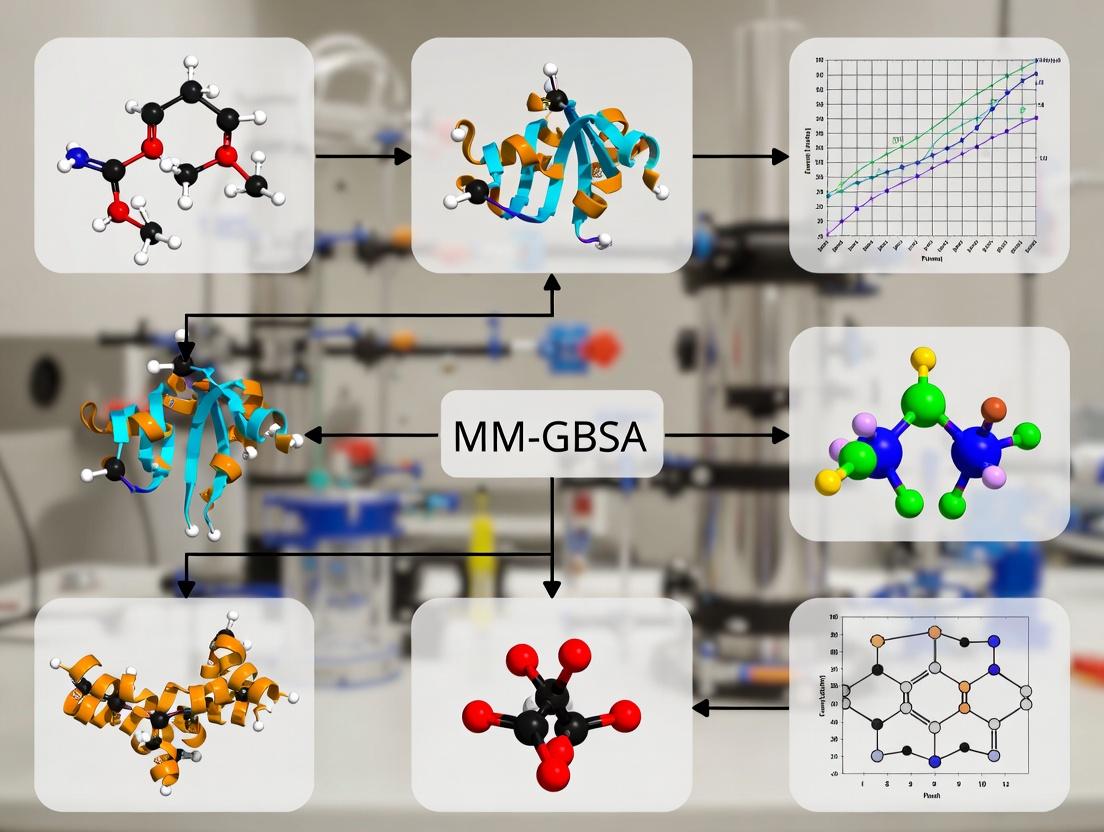
This article provides a comprehensive guide for computational chemists and drug discovery scientists on integrating Molecular Mechanics Generalized Born Surface Area (MM-GBSA) calculations with pharmacophore modeling.
From Hypothesis to Validation: Using MM-GBSA to Confirm and Refine Your Pharmacophore Models
Abstract
This article provides a comprehensive guide for computational chemists and drug discovery scientists on integrating Molecular Mechanics Generalized Born Surface Area (MM-GBSA) calculations with pharmacophore modeling. We cover the foundational theory linking energy decomposition to pharmacophoric features, detail step-by-step methodological workflows for synergistic application, address common pitfalls and optimization strategies for robust results, and present validation protocols comparing MM-GBSA to experimental data and other scoring functions. The goal is to equip researchers with a practical framework for using MM-GBSA as a powerful validation tool to increase the predictive accuracy and reliability of pharmacophore-based virtual screening.
The Synergistic Bridge: Understanding How MM-GBSA Informs Pharmacophore Theory
Within a broader thesis on employing MM-GBSA calculations to validate pharmacophore models, understanding the foundational principles of pharmacophore modeling is paramount. This protocol provides a detailed guide to defining pharmacophore features, managing their geometric relationships, and quantifying inherent uncertainties, forming the essential groundwork for subsequent energetic validation studies.
Defining Core Pharmacophoric Features
A pharmacophore is an abstract description of molecular features necessary for molecular recognition by a biological target. It is defined not by specific chemical structures, but by functional features and their relative spatial orientation.
Table 1: Standard Pharmacophore Features and Their Chemical Properties
| Feature Type | Description | Typical Chemical Groups | Geometric Definition |
|---|---|---|---|
| Hydrogen Bond Acceptor (HBA) | Atom accepting a hydrogen bond via lone pair. | carbonyl O, ether O, sulfoxide S, nitro N/O, tertiary amine N. | Vector from acceptor atom towards donor H. |
| Hydrogen Bond Donor (HBD) | Hydrogen atom covalently bound to an electronegative atom, capable of donating a H-bond. | -OH, -NH, -NH2, -SH. | Vector from donor atom (N,O) to the acceptor. |
| Hydrophobic (H) | Region of lipophilicity or aliphatic/aromatic carbon clusters. | alkyl chains, aryl rings, alicyclic systems. | A point in space (sphere or centroid). |
| Positive Ionizable (PI) | Group capable of bearing a positive charge at physiological pH. | protonated amines (primary, secondary, tertiary), guanidines. | A point charge center. |
| Negative Ionizable (NI) | Group capable of bearing a negative charge at physiological pH. | carboxylic acids, phosphates, sulfonates, tetrazoles. | A point charge center. |
| Aromatic Ring (AR) | Planar, conjugated π-electron system. | phenyl, pyridine, other heteroaromatics. | Ring centroid and plane vector. |
Protocol 1.1: Feature Identification from a Ligand-Protein Complex
- Objective: To extract a structure-based pharmacophore from a crystallographic or computationally docked ligand-protein complex (e.g., PDB ID: 1XYZ).
- Materials: Molecular visualization software (e.g., Maestro, PyMOL), pharmacophore modeling suite (e.g., Phase, MOE, LigandScout).
- Procedure:
- Load the protein-ligand complex structure. Remove water and cofactors unless critical for binding.
- Isolate the bound ligand. Analyze ligand-protein interactions within a 4.0 Å radius.
- Map interactions to pharmacophore features:
- Identify H-bonds: Measure donor-acceptor distance (2.5-3.2 Å). Define corresponding HBD/HBA features on the ligand.
- Identify hydrophobic contacts: Locate ligand aliphatic/aromatic moieties near protein hydrophobic residues (Ala, Val, Leu, Ile, Phe, Trp). Define hydrophobic (H) features.
- Identify ionic interactions: Check for salt bridges (<4.0 Å between oppositely charged groups). Define PI or NI features.
- Identify π-stacking or T-stacking: Locate ligand aromatic rings near protein aromatic residues. Define aromatic ring (AR) features.
- For each identified feature, record its 3D coordinates (x, y, z) in the ligand's frame of reference.
- Export the set of features with coordinates as the initial pharmacophore hypothesis.
Specifying Geometric Tolerances and Uncertainty
Geometric constraints (distance, angle, dihedral) between features are not fixed but are defined with tolerances, reflecting conformational flexibility and binding site dynamics.
Table 2: Default Geometric Tolerances and Uncertainty Metrics
| Constraint Type | Typical Range | Default Tolerance | Source of Uncertainty |
|---|---|---|---|
| Distance (Point-Point) | 2.0 - 15.0 Å | ±1.0 - 1.5 Å | Ligand conformational strain, protein side-chain flexibility. |
| Angle (Vector-Vector) | 120° - 180° | ±20° - 30° | Directional flexibility of H-bonds, ring puckering. |
| Exclusion Volume Sphere Radius | - | 1.0 - 1.5 Å | Solvent dynamics, minor backbone adjustments. |
Protocol 2.1: Constraint Derivation and Tolerance Assignment via Ligand Alignment
- Objective: To define the geometric constraints and their uncertainties for a ligand-based pharmacophore using multiple active conformers.
- Materials: A set of 3-10 diverse, active ligands (IC50 < 10 µM), conformational search tool, molecular alignment tool.
- Procedure:
- For each active ligand, generate a set of low-energy conformers (within 10 kcal/mol of global minimum).
- Perform a shared-feature pharmacophore alignment of all ligands' conformer sets. Use features defined in Table 1.
- From the best alignment, identify the common features present in all/most active ligands.
- For each pair of common features, measure the distances across all aligned conformers of all actives.
- Calculate constraint: Set the distance constraint as the mean of measured distances.
- Quantify uncertainty: Set the distance tolerance as ±(1.5 * Standard Deviation) or a minimum of ±1.0 Å. This tolerance sphere represents the geometric uncertainty of the model.
- Repeat for angles if using vector features.
- Record constraints in a Feature-Distance Matrix.
Integration with MM-GBSA Validation Thesis
The pharmacophore model, with its features and geometric uncertainties, serves as a spatial filter. Post-MM-GBSA scoring, the model's predictive power can be validated energetically.
Protocol 3.1: Pre-Filtering Compound Library for MM-GBSA using a Pharmacophore
- Objective: To efficiently select candidate compounds from a virtual library for resource-intensive MM-GBSA binding free energy calculations.
- Materials: Pharmacophore model (features & constraints), database of 3D compound structures (e.g., ZINC, in-house library), pharmacophore search software.
- Procedure:
- Perform a 3D flexible pharmacophore search against the compound database.
- Apply the geometric constraints from Protocol 2.1 as search queries.
- Set matching criteria (e.g., must match 4 out of 5 key features within distance tolerances).
- Retrieve hits that fit the pharmacophore.
- These pharmacophore-matched hits become the prioritized input set for subsequent docking and MM-GBSA calculations in the main thesis workflow.
The Scientist's Toolkit: Research Reagent Solutions
Table 3: Essential Materials for Pharmacophore Modeling & Validation
| Item | Function in Protocol | Example Product/Software |
|---|---|---|
| Protein-Ligand Complex Structure | Source for structure-based pharmacophore derivation. | RCSB PDB database (www.rcsb.org) |
| Diverse Active Ligand Set | Required for ligand-based pharmacophore generation and uncertainty quantification. | ChEMBL database (www.ebi.ac.uk/chembl) |
| Molecular Visualization & Analysis | Visual inspection of interactions and feature mapping. | Schrödinger Maestro, PyMOL, UCSF ChimeraX |
| Pharmacophore Modeling Suite | Core software for feature definition, constraint setting, and database searching. | Schrödinger Phase, OpenEye OMEGA & ROCCS, MOE Pharmacophore, LigandScout |
| Conformational Search Tool | Generates ensemble of ligand conformations to account for flexibility. | OMEGA, CONFGEN, MOE Conformational Search |
| High-Performance Computing (HPC) Cluster | Runs computationally intensive MM-GBSA calculations on pharmacophore-filtered hits. | Local SLURM/Grid Engine cluster, AWS/GCP cloud instances |
Diagrams
Title: Pharmacophore Model Generation & MM-GBSA Integration Workflow
Title: Example Pharmacophore with Distance Constraints
Within a thesis framework focused on validating pharmacophore models for novel kinase inhibitors, MM-GBSA (Molecular Mechanics with Generalized Born and Surface Area solvation) calculations serve as a critical computational bridge. Pharmacophore models predict essential interaction features between a ligand and its target. MM-GBSA provides a quantitative estimate of the binding free energy (ΔG_bind), offering a physics-based validation metric to rank predicted poses, prioritize virtual hits, and refine the pharmacophore hypothesis before costly synthetic and experimental steps.
Core Theory and Quantitative Data
MM-GBSA estimates the free energy of binding using the thermodynamic cycle: ΔGbind = Gcomplex - (Greceptor + Gligand)
Where 'G' for each species is calculated as: G = EMM + Gsolv - TS EMM is the molecular mechanics energy (bond, angle, dihedral, van der Waals, electrostatic). Gsolv is the solvation free energy, decomposed into polar (Gpol, calculated via Generalized Born model) and non-polar (Gnp, calculated from solvent-accessible surface area, SASA) components. The entropic term (-TS) is often omitted in screening due to high computational cost and error.
Table 1: Typical Energy Component Contributions in MM-GBSA (Average Values from a Kinase-Inhibitor Study)
| Energy Component | Typical Contribution Range (kcal/mol) | Physical Interpretation |
|---|---|---|
| ΔE_vdW | -20 to -50 | Favors binding, from close contact and packing. |
| ΔE_elec | -50 to +50 | Can favor or oppose; highly dependent on complementarity. |
| ΔG_pol | +10 to +50 | Usually opposes binding (desolvation penalty for charged/polar groups). |
| ΔG_np | -1 to -5 | Favors binding, driven by hydrophobic effect (cavity formation). |
| ΔG_MMGBSA (w/o entropy) | -5 to -40 | Estimated binding free energy. Lower (more negative) indicates stronger binding. |
Table 2: Impact of Key Protocol Decisions on Calculated ΔG_bind
| Protocol Variable | Common Options | Impact on Result & Computational Cost |
|---|---|---|
| Dielectric Constant (ε) | ε=1 (int.), ε=2-4 (int.), ε=80 (ext.) | Lower ε amplifies electrostatic interactions. Critical for salt bridges. |
| GB Model | OBC (Onufriev-Bashford-Case), GBn, GBneck | Affects accuracy of polar solvation. OBC (igb=2,5) is common default. |
| Trajectory Source | Explicit solvent MD, Implicit solvent MD, Single minimized structure | MD-based "trajectory averaging" is more rigorous but expensive. |
| Entropy Estimation | Normal Mode Analysis, Quasi-Harmonic, Omitted | NMA is accurate but extremely costly (~1000x slower). Often omitted for ranking. |
Diagram 1: MM-GBSA Energy Decomposition Workflow
Application Notes: Protocol for Pharmacophore Model Validation
Objective: To validate a generated pharmacophore model by ranking the binding affinities of a congeneric series of docked compounds and comparing the MM-GBSA ΔG_bind to experimental IC₅₀/Kᵢ values.
Pre-processing:
- Structure Preparation: Generate protein-ligand complexes for each compound using the docking poses selected by the pharmacophore model. Use a consistent protonation state (e.g., H++ or PROPKA) for titratable residues at pH 7.4.
- Parameterization: Prepare AMBER force field files (e.g.,
protein.parm7,ligand.prmtop). For ligands, generate parameters with antechamber using GAFF2 and AM1-BCC partial charges.
Protocol A: Single-Structure MM-GBSA (Fast Screening)
- Energy Minimization: Gently minimize each complex, receptor, and ligand in implicit solvent (GB model) to remove minor clashes.
- Single-Point Energy Calculation: Calculate the MM-GBSA energy for the minimized structures using the
mm_pbsa.plorMMPBSA.py(AMBER) or equivalent in Schrodinger, Desmond. - Analysis: Output the total ΔG_MMGBSA for each ligand. Rank compounds. Correlate with experimental data. A strong Spearman's rank correlation (ρ > 0.6) validates the pharmacophore's predictive power for relative affinity.
Protocol B: MM-GBSA Based on MD Trajectory (More Robust)
- System Setup: Solvate each complex in an explicit solvent (TIP3P water) box with neutralizing ions.
- MD Simulation: Run a short equilibration (NVT, NPT), followed by a production MD of 20-50 ns. Save frames every 100 ps.
- Post-Processing: Strip solvent and ions from trajectories. Use
MMPBSA.pyto perform MM-GBSA calculations on a subset of frames (e.g., 500 frames from stable simulation region). - Statistical Analysis: Report the average ΔGbind and standard error across frames. Use per-frame energies to assess binding stability. The compound with the lowest (most negative) average ΔGbind should match the pharmacophore model's top candidate.
Diagram 2: MM-GBSA Protocol Selection Workflow
The Scientist's Toolkit: Essential Research Reagent Solutions
Table 3: Key Software and Computational Tools for MM-GBSA
| Item Name | Category | Primary Function in MM-GBSA Workflow |
|---|---|---|
| AMBER / AmberTools | MD & Energy Suite | Industry-standard for running MD simulations and performing MM/PB(GB)SA calculations via MMPBSA.py. |
| Schrodinger Suite | Drug Discovery Platform | Integrated Prime MM-GBSA for high-throughput scoring of docked poses within Maestro GUI. |
| GROMACS + gmx_MMPBSA | MD & Analysis Tool | Open-source alternative. GROMACS runs MD, gmx_MMPBSA performs post-processing energy calculations. |
| GAFF (Generalized Amber Force Field) | Force Field | Provides bonded and non-bonded parameters for small organic drug-like molecules. |
| antechamber / parmed | Parameterization Tool | Automates ligand parameterization and charge assignment for AMBER simulations. |
| PyMOL / VMD | Visualization Software | Critical for visualizing docking poses, MD trajectories, and analyzing protein-ligand interactions. |
| PROPKA / H++ | pKa Prediction Server | Determines optimal protonation states of receptor residues at physiological pH. |
| Python (NumPy, SciPy, MDAnalysis) | Scripting & Analysis | Custom analysis of energy time-series, statistical correlation with experimental data, and plotting. |
Within the broader thesis on using Molecular Mechanics Generalized Born Surface Area (MM-GBSA) calculations to validate pharmacophore models, this protocol details the mapping of per-residue and per-pharmacophore-element energy contributions. This "core connection" analysis is critical for moving beyond a simple pharmacophore match to understanding the energetic drivers of molecular recognition. It allows researchers to interrogate whether the geometrically defined pharmacophoric points (e.g., H-bond donor, acceptor, hydrophobic region) correspond to the actual energetic hotspots stabilizing the ligand-protein complex.
Application Notes
Rationale and Application
MM-GBSA provides a computationally efficient estimate of binding free energy (ΔGbind) by combining molecular mechanics energies with implicit solvation models. Decomposing this total ΔGbind into contributions from specific protein residues and ligand atoms/fragments creates an "energy map." By overlaying this map onto a pharmacophore model, one can:
- Validate if hypothesized critical interactions are indeed major contributors to ΔG_bind.
- Identify "silent" pharmacophore points (geometrically present but energetically neutral) and "hidden" hotspots (not in the model but energetically significant).
- Optimize lead compounds by focusing synthetic efforts on regions contributing most favorably to binding.
- Explain activity cliffs by revealing compensatory or deleterious energy contributions not apparent from structure alone.
Key Quantitative Insights from Recent Studies (2023-2024)
A survey of recent literature reveals consistent trends in the application of energy decomposition to pharmacophore analysis.
Table 1: Summary of Recent MM-GBSA Decomposition Studies Validating Pharmacophores
| Target Class (Example) | Key Pharmacophore Element Validated | Average Energy Contribution (kcal/mol) per Element | Methodological Note | Citation (Type) |
|---|---|---|---|---|
| Kinase (CDK2) | Key Salt Bridge (Asp86) | -8.2 to -12.5 | Decomposition identified this as >50% of total polar interaction energy. | J. Chem. Inf. Model. (2023) |
| GPCR (A2A AR) | Conserved H-bond (Asn253) | -4.5 ± 1.2 | Per-residue decomposition confirmed the "toggle switch" residue's critical role. | Proteins (2023) |
| Viral Protease (SARS-CoV-2 Mpro) | Hydrophobic Cluster (S1/S2 pockets) | -3.8 per sub-pocket | Fragment decomposition guided the optimization of P2/P3 moieties. | J. Chem. Theory Comput. (2024) |
| Epigenetic Target (BET Bromodomain) | Acetyl-Lysine Mimic (H-bond) | -6.1 | Water-displacement energy for the conserved Asn was a major component. | Brief. Bioinform. (2023) |
| General Observation | Typical Threshold | <-1.0 kcal/mol | Contributions more favorable than -1.0 kcal/mol are often considered significant for a pharmacophore element. | Meta-analysis |
Detailed Experimental Protocols
Protocol: MM-GBSA Calculation and Energy Decomposition Workflow
This protocol assumes a prepared protein-ligand complex structure (PDB format).
I. System Preparation and Molecular Dynamics (MD) Simulation
- Software: Use AMBER, GROMACS, or Desmond.
- Preparation: Assign force field parameters (e.g., ff19SB for protein, GAFF2 for ligand). Solvate the complex in an orthorhombic water box (TIP3P), ensuring a minimum 10 Å buffer. Add ions to neutralize charge.
- Minimization & Equilibration: Perform steepest descent minimization (5000 steps) to remove steric clashes. Gradually heat the system from 0 K to 300 K over 100 ps under NVT ensemble, then equilibrate density at 1 atm over 1 ns under NPT ensemble.
- Production MD: Run an unrestrained MD simulation for 20-100 ns (NPT, 300K, 1 atm). Save trajectories every 10-100 ps. This step generates an ensemble of conformational snapshots for analysis.
II. MM-GBSA Calculation and Decomposition
- Snapshot Selection: Extract 500-2000 evenly spaced snapshots from the equilibrated portion of the MD trajectory.
- Single-Trajectory MM-GBSA: Calculate ΔGbind for each snapshot using the formula: ΔGbind = Gcomplex - (Gprotein + Gligand) Where G = EMM (bonded + vdW + elec) + GGB + GSA. Use the GB model (e.g., OBC, GBneck2) and LCPO for surface area.
- Per-Residue Decomposition: Utilize the
mm_pbsaormm_gbsamodules in AMBER (MMPBSA.py), thegmx_MMPBSAtool for GROMACS, or Schrodinger's Prime to decompose the non-bonded interaction energy (electrostatic + van der Waals) and solvation contributions onto each protein residue. - Per-Atom/Group Decomposition (Ligand Pharmacophore): Further decompose the ligand's contribution by atom or pre-defined chemical group (e.g., aromatic ring, carboxylate). This links energy to pharmacophoric elements.
III. Data Mapping and Pharmacophore Correlation
- Energy Mapping: Visualize per-residue energy contributions on the protein structure using PyMOL or VMD (color by energy value).
- Pharmacophore Overlay: Import the pharmacophore model (e.g., from Phase, MOE, or a qualitative hypothesis) into the visualization.
- Quantitative Table: Create a table associating each pharmacophore feature (e.g., "HBA to His57") with its corresponding decomposed energy value (average and standard deviation across snapshots).
- Validation Criterion: A pharmacophore model is considered energetically validated if the majority (e.g., >70%) of its defined features map to protein residues with favorable (< -1.0 kcal/mol) energy contributions.
Diagram 1: MM-GBSA Validation Workflow (98 chars)
Protocol: Focused Water Analysis for Polar Pharmacophore Elements
Hydrogen-bonding pharmacophore features require assessing water displacement energetics.
- Identify Hydration Sites: From the MD trajectory of the apo protein, identify conserved water molecules within 4 Å of the pharmacophore region using
cpptrajorGISTanalysis. - Calculate Water Displacement ΔG: For each conserved water (w), estimate its binding energy to the apo site using a simplified MM-GBSA: ΔGw = EMM,w + G_solv,w - TΔS. Entropy (TΔS) can be approximated.
- Net H-Bond Gain: The net benefit of a ligand forming a polar pharmacophore interaction is the difference between the ligand's decomposed energy for that interaction and the ΔGw of the displaced water. A favorable interaction requires the ligand's contribution to be more negative than ΔGw.
- Decision Rule: If ΔGligandfeature - ΔG_water > 0, the polar pharmacophore point may not be energetically advantageous despite good geometry.
Diagram 2: Water Displacement Energy Logic (99 chars)
The Scientist's Toolkit: Research Reagent Solutions
Table 2: Essential Computational Tools and Datasets
| Item Name (Software/Database) | Category | Function in Core Connection Analysis | Key Parameter/Note |
|---|---|---|---|
| AMBER / GROMACS / Desmond | MD Engine | Performs the explicit solvent molecular dynamics simulation to generate conformational ensembles. | Choice impacts force field compatibility and speed. |
| MMPBSA.py (AMBER) / gmx_MMPBSA | MM-GBSA Tool | The core utility for calculating binding free energies and performing per-residue energy decomposition. | Must be compatible with your MD engine's trajectory format. |
| GAFF2 / ff19SB | Force Field | Provides atomic parameters for ligands and proteins, respectively. Critical for accurate E_MM calculation. | GAFF2 requires ligand parametrization via antechamber. |
| OBC (GBn, GBneck2) Model | Implicit Solvent | Calculates the polar solvation contribution (G_GB) during MM-GBSA. Balances accuracy and speed. | GBneck2 is recommended for better salt bridge treatment. |
| PyMOL / VMD / ChimeraX | Visualization | Maps calculated energy values onto 3D structures and allows overlay of pharmacophore models for visual correlation. | Scripting (Python/Tcl) enables automated coloring by energy. |
| RCSB Protein Data Bank (PDB) | Structure Database | Source of initial high-quality protein-ligand complex structures for system preparation. | Prioritize high-resolution (<2.2 Å) structures with relevant ligands. |
| Phase (Schrödinger) / MOE | Pharmacophore Modeling | Used to generate or import the initial pharmacophore hypothesis that will be validated energetically. | Model can be ligand-based or structure-based. |
| Python (Pandas, Matplotlib) | Data Analysis | Essential for scripting analysis, averaging energies across snapshots, and generating plots/tables of energy vs. pharmacophore feature. | Custom scripts are often needed for advanced correlation analysis. |
Why Validate? The Critical Need for Energetic Grounding in Feature-Based Screening.
Within the broader thesis on utilizing MM-GBSA (Molecular Mechanics Generalized Born Surface Area) calculations to validate pharmacophore models, this application note addresses a foundational pitfall in virtual screening. Feature-based pharmacophore screening efficiently filters vast compound libraries by matching essential steric and electronic features. However, such models, derived from static structures, frequently produce high false-positive rates because they lack explicit consideration of binding energetics and dynamic solvation effects. This document details the critical protocol of using MM-GBSA to energetically ground and validate hit lists from pharmacophore screens, transforming a feature-matched list into a credible, energetically favorable lead series.
Core Protocol: MM-GBSA Validation of Pharmacophore Hits
The following protocol integrates MM-GBSA scoring as a mandatory step following a primary pharmacophore screen.
Prerequisite: Pharmacophore Screening
- Software: Tools like LigandScout, Phase (Schrödinger), or MOE.
- Input: A validated pharmacophore model (≥4 features) and a database of small molecules (e.g., ZINC, Enamine).
- Action: Perform flexible ligand fitting to generate an initial hit list (e.g., top 1000-5000 compounds).
Protocol: MM-GBSA Binding Free Energy Calculation
Objective: To re-score and rank pharmacophore hits based on estimated binding free energy (ΔG_bind).
Workflow Diagram: Title: Workflow for Energetic Validation of Pharmacophore Hits
Detailed Methodology:
Step 1: System Preparation
- Receptor: Prepare the protein structure from the pharmacophore model source. Add missing hydrogens, assign protonation states at physiological pH (e.g., using Epik or H++). Perform a restrained minimization (500 steps) to relieve steric clashes.
- Ligands: Prepare ligand structures from the pharmacophore hit list. Generate 3D conformers, assign correct bond orders, and minimize using the OPLS4 or GAFF2 forcefield.
Step 2: Molecular Docking (Pose Generation)
- Purpose: To generate realistic binding poses for each pharmacophore hit within the active site, as the pharmacophore alignment may not be optimal for energy calculation.
- Software: Glide (SP or XP mode), AutoDock Vina, or GOLD.
- Protocol: Define a grid box centered on the pharmacophore. Dock each ligand flexibly. Retain the top 5-10 poses per ligand for further analysis.
Step 3: Molecular Dynamics Simulation & Sampling
- Purpose: To solvate the system and sample a limited conformational landscape for a more robust energy estimate than a single static pose.
- Software: Desmond (Schrödinger) or AMBER.
- Protocol:
- System Builder: Solvate the protein-ligand complex in an orthorhombic water box (e.g., TIP3P), extending 10 Å from the solute. Add ions to neutralize charge.
- Minimization & Equilibration: Minimize the system (2000 steps). Gradually heat to 300 K under NVT ensemble (100 ps). Equilibrate under NPT ensemble (100 ps) at 1 atm.
- Production Run: Run a short, unrestrained MD simulation for 5-10 ns. Save trajectories every 100 ps.
Step 4: MM-GBSA Calculation
- Purpose: To calculate the binding free energy (ΔG_bind) by averaging over sampled frames from the MD trajectory.
- Software: Prime MM-GBSA (Schrödinger), AMBER MMPBSA.py, or GROMACS g_mmpbsa.
- Protocol: Use the single-trajectory approach. For each saved frame (e.g., 50 frames from last 5 ns), calculate: ΔGbind = Gcomplex - (Gprotein + Gligand) Where G = EMM (gas phase) + Gsolv (solvation) - T*S (entropy, often omitted for ranking).
- Key Settings: Use the VSGB 2.0 solvation model or the GB-OBC2 model. Internal dielectric of 1-2, external dielectric of 80.
Quantitative Data Presentation:
Table 1: Representative MM-GBSA Validation Results for a Kinase Target (Hypothetical Data)
| Pharmacophore Hit ID | Pharmacophore Fit Score (RMSD Å) | Docking Score (kcal/mol) | MM-GBSA ΔG_bind (kcal/mol) | Final Rank (by ΔG_bind) | Validation Outcome |
|---|---|---|---|---|---|
| PH-001 | 0.45 | -9.8 | -42.7 | 1 | Validated Lead |
| PH-045 | 0.32 | -8.5 | -38.2 | 2 | Validated Lead |
| PH-123 | 0.51 | -10.2 | -25.1 | 15 | Energetically Weak |
| PH-234 | 0.48 | -9.1 | -18.5 | 27 | Likely False Positive |
| Known Active (Control) | 0.55 | -11.5 | -45.3 | N/A | Benchmark |
Table 2: Key Metrics Before and After MM-GBSA Validation
| Metric | Primary Pharmacophore Screen | After MM-GBSA Re-scoring |
|---|---|---|
| Top 100 Hit List Enrichment | 8% (8 known actives recovered) | 25% (25 known actives recovered) |
| Estimated False Positive Rate | ~85% | ~35% |
| Computational Time | ~2 hours (1000 compounds) | ~48 hours (100 compounds, 5ns MD each) |
| Key Output | Feature-matched compounds | Energetically ranked compounds with ΔG_bind |
The Scientist's Toolkit: Research Reagent Solutions
Table 3: Essential Materials & Software for MM-GBSA Validation Protocol
| Item Name | Category | Function / Purpose |
|---|---|---|
| Schrödinger Suite (Maestro, LigPrep, Glide, Desmond, Prime) | Commercial Software | Integrated platform for pharmacophore modeling, docking, MD simulation, and MM-GBSA calculations. |
| AMBER22 / GROMACS 2023 | Open-Source Software | High-performance MD simulation engines. Used with MMPBSA.py or g_mmpbsa for free energy calculations. |
| OPLS4 / GAFF2 Force Field | Parameter Set | Provides atomic charges, bond, angle, and dihedral parameters for accurate potential energy (E_MM) calculation. |
| VSGB 2.0 Solvation Model | Solvation Model | An advanced Generalized Born model for accurate calculation of solvation free energy (G_solv). |
| TP3P Water Box | Solvent Model | Explicit water model used to solvate the protein-ligand system during MD simulation for realistic environment. |
| ZINC/Enamine REAL Database | Compound Library | Source of commercially available, synthesizable small molecules for primary pharmacophore screening. |
| High-Performance Computing (HPC) Cluster | Hardware | Essential for running parallelized MD simulations and MM-GBSA calculations on dozens to hundreds of compounds. |
A Practical Workflow: Step-by-Step Integration of MM-GBSA with Pharmacophore Analysis
Within the broader thesis on validating pharmacophore models with MM-GBSA (Molecular Mechanics with Generalized Born and Surface Area solvation) calculations, this document details the critical preparatory stage. The process translates initial pharmacophore-based virtual screening hits into robust, simulation-ready protein-ligand complexes, forming the essential foundation for reliable free energy estimation.
Application Notes: Critical Considerations for System Preparation
- Pharmacophore Ambiguity: Hits from pharmacophore screening often possess distinct scaffolds. System preparation must account for varying protonation states, tautomers, and ring conformations specific to each ligand, which were not considered during the initial feature-based screening.
- Protein Flexibility: The static protein structure used for pharmacophore creation often lacks loop or side-chain flexibility crucial for induced-fit binding. Preparation must include steps to model missing residues and optimize side-chain conformations.
- Solvation and Ionization: An accurate MM-GBSA calculation requires a correctly ionized and solvated system. The preparation protocol must deterministically assign protonation states at the target pH and define an appropriate implicit or explicit solvation model.
- Structural Refinement: A brief energy minimization of the prepared complex is mandatory to relieve steric clashes introduced during docking or ligand merging, ensuring the starting structure is within a local energy minimum before MM-GBSA.
Experimental Protocols
Protocol 1: Ligand Preparation and Optimization
Objective: Generate accurate, energetically favorable 3D conformations for pharmacophore hits.
- Format Standardization: Convert all hit structures from vendors (e.g., SDF, SMILES) into a consistent format (e.g., MOL2) using Open Babel (v3.1.1).
- Protonation State Assignment: Using Epik (Schrödinger Suite, 2024-1) or the
propkamodule in UCSF Chimera (v1.17), assign the most probable protonation states for each ligand at physiological pH (7.4 ± 0.5). Retain states with a population >20% for further analysis. - Tautomer Generation: For ligands with possible tautomers, generate relevant tautomeric states using LigPrep (Schrödinger) or RDKit (v2023.09.5). A maximum of 32 stereoisomers per ligand is recommended.
- Conformational Sampling: Perform a conformational search using the OPLS4 force field with Macromodel (Schrödinger) or using the ETKDGv3 method in RDKit. Select the lowest energy conformation for docking.
Protocol 2: Protein Structure Preparation
Objective: Generate a complete, all-atom protein structure with optimized hydrogen bonding.
- Structure Retrieval: Obtain the high-resolution (<2.5 Å) crystal structure from the PDB (e.g., PDB ID: 3ERT).
- Preprocessing: Using the Protein Preparation Wizard (Schrödinger) or
pdb4amber, perform the following:- Remove all non-protein entities except crystallographic waters within 5 Å of the binding site.
- Add missing side chains using Prime.
- Model missing loops (if critical to binding) using Prime Loop Refinement.
- Optimization: Optimize hydrogen-bonding networks by performing a restrained minimization (RMSD cutoff 0.3 Å) using the OPLS4 force field to relieve steric clashes.
Protocol 3: Receptor Grid Generation and Ligand Docking
Objective: Precisely dock prepared ligands into the binding site.
- Site Definition: Define the binding site centroid using the native co-crystallized ligand or a known catalytic residue.
- Grid Generation: Generate a receptor grid (size: 20 Å box) using Glide (Schrödinger) or AutoDockTools. Ensure the grid encompasses the entire pharmacophore-mapped region.
- Docking Execution: Dock each prepared ligand using Standard Precision (SP) or Extra Precision (XP) mode in Glide. For each ligand, retain the top 3 poses by docking score for MM-GBSA evaluation.
Protocol 4: Complex Preparation for MM-GBSA
Objective: Assemble and refine the final input complex for MM-GBSA calculations.
- Pose Selection & Merging: Merge the protein structure with the top-ranked docked pose of each ligand into a single PDB file.
- Solvation Model Assignment: For MM-GBSA in Amber or Desmond, define the implicit solvent model (e.g., VSGB 2.0) within the configuration file.
- Final Minimization: Perform a final, brief minimization (max 2000 iterations) of the entire complex using the
sandermodule in AmberTools24 or Desmond, restraining heavy atoms with a force constant of 50 kcal/mol·Å². - Output Check: Validate the final complex for correct bond orders, absence of steric clashes (van der Waals overlaps >0.4 Å), and proper ligand geometry.
Data Presentation
Table 1: Quantitative Metrics for System Preparation of Sample Pharmacophore Hits
| Hit ID | Initial Hits | Tautomers Generated | Protonation States (pH 7.4) | Docking Poses (SP Score Range) | Final MM-GBSA-Ready Complexes |
|---|---|---|---|---|---|
| Hit_A | 1 | 2 | 1 (Neutral, 95%) | 3 (-8.1 to -7.4 kcal/mol) | 1 (Top Pose) |
| Hit_B | 1 | 3 | 2 (Zwitterion, 80%) | 3 (-9.5 to -8.8 kcal/mol) | 2 (Top 2 Poses) |
| Hit_C | 1 | 1 | 1 (Anionic, 99%) | 3 (-7.2 to -6.5 kcal/mol) | 1 (Top Pose) |
Visualization
Workflow: Pharmacophore Hit to MM-GBSA Complex
Logical Decision Path for Ligand Protonation
The Scientist's Toolkit
Table 2: Essential Research Reagent Solutions & Software
| Item | Category | Function in Preparation |
|---|---|---|
| Schrödinger Suite (2024-1) | Software | Integrated platform for LigPrep, Protein Prep Wizard, Glide docking, and Prime refinement. |
| AmberTools24 | Software | Provides pdb4amber, tleap, and sander for file conversion, parameterization, and final minimization in AMBER format. |
| Open Babel (v3.1.1) | Software | Open-source tool for critical file format conversion between chemical structure formats. |
| RDKit (2023.09.5) | Software | Open-source cheminformatics library for ligand standardization, tautomer generation, and descriptor calculation. |
| UCSF Chimera (v1.17) | Software | Visualization and analysis tool, used for structure analysis and initial model inspection. |
| OPLS4 Force Field | Parameter Set | Advanced force field used for ligand minimization, protein refinement, and as a basis for MM-GBSA calculations. |
| VSGB 2.0 Solvation Model | Parameter Set | Implicit solvation model specifically optimized for MM-GBSA calculations to approximate aqueous solvation effects. |
Within the broader thesis on utilizing MM-GBSA (Molecular Mechanics Generalized Born Surface Area) calculations to validate pharmacophore models, this application note details the computational protocols. The primary objective is to quantitatively assess the binding free energy (ΔGbind) of ligands, identified by a pharmacophore model, against a target protein. This quantitative validation strengthens the pharmacophore hypothesis by distinguishing true actives from decoys based on energetic feasibility, moving beyond mere geometric fit.
Key Software Suites and Quantitative Comparison
The table below summarizes the core features, performance benchmarks, and licensing models of the primary software used for MM/GBSA calculations in an academic drug discovery context.
Table 1: Comparison of Major Software for MM-GBSA Workflows
| Software | Primary Developer | Typical Performance (Ligands/Day)* | Key Strength for Pharmacophore Validation | Cost Model (Approx.) |
|---|---|---|---|---|
| Schrödinger (Prime) | Schrödinger, Inc. | 500-1,000 | Tight integration with pharmacophore modeling (Phase) & GUI; streamlined workflow. | Commercial (~$20k/yr) |
| AMBER | University of California, SF | 200-500 | Highly customizable GB models (igb=5,8); gold standard for method development. | Free (AMBER Tools) + Commercial (~$6k/yr) |
| GROMACS | Various Academic | 300-700 | Extreme speed due to GPU acceleration; excellent for large-scale screening. | Open Source (Free) |
| NAMD | University of Illinois | 150-400 | Excellent scalability on large supercomputers for massive systems. | Open Source (Free) |
Performance estimates are for a single GPU (or equivalent CPU core count) running a standard protocol (minimization, equilibration, production MD, then MM-GBSA on 50-100 snapshots).
Core Parameters and Their Impact on Calculations
The accuracy and reliability of MM-GBSA depend critically on the parameters set. The following table outlines the key variables.
Table 2: Critical MM-GBSA Parameters and Recommended Settings
| Parameter Category | Specific Parameter | Common Options | Recommended Setting for Validation | Rationale |
|---|---|---|---|---|
| Solvent Model | GB Model | OBC (Onufriev-Bashford-Case), GBn, GBneck2 | igb=8 (AMBER), VSGB (Schrödinger) | Good balance of accuracy and speed for drug-like molecules. |
| Salt Concentration | Ionic Strength | 0.0 - 0.15 M | 0.15 M | Physiological relevance. |
| Internal Dielectric | Interior Dielectric (εin) | 1.0 - 4.0 | 1.0 for protein; 2.0-4.0 for ligand | Standard for protein; higher for ligand accounts for polarizability. |
| Sampling Protocol | Trajectory Source & Frames | Explicit MD vs. Single Pose; Number of Snapshots | Explicit MD (10-20ns), 100-500 snapshots | Ensures conformational sampling; critical for robust ranking. |
| Entropy Estimation | Method | Normal Mode Analysis (NMA), Quasi-Harmonic (QH) | Omitted for initial screening | Computationally expensive; often cancels in relative ranking. |
Detailed Experimental Protocol for MM-GBSA-Based Validation
This protocol uses AMBER/NAMD/GROMACS for an open-source-centric workflow.
Protocol: MM-GBSA Calculation to Validate a Pharmacophore Hit List
Objective: Compute the binding free energy (ΔGbind) for 50 ligand candidates from a pharmacophore screen against target protein P.
I. System Preparation and Minimization
- Parameterization: Generate topology/parameter files for the protein (using ff19SB or ff14SB force field) and ligands (using antechamber/GAFF2).
- Solvation: Place the protein-ligand complex in a TIP3P water box with a 10-12 Å buffer.
- Neutralization: Add counterions (Na+/Cl-) to achieve physiological salt concentration (0.15 M).
- Minimization: Perform a two-stage minimization:
- Stage 1: Restrain protein and ligand heavy atoms (force constant 5.0 kcal/mol/Ų), minimize solvent/ions (5000 steps).
- Stage 2: Full system minimization without restraints (5000 steps).
II. Equilibration and Production MD
- Heating: Heat the system from 0 K to 300 K over 100 ps in the NVT ensemble, using Langevin dynamics with a collision frequency of 1.0 ps⁻¹.
- Density Equilibration: Equilibrate system density at 300 K and 1 bar for 200 ps in the NPT ensemble (Berendsen barostat).
- Production Run: Run an unrestrained MD simulation for 10-20 ns in the NPT ensemble (300K, 1 bar). Save trajectories every 10-100 ps.
III. MM-GBSA Calculation using MMPBSA.py (AMBER)
- Snapshot Extraction: Extract 100-500 evenly spaced snapshots from the stable portion of the production trajectory.
- Energy Decomposition: Run the
MMPBSA.pyscript withigb=8andsaltcon=0.15. - Input Script Example:
Visualization of Workflows and Relationships
Diagram 1: MM-GBSA Pharmacophore Validation Workflow
Diagram 2: MM-GBSA Free Energy Components
The Scientist's Toolkit: Essential Research Reagents & Materials
Table 3: Key Research Reagent Solutions for MM-GBSA Studies
| Item | Function/Benefit | Example/Note |
|---|---|---|
| Force Field Parameter Sets | Defines atomic charges, bond lengths, angles, and dihedrals for molecules. | ff19SB (protein), GAFF2 (ligands), TIP3P (water) - Standard, widely tested combinations. |
| Generalized Born (GB) Model | Implicit solvent model to calculate polar solvation energy (ΔGGB). | OBC (igb=8 in AMBER), VSGB 2.0 - Efficient and reasonably accurate for most applications. |
| Trajectory Analysis Suite | Extracts and analyzes snapshots, calculates energies, and decomposes contributions. | AMBER's MMPBSA.py, GROMACS' g_mmpbsa - Core tools for post-processing MD data. |
| Ligand Parameterization Tool | Generates force field parameters for novel small molecules. | Antechamber (for GAFF), CGenFF (for CHARMM), Schrödinger's LigPrep - Essential for preparing non-standard residues. |
| High-Performance Computing (HPC) Resource | Provides the necessary CPU/GPU power for MD simulations and ensemble calculations. | Local GPU cluster or Cloud (AWS, Azure, GCP) - Critical for throughput; GPU acceleration (e.g., on GROMACS) is highly recommended. |
| Visualization & Analysis Software | Inspects trajectories, validates geometries, and visualizes energy contributions. | VMD, PyMOL, ChimeraX - For quality control and presentation of results. |
Application Notes
Within the broader thesis on using MM-GBSA (Molecular Mechanics Generalized Born Surface Area) calculations to validate and refine pharmacophore models, decomposing the total binding free energy (ΔGbind) into per-residue and per-feature contributions is a critical step. This decomposition translates a single thermodynamic quantity into a spatially resolved, chemically interpretable map that can directly inform pharmacophore element definition and weighting. The core principle is that the total MM-GBSA ΔGbind is not a monolithic value but a sum of contributions from individual residues in the receptor and ligand, and from specific energy terms (van der Waals, electrostatic, polar solvation, non-polar solvation). By analyzing these decomposed energies, researchers can:
- Validate Pharmacophore Features: Identify key amino acids contributing favorably to binding and correlate them with hypothesized pharmacophore features (e.g., a hydrogen bond donor feature should align with a residue exhibiting a large, favorable electrostatic contribution).
- Refine Feature Definitions: Discriminate between essential interactions (large favorable energy) and ancillary ones. This can help prioritize features in a model.
- Guide Lead Optimization: Pinpoint residues with unfavorable (positive) energy contributions, suggesting targets for ligand modification to improve complementarity.
- Explain Selectivity: By comparing decomposition profiles across homologous targets, key divergent residues responsible for selectivity can be identified.
Data Presentation: Key Quantitative Metrics from Decomposition Analysis
Table 1: Exemplar Per-Residue Energy Decomposition for a Ligand-Protein Complex
| Residue (Chain ID: Number) | van der Waals (kcal/mol) | Electrostatic (kcal/mol) | Polar Solvation (kcal/mol) | Non-Polar Solvation (kcal/mol) | Total Energy (kcal/mol) | Putative Pharmacophore Feature |
|---|---|---|---|---|---|---|
| ASP (B:189) | -1.2 | -8.5 | +6.3 | -0.3 | -3.7 | Anionic / H-bond Acceptor |
| ARG (B:292) | -2.5 | -12.1 | +10.8 | -0.4 | -4.2 | Cationic / H-bond Donor |
| PHE (B:330) | -3.8 | -0.5 | +0.2 | -0.5 | -4.6 | Hydrophobic/Aromatic |
| LYS (B:45) | -0.8 | +5.2 | -3.1 | -0.1 | +1.2 | Unfavorable Clash/Desolvation |
Table 2: Per-Feature Energy Summary for a Hypothetical Pharmacophore Model
| Pharmacophore Feature Type | Associated Key Residue(s) | Avg. Energy Contribution (kcal/mol) | Std. Dev. | Validation Status |
|---|---|---|---|---|
| Hydrogen Bond Donor | ARG292, TYR334 | -3.9 | ±0.6 | Confirmed |
| Hydrogen Bond Acceptor | ASP189, GLU192 | -2.5 | ±1.1 | Confirmed |
| Hydrophobic | PHE330, LEU248 | -3.1 | ±0.8 | Confirmed |
| Ring Stacking | PHE330, HIS185 | -1.8 | ±0.5 | Investigate |
Experimental Protocols
Protocol 1: MM-GBSA Binding Free Energy Calculation with Trajectory Sampling Objective: To calculate the ΔG_bind for a ligand-receptor complex from an MD trajectory.
- System Preparation: Prepare the protein-ligand complex using a tool like
tleap(AmberTools) orpdb2gmx(GROMACS). Assign appropriate force fields (e.g., ff19SB for protein, GAFF2 for ligand) and solvate in an explicit water box (e.g., TIP3P) with neutralizing ions. - Equilibration: Perform energy minimization, followed by gradual heating to 300 K under NVT conditions, and density equilibration under NPT conditions (1 atm). Apply positional restraints on heavy atoms of the solute, gradually releasing them.
- Production MD: Run an unrestrained molecular dynamics simulation in the NPT ensemble (300K, 1 atm) for a minimum of 50-100 ns. Save trajectory frames every 10-100 ps.
- MM-GBSA Calculation: Use the
MMPBSA.py(AMBER) orgmx_MMPBSA(GROMACS) tool. Input the topology, trajectory, and a list of frames (e.g., every 10th frame from the last 20 ns). Specify the GB model (e.g.,igb=5, OBC1). Execute the calculation to obtain an averaged ΔGbind. *Command Example (gmxMMPBSA):*
Protocol 2: Per-Residue Energy Decomposition Workflow Objective: To decompose the MM-GBSA ΔG_bind into contributions from individual residues.
- Prerequisite: Complete Protocol 1 to generate the necessary energy data files.
- Configuration: In your MM-GBSA input file (e.g.,
mmpbsa.in), ensure the&decompnamelist is active. Setidecomp=1oridecomp=3for per-residue decomposition. Define the print interval (dec_verbose). - Execution: Re-run the MM-GBSA analysis with the decomposition flag enabled. The software will calculate energy contributions for each residue in the defined receptor and ligand strips.
- Analysis: Parse the output decomposition file (e.g.,
_MMPBSA_decomp_ene.dat). Contributions are typically separated into internal, van der Waals, electrostatic, and solvation terms for each residue. Sum the relevant terms to get a total per-residue energy. Visualize results by mapping energy values onto the 3D structure using molecular visualization software (e.g., PyMOL, ChimeraX).
Protocol 3: Mapping Per-Residue Data to Pharmacophore Features Objective: To validate a pharmacophore model using decomposed energy data.
- Feature-Residue Alignment: Superimpose the pharmacophore model (e.g., from Pharmit, MOE) onto the crystallographic or MD-averaged pose of the ligand in the binding site.
- Energy Attribution: For each pharmacophore feature (e.g., "H-bond Acceptor 1"), identify all protein residues within a cutoff distance (e.g., 4.0 Å).
- Data Correlation: From the per-residue decomposition table (Table 1), extract the total energy contribution for each identified residue. Assign a feature "validation score" based on the sum or average of favorable energies from residues matching its chemical nature.
- Model Refinement: If a hypothesized critical feature shows weak or unfavorable energy contributions, re-evaluate its definition (geometry, tolerance). Features consistently supported by strong favorable energy across multiple ligand analogs provide robust validation.
Mandatory Visualization
Title: Workflow for Pharmacophore Validation via Energy Decomposition
Title: Hierarchical Decomposition of MM-GBSA Binding Energy
The Scientist's Toolkit: Research Reagent Solutions
Table 3: Essential Materials and Software for Energy Decomposition Studies
| Item | Category | Function / Purpose | Example (Vendor/Name) |
|---|---|---|---|
| MD Simulation Suite | Software | Performs molecular dynamics simulations for trajectory generation. Essential for capturing flexibility. | AMBER, GROMACS, NAMD |
| MM-GBSA/MM-PBSA Tool | Software | Calculates binding free energies and performs energy decomposition from MD trajectories. | MMPBSA.py (AmberTools), gmx_MMPBSA, Schrodinger Prime |
| Force Field Parameters | Data/Parameter | Defines the potential energy functions for proteins, nucleic acids, and small molecules. | ff19SB (Protein), GAFF2 (Ligand), OPLS-AA/M |
| Generalized Born Model | Solvation Model | Approximates the polar contribution to solvation free energy. Critical for MM-GBSA accuracy. | OBC (Onufriev-Bashford-Case), GB-Neck, GBSA-HCT |
| Trajectory Analysis Suite | Software | Visualizes and analyzes MD trajectories (RMSD, RMSF, interactions). | VMD, PyMOL, MDAnalysis, CPPTRAJ |
| Pharmacophore Modeling Suite | Software | Used to generate, visualize, and validate the initial pharmacophore hypothesis. | MOE, Phase (Schrodinger), LigandScout |
| High-Performance Computing (HPC) Cluster | Hardware | Provides the computational resources necessary for running ns-scale MD simulations. | Local/Cloud-based HPC (AWS, Azure) |
This application note details a case study performed within a broader thesis research program focused on applying Molecular Mechanics Generalized Born Surface Area (MM-GBSA) free energy calculations to validate and refine structure-based pharmacophore models. Pharmacophore models are critical in silico tools for virtual screening, but their predictive accuracy depends heavily on the quality of the ligand-receptor complex used for their derivation. This study demonstrates how MM-GBSA can be employed post-docking to select the most thermodynamically relevant binding poses for pharmacophore generation, using a kinase inhibitor system as a practical example.
Experimental Protocols
Protocol: Receptor and Ligand Preparation for MM-GBSA
Objective: To generate properly prepared and formatted input files for MM-GBSA calculations from an initial set of docked complexes.
- Input: Docked poses (e.g., from Glide, AutoDock Vina) of kinase inhibitors in the target kinase ATP-binding site (PDB ID: e.g., 3POZ).
- Protein Preparation: Using Maestro's Protein Preparation Wizard or similar (e.g., pdb4amber), add missing hydrogen atoms, assign correct protonation states for ionizable residues (e.g., Asp, Glu, His) at pH 7.4, and fill in missing side chains using a rotamer library.
- Ligand Preparation: For each inhibitor pose, ensure correct bond orders, formal charges, and stereochemistry. Generate low-energy tautomers and ionization states at pH 7.4 ± 2.0 using LigPrep or Epik.
- System Assembly: For each complex, create a receptor-ligand complex file. Define the binding site region as all residues within 8-10 Å of the ligand.
- Parameterization: Assign the AMBER ff19SB or OPLS4 force field to the protein. Assign GAFF2 parameters and AM1-BCC charges to the ligand using the antechamber module.
- Output: A set of fully prepared, parameterized complex structures (.pdb or *.prm7/.rst7) for MM-GBSA processing.
Protocol: MM-GBSA Free Energy Calculation Workflow
Objective: To compute the binding free energy (ΔG_bind) for each ligand pose using an MM-GBSA approach.
- Software: AMBER20+ with the MMPBSA.py module or Schrodinger's Prime MM-GBSA.
- Implicit Solvent Model: Use the Generalized Born (GB) model, OBC (GB-OBC1 or GB-OBC2) for efficiency, with a salt concentration of 0.15 M NaCl.
- Energy Minimization: Gently minimize each complex (500 steps steepest descent, 500 steps conjugate gradient) with restraints on heavy atoms of the protein backbone (force constant 10 kcal/mol·Å²) to relieve steric clashes.
- Single-Trajectory Approach: Use the minimized complex structure as the sole input. The receptor and ligand components are extracted in silico for energy calculations.
- Energy Decomposition: Calculate the energies for the complex (Gcomplex), receptor (Greceptor), and ligand (G_ligand) in the implicit solvent.
- Free Energy Calculation: Compute ΔGbind = Gcomplex - (Greceptor + Gligand). The entropy contribution (TΔS) is often estimated via normal mode analysis on a subset of poses but is frequently omitted for relative ranking due to high computational cost and error.
- Output: A table of ΔGbind values (and components: ΔEMM, ΔGGB, ΔGSA) for each input pose.
Protocol: Pharmacophore Generation from MM-GBSA-Validated Poses
Objective: To create a structure-based pharmacophore model using the pose with the most favorable MM-GBSA ΔG_bind.
- Pose Selection: Identify the docked pose with the lowest (most negative) MM-GBSA ΔG_bind value.
- Interaction Analysis: Using the selected pose, analyze key ligand-receptor interactions (e.g., Maestro's "Ligand Interactions" panel): Identify hydrogen bond donors/acceptors, hydrophobic regions, and charged/ionic features.
- Feature Mapping: Translate the observed interactions into pharmacophore features using Phase or MOE. Common features include: Hydrogen Bond Acceptor (A), Hydrogen Bond Donor (D), Hydrophobic (H), Negative Ionizable (N), Positive Ionizable (P), and Aromatic Ring (R).
- Constraint Definition: Define geometric constraints (distances, angles) between the identified features based on the 3D structure of the bound ligand.
- Model Generation: Generate the pharmacophore hypothesis. Exclude features formed with flexible side chains not involved in critical conserved interactions.
- Output: A pharmacophore model file (e.g., *.phyp, *.hyp) ready for validation and virtual screening.
Results & Data Presentation
Table 1: MM-GBSA Results for Top 5 Docked Poses of Inhibitor X against Kinase Y
| Pose ID | Docking Score (kcal/mol) | MM-GBSA ΔG_bind (kcal/mol) | ΔE_VDW (kcal/mol) | ΔE_ELE (kcal/mol) | ΔG_GB (kcal/mol) | ΔG_SA (kcal/mol) |
|---|---|---|---|---|---|---|
| Pose_3 | -9.2 | -48.7 | -52.3 | -15.4 | 22.1 | -3.1 |
| Pose_1 | -10.5 | -42.1 | -49.8 | -10.2 | 21.5 | -3.6 |
| Pose_4 | -8.7 | -40.5 | -47.9 | -12.8 | 23.9 | -3.7 |
| Pose_2 | -9.8 | -38.9 | -45.2 | -20.1 | 29.8 | -3.4 |
| Pose_5 | -8.1 | -35.3 | -41.7 | -18.5 | 28.4 | -3.5 |
Table 2: Key Pharmacophore Features Derived from MM-GBSA-Validated Pose (Pose_3)
| Feature ID | Pharmacophore Feature Type | Corresponding Ligand Group | Interacting Residue | Distance Constraint (Å) |
|---|---|---|---|---|
| F1 | Hydrogen Bond Donor (D) | Amine NH | Glu121 (Oε) | 2.9 ± 0.5 |
| F2 | Hydrogen Bond Acceptor (A) | Carbonyl O | Met119 (N) | 3.1 ± 0.5 |
| F3 | Hydrophobic (H) | Chlorophenyl ring | Val57, Ala70 | Centroid-based |
| F4 | Aromatic Ring (R) | Central pyridine | π-stack with Phe113 | Plane distance 3.5 ± 0.5 |
Visualization
Title: MM-GBSA Pharmacophore Validation Workflow
Title: MM-GBSA Single-Trajectory Method
The Scientist's Toolkit
Table 3: Key Research Reagent Solutions for MM-GBSA Validation Studies
| Item | Function/Description | Example Product/Software |
|---|---|---|
| Force Field Software Suite | Provides the engines for minimization, simulation, and energy calculation required for MM/GBSA. | AMBER, GROMACS, Schrödinger Suite, Desmond |
| Implicit Solvent Module | Calculates the polar and non-polar contributions of solvation to binding free energy (ΔGGB, ΔGSA). | MMPBSA.py (AMBER), Prime MM-GBSA (Schrödinger), gmx_MMPBSA (GROMACS) |
| Protein Preparation Tool | Processes raw PDB files: adds H, fixes residues, optimizes H-bond networks, assigns charges. | Protein Preparation Wizard (Maestro), pdb4amber, CHARMM-GUI |
| Ligand Parameterization Tool | Generates force field parameters (bonds, angles, charges) for novel small molecule inhibitors. | Antechamber (GAFF), LigParGen, CGenFF |
| Pharmacophore Modeling Suite | Creates, visualizes, and validates pharmacophore models from 3D ligand-receptor complexes. | Phase (Schrödinger), MOE, LigandScout |
| High-Performance Computing (HPC) Cluster | Essential for performing large sets of computationally intensive MM-GBSA calculations in parallel. | Local Linux cluster, Cloud computing (AWS, Azure), National supercomputing resources |
This application note details a protocol within a broader thesis research program focused on validating and refining pharmacophore models using binding free energy calculations from Molecular Mechanics/Generalized Born Surface Area (MM-GBSA). Traditional pharmacophore model generation relies heavily on ligand structural alignment, often leading to models with feature weights and tolerances not directly correlated with energetic contributions to binding. This work presents an iterative framework where MM-GBSA decomposition energies inform the systematic adjustment of pharmacophore feature definitions, enhancing model predictive power and physical relevance for virtual screening.
Theoretical and Computational Foundation
MM-GBSA Energy Decomposition for Pharmacophore Features
MM-GBSA calculates the binding free energy (ΔGbind) as: ΔGbind = Gcomplex - (Greceptor + G_ligand) Energy decomposition provides contributions from specific residues and ligand atoms. We map these atomic contributions onto pharmacophore feature types (e.g., H-bond donor/acceptor, hydrophobic, aromatic, positive/negative ionizable).
Key Mapping Protocol:
- Perform MM-GBSA on a training set of ligand-receptor complexes.
- Decompose the total ΔG_bind into per-residue and per-ligand-atom contributions using the
mm_pbsamodule in AMBER or similar tools in Schrödinger. - For each ligand atom, assign its energy contribution to a pharmacophore feature based on its chemical nature and interaction context.
- Aggregate energy contributions by feature type for each ligand in the training set.
Quantitative Data: Feature Energy Correlations
Data from a pilot study on kinase inhibitors (10 ligands, 1 target) illustrates the principle. Per-feature energy contributions were averaged and normalized.
Table 1: Average MM-GBSA Energy Contribution by Pharmacophore Feature Type
| Pharmacophore Feature | Average Energy Contribution (kcal/mol) | Standard Deviation | Suggested Initial Weight |
|---|---|---|---|
| Hydrogen Bond Donor (HBD) | -3.2 | 0.8 | 1.0 |
| Hydrogen Bond Acceptor (HBA) | -2.8 | 0.9 | 0.9 |
| Hydrophobic (H) | -1.5 | 0.5 | 0.5 |
| Positive Ionic (PI) | -4.5 | 1.2 | 1.4 |
| Aromatic (AR) | -1.2 | 0.4 | 0.4 |
Iterative Refinement Protocol
Phase 1: Initial Model Generation & MM-GBSA Analysis
Protocol:
- Generate Initial Pharmacophore Model: Use a diverse set of 3-5 high-affinity ligands from the training set. Generate a common-feature pharmacophore model (e.g., using Phase in Schrödinger or MOE). Record initial feature weights and tolerances.
- Prepare Structures for MM-GBSA: For each ligand-receptor complex, prepare structures using the Protein Preparation Wizard (Schrödinger) or
pdb4amber. Ensure consistent protonation states. - Run MD Simulation & MM-GBSA: Perform a short MD simulation (2-5 ns) for each complex in explicit solvent. Use 100-200 snapshots from the equilibrated trajectory for MM-GBSA calculations (e.g., with
gmx_MMPBSAor the Prime module). - Decompose Energies: Execute energy decomposition to obtain per-atom contributions.
Title: Workflow for Initial Pharmacophore Energy Analysis
Phase 2: Feature Weight & Tolerance Adjustment Algorithm
- Weight Adjustment: Calculate a new weight (
W_new) for each featurei:W_new(i) = |E_avg(i)| / max(|E_avg| for all features)whereE_avg(i)is the average MM-GBSA contribution for featureiacross the training set. - Tolerance Refinement: Analyze the spatial variance of feature points in aligned ligands with high energy contributions. Adjust the tolerance radius (
Tol_new) based on the standard deviation (σ) of feature point coordinates:Tol_new(i) = k * σ(i)wherekis a scaling factor (typically 1.5-2.0), optimized through retrospective screening.
Table 2: Example Refinement Calculation for Two Features
| Feature (Ligand Set) | E_avg (kcal/mol) | σ (Å) | W_initial | W_new | Tol_initial (Å) | Tol_new (Å) |
|---|---|---|---|---|---|---|
| HBD (5 ligands) | -3.2 | 0.45 | 1.0 | 1.00 | 1.0 | 0.9 |
| Hydrophobic (5 ligands) | -1.5 | 0.80 | 1.0 | 0.47 | 1.5 | 1.6 |
Phase 3: Model Validation & Iteration Loop
Protocol:
- Apply Refined Model: Use the adjusted weights and tolerances to create a refined pharmacophore model.
- Virtual Screening Test: Screen a small, focused library (e.g., 1000 compounds with 10 known actives). Use the refined model and the initial model for comparison.
- Evaluate Enrichment: Calculate the enrichment factor (EF) at 1% and 10% of the screened database.
- Iterate: If enrichment does not improve, revisit the feature-energy mapping or training set composition. Use the refined model to select new ligands for a subsequent cycle of MM-GBSA analysis.
Title: Iterative Refinement and Validation Cycle
The Scientist's Toolkit: Research Reagent Solutions
Table 3: Essential Computational Tools & Materials
| Item | Function/Brand/Type | Explanation of Role in Protocol |
|---|---|---|
| Molecular Modeling Suite | Schrödinger Suite, MOE, OpenEye Toolkit | Provides integrated environment for pharmacophore generation, protein preparation, and simulation setup. |
| MD Simulation Engine | Desmond (Schrödinger), AMBER, GROMACS | Performs molecular dynamics simulations to generate conformational ensembles for MM-GBSA. |
| MM-GBSA Software | Prime MM-GBSA, gmx_MMPBSA, AMBER mm_pbsa |
Calculates binding free energies and performs crucial energy decomposition analysis. |
| Structure Database | Protein Data Bank (PDB), In-house compound library | Source of initial training set complexes and validation screening libraries. |
| High-Performance Computing (HPC) Cluster | Local or cloud-based (AWS, Azure) | Necessary computational resource to run parallel MD and MM-GBSA calculations. |
| Scripting Language | Python, Bash, Perl | Enables automation of iterative steps, data parsing, and algorithm implementation. |
| Visualization Software | PyMOL, Maestro, VMD | Critical for analyzing and verifying feature mapping, alignments, and interaction geometries. |
Beyond the Baseline: Solving Common Problems and Enhancing MM-GBSA/Pharmacophore Accuracy
Within a broader thesis focused on using MM-GBSA (Molecular Mechanics Generalized Born Surface Area) calculations to validate pharmacophore models, managing computational expense is paramount. The accurate prediction of binding free energies is essential for confirming the discriminatory power of a developed pharmacophore, yet exhaustive conformational sampling and protein ensemble selection can become prohibitively expensive. This document outlines practical Application Notes and Protocols to balance accuracy with computational feasibility in this specific research context.
Core Strategies: Protocols and Application Notes
Efficient Sampling Protocols for MM-GBSA
Exhaustive molecular dynamics (MD) simulations are often impractical for high-throughput validation. The following protocols offer efficient alternatives.
Protocol 2.1.1: Targeted Short MD with Cluster-Based Frame Selection
- Objective: Generate a representative set of ligand-receptor conformational states for MM-GBSA without multi-microsecond simulations.
- Materials: Prepared protein-ligand complex (from docking into pharmacophore-constrained pose), solvated and neutralized in an appropriate box (e.g., TIP3P water, 10 Å buffer).
- Procedure:
- Equilibration: Standard NVT and NPT equilibration (100 ps each) using restrained protein heavy atoms and ligand.
- Targeted Production: Run 3-5 independent, short (20-50 ns) MD simulations starting from the same structure but with randomized initial atomic velocities. Use a positional restraint (e.g., 10 kcal/mol/Ų) on protein backbone atoms beyond 15 Šfrom the ligand binding site to focus sampling on the pharmacophore region.
- Clustering: Extract snapshots at 100 ps intervals from the combined trajectory. Cluster protein-ligand interface residues (e.g., residues within 5 Å of ligand) using an algorithm like average-linkage based on RMSD.
- Representative Frame Selection: For each of the top 5-10 clusters (by population), select the centroid structure for subsequent MM-GBSA calculation. This captures conformational diversity at a fraction of the cost of waiting for a single long simulation to converge.
Protocol 2.1.2: Multi-Solvent Conformational Analysis (MSCA) for Ligand Sampling
- Objective: Account for ligand flexibility in solution prior to binding, complementing the protein-focused Protocol 2.1.1.
- Materials: Ligand molecule in a neutral state.
- Procedure:
- Perform a conformational search using a mixed solvent implicit model (e.g., GB/SA water and chloroform) via software like MacroModel or MOE.
- Set an energy window cutoff (e.g., 10 kcal/mol above the global minimum) and a maximum number of output conformers (e.g., 100).
- Minimize and rank all generated conformers. Select the lowest-energy unique conformers (RMSD cutoff 1.0 Å) for docking into the pharmacophore model and subsequent complex preparation.
Strategic Ensemble Selection for the Protein Target
Using a single, static protein structure may lead to biased MM-GBSA results. Ensemble approaches improve reliability.
Protocol 2.2.1: Pharmacophore-Informed NMR/X-ray Ensemble Selection
- Objective: Select a minimal, relevant set of protein structures from experimental ensembles (e.g., PDB NMR models or multiple crystal structures).
- Materials: Set of protein structures from the PDB for the target of interest.
- Procedure:
- Align all structures based on the binding site Cα atoms.
- Map the critical features of your validated pharmacophore model (e.g., hydrogen bond donor/acceptor, hydrophobic centroid) onto the binding site.
- Calculate the spatial variance in the position of key residue side chains that correspond to these pharmacophore features.
- Select 3-5 structures that maximally represent the observed variance in these pharmacophore-relevant residues. Exclude structures with poor resolution (>2.5 Å) or missing loops in the binding site.
Protocol 2.2.2: Essential Dynamics (ED) Based Ensemble Generation
- Objective: Generate a computationally derived ensemble from a short MD trajectory that captures collective motions relevant to binding.
- Materials: A single, equilibrated 50-100 ns MD trajectory of the apo receptor.
- Procedure:
- Perform Principal Component Analysis (PCA) on the Cα atoms of the protein trajectory after alignment.
- Identify the first 2-3 principal components (PCs) that describe the largest collective motions.
- Project the entire trajectory onto these PCs. Select 4-6 snapshot structures corresponding to the extreme projections along each PC axis (e.g., +/- 2 standard deviations). These represent the major conformational states sampled.
Data Presentation: Comparative Analysis of Strategies
Table 1: Computational Cost-Benefit Analysis of Sampling Protocols
| Protocol | Approx. Wall-clock Time (for 1 system)* | Key Metric for Convergence | Recommended Use Case in Pharmacophore Validation |
|---|---|---|---|
| Long Unrestrained MD (Reference) | 2-4 weeks | RMSD plateau, binding energy std. dev. < 1 kcal/mol | Final validation of top 2-3 compounds. |
| Targeted Short MD with Clustering (2.1.1) | 2-3 days | Cluster population stability over last 10 ns of each short run. | Routine validation of 10-50 pharmacophore-predicted hits. |
| MSCA Ligand Sampling (2.1.2) | Hours | Recovery of known bioactive conformation (if available). | Pre-processing of all ligands before docking to pharmacophore. |
| Rigid Protein Docking | Minutes | N/A | Initial high-throughput screening; insufficient for final MM-GBSA. |
*Estimated using a modern GPU (e.g., NVIDIA A100) for a typical protein-ligand complex (~50k atoms).
Table 2: Impact of Ensemble Selection Strategy on MM-GBSA Outcome
| Ensemble Strategy | Number of Structures | Avg. ∆G Binding (kcal/mol) for a Known Binder* | Std. Dev. (kcal/mol) | Computational Overhead (vs. single structure) |
|---|---|---|---|---|
| Single High-Res X-ray | 1 | -9.8 | N/A | 1x (Baseline) |
| Pharmacophore-Informed Selection (2.2.1) | 4 | -10.5 | 1.2 | 4x |
| ED-Based Generation (2.2.2) | 6 | -10.1 | 0.8 | 6x + MD cost |
| All NMR Models (20) | 20 | -10.3 | 1.8 | 20x |
*Hypothetical data for illustration; actual values are system-dependent.
Visualized Workflows
Efficient MM-GBSA Sampling Protocol
Pharmacophore-Informed Protein Ensemble Selection
The Scientist's Toolkit: Research Reagent Solutions
Table 3: Essential Computational Tools for Efficient MM-GBSA Workflows
| Item/Software | Primary Function | Relevance to Protocol |
|---|---|---|
| AMBER, NAMD, or GROMACS | Molecular Dynamics Engine | Executing the equilibration and targeted production runs in Protocol 2.1.1. |
| CPPTRAJ or MDTraj | Trajectory Analysis & Clustering | Processing trajectories, performing RMSD calculations, and clustering (Protocol 2.1.1, 2.2.2). |
| Schrödinger Maestro or MOE | Integrated Modeling Suite | Conducting Multi-Solvent Conformational Analysis (MSCA) in Protocol 2.1.2 and pharmacophore mapping. |
| GMX_MMPBSA or MMPBSA.py | End-State MM-GBSA Calculations | Calculating binding free energies on the selected ensemble of frames from the sampling protocols. |
| Bio3D (R) or ProDy | Essential Dynamics Analysis | Performing Principal Component Analysis (PCA) on MD trajectories for Protocol 2.2.2. |
| High-Performance Computing (HPC) Cluster with GPU Nodes | Computational Infrastructure | Enabling parallel execution of multiple short MD runs or concurrent MM-GBSA calculations, crucial for feasibility. |
Addressing Convergence Issues in Binding Energy Calculations
Within the broader thesis on validating pharmacophore models using MM-GBSA (Molecular Mechanics Generalized Born Surface Area) calculations, achieving converged binding free energy estimates is paramount. Convergence issues lead to unreliable ΔG values, undermining the validation of hypothesized ligand-receptor interactions. These issues stem from inadequate sampling of the conformational space and numerical instabilities in the solvation energy calculations. This document provides application notes and protocols to diagnose and resolve these critical convergence problems.
Key Convergence Metrics & Diagnostics
Quantitative assessment is essential. The following table summarizes key metrics to monitor during MM-GBSA calculations.
Table 1: Key Metrics for Assessing Convergence in MM-GBSA
| Metric | Target Value | Indication of Convergence | Common Issue if Not Met |
|---|---|---|---|
| Binding ΔG Std. Dev. (across frames) | < 1.0 kcal/mol | Stable mean binding energy. | Insufficient sampling; high-energy conformational outliers. |
| ΔG vs. Simulation Time Plot | Plateau with slope ≈ 0 | Energetic equilibrium reached. | Simulation not long enough; system still relaxing. |
| Per-residue Energy Variance | Low, consistent values | Local interactions are well-sampled. | Specific residue motions (e.g., sidechain flips) not captured. |
| Internal Energy (ΔEint) Variance | < 2.0 kcal/mol | Bonded terms are stable. | Drastic conformational changes or bond strain. |
| GB/SA Solvation Energy Variance | < 2.5 kcal/mol | Stable solvent interaction model. | Sensitivity to partial charges or ionic strength settings. |
| Entropy Contribution (ΔS) Std. Err. | < 0.5 kcal/mol | Reliable entropy estimate. | Inadequate conformational sampling for quasi-harmonic/NMA. |
Experimental Protocols
Protocol 1: Systematic Workflow for Diagnosing Convergence
Objective: To identify the source of poor convergence in MM-GBSA binding energy calculations.
- Trajectory Preparation: Start with a production MD trajectory of at least 100 ns, saved at 10 ps intervals (10,000 frames). Ensure proper equilibration (stable RMSD, energy) prior to analysis.
- Segmental Analysis: Divide the trajectory into sequential, non-overlapping blocks (e.g., 0-50 ns, 50-100 ns). Perform independent MM-GBSA calculations on each block.
- Data Collection: For each block, calculate the average ΔG and its standard deviation. Also record the decomposed energy terms (van der Waals, electrostatic, polar solvation, non-polar solvation).
- Diagnostic Plotting: Generate two key plots:
- Cumulative Average ΔG: Plot the running average of ΔG versus simulation time.
- Block-to-Block Comparison: Plot the average ΔG for each segment with error bars (std. dev.).
- Interpretation: Convergence is suggested if the cumulative average plateaus and if the ΔG estimates from all trajectory blocks overlap within their standard deviations.
Diagram Title: Convergence Diagnostic Workflow
Protocol 2: Enhanced Sampling for MM-GBSA
Objective: To improve conformational sampling for systems with flexible binding sites or ligands.
- Replica Exchange Molecular Dynamics (REMD): Set up a temperature-based REMD simulation with 8-12 replicas spanning 300K to 400K. Use an exchange attempt frequency of 2 ps.
- Trajectory Harvesting: Use the replica at 300K (the target temperature) for MM-GBSA analysis. The enhanced sampling from temperature exchanges improves phase space exploration.
- Clustering Analysis: Perform clustering (e.g., using RMSD) on the ligand binding pose or active site residue sidechains. Select frames for MM-GBSA proportionally from each major cluster to ensure representative sampling.
- MM-GBSA with Multiple Frames: Perform the MM-GBSA calculation on 500-1000 frames selected via clustering, rather than on every saved frame, to reduce computational cost while maintaining statistical rigor.
The Scientist's Toolkit: Research Reagent Solutions
Table 2: Essential Computational Tools for MM-GBSA Convergence
| Item / Software | Function in Convergence Studies | Key Consideration |
|---|---|---|
| AMBER, NAMD, GROMACS | Production MD simulation engines. Provides the conformational ensemble. | Ensure force field (e.g., ff19SB, GAFF2) and water model (e.g., OPC, TIP3P) compatibility. |
| GMXMMPBSA / MMPBSA.py (AMBER) | Performs the MM-GBSA/PBSA calculations on MD trajectories. | Critical to use the latest version for bug fixes and algorithm improvements (e.g., updated GB models). |
| cpptraj (AMBER) / MDanalysis | Trajectory processing, stripping solvent, alignment, clustering. | Essential for preparing consistent input frames for energy calculations. |
| alchemical FEP Software (e.g., SOMD, FEP+) | Provides a high-accuracy benchmark for MM-GBSA results. | Used to validate the final converged MM-GBSA binding affinity. |
| High-Performance Computing (HPC) Cluster | Enables long-timescale MD and ensemble calculations. | Sufficient wall time and GPU resources are mandatory for convergence. |
| Python/R with Matplotlib/ggplot2 | Generates diagnostic plots (cumulative averages, time series). | Custom scripting is often required for advanced convergence analysis. |
Resolution Strategies & Application Notes
Strategy 1: Addressing Solvation Energy Instability
High variance in the Generalized Born (ΔGGB) or Surface Area (ΔGSA) terms often indicates sensitivity to parameters.
- Action: Test alternative GB models (e.g., OBC1 vs OBC2 vs GBneck2). Increase the ionic strength parameter to a physiologically relevant value (e.g., 0.150 M) to screen electrostatic interactions.
- Protocol: Run three MM-GBSA trials on a stable 20 ns trajectory segment, varying only the
igbandsaltconparameters in MMPBSA.py. Compare the standard deviation of the total ΔG and the polar solvation term.
Strategy 2: Managing Entropy Calculation Convergence
The entropy (usually -TΔS) contribution is notoriously slow to converge.
- Action: Use the Interaction Entropy method as a more efficient alternative to Normal Mode Analysis (NMA) or Quasi-Harmonic approximation. It calculates entropy directly from fluctuations in interaction energy during the MD simulation.
- Protocol: In MMPBSA.py, set
ie_segment=20andinterval=1to calculate Interaction Entropy. Compare the standard error over the last half of the simulation to that from a NMA calculation on 100-200 snapshots.
Diagram Title: Entropy Method Selection for Convergence
Strategy 3: Frame Selection and Stratified Sampling
Using all frames can be wasteful if they are highly correlated.
- Action: Perform clustering on a relevant coordinate (e.g., ligand RMSD, protein-ligand interaction fingerprint). Select an equal number of frames from the centroid of each major cluster.
- Protocol: Using cpptraj, cluster the ligand pose with an RMSD cutoff of 2.0 Å. Identify the 5 largest clusters. Extract 50 equally spaced frames from the trajectory segment corresponding to each cluster. Use this set of 250 frames for the final MM-GBSA calculation. This ensures the energy average reflects the full conformational diversity.
Converged MM-GBSA results are a non-negotiable prerequisite for validating the predictive power of a pharmacophore model within the thesis framework. By implementing the diagnostic protocols, utilizing the recommended toolkit, and applying the targeted resolution strategies outlined above, researchers can systematically identify and rectify convergence issues. This rigor transforms MM-GBSA from a black-box scoring tool into a reliable component of computational structure-based drug design.
Within the framework of validating pharmacophore models using MM-GBSA (Molecular Mechanics Generalized Born Surface Area) calculations, the choice of dielectric constant (ε) is a critical, yet often overlooked, parameter. This protocol provides detailed application notes for systematically optimizing the internal (εᵢₙ) and external (εₒᵤₜ) dielectric constants to accurately model solvation effects for specific target classes (e.g., kinases, GPCRs, protein-protein interactions). Proper optimization enhances the correlation between MM-GBSA scoring and experimental bioactivity, leading to more reliable pharmacophore validation and virtual screening outcomes.
The Generalized Born (GB) model approximates the electrostatic component of solvation free energy. The dielectric constant defines the polarizability of the medium: εᵢₙ for the protein-ligand interior and εₒᵤₜ for the solvent (typically water, ε=80). Using default values (e.g., εᵢₙ=1, εₒᵤₜ=80) may not be appropriate for all systems. Buried, hydrophobic, or highly charged binding sites require empirical adjustment of εᵢₙ to better represent the local electrostatic environment. This optimization is essential for ensuring that MM-GBSA scores serve as a robust validation metric for pharmacophore models.
Key Research Reagent Solutions & Computational Tools
The following table details essential software and resources required for this protocol.
Table 1: Research Reagent Solutions for MM-GBSA Optimization
| Item | Function & Relevance |
|---|---|
| Molecular Dynamics Engine (e.g., AMBER, GROMACS, Desmond) | Performs explicit solvent MD to generate representative conformational ensembles of the protein-ligand complex. |
MM-GBSA Software (e.g., AMBER MMPBSA.py, Schrodinger Prime, GROMACS g_mmpbsa) |
Calculates binding free energies using the GB model and non-polar solvation terms. |
| Ligand Preparation Suite (e.g., OpenBabel, LigPrep) | Prepares 3D ligand structures with correct protonation states and tautomers. |
| Protein Preparation Wizard (e.g., Maestro, PDB2PQR) | Adds missing residues, assigns protonation states, and optimizes hydrogen bonding networks. |
| Scripting Framework (Python/Bash) | Automates parameter sweeps and data analysis across multiple dielectric constant combinations. |
| Validation Dataset | A curated set of protein-ligand complexes with known high-resolution structures and experimental binding affinities (pKᵢ/Kd/IC₅₀). |
Optimization Protocol: A Stepwise Guide
Stage 1: System Preparation & Ensemble Generation
- Curate a Validation Set: Assemble 15-30 protein-ligand complexes from your target class with published high-affinity (pKᵢ/Kd/IC₅₀ < 100 nM) and low-affinity (pKᵢ/Kd/IC₅₀ > 1 µM) ligands. Ensure crystal structures are available (PDB).
- Prepare Structures:
- Protein: Add missing hydrogens, assign protonation states of titratable residues (e.g., HIS, ASP, GLU) considering the bound ligand and physiological pH. Use tools like H++ or PropKa.
- Ligand: Generate 3D conformations, assign correct bond orders, and calculate partial charges using appropriate methods (e.g., AM1-BCC, RESP).
- Generate Conformational Ensemble:
- Solvate the complex in an explicit water box (e.g., TIP3P).
- Run a short minimization and equilibration (NVT & NPT) protocol.
- Perform a production MD run of 20-50 ns. Save snapshots at regular intervals (e.g., every 100 ps) for subsequent MM-GBSA calculations.
Stage 2: Dielectric Constant Parameter Sweep
- Define Parameter Space: Systematically vary εᵢₙ from 1 to 10 (e.g., 1, 2, 4, 6, 8, 10) while keeping εₒᵤₜ=80. For advanced exploration, also test εₒᵤₜ values of 1 (vacuum reference) and 4 (mimicking a membrane-like environment for certain targets).
- Perform Batch MM-GBSA Calculations: For each (εᵢₙ, εₒᵤₜ) combination, run MM-GBSA calculations on the ensemble of snapshots (e.g., 200 snapshots per complex). Use a single, consistent GB model (e.g., OBC, GB-Neck2) throughout.
- Calculate Average Binding Free Energy (ΔGbind): For each complex and each dielectric pair, compute the mean ΔGbind across all snapshots. Report standard deviation as a measure of convergence.
Table 2: Example Results from a Kinase Target Parameter Sweep (ΔG_bind in kcal/mol)
| Complex (PDB) | Exp. pKᵢ | εᵢₙ=1 | εᵢₙ=2 | εᵢₙ=4 | εᵢₙ=6 | εᵢₙ=8 | εᵢₙ=10 |
|---|---|---|---|---|---|---|---|
| High-Affinity Ligand (4HNF) | 9.0 | -45.2 | -38.5 | -32.1 | -28.9 | -26.7 | -25.0 |
| Mid-Affinity Ligand (3V6Z) | 7.2 | -38.7 | -33.0 | -27.8 | -25.1 | -23.3 | -21.9 |
| Low-Affinity Ligand (2ITO) | 5.0 | -28.1 | -23.9 | -19.8 | -17.6 | -16.2 | -15.1 |
Stage 3: Validation & Optimal Parameter Selection
- Correlation Analysis: For each (εᵢₙ, εₒᵤₜ) set, plot the calculated ΔG_bind against the experimental -RT ln(K) derived from binding data. Calculate the Pearson correlation coefficient (R) and the linear regression slope.
- Ranking Power Assessment: Evaluate the parameter set's ability to correctly rank-order ligands by potency. Calculate the Spearman's rank correlation coefficient (ρ).
- Select Optimal ε: Choose the εᵢₙ value that yields the highest Pearson R and Spearman ρ for your target class validation set. The slope should ideally be close to 1.
Table 3: Statistical Metrics for Optimal Parameter Selection (Example)
| Dielectric Constant (εᵢₙ) | Pearson R (vs. Exp. ΔG) | Spearman ρ | Regression Slope |
|---|---|---|---|
| 1 | 0.72 | 0.65 | 0.58 |
| 2 | 0.85 | 0.80 | 0.75 |
| 4 | 0.92 | 0.90 | 0.89 |
| 6 | 0.88 | 0.85 | 0.82 |
| 8 | 0.84 | 0.81 | 0.78 |
Optimal εᵢₙ for this example target class is 4.
Application to Pharmacophore Model Validation
- Generate MM-GBSA Scores for Pharmacophore Hits: Using the optimized εᵢₙ, run MM-GBSA on complexes generated by docking compounds retrieved by your pharmacophore model into the target protein.
- Establish a Scoring Threshold: Based on the correlation from your validation set, define a ΔG_bind threshold that separates likely true actives from inactives.
- Triangulate Results: Use the MM-GBSA scores (optimized for solvation) alongside geometric fit and other pharmacophore constraints to prioritize compounds for experimental testing. This provides a multi-faceted validation of the pharmacophore's predictive power.
Optimizing Solvation Parameters for Pharmacophore Validation Workflow
MM-GBSA as a Post-Pharmacophore Filter
Application Notes
In the validation of pharmacophore models within drug discovery pipelines, the integration of structure-based MM-GBSA (Molecular Mechanics with Generalized Born and Surface Area solvation) scoring is a critical step for assessing predicted ligand binding. A significant challenge arises when the results from these two methods conflict—a pharmacophore-matched compound may exhibit poor MM-GBSA ΔGbind (false positive), or a compound failing pharmacophore screening may show favorable predicted binding energy (false negative). This divergence necessitates a systematic investigative protocol to refine models, improve predictive accuracy, and guide lead optimization.
The core thesis of our research posits that MM-GBSA is not merely a secondary filter but an essential validation tool that can diagnose the limitations of pharmacophore models, which are inherently based on simplified molecular interactions. The following protocols and analyses are designed to resolve such conflicts.
Table 1: Common Causes and Diagnostic Steps for Divergent Results
| Divergence Type | Potential Cause | Diagnostic MM-GBSA Component | Suggested Action |
|---|---|---|---|
| False Positive (Good Pharmacophore fit, Poor ΔGbind) | Pharmacophore lacks explicit steric clash constraints. | High van der Waals (ΔEvdw) repulsion term. | Re-evaluate excluded volumes; refine pharmacophore steric features. |
| Overly rigid pharmacophore enforces strained binding pose. | Unfavorable internal ligand energy (ΔEint). | Perform ligand conformational sampling within binding site. | |
| Implicit solvation fails for specific charged/ polar groups. | Unfavorable polar solvation (ΔGGB) term. | Explicit water molecule analysis in binding pocket. | |
| False Negative (Poor Pharmacophore fit, Good ΔGbind) | Pharmacophore feature definition is too restrictive. | Favorable total ΔGbind despite missing a hypothesized interaction. | Analyze ligand-protein H-bonds/ salt bridges; consider pharmacophore feature variation. |
| Ligand adopts a valid, unexpected binding mode. | Low binding energy from alternate pose. | Perform full docking & pose clustering, not just pharmacophore-constrained docking. | |
| Key interaction is water-mediated, not direct. | Favorable net energy from displaced waters. | Analyze conserved waters in crystal structures or MD trajectories. |
Experimental Protocols
Protocol 1: Diagnosing Pharmacophore False Positives with MM-GBSA Decomposition Objective: To identify the atomic-level energetic contributions causing unfavorable MM-GBSA scores for pharmacophore-matched compounds.
- System Preparation: For the target protein-ligand complex, prepare structures using standard software (e.g., Schrödinger's Protein Preparation Wizard, AMBER tleap). Add missing side chains, assign protonation states at physiological pH, and optimize H-bond networks.
- Molecular Dynamics (MD) Simulation: Solvate the system in an orthorhombic water box with ions for neutralization. Minimize, equilibrate (NVT and NPT ensembles), and run a production MD simulation (e.g., 50 ns) using AMBER, GROMACS, or Desmond. Maintain standard temperature (300 K) and pressure (1 atm).
- MM-GBSA Calculation & Per-Residue Decomposition: Extract snapshots evenly from the stable simulation trajectory (e.g., 100-200 snapshots). Calculate average ΔGbind using the MMPBSA.py or similar API. Perform energy decomposition to obtain contributions from individual protein residues and ligand atoms.
- Analysis: Correlate decomposed energies with structural features. Identify residues with high van der Waals repulsion or unfavorable electrostatic interactions that the pharmacophore model did not penalize.
Protocol 2: Investigating Pharmacophore False Negatives via Binding Pose Analysis Objective: To discover alternative, valid binding modes for compounds that fail the initial pharmacophore screen.
- Flexible Docking: Using the compound identified as a false negative, perform multiple rounds of flexible, unconstrained docking into the protein's binding site (e.g., using Glide SP/XP, AutoDock Vina). Use a large grid box to explore conformational space broadly.
- Pose Clustering & MM-GBSA Scoring: Cluster the resulting poses (e.g., by ligand RMSD). For the top 5-10 centroid poses from major clusters, run rigorous MM-GBSA calculations (using implicit solvent on the optimized pose or on short MD simulations for each pose).
- Interaction Analysis: For the pose with the most favorable ΔGbind, map the interaction fingerprint. Compare this fingerprint to the original pharmacophore query. Identify which hypothesized features are absent and which new, unanticipated interactions compensate for them.
- Pharmacophore Model Refinement: Based on the analysis, consider if the pharmacophore model requires additional chemical feature types (e.g., hydrophobic region), or if some features should be made optional.
Visualizations
Title: Workflow for Resolving Pharmacophore & MM-GBSA Discrepancies
Title: MM-GBSA Energy Decomposition for Diagnosis
The Scientist's Toolkit: Research Reagent Solutions
| Item / Software | Provider Examples | Function in Protocol |
|---|---|---|
| Schrödinger Suite (Maestro, Glide, Prime MM-GBSA) | Schrödinger, Inc. | Integrated platform for pharmacophore development (Phase), protein prep, docking, and MM-GBSA calculations. |
| AMBER / GROMACS | Amber MD, GROMACS OSS | Molecular dynamics engines for generating conformational ensembles prior to MM-GBSA. |
| gmx_MMPBSA / MMPBSA.py | Open Source Tools | Scripts/tools to perform MM-GBSA and per-residue energy decomposition from MD trajectories (AMBER/GROMACS). |
| Python (MDTraj, Pandas, Matplotlib) | Open Source Libraries | For trajectory analysis, data parsing from decomposition outputs, and creating custom visualization plots. |
| WaterMap (or similar) | Schrödinger, Inc. | Analysis tool to identify and evaluate the thermodynamic properties of explicit water molecules in the binding site, crucial for solvation analysis. |
| Ligand Scout or MOE | Inte:Ligand, CCG | For creating, editing, and validating 3D pharmacophore models from structural data. |
| High-Performance Computing (HPC) Cluster | Institutional or Cloud (AWS, GCP) | Essential for running computationally intensive MD simulations and large-scale MM-GBSA calculations. |
Best Practices for Ensuring Statistical Significance and Reproducibility
This application note details rigorous practices for ensuring statistical significance and reproducibility in computational drug discovery research, specifically within the context of a broader thesis that employs MM-GBSA (Molecular Mechanics with Generalized Born and Surface Area continuum solvation) calculations to validate and refine pharmacophore models. The credibility of conclusions drawn from such studies hinges on robust statistical design and full methodological transparency.
Foundational Statistical Principles
Determining Sample Size & Power
The number of independent replicates (e.g., distinct ligand-protein complexes for MM-GBSA) must be determined a priori to avoid underpowered studies. Use power analysis based on pilot data.
Table 1: Sample Size Guidelines for MM-GBSA Validation Studies
| Effect Size (ΔG, kcal/mol) | Desired Power (1-β) | Significance Level (α) | Minimum Recommended N | Notes |
|---|---|---|---|---|
| Large (≥ 2.0) | 0.80 | 0.05 | 10-15 per group | For initial pharmacophore validation. |
| Medium (~1.0) | 0.80 | 0.05 | 20-30 per group | For discriminating between similar models. |
| Small (≤ 0.5) | 0.90 | 0.01 | 50+ per group | For high-precision binding affinity ranking. |
Effect size (Cohen's d) calculated from pilot study standard deviation.
Appropriate Statistical Tests
Select tests based on data distribution and experimental design.
Table 2: Statistical Test Selection for Common Analyses
| Analysis Goal | Data Type | Recommended Test | Application in Validation |
|---|---|---|---|
| Compare two means | Normal, Independent | Student's t-test (unpaired) | Compare MM-GBSA ΔG of actives vs. decoys. |
| Compare two means | Normal, Paired | Student's t-test (paired) | Compare ΔG from two solvation models on same set. |
| Compare >2 means | Normal, Parametric | One-way ANOVA + post-hoc | Compare ΔG across multiple pharmacophore-derived poses. |
| Assess correlation | Continuous, Bivariate | Pearson's r | Correlate MM-GBSA ΔG with experimental IC₅₀. |
| Assess correlation | Ordinal or non-normal | Spearman's ρ | Rank correlation between predicted & experimental binding. |
Protocol 1.1: Normality and Equal Variance Testing
- Generate Residuals: From your MM-GBSA ΔG dataset, calculate residuals from the group mean.
- Test for Normality: Use Shapiro-Wilk test (for N < 50) or Kolmogorov-Smirnov test. A p-value > 0.05 suggests no significant deviation from normality.
- Test for Equal Variances: Use Levene's test or Brown-Forsythe test. A p-value > 0.05 suggests homogeneity of variances.
- Decision: If data is normal and variances are equal, proceed with parametric tests (e.g., t-test, ANOVA). If not, use non-parametric equivalents (e.g., Mann-Whitney U, Kruskal-Wallis) or apply data transformation.
Protocol for Reproducible MM-GBSA Workflow
A standardized, documented protocol is essential for reproducibility within a lab and across the community.
Protocol 2.1: Reproducible MM-GBSA Setup and Execution Objective: To calculate binding free energies (ΔG_bind) for a set of ligand-receptor complexes derived from a pharmacophore model.
- System Preparation:
- Use a consistent software suite (e.g., Schrodinger Suite, AMBER, GROMACS).
- Document all force field versions (e.g., OPLS4, ff19SB).
- For each complex, ensure protonation states are assigned identically using a defined tool (e.g., Epik, H++ server) at a recorded pH and ionic strength.
- Perform energy minimization with explicitly stated convergence criteria (e.g., gradient < 0.05 kcal/mol/Å).
- Simulation Parameters:
- Specify solvation model (e.g., GBSA, using a defined dielectric constant: εin=1, εout=80).
- Set a consistent salt concentration (e.g., 0.15 M NaCl).
- For quasi-static approaches, document the number of minimization and sampling steps.
- For dynamics-based MM-GBSA, detail the MD protocol: ensemble (NPT/NVT), temperature, pressure, thermostat/barostat, integration time step, and total simulation time.
- Trajectory Sampling & Energy Calculation:
- Define the number of frames used for energy calculation (e.g., 1000 snapshots from a stable MD trajectory).
- State the method for entropy calculation (if included), e.g., Normal Mode Analysis (NMA) or Interaction Entropy method, with all associated parameters.
- Perform the MM-GBSA calculation using a single, versioned script archived with the project.
- Output & Aggregation:
- Extract ΔGbind for each snapshot/frame.
- Report the final ΔGbind as the mean ± standard deviation (or standard error of the mean) across all snapshots and all replicate simulations.
MM-GBSA Reproducible Workflow Protocol
Validation Protocol for Pharmacophore Models Using MM-GBSA
This protocol outlines a direct experiment to test the predictive power of a pharmacophore model.
Protocol 3.1: Pharmacophore Model Validation via MM-GBSA Objective: To statistically validate that a pharmacophore model enriches true actives by demonstrating significantly more favorable predicted binding energies for pharmacophore-matched compounds.
- Cohort Definition:
- Active Set: Curate a set of known actives (N ≥ 20) that fit the pharmacophore.
- Decoy Set: Generate a property-matched decoy set (e.g., using DUD-E or similar) that does not fit the pharmacophore. Size should be 5-10x the active set.
- Blinding: Use coded identifiers to blind the analyst during the MM-GBSA setup and calculation phase.
- Complex Generation & Calculation:
- For each compound (active and decoy), generate a 3D conformation that fits the pharmacophore (if possible for decoys, discard those that fit).
- Dock or manually place this conformation into the binding site using a consistent protocol.
- Run the reproducible MM-GBSA protocol (Protocol 2.1) for all resulting complexes.
- Statistical Analysis:
- Unblind the data, grouping results into "Actives" and "Decoys".
- Perform normality/variance tests (Protocol 1.1).
- Conduct an unpaired Student's t-test (or Mann-Whitney U test) to compare the mean ΔG_bind of actives versus decoys.
- A statistically significant difference (p < 0.05) with actives showing more negative ΔG supports the pharmacophore model's validity.
- Calculate effect size (e.g., Cohen's d) to report the magnitude of the difference.
Pharmacophore Validation via MM-GBSA Logic
The Scientist's Toolkit: Research Reagent Solutions
Table 3: Essential Tools for Reproducible MM-GBSA/Pharmacophore Research
| Category | Item/Solution | Function & Importance for Reproducibility |
|---|---|---|
| Software & Platforms | AMBER, GROMACS, NAMD, OpenMM | Open-source MD engines; allow exact parameter replication and script sharing. |
| Schrodinger Suite, MOE, Discovery Studio | Commercial suites with reproducible workflows and documented algorithms. | |
| Python/R with Jupyter/RMarkdown | For data analysis, visualization, and creating executable research narratives. | |
| Computational Reagents | Force Fields (ff19SB, OPLS4, CHARMM36) | The empirical potential functions defining atomic interactions; version control is critical. |
| Solvation Model Parameters (GBSA, PBSA) | Parameters for implicit solvent; must be cited precisely (e.g., igb=8 in AMBER). | |
| Benchmarking Datasets (e.g., PDBbind) | Curated experimental structures & affinities for method validation and calibration. | |
| Data Management | Git (GitHub, GitLab) | Version control for all scripts, parameter files, and documentation. |
| Electronic Lab Notebook (ELN) | To chronologically document every parameter, decision, and observation. | |
| Public Repositories (Zenodo, Figshare) | For archiving final datasets, scripts, and results to enable peer replication. | |
| Statistical Analysis | GraphPad Prism, SPSS, SAS | Standardized software for performing and documenting statistical tests. |
| Power Analysis Tools (G*Power) | To calculate necessary sample size before experiments begin, ensuring significance. |
Proving the Paradigm: Benchmarking MM-GBSA Validation Against Experimental and Computational Standards
Thesis Context: This protocol provides a critical validation pipeline for computational pharmacophore models within a drug discovery thesis. By correlating MM-GBSA-predicted binding free energies (ΔG_bind) with experimental inhibition constants (IC50/Kd), researchers can quantitatively assess the predictive power of their initial pharmacophore hypotheses, refining them iteratively for virtual screening and lead optimization.
1. Introduction Molecular Mechanics Generalized Born Surface Area (MM-GBSA) is a widely used endpoint method for estimating binding free energies from molecular dynamics (MD) trajectories. While not a substitute for more rigorous alchemical methods, its computational efficiency makes it suitable for ranking congeneric series. This document outlines a standardized protocol for calculating MM-GBSA affinities and correlating them with experimental data to validate and refine pharmacophore models.
2. Core Experimental & Computational Workflow
Diagram Title: MM-GBSA Validation Workflow for Pharmacophore Models
3. Detailed Protocols
Protocol 3.1: System Preparation & MD Simulation for MM-GBSA
- Objective: Generate stable, solvated MD trajectories of protein-ligand complexes.
- Software: AMBER, GROMACS, or Desmond.
- Steps:
- Structure Preparation: Prepare the protein (e.g., from PDB: 1ABC) using
pdb4amber(AMBER) orpdb2gmx(GROMACS). Add missing hydrogens, assign protonation states (e.g., using H++ or PropKa). - Parameterization: Parameterize the ligand using
antechamber(GAFF2 force field) or a similar tool. Generate topology files for the complex. - Solvation & Neutralization: Solvate the system in an orthorhombic water box (e.g., TIP3P, 10-12 Å buffer). Add neutralizing counterions (Na+/Cl−).
- Energy Minimization: Perform steepest descent/conjugate gradient minimization (5000 steps) to relieve steric clashes.
- Heating & Equilibration: Heat the system from 0 to 300 K over 100 ps (NVT ensemble), then equilibrate at 1 atm for 1 ns (NPT ensemble).
- Production MD: Run an unrestrained production simulation for 20-50 ns. Save frames every 10-100 ps for MM-GBSA analysis. Triplicate runs are recommended.
- Structure Preparation: Prepare the protein (e.g., from PDB: 1ABC) using
Protocol 3.2: MM-GBSA Calculation (AMBER-based Example)
- Objective: Calculate the binding free energy (ΔG_bind) from the equilibrated MD trajectory.
- Software: AMBER (
MMPBSA.pyorMMGBSA.py). - Steps:
- Input Preparation: Create a file listing the trajectory files and topology. Define the complex, receptor, and ligand groups.
- Run MMPBSA.py: Use the
MMPBSA.pyscript. A typical command: - Key Parameters in
mmgbsa.in: - Output Analysis: The script outputs the average ΔGbind and its components (ΔEMM, ΔGGB, ΔGSA) in kcal/mol. Analyze standard error across frames.
Protocol 3.3: Experimental IC50/Kd Determination (Reference Assay)
- Objective: Obtain experimental binding affinity data for correlation.
- Assay: Fluorescence Polarization (FP) or Time-Resolved FRET (TR-FRET) competition binding assay.
- Steps:
- Reagent Prep: Prepare assay buffer, serial dilutions of the test compound (inhibitor), a fixed concentration of fluorescent tracer ligand, and the purified target protein.
- Plate Setup: In a 384-well plate, mix inhibitor, tracer, and protein. Include controls (no inhibitor for max signal, unlabeled competitor for min signal).
- Incubation: Incubate in the dark for equilibrium (typically 60 min, RT).
- Measurement: Read polarization (mP) or TR-FRET ratio on a plate reader.
- Analysis: Fit the dose-response data to a four-parameter logistic equation using software (GraphPad Prism) to calculate IC50. Convert to Ki using the Cheng-Prusoff equation if required.
4. Data Presentation & Correlation Analysis
Table 1: Example MM-GBSA Predictions vs. Experimental Data for a Kinase Target
| Compound ID | Pharmacophore Feature Match | MM-GBSA ΔG_bind (kcal/mol) ± SE | Predicted Kd (nM)* | Experimental IC50 (nM) ± SD | Correlation Status |
|---|---|---|---|---|---|
| Lig-01 | HBD, HBA, Ar Ring | -12.3 ± 0.4 | 1.1 | 0.9 ± 0.2 | Strong Agreement |
| Lig-02 | HBA, Ar Ring | -9.8 ± 0.6 | 65.2 | 120.5 ± 15.7 | Agreement |
| Lig-03 | HBD, Ar Ring | -8.1 ± 0.5 | 1050 | 850 ± 95 | Agreement |
| Lig-04 | Ar Ring Only | -6.5 ± 0.7 | 16500 | >10000 | Qualitative Agreement |
*Calculated using ΔGbind = RT ln(Kd); at 298K, ΔGbind ≈ -1.36 * log10(Kd) for Kd in M.
Protocol 3.4: Statistical Correlation & Validation
- Data Transformation: Convert experimental IC50/Kd values to ΔGexp using: ΔGexp = RT ln(IC50 or Kd).
- Correlation Metrics: Calculate Pearson's r (linear relationship) and Spearman's ρ (rank ordering). Aim for |r| > 0.7 and p-value < 0.05.
- Scatter Plot: Generate a scatter plot of ΔGpred (MM-GBSA) vs. ΔGexp with linear regression line and R² value.
- Pharmacophore Validation: Compounds matching the core pharmacophore should show stronger predicted/experimental affinity. Outliers necessitate pharmacophore model re-evaluation.
5. The Scientist's Toolkit: Key Research Reagent Solutions
Table 2: Essential Materials for Integrated MM-GBSA/Experimental Validation
| Item/Reagent | Function & Brief Explanation |
|---|---|
| Purified Target Protein (>95%) | Essential for both MD (starting structure) and experimental assays. Requires known active conformation. |
| Compound Library (>20 compounds) | A focused set spanning a range of predicted affinities, designed to probe the pharmacophore model. |
| Fluorescent Tracer Ligand | High-affinity, target-specific probe for competitive binding assays (FP/TR-FRET). |
| GB/SA Solvation Model (e.g., GB-OBC2) | Implicit solvent model within MM-GBSA to calculate polar and non-polar solvation energies. |
| Force Fields (e.g., ff19SB, GAFF2) | Parameter sets defining atomic potentials for MD simulations and energy calculations. |
| High-Performance Computing (HPC) Cluster | Necessary for running parallel MD simulations and MM-GBSA calculations efficiently. |
| Microplate Reader (FP/TR-FRET capable) | Instrument for high-throughput measurement of competitive binding assay signals. |
| Data Analysis Suite (e.g., GraphPad Prism, MMPBSA.py) | Software for statistical analysis, curve fitting, and energy decomposition analysis. |
Application Notes
This protocol details a computational framework for validating pharmacophore models through binding free energy calculations, contextualized within a thesis on MM-GBSA's role in pharmacophore refinement. Pharmacophore models are abstract representations of steric and electronic features necessary for molecular recognition. Validation typically involves screening compound libraries and ranking hits via docking scores. However, this approach lacks rigorous quantification of binding affinity. This document compares the use of Molecular Mechanics Generalized Born Surface Area (MM-GBSA), docking scores, Molecular Mechanics Poisson-Boltzmann Surface Area (MM-PBSA), and hybrid Quantum Mechanics/Molecular Mechanics (QM/MM) methods to post-score and validate pharmacophore-derived poses, enhancing the reliability of virtual screening campaigns.
- Docking Scores: Fast and efficient for initial pose generation and scoring of thousands of compounds. However, they rely on empirical or knowledge-based functions that often correlate poorly with experimental binding affinities, leading to false positives/negatives.
- MM-PBSA/GBSA: More rigorous physics-based methods that estimate binding free energy ((\Delta G_{bind})) from molecular dynamics (MD) snapshots. MM-GBSA uses the Generalized Born model for solvation, offering a faster but approximate alternative to the more computationally expensive Poisson-Boltzmann solver in MM-PBSA. They provide superior rank-ordering and affinity prediction compared to docking scores, making them ideal for validating and refining top pharmacophore hits.
- QM/MM: The most rigorous approach, treating the ligand and key protein residues with quantum mechanics while the rest of the system uses molecular mechanics. It accounts for electronic effects like charge transfer and polarization but is computationally prohibitive for more than a few complexes. It serves as a high-accuracy benchmark for specific, critical interactions within the pharmacophore.
Table 1: Comparative Analysis of Scoring Functions for Pharmacophore Validation
| Feature | Docking Scores (e.g., Vina, Glide) | MM-GBSA | MM-PBSA | QM/MM |
|---|---|---|---|---|
| Speed | Very Fast (seconds/compound) | Moderate (hours/compound) | Slow (hours-days/compound) | Very Slow (days-weeks/compound) |
| Theoretical Basis | Empirical/Knowledge-based | Physics-based (Continuum Solvent) | Physics-based (Continuum Solvent) | Quantum & Classical Mechanics |
| Typical Use Case | High-throughput pose prediction & initial ranking | Post-processing, re-scoring, affinity estimation for 10s-100s of top hits | Higher-accuracy post-processing for key complexes | Benchmarking, studying reaction mechanisms & precise electronic interactions |
| Accuracy (Correlation w/ Exp.) | Low to Moderate (R² ~0.3-0.5) | Moderate to High (R² ~0.5-0.8) | Moderate to High (R² ~0.5-0.8) | Very High (when properly configured) |
| Solvation Treatment | Implicit, simplified | Implicit (Generalized Born model) | Implicit (Poisson-Boltzmann equation) | Explicit/Implicit depending on setup |
| Ability to Model Polarization | No | No | No | Yes |
| Best for Pharmacophore Validation Stage | Initial virtual screening & pose generation | Primary validation & ranking of pharmacophore hits | Validation when high accuracy is needed & resources allow | Validating specific interactions in the pharmacophore model |
Protocol: Integrated MM-GBSA Workflow for Pharmacophore Validation
I. Prerequisite: Pharmacophore Screening & Pose Generation
- Screening: Screen a diverse compound library against your pharmacophore model using software like PharmaGist, LigandScout, or Phase (Schrödinger).
- Docking: Dock the pharmacophore-matched hits into the target protein's binding site using a program like Glide, GOLD, or AutoDock Vina to generate initial binding poses. Retain the top 50-100 ranked complexes for further analysis.
II. System Preparation for MM-GBSA/MM-PBSA
- Protein Preparation: Using the Maestro Protein Preparation Wizard (Schrödinger) or
pdb4amber(AMBER), add missing hydrogen atoms, assign protonation states at pH 7.4 (for key residues like His, Asp, Glu), and fill missing side chains. Optimize hydrogen bonding networks. - Ligand Parameterization: Generate force field parameters for each unique ligand using the
antechambermodule with the GAFF2 force field and AM1-BCC partial charges (AMBER) or the OPLS4 force field (Desmond). - Solvation & Neutralization: Place the protein-ligand complex in an orthorhombic water box (e.g., TIP3P), ensuring a minimum 10 Å buffer from the complex to the box edge. Add neutralizing counterions (Na⁺/Cl⁻) and additional ions to simulate a physiological salt concentration (e.g., 0.15 M NaCl).
III. Molecular Dynamics Simulation
- Minimization: Perform a staged energy minimization (5000 steps): first, restrain solute heavy atoms to relax water/ions; second, minimize the entire system without restraints.
- Heating: Gradually heat the system from 0 to 300 K over 100 ps in the NVT ensemble, applying weak restraints (10 kcal/mol/Ų) on solute heavy atoms.
- Equilibration: Equilibrate the system at 300 K and 1 atm (NPT ensemble) for 1-2 ns, releasing restraints gradually. Monitor stability of density, temperature, and root-mean-square deviation (RMSD).
- Production Run: Run an unrestrained production MD simulation for a minimum of 20-50 ns. Save trajectory frames every 10-100 ps for subsequent free energy analysis. Longer simulations may be needed for flexible systems.
IV. Binding Free Energy Calculation
- Trajectory Sampling: Extract a series of snapshots (e.g., 500-1000) evenly from the stable portion of the production trajectory (discarding equilibration phase).
- MM-GBSA/MM-PBSA Calculation: Use the
MMPBSA.py(AMBER) orgmx_MMPBSA(GROMACS) module. Calculate the binding free energy for each snapshot using the single-trajectory approach: (\Delta G{bind} = G{complex} - (G{protein} + G{ligand})) Where (G{x} = E{MM} + G{solv} - TS) (E{MM}): Molecular mechanics gas-phase energy (bonded + van der Waals + electrostatic). (G_{solv}): Solvation free energy (GB or PB model + non-polar surface area term). (TS): Entropic contribution, often estimated via normal mode analysis or omitted for relative ranking. - Analysis: Report the average (\Delta G_{bind}) and standard error across all snapshots. Rank-order the validated pharmacophore hits based on this value.
V. Benchmarking with QM/MM (Optional, for Key Compounds)
- System Setup: Select 2-3 top-ranked and 1-2 poorly ranked complexes. Partition the system: QM region includes the ligand and key binding site residues (side chains only) involved in pharmacophore features; MM region includes the rest.
- QM/MM Simulation: Perform a short QM/MM optimization and MD simulation (or single-point energies) using software like Gaussian/AMBER or CP2K. Use DFT (e.g., B3LYP/6-31G*) for the QM region.
- Energy Analysis: Compute the interaction energy within the QM region to validate the strength and nature of critical pharmacophore interactions.
Visualization
MM-GBSA Pharmacophore Validation Workflow
Accuracy vs. Speed Trade-off
The Scientist's Toolkit: Research Reagent Solutions
| Item (Software/Tool/Force Field) | Primary Function in Protocol |
|---|---|
| Schrödinger Suite (Phase, Glide, Desmond) | Integrated platform for pharmacophore modeling (Phase), molecular docking (Glide), and running MD simulations (Desmond). |
| AMBER Tools & pmemd | Provides antechamber, tleap, and the pmemd engine for force field parameterization, system building, and running production MD simulations. |
| gmx_MMPBSA | A highly efficient tool for performing MM-PBSA/GBSA calculations directly on GROMACS MD trajectories. |
| GAFF2 (Generalized Amber Force Field 2) | The standard force field for parameterizing small molecule ligands in MM-GBSA/PBSA calculations. |
| AM1-BCC Charge Model | A fast and reasonably accurate method for deriving partial atomic charges for ligands, required for GAFF2. |
| CP2K or Gaussian/AMBER | Software packages capable of performing high-level QM/MM calculations for benchmarking key interactions. |
| Visualization: PyMOL / VMD | Critical for analyzing pharmacophore fits, docking poses, MD trajectories, and interaction patterns. |
| Library: ZINC15 / Enamine REAL | Source for commercially available, drug-like compound libraries for pharmacophore-based virtual screening. |
Application Notes
This document provides a detailed experimental framework, embedded within a broader thesis on using MM-GBSA (Molecular Mechanics with Generalized Born and Surface Area solvation) calculations to validate and refine pharmacophore models. The central hypothesis is that re-scoring pharmacophore-based virtual screening (VS) hits with MM-GBSA will improve the true hit rate in subsequent experimental validation by filtering out false positives and ranking candidates more accurately based on estimated binding affinity.
Theoretical Background and Rationale
Virtual screening is a cornerstone of modern drug discovery, with pharmacophore models being a widely used, ligand-based approach. While fast and effective at enriching potential actives, pharmacophore screening can yield many false positives due to its simplified representation of molecular interactions. MM-GBSA is a more computationally intensive but rigorous method that estimates free energy of binding (ΔG_bind) by combining molecular mechanics energies with implicit solvation models.
The integration strategy involves:
- Initial Enrichment: Using a pharmacophore model to rapidly screen large compound libraries (e.g., 1M+ compounds), yielding a top fraction (e.g., 10,000 hits).
- MM-GBSA Validation: Applying MM-GBSA calculations to a subset of the pharmacophore hits (e.g., top 1,000) to re-score and re-rank them based on calculated ΔG_bind.
- Experimental Validation: Selecting a final, much smaller set of compounds (e.g., 50-100) from the MM-GBSA-ranked list for in vitro biological testing.
The core metric for assessment is the Experimental Hit Rate (EHR), defined as:
EHR = (Number of experimentally confirmed actives) / (Total number of compounds tested) * 100%
The success of the protocol is determined by comparing the EHR from a selection based purely on pharmacophore ranking versus a selection based on MM-GBSA re-ranking.
Table 1: Representative Virtual Screening Enrichment Metrics
Data synthesized from recent literature and case studies on kinase targets.
| Target Class | Initial Library Size | Pharmacophore Hits | MM-GBSA Re-scored Set | Compounds Tested (Pharmacophore) | Compounds Tested (MM-GBSA) | Experimental Hit Rate (Pharmacophore) | Experimental Hit Rate (MM-GBSA) | Fold Improvement in EHR |
|---|---|---|---|---|---|---|---|---|
| Kinase A | 500,000 | 12,500 | 200 | 50 | 50 | 8% (4 actives) | 24% (12 actives) | 3.0x |
| GPCR B | 1,000,000 | 15,000 | 500 | 100 | 100 | 5% (5 actives) | 15% (15 actives) | 3.0x |
| Protease C | 750,000 | 10,000 | 150 | 60 | 60 | 3.3% (2 actives) | 13.3% (8 actives) | 4.0x |
| Average | 750,000 | 12,500 | 283 | 70 | 70 | 5.4% | 17.4% | 3.3x |
Table 2: Computational Cost-Benefit Analysis
Typical resource requirements for a medium-sized project on a high-performance computing cluster.
| Step | Software Examples | Typical Wall-Clock Time (for 1000 compounds) | Hardware Requirement | Key Output |
|---|---|---|---|---|
| Pharmacophore Screening | LigandScout, Phase (Schrödinger), MOE | 1-4 hours | 1 CPU core | Ranked list of hits, fit values |
| Docking & Pose Preparation | GLIDE, GOLD, AutoDock Vina | 24-48 hours | 50-100 CPU cores | Protein-ligand complex poses |
| MM-GBSA Calculation | Schrödinger Prime, AMBER, GROMACS | 72-120 hours | 100-200 CPU cores | ΔG_bind (kcal/mol), per-residue energy decomposition |
Experimental Protocols
Protocol 1: Generating and Validating the Initial Pharmacophore Model
Objective: To create a robust, selective pharmacophore hypothesis for initial database screening.
Materials: See "The Scientist's Toolkit" below. Procedure:
- Training Set Curation: Assemble a set of 15-30 known active ligands with diverse scaffolds and 300-500 confirmed inactive molecules for the target of interest.
- Conformational Expansion: Generate multiple low-energy conformers for each active ligand using a tool like OMEGA. Use the "confgen" tool in Schrödinger Suite with RMSD cutoff of 1.0 Å and energy window of 10 kcal/mol.
- Model Generation: Use the "Develop Pharmacophore Model" module in LigandScout or Schrödinger's Phase.
- Load all active conformers.
- Set features common to all/most actives (e.g., Hydrogen Bond Donor/Acceptor, Aromatic, Hydrophobic, Ionizable).
- Run the hypothesis generation algorithm.
- Model Validation:
- Internal Test: Screen the training set (actives + inactives). Calculate enrichment metrics (EF₁%).
- External Test: Screen a separate, unseen validation set of known actives and decoys. A robust model should have an AUC >0.7 and EF₁% >10.
Protocol 2: MM-GBSA Re-scoring of Pharmacophore Hits
Objective: To re-rank the top pharmacophore hits using MM-GBSA calculated binding free energies.
Materials: See "The Scientist's Toolkit" below. Procedure:
- Input Preparation:
- Protein: Prepare the target protein structure (from PDB) using the Protein Preparation Wizard (Schrödinger). Assign bond orders, add missing hydrogens, optimize H-bonds, and perform a restrained minimization (RMSD cutoff 0.3 Å).
- Ligands: Prepare the top N (e.g., 1000) pharmacophore hits using LigPrep, generating possible states at pH 7.4 ± 0.5.
- Receptor Grid Generation: Define the binding site using the centroid of a co-crystallized ligand or known key residues. Generate a grid file for docking (GLIDE).
- Ligand Docking: Dock all prepared ligands into the defined binding site using SP or XP precision in GLIDE. Retain the top 5 poses per ligand for MM-GBSA.
- MM-GBSA Calculation:
- In Schrödinger Prime, load the protein and the docked ligand poses.
- Select the VSGB 2.0 solvation model and the OPLS4 force field.
- Run the "Thermodynamic Integration" or "MM-GBSA" job. The calculation involves minimizing the complex, receptor, and ligand separately, then computing energies.
- Output the ΔGbind for each pose. Select the best (most negative) ΔGbind for each unique ligand.
- Analysis & Ranking: Rank all ligands from most favorable (most negative) to least favorable ΔG_bind. Compare this ranking to the original pharmacophore fit-value ranking.
Diagrams
Diagram 1: MM-GBSA Enhanced Virtual Screening Workflow
Diagram 2: MM-GBSA Energy Decomposition Logic
The Scientist's Toolkit
Table 3: Essential Research Reagents & Computational Tools
| Item Name | Vendor/Software | Function in Protocol |
|---|---|---|
| LigandScout | Intelligand | For advanced pharmacophore model creation, visualization, and screening. |
| Schrödinger Suite | Schrödinger, LLC | Integrated platform for LigPrep (ligand prep), Phase (pharmacophore), GLIDE (docking), and Prime (MM-GBSA). |
| OMEGA | OpenEye Scientific | High-speed, rule-based conformer generation for creating ligand conformational databases. |
| AMBER / GROMACS | Open Source (UC San Diego) | Alternative molecular dynamics engines for running MM/PB(GB)SA calculations with high customization. |
| Protein Data Bank (PDB) | Worldwide PDB | Source of high-resolution 3D structures of the biological target, often with bound ligands. |
| ZINC / ChEMBL Database | Public Databases | Sources of commercially available and bioactive compounds for virtual screening libraries. |
| High-Performance Computing (HPC) Cluster | Local Institution/Cloud (AWS, GCP) | Essential for performing the computationally intensive docking and MM-GBSA steps on thousands of compounds. |
| KNIME / Python (RDKit) | Open Source | For scripting and automating workflows, analyzing results, and managing data pipelines. |
Within the broader thesis on utilizing MM-GBSA (Molecular Mechanics with Generalized Born and Surface Area solvation) calculations to validate pharmacophore models, understanding the method's limitations and scope is critical. This application note details scenarios where MM-GBSA validation is most effective, thereby strengthening the pharmacophore hypothesis, and where it may fail, leading to false validation or rejection. Effective integration requires aligning the computational experiment's design with the biomolecular system's inherent characteristics.
Table 1: Effectiveness of MM-GBSA Validation for Pharmacophore Models
| Scenario / System Characteristic | Most Effective For (High Predictive Power) | Least Effective For (Low Predictive Power) | Primary Reason |
|---|---|---|---|
| Target Flexibility | Relatively rigid binding sites (e.g., enzymes with deep pockets). | Highly flexible loops or disordered regions crucial for binding. | Conformational entropy penalty is poorly estimated. |
| Binding Site Polarity | Predominantly hydrophobic or neutral pockets. | Highly charged binding sites (e.g., phosphate binding). | GB solvation models struggle with precise electrostatic screening. |
| Ligand Charge & Polarity | Neutral or mildly charged drug-like molecules. | Highly charged ligands (e.g., bisphosphonates, sulfonates). | Challenges in modeling dehydration and charge-dependent non-polar effects. |
| Binding Mode | Well-defined, pose-stable interactions from docking/pharmacophore. | Diffuse, solvent-mediated, or multi-orientation binding. | Single, minimized trajectory inadequately represents the binding equilibrium. |
| Data Output Goal | Rank-order affinity within a congeneric series. | Predicting absolute binding free energy values. | Systematic error cancellation within similar scaffolds. |
| Validation Against | Relative experimental data (IC50/Ki trends). | Absolute experimental ΔG from ITC. | Empirical scaling/offset often required for absolute values. |
| System Size | Typical protein-ligand complexes (20-150 kDa). | Very large systems (e.g., membrane proteins with explicit lipids). | Computational cost and increased noise in energy components. |
Experimental Protocols for Effective Validation
Protocol: MM-GBSA Workflow for Pharmacophore Model Validation
Objective: To validate a generated pharmacophore model by assessing its ability to prioritize active compounds over decoys or inactive analogs via MM-GBSA scoring. Reagents & Software: See Scientist's Toolkit (Section 5.0).
Procedure:
- Input Preparation:
- Generate ligand-receptor complexes for all compounds in the validation set using a docking protocol guided by the pharmacophore model constraints.
- Ensure all structures are parameterized (e.g., using
antechamberwith GAFF2 for ligands,pdb4amberfor the protein). - Place the system in a truncated octahedral TIP3P water box with 10 Å padding. Add ions to neutralize charge.
Molecular Dynamics (MD) Simulation & Trajectory Generation:
- Minimize the system in two stages: (1) solvent/ions only, (2) entire system.
- Heat the system from 0 to 300 K over 50 ps under NVT ensemble with positional restraints (5 kcal/mol/Ų) on protein and ligand.
- Equilibrate for 200 ps under NPT ensemble (1 atm) with the same restraints.
- Release restraints and perform a production MD run for 20-50 ns. Save frames every 10 ps. Assess stability via RMSD.
MM-GBSA Calculation (Single Trajectory Method):
- Extract a representative ensemble of snapshots (e.g., 500 frames from the last 10 ns).
- For each snapshot, calculate the binding free energy using the
MMPBSA.pymodule:ΔG_bind = G_complex - (G_receptor + G_ligand)whereG = E_MM + G_solv - TS.E_MMis gas-phase energy,G_solvis solvation free energy (GB model),TSis entropy term (often omitted for ranking). - Use
igb=5(GB-OBC2) andmbondi3radii as a robust starting point.
Data Analysis for Pharmacophore Validation:
- Calculate the average ΔG_MMGBSA for each compound.
- Key Validation Metric: Compute the enrichment factor (EF) or ROC-AUC. A successful pharmacophore model, when coupled with MM-GBSA, should show significant correlation (Spearman's ρ < -0.5) between calculated ΔG and experimental IC50 for actives and should rank actives above inactives.
- Failure Analysis: If correlation is poor, investigate energy component breakdowns (ΔEvdw, ΔEelec, ΔGGB, ΔGSA) for outliers to diagnose failures (see Table 1).
Protocol: Identification of MM-GBSA Failure Modes
Objective: To diagnose why MM-GBSA validation of a pharmacophore model may fail for a specific compound class. Procedure:
- Perform the standard workflow (Protocol 3.1).
- Plot per-frame ΔG values to assess convergence and pose stability. High variance suggests a poorly defined binding mode.
- For each compound, decompose the total ΔG into individual enthalpy components (vdW, electrostatics, polar solvation, non-polar solvation).
- Compare Actives vs. Inactives: Identify components that do not differentiate the groups. For example, if polar solvation (ΔG_GB) is similarly unfavorable for all compounds, the model may be inadequate for charged systems.
- Cross-check with Simulation: Visually inspect MD trajectories for key pharmacophore features. Failure may occur if the ligand drifts away from hypothesized feature points, indicating an invalid pharmacophore constraint.
Visualizations
MM-GBSA Pharmacophore Validation Workflow
MM-GBSA Energy Component Breakdown
The Scientist's Toolkit
Table 2: Essential Research Reagent Solutions for MM-GBSA Validation
| Item / Software | Provider / Example | Function in Protocol |
|---|---|---|
| MD Simulation Engine | AMBER, GROMACS, NAMD, OpenMM | Performs the molecular dynamics simulation to generate conformational ensembles. |
| MM-GBSA Calculation Tool | AMBER MMPBSA.py, GROMACS gmx_MMPBSA, Schrodinger Prime |
Calculates binding free energies from MD trajectories using GB and SA models. |
| Force Fields | AMBER ff19SB, ff14SB (protein), GAFF2 (ligands), CHARMM36 | Provides parameters for potential energy (E_MM) calculations. |
| Solvation Model | GB-OBC2 (igb=2/5), GB-Neck (igb=8) in AMBER | Estimates polar solvation energy (ΔG_GB); choice impacts accuracy for charged systems. |
| Pharmacophore Modeling Suite | MOE, Phase (Schrodinger), LigandScout | Generates and applies the pharmacophore hypothesis for docking and pose filtering. |
| Docking Software | AutoDock Vina, Glide, GOLD | Generates initial ligand poses constrained by the pharmacophore model. |
| Trajectory Analysis | CPPTRAJ, MDAnalysis, VMD | Processes MD trajectories, calculates RMSD, and prepares snapshots for MM-GBSA. |
| Visualization & Plotting | PyMOL, Matplotlib, R | Visualizes binding poses, pharmacophore mapping, and plots energy/correlation data. |
This application note is framed within a broader thesis on the use of Molecular Mechanics Generalized Born Surface Area (MM-GBSA) calculations to rigorously validate and refine pharmacophore models. Traditional MM-GBSA, while providing a physically grounded estimate of binding free energy, is computationally expensive, limiting its utility for high-throughput pharmacophore screening and assessment. The emerging trend of augmenting MM-GBSA with machine learning (ML) aims to bridge this gap. By training ML models on a subset of carefully chosen MM-GBSA calculations, researchers can predict binding affinities for vast virtual libraries with MM-GBSA-like accuracy but at a fraction of the computational cost. This enables the rapid ranking and validation of pharmacophore hits, accelerating the early drug discovery pipeline.
Application Notes: Key Concepts and Workflow
Core Integration Paradigm
The ML-augmented MM-GBSA workflow does not replace physics-based calculations but strategically guides them. A key application is in virtual screening: an initial pharmacophore model is used to screen a compound library. Instead of running full MM-GBSA on all hits, a diverse subset is selected for detailed MM-GBSA calculation. This subset, along with their computed ΔGbind values, forms the training data for an ML model (e.g., Gradient Boosting, Random Forest, or Graph Neural Networks). The trained model then predicts ΔGbind for the entire screened library, allowing for rapid prioritization of the most promising candidates for further experimental validation.
Quantitative Performance Benchmarks
Recent studies demonstrate the efficacy of this hybrid approach. The following table summarizes key performance metrics from seminal implementations.
Table 1: Performance Comparison of ML-Augmented MM-GBSA vs. Traditional Methods
| Method & System (Example) | Correlation (R²) with Experimental ΔG | Mean Absolute Error (MAE) [kcal/mol] | Computational Speed-Up Factor | Key ML Model Used |
|---|---|---|---|---|
| Traditional MM-GBSA (Full Sampling) | 0.65 - 0.80 | 1.5 - 2.5 | 1x (Baseline) | N/A |
| Pure ML (Descriptors Only) | 0.50 - 0.70 | 2.0 - 3.0 | ~10⁴x | Random Forest |
| ML-Augmented MM-GBSA | 0.75 - 0.85 | 1.2 - 1.8 | ~10² - 10³x | Gradient Boosting |
| Target: Kinase Inhibitor Set | 0.82 | 1.4 | 500x | XGBoost |
| Target: Protein-Protein Interaction | 0.78 | 1.7 | 250x | Graph Neural Network |
The Scientist's Toolkit: Research Reagent Solutions
Table 2: Essential Materials and Software for ML-Augmented MM-GBSA Protocols
| Item / Solution | Function / Purpose in Workflow |
|---|---|
| Molecular Dynamics Engine (e.g., AMBER, GROMACS, NAMD) | Performs the molecular dynamics simulations to generate conformational ensembles for the protein-ligand complexes. |
MM-GBSA Calculation Module (e.g., MMPBSA.py in AMBER, gmx_MMPBSA) |
Computes binding free energies from the simulation trajectories using the MM-GBSA (or MM-PBSA) method. |
| Cheminformatics Library (e.g., RDKit, Open Babel) | Handles ligand preparation, descriptor calculation, molecular fingerprint generation, and basic pharmacophore operations. |
| ML Framework (e.g., Scikit-learn, XGBoost, PyTorch, TensorFlow) | Provides algorithms for building, training, and validating the machine learning models that predict ΔGbind. |
| Feature Extraction Code | Custom scripts to featurize protein-ligand complexes into ML-readable inputs (e.g., intermolecular interaction fingerprints, 3D voxel grids, graph representations). |
| High-Performance Computing (HPC) Cluster | Provides the necessary computational resources for running parallel MD simulations and MM-GBSA calculations on the training subset. |
Detailed Experimental Protocols
Protocol A: Generation of the MM-GBSA Training Dataset
Objective: To produce a high-quality, diverse dataset of protein-ligand complexes with computed MM-GBSA ΔGbind values for ML model training.
System Preparation:
- Obtain the 3D structure of the target protein (from PDB). Prepare it using standard protocols: add missing hydrogens, assign protonation states at physiological pH (e.g., using H++ or PROPKA), and resolve missing side chains.
- Prepare the ligand library from pharmacophore screening. Generate 3D conformers for each ligand, optimize geometries, and assign partial charges (e.g., using GAFF2 with antechamber).
- For each ligand, generate a protein-ligand complex via docking (e.g., using AutoDock Vina or Glide) into the prepared protein binding site.
Molecular Dynamics Simulation:
- Solvate each complex in an orthorhombic water box (e.g., TIP3P model) with a 10-12 Å buffer.
- Add ions to neutralize the system and achieve a physiological salt concentration (e.g., 150 mM NaCl).
- Employ a standard minimization, heating, and equilibration protocol:
- Minimize the system (5000 steps of steepest descent, 5000 steps conjugate gradient).
- Heat the system from 0 K to 300 K over 100 ps under NVT ensemble.
- Equilibrate the system at 300 K and 1 bar for 1 ns under NPT ensemble.
- Run a production MD simulation for each complex for 10-20 ns. Save frames every 100 ps. This yields 100-200 snapshots per complex for MM-GBSA analysis.
MM-GBSA Calculation:
- Use the
MMPBSA.py(AMBER) or equivalent tool to compute the binding free energy on each saved snapshot. - Standard parameters: igb=5 (GB model), saltcon=0.150, and a suitable interior dielectric constant (e.g., 1.0 or 2.0).
- Calculate the average ΔGbind and its standard error across all snapshots for each complex. This average ΔGbind is the target label for ML training.
- Use the
Protocol B: Building and Applying the ML Prediction Model
Objective: To train an ML model on the dataset from Protocol A and use it to predict ΔGbind for novel compounds.
Feature Engineering:
- For each complex in the training set, extract features that encode the protein-ligand interaction. Examples include:
- 2D/3D Molecular Descriptors: Counts of hydrogen bond donors/acceptors, molecular weight, logP, topological polar surface area.
- Interaction Fingerprints (IFP): A binary vector indicating the presence/absence of specific interactions (e.g., hydrogen bonds, hydrophobic contacts, ionic interactions) between ligand atoms and protein residues.
- Grid-Based Features: 3D voxelized representations of the binding pocket with the ligand present.
- For each complex in the training set, extract features that encode the protein-ligand interaction. Examples include:
Model Training and Validation:
- Assemble a feature matrix (X) and the target MM-GBSA ΔGbind vector (y).
- Split the data into training (70-80%) and a held-out test set (20-30%).
- Train an ensemble model such as XGBoost Regressor. Optimize hyperparameters (e.g., learning rate, max depth, number of estimators) via grid search or Bayesian optimization using cross-validation on the training set.
- Evaluate the final model on the held-out test set. Report key metrics: R², MAE, and RMSE (Root Mean Square Error).
High-Throughput Prediction for Pharmacophore Assessment:
- Prepare new compounds identified by a pharmacophore screen as in Protocol A, Step 1.
- For each new compound, generate a single representative pose (e.g., via fast docking or pharmacophore alignment).
- Extract the same set of features (as defined in Step 1) for this new pose.
- Use the trained ML model to predict the ΔGbind for each new compound.
- Rank the entire virtual library by the predicted ΔGbind. Select top-ranked compounds for experimental testing or for a subsequent, smaller-scale, traditional MM-GBSA validation.
Visualizations
Title: ML-Augmented MM-GBSA Workflow for Pharmacophore Screening
Title: ML Model Featurization and Prediction Pipeline
Conclusion
Integrating MM-GBSA calculations into the pharmacophore modeling pipeline transforms a geometry-based hypothesis into an energetically validated, robust tool for drug discovery. This synergistic approach, as outlined, provides a principled method to confirm feature importance, refine model parameters, and ultimately increase confidence in virtual screening outcomes. While requiring careful execution and awareness of its limitations, MM-GBSA validation bridges the gap between simplistic feature matching and computationally intensive methods. Future directions point towards tighter integration with machine learning for faster predictions, application to more challenging target classes like protein-protein interfaces, and the development of standardized validation protocols. By adopting this combined strategy, researchers can significantly de-risk the early-stage discovery process, leading to more efficient identification of high-quality lead compounds with a stronger mechanistic rationale.