Capturing Motion: How Molecular Dynamics Simulations Reveal Biomolecular Conformational Changes for Drug Discovery
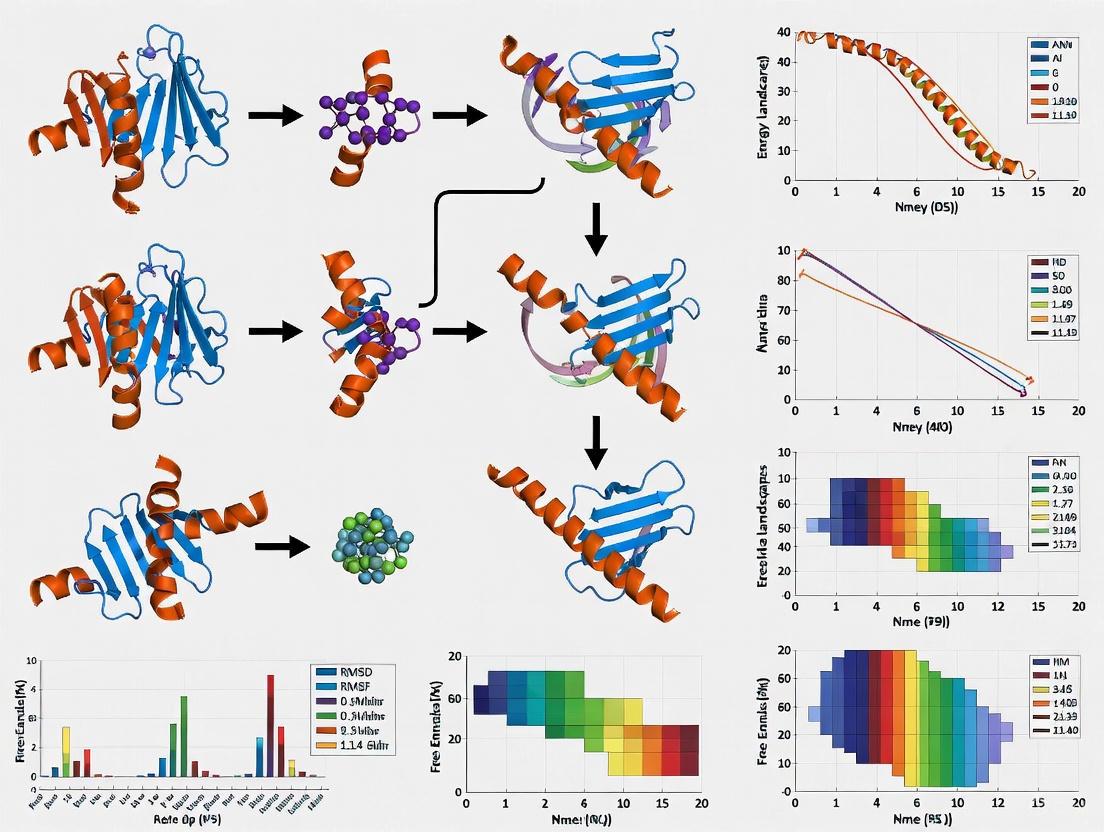
This article provides a comprehensive overview of the application of Molecular Dynamics (MD) simulations in studying biomolecular conformational changes, a critical process in understanding biological function and enabling structure-based drug...
Capturing Motion: How Molecular Dynamics Simulations Reveal Biomolecular Conformational Changes for Drug Discovery
Abstract
This article provides a comprehensive overview of the application of Molecular Dynamics (MD) simulations in studying biomolecular conformational changes, a critical process in understanding biological function and enabling structure-based drug design. It covers the foundational principles of MD, detailing how these simulations act as 'virtual molecular microscopes' to capture atomic-level motions. The article explores advanced methodologies and key applications, including the detection of cryptic binding sites and the use of Markov state models to extend timescales. It also addresses common challenges such as sampling limitations and force field accuracy, presenting solutions like enhanced sampling and AI integration. Finally, it discusses the critical process of validating simulations against experimental data and compares the performance of different MD software and force fields. Aimed at researchers and drug development professionals, this review synthesizes how MD simulations complement experimental techniques to drive discovery in biochemistry and pharmacology.
The Atomic Movie: Foundational Principles of Biomolecular Dynamics
The Paradigm Shift: From Single Structures to Dynamic Ensembles
Proteins are not static entities; their functions are fundamentally governed by dynamic transitions between multiple conformational states [1]. For decades, static three-dimensional structures, often derived from X-ray crystallography, provided the primary snapshot of protein architecture. However, this static view fails to capture the essential molecular motions that underlie biological function, including catalysis, allosteric regulation, and signal transduction [1]. The emerging paradigm recognizes proteins as conformational ensembles—collections of interconverting structures that represent the full scope of a protein's functional repertoire under given conditions [1].
This shift is crucial for understanding the mechanistic basis of protein function and regulation. Many pathological conditions, including Alzheimer's disease and Parkinson's disease, stem from protein misfolding or abnormal dynamic conformations [1]. Consequently, systematically elucidating transitions between conformational states is essential for designing conformation-specific drugs and treating a wide range of diseases [1]. The limitations of single-structure approaches are particularly pronounced for intrinsically disordered proteins (IDPs), which comprise approximately 30–40% of the human proteome and lack a stable tertiary structure altogether [2]. The dynamic ensemble view thus represents not merely a technical refinement but a fundamental transformation in how we conceptualize and investigate protein structure-function relationships.
Methodological Approaches for Studying Conformational Dynamics
Experimental and Computational Landscape
Both experimental and computational methods contribute to characterizing protein dynamics. Experimental techniques like nuclear magnetic resonance (NMR), cryo-electron microscopy (cryo-EM), and hydrogen-deuterium exchange mass spectrometry can capture conformational changes to varying degrees [1]. However, these methods often face limitations due to rigorous crystallization requirements, or the challenges of interpreting sparse, ambiguous, and noisy data [1].
Computational approaches have emerged as powerful complements, with molecular dynamics (MD) simulations providing particularly valuable insights by directly simulating the physical movements of atoms and molecules over time [3] [1]. MD simulations model protein conformational change by implementing fundamental laws of motion on an atom-by-atom basis, accurately predicting dynamic behavior in various environments [3]. The resulting trajectories provide a time-dependent sampling of conformational space, offering a representation of a system's potential energy landscape [3].
Advanced Sampling and Ensemble Methods
Conventional molecular dynamics (cMD) faces timescale limitations, often preventing direct assessment of rare transition events between conformational states [3]. To overcome these barriers, accelerated molecular dynamics (aMD) utilizes a robust bias potential function to simulate transitions between different potential energy minima more efficiently [3]. This approach reduces computational time spent at energy minima and increases the system's ability to overcome potential barriers, all while converging to the proper canonical distribution [3].
In the post-AlphaFold era, artificial intelligence has revolutionized structural prediction. Ensemble methods like FiveFold combine predictions from multiple complementary algorithms (AlphaFold2, RoseTTAFold, OmegaFold, ESMFold, and EMBER3D) to model conformational diversity explicitly [2]. This approach acknowledges and captures the inherent conformational heterogeneity of proteins, moving beyond single-structure paradigms toward ensemble-based approaches that are particularly valuable for modeling IDPs and multiple conformational states relevant to drug discovery [2].
Table 1: Comparison of Computational Methods for Studying Protein Dynamics
| Method | Key Principle | Advantages | Limitations | Typical Applications |
|---|---|---|---|---|
| Classical MD (cMD) | Simulates physical movements based on Newton's laws [3] | Physically realistic, all-atom detail [3] | Limited to nanosecond-microsecond timescales; computationally expensive [3] | Local fluctuations, solvent interactions, small-scale transitions [3] |
| Accelerated MD (aMD) | Adds bias potential to overcome energy barriers [3] | Enhanced sampling of conformational space; preserves canonical distribution [3] | Requires careful parameter selection (boost energy); reweighting needed for kinetics [3] | Rare events, large-scale conformational transitions [3] |
| FiveFold Ensemble | Combines predictions from five algorithms [2] | Models conformational diversity; less dependent on MSAs [2] | Consensus building adds complexity; computational cost of multiple algorithms [2] | IDPs, multiple conformational states, drug discovery [2] |
| PCA-MD Analysis | Reduces dimensionality of MD trajectories [4] | Identifies dominant collective motions; simplifies trajectory analysis [4] | Limited to linear transformations; may miss rare events [4] | Identifying essential dynamics, functional motions [4] |
Experimental Protocols
Protocol: Accelerated Molecular Dynamics (aMD) Simulation
Application: Modeling rare events and conformational transitions in proteins, such as neurotransmitter transporters or enzyme functional cycles [3].
Principle: aMD enhances conformational sampling by applying a nonnegative, continuous bias potential (ΔV(r)) when the system's potential energy falls below a defined threshold (E). This raises potential energy surfaces near minima while leaving barrier regions relatively unaffected, facilitating transitions between states [3].
Step-by-Step Workflow:
System Preparation:
- Obtain initial coordinates from experimental structures (e.g., PDB) or homology models.
- Embed the protein in a physiologically relevant environment (e.g., lipid bilayer for membrane proteins) [3].
- Solvate the system in a water box and add ions to achieve physiological concentration and neutralize the system.
Energy Minimization and Equilibration:
- Perform energy minimization to remove steric clashes.
- Conduct gradual equilibration with position restraints on protein atoms, slowly increasing temperature to the target (e.g., 310 K) and pressure to 1 bar.
aMD Parameter Calculation:
- Run a short conventional MD simulation (1-10 ns) to collect potential energy statistics.
- Calculate the average potential energy (Vavg) and standard deviation from the cMD trajectory.
- Set the boost energy (E) for aMD: E = Vavg + (4-6 × standard deviation) for aggressive acceleration, or lower multiples for more moderate boosting [3].
- Set the tuning parameter (α) to 0.15-0.20 × the number of atoms in the system to determine the depth of the modified potential energy basin [3].
aMD Production Simulation:
- Implement the bias potential using the "snow drift" function: ΔV(r) = (E - V(r))² / (α + (E - V(r))) [3].
- Run the production simulation using aMD-enabled software (NAMD [3] or Amber [3]).
- The simulation clock advances nonlinearly: Δt* = Δt × e^(βΔV[r(ti)]), where β = 1/kBT, accelerating the observed transitions [3].
Trajectory Analysis:
Protocol: Principal Component Analysis (PCA) of MD Trajectories
Application: Identifying essential collective motions and dominant conformational changes from MD simulation data [4].
Principle: PCA reduces the high-dimensionality of MD trajectories (3N coordinates for N atoms) to a lower-dimensional space defined by principal components (PCs)—orthogonal vectors representing the directions of maximum variance in the data, corresponding to the most significant collective motions [4].
Step-by-Step Workflow:
Trajectory Preprocessing:
- Concatenate and align all trajectory frames to a reference structure (usually the first frame or an average structure) using least-squares fitting to remove global rotation and translation.
- Select specific atoms for analysis (typically Cα atoms to capture backbone motions).
Covariance Matrix Construction:
- Calculate the covariance matrix C of atomic positional fluctuations:
- Cij = ⟨(xi - ⟨xi⟩)(xj - ⟨xj⟩)⟩, where xi and xj are the Cartesian coordinates of atoms i and j, and ⟨⟩ represents the time average over all frames [4].
- Calculate the covariance matrix C of atomic positional fluctuations:
Diagonalization:
- Diagonalize the covariance matrix to obtain eigenvalues (λi) and eigenvectors (pi).
- Each eigenvector (pi) represents a principal component—a collective motion direction.
- Each eigenvalue (λi) corresponds to the mean square fluctuation along that PC, indicating its contribution to the total variance [4].
Projection and Analysis:
- Project the original trajectory onto the principal components to generate PC projections: PCi(t) = p_i · (x(t) - ⟨x⟩) for each frame t.
- Analyze the free energy landscape by projecting the trajectory onto the first few PCs: ΔG(PC1, PC2) = -kBT ln P(PC1, PC2), where P is the probability distribution [4].
Interpretation:
- Use a scree plot (eigenvalues vs. mode index) to determine how many PCs are significant [4].
- Visually inspect the motions along each dominant PC to identify biologically relevant conformational changes.
- Analyze the conformational clusters in the reduced PC space.
Workflow for PCA of Molecular Dynamics Trajectories
The Scientist's Toolkit: Research Reagents & Computational Solutions
Table 2: Essential Resources for Protein Dynamics Research
| Resource / Tool | Type | Primary Function | Application Example | Key Features |
|---|---|---|---|---|
| AMBER [1] | MD Software Suite | Force field development and MD simulation | Simulation of proteins, nucleic acids, and carbohydrates [1] | Comprehensive set of force fields; supports aMD [3] |
| GROMACS [1] | MD Software Package | High-performance MD simulation | Large-scale systems on HPC clusters [1] | Extremely fast calculation algorithms; free software |
| OpenMM [1] | MD Library | Hardware-accelerated MD simulations | Custom simulation workflows via Python API [1] | GPU acceleration; high flexibility |
| CHARMM [1] | MD Program | Simulation with empirical force field | Complex biomolecular systems [1] | All-atom additive force field |
| ATLAS Database [1] | MD Database | Repository of protein MD simulations | Access to pre-computed simulations of ~2000 proteins [1] | Covers vast structural space; facilitates comparative analysis |
| GPCRmd [1] | Specialized Database | GPCR-focused MD trajectories and analysis | Understanding GPCR activation mechanisms and drug binding [1] | Systematically organized data for membrane protein family |
| AlphaFold2 [2] | AI Structure Prediction | Predicts protein structures from sequence | Initial coordinates for MD simulations; static structure prediction [2] | High accuracy for many single-domain proteins |
| FiveFold [2] | Ensemble Prediction | Generates multiple conformations via algorithm combination | Modeling conformational diversity and IDPs [2] | Integrates 5 algorithms; Protein Folding Shape Code (PFSC) |
Biological Applications and Case Studies
Case Study: CRISPR-Cas12a Activation Mechanism
Research employing Gaussian accelerated MD simulations has revealed how specific mutations (e.g., K949A) in the CRISPR-Cas12a system induce conformational changes that drive an effective target-binding mechanism [5]. These simulations demonstrated that mutations can alter the energy landscape and facilitate conformational transitions essential for function, providing insights crucial for optimizing genome-editing tools.
Case Study: SARS-CoV-2 Spike Protein Dynamics
Deep learning approaches applied to MD simulations of the SARS-CoV-2 spike protein receptor-binding domain (RBD) have successfully identified non-trivial conformational changes induced by point mutations [6]. These structural alterations influence viral infectivity and immunogenicity. The 2D-RMSD analysis revealed significant fluctuations in the receptor-binding motif (RBM), particularly in the β₁′/β₂′-C loop, with RMSD values reaching 5Å during simulation for mutations that enable immune evasion [6].
Case Study: HIV-1 Protease and Drug Resistance
PCA of MD simulations has provided crucial insights into drug resistance mechanisms in HIV-1 protease (HIV-1-pr) variants [4]. Studies comparing inhibitors DRV and 4UY revealed that 4UY binds more strongly to mutant HIV-1-pr variants, with PCA showing that 4UY binding promotes flap closing—a key conformational change in protease function [4]. Thermodynamic calculations confirmed 4UY's stronger binding affinity by 4.3–6.4 kcal/mol, demonstrating how dynamics inform drug design [4].
Integrating Methods for Conformational Ensemble Determination
The transition from analyzing static snapshots to characterizing dynamic ensembles represents a fundamental advancement in structural biology. Methods like aMD, PCA, and AI-driven ensemble modeling are providing unprecedented insights into the conformational landscapes that govern protein function. This paradigm shift is particularly transformative for drug discovery, where understanding dynamic transitions enables targeting of previously "undruggable" proteins through allosteric mechanisms and conformation-specific inhibitors. As these methodologies continue to evolve and integrate with experimental data, they will deepen our understanding of biological mechanisms and accelerate the development of novel therapeutic strategies.
Molecular dynamics (MD) simulation stands as a cornerstone technique in computational biology, enabling researchers to probe the structural and dynamic properties of biomolecules at an atomistic level. This application note details the core components of MD simulations, focusing on the synergistic application of Newton's classical mechanics and empirically derived force fields to study biomolecular conformational changes. Within drug development, these simulations provide critical insights into mechanisms of action, protein-ligand interactions, and allosteric regulation that are difficult to capture through experimental methods alone. We present here both the theoretical foundation and practical protocols for implementing these methods effectively, with particular emphasis on recent advancements in force field technology.
Theoretical Foundation: The Physics of Molecular Simulation
Newton's Laws as the Governing Framework
At its core, molecular dynamics relies on Newton's second law of motion, expressed mathematically for a particle i as: Fi = m__i_a_i_, where *Fi is the force exerted on the particle, m_i_ is its mass, and *ai is its acceleration [7] [8]. In MD simulations, this equation is recast in terms of the potential energy gradient: F1 = -∇iV({rj}), where F1 represents conservative forces, -∇iV is the gradient of potential energy, and {rj} denotes atomic positions [8]. This formulation directly connects the forces driving atomic motion to the underlying potential energy function, creating a deterministic framework where initial atomic positions and velocities dictate subsequent system evolution.
Numerical Integration of Equations of Motion
Solving Newton's equations for complex biomolecular systems requires robust numerical integration techniques. The Velocity Verlet algorithm has emerged as the preferred method due to its numerical stability and favorable energy conservation properties [7]. This algorithm calculates particle positions and velocities at each time step through the following sequence:
- Compute new positions: r(t + Δt) = r(t) + v(t)Δt + (1/2)a(t)Δt²
- Calculate velocities at half-step: v(t + Δt/2) = v(t) + (1/2)a(t)Δt
- Determine new forces and accelerations: a(t + Δt) = -∇V({r(t + Δt)})/m
- Complete velocity update: v(t + Δt) = v(t + Δt/2) + (1/2)a(t + Δt)Δt
This symplectic integrator preserves phase space volume, ensuring excellent energy conservation even with relatively large time steps (typically 1-2 femtoseconds) [7]. The alternative semi-implicit Euler method demonstrates significantly poorer energy conservation, with errors approximately 100 times greater than Velocity Verlet at equivalent time steps [7].
Force Fields: The Molecular Mechanics Engine
Force fields constitute the mathematical framework that defines potential energy contributions within a molecular system. These empirically parameterized functions describe both bonded interactions (maintaining structural integrity) and non-bonded interactions (capturing intermolecular forces) [9] [10].
Table 1: Fundamental Components of Biomolecular Force Fields
| Energy Component | Mathematical Form | Physical Basis | Key Parameters |
|---|---|---|---|
| Bond Stretching | V = ½kb(r - r₀)² | Harmonic vibration along covalent bonds | Equilibrium bond length (r₀), force constant (k*b) |
| Angle Bending | V = ½kθ(θ - θ₀)² | Harmonic vibration of bond angles | Equilibrium angle (θ₀), force constant (k*θ) |
| Torsional Rotation | V = ½Vn[1 + cos(nφ - γ)] | Rotation around bonds with periodicity | Barrier height (V*n), periodicity (n), phase (γ) |
| van der Waals | V = 4ε[(σ/r)¹² - (σ/r)⁶] | Lennard-Jones potential for transient dipoles | Well depth (ε), collision diameter (σ) |
| Electrostatic | V = (q_i_q_j_)/(4πε₀εr*r) | Coulomb's law for charged interactions | Atomic partial charges (q), dielectric constant (ε*r) |
Table 2: Comparison of Modern Force Field Types for Biomolecular Simulations
| Force Field Type | Representative Examples | Resolution | Strengths | Limitations | Best Applications |
|---|---|---|---|---|---|
| Additive All-Atom | AMBER, CHARMM, OPLS-AA | Atomistic with fixed charges | Computational efficiency; extensive validation | Limited polarization effects; fixed charge distribution | Routine protein folding; ligand binding [9] |
| Polarizable | Drude-2013, AMOEBABio09 | Atomistic with responsive charges | Enhanced accuracy for electrostatic interactions | Increased computational cost (~3-5x); complex parameterization | Membrane systems; ion channel permeation [9] |
| Coarse-Grained | Martini 3, GōMartini | 3-5 heavy atoms per bead | Extended spatiotemporal access (μs-ms scale) | Loss of atomic detail; empirical parameterization | Large complexes; membrane remodeling [11] |
| Structure-Based | Gō-like models | Simplified contact maps | Efficient sampling of folding landscapes | Requires known native structure; limited transferability | Protein folding mechanisms; mechanical unfolding [11] |
| Machine Learning | ANI, Neural Network Potentials | Varies by implementation | High accuracy from quantum data | Extensive training requirements; computational cost | Quantum-mechanical property prediction [9] |
The Martini 3 protein model represents a significant advancement in coarse-grained force fields, now utilizing uniform P2 beads for most backbone particles regardless of secondary structure, with exceptions for specific residues (GLY, ALA, VAL, PRO) to better represent polarity and size variations [11]. This evolution from the previous Martini 2 implementation, which used different bead types (P5, Nda, N0) based on secondary structure, improves the balance between chemical specificity and computational efficiency.
GōMartini 3: A Hybrid Approach for Conformational Changes
The GōMartini 3 model represents an innovative synthesis of structure-based and physics-based approaches, combining a virtual-site implementation of Gō models with the Martini 3 coarse-grained force field [11]. This hybrid methodology maintains the computational advantages of coarse-grained modeling while enabling the study of substantial conformational changes in diverse biological environments.
The potential energy in the Gō model is constructed as: U_Gō_ = ∑i
Table 3: Performance Metrics of GōMartini 3 Across Application Domains
| Application Domain | System Type | Simulation Timescale | Key Performance Outcome | Comparison to All-Atom |
|---|---|---|---|---|
| Protein-Membrane Binding | Pleckstrin Homology (PH) domain with PI(4,5)P₂ | Microsecond | Accurate membrane recruitment and orientation | Comparable binding pose at 1/1000th computational cost |
| Protein-Ligand Interactions | Benzene binding to T4 Lysozyme | Microsecond | Reproduced binding pocket geometry and affinity | Similar binding free energy (±0.5 kcal/mol) |
| Allosteric Pathways | Cu,Zn Superoxide Dismutase | Sub-millisecond | Identified conserved communication networks | Confirmed by mutant simulations and experimental data |
| AFM Force Spectroscopy | Antigen:Antibody complexes | Nanosecond | Quantified mechanical stability and unfolding pathways | Force profiles within experimental error margins |
Experimental Protocols
Standard Protocol for MD Simulation of Protein Conformational Changes
Objective: Characterize the conformational landscape of a biomolecule using all-atom molecular dynamics. System Preparation:
- Obtain initial coordinates from experimental structure (PDB) or homology modeling.
- Solvate the protein in an appropriate water box (TIP3P, TIP4P) with ≥10 Å padding.
- Add physiological ion concentration (0.15 M NaCl) using Monte Carlo ion placement.
- Energy minimize using steepest descent (1000 steps) until convergence (<1000 kJ/mol/nm).
Equilibration:
- Perform NVT equilibration (100 ps) using velocity rescaling thermostat (310 K) with heavy atom position restraints (1000 kJ/mol/nm²).
- Conduct NPT equilibration (100 ps) using Parrinello-Rahman barostat (1 atm) with reduced position restraints (400 kJ/mol/nm²).
- Execute unrestrained NPT equilibration (1 ns) to stabilize density.
Production Simulation:
- Initiate production MD using Velocity Verlet integration with 2 fs time step.
- Maintain temperature (310 K) with velocity rescaling thermostat and pressure (1 atm) with Parrinello-Rahman barostat.
- Employ LINCS constraints for all bonds involving hydrogen.
- Use Particle Mesh Ewald for long-range electrostatics with 1.2 nm cutoff.
- Simulate for duration sufficient to observe phenomenon of interest (typically 100 ns - 1 μs).
Analysis:
- Calculate root-mean-square deviation (RMSD) to assess stability.
- Determine root-mean-square fluctuation (RMSF) for residue flexibility.
- Perform principal component analysis (PCA) on trajectory to identify essential dynamics.
- Employ Markov state models to characterize conformational states.
Specialized Protocol for GōMartini 3 Simulations
Objective: Study large-scale conformational changes or protein-environment interactions. System Setup:
- Convert all-atom structure to Martini 3 representation using martinize2 script.
- Define elastic network using Cα atoms within 0.9-1.2 nm cutoff (if maintaining native structure).
- For GōMartini, define native contacts from reference structure (5 Å heavy atom cutoff).
- Solvate with standard Martini water at 1.1 nm minimum padding.
- Add ions to neutralize and achieve 0.15 M salt concentration.
Simulation Parameters:
- Use 20-30 fs time step for integration.
- Maintain temperature with velocity rescaling thermostat (310 K) and pressure with Berendsen barostat (1 atm).
- Apply reaction-field electrostatics with 1.1 nm cutoff and ε*rf = 15.
- Run simulation for 1-10 μs depending on system size and biological process.
Enhanced Sampling:
- Implement metadynamics for free energy calculations of conformational transitions.
- Use umbrella sampling for potential of mean force along reaction coordinates.
- Employ parallel tempering for improved sampling of rugged energy landscapes.
Workflow for Standard All-Atom MD Simulation
The Scientist's Toolkit: Essential Research Reagents
Table 4: Key Software Tools for Biomolecular MD Simulations
| Tool Name | Type | Primary Function | Application Notes |
|---|---|---|---|
| GROMACS | MD Engine | High-performance MD simulation | Optimal for large systems on HPC clusters; extensive analysis tools |
| AMBER | MD Suite | Biomolecular simulation package | Specialized force fields for proteins/nucleic acids; advanced sampling |
| CHARMM-GUI | Web Portal | Input file generation | Streamlines setup of complex systems (membranes, solutions) |
| VMD | Visualization | Trajectory analysis and rendering | Flexible scripting; extensive plugin ecosystem |
| MDAnalysis | Python Library | Trajectory analysis | Programmatic analysis workflow; customization |
| PLUMED | Plugin | Enhanced sampling | Meta-dynamics; umbrella sampling; collective variables |
| PACKMOL | Tool | Initial system configuration | Molecular packing in simulation boxes |
| CCP5 | Software Suite | Materials modeling | Polymeric materials; interfacial systems |
Table 5: Key Force Fields for Biomolecular Conformational Studies
| Force Field | Best Applications | Strengths | Water Model | Latest Version |
|---|---|---|---|---|
| CHARMM36 | Membrane proteins; lipids | Accurate lipid bilayers; extensive validation | TIP3P | 2021 update |
| AMBER ff19SB | Proteins; nucleic acids | Optimized backbone torsions | OPC, TIP4P-Ew | 2019 |
| Martini 3 | Large complexes; membranes | Speed; chemical specificity | Martini water | 2023 |
| GōMartini 3 | Conformational changes | Hybrid approach; environmental effects | Martini water | 2025 [11] |
| CHARMM Drude | Polarizable systems | Electronic responsiveness | SWM4-NDP | 2020 |
Advanced Applications in Drug Discovery
The integration of advanced force fields with molecular dynamics has enabled transformative applications in structure-based drug design. Free energy perturbation (FEP) calculations now provide reliable predictions of relative binding affinities for congeneric ligand series, with accuracy approaching experimental uncertainty (±1 kcal/mol) [9]. These methods directly support lead optimization campaigns by prioritizing synthetic efforts toward high-affinity compounds.
For challenging targets involving protein-protein interactions (PPIs), the emergence of molecular glues and proteolysis-targeting chimeras (PROTACs) has created new demands for accurate modeling of ternary complex formation [9]. The GōMartini 3 approach demonstrates particular promise in this domain, enabling simulations of target-ligand-target systems on biologically relevant timescales while maintaining sufficient chemical specificity to inform molecular design.
Force Field Selection Guide for Biomolecular Applications
Molecular dynamics simulations, powered by the continuous refinement of force fields and integration of Newtonian physics, have become an indispensable tool for investigating biomolecular conformational changes. The emergence of hybrid approaches like GōMartini 3 represents a significant advancement, bridging structure-based and physics-based methodologies to address complex biological questions. As force fields continue to evolve—incorporating polarizability, addressing chemical modifications, and leveraging machine learning—the predictive power of MD simulations will further expand. For drug development professionals, these computational approaches now provide actionable insights that complement experimental structural biology, enabling more rational and efficient therapeutic design across diverse target classes.
Molecular dynamics (MD) simulations have become an indispensable tool for probing the dynamic nature of biomolecules, providing atomic-level insights into processes that are often difficult to capture experimentally. This application note explores how MD simulations reveal critical biomolecular processes—folding, binding, and allostery—within the context of research on biomolecular conformational changes. For researchers and drug development professionals, understanding these processes is fundamental to elucidating disease mechanisms and designing novel therapeutics, particularly as allosteric drugs offer advantages in specificity and reduced off-target effects [12]. MD simulations facilitate the investigation of conformational changes over various timescales, from sub-nanosecond to millisecond events, enabling the identification of transient states and cryptic allosteric sites crucial for protein function and regulation [12].
Key Biomolecular Processes and Quantitative Insights
MD simulations provide quantitative data on the dynamic behavior of biomolecular systems. The table below summarizes key metrics and parameters used to investigate folding, binding, and allostery.
Table 1: Key Quantitative Metrics in Biomolecular MD Simulations
| Process | Key Metric | Typical Scale/Value | Computational Method | Biological Insight |
|---|---|---|---|---|
| Folding | Root Mean Square Deviation (RMSD) | 1-10 Å (Backbone) | MD Trajectory Analysis [13] | Protein structural stability and convergence. |
| Radius of Gyration | Molecular dependent (Å) | MD Trajectory Analysis [13] | Compactness of the protein structure. | |
| Binding | Root Mean Square Fluctuation (RMSF) | Per-residue (Å) | MD Trajectory Analysis [14] | Flexibility of residues; identifies key binding regions. |
| Binding Free Energy (ΔG) | kcal/mol | MM/PBSA, Thermodynamic Integration | Quantification of binding affinity. | |
| Protein-Ligand Interaction Fingerprints | - | Post-MD Analysis [15] | Specific atomic interactions over time. | |
| Allostery | Dynamic Residue Network (DRN) | Shortest Path Length (residues) | Network Analysis of MD Trajectories [16] | Identifies potential allosteric communication pathways. |
| Correlation Analysis | Covariance Matrix | Essential Dynamics (PCA) [15] | Collective motions and correlated residues. | |
| Free Energy Landscape (FEL) | kcal/mol vs. Collective Variables | Enhanced Sampling (MetaD, aMD) [12] | Maps stable states and transition pathways. |
Advanced computational methods have been developed to analyze these complex biomolecular processes. For instance, the Neural Relational Inference (NRI) model, a graph neural network, can learn long-range allosteric interactions from MD trajectories by treating proteins as dynamic networks of interacting residues [14]. Furthermore, tools like STINGAllo leverage machine learning with 54 optimized internal protein nanoenvironment descriptors to predict allosteric site-forming residues at single-residue resolution, achieving a 78% success rate on benchmark datasets [17].
Experimental Protocols
Protocol 1: Probing Allosteric Inhibition of hACE2 for Viral Entry Blockade
This protocol details an MD-based approach to identify and characterize a novel allosteric site on the host-cell receptor hACE2 (angiotensin-converting enzyme 2) to disrupt its interaction with the SARS-CoV-2 spike protein [16].
Workflow Diagram: Allosteric hACE2 Modulation Study
Detailed Methodology:
System Preparation:
- Structures: Retrieve the crystal structure of the hACE2-spike RBD complex (e.g., PDB ID: 6M0J). Separate the spike RBD and hACE2 into individual PDB files.
- Ligand: A reference allosteric modulator (e.g., SB27012) is drawn and optimized using density functional theory (DFT) at the B3LYP/6-311G (d,p) level with Gaussian 16 [16].
Molecular Docking:
- Perform blind docking of the optimized reference molecule into the entire hACE2 protein using AutoDock Vina in PyRx 0.8 to identify a potential allosteric site.
- Dock the wild-type spike RBD to the resulting protein-ligand complex using HADDOCK2.4 to model the ternary system [16].
MD Simulation Setup (using GROMACS):
- Force Fields: Generate protein topology with AMBER ff99SB. Generate ligand topology and parameters using ACPYPE (AnteChamber).
- Solvation and Ions: Solvate the complex in a cubic box with a 10 Å diameter using the TIP3P water model. Neutralize the system with 0.15 mol L⁻¹ of Na⁺ and Cl⁻ counterions.
- Energy Minimization: Employ the steepest descent integrator for 5000 steps until the force convergence is below 1000 kcal mol⁻¹ nm⁻¹ [16].
Production and Analysis:
- Run unbiased, microsecond-scale MD simulations of the hACE2-RBD complex with and without the allosteric modulator.
- Dynamic Network Analysis: Construct a dynamic residue network (DRN) of Cα atoms. Calculate the shortest suboptimal path to identify the allosteric communication pathway between the allosteric site and the RBD interface [16].
- Pharmacophore Modeling & HTVS: Develop a structure-based pharmacophore from critical modulator-protein interactions. Use it for high-throughput virtual screening (HTVS) of large molecular databases (e.g., ~0.35 billion molecules) to identify more effective modulators [16].
Protocol 2: Uncovering Long-Range Allosteric Pathways with Neural Relational Inference
This protocol uses a Graph Neural Network (GNN) to infer latent allosteric interactions and pathways from MD simulation trajectories [14].
Workflow Diagram: NRI-Based Allostery Analysis
Detailed Methodology:
System Setup and MD Simulation:
- Prepare the system of interest (e.g., full-length Pin1) in both apo and ligand-bound (e.g., FFpSPR-bound) states.
- Perform MD simulations for both systems to generate trajectories capturing the dynamics.
Data Preparation for NRI:
- Extract the Cα atom coordinates from the MD trajectories to represent each residue as a node in the graph.
NRI Model Training:
- Architecture: Use an encoder-decoder architecture. The encoder takes the MD trajectories and infers a distribution over latent edge types (interactions) between residue nodes. The decoder learns a generative model of the dynamics based on these inferred interactions.
- Training: Train the model by minimizing the reconstruction error between the reconstructed and original MD trajectories [14].
Pathway Analysis:
- After training, the model outputs a latent interaction graph. Analyze this graph to identify the strongest learned edges between residues and different domains.
- Calculate the shortest pathways from the allosteric site (e.g., the WW domain in Pin1) to the active site (e.g., the catalytic loop in Pin1) based on the learned edges.
- Compare the pathways and residue frequencies in the apo and bound states to understand how ligand binding alters allosteric communication. Validate findings against known functional mutation sites [14].
The Scientist's Toolkit
Table 2: Essential Research Reagents and Computational Tools
| Item/Tool Name | Function/Application | Relevant Protocol/Section |
|---|---|---|
| GROMACS | A software package for performing MD simulations; used for energy minimization, equilibration, and production runs. [16] | Protocol 1 |
| AMBER ff99SB | A force field for proteins, providing parameters for calculating potential energy and atomic forces. [16] | Protocol 1 |
| AutoDock Vina | A program for molecular docking, used for predicting bound conformations and binding affinities of small molecules. [16] | Protocol 1 |
| HADDOCK2.4 | An information-driven docking software for modeling biomolecular complexes. [16] | Protocol 1 |
| STINGAllo Web Server | A machine learning-based web server for high-throughput prediction of allosteric sites and residues. [17] | Section 2 |
| Neural Relational Inference (NRI) Model | A graph neural network model to infer latent, dynamic interactions between residues from MD trajectories. [14] | Protocol 2 |
| OpenMM | A high-performance toolkit for MD simulation, used in automated workflows like MDCrow. [13] | Automated Workflows |
| MDTraj | A Python library for analyzing MD simulations trajectories, e.g., calculating RMSD, RMSF. [13] | Automated Workflows |
| Metadynamics (MetaD) | An enhanced sampling technique to accelerate exploration of conformational space and reconstruct free energy landscapes. [12] | Table 1 |
Automated Workflows and Future Perspectives
Automation is transforming MD research. Frameworks like MDCrow leverage Large Language Models (LLMs) to automate complex MD workflows. MDCrow uses over 40 expert-designed tools for tasks ranging from retrieving PDB files and setting up simulations with OpenMM to performing analyses with MDTraj [13]. Similarly, DynaMate provides a modular multi-agent template for generating, running, and analyzing molecular simulations, significantly reducing the time required for repetitive tasks [18]. These tools lower the barrier to entry for non-experts and enhance the productivity of seasoned researchers. The integration of AI agents with advanced simulation and analysis methods, such as the NRI model and STINGAllo, points toward a future where the prediction of allosteric mechanisms and the design of modulators can be conducted with increasing speed and accuracy, accelerating therapeutic discovery [17] [14] [13].
Molecular dynamics (MD) simulation is a pivotal tool in structural biology, capable of providing full atomic details of biomolecular processes unmatched by experimental techniques. However, a profound challenge limits its utility: the massive gap between the time scales accessible by standard MD simulation (typically microseconds) and the time scales of fundamental functional processes such as conformational changes, ligand binding, and allostery (milliseconds to hours). This disparity, often referred to as the "timescale barrier," prevents the direct simulation of many biologically critical phenomena, making enhanced sampling methods not merely beneficial but essential for advancing research in drug development and molecular biology.
This application note examines the current state of enhanced sampling methodologies, focusing on practical implementations for studying conformational changes in proteins and RNA. We provide a structured comparison of approaches, detailed experimental protocols, and visualization of workflows to equip researchers with actionable strategies for overcoming the sampling bottleneck in their computational studies.
Current Methodologies for Enhanced Sampling
Enhanced sampling methods can be broadly categorized into two branches: those focusing on sampling important metastable conformations, and those focusing on sampling the transition dynamics between them [19]. The table below summarizes the key methodologies, their underlying principles, and representative applications.
Table 1: Enhanced Sampling Methods for Biomolecular Conformational Changes
| Method Category | Key Principle | Representative Techniques | Typical Applications | Key Requirements |
|---|---|---|---|---|
| Collective Variable (CV)-Based Sampling | Accelerates sampling by applying bias potentials along user-selected collective variables | Umbrella Sampling, Metadynamics, Adaptive Biasing Force [19] | Conformational transitions, ligand binding/unbinding, free energy calculations | A priori knowledge to select relevant CVs; risk of "hidden barriers" with poor CV choice [19] |
| Generative Deep Learning | Learns physical principles of conformational changes from MD data to generate novel synthetic conformations | Internal Coordinate Net (ICoN) [20] | Sampling conformational ensembles of highly dynamic proteins (e.g., Aβ42 monomer) | Molecular dynamics simulation data for training |
| True Reaction Coordinate (tRC) Methods | Identifies and biases the essential coordinates that control conformational changes and energy relaxation | Generalized Work Functional (GWF) [19] | Protein conformational changes (e.g., HIV-1 protease flap opening) | Single protein structure as input; computes tRCs from energy relaxation simulations [19] |
| Generative Committor-Guided Sampling | Combines generative models with committor analysis to discover transition pathways without predefined variables | Gen-COMPAS [21] | Protein folding, binding-upon-folding, large-scale conformational changes | Short unbiased simulations from metastable states for initial training |
| Coarse-Grained Modeling | Simplifies representation to reduce degrees of freedom and smooth energy landscape | GōMartini 3 [11] | Protein-membrane binding, protein-ligand interactions, large-scale domain motions | Known native structure for Gō model parameterization |
Protocols for Key Enhanced Sampling Techniques
Protocol: Sampling with True Reaction Coordinates via Energy Relaxation
This protocol, adapted from [19], enables predictive sampling of conformational changes using true reaction coordinates (tRCs) computed from energy relaxation simulations, requiring only a single protein structure as input.
Materials and Replicates:
- Starting Structure: A single protein structure (e.g., from PDB, AlphaFold)
- Software: MD package with enhanced sampling capabilities (e.g., GROMACS, NAMD, OpenMM)
- System Setup: Solvate protein in appropriate water model, add ions to physiological concentration
- Replicates: Minimum of 3 independent simulations with different initial random seeds
Procedure:
- System Preparation and Equilibration
- Prepare the initial structure using PDB2GMX or similar tool
- Solvate the protein in a triclinic or dodecahedral water box with 1.0-1.5 nm minimum distance from protein to box edge
- Add ions to neutralize system and achieve 0.15 M NaCl concentration
- Energy minimize using steepest descent until Fmax < 1000 kJ/mol/nm
- Equilibrate with position restraints on protein heavy atoms (NPT ensemble, 310K, 1 bar, 100 ps)
Energy Relaxation Simulation and tRC Identification
- Run 10-50 ns of unbiased MD simulation to sample energy relaxation
- Compute potential energy flows (PEFs) through individual coordinates using: dWᵢ = - (∂U(q)/∂qᵢ) dqᵢ [19]
- Apply Generalized Work Functional (GWF) method to generate singular coordinates (SCs)
- Identify tRCs as SCs with highest PEFs [19]
Enhanced Sampling with tRC Bias
- Apply bias potential (e.g., metadynamics, umbrella sampling) on identified tRCs
- Run biased simulation for 100-500 ns, monitoring convergence
- For HIV-1 protease, this approach accelerated flap opening from ~10⁵ s to 200 ps [19]
Trajectory Analysis and Validation
- Extract conformational clusters using clustering algorithms (e.g., GROMOS)
- Validate against experimental data (e.g., EPR, FRET) where available
- Generate committor distributions to verify transition states (pB ≈ 0.5)
Diagram Title: tRC Identification and Enhanced Sampling Workflow
Protocol: Generative Discovery of Transition Pathways (Gen-COMPAS)
The Gen-COMPAS framework [21] combines generative diffusion models with committor analysis to reconstruct transition pathways without predefined collective variables at a fraction of the cost of conventional methods.
Materials and Replicates:
- Initial Structures: Representative structures of reactant (A) and product (B) states
- Software: Gen-COMPAS implementation (available from authors), MD simulation package
- Computing Resources: GPU-accelerated computing nodes
- Replicates: 5-10 iterations of the generative-sampling cycle
Procedure:
- Initial Sampling of Metastable States
- Run short (1-2 ns) unbiased MD simulations from states A and B
- Collect 100-500 conformations from each state as initial training set
Generative Model Training
- Train diffusion model on collected conformations
- Generate intermediate conformations connecting states A and B
Committor Prediction and Transition State Identification
- Learn high-dimensional committor function (q) directly in conformational space
- Identify near-transition structures with committor values q ≈ 0.5
Targeted Sampling and Iteration
- Run targeted MD simulations from states A and B toward identified intermediates
- Shoot unbiased MD simulations from points near separatrix (q = 0.5)
- Incorporate newly generated data to retrain diffusion model and committor predictor
- Repeat for 5-10 iterations until convergence of free energy landscape
Pathway Analysis and Validation
- Extract transition-state ensembles (TSE)
- Construct committor maps projected onto interpretable CVs
- Compute free-energy landscapes and identify dominant pathways
- Validate against experimental kinetic data where available
Diagram Title: Gen-COMPAS Iterative Sampling Framework
Table 2: Essential Computational Tools and Methods for Enhanced Sampling Studies
| Resource/Method | Type | Primary Function | Application Context |
|---|---|---|---|
| GROMACS | MD Software Package | High-performance molecular dynamics simulations | Production MD runs, efficient on CPU and GPU clusters; widely used for biomolecular systems |
| PLUMED | Enhanced Sampling Plugin | Collective variable definition and analysis | Couples with major MD packages for metadynamics, umbrella sampling, and other CV-based methods |
| Gen-COMPAS | Generative Sampling Framework | Committor-guided path sampling without predefined CVs | Discovering transition pathways for protein folding, conformational changes [21] |
| GōMartini 3 | Coarse-Grained Force Field | Balanced structure- and physics-based modeling | Studying large conformational changes, protein-membrane interactions, mechanostability [11] |
| True Reaction Coordinates (tRCs) | Theoretical Concept & Method | Essential coordinates controlling conformational changes | Optimal CVs for accelerating barrier crossing in protein conformational changes [19] |
| Committor Analysis (pB) | Analytical Method | Probability of reaching product before reactant state | Identifying transition states, validating reaction coordinates, quantifying progress [19] |
| Internal Coordinate Net (ICoN) | Deep Learning Model | Learns physical principles from MD data for conformation generation | Sampling conformational ensembles of highly dynamic proteins and IDPs [20] |
The field of enhanced sampling is undergoing a transformative shift from reliance on intuitive collective variables to physics-based and machine-learning-driven approaches. Methods that identify true reaction coordinates through energy relaxation [19] or leverage generative models with committor analysis [21] represent promising directions for achieving predictive sampling of biomolecular conformational changes. These approaches demonstrate that the key to bridging the timescale gap lies not in brute force computational power, but in smarter sampling strategies that focus on the essential physics governing molecular transitions.
For drug development professionals, these advances translate to increasingly accurate predictions of ligand binding pathways, allosteric mechanisms, and protein dynamics that underlie biological function and therapeutic intervention. As these methods continue to mature and integrate with experimental structural biology, they promise to make molecular dynamics simulation an even more powerful tool for rational drug design and mechanistic studies of biomolecular function.
Advanced MD Techniques and Their Impact on Drug Discovery
Molecular Dynamics (MD) simulations are a cornerstone of modern computational biology, providing atomistic insight into biomolecular function. However, a significant limitation of conventional MD is the insufficient sampling of conformational space due to the rough energy landscapes of biomolecules, which are characterized by many local minima separated by high-energy barriers [22]. This "sampling problem" prevents the simulation of many critical, but rare, biological events, such as large-scale conformational changes in proteins, folding, and ligand binding or unbinding [22] [23].
Enhanced sampling methods have been developed to address this challenge. Among them, accelerated MD (aMD) and its refinement, Gaussian accelerated MD (GaMD), are powerful techniques that enhance conformational sampling without requiring pre-defined collective variables. This application note details the principles, protocols, and applications of these methods, framed within ongoing research on biomolecular conformational changes.
Methodological Foundations
The Sampling Problem in Biomolecular Simulation
Biological molecules possess complex, multi-minima energy landscapes [22]. In conventional MD, the system can become trapped in local energy minima for timescales that far exceed the practical simulation time, leading to non-ergodic sampling where relevant conformational states are never visited. This is particularly problematic for studying functional processes like ligand binding to receptors such as GPCRs, where the timescale can range from microseconds to hours [23]. Enhanced sampling algorithms are designed to mitigate this by facilitating the crossing of energy barriers.
Accelerated Molecular Dynamics (aMD)
Principle: The core idea of aMD is to reduce the height of energy barriers by adding a non-negative boost potential to the system's original potential energy surface [23]. This "boosts" the system in regions where the potential energy is lower than a predefined reference energy, making it easier to escape local minima.
Mathematical Formulation: When the system potential ( V(\vec{r}) ) is below a threshold energy ( E ), a boost potential ( \Delta V(\vec{r}) ) is added [23]: [ \Delta V(\vec{r}) = \frac{(E - V(\vec{r}))^2}{\alpha + (E - V(\vec{r}))} ] where ( \alpha ) is a tuning parameter that controls the shape of the boost potential. The modified potential becomes ( V^*(\vec{r}) = V(\vec{r}) + \Delta V(\vec{r}) ).
Advantages and Limitations: A key advantage of aMD is that it does not require a priori knowledge of the reaction pathway or the selection of collective variables. However, a significant drawback is that the resulting boost potential can exhibit large fluctuations, which complicates the process of reweighting the simulation data to recover unbiased thermodynamic averages [23].
Gaussian Accelerated Molecular Dynamics (GaMD)
Principle: GaMD is an evolution of aMD designed to overcome its reweighting limitations. It adds a harmonic boost potential that follows a near-Gaussian distribution [23]. This property allows for accurate recovery of the original free energy landscape through a "Gaussian approximation" of the reweighting probability.
Mathematical Formulation: The GaMD boost potential is defined as [23]: [ \Delta V(\vec{r}) = \begin{cases} \frac{1}{2} k (E - V(\vec{r}))^2 & V(\vec{r}) < E \ 0 & V(\vec{r}) \geq E \end{cases} ] Here, ( k ) is a harmonic force constant. The parameters ( E ) and ( k ) are determined automatically based on the system's potential energy statistics to ensure the boost potential is both Gaussian and sufficient for overcoming energy barriers [23].
Advantages: GaMD retains the collective-variable-free advantage of aMD while enabling robust energetic reweighting. This makes it particularly suitable for calculating free energy profiles of complex biomolecular processes.
Table 1: Key Features of aMD and GaMD
| Feature | Accelerated MD (aMD) | Gaussian Accelerated MD (GaMD) |
|---|---|---|
| Boost Potential | Non-negative, hyperbolic | Harmonic, Gaussian-distributed |
| Reweighting | Difficult due to large energy noise | Accurate via Gaussian approximation |
| Collective Variables | Not required | Not required |
| Ease of Setup | Requires tuning of (E) and (\alpha) | Parameters (E) and (k) calculated automatically |
| Primary Application | Qualitative exploration of conformational space | Quantitative free energy calculations |
Research Reagent Solutions: A Computational Toolkit
The following table lists key software and computational resources essential for implementing aMD and GaMD simulations.
Table 2: Essential Research Reagents and Computational Tools
| Tool/Reagent | Function/Description | Availability / Example |
|---|---|---|
| Simulation Software | MD engines with implemented aMD/GaMD algorithms. | AMBER [22] [23], NAMD [22] [23], GROMACS [22] |
| Force Fields | Mathematical functions parameterizing atomic interactions. | CHARMM, AMBER, OPLS-AA |
| System Preparation Tools | Prepares molecular structures for simulation (solvation, ionization). | CHARMM-GUI, tleap (AMBER) |
| Analysis Suites | Tools for trajectory analysis, reweighting, and visualization. | CPPTRAJ (AMBER), VMD, MDAnalysis |
| High-Performance Computing (HPC) | CPU/GPU clusters for running computationally intensive simulations. | Local clusters, NSF/XSEDE resources, Cloud computing |
Generalized GaMD Protocol
Below is a detailed workflow for setting up and running a GaMD simulation, which is the recommended method for most applications due to its superior reweighting capabilities.
Step-by-Step Protocol
System Preparation
- Obtain the initial molecular structure (e.g., from PDB, AlphaFold).
- Solvate the system in a water box (e.g., TIP3P water model).
- Add ions to neutralize the system's charge and achieve a physiologically relevant salt concentration.
- Perform energy minimization to remove any steric clashes.
Stage 1: Conventional MD (cMD)
- Run a short, unbiased MD simulation (typically a few nanoseconds) under the desired thermodynamic ensemble (NPT or NVT).
- Purpose: Collect potential energy statistics ((V{max}), (V{min}), (V{avg}), (σV)) required to calculate the GaMD boost parameters ((E) and (k)) [23].
Stage 2: GaMD Equilibration
- Apply the GaMD boost potential using the parameters calculated in Stage 1.
- Run a short simulation to allow the system to equilibrate under the influence of the boost potential.
Stage 3: GaMD Production
- Run an extended GaMD simulation (hundreds of nanoseconds to microseconds) to achieve enhanced sampling.
- Output: Save the trajectory (atomic coordinates), boost potential values, and other relevant energies at a high frequency for subsequent analysis.
Reweighting and Analysis
- Use the recorded boost potential to reweight the simulation and recover the unbiased free energy landscape.
- The Gaussian distribution of the boost potential in GaMD allows for accurate reweighting using the "Gaussian Approximation" method [23].
- Analyze the reweighted trajectory to identify metastable states, conformational changes, and calculate free energy profiles along reaction coordinates of interest.
Applications in Drug Discovery
GaMD has proven particularly effective in elucidating mechanisms central to rational drug design.
Application Note: GPCR Drug Binding
- System: β₂-Adrenergic Receptor (β₂AR) with a bound ligand.
- Objective: Determine the ligand binding pathway and estimate the binding free energy.
- Method: GaMD with dual-potential boost (applied to both total and dihedral potential) for maximum acceleration [23].
- Outcome: GaMD simulations successfully captured the complete pathway of ligand binding and unbinding, providing atomistic details of intermediate states that are difficult to observe experimentally. The free energy profile calculated from reweighted GaMD data gave critical insights into the binding mechanism and affinity [23].
Performance and Acceleration
GaMD can accelerate the simulation of slow biomolecular processes by several orders of magnitude. For instance, in a study on HIV-1 protease, biasing true reaction coordinates identified through advanced methods led to an acceleration of a ligand unbinding process (experimental lifetime of ~10⁶ seconds) to just 200 picoseconds in simulation [19]. This represents a speedup factor of 10¹⁵, demonstrating the immense power of enhanced sampling for probing otherwise inaccessible dynamics.
Table 3: Quantitative Acceleration of Biomolecular Processes via Enhanced Sampling
| Biological System | Process | Experimental/Timescale | Simulation Timescale with Enhanced Sampling | Speedup Factor |
|---|---|---|---|---|
| HIV-1 Protease | Ligand Unbinding | 8.9 x 10⁵ s [19] | 200 ps [19] | ~ 10¹⁵ |
| GPCRs (e.g., M3) | Ligand Binding | Microseconds to seconds [23] | Nanoseconds to microseconds [23] | 10³ - 10⁶ |
| Fast-folding Proteins | Folding/Unfolding | Microseconds [23] | Nanoseconds [23] | ~ 10³ |
Enhanced sampling methods, particularly GaMD, have moved beyond mere theoretical interest to become practical tools in the computational scientist's arsenal. By effectively addressing the sampling problem inherent to conventional MD, they enable the study of complex biomolecular events—such as conformational changes, folding, and drug binding—at an atomistic level of detail. The ability of GaMD to provide unconstrained enhanced sampling combined with accurate energetic reweighting makes it exceptionally well-suited for applications in computer-aided drug design, where understanding pathways and quantifying free energies are critical for informing and accelerating the development of new therapeutics.
Markov State Models (MSMs) have emerged as a powerful computational framework for bridging the critical gap between the short timescales accessible by all-atom Molecular Dynamics (MD) simulations and the long, biologically relevant timescales of biomolecular conformational changes. Processes such as protein folding, functional conformational shifts, and ligand binding often occur on millisecond to second timescales, far exceeding the microsecond-scale reach of even the most extensive MD simulations [24] [25]. MSMs address this challenge by providing a rigorous statistical methodology for integrating data from many short, disparate MD simulations to model long-time dynamics, predict kinetic and thermodynamic properties, and gain mechanistic insight into biomolecular function [24] [26]. This application note details the core principles, construction protocols, and key applications of MSMs, providing a standardized resource for researchers investigating conformational dynamics.
Theoretical Foundations of Markov State Models
An MSM is a discrete-state, discrete-time stochastic model that approximates the continuous conformational dynamics of a molecular system. Its foundation lies in the transfer operator theory, where the model aims to approximate the dominant eigenfunctions and eigenvalues of this operator, which correspond to the slowest dynamical processes in the system [25] [26].
The model is defined by two key components:
- A state space discretization, where the high-dimensional conformational space is partitioned into a set of discrete states, ( S1, S2, ..., S_n ).
- A transition matrix, ( \mathbf{T}(\tau) ), where each element ( T{ij}(\tau) ) represents the conditional probability of transitioning from state ( i ) to state ( j ) after a lag time ( \tau ), such that ( T{ij}(\tau) = \mathbb{P}(x{t+\tau} \in Sj | xt \in Si ) ) [25] [26].
A fundamental property of the transition matrix is that it can be used to compute the system's stationary distribution, ( \boldsymbol{\pi} ), by solving the eigenvalue problem ( \boldsymbol{\pi}^T \mathbf{T} = \boldsymbol{\pi}^T ) [25] [26]. This means MSMs can recover full equilibrium thermodynamics from ensembles of short, non-equilibrium simulations.
The kinetic relaxation timescales inherent to the dynamics are revealed by the eigenvalues, ( \lambdai(\tau) ), of the transition matrix. These are converted into implied timescales via ( ti = -\tau / \ln |\lambda_i(\tau)| ). A core validation test, the implied timescales plot, checks for Markovianity by ensuring these timescales are constant beyond a sufficiently long lag time [27] [28].
Table 1: Key Kinetic Properties Computable from MSMs and Their Biophysical Significance.
| Property | Mathematical Definition | Biophysical Significance | ||
|---|---|---|---|---|
| Stationary Distribution | ( \boldsymbol{\pi}^T \mathbf{T} = \boldsymbol{\pi}^T ) | Equilibrium populations of conformational states; related to free energy. | ||
| Implied Timescales | ( t_i = -\tau / \ln | \lambda_i(\tau) | ) | Intrinsic relaxation rates of slow dynamical processes. |
| Mean First-Passage Time (MFPT) | Average time to reach a state ( j ) for the first time, starting from ( i ). | Measures transition rates between functional states (e.g., folded/unfolded). | ||
| Committor Probability | Probability a trajectory from a state ( i ) reaches a target state ( B ) before state ( A ). | Identifies transition states (where committor ~0.5). |
A significant paradigm shift in MSM construction has moved from maximizing the metastability of states (long state lifetimes) to minimizing the approximation error of the transfer operator's slow eigenspaces [25] [26]. This ensures the MSM most accurately captures the long-time statistical dynamics, even if individual states have shorter lifetimes.
Standardized Protocol for MSM Construction
The construction of a validated MSM follows a multi-stage workflow, from feature selection to model analysis. The following protocol, summarized in the diagram below, is recommended for studying functional conformational changes [29].
MSM Construction and Validation Workflow. The process involves initial simulation, data-driven model construction, and final validation/analysis stages.
Stage 1: Simulation Setup
- A. Generate Initial Pathways: For complex functional transitions, begin by generating initial pathways connecting known metastable states (e.g., from crystal structures). Methods include targeted MD, the String method, or action-based approaches like Action-CSA [29].
- B. Perform Ensemble MD: Launch a large number of parallel, short MD simulations. Initial structures can be seeded from the initial pathways, using enhanced sampling methods, or from stochastic unfolding simulations to ensure broad coverage. This ensemble approach is more effective for sampling than a single long trajectory [24] [29].
Stage 2: Model Construction
- C. Feature Selection: The raw Cartesian coordinates from MD are transformed into a set of structural descriptors ("features"). For functional changes in large systems, automatic feature selection is critical.
- D. Dimensionality Reduction: The high-dimensional feature space is projected onto a low-dimensional space of collective variables (CVs) that capture the slowest dynamics.
- E. Clustering & MSM Building: The projected data is clustered into microstates.
- Microstate Clustering: Use k-means or k-centers clustering on the CVs to create 100 to 10,000+ microstates [27] [24].
- Transition Matrix Estimation: Assign every MD frame to a microstate. Count observed transitions between microstates at a lag time ( \tau ) to build a count matrix ( \mathbf{C}(\tau) ), which is normalized to obtain the row-stochastic transition matrix ( \mathbf{T}(\tau) ) [24].
- Coarse-Graining (Optional): Microstates can be lumped into larger, more interpretable metastable macrostates using algorithms like PCCA+ [27].
Stage 3: Model Application
- F. Validation & Analysis: The final, critical step is to validate the model and use it to compute biologically relevant properties.
- Validation: The Chapman-Kolmogorov test checks the Markovianity of the model by comparing the model's predicted state populations over time ( [\mathbf{T}(n\tau)]^n \mathbf{p}(0) ) to those directly observed in the data [27] [29]. Implied timescales analysis ensures timescales are constant above the chosen lag time ( \tau ) [27].
- Analysis: Use Transition Path Theory (TPT) [27] to analyze mechanisms and fluxes between states. Compute Mean First-Passage Times (MFPTs) [28] and identify key transition states via committor analysis [30] or newer deep learning methods like TS-DAR [30].
The Scientist's Toolkit: Essential Reagents and Software
Table 2: Key Research Reagent Solutions for MSM Construction.
| Tool / Resource | Type | Primary Function | Application Note |
|---|---|---|---|
| PyEMMA [27] | Software Library | End-to-end MSM estimation, validation, and analysis. | Implements TICA, clustering, CK test, and TPT. A comprehensive toolkit for standard analyses. |
| MSMBuilder [28] | Software Library | Construction and analysis of MSMs from MD trajectories. | Known for scalability and flexibility in handling large simulation datasets. |
| VAMPNets [29] | Deep Learning Model | Uses neural networks to simultaneously learn optimal state discretizations and the MSM. | Capable of identifying nonlinear collective variables, improving model accuracy. |
| Time-lagged Independent Component Analysis (TICA) [25] [29] | Algorithm | Dimensionality reduction to find slow collective variables. | The most widely used linear method for projecting dynamics before clustering. |
| WESTPA [31] | Software Toolkit | Weighted Ensemble (WE) sampling for rare events. | Used before MSM construction to enhance sampling of rare transitions for more complete models. |
| TS-DAR [30] | Deep Learning Framework | Identification of transition state structures from MD data. | Frames transition states as out-of-distribution data in a hyperspherical latent space. |
Advanced Applications and Future Directions
MSMs have moved beyond protein folding to address complex problems in molecular biology. Notable applications include studying ligand binding and unbinding pathways, functional conformational changes in large kinases like Src kinase, and processive mechanisms such as the translocation of RNA polymerase and DNA motor proteins [29] [30]. These applications demonstrate MSMs' power in connecting atomistic simulations to functional mechanisms and, through forward simulation of experimental observables, to single-molecule and ensemble kinetics experiments [26].
Recent advancements are addressing key limitations and opening new frontiers:
- History-Augmented MSMs (haMSMs): Standard MSMs can be biased for path-based observables like MFPTs when states are short-lived. haMSMs condition transitions on previous macrostate visitation, significantly improving accuracy for kinetic predictions [28].
- Machine Learning Integration: Beyond VAMPNets, new frameworks like quasi-MSMs (qMSMs) use the generalized master equation to model dynamics with far fewer states, simplifying the interpretation of complex functional changes [29]. Generative models like MarS-FM are now using MSMs as a scaffold to generate physically accurate, long-timescale trajectories at a fraction of the computational cost of MD [32].
- Standardized Benchmarking: The field is moving towards rigorous evaluation with frameworks that leverage enhanced sampling (e.g., Weighted Ensemble) and diverse protein datasets to provide fair, reproducible comparisons between different MD and machine learning methods [31].
In the study of biomolecular conformational changes, understanding the pathway and kinetics of transitions is fundamental. The rate of a reaction is governed by the energy difference between the transition state (TS), the highest energy point on the minimum energy path (MEP) between reactants and products, and the reactants themselves [33]. Locating these first-order saddle points on the potential energy surface is therefore crucial for predicting reaction rates and selectivity, which has direct implications for understanding enzyme catalysis and drug-target interactions [33] [34]. However, the high-dimensional space in which biomolecules exist makes locating these states non-trivial [33]. This article details modern computational protocols for identifying transition states and discovering optimal reaction coordinates, with a focus on applications in biomolecular simulation.
Theoretical Foundation
A transition state is formally defined as a first-order saddle point, characterized by a zero gradient and a Hessian matrix (the matrix of second derivatives) with a single negative eigenvalue, which corresponds to the imaginary frequency of the unstable mode [33]. The minimum energy path (MEP) is the path connecting reactants and products that minimizes energy in all directions orthogonal to the path tangent [33].
The concept of a reaction coordinate (RC) or collective variable (CV) is central to this process. An ideal RC is a low-dimensional representation that distinguishes between metastable states and captures the slow, collective motions essential for the transition [35] [36]. The quality of an RC can be quantified by the committor probability, which measures the likelihood that a trajectory initiated from a specific configuration will reach one metastable state before another [36].
Methodologies for Transition State Location
Several algorithms have been developed to locate transition states, each with specific strengths and optimal use cases. The choice of method often depends on the available prior knowledge, such as known reactant and product structures.
Table 1: Comparison of Transition State Search Methods
| Method | Key Principle | Requirements | Best For |
|---|---|---|---|
| Synchronous Transit (LST/QST) [33] | Finds maximum energy point on an interpolated path (linear or quadratic) between reactants and products. | Reactant and product structures. | Simple reactions with a clear, direct path. |
| Nudged Elastic Band (NEB) [33] | Optimizes a series of "images" along the path, connected by springs, to map the MEP. | Reactant and product structures; multiple path images. | Mapping the entire reaction pathway and identifying approximate TS regions. |
| Climbing-Image NEB (CI-NEB) [33] | A variant of NEB where the highest energy image "climbs" against the gradient to the saddle point. | Reactant and product structures; multiple path images. | Directly locating the TS without needing a separate optimization. |
| Dimer Method [33] | Follows the path of lowest curvature uphill using a pair of geometries to estimate curvature without a Hessian. | An initial guess structure. | Systems where calculating the Hessian is expensive; common in periodic DFT. |
| Coordinate Scanning [34] | Scans a suspected reaction coordinate and uses the highest-energy structure as a TS guess. | A suspected bond/angle/dihedral involved in the reaction. | Systems with a single, obvious reaction coordinate. |
| Machine Learning Potentials [37] | Uses ML models trained on quantum chemistry data to rapidly predict energies and forces for TS search. | A pre-trained, accurate ML potential. | High-throughput screening of reaction networks in organic synthesis. |
Protocol: Transition State Optimization via QST
The following protocol is adapted for biomolecular systems using common computational chemistry software.
- Endpoint Preparation: Optimize the reactant and product conformations to their respective local energy minima. Verify using frequency calculations that no imaginary frequencies exist.
- Initial Guess Generation: Use a synchronous transit method (e.g., LST) to generate an initial guess for the transition state geometry by interpolating between the optimized reactant and product.
- TS Optimization: Submit the initial guess to a quadratic synchronous transit (QST) optimizer, such as QST2 or QST3, which refines the path and optimizes the geometry normal to the constraining curve [33].
- TS Verification:
- Perform a frequency calculation on the optimized TS structure.
- Confirm the presence of a single imaginary frequency (negative eigenvalue).
- Animate the imaginary frequency to ensure it corresponds to the expected bond formation/breaking or conformational change.
- IRC Validation: Perform an Intrinsic Reaction Coordinate (IRC) calculation from the verified TS to confirm that it correctly connects to the reactant and product basins.
Advanced Approaches for Reaction Coordinate Discovery
For complex biomolecular transitions, the relevant RC is often not intuitive. Data-driven and machine learning methods can discover optimal RCs from simulation data.
Linear Discriminant Analysis (LDA) on Positions
LDA is a supervised technique that finds the linear combination of features that best separates two predefined states [35].
- Principle: Given two sets of data (e.g., folded and unfolded protein structures), LDA finds a projection vector that maximizes the distance between the class means while minimizing the variance within each class [35].
- Application to MD: Atomic positions, once aligned to a global reference to remove rotational and translational degrees of freedom, serve as the input features. The resulting LDA coordinate provides a highly effective RC for enhanced sampling [35].
- Protocol:
- State Definition: Perform two separate simulations, one trapped in State A (e.g., bound conformation) and another in State B (e.g., unbound conformation).
- Alignment and Sampling: Align all simulation snapshots to a common reference structure (e.g., the crystal structure). Uniformly sample configurations from both State A and State B.
- LDA Training: Compute the within-class and between-class scatter matrices from the aligned atomic coordinates and solve the generalized eigenvalue problem to obtain the LDA transformation vector.
- Biased Simulation: Use the LDA projection value as the collective variable in an enhanced sampling simulation (e.g., Metadynamics or Umbrella Sampling) to drive transitions between states and compute the free energy landscape.
Deep Learning for RC Discovery
Machine learning frameworks can learn non-linear RCs that capture complex conformational changes without pre-defined features.
- The AMORE-MD Framework: This framework uses the ISOKANN algorithm to learn a neural network-based membership function,
χ, which approximates the dominant eigenfunction of the molecular dynamics generator [36]. Thisχ-function acts as an optimal RC for the slowest process in the system. - Interpretability: A key advantage of AMORE-MD is its interpretability. The framework allows for:
- Pathway Reconstruction: The
χ-minimum-energy path (χ-MEP) can be found by integrating along the gradient ofχ, providing a representative, atomically detailed transition pathway [36]. - Sensitivity Analysis: The gradient of
χwith respect to atomic input coordinates identifies which specific atoms or distances contribute most to the reaction coordinate, revealing the atomistic mechanism [36].
- Pathway Reconstruction: The
- Workflow: The process is iterative: run MD, train
χ, useχto initialize new enhanced sampling simulations, and retrain to improve coverage of rare events [36].
Machine Learning for Initial TS Guessing
Convolutional Neural Networks (CNNs) can generate high-quality initial guesses for TS structures, streamlining the optimization process.
- Bitmap Representation: A 2D bitmap representation of the molecular structure around the reaction center is used as input to a CNN, such as ResNet50 [38].
- Genetic Algorithm: A genetic algorithm explores the configuration space of the reacting molecules, and the trained CNN model scores each candidate structure based on its likelihood of being near the true TS [38].
- Performance: This approach has achieved verified TS optimization success rates of 81.8% for hydrofluorocarbons and 80.9% for hydrofluoroethers in challenging hydrogen abstraction reactions [38].
The following diagram illustrates a generalized workflow integrating traditional and machine learning approaches for identifying transition states and reaction coordinates.
The Scientist's Toolkit: Essential Research Reagents & Software
Table 2: Key Computational Tools for TS and RC Analysis
| Tool / Resource | Type | Function in Research |
|---|---|---|
| PLUMED [35] [36] | Software Library | Industry-standard for implementing enhanced sampling methods and analyzing collective variables in MD simulations. |
| DeePEST-OS [37] | Machine Learning Potential | A generic ML potential for rapid transition state searches in organic synthesis, offering DFT-level accuracy at much lower computational cost. |
| Linear Discriminant Analysis (LDA) [35] | Statistical Method | A supervised dimensionality reduction technique to create an optimal reaction coordinate from two predefined states. |
| AMORE-MD Framework [36] | Deep Learning Framework | Learns interpretable reaction coordinates and reveals atomistic mechanisms via sensitivity analysis and minimum-energy paths. |
| Convolutional Neural Network (CNN) [38] | Machine Learning Model | Classifies or scores molecular structures based on bitmap representations to generate high-quality initial TS guesses. |
| Genetic Algorithm (GA) [38] | Optimization Algorithm | Explores molecular configuration space to generate candidate structures for ML-based TS prediction. |
| Principal Component Analysis (PCA) [4] | Statistical Method | An unsupervised technique to identify the dominant modes of motion in an MD trajectory; often used as a starting point for RC analysis. |
The field of transition state identification and reaction coordinate discovery is being transformed by the integration of robust traditional algorithms and powerful new machine learning methods. While path-based methods like QST and NEB remain vital when endpoint structures are available, techniques like LDA and deep learning frameworks such as AMORE-MD provide powerful, data-driven avenues for discovering reaction coordinates and transition pathways in complex biomolecular systems, even without a priori knowledge. The integration of machine learning potentials promises to further accelerate this field, dramatically reducing the computational cost of high-accuracy calculations and enabling the exploration of complex reaction networks relevant to drug design and biomolecular engineering.
Application Note 1: Unveiling Cryptic Pockets with Molecular Dynamics
Molecular dynamics (MD) simulations are powerful computational techniques for capturing the dynamic behavior of biomolecules, enabling the identification of transient druggable binding sites that are absent in static crystal structures. This application note details a protocol for using microsecond-scale MD simulations to uncover cryptic allosteric pockets, using AMP-activated protein kinase (AMPK) as a case study. The identification of such pockets expands the druggable landscape of therapeutic targets and provides new avenues for allosteric drug design [39].
Background
Cryptic pockets are potential binding sites that become apparent only upon specific conformational changes of a protein. Their transient nature makes them challenging to detect with experimental methods alone. Molecular dynamics simulations can model the full conformational flexibility of proteins, capturing the opening and closing of such pockets in atomistic detail. AMPK, a key cellular energy sensor, contains several such dynamic sites, including the allosteric drug and metabolite (ADaM) site, which represents a promising target for small-molecule activators [39].
Protocol: MD Simulation for Cryptic Pocket Detection
Step 1: System Preparation and Initial Modeling
- Obtain Initial Structure: Acquire the protein structure from the RCSB Protein Data Bank (e.g., PDB Entry ID: 7MYJ for AMPK). Remove all bound ligands and heteroatoms not part of the native protein [39].
- Molecular Modeling: For missing loops or domains, use a comparative modeling server like Robetta, which employs deep learning-based methods from the RosettaCM algorithm. Validate the final model's stereochemical quality using a Ramachandran plot (target: >97% residues in favored regions) [39].
Step 2: Molecular Dynamics Simulation Setup
- Software: Use a package like AMBER, GROMACS, or NAMD.
- Force Field: Employ a triple-precision calculation force field to reduce integration artifacts [39].
- System Solvation: Solvate the protein in a cubic or rectangular water box (e.g., TIP3P water model) with a minimum 10 Å buffer between the protein and box edge.
- Neutralization: Add ions (e.g., Na⁺, Cl⁻) to neutralize the system's charge and simulate a physiological salt concentration (e.g., 150 mM NaCl).
- Energy Minimization: Perform steepest descent or conjugate gradient minimization to relieve steric clashes.
Step 3: Production Simulation and Analysis
- Equilibration: Run a two-phase equilibration: 1) NVT ensemble (constant Number of particles, Volume, and Temperature) for 100-500 ps to stabilize temperature; 2) NPT ensemble (constant Number of particles, Pressure, and Temperature) for 100-500 ps to stabilize density.
- Production Run: Execute microsecond-scale production simulations in the NPT ensemble. Save trajectory frames every 100 ps for analysis.
- Pocket Detection: Analyze the trajectory using built-in or external tools to detect transient pockets:
- Tools: Use POCKETDETECTOR, MDpocket, or GROMACS
gmx cavaxyz. - Metric: Monitor the volume of potential cavities over time. A cryptic pocket is characterized by its appearance (volume > 50 ų) and disappearance throughout the simulation [39].
- Visual Inspection: Visually inspect frames where pockets open to confirm their physicochemical properties (e.g., hydrophobicity, presence of polar residues) for druggability.
- Tools: Use POCKETDETECTOR, MDpocket, or GROMACS
Workflow Visualization
The following diagram illustrates the integrated workflow for identifying cryptic binding pockets.
Case Study: AMPK Allosteric Site Identification
MD simulations of full-length AMPK revealed conformational changes in the autoinhibitory domain (AID) and the region near the ADaM site. The simulations identified transient druggable binding pockets in addition to the known ADaM site. Analysis of the dynamics provided atomistic details of the AMPK activation mechanism, where binding of an activator ligand at the ADaM site shields key residues from dephosphorylation, preserving the kinase in its activated state [39].
Application Note 2: Validating Docking Poses with the PoseBusters Framework
The rise of deep learning (DL) docking methods has necessitated robust validation that goes beyond simple root-mean-square deviation (RMSD) metrics. Many DL models produce poses with favorable RMSD but severe physical imperfections. This note provides a protocol for using the PoseBusters benchmark and validation toolkit to perform comprehensive chemical and physical plausibility checks on predicted protein-ligand docking poses, ensuring they represent realistic binding conformations [40] [41].
Background
Traditional docking evaluation relies heavily on the RMSD between predicted and native ligand poses. However, PoseBusters reveals that DL-based docking methods, despite achieving low RMSD, frequently generate poses with incorrect stereochemistry, steric clashes, and implausible bond geometries. The PoseBusters framework introduces a suite of tests to ensure that a docking pose is not only geometrically close but also physically valid (PB-valid), which is crucial for reliable virtual screening and drug discovery [40] [41].
Protocol: Comprehensive Pose Validation with PoseBusters
Step 1: Docking Pose Generation
- Generate docking poses using your chosen method (e.g., traditional tools like AutoDock Vina or Glide SP, or DL-based tools like DiffDock, SurfDock, or TankBind) [40] [42].
Step 2: PoseBusters Validation Suite
- Tool: Use the PoseBusters toolkit to run the validation suite on the generated poses [41].
- Input: Predicted protein-ligand complex structure file(s).
Step 3: Analysis of Validation Results
- A pose is classified as successful only if it meets dual criteria:
Table 1: Key PoseBusters Validation Criteria and Thresholds [41]
| Validation Dimension | Specific Check | Success Threshold |
|---|---|---|
| Stereochemistry & Bonding | Molecular formula & connectivity | Conserved (via InChI match) |
| Tetrahedral chirality & double bond configuration | Conserved | |
| Geometry | Bond lengths | Within [0.75, 1.25] of reference |
| Bond angles | Within [0.75, 1.25] of reference | |
| Aromatic ring planarity | Atoms within 0.25 Å of best-fit plane | |
| Steric Clashes | Intramolecular (ligand) | Min. distance > 0.75 × sum of vdW radii |
| Intermolecular (ligand-protein) | Volume overlap ≤ 7.5% | |
| Energetics | Strain energy ratio | (Pose UFF energy)/(Mean conformer energy) ≤ 100 |
Performance Benchmarking
The table below summarizes the performance of various docking methods, highlighting the critical difference between pure RMSD accuracy and combined physical validity.
Table 2: Comparative Docking Performance Across Benchmark Datasets (Success Rates %) [40]
| Docking Method | Category | Astex Diverse Set (RMSD ≤2Å / PB-valid) | PoseBusters Set (RMSD ≤2Å / PB-valid) | DockGen (Novel Pockets)(RMSD ≤2Å / PB-valid) |
|---|---|---|---|---|
| Glide SP | Traditional | ~90% / ~98% | ~82% / ~97% | ~68% / ~94% |
| AutoDock Vina | Traditional | ~82% / ~95% | ~70% / ~92% | ~53% / ~88% |
| SurfDock | Generative Diffusion | ~92% / ~64% | ~77% / ~46% | ~76% / ~40% |
| DiffBindFR | Generative Diffusion | ~75% / ~47% | ~49% / ~47% | ~33% / ~47% |
| KarmaDock | Regression-based | ~25% / ~10% | ~10% / ~15% | ~5% / ~12% |
| Interformer | Hybrid (AI + Search) | ~85% / ~85% | ~75% / ~83% | ~62% / ~79% |
Workflow Visualization
The following diagram illustrates the standardized workflow for docking and pose validation.
Protocol: Post-Docking Refinement for Invalid Poses
For poses that fail PoseBusters validation, a refinement step can be applied:
- Energy Minimization: Use a molecular mechanics force field (e.g., AMBER ff14SB or Sage in OpenMM) to minimize the energy of the predicted complex. This step can resolve minor steric clashes and improve bond geometries, significantly boosting the PB-valid rate of AI-generated poses [41].
- Re-docking: Consider re-running the docking simulation with a different method, particularly a traditional or hybrid approach that inherently incorporates more physical constraints [40].
The Scientist's Toolkit: Essential Research Reagents & Software
Table 3: Key Software Tools for MD Simulations and Docking Validation
| Tool Name | Category/Type | Primary Function in Workflow |
|---|---|---|
| AMBER / GROMACS / NAMD | Molecular Dynamics Engine | Executes the energy minimization, equilibration, and production MD simulations for studying conformational changes [39]. |
| Robetta Server | Protein Structure Modeling | Provides deep learning-based comparative modeling to complete missing regions in protein structures [39]. |
| PyMOL | Molecular Visualization | Visualizes MD trajectories, docking poses, protein-ligand interactions, and cryptic pockets [42]. |
| MDpocket | Analysis Utility | Detects and analyzes the dynamics of binding pockets and cavities throughout an MD trajectory [39]. |
| AutoDock Vina | Docking Software | Traditional docking program for predicting protein-ligand binding poses and affinities [40] [42]. |
| SurfDock / DiffDock | AI-Based Docking | Deep learning-based docking tools that use generative models for rapid pose prediction [40]. |
| PoseBusters | Validation Toolkit | A suite of tests that validates the physical and chemical plausibility of docking poses against multiple criteria [40] [41]. |
| AMDock | Graphical User Interface (GUI) | Integrates system preparation, docking (Vina, AutoDock4), and results analysis with PyMOL visualization [42]. |
Overcoming Limitations: A Guide to Robust and Efficient MD Simulations
In biomolecular conformational changes research, molecular dynamics (MD) simulations are indispensable for studying mechanisms like protein folding and allosteric regulation. However, achieving biologically relevant timescales presents a significant computational challenge. This application note provides a structured framework for selecting hardware and software solutions to manage these costs effectively, framed within a thesis on MD for biomolecular conformational changes. It synthesizes current performance data and protocols to guide researchers and drug development professionals in optimizing their computational resources for impactful research.
Hardware Solutions: Performance and Cost-Benefit Analysis
Consumer and Data Center GPUs
Graphics Processing Units are the cornerstone of modern MD simulation, offering massive parallel processing power. Their architecture, built around thousands of cores, excels at handling the simultaneous calculations required for modeling atomic forces [43]. Selecting the right GPU involves balancing double-precision (FP64) performance, memory capacity, and cost.
- Precision Requirements: A critical first step is determining whether a simulation requires full double-precision (FP64) arithmetic. Codes that default to or mandate FP64 for accuracy will experience significant bottlenecks on consumer-grade GPUs like the GeForce RTX series, which have intentionally limited FP64 throughput [43]. Data-center GPUs (e.g., NVIDIA A100, H100) or CPUs are more performant for such workloads. Many modern MD codes, however, use mixed-precision models, running predominantly in single-precision while maintaining accuracy for critical parts, making consumer GPUs highly cost-effective [43].
- Performance and Memory Considerations: For mixed-precision workloads, consumer and workstation GPUs offer exceptional price-to-performance. The NVIDIA GeForce RTX 5090, for instance, provides peak single-GPU throughput for AMBER simulations [44]. For larger systems exceeding 24 GB of VRAM, workstation GPUs like the NVIDIA RTX 6000 Ada (48 GB) are essential [45]. Specialized AI and HPC GPUs like the H100 and B200 offer top-tier performance but at a significantly higher cost, making them less price-efficient for MD simulations that are not heavily FP64-bound [44].
Table 1: GPU Recommendations for Major MD Software Packages
| MD Software | Recommended GPU(s) | Key Rationale | Considerations |
|---|---|---|---|
| AMBER | NVIDIA RTX 5090, RTX PRO 4500 Blackwell [44] | RTX 5090 offers peak single-GPU throughput; PRO 4500 provides excellent price/performance for lower atom counts [44]. | AMBER does not multi-GPU accelerate a single calculation; run multiple independent simulations in parallel [44]. |
| GROMACS | NVIDIA RTX 4090/5090 [43] [45] | High CUDA core count and superior tensor performance accelerate simulation cycles efficiently [45]. | Mature GPU offloading for non-bonded forces, PME, and updates in mixed precision [43]. |
| NAMD | NVIDIA RTX 4090, RTX 6000 Ada [45] | Optimized for NVIDIA GPUs; high core count and memory bandwidth enhance complex simulations [45]. | Can efficiently distribute computation across multiple GPUs in a single node [45]. |
| Double-Precision Codes (e.g., CP2K, Quantum ESPRESSO) | Data-Center GPUs (A100, H100) or CPU Clusters [43] | These codes mandate high FP64 throughput, which is throttled on consumer GPUs [43]. | Consumer GPUs may offer limited or negative speedups. |
Table 2: Representative GPU Performance Benchmarks in AMBER 24 (ns/day) [44]
| GPU Model | STMV (1M atoms) | Cellulose NVE (408k atoms) | FactorIX NVE (91k atoms) | DHFR NVE (24k atoms) |
|---|---|---|---|---|
| RTX 5090 | 109.75 | 169.45 | 529.22 | 1655.19 |
| RTX PRO 6000 Blackwell Max-Q | 97.44 | 149.84 | 475.04 | 1464.14 |
| RTX PRO 4500 Blackwell | 54.17 | 88.41 | 389.54 | 1481.61 |
| NVIDIA H100 PCIe | 74.50 | 125.82 | 410.77 | 1532.08 |
| RTX 6000 Ada | 70.97 | 123.98 | 489.93 | 1697.34 |
Specialized Hardware: Anton 3
For simulations requiring microsecond to millisecond timescales, general-purpose GPUs can be limiting. The Anton supercomputer, designed specifically for biomolecular simulation, addresses this gap. Anton 3 enables the simulation of millions of atoms at speeds of microseconds per day, allowing researchers to access biologically relevant timescales like protein folding and aggregation in a timely manner [46].
Anton at the Pittsburgh Supercomputing Center is available without cost for non-commercial research by US universities and not-for-profit institutions, allocated via a competitive proposal process reviewed by the National Academies of Sciences, Engineering, and Medicine [46]. This makes it a powerful resource for projects that are computationally intractable elsewhere.
Cloud GPU Solutions
GPU-as-a-Service provides an agile, cost-effective alternative to on-premise hardware, transforming a capital expenditure into an operational expense [47]. Providers offer on-demand access to a range of GPUs, from entry-level (NVIDIA T4) to high-end (NVIDIA H100), allowing researchers to scale resources with project needs and avoid hardware procurement delays and maintenance overhead [47].
Software-Specific Protocols and Configuration
GROMACS
GROMACS has a mature GPU acceleration path, optimally using mixed precision [43].
Protocol: Standard GPU-Accelerated Simulation
- System Setup: Prepare your simulation box with solvent and ions. Generate the topology and input structure files.
- Energy Minimization: Use the GPU to relieve steric clashes.
- Equilibration (NVT and NPT): Slowly heat and pressurize the system to target conditions (e.g., 310 K, 1 bar) with position restraints on solute atoms.
- Production MD: Run the production simulation with full GPU offloading enabled.
Key Flags: -nb gpu (offloads short-range non-bonded forces), -pme gpu (offloads Particle Mesh Ewald), -update gpu (offloads coordinate and constraint updates) [43].
AMBER
AMBER's performance is dominated by its PMEMD engine running on CUDA [44]. CPU and storage speed have minimal impact on simulation throughput.
Protocol: Running a Production Simulation with pmemd.cuda
- System Preparation: Use
tleapto create the system topology and coordinate files. - Minimization and Equilibration: Run standard steps with
pmemd.cudato prepare the system. - Production Run: Launch the GPU-accelerated production dynamics. Multi-GPU Strategy: AMBER does not split a single simulation across multiple GPUs. To maximize throughput on a multi-GPU system, run multiple independent simulations concurrently, each on a dedicated GPU [44].
NAMD
NAMD is highly optimized for parallel execution across multiple GPUs and nodes.
Protocol: Multi-GPU Simulation
- Configuration File: In the NAMD configuration file, ensure the
charmrunandnamd2binaries are built for CUDA. - GPU Assignment: Specify the number of GPUs per node and the devices to use.
- Execution: Launch NAMD with
charmrunto distribute the workload across the available GPUs.
Case Study: AMPK Conformational Dynamics
This case study, relevant to a thesis on biomolecular conformational changes, illustrates the practical application of these tools.
Research Objective: To identify conformational changes and transient druggable binding sites in full-length AMP-activated protein kinase (AMPK) through microsecond-scale MD simulations [39].
Background: AMPK is a crucial cellular energy sensor. Understanding its conformational dynamics, particularly around the allosteric drug and metabolite (ADaM) site and the γ-subunit (CBS3 domain), is vital for developing direct activators with potential anti-aging applications [48] [39].
Experimental Workflow:
Key Research Reagent Solutions:
Table 3: Essential Materials and Tools for AMPK MD Study
| Item | Function / Role in the Study |
|---|---|
| Molecular Template (PDB 7MYJ) | Crystal structure of AMPK complexed with activator MSG011, providing the initial atomic coordinates [39]. |
| Robetta Server | A protein structure prediction service used for comparative modeling of the apo (ligand-free) form of AMPK after removing crystallographic ligands [39]. |
| GPU Cluster | High-performance computing resource required to run the microsecond-scale MD simulations in a reasonable timeframe (weeks/months). |
| Triple-Precision Calculations | A specific computational setting used during the simulation to reduce numerical artifacts and ensure accuracy for analysis [39]. |
| Clustering Analysis | A computational method to group similar protein conformations from the MD trajectory, identifying representative states for analysis [39]. |
| Cavity Detection Algorithm | Software tool to analyze protein structures and identify voids that could represent transient binding pockets for drugs [39]. |
Key Findings: The 1 μs trajectory revealed conformational heterogeneity in the apo-ADaM site and identified the γ-subunit CBS3 site as a transient druggable pocket, offering new avenues for AMP-mimetic drug design [48] [39].
Cost Management and Reproducibility Framework
Benchmarking and Cost Calculation
Before scaling any simulation, run a small, representative case on your target hardware [43]. Measure performance in wall-clock time and the relevant scientific metric for your field. Compute a simple cost-per-result metric to guide decisions:
Ensuring Reproducible Science
Maintain a "run card"—a one-page text file checked into your repository with all details needed to reproduce the simulation [43]. This should include:
- Software: Container image digest, CUDA/driver versions, solver versions and build options.
- Hardware: CPU/GPU model, VRAM.
- Inputs: Input dataset hash, all simulation parameters (.mdp files, command lines, environment variables, seed values).
- Outputs: Wall-clock time, ns/day, iterations/second [43].
Emerging Trends
The hardware landscape is rapidly evolving. New architectures like NVIDIA's Blackwell promise further performance gains [44]. In software, AI-based methods like BioEmu are emerging as powerful alternatives. BioEmu uses a diffusion model to generate equilibrium protein conformations from a sequence, allowing researchers to sample tens of thousands of structures in minutes to hours on a single GPU, dramatically increasing throughput for conformational analysis [49].
Molecular dynamics (MD) simulations have become an indispensable tool for studying biomolecular conformational changes, directly impacting drug discovery and development. The accuracy of these simulations hinges on the force field (FF)—a mathematical model describing the potential energy surface governing atomic interactions. For researchers investigating protein folding, ligand binding, or nucleic acid dynamics, selecting an appropriate force field is a critical first step. The three major families—AMBER, CHARMM, and GROMOS—each offer distinct philosophies, parameterization strategies, and performance characteristics. This application note provides a structured framework for navigating this complex landscape, enabling researchers to make informed decisions based on their specific biomolecular system and research objectives. Understanding the fundamental trade-offs between these force fields is essential for generating biologically relevant data and advancing drug development projects.
Force Field Architectures and Theoretical Foundations
The AMBER, CHARMM, and GROMOS force fields share a common underlying functional form for calculating potential energy, which includes terms for bond stretching, angle bending, torsion potentials, and non-bonded van der Waals and electrostatic interactions. Despite this common foundation, they differ significantly in their parameterization methodologies, treatment of solvent interactions, and target applications.
AMBER (Assisted Model Building with Energy Refinement) employs a pairwise additive approximation for nonbonded electrostatic interactions with fixed partial charges assigned to each atom [9]. Its development has involved significant community effort, particularly for nucleic acids, with branches of development including the Barcelona Supercomputing Center (BSC) and Olomouc (OL) parameter sets [50]. Recent versions have introduced corrections for specific dihedral angles (e.g., α and γ in OL21) to improve DNA modeling [50].
CHARMM (Chemistry at HARvard Molecular Mechanics) emphasizes transferability between different molecular environments and consistency with experimental data on model compounds [51]. The force field incorporates the CMAP (correction map) term, which provides a two-dimensional torsional correction potential for protein backbone dihedrals (φ and ψ angles), significantly improving secondary structure representation [52]. CHARMM has been thoroughly tested with GROMACS-specific techniques like virtual sites [52].
GROMOS (GROningen Molecular Simulation) follows a united-atom approach where aliphatic hydrogens are combined with the carbon atoms into extended atoms [52]. The force field has been parameterized with a focus on condensed-phase properties and uses a physically incorrect multiple-time-stepping scheme for a twin-range cut-off, which can affect physical properties like density when used with modern integrators [52]. It utilizes a fourth-power bond stretching potential and an angle potential based on the cosine of the angle [52].
Table 1: Core Characteristics of Major Force Field Families
| Feature | AMBER | CHARMM | GROMOS |
|---|---|---|---|
| Atom Representation | All-atom | All-atom | United-atom (aliphatic hydrogens implicit) |
| Electrostatics | Pairwise additive | Pairwise additive | Pairwise additive |
| Special Terms | DNA-specific dihedral corrections (e.g., OL21) | CMAP for backbone torsions | Fourth-power bond stretching |
| Water Model Compatibility | TIP3P, SPC/E, OPC, TIP4P/2005 [50] [53] | TIP3P-modified [53] | SPC [53] |
| Primary Parameterization Focus | Quantum mechanics and experimental data | Transferability and experimental consistency | Condensed-phase properties |
The following diagram illustrates the key decision points when selecting a force field for biomolecular simulations:
Performance Comparison and Validation Protocols
Quantitative Assessment Across Biomolecular Systems
Rigorous validation against experimental data is essential for assessing force field performance. Different force fields exhibit distinct strengths and weaknesses across various biomolecular contexts:
Table 2: Force Field Performance Across Biomolecular Systems
| Biomolecular System | Recommended Force Field | Key Supporting Evidence | Performance Notes |
|---|---|---|---|
| Double-Stranded DNA | AMBER OL21 with OPC water [50] | Improved α and γ dihedral parameters; optimal performance with Z-DNA sequences [50] | OL21 performs significantly better with Z-DNA than Tumuc1 [50] |
| Intrinsically Disordered Proteins (PolyQ) | AMBER ff99SB, AMBER ff99SB*, OPLS-AA/L [53] | Reproduction of collapsed disordered conformations consistent with experimental polymer scaling [53] | Accurate representation of heterogeneous ensembles without overstabilizing secondary structure [53] |
| Proteins (Structured) | CHARMM36 with CMAP [52] | Improved backbone torsion potential via correction maps [52] | CMAP essential for proper secondary structure balance [52] |
| Membranes/Lipids | CHARMM36 [54] | Accurate density and shear viscosity for ether-based systems [54] | Transferable to membrane environments [52] |
| Small Molecule Solvation | GROMOS-2016H66, OPLS-AA [55] | Lowest RMSE (2.9 kJ mol⁻¹) for cross-solvation free energies [55] | Excellent for organic molecule transfer free energies [55] |
Experimental Validation Protocol for DNA Force Fields
Based on recent assessments of Amber force fields for DNA simulations [50], the following protocol provides a robust methodology for validating force field performance:
Step 1: System Preparation
- Obtain starting structures from diverse sources: NMR structures (e.g., PDB: 1FZX, 1NAJ) and high-resolution X-ray crystal structures (e.g., PDB: 1ICK for Z-DNA, 1SK5 for B-DNA) [50].
- Remove crystallographic water molecules and counterions to establish clean starting structures [50].
- Solvate in truncated octahedron boxes with 10 Å buffer distance using appropriate water models (OPC recommended for OL21) [50].
- Add net-neutralizing counterions (Na⁺, Cl⁻) using Joung-Cheatham ion parameters with excess salt to achieve ~200 mM physiological concentration [50].
Step 2: Equilibration Procedure
- Perform incremental minimization with harmonic restraints:
- 5 kcal mol⁻¹ Å⁻² for 1 ns (solute fixed)
- 0.5 kcal mol⁻¹ Å⁻² for 1 ns
- 0.1 kcal mol⁻¹ Å⁻² for 1 ns
- Unrestrained simulation for 1 ns [50]
- Use 1 fs integration time step during equilibration [50]
Step 3: Production Simulation
- Run in NPT ensemble at 300 K using Langevin dynamics for temperature control [50]
- Use Berendsen barostat for pressure regulation (pressure relaxation time: 1 ps) [50]
- Apply SHAKE to restrain hydrogen atoms [50]
- Employ 4 fs integration time step with hydrogen mass repartitioning [50]
- Utilize particle mesh Ewald for long-range electrostatics (10 Å cutoff) [50]
- For each system, run ≥5 independent replicas with randomized ion positions [50]
- Collect aggregate sampling time of 3-5 μs per system to ensure convergence [50]
Step 4: Trajectory Analysis
- Discard first 1000 ns of each replica as equilibration [50]
- Analyze:
- Backbone dihedral distributions (α, γ, ε, ζ)
- Groove dimensions and helical parameters
- Root-mean-square deviations (RMSD) from experimental structures
- Comparison to NMR data (where available)
Table 3: Computational Toolkit for Force Field Applications
| Tool/Resource | Function | Application Context |
|---|---|---|
| GROMACS | Molecular dynamics simulation package | Primary engine for running simulations with various FFs [52] |
| CHARMM-GUI | Web-based interface for system setup | Facilitates building complex membrane-protein systems [51] |
| VOTCA | Versatile Object-oriented Toolkit for Coarse-Graining Applications | Systematic coarse-graining and parameterization [52] |
| AMBER Tools | Suite of utilities for AMBER simulations | Parameter development and system preparation [50] |
| NAB | Nucleic Acid Builder | Construction of DNA starting structures [50] |
| CPPTRAJ | Trajectory analysis tool | Analysis of MD simulations, including ion randomization [50] |
| OPC Water Model | 4-point water model | Improved DNA simulation accuracy with OL21 [50] |
| TIP3P Water Model | 3-point water model | Traditional companion for many biomolecular FFs [53] |
Force field selection remains system-dependent, with each major family offering distinct advantages for specific biomolecular contexts. Based on current validation studies:
- For DNA simulations, AMBER OL21 with OPC water emerges as the leading choice, particularly for complex sequences including Z-DNA [50].
- For intrinsically disordered proteins and peptides like polyQ, AMBER ff99SB, ff99SB*, and OPLS-AA/L provide the most accurate representation of collapsed disordered ensembles [53].
- For structured proteins, CHARMM36 with CMAP corrections offers excellent balance of secondary structure stability [52].
- For membrane systems, CHARMM36 provides accurate lipid and ether representations, though MARTINI offers advantages for larger-scale simulations [52] [54].
The field continues to evolve with incorporating polarizable force fields, machine-learning approaches, and improved parameterization strategies [9]. Researchers should validate their selected force field against system-specific experimental data whenever possible and maintain awareness of ongoing force field developments to ensure their simulations provide the most biologically relevant insights for drug development applications.
The study of biomolecular conformational changes is fundamental to understanding biological processes, from protein folding and enzyme catalysis to cellular signaling and drug binding. These dynamic processes are governed by complex energy landscapes, where transient transition states pose a significant challenge for both experimental and computational characterization. Molecular dynamics (MD) simulations provide an atomic-resolution window into these dynamics, but traditional approaches face severe limitations in simulating the relevant timescales and identifying rare, high-energy states.
The integration of deep learning methodologies is revolutionizing this field by overcoming traditional barriers. This paradigm shift enables researchers to automatically identify critical transition states in complex biomolecular systems and enhances the efficiency of conformational sampling. These advancements are particularly valuable for drug design and biomolecular engineering, where understanding transition pathways can illuminate mechanisms of action and guide therapeutic development [56] [57].
This article details cutting-edge protocols and applications where deep learning synergizes with molecular dynamics, providing researchers with practical tools to advance their investigations into biomolecular dynamics.
Core Methodologies and Applications
Deep Learning for Transition State Identification
Identifying transition states—the high-energy, transient configurations that dictate the rates of conformational changes—has long been considered a "holy grail" in computational chemistry. Unlike simple chemical reactions, biomolecular processes often involve multiple metastable intermediate states connected by numerous transition states across a complex free energy landscape [56].
The TS-DAR method represents a breakthrough in this domain. This technique treats transition states as out-of-distribution data within a hyperspherical latent space representation of molecular dynamics data. Inspired by out-of-distribution detection concepts from artificial intelligence, TS-DAR automatically captures all transition states at once from MD simulation data, enabling a comprehensive view of the dynamic processes [56].
In practical applications, TS-DAR has demonstrated remarkable performance. When applied to the DNA motor protein AlkD during DNA translocation—a key process in DNA repair—the method revealed new insights into how protein-DNA hydrogen bonds influence the rate-limiting step of translocation [56].
Alternative machine learning approaches also show promising results. For instance, bitmap representations of chemical structures combined with convolutional neural networks can generate high-quality initial guesses for transition state structures. In studies of hydrogen abstraction reactions by hydrofluorocarbons and hydrofluoroethers, this approach achieved transition state optimization success rates of 81.8% and 80.9%, respectively, dramatically accelerating what was previously a labor-intensive manual process [38].
AI-Augmented Sampling and Potentials
Beyond identifying transition states, deep learning plays a crucial role in enhancing the sampling of conformational space and improving the accuracy of energy calculations.
Machine learning interatomic potentials have emerged as powerful tools that combine the accuracy of quantum mechanical methods with the computational efficiency of classical force fields. MLIPs provide a high-dimensional fit of the potential energy surface, enabling large-scale simulations while maintaining quantum-level accuracy [58]. Frameworks like ArcaNN address the critical challenge of constructing training datasets for reactive MLIPs by combining concurrent learning with enhanced sampling techniques, ensuring accurate representation of high-energy barrier regions crucial for studying chemical reactivity [58].
For specialized analysis tasks, distance map representations coupled with convolutional neural networks offer robust solutions. In studies of SARS-CoV-2 spike protein interactions with ACE2 receptors, researchers successfully modeled MD trajectories as interresidue distance maps to predict the functional impact of point mutations related to viral infectivity and immunogenicity. This approach demonstrated high predictive precision (0.718) and recall (0.800), while identifying fluctuating regions within the receptor-binding motif that correlate with immune evasion capabilities [6].
Table 1: Performance Metrics of Featured Deep Learning Methods
| Method Name | Primary Application | Key Performance Metrics | System Tested |
|---|---|---|---|
| TS-DAR [56] | Automatic transition state identification | Outperformed traditional methods in accuracy and efficiency | DNA motor protein AlkD translocation |
| Bitmap CNN [38] | Transition state initial guess generation | 81.8% success rate for HFCs; 80.9% for HFEs | Hydrogen abstraction reactions |
| Distance Map CNN [6] | Mutation impact prediction | Precision=0.718; Recall=0.800; F₁=0.757 | SARS-CoV-2 spike protein RBD |
| ArcaNN Framework [58] | Training dataset generation for reactive MLIPs | Uniformly low error along reaction coordinate | Nucleophilic substitution & Diels-Alder reactions |
Experimental Protocols
Protocol: Implementing TS-DAR for Biomolecular Transition States
This protocol details the application of the TS-DAR method to identify transition states in protein conformational changes using molecular dynamics data.
Research Reagent Solutions:
- Software Requirements: MD simulation software (e.g., GROMACS, AMBER, LAMMPS), Python with PyTorch/TensorFlow, TS-DAR implementation.
- Computational Resources: High-performance computing cluster with GPU acceleration.
- Data Input: MD trajectories of the biomolecular system in standard formats (e.g., XTC, DCD).
Procedure:
- System Preparation and MD Simulation:
- Obtain initial protein structure from PDB or homology modeling.
- Solvate the system in an appropriate water model and add ions to neutralize charge.
- Energy minimization using steepest descent algorithm until convergence (<1000 kJ/mol/nm).
- Equilibration in NVT and NPT ensembles (typically 100-500 ps each).
- Production MD simulation using a supercomputer or GPU cluster. Ensure sufficient sampling of conformational changes (simulation length depends on system size and dynamics).
Data Preprocessing:
- Extract frames from MD trajectories at regular intervals (e.g., every 10-100 ps).
- Align all frames to a reference structure to remove global rotation/translation.
- Compute relevant collective variables or features describing molecular conformation.
TS-DAR Implementation:
- Embed the preprocessed MD data into a hyperspherical latent space using the variational encoder.
- Apply the out-of-distribution detection algorithm to identify structures located at free energy barriers.
- Regularize the neural network using the variational principle to ensure physical meaningfulness.
- Cluster identified transition states to account for multiple pathways.
Validation and Analysis:
- Validate identified transition states through committor analysis.
- Calculate free energy barriers associated with each transition state.
- Analyze structural features distinguishing transition states from stable conformations.
- Correlate transition states with functional properties (e.g., catalytic activity, binding affinity).
Troubleshooting Tips:
- For poor transition state identification, increase MD sampling or adjust the latent space dimensionality.
- If computational costs are prohibitive, consider transfer learning from smaller systems or coarse-grained representations.
- Validate against known experimental data or traditional methods like umbrella sampling when possible.
Protocol: AI-Enhanced Sampling with MLIPs Using ArcaNN
This protocol describes the use of ArcaNN for generating training datasets for machine learning interatomic potentials, with enhanced sampling for reactive systems.
Research Reagent Solutions:
- Software: ArcaNN framework, LAMMPS, DeePMD-kit or similar MLIP package, CP2K for quantum calculations.
- Initial Structures: 3D coordinates of the molecular system.
- Reference Method: Quantum chemistry software (CP2K, Gaussian, VASP) for accurate energy/force calculations.
Procedure:
- Initial Dataset Preparation:
- Select an initial set of structures (50-100 configurations) spanning relevant conformational states.
- Perform reference quantum calculations to obtain energies and forces for these structures.
- Curate the initial dataset to include diverse geometries, ensuring adequate coverage of configuration space.
ArcaNN Workflow Implementation:
- Set up the iterative training loop with the following components:
- Training: Train multiple MLIPs (committee) on the current dataset with different random initializations.
- Exploration: Run MD simulations using the trained MLIPs, employing enhanced sampling techniques (e.g., metadynamics, umbrella sampling) to probe high-energy regions and reaction barriers.
- Selection: Identify new candidate structures using query-by-committee disagreement (high uncertainty regions) and enhanced sampling trajectories.
- Labeling: Perform reference quantum calculations on selected candidates to obtain accurate energies and forces.
- Set up the iterative training loop with the following components:
Active Learning Convergence:
- Repeat the training-exploration-selection-labeling cycle until:
- Committee disagreement falls below threshold (e.g., 99% of sampled structures have low uncertainty).
- No new chemically relevant regions are discovered after multiple iterations.
- The MLIP accurately reproduces reference energies and forces for diverse configurations.
- Repeat the training-exploration-selection-labeling cycle until:
Production Simulation:
- Use the final converged MLIP for large-scale MD simulations (nanosecond to microsecond timescales).
- Analyze reactive events and conformational changes with quantum-level accuracy.
- Validate predictions against experimental data when available.
Applications Note: This protocol is particularly valuable for studying chemical reactions in complex biomolecular systems, such as enzyme catalysis or ligand-binding processes, where accurate description of bond formation/breaking is essential.
The Scientist's Toolkit
Table 2: Essential Research Reagent Solutions for AI-Enhanced Molecular Dynamics
| Tool Name | Type | Primary Function | Application Context |
|---|---|---|---|
| TS-DAR [56] | Deep Learning Algorithm | Automatic identification of transition states | Protein conformational changes, biomolecular dynamics |
| ArcaNN [58] | Computational Framework | Generating training sets for reactive MLIPs | Chemical reactions in condensed phases |
| ML-IAP-Kokkos [59] | Software Interface | Integrating PyTorch MLIPs with LAMMPS MD | Scalable AI-driven molecular dynamics simulations |
| DeePMD-kit [60] | MLIP Package | Training and running deep potential models | Large-scale systems with quantum accuracy |
| ElectroFace [60] | Specialized Dataset | AI-accelerated AIMD for electrochemistry | Electrochemical interfaces, battery materials |
| ArcaNN [58] | Enhanced Sampling | Exploring high-energy barrier regions | Reactive systems, transition state sampling |
Workflow Visualization
AI-Enhanced Transition State Workflow: This diagram illustrates the integrated computational pipeline combining traditional molecular dynamics simulations with deep learning components to identify transition states in biomolecular systems.
Active Learning for MLIPs: This workflow depicts the iterative ArcaNN framework for generating training datasets for machine learning interatomic potentials, combining active learning with enhanced sampling to efficiently explore configuration space.
The integration of deep learning with molecular dynamics represents a paradigm shift in our ability to study biomolecular conformational changes. Methods like TS-DAR for automatic transition state identification and ArcaNN for generating reactive machine learning potentials are pushing the boundaries of what's computationally feasible, enabling researchers to tackle increasingly complex biological questions.
These AI-enhanced approaches share several key advantages: they dramatically reduce computational costs compared to traditional quantum methods, provide automated analysis of complex simulation data, and enable the discovery of previously inaccessible insights into biomolecular function. As these methodologies continue to mature and become more accessible to the broader research community, they hold tremendous promise for accelerating drug discovery, biomolecular engineering, and our fundamental understanding of biological processes at the atomic level.
The protocols and tools detailed in this article provide a practical foundation for researchers to incorporate these cutting-edge techniques into their own investigations of biomolecular dynamics.
Molecular dynamics (MD) simulations have become an indispensable tool in molecular biology and drug discovery, providing atomic-level insight into the behavior of proteins and other biomolecules over time. The impact of MD has expanded dramatically in recent years due to major improvements in simulation speed, accuracy, and accessibility. These simulations capture protein behavior in full atomic detail at very fine temporal resolution, allowing researchers to decipher functional mechanisms of proteins, uncover structural bases for disease, and facilitate the design of small molecules, peptides, and proteins. The core strength of MD lies in its ability to predict how every atom in a molecular system will move over time based on a general model of the physics governing interatomic interactions. This capability is particularly valuable for studying conformational changes—structural transitions that proteins undergo while performing their biological functions, such as enzyme catalysis, ligand binding, and allosteric regulation.
For researchers investigating biomolecular conformational changes, MD simulations offer a unique window into processes that are often difficult to observe experimentally. They allow scientists to not only watch these biomolecules in action but also to perturb them at the atomic level and observe their responses. This is particularly valuable for understanding how biomolecules respond to mutations, phosphorylation, protonation, or the addition or removal of a ligand. The simulations serve as a crucial bridge between static structural snapshots obtained through techniques like X-ray crystallography and cryo-EM and the dynamic reality of protein function in biological systems.
Theoretical Foundations of MD Force Fields and Parameters
Force Field Classifications and Energy Terms
The physical model underlying MD simulations is known as a molecular mechanics force field, which is fit to the results of quantum mechanical calculations and experimental measurements. A force field consists of a set of empirical energy functions and parameters used to calculate the potential energy U as a function of molecular coordinates. The potential energy function in MD simulations is composed of non-bonded and bonded interactions: U(r) = ΣUbonded(r) + ΣUnon-bonded(r). In most biomolecular simulations, only pairwise interactions are considered for computational efficiency [61].
Force fields are typically classified into three categories based on their complexity and treatment of molecular interactions:
Class 1 force fields represent the most widely used category for biomolecular simulations. These include popular force fields such as AMBER, CHARMM, GROMOS, and OPLS. Class 1 force fields describe the dynamics of bond stretching and angle bending using simple harmonic motion (quadratic approximation) but omit correlations between bond stretching and angle bending. Their relative computational efficiency makes them suitable for large systems and long timescales [61].
Class 2 force fields add anharmonic cubic and/or quartic terms to the potential energy for bonds and angles. They also contain cross-terms describing the coupling between adjacent bonds, angles, and dihedrals. Examples include MMFF94 and UFF. These offer improved accuracy for certain systems at the cost of increased computational complexity [61].
Class 3 force fields explicitly incorporate special effects of organic chemistry such as polarization, stereoelectronic effects, electronegativity effects, and the Jahn-Teller effect. Examples include AMOEBA and DRUDE. While more physically accurate, these force fields require substantially more computational resources, limiting their application to smaller systems or shorter timescales [61].
Non-Bonded Interaction Parameters
Non-bonded interactions describe non-electrostatic and electrostatic interactions between all pairs of atoms and are crucial for accurately modeling molecular recognition, binding, and conformational changes.
Van der Waals Interactions
The Lennard-Jones (LJ) potential is the most common function used to describe van der Waals interactions: V_LJ(r) = 4ε[(σ/r)^12 - (σ/r)^6]. The r^(-12) term approximates the strong Pauli repulsion originating from overlap of electron orbitals, while the r^(-6) term describes weaker attractive forces between local dynamically induced dipoles. The LJ potential is characterized by two parameters: the well depth ε and the van der Waals radius σ [61].
The Buckingham potential provides an alternative formulation that replaces the repulsive r^(-12) term with an exponential function: V_B(r) = Aexp(-Br) - C/r^6. This exponential function describes electron density more realistically but is computationally more expensive and carries a risk of "Buckingham catastrophe" at short distances due to the finite barrier height [61].
Table 1: Non-Bonded Interaction Potential Functions and Parameters
| Potential Type | Mathematical Form | Key Parameters | Advantages | Limitations |
|---|---|---|---|---|
| Lennard-Jones | V_LJ(r) = 4ε[(σ/r)^12 - (σ/r)^6] | ε (well depth), σ (van der Waals radius) | Computational efficiency; Numerical stability | Overestimates repulsive wall; May overestimate pressure |
| Buckingham | V_B(r) = Aexp(-Br) - C/r^6 | A, B, C | More realistic electron density description | Risk of "catastrophe" at short distances; More computationally expensive |
Electrostatic Interactions
Electrostatic interactions are typically modeled using Coulomb's law: VElec = (qiqj)/(4πε0εrrij). Point charges are assigned to atomic nuclei to approximate the electrostatic potential around molecules. The challenge with electrostatic interactions is their long-range nature (r^(-1)), which requires special treatment to accurately capture without excessive computational cost [61].
Combining Rules
To avoid the need for parameterization of every possible atom pair combination, force fields use combining rules to calculate interaction parameters between different atom types. The most common combining rules include:
- Geometric Mean (used in GROMOS): C12ij = √(C12ii × C12jj), C6ij = √(C6ii × C6jj)
- Lorentz-Berthelot (used in CHARMM, AMBER): σij = (σii + σjj)/2, εij = √(εii × εjj)
The combining rule is specified in the force field definition files. For example, in GROMACS, it is defined in the [defaults] section of the forcefield.itp file, with geometric mean selected by rules 1 and 3, and Lorentz-Berthelot by rule 2 [61].
Bonded Interaction Parameters
Bonded interactions maintain the structural integrity of molecules and include several key components:
Bond potentials typically use a harmonic function to describe oscillation about an equilibrium bond length r0: VBond = kb(rij - r0)^2. While this is a poor approximation at extreme stretching, it works well at moderate temperatures [61].
Angle potentials also generally employ a harmonic function for oscillation about an equilibrium angle θ0: VAngle = kθ(θijk - θ0)^2. The force constants for angle potentials are typically about five times smaller than those for bond stretching [61].
Torsion (dihedral) angle potentials are defined for every four sequentially bonded atoms and employ periodic functions: VDihed = kφ(1 + cos(nφ - δ)). The parameter n represents the number of potential maxima or minima generated in a 360° rotation. Multiple dihedral terms may be summed to reproduce complex rotational energy profiles [61].
Improper torsion potentials enforce planarity in molecular structures and are given by a harmonic function: VImproper = kφ(φ - φ_0)^2. These are defined for groups of four bonded atoms where the central atom is connected to three peripheral atoms [61].
System Setup and Preparation Protocols
Initial Structure Preparation
The first critical step in MD simulation is obtaining and preparing an appropriate initial structure. The quality of the starting structure largely determines the reliability of the resulting simulation. The protocol for structure preparation involves several key steps:
Input Structure Acquisition: Molecular dynamics simulations typically require initial structure files in PDB format. These can be obtained from experimental structure determination methods (X-ray crystallography, cryo-EM, NMR) or from theoretical modeling. For studies of conformational changes, both initial and final structures of the protein may be required [62].
Structure Cleaning and Validation: The initial structure must be inspected for missing atoms, residues, or unusual geometries. Protocols typically include running Dock Prep to perform several tasks to prepare the system for energy calculations, including adding hydrogens using tools like AddH and assigning partial charges using tools like Add Charge [63].
Protonation State Assignment: The protonation states of ionizable residues (Asp, Glu, His, Lys, Arg) should be assigned according to the physiological pH of interest. This is particularly important for residues involved in catalytic activity or conformational transitions. Tools like PROPKA or H++ can predict pKa values and determine appropriate protonation states.
Force Field Parameter Assignment: Parameters from the selected force field (AMBER, CHARMM, OPLS, etc.) must be assigned to all atoms in the system. For standard amino acids, nucleic acids, and lipids, standardized parameters are available. For nonstandard residues, cofactors, or drug molecules, parameters may need to be developed using tools like Antechamber or CGenFF [63].
Solvation and Ionization Protocols
Biomolecules function in aqueous environments, and proper solvation is essential for accurate simulation of conformational dynamics. The solvation protocol involves:
Solvent Model Selection: Common water models include TIP3P, TIP4P, and SPC/E, each with different trade-offs between accuracy and computational cost. The choice of water model should be consistent with the selected force field.
Solvation Box Placement: The biomolecule is placed in a solvent box with sufficient padding to avoid artificial interactions with periodic images. A typical protocol uses the Solvate tool to add water molecules, with box padding (distance from protein to box surfaces) typically set to 10-15 Å in x, y, and z dimensions [62].
System Neutralization and Ion Concentration: To mimic physiological conditions, counterions are added to neutralize the system net charge, and additional ions are added to achieve desired physiological salt concentrations (typically 0.15 M NaCl). Tools like Autoionize are used for this purpose, replacing water molecules with ions [62].
Table 2: Solvation and Ionization Parameters for Different System Types
| System Type | Box Type | Minimum Padding | Ion Concentration | Common Water Models |
|---|---|---|---|---|
| Globular Protein | Rectangular or Octahedral | 10-12 Å | 0.15 M NaCl | TIP3P, SPC/E |
| Membrane Protein | Rectangular | 10 Å lateral, 15-20 Å z-direction | 0.15 M NaCl | TIP3P, SLIPIDS, Berger |
| Nucleic Acids | Rectangular or Truncated Octahedral | 12-15 Å | 0.15-0.20 M NaCl | TIP3P, TIP4P/2005 |
| Protein-Ligand Complex | Rectangular or Octahedral | 10-12 Å | 0.15 M NaCl | TIP3P |
Energy Minimization Protocols
Energy minimization relieves steric clashes and unfavorable interactions introduced during system setup. The minimization protocol typically involves:
Steepest Descent Minimization: Performed first to relieve highly unfavorable clashes. Typical parameters include 100-5000 steps with a step size of 0.01-0.02 Å. This method is robust but converges slowly near energy minima [63].
Conjugate Gradient Minimization: Follows steepest descent minimization for more efficient convergence to a local minimum. Typical parameters include 10-10000 steps with a step size of 0.01-0.02 Å. This method is slower initially but more effective at reaching an energy minimum after severe clashes have been relieved [63].
The minimization process should continue until the maximum force falls below a reasonable threshold (typically 100-1000 kJ/mol/nm). Energies are monitored throughout the process to ensure steady convergence.
Simulation Parameter Optimization for Stability
Integration Parameters and Time Steps
The choice of integration parameters critically affects simulation stability and efficiency. The Verlet algorithm (or its variants like leap-frog) is most commonly used for numerical integration of Newton's equations of motion.
Time Step Selection: To ensure numerical stability, MD simulations use very short time steps, typically 1-2 femtoseconds (fs). This short step size is necessary to accurately capture the fastest motions in the system (bond vibrations involving hydrogen atoms). Constraints algorithms like LINCS or SHAKE can be applied to allow for longer time steps of 2-4 fs by freezing the fastest bond vibrations [64].
Constraint Algorithms: These algorithms maintain fixed distances between specified atoms, typically for bonds involving hydrogen atoms. LINCS (Linear Constraint Solver) is generally more stable and efficient for larger systems, while SHAKE is more straightforward and widely implemented.
Temperature and Pressure Control
Maintaining appropriate thermodynamic conditions requires careful parameter selection for temperature and pressure coupling.
Temperature Coupling: Thermostats maintain the system at a desired temperature by adjusting atomic velocities. Common thermostats include:
- Nosé-Hoover thermostat: Provides rigorous canonical ensemble; parameters include target temperature (typically 298-310 K) and relaxation time (default 0.2-1.0 ps) [63].
- Velocity rescaling: Simple velocity rescaling to attain target temperature; parameters include target temperature and allowed deviation before rescaling [63].
- Andersen thermostat: Stochastic thermostat that randomly assigns new velocities from Maxwell-Boltzmann distribution.
Pressure Coupling: For constant pressure simulations, barostats control system pressure. Common options include:
- Parrinello-Rahman barostat: Provides rigorous pressure control; parameters include target pressure (default 1 bar) and relaxation time (default 1-5 ps).
- Berendsen barostat: Weak coupling method that scales coordinates and box vectors; less rigorous but more stable for equilibration.
Table 3: Temperature and Pressure Control Parameters for Different Ensembles
| Ensemble | Thermostat | Barostat | Typical Temperature Parameters | Typical Pressure Parameters |
|---|---|---|---|---|
| NVT (Canonical) | Nosé-Hoover | None | T = 298 K, τ_T = 0.2-1.0 ps | N/A |
| NPT (Isothermal-Isobaric) | Nosé-Hoover | Parrinello-Rahman | T = 298 K, τ_T = 0.2-1.0 ps | P = 1 bar, τ_P = 1-5 ps |
| NVE (Microcanonical) | None | None | N/A | N/A |
Long-Range Electrostatic Treatments
The long-range nature of electrostatic interactions presents a significant computational challenge. Several methods are available with different trade-offs between accuracy and computational cost:
Particle Mesh Ewald (PME): The gold standard for accurate treatment of long-range electrostatics in periodic systems. PME computes reciprocal space sums using Fast Fourier Transforms, providing O(N log N) scaling. Key parameters include Fourier spacing (typically 1.0-1.5 Å) and interpolation order (4th-6th order) [63].
Reaction Field Methods: Approximate treatment where a cutoff sphere around each particle contains explicit interactions, while outside the sphere, a continuum dielectric medium is assumed. Less accurate than PME but computationally more efficient for small systems.
Ewald Summation: The original method for exact treatment of periodic electrostatics, with O(N^2) scaling that makes it prohibitively expensive for large systems.
Bonded and Non-Bonded Interaction Cutoffs
Proper treatment of non-bonded interactions is essential for simulation stability and accuracy:
Van der Waals Cutoff: A cutoff of 10-12 Å is typically used for Lennard-Jones interactions, with potential-shift or potential-switch modifiers to eliminate discontinuities at the cutoff distance.
Neighbor Searching: Given the constant motion of atoms, neighbor lists must be regularly updated. The Verlet buffer method is most common, with neighbor list updates every 10-20 steps and a buffer size of 0.1-0.2 Å.
Equilibration and Production Protocols
Systematic Equilibration Strategy
A carefully designed equilibration protocol is essential for preparing a stable system for production simulation. The recommended multi-stage equilibration protocol includes:
Stage 1: Solvent Relaxation - The protein heavy atoms are position-restrained with harmonic restraints (force constant of 100-1000 kJ/mol/nm²) while allowing the solvent and ions to relax around the protein. This stage typically involves 50-100 ps of simulation with a 1-2 fs time step.
Stage 2: Sidechain Relaxation - Backbone atoms are restrained while allowing sidechains to relax. This helps relieve any residual sidechain clashes while maintaining the protein fold. This stage typically involves 50-100 ps of simulation.
Stage 3: Full System Relaxation - All restraints are gradually released, typically in multiple steps with decreasing restraint force constants. The final stage involves completely unrestrained simulation until system properties (temperature, pressure, energy) stabilize.
Throughout equilibration, key system properties should be monitored to assess convergence, including potential energy, temperature, pressure, density, and root-mean-square deviation (RMSD) of protein backbone atoms.
Production Simulation Parameters
Once the system is properly equilibrated, production simulations can begin with the following parameter considerations:
Simulation Length: The appropriate simulation length depends entirely on the biological process being studied. For local sidechain motions, nanoseconds may suffice; for large-scale conformational changes or protein folding, microseconds to milliseconds may be required. Multiple independent replicates are recommended to assess convergence [64].
Output Frequency: Trajectory frames should be saved frequently enough to capture the dynamics of interest but not so frequently as to create unmanageably large files. For most applications, saving coordinates every 10-100 ps is appropriate, providing sufficient temporal resolution while maintaining manageable file sizes.
Performance Optimization: For efficient simulation, parallelization strategies should be employed. GPU acceleration has dramatically improved MD performance, with modern GPUs allowing simulations of tens of thousands of atoms to reach microsecond timescales in reasonable wall-clock time [64].
Analysis of Conformational Changes and Validation
Principal Component Analysis (PCA) for Conformational Dynamics
Principal Component Analysis is an invaluable tool for analyzing conformational changes from MD trajectories. PCA reduces the high-dimensionality of MD data (3N coordinates for N atoms) to a few essential dimensions that capture the major collective motions [4].
PCA Protocol:
- Trajectory Alignment: Superpose all trajectory frames to a reference structure to remove global translation and rotation.
- Covariance Matrix Construction: Calculate the covariance matrix of atomic positional fluctuations, typically focusing on Cα atoms for protein backbone motions.
- Diagonalization: Diagonalize the covariance matrix to obtain eigenvectors (principal components) and eigenvalues (variances).
- Projection: Project the trajectory onto the principal components to analyze conformational changes along these collective coordinates.
Interpretation: The first few principal components typically describe large-scale collective motions relevant to biological function, while higher components represent smaller-scale, localized fluctuations. PCA can identify essential dynamics and conformational substates sampled during the simulation [4].
Analysis of Simulation Stability and Convergence
Before analyzing conformational changes, it is essential to verify that the simulation has reached equilibrium and that sampling is adequate:
Energy Equilibration: Plot the potential, kinetic, and total energy over time to ensure they have stabilized and are fluctuating around stable averages.
Root-Mean-Square Deviation (RMSD): Calculate backbone RMSD relative to the initial structure. An stable RMSD indicates the protein has reached a stable conformational state.
Root-Mean-Square Fluctuation (RMSF): Compute per-residue fluctuations to identify flexible and rigid regions, which can be compared with experimental B-factors when available.
Convergence Assessment: For studies of conformational changes, multiple independent simulations should show sampling of similar conformational spaces. Tools like cosine content analysis can assess whether principal components represent diffusive motions indicative of inadequate sampling.
Advanced Sampling for Conformational Transitions
Many biologically relevant conformational changes occur on timescales beyond what can be accessed with conventional MD. Several enhanced sampling methods are available to accelerate these transitions:
Targeted MD (TMD): Applies steering forces to guide the system from an initial to a final conformation. Key parameters include spring constant (kcal/mol/Ų) and simulation length (ps) [62].
Umbrella Sampling: Uses biasing potentials along a predetermined reaction coordinate to enhance sampling of specific conformational transitions.
Metadynamics: Adds history-dependent biasing potentials to discourage revisiting of already sampled configurations, effectively pushing the system to explore new regions of conformational space.
Replica Exchange MD (REMD): Runs multiple simulations at different temperatures, with periodic exchange attempts between replicas, enhancing sampling over energy barriers.
The Scientist's Toolkit: Essential Research Reagents and Software
Table 4: Essential Software Tools for MD Simulations of Biomolecular Conformational Changes
| Tool Category | Specific Software | Primary Function | Key Features |
|---|---|---|---|
| Simulation Engines | GROMACS, NAMD, AMBER, OpenMM | Perform MD simulations | GROMACS: High performance; NAMD: Scalability; AMBER: Force field development; OpenMM: GPU acceleration |
| System Preparation | CHARMM-GUI, MDWeb, ProDy | Prepare initial structures | CHARMM-GUI: Web-based; ProDy: Python API; MDWeb: Automated workflows |
| Analysis Tools | MDAnalysis, MDTraj, VMD, PyTraj | Trajectory analysis | MDAnalysis: Python library; VMD: Visualization; PyTraj: AMBER integration |
| Visualization | VMD, PyMOL, Chimera | 3D visualization | VMD: MD specialization; PyMOL: Publication quality; Chimera: User-friendly |
| Enhanced Sampling | PLUMED, SSAGES | Advanced sampling | PLUMED: Community plugin; SSAGES: Multiple methods |
Table 5: Key Force Fields for Biomolecular Simulations
| Force Field | Best For | Water Model | Considerations |
|---|---|---|---|
| CHARMM36 | Proteins, lipids, nucleic acids | TIP3P | Balanced accuracy for diverse biomolecules |
| AMBER ff19SB | Proteins | TIP3P | Improved sidechain torsion potentials |
| OPLS-AA/M | Proteins, organic molecules | TIP3P, TIP4P | Optimized for liquid properties |
| GROMOS | Computational efficiency | SPC | Unified atom (no aliphatic hydrogens) |
| AMOEBA | Polarizable systems | AMOEBA water | Higher accuracy, computational cost |
Setting appropriate parameters, careful system setup, and ensuring simulation stability are fundamental to obtaining biologically meaningful insights from MD simulations of biomolecular conformational changes. As MD simulations continue to evolve with improvements in force fields, hardware, and sampling algorithms, their application to understanding conformational dynamics will expand further. The protocols outlined in this application note provide a foundation for researchers to implement robust MD simulations that can capture and characterize the dynamic nature of biomolecules, ultimately advancing our understanding of biological function and facilitating drug discovery efforts. By adhering to these practical considerations and continuously validating simulations against experimental data, researchers can maximize the predictive power and biological relevance of their molecular dynamics studies.
Benchmarking Truth: Validating and Comparing MD Results with Experiment
The integration of experimental data with molecular dynamics (MD) simulations has emerged as a powerful paradigm for investigating biomolecular conformational changes. While MD simulations provide atomistic detail and temporal resolution, they are often limited by sampling timescales and force field inaccuracies. Experimental techniques like Nuclear Magnetic Resonance (NMR), Small-Angle X-Ray Scattering (SAXS), and Cryo-Electron Microscopy (cryo-EM) provide complementary structural and dynamic information but at different resolutions and often as ensemble averages. This application note details protocols for creating a validation loop where data from these techniques are used to refine and validate MD simulations, thereby producing more accurate structural ensembles for drug development research.
The Scientific Rationale for Integrative Approaches
Biomolecular function is inherently linked to dynamics, involving conformational changes across wide temporal and spatial scales [65]. No single technique can fully capture this complexity. NMR spectroscopy provides atomic-level data on dynamics and chemical environments in solution [66] [67]. SAXS offers low-resolution information about overall shape and dimensions in solution, making it particularly sensitive to conformational heterogeneity and flexible regions [68] [69]. Cryo-EM yields three-dimensional density maps of large complexes and assemblies, with recent technological advances enabling near-atomic resolution for many systems [66] [67]. MD simulations predict atomistic trajectories but can suffer from inaccuracies in force fields or insufficient sampling [70].
Integrating these techniques creates a powerful validation loop: simulations generate structural hypotheses that are tested against experimental data, and discrepancies are used to refine the simulations through iterative adjustment or ensemble reweighting. This approach is particularly valuable for studying membrane proteins, large macromolecular complexes, and flexible systems that challenge individual methods [67] [71].
Table 1: Key Experimental Techniques in the Validation Loop
| Technique | Spatial Resolution | Time Resolution | Key Information Provided | Best For |
|---|---|---|---|---|
| NMR | Atomic (Å) | Picoseconds-seconds | Chemical shifts, distances (NOEs), dynamics | Small-mid size proteins, dynamics, atomic detail in solution |
| SAXS/SANS | Low (1-10 nm) | Milliseconds-seconds | Overall shape, size (Rg), ensemble averaging | Flexible systems, multi-domain proteins, solution state |
| Cryo-EM | Near-atomic to sub-nanometer | Static snapshot (ms freezing) | 3D density maps, large complex architecture | Large complexes, membrane proteins, structural heterogeneity |
| MD Simulations | Atomic | Femtoseconds-microseconds | Atomistic trajectories, kinetic information | Conformational dynamics, pathways, atomic insight |
Experimental Protocols and Data Generation
NMR Data Collection for Structural Validation
NMR provides atomic-level structural and dynamic information that serves as a critical constraint for validating simulations.
Key Protocol Steps:
- Sample Preparation: Prepare uniformly (^{15}\text{N}) and (^{13}\text{C})-labeled protein samples in a suitable buffer (e.g., 25 mM phosphate, pH 6.5, 50 mM NaCl). For larger complexes (>40 kDa), perdeuteration is recommended to improve spectral resolution [66] [67].
- Backbone Assignment: Acquire a standard set of triple-resonance experiments (HNCACB, CBCA(CO)NH, HNCO) using a high-field NMR spectrometer (≥600 MHz) equipped with a cryoprobe for sensitivity [66] [72].
- Chemical Shift Measurement: Process and analyze spectra using tools like NMRPipe and CcpNmr. Extract chemical shifts for backbone atoms (H, N, Cα, Cβ, CO). These are primary inputs for validation [66].
- Deriving Structural Restraints: Use programs like CYANA or Xplor-NIH to calculate structures from NMR-derived restraints (NOEs, residual dipolar couplings, J-couplings) [73].
Data Interpretation: Chemical shifts are highly sensitive to local environment and secondary structure. They can be used to directly validate simulation trajectories by comparing experimental versus back-calculated shifts from simulated structures [66].
SAXS Data Collection for Shape Validation
SAXS provides information about the overall shape and size of biomolecules in solution, making it ideal for validating global conformational properties.
Key Protocol Steps:
- Sample Preparation: Purify the target protein via size-exclusion chromatography (SEC) to ensure monodispersity. For SEC-SAXS, directly couple the column to the SAXS flow cell [69] [71].
- Data Collection: Collect scattering data at a synchrotron beamline. Measure the sample in a series of concentrations (e.g., 1-5 mg/mL) and matching buffer blanks. Data are collected as scattering intensity, ( I(q) ), versus momentum transfer, ( q = 4π \sin(θ)/λ ), where ( 2θ ) is the scattering angle [69].
- Basic Analysis using BioXTAS RAW:
- Perform buffer subtraction and scaling.
- Analyze the Guinier region (at low ( q ), where ( q \cdot Rg < 1.3 )) to determine the radius of gyration (( Rg )) and check for aggregation.
- Calculate the pair-distance distribution function, ( P(r) ), using GNOM to assess overall shape and maximum particle dimension (( D_{max} )) [69].
- Compute ab initio shapes using DAMMIF/DAMMIN or electron density reconstructions using DENSS [69].
Data Interpretation: The ( R_g ) and ( P(r) ) function from SAXS provide critical global parameters to assess whether an MD simulation samples a physically realistic conformational space or becomes overly compact or extended [68].
Cryo-EM Data Collection for Density Validation
Cryo-EM reveals the three-dimensional architecture of large complexes. Medium-resolution (4-6 Å) maps can validate simulation models, especially for large-scale features.
Key Protocol Steps:
- Grid Preparation: Apply 2.5-3.5 µL of sample to a glow-discharged Quantifoil grid. Blot and plunge-freeze in liquid ethane using a vitrification device [66].
- Data Collection: Collect micrographs on a 300 kV cryo-electron microscope equipped with a direct electron detector (e.g., Gatan K2). Use a defocus range of 0.7-2.2 µm and a total dose of ~40 e⁻/Ų fractionated over 20-30 subframes [66].
- Image Processing: Motion-correct subframes. Perform auto-picking and 2D classification to select good particles. Generate an initial 3D model and proceed with 3D classification and auto-refinement in RELION or cryoSPARC to obtain a final density map [66].
Data Interpretation: The cryo-EM density map serves as a volumetric constraint. Simulated structures can be fitted into the map, and their agreement can be quantified using metrics like cross-correlation [66] [73].
Integration Methodologies: Creating the Validation Loop
The core of the validation loop involves using the experimental data to refine simulation ensembles. Two primary computational strategies are employed: integrative simulation and ensemble reweighting.
Integrative Simulation with Experimental Restraints
This approach incorporates experimental data as energetic biases during the simulation to guide the system toward conformations that agree with experiments.
Workflow for NMR CS-biased Cryo-EM Refinement [66]:
Protocol Steps:
- Initial Model: Generate an initial atomic model, for example, by fitting a known structure into the cryo-EM density map [66].
- Define Restraints: Convert the cryo-EM density into a potential using methods like MDFF (Molecular Dynamics Flexible Fitting). Simultaneously, use the NMR chemical shifts to derive conformational restraints [66].
- Run Simulations: Perform MD simulations (all-atom or coarse-grained) that integrate these combined experimental potentials along with the physical force field [66].
- Validation: The refined model should exhibit improved fit-to-density while also showing better agreement with NMR chemical shifts and other available data.
Bayesian/Maximum Entropy (BME) Ensemble Reweighting
This is a powerful post-processing method. It starts with an unbiased simulation and reweights the conformations to achieve the best agreement with experimental data without introducing artificial forces.
Workflow for SAXS/SANS and NMR Ensemble Reweighting [68] [71]:
Protocol Steps:
- Generate Prior Ensemble: Run an extensive, unbiased MD simulation (all-atom or coarse-grained like Martini) to sample a broad conformational space [68] [71].
- Calculate Theoretical Data: For each saved frame in the trajectory, calculate the theoretical experimental observable (e.g., SAXS curve with CRYSOL, SANS curve with CRYSON, or NMR chemical shift with SHIFTX2) [68] [71].
- Optimize Weights: Use the BME formalism to find a set of weights for each simulation frame that minimizes the function: ( χ² + θ * Relative-Entropy ). Here, ( χ² ) measures the fit to experimental data, and the entropy term penalizes deviation from the original simulation ensemble. The ( θ ) parameter controls the balance [68] [71].
- Validate: The reweighted ensemble is analyzed. A successful reweighting will show good agreement with the target data and should also improve agreement with validation data not used in the reweighting.
Table 2: Summary of Integration Strategies
| Strategy | Key Principle | Advantages | Limitations | Example Software/Tools |
|---|---|---|---|---|
| Integrative Simulation | Experimental data incorporated as potentials during MD | Directly guides sampling; can escape local minima | Risk of overfitting; potential bias | MDFF, CS-Rosetta, PLUMED |
| Ensemble Reweighting (BME) | Post-simulation reweighting of frames to match data | No force field bias; uses unbiased sampling | Limited by the quality of the prior ensemble | BME (in-house scripts), EOM |
| Cross-Validation | Data split into refinement and validation sets | Assesses predictive power and overfitting | Reduces amount of data for refinement | Custom analysis scripts |
Case Studies in Integrative Modeling
HIV-1 Capsid Assembly Refinement
The structure of the HIV-1 capsid tubular assembly was determined by combining a 5 Å resolution cryo-EM map with NMR chemical shifts. The cryo-EM map revealed the overall architecture and locations of bulky side chains, while MAS NMR provided atomic-level data for 96% of the backbone. These complementary datasets were integrated via MD simulations to derive an atomistic model of the assembled capsid that was not attainable by either method alone [66].
Nanodisc Conformational Ensemble
The structure and dynamics of lipid nanodiscs were elucidated by integrating SAXS, SANS, and previously obtained NMR/EPR data with MD simulations. SAXS/SANS data indicated an elliptical shape, while NMR had suggested a circular belt. Integrative modeling using the BME approach reconciled these observations, revealing a conformational ensemble of elliptical shapes with heterogeneous lipid ordering, demonstrating the power of integration to resolve conflicting structural data [71].
The Scientist's Toolkit: Essential Research Reagents and Materials
Table 3: Key Research Reagents and Computational Tools
| Item Name | Function/Application | Specifications/Notes |
|---|---|---|
| Membrane Scaffold Protein (MSP) | Forms lipid nanodiscs for studying membrane proteins in a native-like environment. | MSP1D1ΔH5 and ΔH4H5 are common truncated variants for smaller discs [71]. |
| Direct Electron Detector | Key hardware for high-resolution cryo-EM; improves signal-to-noise. | e.g., Gatan K2 Summit; enables motion correction and counting mode [66] [67]. |
| BioXTAS RAW | GUI-based software for comprehensive SAXS data reduction and analysis. | Performs Guinier analysis, P(r) calculation, and 3D shape reconstruction [69]. |
| RELION | Standard software for cryo-EM single-particle analysis 2D & 3D. | Used for 2D classification, 3D classification, and high-resolution refinement [66]. |
| GROMACS | High-performance MD simulation package. | Can be used with PLUMED for enhanced sampling and applying restraints [68]. |
| Martini Coarse-Grained Force Field | Accelerates MD sampling by grouping atoms into beads. | Martini 3 is the latest version; often requires elastic networks for structured domains [68]. |
| Bayesian/Maximum Entropy (BME) Scripts | For reweighting MD ensembles to match experimental data. | Custom in-house codes are often used; implements the χ² + entropy minimization [68] [71]. |
Molecular dynamics (MD) simulation serves as a fundamental computational microscope in life sciences, enabling researchers to study biomolecular conformational changes critical for understanding biological functions and rational drug design [74] [75]. The accuracy and efficiency of these simulations depend profoundly on the underlying molecular mechanics force fields and the software engines that implement them. Among the most widely used packages, AMBER, CHARMM, and GROMACS have evolved through continuous development, each with distinct strengths and specializations. This application note provides a contemporary comparative analysis of these tools, focusing on their performance in simulating biomolecular conformational dynamics. We frame this comparison within the practical context of a research thesis investigating biomolecular conformational changes, presenting structured quantitative data, detailed experimental protocols, and essential implementation workflows to guide researchers and drug development professionals in selecting and effectively utilizing these powerful simulation tools.
Performance Benchmarks and Quantitative Comparisons
Computational Throughput and Hardware Utilization
Table 1: GPU-Accelerated Performance Benchmarks for AMBER and GROMACS
| Software | GPU Architecture | System | System Size (Atoms) | Performance (ns/day) |
|---|---|---|---|---|
| AMBER 24 | NVIDIA RTX 5090 | STMV (NPT 4fs) | 1,067,095 | 109.75 [44] |
| AMBER 24 | NVIDIA B200 SXM | STMV (NPT 4fs) | 1,067,095 | 114.16 [44] |
| AMBER 24 | NVIDIA RTX 5090 | DHFR (NPT 4fs) | 23,558 | 1,632.97 [44] |
| AMBER 24 | NVIDIA RTX 5080 | STMV (NPT 4fs) | 1,067,095 | 63.17 [44] |
| GROMACS 2025 | CUDA 7.5+ | General (Kernel Improvement) | Variable | 5-20% kernel performance increase [76] |
| GROMACS 2025 | AMD OpenCL | RF/Plain Cut-off + PME | Variable | >50% improvement [76] |
Throughput represents a critical practical consideration for MD simulations. Recent benchmarks demonstrate that AMBER's pmemd.cuda implementation achieves impressive performance on modern NVIDIA GPU architectures, particularly for large systems. The NVIDIA RTX 5090 delivers approximately 109.75 ns/day for the ~1 million atom Satellite Tobacco Mosaic Virus (STMV) system, while maintaining over 1.6 μs/day for the smaller DHFR system (~23,500 atoms) [44]. The data reveals diminishing returns for data center GPUs like the B200 SXM in smaller systems, making consumer-grade GPUs particularly cost-effective for typical simulation sizes [44].
GROMACS shows significant architectural advantages through its recent performance optimizations. The 2025 version demonstrates 5-20% GPU kernel performance improvements on CUDA devices, while OpenCL performance on AMD devices exhibits dramatic gains exceeding 50% for specific electrostatic treatments [76]. This cross-platform optimization flexibility provides researchers with more hardware options, particularly in heterogeneous computing environments.
Force Field Accuracy and Methodological Considerations
Table 2: Force Field Characteristics and Performance Considerations
| Force Field Family | Electrostatic Treatment | Strengths | Biomolecular Applications | Performance Considerations |
|---|---|---|---|---|
| Additive (AMBER, CHARMM) | Fixed partial charges, pairwise approximation [9] | Routine biomolecular simulations [9] | Proteins, nucleic acids, carbohydrates [9] | Fast computation, widely validated [9] |
| Polarizable (AMOEBA, Drude) | Inducible dipoles, fluctuating charges [9] | Enhanced accuracy for heterogeneous environments [9] | Membrane systems, ion channels, nucleic acids [9] | 3-10x computational overhead [9] |
| Machine Learning (AI2BMD) | Learned from QM data [75] | Ab initio accuracy [75] | Protein folding, precise free-energy calculations [75] | Near-DFT accuracy with significantly reduced computation [75] |
While AMBER and CHARMM represent traditional additive force fields with fixed partial charges, the landscape is evolving toward more sophisticated models. Polarizable force fields like AMOEBA and Drude address the fundamental limitation of fixed-charge models by accounting for electronic polarization effects, providing enhanced accuracy in heterogeneous environments such as membrane systems and ion channels, though at a 3-10x computational overhead [9].
The emergence of machine learning force fields represents a paradigm shift. The AI2BMD system demonstrates the potential to achieve density functional theory (DFT) level accuracy with dramatically reduced computational time—simulating a 13,728-atom protein in seconds compared to an estimated 254 days for conventional DFT [75]. This approach maintains chemical accuracy while accessing biologically relevant timescales, though generalization challenges remain for diverse biomolecular systems [75].
Experimental Protocols for Biomolecular Conformational Analysis
Standard MD Simulation Protocol for Conformational Sampling
Objective: Generate equilibrium conformational ensemble of a biomolecular system (e.g., protein, protein-ligand complex) using classical force fields.
System Setup:
- Structure Preparation: Obtain initial coordinates from Protein Data Bank or homology modeling. Add missing hydrogen atoms using AmberTools
tleapor CHARMMcharmmguior GROMACSpdb2gmx. - Solvation: Place the biomolecule in an explicit solvent box (e.g., TIP3P water) with a minimum 10-12 Å padding from the box edge to the biomolecule surface.
- Neutralization: Add counterions (e.g., Na+, Cl-) to achieve system electroneutrality using Monte Carlo ion placement methods.
- Energy Minimization: Perform 5,000-10,000 steps of steepest descent minimization to relieve steric clashes and bad contacts.
Equilibration:
- NVT Ensemble: Heat system from 0 K to target temperature (e.g., 300 K) over 100 ps using stochastic thermostat (e.g., Bussi/Parrinello for GROMACS, Langevin for AMBER/CHARMM) with harmonic position restraints (force constant 1,000 kJ/mol/Ų) on heavy atoms.
- NPT Ensemble: Equilibrate density for 100-500 ps using isotropic pressure coupling (e.g., Parrinello-Rahman for GROMACS, Monte Carlo barostat for AMBER) at 1 bar, maintaining weaker restraints (400 kJ/mol/Ų) on heavy atoms.
Production Simulation:
- Unrestrained MD: Run production simulation for system-dependent duration (typically 100 ns to 1 μs for standard conformational sampling) with 2-4 fs timestep (using hydrogen mass repartitioning if >2 fs).
- Nonbonded Interactions: Employ particle mesh Ewald (PME) for long-range electrostatics with 10-12 Å direct space cutoff. Apply Lennard-Jones potential with same cutoff using potential shift or switch modifiers.
- Neighbor Searching: Update Verlet neighbor lists every 20-40 steps with buffering to maintain performance [77].
- Data Collection: Save trajectories every 100 ps for analysis, with energies logged every 1-10 ps.
Enhanced Sampling Protocol with Replica Exchange MD
Objective: Enhance conformational sampling efficiency, particularly for systems with high energy barriers, using generalized ensemble methods.
System Preparation: Follow Steps 3.1 for system setup and equilibration, generating a single equilibrated structure.
Replica Configuration:
- Parameter Selection: For temperature REMD, select 24-48 exponentially spaced temperatures between 300 K and 500 K to maintain >20% exchange probability [74]. For Hamiltonian REMD, scale specific energy terms (e.g., torsions, electrostatics) across replicas.
- Replica Distribution: Distribute replicas across available computational resources (CPUs/GPUs), with 1 replica per GPU for optimal AMBER and GROMACS performance [77] [44].
Simulation Execution:
- Parallel MD: Run simultaneous MD simulations for each replica/temperature using parameters from Protocol 3.1, with appropriate temperature coupling for each replica.
- Exchange Attempts: Attempt configuration exchanges between neighboring replicas every 1-2 ps using Metropolis criterion based on potential energy and temperature (for T-REMD) or Hamiltonian differences (for H-REMD).
- Duration: Run simulation for sufficient time to achieve multiple random walks across the entire temperature/parameter range (typically 100-500 ns per replica).
Analysis:
- Replica Tracing: Implement trajectory reordering to analyze conformational evolution at reference temperature.
- Free Energy Calculations: Use weighted histogram analysis method (WHAM) or multistate Bennett acceptance ratio (MBAR) to reconstruct free energy surfaces at temperatures of interest.
Advanced Analysis of Conformational Dynamics
Objective: Identify and quantify subtle conformational changes and critical residue-residue interactions from MD trajectories.
Trajectory Processing:
- Alignment: Remove global rotation/translation by aligning trajectories to reference structure using backbone heavy atoms.
- Consistency Checks: Ensure periodic boundary conditions are correctly handled and molecules are made whole across periodic images.
gmx_RRCS Analysis:
- Tool Installation: Install
gmx_RRCSfrom GitHub or PyPI following developer documentation [78]. - Contact Score Calculation: Execute
gmx_RRCSanalysis specifying residue pairs of interest or performing complete residue-residue contact mapping across trajectory frames. - Interaction Quantification: Residue-residue contact scores quantify interaction strengths, capturing subtle conformational changes including hydrophobic packing that traditional metrics (RMSD, RMSF) may miss [78].
Data Interpretation:
- Critical Interaction Identification: Identify persistent and transient interactions through contact score time series analysis.
- Conformational State Classification: Cluster structures based on contact score patterns to identify distinct conformational states.
- Correlation Analysis: Identify correlated and anti-correlated residue motions through contact score covariance analysis.
Implementation Workflows
Workflow for Biomolecular Conformational Analysis
Software Selection Decision Framework
Research Reagent Solutions: Essential Computational Tools
Table 3: Essential Software Tools for Biomolecular Conformational Studies
| Tool Category | Specific Tools | Primary Function | Application Context |
|---|---|---|---|
| MD Engines | AMBER (pmemd.cuda), GROMACS, CHARMM | Core simulation execution | Production MD simulations with varying performance characteristics [77] [79] [44] |
| Enhanced Sampling | REMD, REST2, ALSD, GEPS | Overcome energy barriers | Efficient conformational sampling of complex landscapes [74] |
| System Preparation | AmberTools, CHARMM-GUI, pdb2gmx | Initial system building | Solvation, ionization, parameter assignment [77] |
| Trajectory Analysis | gmx_RRCS, CPPTRAJ, MDTraj | Conformational analysis | Quantifying residue interactions, dynamics [78] |
| Force Fields | AMBER FF series, CHARMM FF series, AMOEBA | Molecular interaction potentials | Balancing accuracy with computational efficiency [9] |
| Visualization | VMD, PyMol, ChimeraX | Structural visualization | Result interpretation and figure generation [79] |
| Specialized Libraries | OpenMM, AI2BMD | Advanced methodologies | Machine learning force fields, custom algorithms [75] |
The continuing evolution of MD simulation packages and force fields provides researchers with an expanding toolkit for investigating biomolecular conformational changes. AMBER demonstrates exceptional performance on GPU architectures, particularly for small to medium systems, with sophisticated support for enhanced sampling methods like REMD. GROMACS offers outstanding cross-platform performance and scalability for large systems, with recent optimizations delivering significant speed improvements. CHARMM maintains strengths in specialized biomolecular systems, particularly membranes and complex carbohydrates. The emerging generation of machine learning force fields, exemplified by AI2BMD, promises to bridge the accuracy gap between classical molecular mechanics and quantum calculations while maintaining computational feasibility. Selection among these tools should be guided by specific research objectives, system characteristics, and available computational resources, with the protocols and workflows provided here serving as practical implementation guides for conformational dynamics studies in basic research and drug development applications.
Molecular dynamics (MD) simulations provide atomically detailed insights into biomolecular conformational changes, which are crucial for understanding function and aiding drug discovery. However, simulations of the same system often produce divergent conformational ensembles due to variations in force fields, sampling limitations, and analysis methods. This application note details robust protocols for interpreting these differences, leveraging quantitative comparison metrics like the Kullback-Leibler Divergence, maximum entropy reweighting to experimental data, and machine learning-based ensemble generation. We provide step-by-step methodologies for implementing these approaches, alongside a curated toolkit of software and analytical resources, enabling researchers to resolve discrepancies and derive biologically accurate conclusions from their simulation data.
Proteins are dynamic entities that sample an ensemble of conformations to perform their biological functions. Molecular dynamics simulations are a powerful tool for characterizing these conformational ensembles at atomic resolution [3]. However, a central challenge in the field arises when simulations of the same system under identical conditions yield divergent ensembles. These discrepancies can stem from inherent sampling limitations, differences in the underlying physical models (force fields), or the specific analysis techniques employed [80] [81].
Interpreting these differences is not merely a technical exercise; it is critical for validating simulation models and for extracting reliable mechanistic insights, particularly for processes like allostery and ligand binding [82]. This document outlines established and emerging protocols for analyzing and reconciling differing conformational ensembles, providing a framework for researchers to enhance the rigor and reproducibility of their MD-based research.
Quantitative Comparison of Conformational Ensembles
A critical first step is the quantitative comparison of conformational ensembles using robust statistical measures that go beyond simple root-mean-square deviation (RMSD).
The Kullback-Leibler Divergence (KLD) Framework
The Kullback-Leibler Divergence is an information-theoretic measure that quantifies the free energy difference between two equilibrium ensembles, capturing changes in both structure and dynamics [82].
Theoretical Basis: The differential KLD between a reference ensemble (ρ) and a perturbed ensemble (ρ) for a set of degrees of freedom ( x_1, ..., x_m ) is defined as: [ KL(x_1,…,x_m∣∣x_1^,…,xm^*)=∫ J(x1,…,xm)ρ(x1,…,xm)\ln\frac{ρ(x1,…,xm)}{ρ^*(x1^,…,x_m^)}dx1,…,dxm ] where ( J ) is the Jacobian determinant. For torsion angles or Cartesian coordinates, the Jacobian is unity, simplifying the analysis. The KLD can be expanded using the Generalized Kirkwood Superposition Approximation (GKSA) to make it computationally tractable for high-dimensional biomolecular systems. This expansion allows the full KLD to be approximated from lower-dimensional marginal probability distributions involving one or two variables (e.g., individual torsion angles or pairs of angles) [82].
Application: The KLD is particularly effective for identifying allosteric changes and population shifts in response to perturbations like mutations or ligand binding. Its connection to thermodynamics and its ability to be decomposed into per-residue or per-torsion contributions make it a powerful tool for pinpointing the specific structural elements that differ between ensembles [82].
Table 1: Key Metrics for Comparing Conformational Ensembles
| Metric | Theoretical Basis | Application Context | Advantages |
|---|---|---|---|
| Kullback-Leibler Divergence (KLD) | Information Theory, Thermodynamics | Identifying population shifts & allostery from perturbations [82] | Thermodynamically meaningful; Low background signal |
| Principal Component Analysis (PCA) | Dimensionality Reduction | Identifying large-scale collective motions from simulation trajectories [4] | Reduces complexity; Identifies dominant motions |
| Maximum Entropy Reweighting | Statistical Mechanics, Bayesian Inference | Integrating experimental data to refine and assess ensemble accuracy [80] [81] | Minimally biased; Combines multiple data sources |
Principal Component Analysis (PCA) for Dimensionality Reduction
PCA is a cornerstone technique for reducing the high dimensionality of MD data to identify the essential collective motions that differentiate ensembles.
Workflow: PCA is performed on the covariance matrix of atomic coordinates (e.g., Cα atoms) from the simulation trajectory. The eigenvectors of this matrix are the principal components (PCs), representing the directions of maximal variance, while the eigenvalues indicate the magnitude of variance along each PC [4]. The projection of a trajectory onto the first two PCs provides a low-dimensional visualization of the conformational landscape, allowing for easy comparison of the regions sampled by different simulations [4].
Interpretation: A scree plot (eigenvalues vs. mode index) is used to determine how many PCs are necessary to capture the essential dynamics. Convergence of the PC amplitudes should be checked to ensure the observed motions are statistically robust [4]. Differences in the PC projections of two ensembles for the same system can reveal biases in sampling or fundamental disagreements in the predicted dynamics.
Protocols for Integrative Ensemble Refinement
When simulations diverge, experimental data provides an objective arbiter for determining the most accurate conformational ensemble.
Maximum Entropy Reweighting of Molecular Dynamics Simulations
This protocol details the use of a maximum entropy approach to reweight an ensemble of structures from an MD simulation to achieve better agreement with experimental data, as demonstrated in [80].
Step-by-Step Protocol:
- Generate Initial Ensembles: Perform extensive MD simulations of the system of interest using one or more state-of-the-art force fields (e.g., a99SB-disp, CHARMM36m, Amber ff19SB) [80].
- Compile Experimental Data: Collect relevant ensemble-averaged experimental data. For IDPs, this typically includes:
- NMR chemical shifts
- NMR scalar couplings (J-couplings)
- Residual Dipolar Couplings (RDCs)
- Paramagnetic Relaxation Enhancement (PRE) data
- Small-Angle X-Ray Scattering (SAXS) profiles [80]
- Calculate Theoretical Observables: Use forward models (software that predicts experimental readings from atomic coordinates) to compute the theoretical value of each experimental observable for every frame in the MD ensemble [80].
- Define the Reweighting Problem: Assign a statistical weight, ( wi ), to each simulation frame ( i ) such that the reweighted ensemble average of each calculated observable, ( \langle O{calc} \rangle ), matches the corresponding experimental value, ( O{exp} ). This is done by minimizing the function: [ L({wi}) = \sum{j} \frac{(\langle O{j,calc} \rangle - O{j,exp})^2}{2\sigmaj^2} - T S{KL} ] where ( S{KL} = -\sum{i} wi \ln(wi) ) is the Kullback-Leibler entropy that ensures minimal deviation from the original uniform weights, and ( T ) is a scaling parameter. The ( \sigmaj ) terms represent uncertainties [80] [81].
- Optimize Weights and Validate: Solve for the weights ( {wi} ) that minimize the loss function ( L ). A key control is the Kish effective sample size (K): [ K = \frac{(\sum{i=1}^N wi)^2}{\sum{i=1}^N w_i^2} ] A large K indicates that the reweighted ensemble is representative of the original simulation and not over-fit to the data. A significant drop in K suggests the simulation is fundamentally inconsistent with the experiment [80] [83].
- Compare Reweighted Ensembles: Apply this procedure to ensembles generated from different force fields. Convergence of the reweighted ensembles to a similar conformational distribution is strong evidence for a force-field independent, accurate solution ensemble [80].
The following workflow diagram illustrates the key steps of this protocol:
Machine Learning for Direct Ensemble Generation
As an alternative to reweighting, generative machine learning models can be trained on simulation data to produce conformational ensembles de novo.
Protocol Overview (idpGAN): This protocol is based on the idpGAN model, which uses a Generative Adversarial Network (GAN) architecture [84].
- Data Preparation: Train the model on a large dataset of conformations from MD simulations of diverse protein sequences. The data can be at a coarse-grained (Cα) or all-atom resolution.
- Network Architecture:
- Generator (G): A transformer-based network that takes a random latent vector and the protein's amino acid sequence as input and outputs a set of 3D coordinates for the protein [84].
- Discriminator (D): A network that takes a protein conformation and a sequence as input and outputs the probability that the conformation is "real" (i.e., from the MD training data) [84].
- Adversarial Training: G and D are trained in competition. G learns to generate conformations that are indistinguishable from real MD snapshots, while D learns to better discriminate between real and generated data. This process forces G to learn the underlying probability distribution of the training ensembles [84].
- Generation and Validation: Once trained, the generator can produce thousands of independent conformations for a new protein sequence in seconds. The generated ensemble must be validated against experimental data or benchmarked against MD results to ensure its physical realism and accuracy [84].
The Scientist's Toolkit: Essential Reagents & Software
Successful interpretation of conformational ensembles relies on a suite of specialized software and computational resources.
Table 2: Essential Research Reagents and Software Solutions
| Tool Name | Type/Category | Primary Function | Application in this Context |
|---|---|---|---|
| MutInf | Software Package | Calculates Kullback-Leibler Divergence from MD trajectories [82] | Quantifying differences between ensembles from different simulation conditions. |
| PLUMED | Software Plugin | Enhanced sampling and data analysis for MD simulations [83] | Implementing metadynamics, calculating collective variables, and performing reweighting. |
| MaxEnt Reweighting Code | Software Script | Automated maximum entropy reweighting [80] | Integrating MD simulations with NMR/SAXS data to resolve divergent ensembles. |
| idpGAN | Machine Learning Model | Generative model for conformational ensembles [84] | Rapidly generating alternative ensembles for comparison and hypothesis testing. |
| GROMACS/AMBER/NAMD | MD Simulation Engine | Running molecular dynamics simulations [3] [83] | Generating the initial conformational ensembles for analysis. |
| a99SB-disp, CHARMM36m | Molecular Force Field | Physics-based model for atomic interactions [80] | One source of ensemble divergence; comparing results across force fields is essential. |
Workflow for Interpreting Divergent Simulations
The following diagram synthesizes the aforementioned techniques into a logical workflow for diagnosing and addressing divergent simulation results.
The quantitative assessment of uncertainty and sampling quality represents a cornerstone of rigorous molecular simulation. As computational scientists push the boundaries of simulating increasingly complex biomolecular systems, the statistical reliability of these simulations becomes paramount. Even with access to modern large-scale computing resources, adequate sampling is never guaranteed, making the analysis and communication of statistical uncertainties essential for understanding the significance and limitations of simulated data [85]. For researchers investigating biomolecular conformational changes, this translates to a critical need for robust validation frameworks that can quantify confidence in dynamic predictions.
The usefulness of any simulated result ultimately hinges on the ability to confidently and accurately report uncertainties alongside predictions [85]. In the specific context of molecular dynamics (MD) and Monte Carlo (MC) simulations of conformational dynamics, this requires specialized statistical techniques that account for the inherent challenges of sampling complex, high-dimensional energy landscapes. This application note establishes a tiered approach to computational modeling, beginning with feasibility assessments, progressing through semi-quantitative sampling checks, and culminating in the construction of quantitative uncertainty estimates for observables [85]. By adopting these practices, researchers can avoid computational waste while systematically gauging the likelihood that their simulations will yield biologically meaningful insights into conformational dynamics.
Foundational Statistical Concepts and Terminology
Adopting standardized statistical terminology is essential for clear communication of uncertainty in conformational dynamics studies. The following concepts, aligned with the International Vocabulary of Metrology (VIM), provide the foundation for quantitative validation [85]:
Expectation value: The theoretical average value of a random quantity (e.g., a dihedral angle or interatomic distance) over its probability distribution. For a continuous random quantity (x) with probability density (P(x)), the expectation value is defined as (\langle x\rangle = \int dxP(x)x) [85].
Variance and Standard Deviation: The variance (\sigmax^2 = \int dxP(x)(x-\langle x\rangle)^2) quantifies the spread of a random quantity's fluctuations, while the standard deviation (\sigmax) (the positive square root of variance) represents the distribution width. Critically, the standard deviation itself is not a direct measure of statistical uncertainty in the mean estimate [85].
Arithmetic mean: The estimate of the true expectation value from (n) observations: (\bar{x} = \frac{1}{n}\sum{j=1}^{n}xj). This "sample mean" approaches the true expectation value as (n \to \infty) for properly realized random variables without systematic bias [85].
Standard Uncertainty: The uncertainty in a result expressed as a standard deviation. This differs from the "experimental standard deviation of the mean" (often called "standard error"), which is estimated as (s(\bar{x}) = s(x)/\sqrt{n}) where (s(x)) is the experimental standard deviation [85].
Correlation time: For time-series data of a random quantity (x(t)) (e.g., a physical property from an MD trajectory), the correlation time ((\tau)) represents the longest separation between effectively uncorrelated samples, fundamentally impacting statistical precision [85].
Proper application of these concepts requires recognizing that conformational dynamics simulations generate correlated data points along trajectories, necessitating specialized approaches to uncertainty quantification that differ from those used for independent observations.
Quantitative Metrics for Assessing Sampling and Uncertainty
Statistical Uncertainty Estimation Methods
Table 1: Statistical Metrics for Uncertainty Quantification in Conformational Dynamics
| Metric | Formula | Application Context | Key Considerations |
|---|---|---|---|
| Experimental Standard Deviation | (s(x) = \sqrt{\frac{\sum{j=1}^{n}(xj-\bar{x})^2}{n-1}}) | Measure of fluctuation magnitude in any trajectory observable | Property of specific observations, not the random quantity generally; sensitive to outliers [85] |
| Experimental Standard Deviation of the Mean | (s(\bar{x}) = \frac{s(x)}{\sqrt{n}}) | Uncertainty in mean estimate assuming uncorrelated data | Often underestimates true uncertainty for correlated conformational data; use requires caution [85] |
| Block Averaging | Variance of block means across trajectory segments | Accounting for correlation times in mean estimates | More robust for correlated data; block size must exceed correlation time [85] |
| Committor Probability | (P_C = P(\text{reach state B before A}| \text{current state})) | Identifying transition states between conformations | Requires multiple trajectory shootings; computationally intensive but theoretically rigorous [30] |
| Shannon Entropy | (H = -\sum{i}pi\log p_i) | State assignment uncertainty in Markov models | Higher values indicate transition regions; used in MaxEnt-VAMPnets [30] |
For conformational dynamics, simply calculating the standard error of the mean assuming uncorrelated data typically yields underestimates of true uncertainty. Instead, block averaging approaches that account for correlation times provide more reliable uncertainty estimates [85]. When identifying transition states between conformations, committor probabilities (the probability of reaching one stable state before another) offer a rigorous approach, with transition states defined as configurations where committor probability equals 0.5 [30]. Recent deep learning approaches like MaxEnt-VAMPnets utilize Shannon entropy of state assignments to identify sparsely populated transition regions, leveraging the principle that conformations with higher entropy values are more likely located at free energy barriers [30].
Advanced Detection of Transition States
The identification of transition states represents a particular challenge in conformational dynamics validation due to their low populations and transient nature. Traditional Markov State Models (MSMs) partition MD conformations into discrete metastable states but lack inherent description of transition states located at free energy barriers [30]. The recently introduced TS-DAR (Transition State identification via Dispersion and vAriational principle Regularized neural networks) framework addresses this limitation by treating transition state structures as out-of-distribution (OOD) data in a hyperspherical latent space [30].
This approach utilizes a loss function combining VAMP-2 loss (which compacts conformations within the same metastable state) and dispersion loss (which ensures metastable state centers are uniformly distributed across the hypersphere). Consequently, transition state conformations located between free energy basins can be simultaneously identified through their characteristic positioning in the latent space [30]. This method represents a significant advance over previous approaches that could only identify transition states between pairs of metastable states individually.
Experimental Protocols for Validation
Protocol 1: Uncertainty Quantification for Equilibrium Properties
Objective: Quantify statistical uncertainty in equilibrium conformational properties derived from MD simulations.
Step-by-Step Procedure:
Trajectory Preparation: Ensure your MD trajectory has reached equilibrium by monitoring multiple observables (RMSD, energy, etc.) for stationarity. Discard initial equilibration period from analysis [85].
Correlation Time Estimation:
- Calculate the autocorrelation function (C(t) = \frac{\langle x(\tau)x(\tau+t)\rangle - \langle x\rangle^2}{\sigma_x^2}) for key observables (e.g., radius of gyration, inter-domain distances).
- Determine the integrated correlation time (\tau{int} = \frac{1}{2} + \sum{t=1}^{M}C(t)) where M is chosen to balance statistical error and bias [85].
Effective Sample Size Calculation: Compute (N{eff} = \frac{T}{\tau{int}}) where T is total trajectory length, representing the number of statistically independent samples [85].
Block Averaging Implementation:
- Divide the trajectory into (Nb) blocks of size (B), ensuring (B > \tau{int}).
- Calculate the mean of your observable within each block: (\bar{x}i = \frac{1}{B}\sum{j=1}^{B}x_{ij}).
- Compute the variance of block means: (\sigmaB^2 = \frac{1}{Nb-1}\sum{i=1}^{Nb}(\bar{x}_i - \bar{x})^2).
- Estimate standard uncertainty of the overall mean: (\sigma{\bar{x}} = \sqrt{\frac{\sigmaB^2}{N_b}}) [85].
Convergence Assessment: Repeat analysis with different block sizes to verify stability of uncertainty estimates. Check that uncertainty decreases approximately as (1/\sqrt{Nb}) with increasing (Nb) [85].
Expected Outcomes: Proper implementation yields uncertainty estimates that account for temporal correlations in conformational data, providing statistically rigorous error bars for equilibrium properties such as average distances, angles, or energies.
Protocol 2: Validating Against Experimental Observables
Objective: Quantitatively compare simulation-derived conformational ensembles with experimental data.
Step-by-Step Procedure:
Select Validation Metrics: Choose experimental observables calculable from simulation trajectories, such as NMR chemical shifts, J-couplings, NOEs, or SAXS profiles [86].
Compute Experimental Observables from Trajectory:
- For NMR chemical shifts: Use empirical predictors (e.g., SHIFTX2, SPARTA+) on trajectory frames.
- For SAXS: Calculate theoretical scattering profiles using CRYSOL or similar tools.
- For FRET: Compute distance distributions between labeled sites [86].
Quantitative Comparison:
- Calculate Pearson correlation coefficients between experimental and simulated values across residues or timepoints.
- Compute root-mean-square deviations (RMSD) between simulated and experimental values.
- For ensemble-averaged data, use (\chi^2) statistics: (\chi^2 = \frac{1}{N}\sum{i=1}^{N}\frac{(O{i,sim} - O{i,exp})^2}{\sigmai^2}) where (\sigma_i) represents experimental errors [86].
Statistical Significance Assessment:
- Estimate uncertainties in simulation-derived observables using Protocol 1.
- Perform statistical tests (e.g., t-tests) accounting for uncertainties in both experimental and simulated values.
- Report effect sizes alongside p-values for meaningful interpretation [86].
Cross-Validation: When possible, use leave-one-out or k-fold cross-validation to assess predictive power for unseen data [87].
Expected Outcomes: This protocol enables quantitative assessment of how well simulated conformational ensembles reproduce experimental data, moving beyond qualitative comparisons to statistically rigorous validation.
Figure 1: Uncertainty Quantification Workflow for Equilibrium Properties
The Scientist's Toolkit: Essential Research Reagents and Computational Solutions
Table 2: Research Reagent Solutions for Conformational Dynamics Validation
| Tool/Category | Specific Examples | Function in Validation | Implementation Considerations |
|---|---|---|---|
| MD Software Packages | AMBER, GROMACS, NAMD, ilmm [86] | Generate conformational trajectories | Different packages may produce subtle differences in conformational distributions even with same force field [86] |
| Force Fields | AMBER ff99SB-ILDN, CHARMM36, Levitt et al. [86] | Determine energetic accuracy of conformational sampling | Results sensitive to force field choice; consistent use across systems recommended [86] |
| Enhanced Sampling Methods | Replica Exchange MD (REMD) [87], Metadynamics | Improve sampling of conformational transitions | Essential for crossing high free energy barriers; requires careful collective variable selection [65] |
| Markov State Model Frameworks | MSMBuilder, PyEMMA, DeepTime [30] | Extract kinetics and identify metastable states | Quality depends on featurization and lag time; validate with implied timescales [30] |
| Transition State Detection | TS-DAR, MaxEnt-VAMPnets, Committor Analysis [30] | Identify sparsely populated transition regions | TS-DAR treats transition states as out-of-distribution data in latent space [30] |
| Uncertainty Quantification Libraries | pymbar, alchemlyb, NumPy, SciPy | Statistical analysis of trajectory data | Implement block averaging, bootstrap confidence intervals [85] |
| Experimental Validation Tools | SHIFTX2 (NMR), CRYSOL (SAXS), FRETpredict | Calculate experimental observables from structures | Enable quantitative simulation-experiment comparison [86] |
Advanced Applications and Case Studies
Addressing Significant Conformational Changes in Free Energy Calculations
Relative binding free energy (RBFE) calculations face particular challenges when substantial conformational changes occur between reference and target states. Traditional approaches that seed all simulation windows with the same initial structure struggle to sample large-scale conformational transitions within practical simulation timescales [88]. The recently developed Multiconformational FEP (MCFEP) protocol addresses this limitation by strategically seeding different conformational states across the alchemical pathway.
In the "half and half" MCFEP implementation, the first half of alchemical windows are seeded with the reference complex conformation, while the second half are seeded with the target conformation [88]. This approach obviates the need for large barrier crossings during the simulation by providing information about relevant endpoint conformations from the beginning. Applied to systems like T4 lysozyme and Hsp90, this method yielded free energy predictions with RMS errors of 0.62 kcal/mol, significantly improving upon conventional protocols which showed RMS errors of 1.61 kcal/mol for systems with conformational changes [88].
Machine Learning-Enhanced Conformational Sampling and Prediction
Machine learning approaches are increasingly bridging the gap between sequence information, conformational diversity, and functional states. For instance, the Cfold network was specifically trained on a conformational split of the Protein Data Bank to predict alternative protein conformations, achieving high accuracy (TM-score > 0.8) for over 50% of experimentally known nonredundant alternative conformations in benchmark tests [89].
Two key strategies proved effective for exploring conformational landscapes: MSA clustering (sampling different subsets of multiple sequence alignments) and dropout at inference time (randomly excluding different network units during prediction) [89]. Both approaches introduce stochasticity that enables sampling of alternative conformational states, demonstrating that neural networks can generalize beyond single conformational predictions when appropriately regularized and sampled.
Figure 2: Machine Learning-Guided Conformational Screening Workflow
Quantitative validation of simulated conformational dynamics requires a multifaceted approach combining rigorous statistical methods, comparison with experimental data, and advanced sampling techniques. The metrics and protocols outlined here provide researchers with a framework for establishing confidence in their predictions, particularly when studying functionally relevant conformational changes. As molecular simulations continue to illuminate biomolecular mechanisms at atomic resolution, robust uncertainty quantification will remain essential for transforming qualitative observations into quantitatively reliable insights.
Future developments will likely see increased integration of machine learning methods with physical simulation models, enhancing both sampling efficiency and predictive accuracy. However, these approaches will still require the same fundamental statistical rigor in assessing uncertainty and validating against experimental data. By adopting the practices outlined in this application note, researchers can ensure their conformational dynamics studies provide not just visually compelling pathways, but quantitatively reliable insights into biomolecular function.
Conclusion
Molecular Dynamics simulations have matured into an indispensable tool for capturing the intricate conformational changes that underpin biomolecular function. By providing an atomic-resolution, dynamic view, MD moves beyond static structures to reveal the mechanisms of folding, allostery, and ligand binding. While challenges in sampling efficiency and force field accuracy persist, the integration of enhanced sampling algorithms, specialized hardware, and particularly deep learning methods is rapidly overcoming these hurdles. The convergence of MD with AI, exemplified by generative models and frameworks for transition state identification, marks a transformative shift towards more efficient and comprehensive exploration of conformational landscapes. For drug discovery, this progress directly enables the identification of novel binding sites, the rational design of small molecules, and a deeper understanding of disease mechanisms. The future of MD lies in tighter integration with experimental data, the continued development of polarizable force fields, and the scalable application of AI, promising to further solidify its role as a central pillar in biomedical research and therapeutic development.
References
- 1. Beyond static structures: protein dynamic conformations ... [https://pmc.ncbi.nlm.nih.gov/articles/PMC12262120/]
- 2. A comprehensive application of FiveFold for conformation ... [https://www.nature.com/articles/s41598-025-17022-0]
- 3. Accelerated Molecular Dynamics and Protein ... [https://pmc.ncbi.nlm.nih.gov/articles/PMC4518716/]
- 4. A review on description dynamics and conformational ... [https://www.sciencedirect.com/science/article/abs/pii/S0010482524013301]
- 5. Conformational changes induced by K949A mutation in the ... [https://www.sciencedirect.com/science/article/pii/S2665928X25000108]
- 6. Deep learning for discriminating non-trivial conformational ... [https://www.nature.com/articles/s41598-024-72842-w]
- 7. Molecular Dynamics Simulation [https://gibbs.ccny.cuny.edu/teaching/s2021/labs/MolecularDynamicsLab/MDIntro.php]
- 8. 7.3: Molecular Dynamics for Biomembranes [https://phys.libretexts.org/Courses/University_of_California_Davis/Biophysics_241%3A_Membrane_Biology/07%3A_Computational_Characterization_of_Membranes/7.03%3A_Molecular_Dynamics_for_Biomembranes]
- 9. Review The continuous evolution of biomolecular force fields [https://www.sciencedirect.com/science/article/abs/pii/S0969212625001911]
- 10. Best Practices for Foundations in Molecular Simulations ... [https://pmc.ncbi.nlm.nih.gov/articles/PMC6884151/]
- 11. GōMartini 3: From large conformational changes in ... [https://www.nature.com/articles/s41467-025-58719-0]
- 12. Decoding allosteric landscapes: computational methodologies ... [https://pubs.rsc.org/en/content/articlehtml/2025/cb/d4cb00282b]
- 13. MDCrow: Automating Molecular Dynamics Workflows with ... [https://arxiv.org/html/2502.09565v1]
- 14. Neural relational inference to learn long-range allosteric ... [https://www.nature.com/articles/s41467-022-29331-3]
- 15. Editorial: Understanding Protein Dynamics, Binding and ... [https://pmc.ncbi.nlm.nih.gov/articles/PMC8097160/]
- 16. Modulating functional allostery of the host-cell receptor ... [https://pubs.rsc.org/en/content/articlehtml/2025/cp/d5cp01740h]
- 17. STINGAllo: a web server for high-throughput prediction of ... [https://pmc.ncbi.nlm.nih.gov/articles/PMC12368853/]
- 18. leveraging AI-agents for customized research workflows [https://pubs.rsc.org/en/content/articlehtml/2025/me/d5me00062a]
- 19. Enhanced sampling of protein conformational changes via ... [https://www.nature.com/articles/s41467-025-55983-y]
- 20. Sampling Conformational Ensembles of Highly Dynamic ... [https://pubmed.ncbi.nlm.nih.gov/39984300/]
- 21. Generative Discovery of Conformational Free-Energy ... [https://arxiv.org/html/2510.24979v1]
- 22. Enhanced Sampling Techniques in Molecular Dynamics ... [https://pmc.ncbi.nlm.nih.gov/articles/PMC4339458/]
- 23. Gaussian Accelerated Molecular Dynamics for Elucidation ... [https://pmc.ncbi.nlm.nih.gov/articles/PMC6450802/]
- 24. Everything you wanted to know about Markov State Models ... [https://pmc.ncbi.nlm.nih.gov/articles/PMC2933958/]
- 25. Markov state models of biomolecular conformational ... [https://pmc.ncbi.nlm.nih.gov/articles/PMC4124001/]
- 26. Markov state models of biomolecular conformational ... [https://www.sciencedirect.com/science/article/abs/pii/S0959440X14000426]
- 27. 4.3. Markov State Model Construction and Validation [https://bio-protocol.org/exchange/minidetail?id=10743062&type=30]
- 28. What Markov state models can and cannot do - PubMed Central [https://pmc.ncbi.nlm.nih.gov/articles/PMC8127341/]
- 29. Markov State Models to Study the Functional Dynamics of ... [https://pmc.ncbi.nlm.nih.gov/articles/PMC8479766/]
- 30. Exploring transition states of protein conformational ... [https://www.nature.com/articles/s41467-024-55228-4]
- 31. A Standardized Benchmark for Machine-Learned ... [https://arxiv.org/html/2510.17187v1]
- 32. MarS-FM: Generative Modeling of Molecular Dynamics via ... [https://arxiv.org/html/2509.24779v1]
- 33. Guessing Transition States - Rowan Scientific [https://rowansci.com/blog/guessing-transition-states]
- 34. Transition States - Rowan Scientific [https://www.rowansci.com/tools/transition-state]
- 35. Reaction Coordinates for Conformational Transitions Using ... [https://pmc.ncbi.nlm.nih.gov/articles/PMC10373481/]
- 36. Revealing the Atomistic Mechanism of Rare Events ... [https://arxiv.org/html/2511.15514v1]
- 37. DeePEST-OS: A Generic Machine Learning Potential for ... [https://chemrxiv.org/engage/chemrxiv/article-details/684161351a8f9bdab5d606ae]
- 38. Transition state structure detection with machine learningś [https://www.nature.com/articles/s41524-025-01693-4]
- 39. Biomolecular Conformational Changes and Transient ... [https://www.sciencedirect.com/science/article/abs/pii/S1093326325000993]
- 40. Decoding the limits of deep learning in molecular docking for ... [https://pubs.rsc.org/en/content/articlehtml/2025/sc/d5sc05395a]
- 41. PoseBusters: Protein–Ligand Docking Evaluation [https://www.emergentmind.com/topics/posebusters-dataset]
- 42. AMDock: a versatile graphical tool for assisting molecular ... [https://biologydirect.biomedcentral.com/articles/10.1186/s13062-020-00267-2]
- 43. Scientific modeling on cloud GPUs: fit guide for 2025 [https://compute.hivenet.com/post/scientific-modeling-cloud-gpus-fit-guide]
- 44. AMBER 24 NVIDIA GPU Benchmarks | B200, RTX PRO ... [https://www.exxactcorp.com/blog/molecular-dynamics/amber-molecular-dynamics-nvidia-gpu-benchmarks]
- 45. Best CPU, GPU, RAM for Molecular Dynamics in 2024 ... [https://bizon-tech.com/blog/best-cpu-gpu-ram-for-molecular-dynamics?srsltid=AfmBOoqFu-oroUAzw3YFemYsHgmTt-mKKwe25UeWaJb3voPGLyrGeKAn]
- 46. Anton 3 | PSC [https://www.psc.edu/resources/anton/]
- 47. Understanding GPU as a Service (GPUaaS) in 2025 [https://cyfuture.ai/blog/understanding-gpu-as-a-service-gpuaas]
- 48. Biomolecular conformational changes and transient ... [https://pubmed.ncbi.nlm.nih.gov/40186940/]
- 49. BioEmu is a biomolecular emulator for sampling protein ... [https://www.nature.com/articles/s41592-025-02874-1]
- 50. Assessing the Current State of Amber Force Field ... [https://pmc.ncbi.nlm.nih.gov/articles/PMC10339676/]
- 51. CHARMM: The Biomolecular Simulation Program - PMC [https://pmc.ncbi.nlm.nih.gov/articles/PMC2810661/]
- 52. Force field - GROMACS 2025.3 documentation [https://manual.gromacs.org/documentation/2025.3/reference-manual/functions/force-field.html]
- 53. An Analysis of Biomolecular Force Fields for Simulations of ... [https://pmc.ncbi.nlm.nih.gov/articles/PMC4564678/]
- 54. Force field comparison for molecular dynamics simulations ... [https://www.sciencedirect.com/science/article/abs/pii/S0167732224024061]
- 55. Evaluation of nine condensed-phase force fields ... [https://pubs.rsc.org/en/content/articlelanding/2021/cp/d1cp00215e]
- 56. New deep learning method identifies transition states in ... [https://chem.wisc.edu/2025/11/05/research-new-deep-learning-method-identifies-transition-states-in-protein-conformational-changes/]
- 57. A beginner's approach to deep learning applied to VS and MD ... [https://jcheminf.biomedcentral.com/articles/10.1186/s13321-025-00985-7]
- 58. ArcaNN: automated enhanced sampling generation of training ... [https://pubs.rsc.org/en/content/articlehtml/2025/dd/d4dd00209a]
- 59. Enabling Scalable AI-Driven Molecular Dynamics ... [https://developer.nvidia.com/blog/enabling-scalable-ai-driven-molecular-dynamics-simulations/]
- 60. An artificial intelligence accelerated ab initio molecular ... [https://www.nature.com/articles/s41597-025-05338-5]
- 61. Practical considerations for Molecular Dynamics - GitHub Pages [https://computecanada.github.io/molmodsim-md-theory-lesson-novice/aio/index.html]
- 62. Simulation Setup — ProDy [http://www.bahargroup.org/prody/tutorials/comd_tutorial/setup.html]
- 63. Molecular Dynamics Simulation [https://www.cgl.ucsf.edu/chimera/docs/ContributedSoftware/md/md.html]
- 64. Molecular dynamics simulation for all - PMC - PubMed Central [https://pmc.ncbi.nlm.nih.gov/articles/PMC6209097/]
- 65. Large-Scale Conformational Changes and Protein Function [https://www.frontiersin.org/journals/molecular-biosciences/articles/10.3389/fmolb.2019.00117/full]
- 66. CryoEM Structure Refinement by Integrating NMR ... [https://pmc.ncbi.nlm.nih.gov/articles/PMC5459578/]
- 67. High-resolution protein modeling through Cryo-EM and AI [https://pmc.ncbi.nlm.nih.gov/articles/PMC12590954/]
- 68. Combining molecular dynamics simulations with small-angle ... [https://pmc.ncbi.nlm.nih.gov/articles/PMC7205321/]
- 69. How to analyze SAXS data [https://www.bio.aps.anl.gov/pages/how-to-analyze-saxs.html]
- 70. Integrating experimental data with molecular simulations to ... [https://www.sciencedirect.com/science/article/abs/pii/S0959440X22001828]
- 71. Structure and dynamics of a nanodisc by integrating NMR ... [https://elifesciences.org/articles/56518]
- 72. Applications of high-field nuclear magnetic resonance ... [https://www.sciencedirect.com/science/article/pii/S2666441025000159]
- 73. Determination of protein structural ensembles using cryo ... [https://www.sciencedirect.com/science/article/abs/pii/S0959440X18301180]
- 74. Feasibility of Combining Biomolecular Conformational ... [https://pmc.ncbi.nlm.nih.gov/articles/PMC12308781/]
- 75. Ab initio characterization of protein molecular dynamics ... [https://www.nature.com/articles/s41586-024-08127-z]
- 76. Performance improvements - GROMACS 2025.0 ... [https://manual.gromacs.org/2025.0/release-notes/2016/major/performance.html]
- 77. Recent Developments in Amber Biomolecular Simulations [https://pmc.ncbi.nlm.nih.gov/articles/PMC12344759/]
- 78. gmx_RRCS: A Precision Tool for Detecting Subtle ... [https://www.sciencedirect.com/science/article/abs/pii/S0022283625001950]
- 79. Choosing the best tool for MD simulations: GROMACS ... [https://www.linkedin.com/posts/omarariasgaguancela_gromacs-vs-amber-vs-namd-which-one-do-you-activity-7339451262129606656-xgBd]
- 80. Determining accurate conformational ensembles of ... [https://www.nature.com/articles/s41467-025-64098-3]
- 81. Using simulation to interpret experimental data in terms of ... [https://www.sciencedirect.com/science/article/abs/pii/S0959440X16302056]
- 82. Comparing Conformational Ensembles Using the Kullback ... [https://pmc.ncbi.nlm.nih.gov/articles/PMC3538811/]
- 83. How to Determine Accurate Conformational Ensembles by ... [https://www.frontiersin.org/journals/molecular-biosciences/articles/10.3389/fmolb.2021.694130/full]
- 84. Direct generation of protein conformational ensembles via ... [https://www.nature.com/articles/s41467-023-36443-x]
- 85. Best Practices for Quantification of Uncertainty and Sampling ... [https://pmc.ncbi.nlm.nih.gov/articles/PMC6286151/]
- 86. Validating Molecular Dynamics Simulations Against ... [https://pmc.ncbi.nlm.nih.gov/articles/PMC6420231/]
- 87. Statistical Prediction and Molecular Dynamics Simulation [https://www.sciencedirect.com/science/article/pii/S0006349508785916]
- 88. A Method for Treating Significant Conformational Changes ... [https://pmc.ncbi.nlm.nih.gov/articles/PMC11513859/]
- 89. Structure prediction of alternative protein conformations [https://www.nature.com/articles/s41467-024-51507-2]