Breaking the Timescale Barrier: Enhanced Sampling Techniques for Simulating Rare Events in Protein Folding
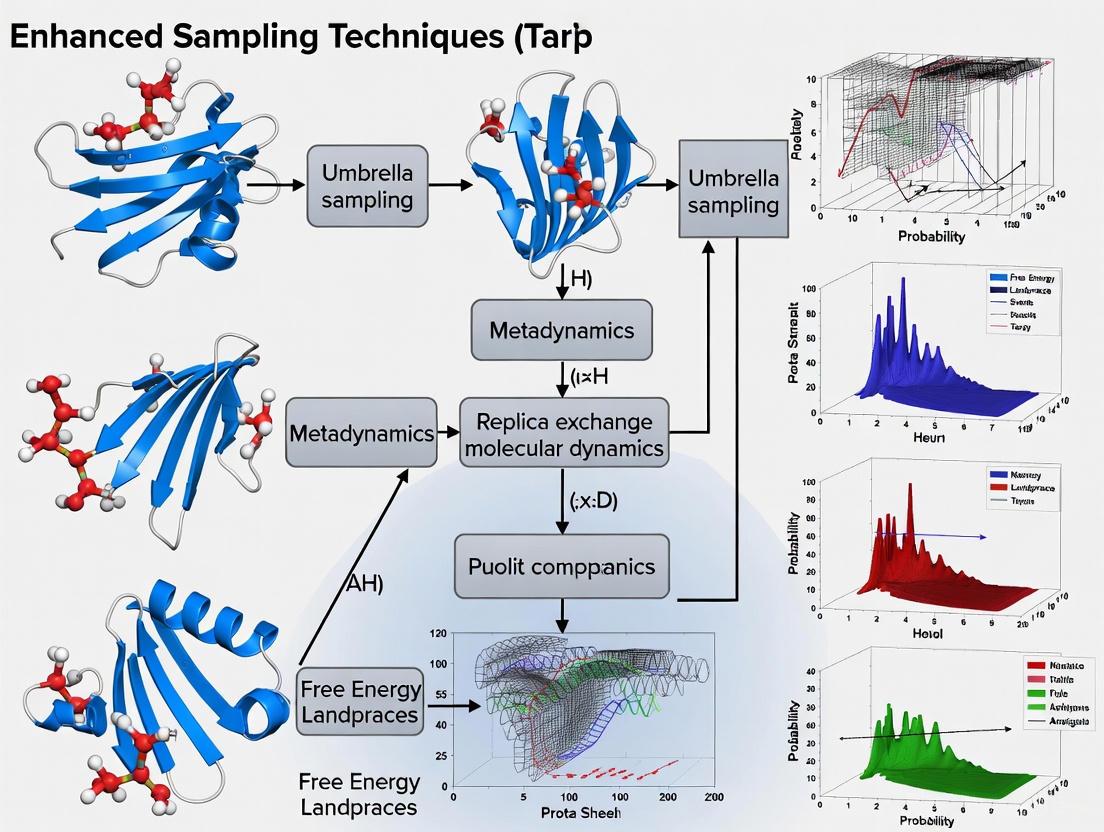
This article provides a comprehensive overview of advanced computational methods designed to overcome the timescale limitations of molecular dynamics simulations in studying rare protein folding events.
Breaking the Timescale Barrier: Enhanced Sampling Techniques for Simulating Rare Events in Protein Folding
Abstract
This article provides a comprehensive overview of advanced computational methods designed to overcome the timescale limitations of molecular dynamics simulations in studying rare protein folding events. It covers foundational principles, key methodological breakthroughs including collective variable-based techniques and machine learning-aided sampling, and addresses critical challenges in selecting optimal reaction coordinates and validating results. By synthesizing the latest research, this review serves as a valuable resource for researchers and drug development professionals seeking to apply these powerful techniques to understand protein folding pathways, misfolding diseases, and accelerate therapeutic discovery.
The Protein Folding Challenge: Why Rare Events Stump Conventional Simulation
Molecular dynamics (MD) simulation is a pivotal tool in molecular biophysics, capable of providing full atomic details of protein folding processes—an advantage unmatched by experimental techniques [1]. However, a profound timescale challenge limits its application: the functional processes of proteins, such as folding and conformational changes, often occur on timescales ranging from milliseconds to hours, whereas all-atom MD simulations traditionally struggle to surpass the microsecond barrier [1] [2]. This 6 to 9 order-of-magnitude gap between computationally accessible timescales and biologically relevant phenomena represents the central "timescale problem" in computational structural biology.
This sampling bottleneck arises from the rugged energy landscapes of proteins, which feature numerous local minima separated by high energy barriers [3]. In conventional simulations, systems frequently become trapped in these metastable states, making it statistically improbable to observe complete folding events within practical computational timeframes. Enhanced sampling techniques have emerged as essential strategies to bridge this gap, enabling researchers to extract meaningful thermodynamic and kinetic information from simulations that would otherwise be mired in local energy basins. For drug development professionals, solving this timescale problem is critical for accurately simulating protein-ligand interactions, allosteric mechanisms, and folding pathways relevant to disease states.
Quantifying the Timescale Gap
Experimental vs. Simulated Folding Times
The disparity between experimentally observed folding times and computationally accessible simulation times has been systematically characterized for several model proteins. The table below summarizes this timescale gap for representative protein systems:
| Protein System | Size/Characteristics | Experimental Folding Time | Simulated Folding Time (Unbiased MD) | Timescale Acceleration Needed |
|---|---|---|---|---|
| Fast-folding proteins (e.g., villin headpiece, WW domain mutants) | 20-35 residues, small single domain | ~1-20 microseconds [2] [4] | ~1-100 microseconds [2] | 1-100x |
| HIV-1 protease flap opening | Complex conformational change with ligand unbinding | 8.9 × 10^5 seconds (~10.3 days) [1] | 200 picoseconds (with tRC biasing) [1] | ~10^15-fold |
| PDZ2 domain conformational changes | Allosteric domain | Minutes to hours (implied) [1] | Significantly accelerated with tRCs [1] | >10^5-fold |
| ACBP folding | 86 residues, millisecond folder | ~10 milliseconds [4] | Achieved via massive parallel simulation (MSMs) [4] | ~1000x (to observe multiple events) |
Table 1: The timescale gap between experimental folding events and computationally accessible simulation times. Acceleration factors for enhanced sampling methods vary significantly based on system complexity and methodology employed.
The Speed Limit of Protein Folding
The theoretical "speed limit" for single-domain protein folding has been established at approximately 1 microsecond, representing the fastest possible time a protein of a certain size can fold on an energy landscape with minimal activation barriers [5]. This limit has been approached from above by experiments and from below by simulations, creating a convergence point where direct comparison becomes possible. However, most biologically interesting proteins fold far slower than this theoretical limit due to larger activation barriers and more complex energy landscapes.
Enhanced Sampling Methodologies
True Reaction Coordinates (tRCs) from Energy Relaxation
A groundbreaking approach to the timescale problem involves identifying and biasing true reaction coordinates (tRCs)—the few essential protein coordinates that fully determine the committor probability of any system conformation [1]. The committor ((p_B)) represents the probability that a trajectory initiated from a given conformation will reach the product state before the reactant state. tRCs are optimal collective variables because they directly track the progression of conformational changes.
Protocol: Identifying tRCs via Energy Relaxation Simulations
System Preparation: Begin with a single protein structure as input, typically the native state obtained from experimental data or structure prediction tools like AlphaFold [1].
Energy Relaxation MD: Perform short molecular dynamics simulations (typically picoseconds to nanoseconds) starting from non-equilibrium configurations. These simulations capture how energy flows through different degrees of freedom as the system relaxes.
Potential Energy Flow (PEF) Calculation: For each coordinate (qi), compute the potential energy flow using: [ dWi = -\frac{\partial U(\mathbf{q})}{\partial qi}dqi ] where (U(\mathbf{q})) is the potential energy function of the system [1]. Integrate this over time to obtain (\Delta Wi(t1,t_2)), which represents the energy cost of motion for each coordinate.
Generalized Work Functional (GWF) Analysis: Apply the GWF method to generate an orthonormal coordinate system of singular coordinates (SCs) that disentangle tRCs from non-essential coordinates by maximizing PEFs through individual coordinates [1].
tRC Identification: Identify coordinates with the highest PEF values as the true reaction coordinates, as these represent the degrees of freedom that incur the highest energy cost during conformational changes and are therefore most critical for overcoming activation barriers [1].
Validation: Perform committor analysis on candidate tRCs to verify they accurately predict (p_B = 0.5) at the transition state.
Protocol: Accelerated Sampling with tRC Biasing
Collective Variable Definition: Define the identified tRCs as collective variables in enhanced sampling simulations.
Bias Potential Application: Apply a bias potential (such as in metadynamics or umbrella sampling) specifically to the tRCs to enhance barrier crossing.
Trajectory Generation: Run biased MD simulations, which can accelerate conformational changes by factors of (10^5) to (10^{15}) compared to unbiased MD [1].
Pathway Analysis: Analyze resulting trajectories (RC-uncovered trajectories) to ensure they follow natural transition pathways and pass through transition state conformations.
Natural Reactive Trajectory Generation: Use transition path sampling (TPS) initiated from transition state conformations to generate unbiased reactive trajectories that mirror physical reality [1].
Parallel Sampling Methods
Markov State Models (MSMs)
Markov State Models have emerged as a powerful framework for overcoming timescale limitations by statistically combining many short, independent simulations [4]:
- Protocol: MSM Construction
- Ensemble Simulation: Generate hundreds to thousands of short MD simulations (nanoseconds to microseconds) starting from diverse initial configurations.
- Dimensionality Reduction: Project trajectories onto a reduced space using techniques like time-lagged independent component analysis (tICA).
- State Discretization: Cluster conformations into microstates based on structural similarity.
- Model Building: Calculate transition probabilities between states at a specified lag time, validating the Markov assumption.
- Kinetic Analysis: Compute slowest relaxation timescales and transition pathways between metastable states.
Replica Exchange Molecular Dynamics (REMD)
REMD enhances sampling by running parallel simulations at different temperatures and allowing controlled exchanges between them [3]:
- Protocol: Temperature REMD
- Replica Setup: Initialize 24-64 replicas of the same system at different temperatures (typically 300-500 K).
- Parallel Simulation: Run MD simultaneously on all replicas for a set number of steps (typically 1-10 ps).
- Exchange Attempt: Periodically attempt to swap configurations between adjacent temperatures with probability: [ P(1 \leftrightarrow 2) = \min\left(1, \exp\left[(\beta1 - \beta2)(U1 - U2)\right]\right) ] where (\beta = 1/k_B T) and (U) is potential energy [3].
- Equilibration: Discard initial non-equilibrated portion of trajectories before analysis.
Biasing Methods
Metadynamics
Metadynamics accelerates sampling by adding a history-dependent bias potential that discourages revisiting previously sampled regions [3]:
- Protocol: Well-Tempered Metadynamics
- CV Selection: Choose 1-3 collective variables (CVs) suspected to describe the slow dynamics.
- Gaussian Deposition: Periodically add Gaussian potentials to the system's potential energy at the current CV values.
- Bias Decay: Gradually decrease the height of added Gaussians to ensure convergence.
- Free Energy Estimation: Reconstruct the free energy surface from the accumulated bias.
Research Reagent Solutions
The following table details key computational tools and their functions in addressing the protein folding timescale problem:
| Tool/Method | Function | Key Applications | Implementation Examples |
|---|---|---|---|
| True Reaction Coordinates (tRCs) | Identify essential coordinates controlling conformational changes | Accelerate slow processes by 10^5-10^15-fold; natural pathway sampling [1] | Custom analysis of energy relaxation simulations |
| Markov State Models (MSMs) | Statistically combine short simulations to model long-timescale dynamics | Extract kinetics and pathways from massive simulation datasets [4] | MSMBuilder, PyEMMA, Enspara |
| Replica Exchange MD (REMD) | Enhance barrier crossing through temperature exchanges | Improved conformational sampling, folding mechanism studies [3] | GROMACS, AMBER, NAMD |
| Metadynamics | Accelerate transitions by filling free energy wells with bias potential | Protein folding, ligand binding, conformational changes [3] | PLUMED, COLVARS |
| Specialized Hardware (GPUs, ANTON) | Dramatically increase simulation speed through specialized processors | Millisecond-length trajectories; high-throughput sampling [4] | ANTON, GPU-accelerated MD codes |
| Structure-Based Models (Gō Models) | Native-centric potentials that smooth energy landscape | Large protein folding, folding pathways, domain interactions [6] | Custom implementations in various MD packages |
Table 2: Essential computational tools and methods for addressing the protein folding timescale problem.
Workflow Visualization
The following diagram illustrates the integrated workflow for applying enhanced sampling methods to protein folding studies:
Diagram 1: Integrated workflow for enhanced sampling of protein folding dynamics, showing multiple strategic approaches to overcome the timescale gap.
The timescale problem in protein folding simulations remains a significant challenge, but recent methodological advances have substantially narrowed the gap between computationally accessible timescales and biologically relevant phenomena. The identification of true reaction coordinates through energy relaxation represents a particularly promising direction, enabling dramatic acceleration factors while maintaining physical relevance of the sampled pathways [1]. Similarly, Markov state models have demonstrated the ability to extract millisecond-timescale kinetics from massive ensembles of short simulations [4].
For drug development professionals, these enhanced sampling techniques offer increasingly viable paths to simulate protein-ligand interactions, allosteric mechanisms, and folding pathways relevant to disease states. The integration of multiple approaches—combining the rapid barrier crossing of tRC-based methods with the statistical rigor of MSMs—represents the current state of the art. As force fields continue to improve and computational hardware becomes more powerful, we anticipate that enhanced sampling methods will become increasingly central to both interpreting experimental folding data and predicting how mutations and small molecules impact protein folding and stability.
Future developments will likely focus on improving the automation of collective variable discovery, enhancing the integration of experimental data with simulations, and extending these methods to even larger protein systems and complexes. The ultimate goal remains a complete atomic-resolution understanding of protein folding that matches the timescales and complexity of biological reality.
The folding funnel hypothesis is a specific version of the energy landscape theory of protein folding, which posits that a protein's native state corresponds to its free energy minimum under physiological solution conditions [7]. This conceptual framework addresses a fundamental paradox in structural biology: how proteins navigate the vast conformational space to find their unique, biologically active three-dimensional structure within biologically relevant timescales, thus resolving Levinthal's Paradox [7] [8]. Unlike a smooth, idealized funnel, the rugged funnel incorporates kinetic traps, energy barriers, and narrow throughways that represent the topological and energetic complexities inherent to biomolecular folding [7].
The landscape's ruggedness arises from frustration, where conflicting interactions within non-native conformations create local free energy minima that can temporarily trap partially folded intermediates [8]. Natural proteins, however, have evolved to be minimally frustrated, meaning their energy landscapes are predominantly funneled toward the native state, with ruggedness being the exception rather than the rule [8]. This organization allows the protein to navigate its conformational landscape efficiently, with the depth of the funnel representing the energetic stabilization of the native state and the width representing the conformational entropy of the system [7].
Quantitative Landscape of Rugged Funnels
The table below summarizes key quantitative metrics and concepts essential for understanding and characterizing rugged energy landscapes.
Table 1: Key Quantitative Metrics for Characterizing Rugged Funnels
| Metric/Concept | Theoretical Basis | Experimental/Simulation Manifestation |
|---|---|---|
| Free Energy (G) | Depth represents stabilization of native state; landscape ruggedness indicates local minima [7] [8]. | Measured via folding/unfolding equilibria; simulated via enhanced sampling [9]. |
| Reaction Coordinate (Q) | Often the fraction of native contacts; measures progress toward native fold [9]. | Used to construct free energy surfaces from simulations; lower Q indicates unfolded/misfolded states [9]. |
| Folding Temperature (TF) | Temperature of the folding transition, resembling a crystallization transition [8]. | Determined from thermal denaturation experiments and simulations. |
| Glass Transition Temperature (Tg) | Temperature below which the system gets trapped in metastable states [8]. | Inferred from kinetic trapping phenomena; a lower Tg relative to TF enables easier folding [8]. |
| TF/Tg Ratio | Measure of landscape "foldability"; high ratio indicates minimal frustration and fast folding [7] [8]. | A high ratio predicts fewer intermediates and a faster folding rate [7]. |
Advanced Sampling Methodologies for Rare Events
Simulating transitions across rugged funnels, such as protein folding and ligand unbinding, is challenging due to their rare event character. The table below compares modern computational methods designed to overcome this timescale barrier.
Table 2: Comparison of Enhanced Sampling Methods for Rare Events
| Method | Core Principle | Key Advantage | Representative Application |
|---|---|---|---|
| PathGennie [10] | Direction-guided adaptive sampling using swarms of ultrashort, unbiased trajectories. | No external biasing forces; preserves true dynamics; generates pathways in picoseconds. | Identified competing unbinding pathways for benzene from T4 lysozyme. |
| Gen-COMPAS [11] | Generative diffusion model coupled with committor-based filtering to pinpoint transition states. | Does not require predefined reaction coordinates; converges within nanoseconds. | Reconstructed pathways for a miniprotein and a ribose-binding protein. |
| Machine-Learned Coarse-Grained (CG) Models [9] | Uses deep learning to create a transferable CG force field from all-atom simulation data. | Several orders of magnitude faster than all-atom MD while maintaining predictive accuracy. | Predicted metastable states and folding free energies for various proteins (e.g., Trp-cage, villin). |
Protocol: Direction-Guided Adaptive Sampling with PathGennie
Application Note: This protocol is designed for the rapid generation of initial transition pathways, such as protein folding or ligand unbinding, which can subsequently be used as seeds for more rigorous path sampling methods like the Weighted Ensemble (WE) approach [10].
Step 1: System Setup and Goal Definition
- Prepare the molecular system of interest (e.g., protein in solvated native state for unfolding studies).
- Define the start (state A, e.g., folded) and end (state B, e.g., unfolded) states in a high-dimensional collective variable (CV) space. Suitable CVs include root-mean-square deviation (RMSD), fraction of native contacts (Q), or radius of gyration (Rg).
Step 2: Launch Ultrashort Trajectory Swarms
- From a configuration in or near state A, initiate a large swarm (e.g., hundreds to thousands) of independent, unbiased molecular dynamics trajectories.
- Critical Parameter: Keep the trajectory length extremely short, on the order of a few femtoseconds [10].
Step 3: Directional Progress Assessment
- After each ultrashort trajectory, calculate the CVs for the final conformation.
- Selection Criterion: Select only those trajectories whose final structures show progress from state A toward state B in the CV space. All other trajectories are terminated [10].
Step 4: Iterative Propagation
- Use the selected conformations from Step 3 as new starting points.
- Repeat Steps 2 and 3, iteratively propagating only the trajectories that make directional progress.
- Continue until a full pathway connecting states A and B is generated.
Step 5: Pathway Validation and Seeding
- The resulting pathway is generated on a picosecond timescale (10-100 ps).
- Validation: Confirm the physical reasonableness of the pathway by inspecting intermediate structures.
- Seeding: Use this pathway as an initial seed for a weighted ensemble simulation to converge onto statistically robust pathway ensembles and calculate rate constants [10].
Protocol: Generative Pathway Discovery with Gen-COMPAS
Application Note: Gen-COMPAS is suited for reconstructing complex transition pathways and free-energy landscapes without pre-defined collective variables, leveraging machine learning for enhanced efficiency [11].
Step 1: End-State Preparation
- Obtain atomic-resolution structures for the initial (e.g., folded) and final (e.g., unfolded) states. These can come from experimental data (NMR, crystallography) or prior simulations.
Step 2: Generative Sampling of Intermediates
- Employ a pre-trained generative diffusion model. This model learns the physical constraints of the molecular system from data and can produce realistic intermediate conformations between the provided end-states [11].
Step 3: Committor Analysis and Filtering
- For each generated intermediate, perform short, unbiased molecular dynamics simulations.
- Calculate the committor probability (pB) for each intermediate—the probability that a simulation initiated from that structure reaches state B before state A.
- Identification: Structures with pB ≈ 0.5 are identified as the transition state [11].
Step 4: Path Ensemble Construction
- Use the high-committor intermediates identified in Step 3 as starting points for new short, unbiased simulations to complete the pathways to states A and B.
- Aggregate all successful transition trajectories to build a full ensemble of pathways.
Step 5: Landscape Reconstruction
- Analyze the resulting path ensemble to compute observables such as the free-energy landscape, committor distributions, and transition state ensembles.
- The entire process converges on a nanosecond timescale, significantly faster than conventional enhanced sampling methods [11].
The Scientist's Toolkit: Research Reagent Solutions
Table 3: Essential Computational Tools for Studying Rugged Funnels
| Tool/Resource | Type | Primary Function | Application Note |
|---|---|---|---|
| PathGennie [10] | Software Package | Rapid generation of rare event pathways via adaptive sampling. | Ideal for creating initial pathway seeds; code is freely available. |
| Gen-COMPAS [11] | Computational Framework | Generative discovery of pathways and landscapes without pre-defined variables. | Leverages machine learning to avoid bias; offers nanosecond-scale convergence. |
| CGSchNet [9] | Machine-Learned Coarse-Grained Force Field | Accelerated molecular dynamics for protein folding and dynamics. | Provides a transferable model for new sequences; orders of magnitude faster than all-atom MD. |
| Committor Probability (pB) | Mathematical Analysis | Identifies the true transition state ensemble (pB = 0.5). | The gold-standard analysis for mechanism elucidation; central to the Gen-COMPAS method [11]. |
| Fraction of Native Contacts (Q) | Collective Variable (CV) | Measures progress along folding reaction coordinate. | Q=1 is native state; Q=0 is unfolded; used to construct free energy profiles [9]. |
Visualizing the Rugged Funnel Landscape
The following diagram illustrates the conceptual energy landscape of a protein, highlighting the funneled nature toward the native state, the inherent ruggedness, and the key states involved in the transition.
The conceptual framework of the rugged funnel provides a powerful paradigm for understanding protein folding and function. The integration of advanced computational methods—from direction-guided sampling and generative machine learning to transferable coarse-grained models—is breaking the timescale barrier that has long hindered the simulation of rare events [10] [11] [9]. These protocols and tools empower researchers to move beyond static structures and explore the dynamic conformational landscapes that underpin biological activity and drug discovery, transforming the rugged funnel from a theoretical concept into a tractable and quantifiable research domain.
The functional biology of proteins is governed by dynamic processes that occur on timescales spanning many orders of magnitude. Among these, rare biological events—those associated with significant kinetic barriers—present particular challenges for both experimental characterization and computational prediction. Such events include the fundamental processes of protein folding, the pathogenic misfolding and aggregation of proteins, and the precise binding of ligands to their biological targets. These processes are considered "rare" because the system must overcome high free-energy barriers between metastable states, making them difficult to observe directly through conventional experimental or simulation approaches [12].
The study of these rare events has been revolutionized by enhanced sampling techniques, which accelerate the exploration of configuration space while maintaining thermodynamic rigor. These methods are particularly valuable in drug discovery, where understanding the atomic-level details of binding and misfolding can inform therapeutic strategies for conditions ranging from infectious diseases to neurodegenerative disorders [13] [12]. This Application Note provides a structured overview of these key biological processes, summarizes quantitative insights gained through advanced sampling, and presents detailed protocols for investigating these rare events computationally.
Protein Folding: Navigating the Rugged Free Energy Landscape
Theoretical Framework and the Folding Code
Protein folding represents a classic rare event in molecular biology, where an unstructured polypeptide chain transitions to its unique native three-dimensional structure. According to Anfinsen's thermodynamic hypothesis, this native structure corresponds to the global free energy minimum under physiological conditions [14]. The conceptual framework for understanding folding has evolved from the Levinthal paradox to the energy landscape theory, which visualizes folding as a funnel-shaped landscape where the protein navigates a minimally frustrated path toward the native state [14] [12].
The "folding code" is determined by the balance of interatomic forces, with substantial evidence indicating hydrophobic interactions play a major organizing role, supplemented by hydrogen bonding, electrostatic interactions, and van der Waals forces [14]. While naturally occurring proteins are "minimally frustrated," their folding landscapes remain rugged, featuring numerous metastable intermediates separated by kinetic barriers that make folding a rare event on molecular timescales [12].
Quantitative Analysis of Folding States and Kinetics
Recent methodological advances have enabled more precise quantification of protein folding states and dynamics. Table 1 summarizes key analytical approaches and their applications in characterizing folding intermediates and kinetics.
Table 1: Analytical Methods for Quantifying Protein Folding States
| Method Category | Specific Techniques | Measurable Parameters | Applications in Folding Studies |
|---|---|---|---|
| Chromatographic | HPLC-based methods | Solubilized protein state, folding state quantification | Monitoring refolding progress, distinguishing native from non-native states [15] |
| Spectroscopic | Various spectroscopy methods | Structural changes, protein conformations | Real-time monitoring of conformational changes during refolding [15] |
| Activity Assays | Enzymatic activity assays | Bioactive conformation | Quantifying native protein recovery in refolding processes [15] |
| Computational CVs | Hydrogen bonding CV, Side-chain packing CV | Free energy landscapes, intermediate states | Resolving folding intermediates like dry molten globule state [16] |
The kinetics of folding are typically characterized by rapid formation of intermediate states followed by slower competition between native structure formation and aggregation pathways. For simplified protein structures, the kinetics can be described by a model where solubilized protein transitions to an intermediate state (rate constant k~i~) before proceeding to either the native form (k~n~) or aggregates (k~a~) [15]. The aggregation reaction is generally of higher order than refolding, making it highly dependent on protein concentration.
Enhanced Sampling Strategies for Folding
Advanced computational approaches have been developed to overcome the timescale limitations of conventional molecular dynamics. These typically employ collective variables (CVs) that capture essential features of the folding reaction:
- Hydrogen Bonding CV: Explicitly distinguishes protein-protein from protein-water hydrogen bonds while incorporating angular information [16]
- Side-chain Packing CV: Captures mesoscale contacts between side-chains, encoding compactness while accounting for both native and non-native contacts [16]
These CVs can be used with enhanced sampling methods like Metadynamics and On-the-fly Probability Enhanced Sampling (OPES) to map folding free energy landscapes and identify metastable intermediates [16]. The recent OneOPES hybrid sampling scheme combines the strengths of OPES Explore, multi-thermal approaches, and replica exchange to reduce the strict requirement for optimal CVs [16].
Figure 1: Protein Folding Energy Landscape. The funnel-shaped free energy landscape of protein folding shows the transition from unfolded states through intermediates like the dry molten globule (DMG) to the native state, competing with off-pathway aggregation.
Protein Misfolding and Aggregation: From Cellular Quality Control to Disease
Mechanisms and Cellular Consequences
Protein misfolding occurs when proteins escape the cellular quality control machinery and fail to attain or maintain their properly folded functional state. The specificity of misfolding depends on the nature of the protein, efficacy of folding and degradation mechanisms, cellular conditions, and genetic factors [12]. Mutations in the amino acid sequence can alter folding energetics, promoting misfolded states that often expose hydrophobic regions normally buried in the native structure [12].
Eukaryotic cells maintain an extensive proteostasis network that governs cellular concentration, folding, and localization of proteins. When newly synthesized or intracellular proteins fail to fold efficiently, the quality control system activates molecular chaperones to facilitate refolding or targets misfolded proteins for degradation via proteasomes or lysosomes [12]. However, when generation of misfolded proteins exceeds cellular degradative capacity, they assemble into aggregates that are associated with various human disorders.
Misfolding Diseases and Experimental Characterization
Misfolded proteins are implicated in diverse diseases including cystic fibrosis, amyloidosis, Alzheimer's disease, Parkinson's disease, and type II diabetes [17] [12]. These conditions may result from either loss of functional protein (as in cystic fibrosis) or toxic gain-of-function from protein aggregates (as in neurodegenerative diseases) [12].
Recent advances in structural proteomics have enabled more detailed characterization of misfolding diseases. Covalent Protein Painting (CPP) has revealed conformational defects in misfolded CFTR variants in cystic fibrosis, identifying previously unreported opening mechanisms and conformational changes during biogenesis [17]. This approach can quantify how disease-associated mutations disturb normal conformational dynamics even after pharmaceutical intervention.
Simulation Approaches for Misfolding
Computational studies of misfolding employ both atomistic and coarse-grained approaches:
- Atomistic simulations using enhanced sampling techniques like Replica Exchange Molecular Dynamics (REMD) can characterize early-stage monomers and small oligomers, revealing the mode of self-assembly from nontoxic monomers to toxic species [12]
- Coarse-grained models sacrifice atomistic detail to capture basic physical principles of misfolding and aggregation over longer timescales, using simplified representations of the polypeptide chain [12]
Table 2: Simulation Methods for Protein Misfolding Studies
| Simulation Method | Resolution | Time Scales | Key Applications | Limitations |
|---|---|---|---|---|
| Atomistic (REMD) | Atomic detail | Nanoseconds to microseconds | Early-stage monomers, small oligomers, atomic details of self-assembly | Limited by system size and simulation time [12] |
| Coarse-grained models | Simplified representation | Microseconds to milliseconds | General principles of aggregation, larger systems | Loss of atomic detail, parameterization challenges [12] |
| Go̅ models | Native-centric | Millisecond and beyond | General features of folding landscape | Lack of atomistic detail, biased toward native state [16] |
Protein-Ligand Binding: Estimating Binding Free Energies
Computational Challenges in Binding Free Energy Prediction
Protein-ligand binding represents another class of rare event characterized by the slow formation and dissociation of molecular complexes. Accurate prediction of binding free energies (ΔG~bind~) remains a formidable challenge in computational chemistry, with the field seeking to bridge the gap between the accuracy of all-atom molecular dynamics and the high-throughput capabilities of docking [13].
Advanced Methods for Binding Free Energy Estimation
Coarse-grained funnel metadynamics (CG-FMD) has emerged as a promising approach that combines the reduced computational cost of coarse-grained representation with enhanced sampling techniques. Using the Martini 3 forcefield, this method has demonstrated ΔG~bind~ estimates comparable to experimental values while requiring only a fraction of the computational cost of all-atom molecular dynamics simulations [13]. The extensive sampling achievable with CG-FMD reduces statistical uncertainty in final predictions, effectively compensating for the simplified system representation.
Figure 2: Protein-Ligand Binding Methods. CG-FMD bridges the gap between accurate but expensive all-atom MD and fast but limited docking approaches.
Experimental Protocols
Protocol 1: Enhanced Sampling Simulation for Protein Folding
Objective: Map the free energy landscape of a mini-protein (e.g., Chignolin or TRP-cage) and identify folding intermediates.
Materials:
- Initial Structure: Atomic coordinates from PDB or predicted structures
- Force Field: All-atom force field (e.g., AMBER, CHARMM) or coarse-grained Martini 3
- Sampling Method: OneOPES or OPES-MetaD implementation in PLUMED
- Solvation: Explicit solvent model with appropriate ion concentration
Procedure:
- System Setup
- Obtain initial protein structure (folded or unfolded state)
- Solvate in appropriate water box with ions for physiological concentration
- Energy minimization using steepest descent algorithm (5,000 steps)
Equilibration
- NVT equilibration for 100 ps with protein heavy atoms restrained
- NPT equilibration for 1 ns with gradual release of restraints
- Unrestrained NPT equilibration for 5-10 ns
Collective Variable Selection
- Hydrogen Bonding CV: Automatically identify protein-protein and protein-water hydrogen bonds from short unbiased trajectories of end states
- Side-chain Packing CV: Identify native and non-native contacts using contact maps
- Apply Linear Discriminant Analysis (LDA)-like criterion to filter features
Enhanced Sampling Production
- Set up OneOPES simulation with hydrogen bonding and side-chain packing CVs
- Run 5 independent replicas for statistical robustness
- For Chignolin: Run 300 μs aggregate sampling; TRP-cage: 200 μs aggregate sampling
Analysis
- Calculate free energy surfaces as a function of selected CVs
- Identify metastable states and intermediates (e.g., dry molten globule)
- Compute folding free energy and rates from state populations
Troubleshooting:
- If convergence is slow, increase the number of replicas or extend simulation time
- If intermediates are not resolved, refine CV selection with additional features
- Validate against available experimental data or long unbiased simulations
Protocol 2: Quantitative Analysis of Protein Refolding Dynamics
Objective: Quantify refolding and aggregation rates in fed-batch refolding processes for inclusion body recovery.
Materials:
- Protein Source: Inclusion bodies from E. coli expression system
- Denaturant: Urea or guanidine hydrochloride (GuHCl)
- Reducing Agent: Dithiothreitol (DTT) or β-mercaptoethanol
- Analytical Tools: HPLC system with appropriate column, photometric activity assay
Procedure:
- Solubilization
- Suspend inclusion bodies in 6-8 M urea or 4-6 M GuHCl
- Add reducing agent (1-5 mM DTT) to break disulfide bridges
- Incubate for 2-4 hours with gentle stirring
Fed-Batch Refolding
- Prepare refolding buffer with appropriate pH and additives
- Use controlled feeding strategy to gradually dilute denaturant
- Maintain protein concentration below 1 g L⁻¹ to minimize aggregation
Sampling Strategy
- Collect frequent samples during first 2-3 hours (high dynamics phase)
- Reduce sampling frequency after initial rapid phase (every 30-60 minutes)
- Continue sampling for 8-24 hours depending on protein
State Quantification
- HPLC Analysis: Separate and quantify native, intermediate, and aggregated states
- Activity Assays: Measure recovery of biological activity
- Spectroscopic Methods: Monitor structural changes
Rate Calculation
- Calculate refolding and aggregation rates by finite difference approximation
- Propagate measurement errors to determine confidence intervals
- Ensure signal-to-noise ratio (SNR) > 12 for reliable rate estimation
Data Interpretation:
- Plot concentrations of different states versus time
- Calculate apparent rate constants for refolding (k~n~) and aggregation (k~a~)
- Optimize process conditions to maximize k~n~/k~a~ ratio
The Scientist's Toolkit: Essential Research Reagents and Materials
Table 3: Key Research Reagent Solutions for Protein Folding and Misfolding Studies
| Reagent/Material | Function/Application | Examples/Specifications |
|---|---|---|
| Chaotropic Agents | Protein denaturation for refolding studies | Urea (6-8 M), Guanidine HCl (4-6 M) for solubilizing inclusion bodies [15] |
| Reducing Agents | Break disulfide bridges, keep cysteine reduced | Dithiothreitol (DTT, 1-5 mM), β-mercaptoethanol [15] |
| Molecular Chaperones | Assist protein folding in cellular environments | Hsp70, Hsp60 families; used in in vitro refolding studies [12] |
| Analytical Chromatography | Separation and quantification of folding states | HPLC systems with size exclusion or reverse phase columns [15] |
| Activity Assay Reagents | Quantify native protein recovery | Substrate-specific reagents for enzymatic activity measurement [15] |
| Coarse-Grained Force Fields | Reduced representation for enhanced sampling | Martini 3 forcefield for CG-FMD binding studies [13] |
| Enhanced Sampling Packages | Accelerate rare events in simulation | PLUMED with OPES, Metadynamics for folding/binding studies [16] |
The study of rare events in protein biology—folding, misfolding, and ligand binding—remains at the forefront of molecular biophysics and drug discovery. Enhanced sampling techniques have dramatically improved our ability to investigate these processes with both temporal and spatial resolution unmatched by experimental approaches alone. The protocols and methodologies outlined in this Application Note provide researchers with practical tools to explore these fundamental biological processes, from the detailed mapping of folding landscapes to the prediction of ligand binding affinities for drug design. As these methods continue to evolve, they promise to deepen our understanding of protein dynamics and accelerate the development of therapeutics for misfolding diseases and beyond.
The central goal of molecular biophysics is to understand how proteins function, a process governed by transitions between metastable conformations on a rugged energy landscape [1]. While Molecular Dynamics (MD) simulation is a pivotal tool that provides full atomic details, a profound gap exists between the time scales achievable by MD simulations (microseconds) and those of functional biological processes (milliseconds to hours) [1]. This disparity makes the direct simulation of many critical processes, such as protein folding, ligand dissociation, and allosteric transitions, computationally infeasible [2]. The core of this problem is the sampling bottleneck: high energy barriers that separate functionally important states trap conventional MD simulations in local energy minima, preventing the exploration of the full conformational space [1] [18].
Enhanced sampling methods are designed to overcome this bottleneck. This Application Note details the underlying cause of this trapping and presents current, advanced methodologies that enable researchers to accelerate the sampling of these rare events, with a focus on techniques that have demonstrated success in protein folding and drug-target interaction studies.
The Fundamental Problem: Energy Barriers and Rare Events
Protein dynamics occur on a complex energy landscape featuring numerous valleys (metastable states) separated by barriers [1]. The waiting period in a metastable state before a rare, activated event occurs is orders of magnitude longer than the actual transition period itself [1]. Conventional MD simulations spend vast computational resources dwelling in these minima rather than sampling the transition pathways.
Table 1: Key Challenges of Conventional MD in Sampling Rare Events
| Challenge | Impact on Simulation | Quantitative Disparity |
|---|---|---|
| High Energy Barriers | Prevents transitions between metastable states; simulations are "trapped." [1] | Activation barriers can be many times higher than thermal energy (kBT). |
| Rugged Energy Landscape | Leads to slow convergence and non-ergodic sampling; the simulation cannot explore all relevant states [18]. | IDP ensembles may require sampling of millions of diverse conformations [18]. |
| Exponential Time Dependence | The waiting time for a barrier-crossing event grows exponentially with the barrier height. | MD timesteps are ~1-2 fs; folding events can range from µs to hours [1] [2]. |
The challenge is particularly acute for Intrinsically Disordered Proteins (IDPs), which occupy a flat energy landscape with many local minima and lack a single stable structure, making representative sampling exceptionally difficult [18].
Diagram 1: The Conventional MD Bottleneck. Simulations spend most of their computational time trapped in metastable states, awaiting rare fluctuations sufficient to cross high energy barriers.
Enhanced Sampling Solutions: Key Methodologies
Enhanced sampling techniques can be broadly categorized into methods that accelerate transitions by biasing simulations and those that focus on sampling the transition paths themselves [19]. The efficacy of many bias-based methods hinges on the identification of optimal Collective Variables (CVs) or Reaction Coordinates (RCs).
The Quest for the True Reaction Coordinate (tRC)
A True Reaction Coordinate (tRC) is defined as the essential protein coordinate that fully determines the committor (pB), which is the probability that a trajectory starting from a given conformation will reach the product state before the reactant state [1]. The tRC is recognized as the optimal CV for accelerating conformational changes because biasing it directly targets the natural transition pathway, avoiding non-physical trajectories and the problem of "hidden barriers" [1].
A recent breakthrough method identifies tRCs from energy relaxation simulations, using the insight that tRCs control both conformational changes and energy flow. The Generalized Work Functional (GWF) method generates an orthonormal coordinate system (singular coordinates) that disentangles tRCs from non-essential coordinates by maximizing the Potential Energy Flow (PEF) through individual coordinates [1]. The PEF through a coordinate qi, ΔWi, is the energy cost of its motion and is given by: [ \Delta W{i}(t{1},t{2}) = \int{t{1}}^{t{2}} dW{i} = - \int{q{i}(t{1})}^{q{i}(t{2})} \frac{\partial U(\mathbf{q})}{\partial q{i}} dq{i} ] Coordinates with the highest PEF are identified as the critical tRCs for the conformational change [1].
Table 2: Quantitative Performance of tRC-Based Enhanced Sampling
| Protein System | Process Studied | Experimental Timescale | Accelerated Timescale (with tRC bias) | Acceleration Factor |
|---|---|---|---|---|
| HIV-1 Protease | Flap opening & ligand unbinding | 8.9 × 10⁵ seconds [1] | ~200 ps [1] | ~1015 |
| PDZ2 Domain | Conformational changes & ligand dissociation | Not Specified | Not Specified | 105 to 1015 [1] |
Protocol: Identifying tRCs via the GWF Method
Application: Predictive sampling of conformational changes starting from a single protein structure [1].
Workflow Overview:
- Energy Relaxation Simulation: Initiate a short MD simulation from a single protein structure of interest.
- Compute Potential Energy Flows (PEF): For each candidate coordinate qi, compute the PEF (ΔWi) as the integral of the work done on the coordinate during the relaxation.
- Apply Generalized Work Functional (GWF): Use the GWF to transform the candidate coordinates into a set of orthonormal Singular Coordinates (SCs).
- Identify tRCs: Rank the SCs by their PEF values. The SCs with the highest PEF are the identified tRCs.
- Enhanced Sampling: Apply a bias potential (e.g., in metadynamics or umbrella sampling) to the identified tRCs to drive conformational transitions.
Diagram 2: GWF Workflow for tRC Identification. This protocol enables predictive sampling from a single structure.
Milestoning for Drug-Target Kinetics
Milestoning is a path-sampling method that divides a rare event (e.g., ligand unbinding) into a series of transitional states called milestones [19]. It uses many short, independent simulations initiated at these milestones to compute kinetic properties like the Mean First Passage Time (MFPT), which is critical for predicting drug residence times [19].
Key Principles:
- Milestones: Hypersurfaces, often isosurfaces of a collective variable, that divide the reaction pathway. Optimal milestones are isosurfaces of the committor function [19].
- Two Core Assumptions:
- The sequence of milestone transitions is Markovian (memoryless).
- The transition times between successive milestones are statistically independent [19].
- Exact Milestoning: An advanced approach that does not rely on the second assumption but is computationally more expensive [19].
Protocol: Markovian Milestoning with Voronoi Tessellations
Application: Calculating unbinding rate constants (koff) and residence times for drug-target complexes [19].
Workflow Overview:
- Define State Boundaries: Identify the configurational space of the bound state and the unbound state.
- Tessellate Configuration Space: Use Voronoi tessellation to divide the phase space between the states into discrete cells. The interfaces between these cells are the "milestones."
- Sample Milestones: Run multiple short MD simulations constrained to each milestone. Record the transitions to neighboring milestones and the time until a transition occurs (the lifetime).
- Construct Transition Matrix: Build a matrix, K, where elements Kij represent the probability of transitioning from milestone i to milestone j.
- Compute Kinetics: Solve the matrix equation to obtain the MFPT from the bound to the unbound state. The inverse of the MFPT is the estimate for koff.
The Scientist's Toolkit: Research Reagent Solutions
Table 3: Essential Computational Tools for Enhanced Sampling Studies
| Tool / Resource | Function / Description | Relevance to Enhanced Sampling |
|---|---|---|
| True Reaction Coordinates (tRCs) [1] | The optimal collective variables that describe the essential pathway of a conformational change. | Biasing tRCs provides maximal acceleration and ensures trajectories follow natural pathways. |
| Committor (pB) [1] | The probability a trajectory from a given conformation reaches the product before the reactant. | The key theoretical metric for validating a proposed reaction coordinate; pB=0.5 defines the transition state. |
| CHARMM36m / AMBER ff19SB [18] | State-of-the-art non-polarizable protein force fields. | Provide accurate balance of protein-protein and protein-water interactions, crucial for modeling both folded and disordered states [18]. |
| TIP3P/TIP4P Water Models [18] | Explicit solvent models used with biomolecular force fields. | Critical for realistic solvation; modified versions (e.g., TIP3P*) can help prevent over-compaction of IDPs [18]. |
| Markovian Milestoning [19] | A path-sampling method to compute kinetics of rare events. | Especially powerful for estimating drug-target unbinding rates and residence times from seconds to hours [19]. |
| Transition Path Sampling (TPS) [1] | A method to harvest unbiased reactive trajectories (Natural Reactive Trajectories) between states. | Used to generate initial reactive trajectories for analysis; can be initiated with TS conformations found via tRC-biased sampling [1]. |
The sampling bottleneck imposed by high energy barriers is a fundamental challenge in MD simulations. While conventional MD is trapped for impossibly long times in metastable states, enhanced sampling methods provide a powerful escape route. The development of physics-based methods to identify True Reaction Coordinates represents a significant advance, moving beyond intuition-based CVs and enabling dramatic, physically meaningful acceleration of protein conformational changes [1]. Simultaneously, methods like milestoning provide a rigorous framework for extracting quantitative kinetics, such as drug residence times, which are crucial for drug development [19].
The future of the field lies in the continued refinement of these methods, their integration with machine learning approaches for CV discovery, and the development of more accurate and transferable force fields. By leveraging these advanced protocols, researchers can overcome the sampling bottleneck and gain unprecedented atomic-level insight into protein function, folding, and interaction dynamics.
A Toolkit for Acceleration: Key Enhanced Sampling Methods and Their Applications
Molecular dynamics (MD) simulations provide a "computational microscope" for studying biological processes at an atomic level, including fundamental problems like protein folding [20]. The effectiveness of MD is often limited by the "rare events problem," where the time scales of functional processes (milliseconds to seconds) far exceed what is practical to simulate (microseconds) [20]. This is particularly true for protein folding, where the energy landscape is rugged with many local minima separated by high energy barriers, making it easy for simulations to become trapped in non-functional states [3].
Enhanced sampling methods address this challenge by accelerating the exploration of configuration space. A central concept in these methods is the use of collective variables (CVs), which are low-dimensional functions of the atomic coordinates (e.g., root-mean-square deviation, radius of gyration, or hydrogen bonding patterns) that are designed to capture the slow, functionally relevant motions of the system [16] [20]. By applying a bias potential along these CVs, enhanced sampling methods facilitate the overcoming of energy barriers that would be prohibitive in standard MD.
Within the broader thesis on enhanced sampling techniques, this article details three foundational CV-based methods: Umbrella Sampling, Metadynamics, and Adaptive Biasing Force. These techniques are crucial for studying protein folding, as they enable the calculation of free energy landscapes and the identification of folding intermediates that are critical for understanding biological function [3] [16].
Theoretical Foundations of Collective Variable-Based Sampling
The core objective of enhanced sampling is to efficiently compute the free energy surface (FES) of a system as a function of selected CVs. For a set of CVs, (\mathbf{s} = \mathbf{s}(\mathbf{R})), the FES is defined as:
[ F(\mathbf{s}) = -\frac{1}{\beta} \log p(\mathbf{s}) ]
where (p(\mathbf{s})) is the probability distribution of the CVs, and (\beta = 1/k_B T) [20]. The FES provides a thermodynamic landscape where metastable states correspond to local minima and reaction pathways are represented by the transitions between them [20].
Table 1: Comparison of Collective Variable-Based Enhanced Sampling Methods
| Method | Theoretical Basis | Bias Formulation | Key Output | Primary Challenge |
|---|---|---|---|---|
| Umbrella Sampling | Restraints on CVs | Harmonic potentials centered at different points in CV space [21]. | Weighted histogram of CV distributions for FES reconstruction [21]. | Requires careful overlap between windows and post-processing. |
| Metadynamics | History-dependent bias | Sum of Gaussian potentials deposited along the trajectory to discourage revisiting [3]. | Time-converged bias potential equals negative FES [3]. | Risk of over-filling and slow convergence; choice of CVs is critical [1]. |
| Adaptive Biasing Force | Instantaneous mean force | Direct estimation and application of the average force along the CV [21]. | Integrated mean force directly gives the FES [21]. | Requires accurate calculation of forces on the CVs. |
A significant challenge for all CV-based methods is the selection of optimal CVs. Poorly chosen CVs can lead to "hidden barriers," where slow degrees of freedom not captured by the CVs prevent effective sampling [1]. True reaction coordinates (tRCs), which are the few essential coordinates that fully determine the committor probability ((p_B)), are recognized as the optimal CVs [1]. Biasing tRCs can accelerate conformational changes by up to (10^{15})-fold while ensuring the trajectories follow natural transition pathways [1].
Methodologies and Protocols
Umbrella Sampling
Umbrella Sampling (US) is a widely used method for reconstructing the free energy profile along a predetermined reaction coordinate.
Experimental Protocol:
- CV Selection and Definition: Choose a CV, (\xi(\mathbf{R})), believed to describe the transition of interest (e.g., a distance for ligand dissociation or radius of gyration for protein folding).
- Window Setup: Define a series of simulations (windows), each with a harmonic bias potential, (Vi(\xi) = \frac{1}{2} k (\xi - \xii)^2), centered at different points (\xi_i) spanning the relevant range of the CV.
- Simulation Execution: Run each biased simulation independently. Ensure sufficient sampling within each window and that the probability distributions from adjacent windows have adequate overlap [21].
- Free Energy Construction: Use the Weighted Histogram Analysis Method (WHAM) or similar techniques to unbias and combine the data from all windows, producing a continuous free energy profile (A(\xi)) [21].
Key Considerations:
- The force constant (k) must be strong enough to ensure sampling near the center (\xi_i) but allow enough fluctuation for histogram overlap.
- US is implemented in enhanced sampling suites such as PySAGES, PLUMED, and SSAGES [21].
Metadynamics
Metadynamics encourages the exploration of CV space by discouraging the recurrence of previously visited states, effectively "filling the free energy wells with computational sand" [3].
Experimental Protocol:
- Collective Variables: Select a small set of CVs, (\mathbf{s}), that are capable of distinguishing between the relevant metastable states.
- Bias Deposition: During the simulation, periodically add a repulsive Gaussian potential to the system's Hamiltonian at the current location in CV space. The total bias at time (t) is (V(\mathbf{s}, t) = \sum{k} w \exp\left(-\frac{|\mathbf{s} - \mathbf{s}(tk)|^2}{2\sigma^2}\right)), where (w) and (\sigma) are the Gaussian height and width, respectively [3] [21].
- Convergence Monitoring: As the simulation progresses, the bias potential (V(\mathbf{s}, t)) will converge to the negative of the underlying FES, (F(\mathbf{s})) [3].
- Analysis: The FES is estimated as (F(\mathbf{s}) \approx -V(\mathbf{s}, t_{\text{final}})).
Key Considerations:
- Well-Tempered Metadynamics: A variant where the height of the deposited Gaussians decreases over time, improving convergence and is often preferred [21].
- Metadynamics has been successfully applied to study protein folding, ligand binding, and conformational changes [3].
Adaptive Biasing Force
The Adaptive Biasing Force (ABF) method directly calculates and applies the mean force acting on the CVs, thereby flattening the free energy landscape along those directions.
Experimental Protocol:
- CV Selection: Define the CVs, (\xi), and ensure the simulation code can compute the associated forces.
- Force Estimation: As the simulation runs, collect samples of the instantaneous force acting on the CV, (\langle F{\xi} \rangle{\xi}), within bins of the CV space.
- Bias Application: Apply a bias force that is the negative of the current estimate of the mean force. This adaptively cancels out the systematic force that traps the system in free energy minima [21].
- Free Energy Integration: The FES is obtained by integrating the converged mean force over the CV: (A(\xi) = -\int \langle F{\xi} \rangle{\xi'} d\xi') [21].
Key Considerations:
- ABF provides a direct route to the FES without the need for post-processing, but requires a good estimate of the mean force, which can be slow to converge in regions rarely visited.
- Modern implementations, such as in PySAGES, may use machine learning to approximate the FES and its gradients, improving efficiency [21].
The Scientist's Toolkit
Table 2: Essential Software and Analysis Tools for CV-Based Sampling
| Tool Name | Type/Function | Key Features | Application in Protocol |
|---|---|---|---|
| PySAGES [21] | Software Library | Python-based; full GPU acceleration; supports US, MetaD, ABF; interfaces with HOOMD-blue, LAMMPS, OpenMM. | End-to-end simulation setup, execution, and analysis. |
| PLUMED [21] | Software Plugin | Industry standard for enhanced sampling; vast library of CVs and methods; works with many MD engines. | CV definition, bias application, and trajectory analysis. |
| SSAGES [21] | Software Suite | C++-based advanced sampling; predecessor to PySAGES. | Free energy calculation and method development. |
| Linear Discriminant Analysis (LDA) [16] | Analysis Algorithm | Identifies features that best distinguish pre-defined states (e.g., folded vs. unfolded). | Data-driven CV construction from short unbiased trajectories. |
| True Reaction Coordinates (tRCs) [1] | Optimal CVs | Coordinates that control energy flow and predict committor probability. | Predictive sampling from a single structure; maximizes acceleration. |
Advanced Concepts and Visualization
A major frontier in enhanced sampling is the integration of machine learning (ML) to overcome the primary bottleneck: the identification of effective CVs [20]. ML techniques can automatically construct CVs from simulation data by identifying slow modes or by using a bottom-up strategy that combines key bioinspired features, such as local hydrogen bonding and side-chain packing [16]. Furthermore, ML is being used to improve biasing schemes themselves, for example, by using artificial neural networks to approximate the free energy surface within the ABF method [21].
The following diagram illustrates the logical relationships and workflow between different enhanced sampling approaches, highlighting the central role of CVs.
Application Notes in Protein Folding Research
The application of these methods has yielded significant insights into protein folding mechanisms. For instance:
Resolving Folding Intermediates: Using advanced CVs that explicitly capture hydrogen bonding and side-chain packing, metadynamics and OPES simulations have successfully identified critical intermediates like the dry molten globule state in the folding of mini-proteins like Chignolin and TRP-cage [16]. These CVs were constructed using a bottom-up strategy that automatically selects features from short unbiased trajectories.
Accelerating Extremely Rare Events: Biasing true reaction coordinates (tRCs), identified through energy flow analysis, has demonstrated extraordinary acceleration factors. In HIV-1 protease, this approach accelerated flap opening and ligand unbinding (experimental lifetime ~10^6 s) to a simulated 200 ps, a factor of over 10^15, while maintaining physically realistic pathways [1].
Leveraging Machine Learning: ML-based CVs are increasingly used to study complex folding phenomena. These data-driven CVs can combine many physical features (distances, angles, solvent interactions) into a low-dimensional representation that closely approximates the committor, leading to more robust convergence and a clearer resolution of the folding free energy landscape [20].
Molecular Dynamics (MD) simulations are a powerful tool for studying protein folding, but their application is often limited by the "rare events" problem [3]. Biomolecular systems possess rough energy landscapes with many local minima separated by high-energy barriers, causing conventional MD simulations to become trapped in non-functional states that obscure the folding pathways and biological mechanisms [3]. This sampling problem is particularly acute for protein folding, where the transition from unfolded to folded states may occur on timescales far exceeding what is practical for standard MD simulations [22].
Replica-Exchange Molecular Dynamics (REMD) addresses this fundamental challenge by enabling more efficient exploration of conformational space. First introduced by Sugita and Okamoto, the method employs independent parallel simulations at different temperatures, with periodic exchanges of configurations between temperatures based on a Metropolis criterion [3] [23]. By allowing systems to escape local energy minima through temporary visits to higher temperatures, REMD significantly enhances sampling of the conformational landscape relevant to protein folding mechanisms and thermodynamics [24] [25].
Theoretical Foundation of REMD
Fundamental Principles and Algorithm
The REMD method creates a generalized ensemble where multiple non-interacting copies (replicas) of a system are simulated simultaneously at different temperatures [25]. The core innovation lies in periodically attempting exchanges between configurations at adjacent temperatures according to a probabilistic rule that preserves detailed balance.
For a system with N particles with coordinates q and momenta p, the Hamiltonian is H(q,p) = K(p) + V(q), where K is kinetic energy and V is potential energy [25]. In the canonical ensemble at temperature T, the probability distribution is ρB(x,T) = exp[-βH(q,p)], where β = 1/kBT.
The replica exchange between configurations at temperatures Tm and Tn is accepted with probability:
This elegant formulation ensures that the kinetic energy terms cancel out, leaving only the potential energy difference in the acceptance criterion [25]. Through this mechanism, REMD enables a random walk in temperature space, facilitating escape from local minima while maintaining proper canonical distributions at all temperatures.
REMD Workflow and Temperature Exchange
The following diagram illustrates the fundamental REMD process:
REMD Variants and Methodological Advances
Temperature-Based REMD and Its Limitations
Traditional temperature-based REMD (T-REMD) has proven effective for various biological systems but faces significant scaling challenges for larger proteins [24]. The number of replicas required to maintain adequate exchange probability grows with the square root of the system size, making simulations of large protein complexes computationally prohibitive [3] [24]. Additionally, T-REMD requires homogeneous computational resources and careful temperature selection, as choosing maximum temperatures too high can actually reduce efficiency compared to conventional MD [3].
Specialized REMD Variants
Several advanced REMD variants have been developed to address the limitations of traditional T-REMD:
Table 1: Key REMD Variants and Their Applications
| Method | Key Feature | Advantages | Ideal Use Cases |
|---|---|---|---|
| Multiplexed REMD (MREMD) | Multiple replicas at each temperature level [23] | Enables heterogeneous computing; enhances sampling through independent trajectories; reduces processor idle time [23] | Large-scale distributed computing (e.g., Folding@home); systems requiring enhanced conformational sampling [23] |
| Hamiltonian REMD (H-REMD) | Different force fields or Hamiltonians across replicas [3] [24] | Reduces number of required replicas; enables specific targeting of energy terms; more efficient for explicit solvent simulations [24] | Large proteins in explicit solvent; studies focusing on specific molecular interactions [3] [24] |
| Reservoir REMD (R-REMD) | Utilizes pre-generated structural reservoirs [3] | Improved convergence properties; more efficient sampling of specific conformational states [3] | Systems with known intermediate states; targeted exploration of conformational subspaces [3] |
Practical Application: REMD Protocol for Protein Folding
Experimental Design and Setup
This protocol outlines the process for studying protein folding using REMD simulations with the GROMACS software package, demonstrated for the dimerization of the 11-25 fragment of human islet amyloid polypeptide (hIAPP(11-25)) [25].
System Preparation:
- Construct initial configuration: Build starting structure using molecular modeling software such as VMD [25].
- Solvation and ionization: Place the protein in an appropriate solvent box and add ions to neutralize system charge.
- Energy minimization: Use steepest descent or conjugate gradient method to remove steric clashes.
- Equilibration: Perform initial equilibration in NVT and NPT ensembles to stabilize temperature and pressure.
REMD Parameters:
- Temperature distribution: Select temperatures using approximate formulas to ensure sufficient exchange rates (typically 15-30% acceptance rate) [25].
- Number of replicas: Determine based on system size and temperature range [25].
- Exchange frequency: Attempt exchanges every 1-2 ps for all adjacent replica pairs [25].
- Simulation length: Ensure sufficient sampling at the lowest temperature for convergence.
The Scientist's Toolkit: Essential Research Reagents
Table 2: Essential Computational Tools for REMD Simulations
| Tool Category | Specific Software/Package | Function in REMD Workflow |
|---|---|---|
| Simulation Engines | GROMACS [25], AMBER [3], NAMD [3], CHARMM [25] | Core molecular dynamics force integration and neighbor searching |
| Analysis Tools | VMD [25], MDAnalysis, GROMACS analysis suite | Trajectory analysis, visualization, and measurement of observables |
| Specialized REMD | PLUMED, COLVARS | Implementation of collective variables and advanced sampling methods |
| Hardware | HPC clusters, GPGPU workstations, Distributed computing (Folding@home) [23] | Computational resources for parallel replica execution |
Case Study: REMD Analysis of Protein Folding Pathways
REMD Simulations of the Trp-Cage Miniprotein
The Trp-cage miniprotein has served as an important model system for benchmarking REMD methodologies. A comprehensive study involving 1.42 μs of aggregate REMD simulation time with explicit solvent revealed both the power and limitations of the approach [22]. When simulations started from the native state, the protein appeared over-stabilized with an unrealistically high melting temperature, but as simulations progressed, unfolding occurred at all temperatures [22]. Conversely, REMD simulations starting from unfolded states showed no significant folding within the simulation timeframe, indicating lack of convergence despite substantial computational investment [22].
Advanced Analysis: Kinetic Network Models
To extract kinetic information from REMD simulations, sophisticated analysis methods have been developed. One innovative approach constructs kinetic network models where REMD-generated conformations become nodes in a network, with edges representing allowed transitions based on structural similarity [26]. This enables study of folding pathways through random walks on the network, revealing that the C-terminal peptide from protein G folds through metastable helical intermediates despite its native β-hairpin structure [26].
The following diagram illustrates this integrated REMD-network methodology:
Comparative Performance and Best Practices
REMD Efficiency and Convergence Assessment
While REMD enhances sampling efficiency, its performance relative to conventional MD depends on system characteristics and simulation parameters. Studies comparing REMD and conventional MD for the Trp-cage miniprotein found that conventional MD provided better estimates of melting temperature at a fraction of the computational cost, though REMD offered broader sampling of conformational space [22]. The critical importance of convergence testing cannot be overstated - multiple simulations with different initial conditions should reach the same steady state to ensure proper equilibration [22].
Guidelines for Method Selection
Choosing the appropriate enhanced sampling method requires careful consideration of system properties and research goals:
System Size: For small proteins and peptides, T-REMD is often effective. For larger systems, H-REMD or solute-tempering approaches reduce computational demands [24].
Research Question: Folding mechanism studies benefit from MREMD with extensive sampling [23]. Thermodynamic characterization may use standard T-REMD with implicit solvent [24].
Computational Resources: Homogeneous clusters work well with traditional REMD, while heterogeneous resources are better suited for MREMD [23].
Solvent Model: Explicit solvent simulations typically require H-REMD variants for efficiency, while implicit solvent allows broader temperature ranges with fewer replicas [24].
Temperature-based REMD approaches have fundamentally expanded our ability to study protein folding by enabling comprehensive sampling of conformational landscapes. While challenges remain in achieving convergence for complex systems, ongoing methodological developments continue to enhance the power and accessibility of these techniques. The integration of REMD with advanced analysis methods like kinetic network models and Markov State Models represents a promising direction for extracting both thermodynamic and kinetic information from enhanced sampling simulations [27] [26].
As force fields continue to improve and computational resources grow, REMD methodologies will play an increasingly important role in elucidating protein folding mechanisms, with significant implications for understanding biological function and designing novel therapeutics. Researchers should carefully select REMD variants based on their specific systems and questions, while maintaining rigorous standards for assessing simulation convergence and validity.
Understanding rare molecular events, such as protein folding or ligand unbinding, is fundamental to biophysics and drug discovery. These processes occur over timescales that are often inaccessible to conventional molecular dynamics (MD) simulations. Enhanced sampling techniques have been developed to overcome this timescale problem. Among them, Transition Path Sampling (TPS) focuses on directly simulating the rare transitions between stable states, while Geodesic Interpolation provides a data-driven approach for identifying optimal reaction coordinates. This application note details the integration of these path-finding techniques with modern data-driven methods, creating powerful protocols for elucidating rare event mechanisms in biomedical research.
Core Methodologies and Quantitative Comparison
Transition Path Sampling and Advanced Variants
Traditional TPS uses a shooting algorithm to generate an ensemble of unbiased transition trajectories without requiring a priori knowledge of the reaction coordinate [28]. Recent advances have integrated machine learning and adaptive sampling to improve efficiency.
PathGennie is a direction-guided adaptive sampling framework that rapidly generates transition pathways without external biasing forces [29]. Its workflow involves launching swarms of ultrashort (femtosecond-scale), unbiased trajectories and selectively propagating only those that show progress towards a defined goal in a collective variable (CV) space. This method has identified competing unbinding pathways for benzene in T4 lysozyme and imatinib from Abl kinase, and captured folding transitions of the Trp-cage and Protein G fast-folding proteins, achieving physically meaningful pathways on a picosecond timescale (∼10-100 ps) [29].
Another innovative approach uses machine learning-guided path sampling to learn the committor—a quantitative representation of the reaction mechanism—while sampling. This method approximates the equilibrium path ensemble from the sampling data, providing efficient sampling, mechanism, free energy, and rates of rare molecular events at a moderate computational cost, as demonstrated in the folding of the mini-protein chignolin [28].
Geodesic Interpolation for Collective Variable Learning
Geodesic Interpolation is a simulation-free data augmentation strategy that generates synthetic transition paths to improve the learning of collective variables [30]. It uses physics-inspired metrics to create geodesic interpolations between known stable states, resembling true protein folding transitions, even without true transition state samples [30]. This approach addresses the data scarcity problem in training models for rare events.
The learned CVs can be used to bias simulations in methods like metadynamics, directing computational resources toward the most relevant regions of the conformational landscape and accelerating the sampling of rare events.
Table 1: Comparison of Path-Finding and Data-Driven Sampling Techniques
| Method | Core Principle | Key Advantage | Typical Application | Computational Cost |
|---|---|---|---|---|
| Traditional TPS | Shooting and aligning to harvest unbiased transition paths | No need for pre-defined Reaction Coordinate | Protein folding, conformational changes | High (long MD trajectories) |
| PathGennie [29] | Direction-guided adaptive sampling with ultrashort trajectories | Rapid pathway generation (~10-100 ps); preserves true dynamics | Ligand unbinding, protein folding/unfolding | Moderate |
| ML-Guided Path Sampling [28] | Iterative path sampling with committor learning | Simultaneously learns mechanism (committor) and harvests paths | Mini-protein folding (e.g., chignolin) | Moderate |
| Geodesic Interpolation [30] | Physics-inspired data augmentation for CV learning | Simulation-free; generates training data for CVs | Learning reaction coordinates for protein folding | Low (no simulation required) |
| Multitask Learning CVs [30] | Neural network trained on multiple objectives (e.g., state discrimination) | Unified, data-efficient framework; outperforms single-task | Complex systems with limited data | Moderate (model training) |
Integrated Experimental Protocols
Protocol 1: Rapid Transition Pathway Generation with PathGennie
This protocol generates mechanistic pathways for rare events like ligand unbinding or protein folding using the PathGennie framework [29].
Required Research Reagents & Tools: Table 2: Essential Research Reagents and Computational Tools
| Item | Function/Description | Example/Note |
|---|---|---|
| Initial Atomic Structure | Starting 3D model of the system (protein, protein-ligand complex, etc.) | PDB ID for a known structure; homology model |
| Collective Variable (CV) Space | A possibly high-dimensional space defining the progress of the transition | Distance, dihedral angles, root-mean-square deviation (RMSD) |
| PathGennie Software | The direction-guided adaptive sampling framework [29] | Freely available from the GitHub repository [29] |
| Weighted Ensemble (WE) Simulator | (Optional) For refining paths and calculating rates | Use with paths from PathGennie for convergence |
Procedure:
- System Preparation: Obtain the initial atomic structure of the system in its starting state (e.g., a folded protein, a bound ligand). Define the target state (e.g., an unfolded protein, an unbound ligand).
- Collective Variable Definition: Select a set of collective variables that are likely to describe the transition. This space can be high-dimensional.
- PathGennie Execution:
- Launch Trajectory Swarms: Initiate a large number of independent, ultrashort (a few femtoseconds), unbiased MD simulations from the initial state.
- Direction-Guided Selection: After each ultrashort burst, analyze the trajectories. Select only those that have measurably progressed towards the pre-defined goal in the CV space.
- Selective Propagation: Use the endpoints of the selected trajectories as new starting points for the next iteration of swarms.
- Iterate: Repeat the process until a complete transition pathway connecting the initial and target states is obtained.
- Path Validation and Analysis: Visually inspect and analyze the generated pathways for physical plausibility. Multiple competing pathways may be identified.
- Path Refinement (Optional): Use the pathways generated by PathGennie as initial seeds for more rigorous path sampling methods, like Weighted Ensemble (WE) simulations, to accelerate the convergence of quantitative rate constants [29].
The following workflow diagram illustrates the PathGennie adaptive sampling process:
Protocol 2: Learning Collective Variables via Geodesic Interpolation
This protocol outlines the process of learning improved collective variables using geodesic interpolation for data augmentation, which can subsequently be used in enhanced sampling simulations [30].
Required Research Reagents & Tools:
- Stable State Configurations: Crystallographic or simulation-derived structures of the initial and final states (e.g., folded and unfolded protein; bound and unbound ligand).
- Reference Molecular Dynamics Data: (Optional) Short, unbiased MD simulation data from both stable states to understand local fluctuations.
- Geodesic Interpolation Code: Software implementation for generating synthetic transition paths [30].
Procedure:
- Data Collection: Gather a set of molecular structures representing the stable initial (A) and final (B) states of the process under study.
- Generate Geodesic Interpolants: For pairs of structures from states A and B, use the geodesic interpolation algorithm to generate a continuous path of synthetic intermediate structures. These interpolants are created using physics-inspired metrics that ensure structural plausibility.
- Construct Augmented Dataset: Combine the original stable state structures with the synthetically generated transition-state-like structures from Step 2.
- Train CV Discovery Model: Train a machine learning model (e.g., an autoencoder or a supervised discriminant model) on the augmented dataset. The objective is for the model to learn a low-dimensional representation (the CV) that best distinguishes between the states and captures the essence of the transition.
- Deploy CV in Enhanced Sampling: Use the learned CV as the biasing coordinate in an enhanced sampling simulation, such as metadynamics or umbrella sampling, to efficiently explore the free energy landscape and recover accurate kinetics and thermodynamics.
The workflow for this protocol is illustrated below:
Application in Drug Discovery
These advanced sampling techniques directly address challenges in modern computational drug discovery. The ability to rapidly map ligand unbinding pathways, as demonstrated with imatinib from Abl kinase [29], provides critical insights for designing drugs that circumvent resistance mutations. Furthermore, accurately predicting protein-ligand binding affinities, a central task in drug discovery, benefits from frameworks that consider binding conformations and the computed 3D structures of complexes [31].
Integrating these path-finding methods with structure-based deep learning approaches, such as co-folding models that predict protein-ligand complexes from sequence, is shaping the future of docking and allosteric ligand prediction [32] [33]. This synergy between physics-based sampling and data-driven learning creates a powerful pipeline for accelerating therapeutic development.
The prediction of protein three-dimensional structures from amino acid sequences represents a monumental achievement in computational biology, largely realized by tools like AlphaFold [1] [34]. However, a significant challenge remains in capturing the dynamic folding processes, intermediates, and transition states that underlie protein function and malfunction [35] [1]. Molecular dynamics (MD) simulations provide atomic-level precision but face a critical temporal gap, as they are typically limited to microsecond timescales while many biological processes, including protein folding and drug binding, occur on millisecond timescales or longer [35] [1].
Enhanced sampling methods have emerged to bridge this temporal gap, yet they traditionally confront two fundamental challenges: (1) identifying suitable collective variables (CVs) or reaction coordinates that effectively accelerate the sampling of rare events, and (2) balancing the exploration of new conformational regions with the exploitation of known promising areas [35]. The integration of machine learning, particularly reinforcement learning (RL), is now reshaping this field by offering data-driven solutions to these longstanding problems [35] [36]. This article details the application of one such framework, Adaptive CVgen, which leverages reinforcement learning to automate collective variable design and sampling strategy, thereby enabling more efficient and accurate characterization of protein folding landscapes.
Key Concepts and Definitions
- Collective Variables (CVs): Low-dimensional descriptors that capture the essential dynamics of a high-dimensional system, such as the transition between protein conformational states. Effective CVs are crucial for accelerating rare events in simulations [35] [16].
- True Reaction Coordinates (tRCs): The optimal, few essential coordinates that fully determine the committor probability of a system conformation. Biasing tRCs is expected to generate highly accelerated trajectories that follow natural transition pathways [1].
- Reinforcement Learning (RL): A machine learning paradigm where an agent learns to make decisions by performing actions in an environment to maximize cumulative reward. In Adaptive CVgen, RL dynamically adjusts CV weights to balance exploration and exploitation [35] [37].
- Committor Probability ((pB)): The probability that a trajectory initiated from a given system conformation will reach the product state before the reactant state. It is the central quantity for defining transition states ((pB = 0.5)) and tracking reaction progression [1].
Adaptive CVgen: A RL-Driven Sampling Framework
Adaptive CVgen is a universal adaptive sampling framework designed to overcome the dual challenges of CV selection and the exploration-exploitation dilemma [35]. Its operational workflow is systematic and iterative, as illustrated below.
Workflow and Algorithm
Diagram 1: The Adaptive CVgen iterative sampling cycle.
The algorithm consists of five key steps [35]:
Generating a Comprehensive CV Pool: An extensive set of CVs is constructed, varying in length and spatial interval, designed to collectively span the system's potential evolutionary phase space. This eliminates the need for designing a single, perfect CV a priori. The SLSQP optimization algorithm is then used to compute decorrelation weights for these CVs, reducing redundancy [35].
Simulation Round Execution: A new simulation round is initiated using either the initial conformation or selected conformations from Step 5 as starting points. Multiple parallel replicas (e.g., 16) are run for each system to ensure statistical reliability [35].
Updating CV Weights via Reinforcement Learning: This is the core of the adaptive process.
- A penalty vector (( \delta_{1 \times N} )) is calculated based on the cumulative duration the system remains in states defined by each CV. This penalizes over-exploitation of specific regions and encourages exploration [35].
- A balance coefficient (( \alpha )) is determined to optimally weigh the trade-off between exploitation (guided by rewards) and exploration (guided by penalties), preventing the sampling from becoming overly dependent on or completely neglecting any CV [35].
- The CV weights (( W_{1 \times N} )) are dynamically updated using an RL strategy that incorporates these calculated penalties and the balance coefficient.
Calculating Reward Values: The cumulative reward value (( R )) for each sampled conformation is computed as the dot product of the updated CV weights (( W{1 \times N} )) and a matrix (( \Theta{N \times M} )) of instantaneous rewards for each conformation under each CV [35].
Selecting Conformations for Next Round: Conformations with the highest reward values, indicating they are the most promising for advancing the system's evolution, are selected as starting points for the next simulation round [35].
Performance and Validation
The Adaptive CVgen framework has been validated on several classical protein systems and the C60 chemical synthesis process. The table below summarizes its quantitative performance in sampling protein conformational space.
Table 1: Performance of Adaptive CVgen in Protein Systems. Data adapted from [35].
| Protein System | Sampling Efficiency | Key Achievement |
|---|---|---|
| Six Representative Proteins | High efficiency and accuracy | Sampled complete transition from disordered to folded states; effectively escaped local energy minima. |
| C60 System | Conformations perfectly matched standard structure | Modeled the chemical synthesis process, achieving structures identical to the known C60 configuration. |
Experimental Protocol: Implementing Adaptive CVgen
This protocol provides a step-by-step guide for setting up and running an Adaptive CVgen simulation for a protein folding study.
Research Reagent Solutions
Table 2: Essential Research Reagents and Computational Tools.
| Item Name | Function/Description | Application Notes |
|---|---|---|
| Molecular Dynamics Engine (e.g., GROMACS, AMBER, OpenMM) | Software to perform the core MD simulations. | Must support running multiple parallel replicas and external biasing forces. |
| Collective Variable (CV) Library | A predefined set of CVs (e.g., distances, angles, dihedrals, contact maps). | Should be comprehensive to cover potential evolutionary phase space [35]. |
| Reinforcement Learning Module | Custom code to calculate penalties, rewards, and update CV weights. | Implements the UCB1 algorithm or similar for exploration-exploitation balance [35]. |
| Initial Protein Structure | The starting conformation, often an unfolded or partially folded state. | Can be obtained from PDB, AlphaFold predictions, or generated computationally [34]. |
| Solvation Box & Force Field | Water model (e.g., TIP3P) and molecular mechanics force field (e.g., CHARMM, AMBER). | Provides the physiological and energetic context for the simulation. |
Step-by-Step Procedure
System Preparation:
- Obtain the initial protein structure (e.g., from PDB or a predicted unfolded state).
- Solvate the protein in an appropriate water model within a simulation box.
- Add ions to neutralize the system's charge.
- Choose and parameterize the system using a suitable biomolecular force field.
CV Pool Generation:
- Define a large and diverse set of initial CVs. These can include:
- Local Features: Dihedral angles, hydrogen bonds (explicitly distinguishing protein-protein from protein-water [16]), and local contact distances.
- Global Features: Radius of gyration, root-mean-square deviation (RMSD) from reference states, and principal components.
- Use the SLSQP optimization algorithm to compute decorrelation weights for the CV set, reducing linear dependencies and creating a more efficient CV pool [35].
- Define a large and diverse set of initial CVs. These can include:
Initial Sampling and Iteration:
- Run Initial Simulations: Launch the first round of simulations (e.g., 16 replicas) from the initial conformation. These can be short, unbiased MD runs.
- Analyze Trajectories and Update Weights: For each iteration:
- Collect all trajectories from the completed round.
- Feed the trajectory data to the RL module to calculate the penalty vector (( \delta )) and the balance coefficient (( \alpha )).
- Update the weights (( W )) for all CVs in the pool.
- Calculate the reward values (( R )) for all conformations in the trajectory ensemble.
- Select New Starting Structures: Choose the top M conformations with the highest reward values.
- Iterate: Use the selected conformations as starting points for the next round of parallel simulations.
- Repeat until the free energy landscape converges or the folded state is satisfactorily sampled.
Complementary ML-Enhanced Sampling Approaches
While Adaptive CVgen uses RL to weight a pre-defined CV pool, other machine learning approaches focus on directly identifying optimal coordinates from data.
Identifying True Reaction Coordinates from Energy Relaxation
A recent breakthrough demonstrates that True Reaction Coordinates (tRCs) can be computed from energy relaxation simulations, rather than requiring hard-to-obtain natural reactive trajectories [1]. The methodology involves:
- Featurization: Automatically collecting microscopic interaction features (e.g., protein-protein hydrogen bonds, side-chain contacts) from short unbiased simulations of the end states (e.g., folded and unfolded) [1] [16].
- Feature Filtering: Using a Linear Discriminant Analysis (LDA)-like criterion to filter the features, selecting those that best distinguish the relevant states.
- CV Construction: Building CVs that are a linear combination of the selected features. A key innovation is summing native contacts while explicitly subtracting non-native contacts to enhance state resolution and reduce degeneracy [16].
- Biasing and Validation: Applying a bias potential (e.g., in Metadynamics or OPES) on the identified tRCs to drive conformational transitions. The accelerated trajectories can then be validated by checking if they pass through transition state conformations with a committor probability of ~0.5 [1].
This approach has shown remarkable acceleration, for example, speeding up the flap opening and ligand unbinding in HIV-1 protease (experimental lifetime ~10^5 seconds) to just 200 picoseconds in simulation [1].
The logical relationship between the core concepts and this complementary method is summarized below.
Diagram 2: Problem-solution landscape for ML-enhanced sampling in protein folding.
Application Notes
Practical Considerations for Implementation
- System Size and Complexity: Adaptive CVgen's use of a high-dimensional CV pool makes it particularly suitable for complex systems where intuitive CV selection is difficult. For smaller proteins, the tRC approach based on energy relaxation may yield highly efficient and physically meaningful pathways [1] [16].
- Computational Cost: While enhanced sampling reduces the time-to-solution compared to standard MD, the overhead of managing multiple replicas, a large CV pool, and RL algorithms is significant. The availability of computational resources will influence the scale of the CV pool and the number of replicas that can be practically deployed [35].
- Validation: Always validate the results of enhanced sampling simulations. This can involve:
Downstream Applications in Drug Development
The ability to accurately simulate protein folding and conformational changes has direct implications for drug discovery:
- Target Identification: Revealing cryptic binding pockets that only exist in specific intermediate folding states or conformational ensembles [35] [1].
- Ligand Binding Mechanism: Simulating the complete pathway of ligand dissociation, as demonstrated with HIV-1 protease, provides atomic-level insight into drug resistance and informs the design of inhibitors with optimized binding kinetics [1].
- Allostery: Understanding how allosteric effectors influence protein function by modulating the energy landscape and transition pathways between conformations [1].
Native-centric models, commonly known as Gō models or structure-based models, are a class of computational approaches that simplify the complex process of protein folding by biasing the energy landscape toward the native structure. The fundamental principle underlying these models is the consistency principle, which posits that proteins have evolved to adopt native structures where both local and non-local interactions are optimally satisfied [38]. First introduced by Taketomi, Ueda, and Gō in 1975 through lattice model studies, Gō models assume that only interactions present in the native state (native contacts) stabilize the folded protein, while non-native interactions are typically ignored or repulsive [38] [39]. This creates a "perfect funnel" on the energy landscape, efficiently guiding the protein toward its native conformation and providing a computationally tractable framework for studying folding mechanisms and conformational dynamics.
The significance of Gō models extends beyond theoretical protein folding studies. For researchers and drug development professionals, these models offer a powerful tool to investigate large-scale conformational changes critical to protein function, such as those occurring in enzymatic catalysis, allosteric regulation, and ligand binding [1] [39]. With the recent breakthrough in protein structure prediction via AlphaFold, which makes native structures readily available, the challenge in molecular biophysics has shifted toward understanding conformational dynamics and transitions between functionally important states [1]. Gō models address this challenge by enabling simulations of large proteins and complexes over biologically relevant timescales, providing insights that are often difficult to obtain through experimental techniques or all-atom molecular dynamics simulations alone.
Theoretical Foundations
Energy Landscape Theory and the Principle of Minimum Frustration
The theoretical justification for Gō models is deeply rooted in energy landscape theory and the principle of minimum frustration. This principle, formulated by Wolynes and colleagues, states that natural proteins have evolved to exhibit energy landscapes with minimal frustration, meaning the native state is strongly stabilized relative to alternative configurations, and the pathways to this state are relatively smooth [38]. The folding landscape resembles a funnel, where the energy decreases monotonically as the protein approaches its native conformation. For a protein to fold efficiently, it must satisfy the foldability condition Tg < T < Tm, where T is the physiological temperature, Tm is the melting temperature, and Tg is the glass transition temperature below which dynamics become slow [38].
Gō models represent an idealization of this minimally frustrated landscape. By including only attractive interactions for native contacts and repulsive interactions for non-native overlaps, these models create a perfectly funneled landscape without energetic traps. This contrasts with more detailed force fields that may include non-native interactions leading to kinetic traps and rugged landscapes, making it difficult to observe complete folding events within practical simulation timescales [38] [39]. The success of Gō models in reproducing experimental observations, such as phi-values from protein engineering studies and cooperative folding transitions, validates that native topology plays a dominant role in determining folding mechanisms [39].
Key Concepts and Terminology
- Native Contacts: Specific pairwise interactions between atoms or residues that exist in the experimentally determined native structure. In Gō models, these are typically assigned using a distance cutoff between heavy atoms (e.g., 4 Å) for residues separated by more than one Kuhn length in the sequence [40].
- Consistency Principle: Proposed by Nobuhiro Gō, this principle suggests that in their native structures, proteins individually achieve optimal local interactions (akin to secondary structure) and non-local interactions (tertiary structure) through evolutionary selection of amino acid sequences [38].
- Folding Funnel: A conceptual representation of the protein folding energy landscape where the width represents conformational entropy, and the depth represents energy. Fast-folding proteins have smooth, funnel-like landscapes where energy decreases monotonically toward the native state [38].
- Cooperative Substructure: Sets of native contacts that share a common free-energy barrier and tend to form cooperatively during folding. These substructures are determined by the native topology and represent fundamental folding units [40].
Model Classification and Implementation
Types of Gō Models
Table 1: Classification of Native-Centric Models
| Model Type | Description | Applications | Advantages | Limitations |
|---|---|---|---|---|
| Lattice Gō Models | Early implementations where protein chains are confined to lattice points with discrete movements [38] | Conceptual folding studies, principle validation | Computationally inexpensive; good for testing theoretical concepts | Limited structural resolution; not suitable for real protein structures |
| Off-lattice Cα Models | Continuous space models with one bead per amino acid placed at Cα atoms [38] [39] | Folding mechanism analysis, transition state identification | Direct application to real proteins; captures collective fluctuations | Simplified representation of side chains |
| All-Atom Gō Models | Atomic-resolution representation where non-bonded atom pairs within cutoff distance attract [39] | Detailed folding pathway analysis; side-chain packing effects | Higher structural detail; differentiates interaction strengths based on atom types | Increased computational cost |
| Elastic Network Models | Ultra-simple models with elastic bonds between spatially close monomers at native structure [38] | Native state fluctuations, conformational dynamics | Excellent for low-frequency collective motions around native state | Cannot represent unfolded states |
| Free Energy Function Models | Ising-like models (e.g., Wako-Saito-Munoz-Eaton) where residues take discrete native/unfolded states [38] | Folding rates prediction, phi-value analysis | Analytical tractability; marked predictive power for kinetics | Combinatorial complexity for large proteins |
Energy Functions and Parameters
The potential energy function in Gō models typically includes several terms to maintain chain geometry and native interactions:
- Bonded Interactions: Harmonic potentials for virtual bonds between consecutive Cα atoms, angles between three consecutive residues, and dihedral angles for four consecutive residues to mimic backbone conformational preferences [39].
- Native Contacts: Attractive interactions using Lennard-Jones-like potentials or similar functions for residue pairs identified as native contacts in the reference structure.
- Non-native Interactions: Repulsive potential to prevent atomic overlaps and ensure proper chain excluded volume.
The contact energy between residues u and v can be calculated as:
ε_uv = -(α_helix)^(1_uv_helix) × [n_uv_nc + α_hb × 1_uv_hb]
where n_uv_nc is the number of heavy-atom contacts, 1_uv_hb indicates a hydrogen bond, 1_uv_helix indicates a helical contact, and α_hb and α_helix are scaling factors [40]. For example, values of α_helix = 5/8 and α_hb = 16 have been empirically chosen to maximize agreement with experiments on protein G [40].
Advanced Implementations and Extensions
Recent developments have introduced more sophisticated variants of Gō models to improve their accuracy and applicability:
- Hydrogen Bond Inclusion: Explicit incorporation of directional hydrogen bonding potentials systematically improves the description of protein folding thermodynamics, particularly for proteins with significant secondary structure elements [41].
- Fluctuation-Based Models: Using multiple conformers from NMR ensembles rather than a single static native structure to define the interaction potential, better capturing the inherent flexibility of native states [42].
- Sequence-Dependent Potentials: Introducing energetic heterogeneity by scaling native contact energies according to physicochemical criteria, such as Miyazawa-Jernigan statistical potentials or parameterization based on atomistic simulations [39].
- Multi-Scale Approaches: Combining Gō models with all-atom simulations or enhanced sampling techniques to bridge timescales and resolution for studying complex conformational changes.
Practical Implementation Protocols
Protocol 1: Setting Up a Basic Cα Gō Model Simulation
Objective: Implement a standard Cα Gō model for a protein of interest starting from its PDB structure.
Materials and Software:
- Experimentally determined protein structure (PDB format)
- Structure-based model simulation software (e.g., SMOG, CafeMol, GROMACS with PLUMED)
- Python or MATLAB scripts for contact map analysis
Table 2: Research Reagent Solutions for Gō Model Implementation
| Reagent/Software | Function | Example Sources/Implementation |
|---|---|---|
| PDB Structure | Provides native contact definition | Protein Data Bank (experimental or AlphaFold prediction) |
| Contact Map Generator | Identifies native residue-residue contacts | In-house scripts with distance cutoff (e.g., 4-8 Å between Cα atoms) |
| SMOG Software | Implements structure-based force fields | http://smog.ucsd.edu/ |
| CafeMol | Coarse-grained biomolecular simulator | http://www.cafemol.org/ |
| GROMACS with PLUMED | MD package with enhanced sampling capabilities | http://www.gromacs.org/; https://www.plumed.org/ |
| Miyazawa-Jernigan Potentials | Statistical residue-residue interaction parameters | Published statistical potentials from PDB analysis |
Step-by-Step Procedure:
Native Contact Identification:
- Extract heavy atom coordinates from PDB file
- Identify all residue pairs (i, j) where |i-j| > 2 (sequential separation)
- Calculate minimal heavy atom distances between residues
- Define native contacts using a distance cutoff (typically 4.0-4.5 Å)
- Optionally, identify hydrogen bonds using standard geometric criteria
Potential Energy Function Setup:
- Implement bonded potentials:
- Bond length:
E_bond = K_bond × (r - r_0)^2 - Bond angle:
E_angle = K_angle × (θ - θ_0)^2 - Dihedral:
E_dihedral = K_dihedral × [1 - cos(φ - φ_0)]
- Bond length:
- Implement non-bonded native contact potential (e.g., 10-12 Lennard-Jones type):
E_contact = ε × [5 × (σ_ij/r_ij)^12 - 6 × (σ_ij/r_ij)^10] - Set non-native interactions to purely repulsive (e.g.,
E_repulsive = ε × (σ_ij/r_ij)^12)
- Implement bonded potentials:
Simulation Parameters:
- Set temperature using reduced units (typically T* = kT/ε ≈ 0.2-0.3 for folding studies)
- Use Langevin dynamics with friction coefficient γ = 0.05-0.1 m/τ
- Set integration time step Δt = 0.002-0.005 τ (where τ is the reduced time unit)
- Run simulations for 10^6-10^8 steps depending on protein size and complexity
Analysis Metrics:
- Calculate fraction of native contacts (Q) as reaction coordinate
- Monitor root-mean-square deviation (RMSD) from native structure
- Identify folding transition state using committor analysis
- Compare with experimental phi-values if available
Protocol 2: Enhanced Sampling with Gō Models
Objective: Combine Gō models with enhanced sampling techniques to study rare conformational transitions in large proteins.
Background: Standard molecular dynamics simulations often fail to adequately sample rare events like large-scale conformational changes due to high energy barriers. Enhanced sampling methods accelerate these transitions while maintaining correct thermodynamics [3].
Enhanced Sampling Methods:
Table 3: Enhanced Sampling Techniques for Native-Centric Models
| Method | Principle | Advantages for Gō Models | Typical Parameters |
|---|---|---|---|
| Replica Exchange MD (REMD) | Parallel simulations at different temperatures with occasional state exchanges [3] | Efficient for global unfolding/refolding; good for thermodynamics | 24-64 replicas; temperature range 300-500K; exchange attempts every 100-1000 steps |
| Metadynamics | History-dependent bias potential added to collective variables to discourage revisiting sampled states [3] | Accelerates specific transitions; good for kinetics and free energy surfaces | Gaussian hill height 0.1-1.0 kJ/mol; width 0.05-0.2; deposition every 500-1000 steps |
| Simulated Annealing | Artificial temperature decreases during simulation to find low-energy states [3] | Efficient for finding native-like structures from extended conformations | Initial temperature 500-1000K; exponential cooling over 10^6-10^7 steps |
| True Reaction Coordinate (tRC) Biasing | Bias applied to coordinates identified through energy flow analysis that control conformational changes [1] | Highly efficient acceleration; follows natural transition pathways | Requires initial energy relaxation simulations to identify tRCs |
Procedure for tRC-Enhanced Sampling [1]:
True Reaction Coordinate Identification:
- Start from a single protein structure (experimental or predicted)
- Run short energy relaxation simulations from slightly perturbed native state
- Compute potential energy flows (PEFs) through individual coordinates using:
ΔW_i(t1,t2) = - ∫_(q_i(t1))^(q_i(t2)) (∂U(q)/∂q_i) dq_i - Apply generalized work functional (GWF) method to generate singular coordinates (SCs)
- Identify tRCs as SCs with highest PEFs
Biased Simulation:
- Apply bias potential (e.g., metadynamics) on identified tRCs
- Run accelerated simulations; tRC biasing can accelerate processes by 10^5 to 10^15-fold
- Generate RC-uncovered trajectories that follow natural transition pathways
Natural Reactive Trajectory Generation:
- Use transition path sampling (TPS) initiated from conformations in biased trajectories
- Obtain unbiased natural reactive trajectories (NRTs) for analysis of transition mechanisms
Applications to Large Proteins and Complex Systems
Case Study: Ubiquitin Folding Mechanism
Application of the contact-graph theory to ubiquitin (76-residue α/β protein) reveals how large proteins fold through predictable sequences of transient states [40]. The theory decomposes ubiquitin into cooperative substructures based on native topology, predicting that folding proceeds through a sequence of discrete transitions between these substructures. The rate-limiting step occurs when critical contacts form between specific substructures, after which folding proceeds downhill in free energy. This approach successfully identifies parallel folding pathways and explains experimental kinetic measurements, demonstrating that native topology alone contains sufficient information to predict folding mechanisms of complex proteins.
Case Study: HIV-1 Protease Conformational Changes
For large systems like HIV-1 protease (HIV-PR), enhanced sampling with true reaction coordinates identified through energy relaxation enables simulation of flap opening and ligand unbinding processes [1]. This approach accelerated these processes, which have an experimental lifetime of 8.9×10^5 seconds, to just 200 picoseconds in simulation. The resulting trajectories followed natural transition pathways and revealed atomic-level details of the conformational transitions crucial for drug design. This demonstrates the power of combining native-centric models with advanced sampling techniques for studying functionally important motions in large biomolecular systems.
Case Study: PDZ Domain Allostery
Application of tRC-based enhanced sampling to PDZ domains revealed previously unrecognized large-scale transient conformational changes at allosteric sites during ligand dissociation [1]. These fleeting conformational changes, observed in natural reactive trajectories, suggest an intuitive mechanism for PDZ allostery where effectors modulate ligand binding by interfering with these transient states. This insight, obtained through structure-based modeling and enhanced sampling, provides new avenues for manipulating allosteric regulation in drug development.
Limitations and Future Directions
While Gō models have proven exceptionally valuable for studying protein folding and dynamics, they have several limitations. The most significant is their reliance on known native structures, though this is increasingly addressed by AlphaFold predictions. They also tend to oversimplify the role of non-native interactions, which can be important in some folding scenarios [39]. Additionally, standard Gō models may overstabilize helical structures and lack explicit treatment of solvent effects beyond implicit models.
Future developments in native-centric modeling will likely focus on several areas:
- Integration with AI-predicted structures for proteins without experimental coordinates
- Multi-scale approaches that combine Gō models with all-atom representations in different regions of the same system
- Incorporation of non-native interactions through hybrid potentials that maintain computational efficiency while adding physical realism
- Application to biomolecular complexes including protein-protein interactions, membrane proteins, and large macromolecular assemblies
- Dynamic contact maps that evolve during simulation to capture conformational flexibility beyond a single static native structure
For researchers and drug development professionals, these advancements will increasingly enable the study of complex biological processes such as allosteric regulation, conformational transitions in membrane proteins, and drug binding mechanisms at a level of detail that bridges computational efficiency with biological insight.
The computational prediction of protein dynamics and folding is a cornerstone of modern structural biology, with profound implications for understanding cellular function and enabling rational drug design. However, a fundamental challenge persists: the timescales of biologically critical processes—from the microsecond folding of small proteins to the large-scale conformational changes in multidomain machines—far exceed the practical reach of conventional molecular dynamics (MD) simulations [43] [20]. Enhanced sampling techniques have been developed to overcome these limitations posed by rare events, accelerating the exploration of protein energy landscapes. These methods have evolved from physical simulation-based approaches to increasingly sophisticated hybrids that integrate deep learning, expanding the scope of addressable problems from small, fast-folding proteins to large, complex multidomain systems [43] [44] [20].
This application note examines this evolution, framing the discussion within the broader thesis that effective enhanced sampling requires strategies adapted to the distinct physical and computational challenges presented by different points on the protein size and complexity spectrum. We provide a quantitative comparison of techniques, detailed protocols for their application, and visualizations of key workflows to serve researchers and drug development professionals.
The Protein Size-Spectrum: Sampling Challenges and Solutions
The choice of an enhanced sampling or structure prediction strategy is highly dependent on the biological and physical characteristics of the system of interest, most notably its size and domain architecture [43].
Small, fast-folding proteins are characterized by their minimal frustration; their short sequences reduce configurational search space and energetic imperfections, allowing them to approach the theoretical speed limit for folding [45]. Their folding can occur on timescales of microseconds or even nanoseconds [45]. This makes them amenable to detailed atomistic simulation techniques, including those that exploit true reaction coordinates (tRCs) for accelerating barrier crossing [1].
In contrast, large multidomain proteins present a different set of challenges. They represent a significant portion of proteomes, with about two-thirds of prokaryotic and four-fifths of eukaryotic proteins containing multiple domains [44] [46]. Their energy landscapes are rougher, and the conformational sampling problem is exacerbated by the high degrees of freedom in the inter-domain linkers and interaction regions [43] [46]. Here, a divide-and-conquer strategy has proven effective: splitting the full-length sequence into compact, single-domain units, predicting their structures individually, and then assembling them into a full-length model using predicted inter-domain interactions [44] [46] [47].
Table 1: Enhanced Sampling and Prediction Techniques Across the Protein Size Spectrum
| System Type | Key Characteristics | Prominent Techniques | Performance Metrics |
|---|---|---|---|
| Small Fast-Folders | Minimal frustration; microsecond/nanosecond folding; smooth energy landscapes [45]. | True Reaction Coordinate (tRC) biasing [1]; DeepJump generative model [48]; Generalized Simulated Annealing (GSA) [43]. | tRC biasing accelerated HIV-1 protease ligand dissociation (8.9x10^5 s) to 200 ps (~10^15-fold) [1]. DeepJump achieves ab initio folding with orders-of-magnitude acceleration [48]. |
| Single-Domain Proteins | Fundamental folding unit; largely "solved" for structure prediction [44]. | Replica-Exchange MD (REMD) [43]; Metadynamics [43]; D-I-TASSER [44]. | D-I-TASSER: Avg TM-score=0.870 on "Hard" targets, outperforming AlphaFold2 (0.829) [44]. REMD effective for less rugged landscapes [43]. |
| Multidomain Proteins | High linker flexibility; weak co-evolutionary signals; multiple conformational states [46] [47]. | Domain Assembly (DeepAssembly [46], M-DeepAssembly [47], M-SADA [49]). | DeepAssembly: 22.7% higher inter-domain distance precision vs. AlphaFold2 [46]. M-DeepAssembly: Avg TM-score 15.4% higher than AlphaFold2 [47]. M-SADA: Best model TM-score 0.913 (5.2% > AF2) & predicts multiple states [49]. |
Protocols for Enhanced Sampling and Structure Prediction
Protocol 1: Sampling Conformational Changes in Proteins Using True Reaction Coordinates
Principle: This protocol uses the generalized work functional (GWF) method to identify the few essential degrees of freedom (tRCs) that control a conformational change. Biasing these tRCs in a molecular dynamics simulation enables dramatic acceleration of transitions while ensuring the trajectory follows a physically realistic pathway [1].
Applications: Ligand dissociation (e.g., from HIV-1 protease), flap opening in enzymes, and allosteric transitions (e.g., in PDZ domains) [1].
Workflow:
- Input Structure: Start with a single protein structure, typically the ligand-bound state or a known stable conformation [1].
- Energy Relaxation Simulation: Run a short, standard MD simulation (e.g., 100 ps) initiating from the input structure. This simulation does not need to observe the full transition.
- Compute Potential Energy Flows (PEFs): From the relaxation trajectory, calculate the PEF through each protein coordinate. The PEF, (\Delta Wi), for a coordinate (qi) is computed as: [ \Delta Wi(t1, t2) = -\int{qi(t1)}^{qi(t2)} \frac{\partial U(\mathbf{q})}{\partial qi} dqi ] where (U(\mathbf{q})) is the system's potential energy [1].
- Identify True Reaction Coordinates (tRCs): Apply the GWF method to generate an orthonormal set of singular coordinates (SCs). The tRCs are identified as the SCs with the highest PEFs [1].
- Enhanced Sampling with tRC Bias: Perform an enhanced sampling simulation (e.g., using metadynamics or umbrella sampling) by applying a bias potential directly to the identified tRCs. This step can accelerate transitions by many orders of magnitude [1].
- Analysis: The resulting trajectories (RC-uncovered trajectories) can be used to identify metastable states and transition states. They also provide excellent starting points for transition path sampling (TPS) to generate natural reactive trajectories [1].
Figure 1: Workflow for enhanced sampling using true reaction coordinates.
Protocol 2: Deep-Learning Assisted Domain Assembly for Multidomain Proteins
Principle: This protocol uses a "divide-and-conquer" strategy, leveraging high-accuracy single-domain predictions from deep learning and assembling them into a full-length structure using predicted inter-domain spatial restraints [46] [47].
Applications: Predicting the structure of large multi-domain proteins and protein complexes where end-to-end deep learning methods may fail due to weak evolutionary signals or large system size [44] [46].
Workflow:
- Input and Domain Parsing: Input the full-length protein sequence. Use a domain boundary predictor (e.g., DomBpred) to split the sequence into individual domain sequences [47].
- Single-Domain Structure Prediction: Generate a 3D model for each identified domain sequence using a high-accuracy predictor (e.g., remote template-enhanced AlphaFold2 or D-I-TASSER) [46] [47].
- Feature Extraction:
- Inter-domain Interactions: Extract multiple sequence alignments (MSAs) and template features. Feed these, along with domain boundaries, into a deep neural network (e.g., DeepAssembly's AffineNet) to predict inter-domain distances and orientations [46] [47].
- Full-length Distance Features: Independently, run AlphaFold2 on the full-length sequence to obtain a predicted distance map for the entire chain [47].
- Multi-Objective Energy Model Construction: Construct two energy functions based on the extracted features [47]:
- ( f{\text{inter}}(x) = \sum{i=1}^l \sum{j=1}^l |d{i,j} - d{i,j}^*| ) (Inter-domain distance restraint)
- ( f{\text{full}}(x) = \sum{w=1}^L \sum{q=1}^L \frac{|d{w,q} - d{w,q}^*|}{\log(|w - q| + \epsilon)} ) (Full-length distance restraint)
- Conformational Sampling and Assembly: Use a multi-objective, population-based evolutionary algorithm to explore the conformational space of the domain arrangements. The algorithm minimizes the combined energy functions by rotating domains around the linker regions [47] [49].
- Model Selection: From the generated ensemble of full-chain models, select the top-ranking model using a model quality assessment (MQA) algorithm [47].
Figure 2: Domain assembly workflow for multidomain proteins.
Table 2: Key Software and Database Resources for Protein Folding Research
| Tool Name | Type | Primary Function | Application Context |
|---|---|---|---|
| D-I-TASSER [44] | Hybrid Prediction Pipeline | Integrates deep learning potentials with replica-exchange Monte Carlo simulations for atomic-level structure modeling. | High-accuracy single-domain and multidomain protein structure prediction, particularly for non-homologous targets. |
| DeepAssembly [46] | Domain Assembly Protocol | Assembles multi-domain structures using inter-domain interactions predicted by a deep neural network. | Modeling large multi-domain proteins and protein complexes by assembling pre-folded domains. |
| AlphaFold2/3 [44] [50] | End-to-End Deep Learning Model | Predicts protein structures from sequence using an attention-based transformer architecture. | High-accuracy single-domain structure prediction; basis for domain splitting and assembly approaches. |
| GWF Method [1] | Physics-Based Analysis Tool | Identifies true reaction coordinates (tRCs) from energy relaxation simulations. | Accelerating specific conformational changes and ligand unbinding with physical realism. |
| M-SADA [49] | Domain Assembly Protocol | Uses an evolutionary algorithm and template information to sample multiple conformational states. | Predicting an ensemble of structures for multi-domain proteins known to adopt different functional states. |
| PAthreader [46] | Remote Template Recognition | Detects distantly homologous templates from the PDB. | Providing structural templates to guide single-domain folding and domain assembly. |
| AlphaFold DB [44] | Protein Structure Database | Repository of pre-computed protein structure predictions for entire proteomes. | Source of initial structural models and single-domain predictions for further analysis or assembly. |
The field of protein folding and dynamics has entered a transformative phase where the integration of physical simulations with data-driven deep learning is pushing the boundaries of what is computationally possible. For small proteins, the frontier involves identifying physically meaningful coordinates to accelerate rare events with high fidelity. For large multidomain systems, the challenge shifts to intelligently decomposing the problem and reassembling the pieces using learned spatial restraints. The protocols and tools outlined here provide a roadmap for researchers to tackle a wide range of problems, from fundamental biophysics to applied drug design, by selecting the appropriate strategy for the protein system at hand. As these hybrid methods continue to mature, the routine and high-throughput simulation of protein dynamics across all timescales and sizes moves closer to reality.
Overcoming Practical Hurdles: Selecting Collective Variables and Escaping Local Minima
In the realm of molecular dynamics (MD) simulations, the study of rare events such as protein folding presents a formidable challenge due to the vast timescales involved. Enhanced sampling techniques have emerged as powerful tools to bridge this gap, and their efficacy is critically dependent on the choice of collective variables (CVs). CVs are low-dimensional descriptors that capture the essential dynamics of a system, serving as reaction coordinates for navigating the complex free energy landscape of biomolecular processes [51]. This article explores the central dilemma in CV-based enhanced sampling: the choice between intuitively selected, physically transparent CVs and systematically identified, often abstract, data-driven CVs. Framed within protein folding research—a field recently revolutionized by structure prediction tools like AlphaFold [52]—we provide application notes and detailed protocols to guide researchers in making this critical choice.
Defining the Collective Variable Landscape
The Role and Classification of Collective Variables
Collective variables are functions of the atomic coordinates that distinguish between the relevant metastable states of a system, such as the folded and unfolded states of a protein. An optimal CV should capture the slow degrees of freedom that represent the true reaction coordinate, enabling efficient sampling of transitions between states separated by high free energy barriers [51]. CVs can be broadly classified into two categories, each with distinct advantages and limitations.
Geometric CVs: These are physically intuitive variables derived from structural parameters. Common examples include:
- Distances: Measured between specific atoms or the centers of mass of groups of atoms, often used to monitor processes like ligand binding or hydrogen bond formation [51].
- Dihedral Angles: Torsion angles (e.g., φ, ψ, χ₁) that describe protein backbone and side-chain conformations, crucial for characterizing rotational transitions [51].
- Root Mean Square Deviation (RMSD): Measures the deviation of a structure from a reference conformation, useful for quantifying global structural changes [51].
- Radius of Gyration: Describes the overall compactness of a molecular structure [16].
Abstract CVs: These are variables obtained through linear or non-linear transformations of geometric descriptors or raw coordinates. They are systematically discovered but can be less interpretable. Examples include:
- Linear Combinations: Methods like Principal Component Analysis (PCA) or Independent Component Analysis (ICA) identify dominant modes of motion from a simulation dataset [51].
- Non-Linear Mappings: Techniques such as time-lagged independent component analysis (TICA), diffusion maps, or variational autoencoders can uncover complex, non-linear relationships essential for describing dynamics [51].
The Core Dilemma: Physical Intuition vs. Data-Driven Discovery
The fundamental challenge in CV selection lies in balancing interpretability against completeness.
The Case for Intuition: Physically intuitive CVs, such as hydrogen bonds or dihedral angles, are grounded in chemical knowledge. They are easy to implement, computationally inexpensive, and their influence on the simulation is transparent. This makes them the preferred choice for well-characterized systems or initial exploratory studies [51]. However, their primary weakness is degeneracy—a single value of a simple CV can correspond to multiple structurally distinct states. For instance, a global RMSD value might not distinguish between a correctly folded protein and a compact misfolded state with similar backbone arrangement but incorrect side-chain packing [16].
The Case for Systematic Identification: Complex biomolecular processes like protein folding often involve coordinated changes across many degrees of freedom. A single geometric CV may be insufficient to describe this complexity, leading to poor sampling convergence. Machine learning (ML)-driven CVs address this by automatically identifying the key features from simulation data, potentially capturing the elusive committor function—the ideal CV that perfectly predicts the probability of a trajectory reaching one state versus another [16] [51]. The trade-off is a loss of interpretability; understanding why a specific abstract CV works can be challenging, potentially obscuring the mechanistic insights the simulation seeks to uncover.
Table 1: Comparing Intuitive and Systematic Approaches to CV Selection
| Feature | Intuitive (Geometric) CVs | Systematic (Abstract) CVs |
|---|---|---|
| Interpretability | High; direct physical meaning | Low to medium; can be a "black box" |
| Ease of Implementation | Straightforward | Requires expertise in ML methods |
| Risk of Degeneracy | High for complex transitions | Lower, if relevant features are included |
| Computational Cost | Low | Higher, for training and analysis |
| Best Suited For | Well-understood processes, initial screening, simple systems | Complex, multi-step processes, systems with poorly understood reaction coordinates |
Advanced Methods and Integrated Approaches
Recent research has focused on developing hybrid strategies that leverage the strengths of both intuitive and systematic approaches. These methods aim to construct CVs that are both descriptive and interpretable.
A Bottom-Up Bioinspired Strategy
A promising approach involves the automated construction of CVs from bioinspired features [16]. This strategy starts with a broad selection of physically motivated microscopic interactions, such as:
- Local Hydrogen Bonding: Explicitly distinguishing between protein-protein and protein-water hydrogen bonds.
- Side-Chain Packing: Accounting for both native and non-native contacts to enhance state resolution.
These features are automatically collected from short, unbiased simulations of the end-states (e.g., folded and unfolded). A feature selection technique, such as Linear Discriminant Analysis (LDA), then filters the most relevant descriptors. The final CV is an intuitive, linear combination of these selected features. This method has been successfully applied to simulate the folding of mini-proteins like Chignolin and TRP-cage, accurately resolving intermediates such as the dry molten globule state [16].
Leveraging AlphaFold for CV Design
The revolutionary structure prediction tool AlphaFold can be repurposed for CV design [52]. AlphaFold outputs a probability profile for residue-residue distances. This profile can be used to score any protein conformation during an MD simulation, creating an "AlphaFold CV" that measures the agreement between the simulated structure and the AI-predicted model. This CV can then be used in metadynamics or parallel tempering metadynamics to guide folding simulations or study mutation effects, effectively using the power of AI to inform the sampling process [52].
Path Generation and Adaptive Sampling
For particularly challenging rare events, direction-guided adaptive sampling methods like PathGennie offer an alternative pathway-focused approach [29]. This method launches swarms of ultrashort, unbiased trajectories and selectively propagates only those that show progress toward a defined goal in CV space. This circumvents long waiting times and can rapidly generate plausible transition pathways for protein folding or ligand unbinding, which can then serve as seeds for more rigorous path sampling methods.
Application Notes & Protocols
This section provides a detailed, practical guide for implementing the discussed methodologies, using the folding of the TRP-cage mini-protein as a primary example.
Protocol 1: Folding Simulation Using Bioinspired CVs
Objective: To simulate protein folding using automatically generated, interpretable CVs based on hydrogen bonding and contact maps [16].
Software Requirements: GROMACS [53] patched with PLUMED [52], Python for analysis.
Procedure:
- System Setup:
- Obtain the initial structure of TRP-cage (e.g., PDB ID 1L2Y).
- Solvate the protein in a cubic water box (e.g., TIP3P water model) and add ions to neutralize the system.
- Minimize the energy and equilibrate the system in NVT and NPT ensembles.
Feature Selection (State Definition):
- Run a short (nanosecond-scale) unbiased simulation starting from the folded state and another from a partially unfolded state.
- From these trajectories, automatically extract:
- All possible protein-protein hydrogen bonds.
- All possible protein-water hydrogen bonds.
- Side-chain contact pairs (e.g., based on heavy atom distances).
- Use an LDA-like criterion to filter these features, selecting those that best discriminate between the folded and unfolded ensembles.
CV Construction:
- Construct two complementary CVs from the selected features:
- sHB: A sum over the selected hydrogen bonds, using a switching function to represent the formation/breakage of each bond.
- sCONTACT: A sum over the selected native contacts, minus a sum over non-native contacts, to favor compact, correctly folded states.
- The final driving CV can be a linear combination:
CV = s_HB + s_CONTACT.
- Construct two complementary CVs from the selected features:
Enhanced Sampling Simulation:
- Employ the OneOPES hybrid sampling scheme [16] or well-tempered metadynamics in GROMACS/PLUMED, biasing the constructed CV(s).
- Run multiple replicas to ensure reproducibility and convergence.
Analysis:
- Use the PLUMED and custom Python scripts to reweight the simulation data and reconstruct the free energy landscape as a function of the CVs.
- Identify metastable intermediates by locating local minima on the free energy surface.
Protocol 2: Folding Simulation with an AlphaFold-Derived CV
Objective: To use AlphaFold's output as a collective variable to guide folding simulations [52].
Software Requirements: GROMACS patched with a modified PLUMED that includes the AlphaFold CV module [52], AlphaFold2.
Procedure:
- AlphaFold Structure Prediction:
- Run AlphaFold2 on the amino acid sequence of TRP-cage. Use the
--max_template_date=1969-12-31flag to exclude homologous structures for a de novo prediction. - The key output is the
distance_probabilitiestensor, which contains the predicted probability distribution for the distance between every pair of residues.
- Run AlphaFold2 on the amino acid sequence of TRP-cage. Use the
CV Implementation:
- The AlphaFold CV is calculated during the simulation for every conformation
C. - For each residue pair
(i, j), find the distance binkthat the current distanced_i,jfalls into. - The CV score is the sum of the log probabilities for all residue pairs being in their current distance bins:
CV_AF = Σ_i,j log(D[i, j, k]). A higher score indicates better agreement with the AlphaFold model.
- The AlphaFold CV is calculated during the simulation for every conformation
Simulation Setup:
- Use the same system setup as in Protocol 1.
- In the PLUMED input file, define the
ALPHAFOLD_CVcomponent, providing the path to the AlphaFold probability tensor.
Enhanced Sampling:
- Apply parallel tempering metadynamics, using the
CV_AFas the biased variable. This combines the conformational space exploration of replica exchange with the efficient barrier crossing of metadynamics. - Use a temperature range (e.g., 300 K to 600 K) to facilitate unfolding and refolding events.
- Apply parallel tempering metadynamics, using the
Analysis:
- Analyze the free energy surface as a function of
CV_AFand other geometric CVs (e.g., RMSD) to validate the folded state and identify intermediates. - Project the predicted folded state from the simulation onto the AlphaFold-predicted structure to assess accuracy.
- Analyze the free energy surface as a function of
The Scientist's Toolkit: Essential Research Reagents & Software
Table 2: Key Software and Resources for CV-Based Protein Folding Studies
| Tool/Resource | Type | Function in Research |
|---|---|---|
| GROMACS [53] | MD Engine | High-performance molecular dynamics simulation software. |
| PLUMED [52] | Plugin | Essential library for implementing enhanced sampling methods and defining CVs. |
| AlphaFold2 [52] | AI Tool | Predicts protein structure and generates distance probability tensors for CV creation. |
| OneOPES [16] | Sampling Algorithm | Hybrid enhanced sampling method that lessens the strict requirement for optimal CVs. |
| PathGennie [29] | Sampling Algorithm | Rapidly generates transition pathways using direction-guided adaptive sampling. |
| Linear Discriminant Analysis (LDA) | Statistical Method | Used for feature selection to identify the most relevant descriptors for CV construction. |
Workflow Visualization
The following diagram synthesizes the intuitive and systematic pathways for CV selection into a practical, decision-based workflow for researchers.
Diagram Title: A Unified Workflow for Navigating the CV Dilemma in Protein Folding.
The dilemma between intuitive and systematic CV identification is a central, dynamic challenge in simulating protein folding. While geometric CVs offer transparency and are sufficient for simpler systems, the complexity of biomolecular energy landscapes often demands more sophisticated, data-driven approaches. The most powerful modern strategies are hybrid, integrating physical intuition with automated feature selection or leveraging AI-based structural models like AlphaFold. The provided protocols and workflow empower researchers to navigate this choice systematically, accelerating the discovery of folding mechanisms and intermediates with direct implications for understanding protein function and guiding drug discovery. As machine learning continues to evolve, the future lies in developing CVs that are not only highly efficient but also maximally interpretable, bridging the gap between computational power and fundamental chemical understanding.
Understanding protein function requires insight into conformational changes, such as those occurring during folding, allostery, or ligand binding. These processes are activated events, where the system must cross an energy barrier significantly higher than thermal energy, making them rare events on timescales from milliseconds to hours [54]. Molecular dynamics (MD) simulation is a powerful tool for observing these events at atomic resolution, but its application is severely limited by two bottlenecks: the large gap between accessible simulation timescales and functional process timescales, and the high dimensionality of protein conformational space [54] [1].
Enhanced sampling methods overcome these limitations by accelerating slow processes. The efficacy of these methods critically depends on the choice of collective variables - the few degrees of freedom upon which bias potentials are applied to drive conformational changes [54]. However, not all collective variables are equally effective. True Reaction Coordinates are the few essential coordinates that fully control an activated process and accurately predict the committor, making them the optimal collective variables for enhanced sampling [1]. This application note details the theoretical foundation, identification protocols, and practical applications of tRCs in protein folding and conformational change research.
Theoretical Foundation: What Are True Reaction Coordinates?
The Committor Criterion and Rigorous Definition
The committor ((p_B)) provides a rigorous criterion for defining true reaction coordinates [54] [1]. For any given protein conformation, the committor is the probability that a dynamic trajectory initiated from that conformation, with initial momenta drawn from the Boltzmann distribution, will reach the product state before the reactant state [54]. The committor precisely quantifies the progression of a conformational change:
- Reactant state: (p_B = 0)
- Transition state: (p_B = 0.5)
- Product state: (p_B = 1)
True reaction coordinates are defined as the minimal set of coordinates that can accurately predict the committor for any system conformation [1]. When biased in enhanced sampling simulations, tRCs generate trajectories that follow natural transition pathways, physically realistic paths that mirror unbiased dynamics [1].
The Physical Nature of tRCs: Optimal Channels of Energy Flow
Recent advances reveal the physical nature of tRCs as the optimal channels of energy flow in biomolecules [54]. During protein conformational changes, rare fluctuations channel energy into tRCs to propel the system over activation barriers [1].
The motion of a coordinate (qi) is governed by its equation of motion, with the mechanical work done on (qi) given by (dWi = -\frac{\partial U(\mathbf{q})}{\partial qi}dqi), where (U(\mathbf{q})) is the potential energy of the system [1]. This represents the potential energy flow through coordinate (qi). The integration of (dWi) over time yields the total energy cost for the motion of (qi) during a finite period [1]. In protein conformational changes, tRCs incur the highest energy cost as they must overcome the activation barrier [1].
Diagram 1: tRC Identification and Application Workflow. The process begins with energy relaxation simulations, proceeds through potential energy flow calculation and generalized work functional transformation to identify singular coordinates, and culminates in enhanced sampling and natural reactive trajectory generation.
Computational Protocols for Identifying tRCs
The Generalized Work Functional Method
The Generalized Work Functional method generates an orthonormal coordinate system called singular coordinates that disentangle tRCs from non-RCs by maximizing potential energy flows through individual coordinates [1]. Consequently, tRCs are identified as the singular coordinates with the highest potential energy flows [1].
Protocol: Computing tRCs from Energy Relaxation
- System Preparation: Start with a single protein structure as input [1]
- Energy Relaxation Simulation: Perform short MD simulations (picoseconds) where excess energy is injected into the active site, triggering systemic motion that dissipates into the environment [55]
- Potential Energy Flow Calculation: For each coordinate (qi), compute (\Delta Wi(t1,t2) = \int{t1}^{t2} dWi = -\int{qi(t1)}^{qi(t2)} \frac{\partial U(\mathbf{q})}{\partial qi} dq_i) [1]
- GWF Transformation: Apply the generalized work functional to generate singular coordinates [1]
- tRC Identification: Select singular coordinates with highest potential energy flows as tRCs [1]
Benchmarking Dimensionality Reduction Methods
While tRCs represent the optimal coordinates, researchers often employ dimensionality reduction techniques to identify collective variables. Benchmarking studies on the Trp-Cage mini-protein provide insights into the performance of various methods [27]:
Table 1: Performance of Dimensionality Reduction and Clustering Methods
| Method | Type | Key Strength | Key Limitation | tRC Compatibility |
|---|---|---|---|---|
| Principal Component Analysis (PCA) | Linear projection | Identifies large-amplite motions | May not capture slow dynamics | Low |
| Time-lagged Independent Component Analysis (TICA) | Linear projection | Captures slow kinetic processes | Limited to linear transformations | Medium |
| Variational Autoencoders (VAE) | Nonlinear deep learning | Discovers complex nonlinear features | High computational cost; complex interpretation | Medium |
| HDBSCAN | Density-based clustering | Effectively handles noise; detects meaningful clusters | Does not directly provide reaction coordinates | High (for state identification) |
| Markov State Models (MSM) | Kinetic modeling | Quantitative kinetic model of processes | Focuses on metastable states, not transition states | Medium |
Application Case Studies
HIV-1 Protease Flap Opening
HIV-1 protease is a key drug target that undergoes large-scale conformational changes during function. Application of the GWF method to identify tRCs for flap opening yielded dramatic acceleration [1] [55]:
Table 2: Quantitative Sampling Acceleration via tRCs
| System | Process | Experimental Lifetime | Accelerated Sampling Time | Acceleration Factor |
|---|---|---|---|---|
| HIV-1 Protease | Flap opening with ligand dissociation | (8.9 \times 10^5) seconds | 200 picoseconds | (10^{15})-fold |
| PDZ2 Domain | Conformational changes and ligand dissociation | Not specified | Not specified | (10^5)-fold |
When tRCs were used as collective variables for enhanced sampling, the resulting trajectories followed natural transition pathways and passed through transition state conformations, enabling efficient generation of natural reactive trajectories via transition path sampling [1]. In contrast, biased trajectories using standard collective variables followed non-physical pathways [1].
Trp-Cage Mini-Protein Folding
The Trp-Cage mini-protein has served as a model system for benchmarking folding methods. Likelihood maximization approaches applied to transition path sampling ensembles found that a combination of the root mean-square deviation of the helix and of the entire protein best described the reaction coordinate among tested order parameters [56].
The "Beacon" structural model provides insights into Trp-Cage folding mechanisms, dividing the protein into folding key regions related to intramolecular hydrogen bonding and non-folding key regions [57]. This model suggests sequential folding of key regions reflected as local basins in the free energy landscape [57].
Research Reagent Solutions
Table 3: Essential Computational Tools for tRC Research
| Tool Type | Specific Examples | Primary Function | Application Context |
|---|---|---|---|
| Enhanced Sampling Methods | Umbrella Sampling, Metadynamics, Adaptive Biasing Force | Accelerate rare events by applying bias potentials | Conformational change sampling when good CVs are available |
| Path Sampling Methods | Transition Path Sampling (TPS), Forward Flux Sampling | Generate reactive trajectories between states | Mechanism analysis when initial paths are available |
| Dimensionality Reduction | PCA, TICA, VAE | Project high-dimensional data to low-dimensional spaces | Exploratory analysis of simulation data |
| Clustering Algorithms | HDBSCAN, K-means, Gaussian Mixture Models | Identify conformational states in trajectory data | State decomposition and MSM construction |
| Energy Flow Analysis | Generalized Work Functional Method | Identify true reaction coordinates from energy flow | Optimal CV identification for enhanced sampling |
| Analysis Packages | MDTraj, PyEMMA, OSPREY | Trajectory analysis and modeling | General simulation analysis |
Diagram 2: Problem-Solution Framework for tRCs. Traditional approaches relying on intuition-based collective variables lead to hidden barriers and inefficient sampling, while the tRC approach enables following natural pathways and predictive sampling.
True Reaction Coordinates represent a transformative advancement in sampling protein conformational changes. By serving as optimal channels of energy flow, tRCs provide the optimal collective variables for enhanced sampling, enabling acceleration of processes by up to (10^{15})-fold while maintaining physical relevance through natural transition pathways [1].
The ability to compute tRCs from energy relaxation simulations starting from a single protein structure enables predictive sampling of conformational changes [1] [55]. This breakthrough unlocks previously inaccessible functional processes for MD simulation studies, with profound implications for drug design and enzyme engineering [55]. As these methods become more widely adopted, they promise to transform our understanding of protein dynamics and function at atomic resolution.
The study of rare molecular events, such as protein folding, ligand binding, and large-scale conformational changes, is crucial for understanding fundamental biological processes and advancing drug discovery [58] [59]. Molecular dynamics (MD) simulations have emerged as a powerful tool for investigating these phenomena at atomic resolution. However, a significant challenge persists: the timescales required for rare events to occur spontaneously in conventional MD simulations often far exceed practical computational limits [58]. Enhanced sampling techniques have been developed to overcome this timescale barrier, with most methods relying on the identification of appropriate collective variables (CVs) along which sampling can be accelerated [58]. The expressiveness of these CVs is critical for sampling efficiency, but obtaining optimal CVs is often hindered by limited information about transition pathways, creating a fundamental chicken-and-egg problem where sufficient transition state samples are needed to learn good CVs, but good CVs are needed to efficiently sample transition states [58].
This application note explores the integration of physics-inspired geodesic interpolation with energy relaxation techniques as a novel solution to this challenge. By generating synthetic transition paths through geometric interpolation on a Riemannian manifold equipped with physics-inspired metrics, researchers can create training data for machine learning CV models without expensive simulations. Subsequent energy relaxation refines these paths to better approximate true minimum energy pathways. This combined approach significantly reduces the computational cost of training effective CV models while improving their quality for enhanced sampling simulations [60] [58].
Theoretical Framework and Key Concepts
The Collective Variable Challenge in Enhanced Sampling
Enhanced sampling methods, including umbrella sampling, metadynamics, and adaptive biasing force techniques, operate by introducing a bias potential along selected collective variables. These CVs are low-dimensional representations of the system's essential dynamics that describe the progress of rare events [58]. The effectiveness of these methods hinges critically on the quality of the chosen CVs. Ideal CVs should capture the true reaction coordinates of the system, connecting metastable states through low-free-energy pathways [58]. In complex biomolecular systems, however, identifying such CVs through chemical intuition alone is often impossible due to the high dimensionality of conformational space and the complex interplay of numerous degrees of freedom [58].
Riemannian Geometry for Molecular Systems
The physics-inspired geodesic interpolation approach operates on a Riemannian manifold of protein conformations, where heavy atom positions are embedded in a point cloud manifold ( \mathcal{M} \subset \mathbb{R}^{n \times 3}/\mathrm{E}(3) ) with points that do not overlap and are neither collinear nor coplanar [58]. This manifold is equipped with a distance metric that incorporates physical principles:
[
w(\mathbf{X},\mathbf{Y}) = \sqrt{\sum{i
where ( \mathbf{X} ) and ( \mathbf{Y} ) represent different molecular structures, ( \mathbf{x}i ) and ( \mathbf{y}i ) denote atom positions, and ( S ) represents the scalar product matrix [58]. This metric captures both relative distance changes between atoms and overall structural scaling, creating a landscape where geometric interpolations resemble physically plausible transitions.
Table 1: Key Components of the Riemannian Manifold for Protein Structures
| Component | Mathematical Representation | Physical Significance |
|---|---|---|
| Manifold | ( \mathcal{M} \subset \mathbb{R}^{n \times 3}/\mathrm{E}(3) ) | Space of all possible heavy atom configurations excluding overlaps and degenerate geometries |
| Distance Metric | ( w(\mathbf{X},\mathbf{Y}) = \sqrt{\sum{i |
Measures structural dissimilarity incorporating relative atomic distances and overall shape |
| Geodesic | ( \gamma(t): [0,1] \rightarrow \mathcal{M} ) | Minimum-length path between two structures on the manifold, representing a probable transition pathway |
Methodological Framework
Geodesic Interpolation Protocol
The generation of synthetic transition paths through geodesic interpolation involves a systematic procedure that approximates the minimum energy path between known metastable states. The following protocol details this process:
Step 1: Define Endpoint Structures
- Obtain starting and ending structures (e.g., folded and unfolded protein conformations) from experimental data or simulations
- Ensure structures are properly aligned and represented in heavy atom coordinates
- Verify that endpoint structures represent stable metastable states
Step 2: Compute Geodesic Interpolation
- Implement the computationally feasible approximation algorithm for geodesics on Riemannian manifolds [58]
- Discretize the path into a series of intermediate structures using the interpolation parameter ( t \in [0,1] )
- Generate a sufficient number of intermediate structures to smoothly represent the transition (typically 50-100 frames)
Step 3: Extract Progress Parameter
- Assign each interpolated structure a progress value ( t ) representing its position along the transition
- This continuous parameter serves as a supervisory signal for regression-based CV learning
Step 4: Validate Interpolation Quality
- Visually inspect interpolated structures for physical plausibility
- Check for steric clashes or unnatural geometries
- Verify smooth progression of structural changes along the path
Energy Relaxation and Path Refinement
While geodesic interpolation provides physically plausible initial paths, energy relaxation techniques further refine these paths to better approximate true minimum energy pathways. The integration with nudged elastic band (NEB) optimization serves this purpose:
Step 1: Initialize NEB with Geodesic Path
- Use the geodesically interpolated structures as initial guess for NEB calculations
- Set appropriate spring constants between adjacent images
- Define convergence criteria for path optimization
Step 2: Perform Energy Minimization
- Compute energies and forces for all images along the path
- Apply NEB algorithm to relax the path toward minimum energy configuration
- Iterate until convergence criteria are met
Step 3: Characterize Transition State
- Identify the highest energy image along the relaxed path as approximate transition state
- Extract structural features and key degrees of freedom at the transition state
- Validate transition state through frequency analysis (if computationally feasible)
Table 2: Energy Relaxation Parameters for Path Refinement
| Parameter | Recommended Value | Purpose | Considerations |
|---|---|---|---|
| Number of Images | 50-100 | Discretization of transition path | Balance between resolution and computational cost |
| Spring Constant | 1-5 eV/Ų | Maintain equal spacing between images | Too weak causes clustering, too strong slows convergence |
| Optimization Algorithm | FIRE or L-BFGS | Efficient energy minimization | Choose based on system size and available gradients |
| Energy Convergence | 0.001-0.01 eV/atom | Criterion for stopping relaxation | Tighter tolerance for final production runs |
| Force Convergence | 0.01-0.05 eV/Å | Criterion based on maximum force | Ensures true stationary points |
Implementation Protocols
Regression-Based Collective Variable Learning
The geodesic interpolation approach enables a novel regression-based scheme for CV learning, which leverages the continuous progress parameter as a supervisory signal. This represents a significant advancement over traditional classifier-based methods:
Protocol: Regression CV Training with Augmented Data
Inputs: Endpoint structures A and B, molecular descriptors (e.g., distances, angles, contact maps) Output: Trained neural network model mapping descriptors to progress parameter
Generate Synthetic Transition Data
- Perform geodesic interpolation between A and B to generate 50-100 intermediate structures
- Assign progress parameter ( t ) to each structure (( t=0 ) for A, ( t=1 ) for B)
- Compute molecular descriptors for all structures
Prepare Training Dataset
- Combine synthetic structures with any available simulation data
- Standardize descriptor values to zero mean and unit variance
- Split data into training (70%), validation (15%), and test (15%) sets
Train Neural Network Model
- Architecture: 2-3 hidden layers with 50-100 neurons per layer
- Activation functions: ReLU or Tanh
- Output: Single neuron with linear activation representing progress estimate
- Loss function: Mean squared error between predicted and actual progress
- Regularization: L2 regularization and dropout to prevent overfitting
Validate Model Performance
- Monitor validation loss during training for early stopping
- Assess prediction accuracy on test set
- Visualize CV behavior on known pathways
Integration with Enhanced Sampling
The learned CVs can be directly integrated with various enhanced sampling methods to accelerate rare event sampling:
Protocol: Enhanced Sampling with Learned CVs
Initialize Enhanced Sampling
- Select enhanced sampling method (metadynamics, umbrella sampling, etc.)
- Set biasing parameters appropriate for the system
- Define sampling boundaries based on CV range [0,1]
Perform Biased Simulations
- Use learned CV model to compute collective variable values during simulation
- Apply biasing potential along the CV
- Monitor simulation progress and CV distribution
Iterative Refinement (Optional)
- If sampling reveals new metastable states, update training data
- Retrain CV model with expanded dataset
- Continue sampling with improved CV
Research Reagents and Computational Tools
Table 3: Essential Research Reagents and Computational Tools
| Resource | Type | Function | Implementation Notes |
|---|---|---|---|
| Geodesic Interpolation Code | Software | Generates synthetic transition paths between conformations | Implement physics-inspired metrics from Diepeveen et al. [58] |
| Molecular Descriptors | Data Features | Input representation for machine learning models | Distances, angles, dihedrals, contact maps, etc. |
| Neural Network Framework | Machine Learning Tool | Regression model for CV learning | PyTorch, TensorFlow with customized architecture |
| Enhanced Sampling Package | Simulation Software | Performs biased MD simulations | PLUMED, OpenMM, GROMACS with enhanced sampling modules |
| Path Optimization Tools | Optimization Algorithm | Refines geodesic paths via energy minimization | Nudged Elastic Band (NEB) implementation |
| Riemannian Geometry Library | Mathematical Toolbox | Computes geodesics on molecular manifolds | Custom implementation based on differential geometry |
Applications and Validation
Protein Folding Studies
The geodesic interpolation approach has demonstrated particular value in protein folding studies, where it successfully generates synthetic folding pathways that closely resemble those observed in molecular dynamics simulations [58]. Benchmark studies reveal that regression-based CVs trained on augmented data show similar or better performance compared to discriminant analysis methods, even when true transition state samples are limited or noisy [61]. This approach significantly reduces the need for expensive initial simulations that would otherwise be required to observe enough folding transitions to train effective CVs [58].
Drug Discovery Applications
In drug discovery, understanding protein-ligand binding mechanisms is essential for rational drug design. Computational simulations incorporating enhanced sampling techniques provide atomic-level insights into binding processes that are difficult to study experimentally [59]. The integration of geodesic interpolation with energy relaxation offers a pathway to efficiently sample binding events and identify cryptic binding pockets, potentially accelerating the drug development process and improving therapeutic outcomes [59].
Concluding Remarks
Physics-inspired geodesic interpolation coupled with energy relaxation represents a significant advancement in the toolkit for studying rare events in molecular systems. By addressing the fundamental data scarcity problem in collective variable learning through simulation-free data augmentation, this approach enables more efficient and accurate enhanced sampling simulations. The regression-based learning framework leverages continuous progress parameters from geodesic interpolations, providing richer supervisory signals compared to traditional classification approaches.
As the field progresses, integration of these geometric approaches with state-of-the-art machine learning methods for protein structure prediction and design [62] [63] promises to further enhance our ability to explore complex biomolecular energy landscapes. Such advances will continue to transform our understanding of protein dynamics and function, with far-reaching implications for basic biology and drug development.
In protein folding research, molecular dynamics (MD) simulations face a fundamental challenge: the vast conformational space of proteins contains numerous local energy minima separated by high-energy barriers, making the observation of functionally relevant rare events, such as folding and ligand unbinding, computationally prohibitive [3]. Enhanced sampling techniques have been developed to accelerate the exploration of these conformational landscapes. Among the most promising recent advances is the integration of reinforcement learning (RL), a machine learning paradigm that systematically balances the exploration of new conformational states with the exploitation of known productive pathways [64]. This balance is critical for efficiently capturing rare biological events without being trapped by local minima or overlooking crucial transitional states. RL's capacity for adaptive decision-making and long-range planning makes it uniquely suited to navigate the complex energy landscapes of proteins, offering a powerful tool to complement traditional physical simulations [65] [64]. This document details the application of RL to protein folding, providing structured protocols, data comparisons, and resource guidelines for researchers.
RL Framework in Protein Folding
In the context of protein folding, the RL problem is formalized as a Markov Decision Process (MDP) where an agent learns to make a sequence of decisions to fold a protein optimally.
- State (s): The current conformation of the protein, often represented as a set of collective variables (CVs), torsion angles, or the entire 3D structure [65] [64].
- Action (a): A change applied to the current conformation. In lattice models, this is typically a move on a grid (e.g., up, down, left, right) [65]. In all-atom or coarse-grained simulations, this can involve perturbing torsional angles or applying biases in CV space [64].
- Reward (R): A scalar feedback signal that guides the learning process. A common reward in the HP model is the number of hydrophobic-hydrophobic (H-H) contacts, as maximizing these contacts stabilizes the native fold [65]. In more detailed models, rewards can include energy functions, structural similarity scores (like TM-Score), or experimental data fidelity [66].
- Policy (π): The strategy that the RL agent learns; it maps states to probabilities of taking each action. The goal is to find an optimal policy that maximizes the cumulative expected reward [65] [66].
The exploration-exploitation trade-off is managed by algorithms like ε-greedy, where with probability ε the agent takes a random action (exploration), and with probability 1-ε it takes the action it currently believes is best (exploitation) [65]. This ensures the agent continually samples new regions of conformational space while also refining known low-energy pathways.
Key Application Areas & Protocols
RL for the HP Lattice Model
The HP model is a classical abstraction for protein folding, where the sequence is composed of hydrophobic (H) and polar (P) monomers confined to a lattice. The goal is to find the conformation that maximizes H-H contacts.
Table 1: Deep Reinforcement Learning (DRL) Setup for the 2D HP Model [65]
| Component | Implementation Details |
|---|---|
| State Representation | The current 2D/3D conformation of the chain on the lattice, often encoded as a vector or image. |
| Action Space | {Up, Down, Left, Right, Forward, Backward} for moves that maintain a self-avoiding walk. |
| Reward Function | +1 for each new H-H contact formed; a final bonus for reaching the best-known energy. |
| Network Architecture | Deep Q-Network (DQN), often with Long Short-Term Memory (LSTM) to capture long-range dependencies in the sequence. |
| Exploration Strategy | ε-greedy strategy, with ε decayed over time to shift from exploration to exploitation. |
Experimental Protocol:
- Initialization: Place the first monomer of the HP sequence at the origin (0,0). Fix the second monomer in a predefined direction (e.g., "up") to eliminate rotational/translational symmetry [65].
- Episode Execution: For each folding episode (trial), the agent sequentially places each subsequent monomer of the chain by selecting an action from the allowed set.
- Constraint Checking: After each action, check that the new conformation is a valid self-avoiding walk (no two monomers occupy the same lattice site).
- Reward Assignment: After each valid action, compute the immediate reward based on the change in the number of H-H contacts.
- Learning: Store the state-action-reward-next state tuples in a replay buffer. Periodically sample mini-batches from this buffer to update the DQN weights using a loss function (e.g., mean-squared error between the predicted and target Q-values) [65].
- Termination: An episode ends when the entire sequence has been placed or a maximum number of steps is reached. The policy is updated over many such episodes.
RL for Generating Collective Variables
In all-atom MD simulations, identifying the right Collective Variables (CVs) – the low-dimensional descriptors that capture the essential dynamics of a transition – is a major bottleneck. RL can automate and optimize this process.
Table 2: Adaptive CVgen RL Framework for CV-Based Sampling [64]
| Component | Implementation Details |
|---|---|
| State Representation | High-dimensional set of candidate CVs (e.g., distances, angles, dihedrals, co-evolutionary correlations). |
| Action Space | Adjusting the weights of the candidate CVs to define a new direction for biased sampling. |
| Reward Function | Based on the expansion of conformational space explored or the discovery of new metastable states. |
| Network Architecture | Policy network that maps the history of states to a probability distribution over weight adjustments. |
| Exploration Strategy | Reinforcement learning with a balance coefficient to iteratively tune the influence of rewards (for new regions) and penalties (for oversampled regions). |
Experimental Protocol:
- CV Pool Definition: Define a comprehensive pool of candidate CVs believed to be relevant to the folding process, including local and long-range structural parameters [64].
- Initialization: Start simulations from a known state (e.g., the unfolded state).
- Iterative Biasing: a. The RL agent evaluates the current simulation trajectory and state. b. Based on its policy, it selects an action to adjust the weights of the CVs in the pool. c. A bias potential (e.g., in metadynamics) is applied to the newly weighted CVs to promote exploration along that direction.
- Reward Calculation: The reward is computed based on how much the new simulation data expands the overall conformational diversity or approaches a target state.
- Policy Update: The agent's policy is updated using a reinforcement learning algorithm (e.g., Proximal Policy Optimization) to maximize future rewards, thus learning which CVs are most effective for driving the transition [64].
- Convergence: The process repeats until the transition pathway is satisfactorily sampled or key metastable states are identified.
RL for Inverse Folding and Sequence Design
Beyond folding pathways, RL is used for the "inverse folding" problem: designing a protein sequence that will fold into a desired 3D structure.
Experimental Protocol (Using Direct Preference Optimization - DPO):
- Policy Initialization: Start with a Protein Language Model (PLM) pre-trained on a large corpus of protein sequences and/or structures (e.g., InstructPLM) [66].
- Sequence Generation: For a given target structure z, the policy model πθ autoregressively generates a batch of candidate sequences.
- Structure Prediction & Reward Calculation: Use a structure prediction tool (e.g., ESMFold) to predict the 3D structure for each generated sequence. Calculate the TM-Score between the predicted structure and the target structure as the reward signal [66].
- Preference Pairing: Rank the generated sequences based on their TM-Score reward. Create preference pairs, where high-scoring sequences are preferred (winners) and low-scoring sequences are dispreferred (losers).
- Policy Optimization: Update the PLM policy using the DPO loss function, which incorporates both the preference ranking and a regularization term to prevent the model from deviating too far from its initial knowledge. This refines the model's understanding of sequence-structure-function relationships [66].
- Iterative Refinement: Repeat steps 2-5 for multiple rounds, continually refining the policy to produce sequences with higher and higher structural fidelity to the target.
The Scientist's Toolkit: Research Reagent Solutions
Table 3: Essential Computational Tools for RL in Protein Folding
| Tool / Resource | Type | Function in Research |
|---|---|---|
| Deep Q-Network (DQN) | Algorithm | Learses optimal folding actions from raw state representations; core of many value-based RL agents [65]. |
| Proximal Policy Optimization (PPO) | Algorithm | A policy-gradient method that stabilizes training; used for continuous action spaces like CV weighting [64] [66]. |
| Long Short-Term Memory (LSTM) | Network Architecture | Captures long-range interactions in the amino acid sequence, crucial for modeling protein folding dynamics [65]. |
| Markov State Models (MSMs) | Analysis Framework | Built from many simulation trajectories to identify metastable states and transition pathways; used to analyze RL-generated data [67]. |
| AlphaFold/ESMFold | Structure Predictor | Provides a fast, approximate 3D structure for a given sequence; used as a reward function for inverse folding and design tasks [66]. |
| Folding@home | Distributed Computing | Provides massive computational power to generate the long simulation trajectories needed to validate RL-discovered pathways and train models [67]. |
| TM-Score | Metric | Measures the structural similarity between two protein conformations; a common and effective reward signal [66]. |
Reinforcement learning represents a paradigm shift in the enhanced sampling of protein dynamics. By formally addressing the exploration-exploitation dilemma, RL provides a structured, adaptive, and goal-oriented framework for navigating the complex energy landscapes of biomolecules. The applications range from abstract lattice models to all-atom simulations capable of predicting rare events like ligand dissociation and allosteric transitions. As RL algorithms continue to evolve and integrate with powerful generative models and large-scale distributed computing, their role in accelerating drug discovery and deepening our understanding of fundamental biological processes is poised to grow exponentially. The protocols and tools outlined here provide a foundation for researchers to deploy these powerful methods in their own investigations.
Understanding rare molecular events, such as protein folding and chemical reaction pathways, is fundamental to advancing drug discovery and materials science. These transitions are characterized by fleeting transition states (TSs)—high-energy, transient structures that are experimentally elusive yet critically important for determining reaction kinetics and mechanisms [68] [69]. The limited availability of true transition state data poses a significant bottleneck for both traditional computational studies and modern machine learning approaches.
This application note details how data augmentation strategies can generate high-quality synthetic transition states. By leveraging physics-inspired interpolation and generative artificial intelligence, researchers can create computationally derived datasets that capture the essence of these rare events, thereby accelerating the exploration of complex biomolecular processes and reaction networks.
Quantitative Comparison of Transition State Generation Methods
The table below summarizes the performance characteristics of various computational approaches for transition state generation, highlighting the evolution from conventional methods to modern machine learning techniques.
Table 1: Performance Comparison of Transition State Generation Methods
| Method | Type | Key Innovation | Reported Accuracy (Median RMSD) | Computational Cost |
|---|---|---|---|---|
| TS-DFM [70] | Machine Learning (Flow Matching) | Distance geometry space interpolation | ~0.037 Å (30% improvement over React-OT) | Very Low (Seconds per TS) |
| React-OT [68] | Machine Learning (Optimal Transport) | Deterministic TS generation from reactants/products | 0.053 Å | 0.4 seconds per TS |
| OA-ReactDiff [68] | Machine Learning (Diffusion) | Object-aware SE(3)-equivariant diffusion | 0.180 Å | High (Requires multiple sampling runs) |
| Conventional DFT/NEB [68] | Quantum Chemistry | First-principles calculation | N/A (Ground truth) | Very High (Hours to days per TS) |
| Geodesic Interpolation [61] [30] | Data Augmentation | Simulation-free path interpolation | Limited published RMSD values | Low |
The quantitative data reveals that modern machine learning approaches, particularly TS-DFM and React-OT, achieve remarkable structural accuracy while reducing computational costs by several orders of magnitude compared to conventional quantum chemistry methods [68] [70].
Detailed Protocols for Synthetic Transition State Generation
Geodesic Interpolation for Collective Variable Learning
This protocol generates plausible transition pathways between known reactant and product states without requiring true transition state samples, particularly valuable for protein folding studies [61] [30].
Table 2: Research Reagent Solutions for Geodesic Interpolation
| Item | Function | Example Implementation |
|---|---|---|
| Initial and Final States | Provide endpoint structures for interpolation | Experimentally determined or computationally predicted protein structures |
| Physics-Inspired Metric | Defines distance measure in conformation space | Root-mean-square deviation (RMSD), dihedral angles, or contact maps |
| Interpolation Algorithm | Generates intermediate structures along transition path | Geodesic interpolation following energy landscape contours |
| Collective Variable (CV) Model | Learns low-dimensional representation of transition | Regression-based neural network using interpolation progress as labeled data |
Step-by-Step Procedure:
Endpoint Preparation: Obtain and preprocess the starting (e.g., unfolded protein) and ending (e.g., folded native state) structures. Ensure proper alignment and consistent atom ordering.
Metric Selection: Choose a physically meaningful metric such as RMSD for structural similarity or define a collective variable space relevant to the folding process (e.g., native contact formation).
Path Interpolation: Generate a sequence of intermediate structures between endpoints using geodesic interpolation. This creates a continuous pathway ( {S0, S1, ..., SN} ) where ( S0 ) is the reactant, ( S_N ) is the product, and intermediate structures resemble transition states.
Progress Parameter Assignment: Label each interpolated structure with a progress parameter ( p \in [0, 1] ) indicating its position along the transition pathway.
CV Model Training: Train a regression model (e.g., neural network) to predict the progress parameter ( p ) from structural features. The resulting model provides a collective variable that characterizes the transition.
This method has demonstrated improved sampling efficiency when true transition state data is limited or noisy [61].
Optimal Transport for Chemical Transition States (React-OT Protocol)
React-OT provides a deterministic machine learning approach specifically designed for generating transition states in chemical reactions, with direct applicability to enzymatic systems [68].
Step-by-Step Procedure:
Data Preparation:
- Source the Transition1x dataset or equivalent containing reactant, transition state, and product structures.
- Format input data as 3D molecular structures with atomic coordinates and element information.
Initialization:
- Generate initial TS guess using linear interpolation between reactant and product Cartesian coordinates: ( TS_{guess} = (R + P)/2 ).
Model Configuration:
- Implement the object-aware SE(3)-equivariant architecture to preserve physical symmetries.
- Set up the optimal transport framework with ordinary differential equation formulation.
Training:
- Train the model to learn the mapping from initial guess to true transition state.
- Use paired reactant, TS, and product data from the training set.
- Employ denoising score matching objective to fit the transition kernel.
Inference:
- Input reactant and product structures only.
- Generate transition state deterministically in a single forward pass (0.4 seconds per reaction).
- Output predicted TS structure with estimated confidence metrics.
This protocol achieves a median structural RMSD of 0.053 Å and median barrier height error of 1.06 kcal mol(^{-1}), providing chemical accuracy at computational speeds approximately 1000× faster than conventional methods [68].
Distance-Geometry Flow Matching (TS-DFM Protocol)
TS-DFM represents the state-of-the-art in transition state prediction, operating directly in molecular distance geometry space to better capture bonding evolution during reactions [70].
Step-by-Step Procedure:
Input Representation:
- Convert reactant and product structures to pairwise distance matrices ( DR ) and ( DP ).
- Compute initial TS guess using distance-geometry interpolation: ( D{initial} = (DR + D_P)/2 ).
Network Architecture:
- Implement the TSDVNet with dual-branch design:
- Main branch processes the evolving distance matrix.
- Auxiliary branch processes conditional inputs (reactant, product distances, atom types).
- Incorporate cross-attention mechanisms for feature fusion.
- Implement the TSDVNet with dual-branch design:
Flow Matching Training:
- Train model to learn the velocity field that transports initial distance matrix toward true TS distance matrix.
- Use conditional flow matching objective with optimal transport paths.
Coordinate Reconstruction:
- Recover 3D Cartesian coordinates from predicted TS distance matrix via nonlinear optimization.
- Preserve global rotational and translational invariance.
Validation:
- Compare predicted TS structures to DFT-calculated references using RMSD metrics.
- Validate reaction barriers through single-point energy calculations.
TS-DFM achieves approximately 30% higher structural accuracy than React-OT, with particularly strong performance on unseen reaction types and molecular structures [70].
Workflow Visualization
Synthetic Transition State Generation Workflow
The diagram illustrates the integrated workflow for generating synthetic transition states, showing how different augmentation methods feed into enhanced sampling simulations for rare event analysis.
The Scientist's Toolkit
Table 3: Essential Research Reagents and Computational Tools
| Tool/Resource | Category | Application | Access |
|---|---|---|---|
| Transition1x Dataset [68] [70] | Benchmark Data | 10,000+ organic reactions with DFT-calculated TS structures | Publicly Available |
| RGD1-xTB Dataset [68] | Training Data | 760,000+ elementary reactions with GFN2-xTB calculations | Publicly Available |
| React-OT Model [68] | Software | Optimal transport-based TS generation | Code: GitHub |
| TS-DFM Framework [70] | Software | Flow matching in distance geometry space | Code: GitHub |
| PLUMED [71] [30] | Sampling Toolkit | Enhanced sampling with collective variables | Open Source |
| Geodesic Interpolation Code [61] [30] | Algorithm | Simulation-free path generation | Research Papers |
| DFT Software (e.g., Gaussian, Q-Chem) [68] | Quantum Chemistry | Ground truth TS validation | Commercial/Academic |
| CI-NEB Implementation [68] [70] | Path Optimization | Reaction pathway refinement | Various MD Packages |
These resources provide the foundation for implementing the data augmentation protocols described in this note, enabling researchers to generate synthetic transition states for enhancing rare event sampling in biomolecular systems.
Enhanced sampling techniques are indispensable in molecular dynamics (MD) simulations of biological systems, particularly for studying rare events such as protein folding and conformational changes. These methods address a fundamental challenge in MD: the rough energy landscapes of biomolecules, characterized by numerous local minima separated by high-energy barriers, which can trap conventional simulations for impractically long timescales [3] [43]. The choice of an appropriate enhanced sampling method is critically dependent on practical considerations of computational cost, the size of the system under study, and the reliable assessment of convergence. These factors directly determine the feasibility and success of research projects, especially in industrial drug discovery settings where resources and time are constrained. This document provides a structured overview of these practical considerations, offering application notes and detailed protocols to guide researchers in selecting and implementing enhanced sampling techniques effectively.
Comparative Analysis of Enhanced Sampling Techniques
The selection of an enhanced sampling method involves trade-offs between computational expense, the complexity of the system, and the specific biological process being investigated. The table below summarizes the key characteristics of prominent techniques:
Table 1: Comparison of Enhanced Sampling Techniques
| Method | Optimal System Size | Computational Cost | Key Strengths | Key Limitations | Suitability for Protein Folding |
|---|---|---|---|---|---|
| Replica-Exchange MD (REMD) | Small to medium peptides/proteins [3] | High (scales with number of replicas) [3] | Efficient for free energy landscapes; good for states with positive activation energy [3] | Efficiency sensitive to choice of maximum temperature; many replicas needed for large systems [3] | Well-suited, widely used for folding mechanism studies [3] |
| Metadynamics | Varies with collective variable (CV) number [3] | Lower than REMD if few CVs are used [3] | Good for rough energy landscapes; "fills" free energy wells to encourage escape [3] | Accuracy depends on low-dimensionality of CVs; hidden barriers with poor CV choice [3] [1] | Effective, but highly dependent on correct identification of Collective Variables [1] |
| True Reaction Coordinate (tRC) Biasing | Demonstrated for proteins like HIV-1 protease [1] | High for tRC identification, but accelerates sampling by 105–1015-fold [1] | Generates natural transition pathways; highly efficient acceleration [1] | Identifying the true reaction coordinates is a major challenge [1] | Highly effective and predictive once tRCs are identified [1] |
| Generalized Simulated Annealing (GSA) | Large macromolecular complexes [3] [43] | Relatively low computational cost [3] | Well-suited for very flexible systems and structural characterization [3] [43] | Traditionally restricted to small proteins [3] | Less common; better for conformation sampling of large complexes [43] |
Quantitative Data on Performance and Cost
Understanding the quantitative impact of enhanced sampling is crucial for project planning and resource allocation. The following table collates key performance metrics from the literature:
Table 2: Quantitative Data on Sampling Performance and Acceleration
| System / Method | Performance Metric | Result | Context and Implications |
|---|---|---|---|
| Standard MD | Simulation Time for 25,000 atoms | ~1 month on 24 processors [3] [43] | Highlights the baseline computational cost and timescale limitation for conventional simulation. |
| tRC Biasing (HIV-1 Protease) | Acceleration Factor | 105 to 1015-fold [1] | Accelerates a process with an experimental lifetime of ~10.3 days to a simulation time of 200 ps. |
| Multiplexed REMD (M-REMD) | Simulation Time to Convergence | ~50 ns [3] | Offers rapid convergence but at a high total computational cost due to the large number of replicas. |
| REMD vs. MD | Relative Efficiency | More efficient than MD when positive activation energy for folding exists [3] | Guides method selection based on the system's thermodynamic characteristics. |
Protocols for Key Enhanced Sampling Experiments
Protocol 1: Identifying True Reaction Coordinates via Energy Relaxation
Application Note: This protocol is designed for predictively sampling conformational changes, such as flap opening in HIV-1 protease or ligand dissociation, using a single input protein structure. It overcomes the traditional paradox where identifying tRCs required pre-existing unbiased reactive trajectories, which are themselves difficult to obtain [1].
Step-by-Step Procedure:
System Preparation:
- Obtain a single initial protein structure (e.g., from PDB or AlphaFold prediction).
- Solvate the protein in an explicit solvent box and add ions to neutralize the system using a tool like
tleap(Amber) orgrom pdb2gmx(GROMACS). - Energy-minimize the system and perform a short equilibrium MD run under the desired thermodynamic conditions (NPT or NVT).
Energy Relaxation Simulation:
- From the equilibrated structure, initiate a standard MD simulation in an NVE (microcanonical) ensemble or a weakly coupled NVT ensemble.
- Run the simulation for a short period (typically picoseconds) to observe the natural energy dissipation from the protein to the solvent. The theory states that tRCs are the coordinates that control this energy relaxation process.
Compute Potential Energy Flows (PEFs):
- For every coordinate ( q_i ) in the system (e.g., dihedral angles, distances), compute the PEF using the functional form:
dW_i = - (∂U(q)/∂q_i) * dq_i[1]. - Integrate ( dWi ) over the time period of the energy relaxation simulation to obtain the total PEF, ( ΔWi ).
- For every coordinate ( q_i ) in the system (e.g., dihedral angles, distances), compute the PEF using the functional form:
Apply the Generalized Work Functional (GWF):
- Use the GWF method to generate an orthonormal set of singular coordinates (SCs) from the simulation data. This transformation disentangles the tRCs from non-essential coordinates by maximizing the PEF through individual SCs [1].
Identify the True Reaction Coordinates:
- Rank the SCs based on their computed PEFs.
- Select the top 1-3 SCs with the highest PEFs as the candidate tRCs for your conformational change of interest.
Validation via Biased Sampling:
- Use the identified tRCs as collective variables in an enhanced sampling method like metadynamics or umbrella sampling.
- Validate the tRCs by confirming that the biased simulations reproduce known experimental data (e.g., ligand dissociation rates) or that the generated trajectories follow physically plausible pathways.
The following diagram illustrates the logical workflow of this protocol:
Protocol 2: Selecting and Configuring an Enhanced Sampling Method
Application Note: This protocol provides a decision framework for choosing the most appropriate enhanced sampling technique based on the specific research goal, system size, and available computational resources.
Step-by-Step Procedure:
Define the Scientific Problem and Goal:
- Clearly state the process to be studied (e.g., protein folding, ligand unbinding, allosteric transition).
- Determine if the goal is to obtain equilibrium thermodynamics (free energy landscape) or kinetic information (transition pathways).
Characterize the System:
- Determine the size of the system (number of atoms).
- Assess the system's flexibility and the roughness of its anticipated energy landscape.
Method Selection:
- Refer to the decision diagram below to choose an initial method.
Configuration and Execution:
- For REMD:
- Use a tool like
temperature_remapper.pyto determine an optimal temperature distribution for 8-64 replicas. - Set up simultaneous simulations at these temperatures in a supported MD package (AMBER, GROMACS, NAMD).
- Configure state exchanges every 1-4 ps, with an exchange probability target of 10-20%.
- Use a tool like
- For Metadynamics:
- Select 1-3 preliminary collective variables (CVs) based on intuition or literature (e.g., root-mean-square deviation (RMSD), radius of gyration, specific dihedral angles).
- Configure a well-tempered metadynamics simulation in PLUMED or NAMD. Typical parameters: Gaussian height of 0.5-2.0 kJ/mol, deposition every 500-1000 steps, bias factor of 10-20.
- For tRC Biasing:
- Follow Protocol 1 to identify the tRCs.
- Use the identified tRCs as CVs in a metadynamics or umbrella sampling simulation.
- For REMD:
Monitor Convergence:
- For free energy calculations, run multiple independent simulations and monitor the stability of the reconstructed free energy surface over simulation time.
- For REMD, monitor the random walk of replicas through temperature space to ensure efficient sampling.
- For metadynamics, convergence is approached when the free energy landscape no longer changes significantly with additional simulation time.
The following diagram outlines the decision-making process for method selection:
The Scientist's Toolkit: Research Reagent Solutions
Table 3: Essential Software and Computational Tools for Enhanced Sampling
| Tool Name | Type | Primary Function | Relevant Techniques |
|---|---|---|---|
| GROMACS | MD Software Suite | High-performance MD engine, includes built-in support for various enhanced sampling methods. | REMD, Metadynamics (via PLUMED) [3] |
| AMBER | MD Software Suite | Suite of programs for simulating biomolecules, widely used in drug discovery. | REMD, Umbrella Sampling [3] |
| NAMD | MD Software Suite | Parallel MD code designed for high-performance simulation of large biomolecular systems. | REMD, Metadynamics [3] |
| PLUMED | Plugin Library | Versatile library for CV analysis and free energy methods; interfaces with major MD codes. | Metadynamics, Umbrella Sampling, tRC analysis [3] |
| Collective Variables (CVs) | Mathematical Constructs | Low-dimensional descriptors of complex system transitions (e.g., distances, angles, RMSD). | Metadynamics, Umbrella Sampling, tRC Biasing [1] [3] |
| True Reaction Coordinates (tRCs) | Physics-based CVs | The few essential coordinates that control a conformational change and predict the committor. | tRC Biasing, Transition Path Sampling [1] |
| Generalized Work Functional (GWF) | Analysis Algorithm | Identifies singular coordinates that disentangle tRCs from non-essential coordinates. | tRC Identification [1] |
Benchmarking Performance: Validating Methods and Comparing Efficiency Gains
The study of protein folding, a classic rare event in molecular biology, has been revolutionized by enhanced sampling techniques. However, the accuracy and predictive power of any sampling method must be rigorously validated against unbiased simulations and experimental data. Traditional molecular dynamics (MD) simulations provide an atomic-resolution model of conformational equilibria and structural transitions but face severe challenges in sampling the long timescales of folding processes, often requiring many microseconds to observe a single folding event [2]. This limitation has spurred the development of enhanced sampling methods, whose validation relies on a triad of approaches: comparison with long unbiased MD simulations where feasible, verification against experimental structural data, and correlation with thermodynamic stability measurements. The emergence of deep learning-based structure prediction tools like AlphaFold2 has created new opportunities and challenges for validation, providing high-accuracy structural benchmarks while also creating demand for methods that can capture folding pathways rather than just endpoint structures [72] [73].
Established Validation Benchmarks and Standards
Reference Protein Systems for Folding Studies
Table 1: Characterized Model Proteins for Folding Validation
| Protein System | Size (residues) | Fold Type | Folding Timescale | Key Experimental References |
|---|---|---|---|---|
| Trp-cage | 20 | Miniprotein | ~4 μs | [2] |
| Villin Headpiece | 35 | Three-helix bundle | ~(4.3-7.4 μs)⁻¹ | [2] |
| WW Domain (Pin1) | 35-40 | Three-stranded β-sheet | >50 μs (wild-type) | [2] |
| Protein G | 56 | α/β mixed | Experimentally characterized | [74] |
| β₂-adrenergic receptor | 365 | GPCR | Activation sampled via ECAS | [75] |
Well-characterized small proteins serve as critical benchmarks for validating enhanced sampling methods. The Trp-cage miniprotein has been extensively studied with both implicit and explicit solvent simulations, with folding times of approximately 4 microseconds, making it accessible to direct MD simulation while still challenging for enhanced sampling methods [2]. The villin headpiece subdomain represents a natural protein system that folds on timescales between 4.3 and 7.4 microseconds, with numerous experimental studies providing kinetic and thermodynamic data for validation [2]. For β-sheet proteins, the WW domain presents a more challenging benchmark with slower folding times exceeding 50 microseconds for the wild-type protein, though mutants with folding times under 15 microseconds enable more practical validation studies [2].
Quantitative Metrics for Validation
Table 2: Key Validation Metrics for Protein Folding Methods
| Validation Category | Specific Metrics | Acceptance Criteria | Reference Method |
|---|---|---|---|
| Structural Accuracy | RMSD to experimental structures, pLDDT scores | RMSD < 2.0 Å, pLDDT > 80 | X-ray crystallography, NMR [73] |
| Pathway Reproduction | Transition state structures, intermediate states | Agreement with ϕ-value analysis | Protein engineering experiments [2] |
| Thermodynamic Properties | Folding free energy (ΔG), melting temperature | ΔG ± 1 kcal/mol, Tₘ ± 5°C | Thermal denaturation, cDNA display proteolysis [76] |
| Kinetic Properties | Folding/unfolding rates, transition path times | kₑₓₚ within order of magnitude | Stopped-flow kinetics, single-molecule studies [2] |
| Native Contact Formation | Q-value, fraction of native contacts | >90% native contacts in folded state | Molecular dynamics simulations [74] |
Validation requires multiple quantitative metrics assessing different aspects of folding. Structural accuracy is typically measured by root-mean-square deviation (RMSD) from experimental structures, with values under 2.0 Å generally considered excellent agreement [73]. For predicted structures, the predicted local distance difference test (pLDDT) score provides a confidence measure, with values above 80 indicating structures comparable to experimental resolution [72]. Thermodynamic validation involves comparing computed folding free energies (ΔG) and melting temperatures with experimental measurements, where modern high-throughput methods like cDNA display proteolysis can provide massive datasets for benchmarking [76]. Kinetic validation remains particularly challenging, with folding rates within an order of magnitude of experimental values typically considered satisfactory given the exponential sensitivity to barrier heights.
Experimental Validation Frameworks
High-Throughput Experimental Stability Measurements
The recent development of cDNA display proteolysis represents a breakthrough in experimental validation by enabling thermodynamic folding stability measurements for hundreds of thousands of protein variants in a single experiment [76]. This method combines cell-free molecular biology with next-generation sequencing, where protein-cDNA complexes are incubated with protease and intact proteins are quantified via deep sequencing. The method models protease cleavage using single turnover kinetics, inferring folding stability (ΔG) from the protease concentration required for half-maximal cleavage. The technique has demonstrated high consistency with traditional stability measurements from purified proteins (Pearson correlations >0.75 across 1,188 variants of 10 proteins), establishing it as a powerful validation resource [76]. This massive scale of data enables unprecedented assessment of how mutations affect stability across diverse protein contexts.
Experimental Protocol: cDNA Display Proteolysis for Validation
Protocol Title: High-Throughput Folding Stability Validation using cDNA Display Proteolysis
Purpose: To experimentally validate computational folding predictions by measuring thermodynamic stability for thousands of protein variants in parallel.
Materials and Equipment:
- DNA library encoding protein variants (up to 900,000 sequences)
- In vitro transcription and translation system
- cDNA display reagents (puromycin-linked DNA, ligation enzymes)
- Proteases (trypsin and/or chymotrypsin)
- Magnetic beads with anti-PA tag antibodies
- Next-generation sequencing platform
- Quantitative PCR instrument
Procedure:
- Library Preparation: Design and synthesize DNA oligonucleotides encoding the protein variants of interest, including necessary constant regions for display.
- cDNA Display: Transcribe and translate the DNA library using cell-free cDNA display to create protein-cDNA complexes with covalent C-terminal attachment.
- Proteolysis: Incubate protein-cDNA complexes with a series of protease concentrations (typically trypsin and chymotrypsin separately) for controlled durations.
- Pull-Down: Use magnetic beads with anti-PA tag antibodies to capture intact (protease-resistant) proteins after quenching proteolysis reactions.
- Sequencing Preparation: Amplify cDNA from intact proteins and prepare libraries for deep sequencing.
- Data Analysis: Apply Bayesian model to infer K₅₀ (protease concentration for half-maximal cleavage) from sequencing counts, then calculate ΔG using the relationship: ΔG = -RT ln[(K₅₀,ᵤ - K₅₀)/(K₅₀ - K₅₀,բ)], where K₅₀,ᵤ and K₅₀,բ represent unfolded and folded state protease susceptibilities.
Validation Criteria: High-quality ΔG estimates require consistent results between trypsin and chymotrypsin replicates (R > 0.9) and K₅₀ values well between the K₅₀,ᵤ and K₅₀,բ boundaries to avoid extrapolation errors [76].
Research Reagent Solutions for Folding Validation
Table 3: Essential Research Reagents for Protein Folding Validation
| Reagent/Category | Specific Examples | Function in Validation | Implementation Considerations |
|---|---|---|---|
| Model Protein Systems | Trp-cage, Villin HP, WW Domain, Protein G | Benchmark systems with characterized folding | Select based on simulation timescales and available experimental data [2] |
| Structure Prediction Tools | AlphaFold2, RoseTTAFold | Provide structural benchmarks | pLDDT >80 indicates confident predictions usable for validation [72] |
| Stability Assays | cDNA Display Proteolysis, Yeast Display Proteolysis | High-throughput ΔG measurements | Cost: ~$2,000 per 900,000 sequences; 1 week duration [76] |
| Enhanced Sampling Algorithms | DBFOLD, PathGennie, ECAS | Computational methods for rare events | Different methods suitable for different protein sizes and properties [29] [74] [75] |
| Simulation Software | GROMACS, AMBER, OpenMM | MD simulation engines | Force field choice critical for accurate thermodynamics [2] |
| Evolutionary Coupling Data | EVCouplings Webserver | Inform reaction coordinates for guided sampling | Identifies functionally important residue contacts [75] |
Computational Validation Frameworks
Enhanced Sampling Methods and Their Validation
Multiple enhanced sampling methods have emerged that specifically target protein folding, each requiring specialized validation approaches. The DBFOLD algorithm combines equilibrium Monte Carlo simulations with high-temperature unfolding simulations to predict folding pathways while accounting for non-native contacts [74]. Validation involves demonstrating that the method can accurately reproduce folding pathways and rates for well-characterized systems like Streptococcal protein G before application to larger proteins. PathGennie implements a direction-guided adaptive sampling framework that launches swarms of ultrashort (femtosecond) unbiased trajectories and selectively propagates those showing progress toward a defined goal in collective variable space [29]. This method has demonstrated the ability to identify multiple competing unbinding pathways for ligand-protein systems and capture folding transitions for the Trp-cage and Protein G systems. Evolutionary couplings-guided adaptive sampling (ECAS) uses distances between evolutionarily coupled residues as reaction coordinates to guide sampling toward functional conformations [75]. This approach has shown significant reductions in the simulation time required for β₂-adrenergic receptor activation and WW domain folding.
Validation Against Long Unbiased Simulations
For small proteins where direct MD simulation of folding is feasible, comparison with long unbiased simulations provides the most rigorous validation of enhanced sampling methods. Traditional MD simulations, while computationally demanding, provide extremely high-resolution spatial and temporal data on folding processes without introducing biasing potentials [2]. Successful validation requires that enhanced sampling methods reproduce not only the folded state but also the folding pathways, intermediates, and kinetics observed in unbiased simulations. For example, simulations of Trp-cage have revealed coexisting folding pathways where tertiary contact formation sometimes precedes and sometimes follows helix formation [2]. The validation process must assess whether enhanced sampling methods can correctly identify such pathway heterogeneity and provide accurate estimates of the relative probability of different pathways.
Figure 1: Computational Validation Workflow for Enhanced Sampling Methods
Protocol for Validating Enhanced Sampling Methods
Protocol Title: Validation of Enhanced Sampling Methods Against Unbiased Simulations
Purpose: To establish the accuracy and efficiency of enhanced sampling methods for protein folding by comparison with long unbiased molecular dynamics simulations.
Materials and Computational Resources:
- High-performance computing cluster
- Molecular dynamics software (GROMACS, AMBER, or OpenMM)
- Enhanced sampling software (method-specific)
- Benchmark protein systems (Table 1)
- Analysis tools for RMSD, native contacts, pathway analysis
Procedure:
- Benchmark Selection: Choose one or more benchmark proteins appropriate for the enhanced sampling method being validated, considering protein size, folding timescale, and available unbiased simulation data.
- Reference Data Generation/Collection: Obtain long unbiased simulation trajectories either from existing databases or by running new simulations. For small proteins (<50 residues), aim for multiple folding/unfolding events to establish statistical significance.
- Enhanced Sampling Application: Apply the enhanced sampling method to the same benchmark system(s) using standardized initial conditions.
- Structural Validation: Calculate RMSD values between native states from enhanced sampling and reference structures. For folding intermediates, compare structural features with those observed in unbiased simulations.
- Pathway Analysis: Identify dominant folding pathways and compare the sequence of structural events between enhanced sampling and unbiased simulations.
- Kinetic Validation: If the enhanced method provides kinetic information, compare folding rates and transition path times with unbiased simulation results.
- Statistical Analysis: Quantify uncertainties and perform statistical tests to determine significance of differences between methods.
Validation Criteria: Successful validation requires structural accuracy (RMSD < 2.0 Å for native state), reproduction of major folding pathways observed in unbiased simulations, and folding rates within one order of magnitude of reference values [2] [73].
Integrated Validation Frameworks
Multi-Tiered Validation Strategy
A comprehensive validation framework for protein folding methods requires integration of computational and experimental approaches across multiple tiers. The first tier involves validation against existing unbiased simulations for small, well-characterized proteins where such simulations are feasible. The second tier employs experimental structural data from X-ray crystallography, NMR, and cryo-EM to validate predicted native states and, when available, folding intermediates. The third tier utilizes thermodynamic stability measurements from traditional biophysical experiments or high-throughput methods like cDNA display proteolysis. The final tier involves kinetic validation using experimental folding rates from stopped-flow experiments or single-molecule studies. This multi-tiered approach ensures that enhanced sampling methods are validated across structural, thermodynamic, and kinetic domains.
Case Study: Validation of the DBFOLD Algorithm
The DBFOLD algorithm provides an instructive case study in comprehensive validation [74]. This method combines equilibrium Monte Carlo simulations with high-temperature unfolding to predict folding pathways while accounting for non-native contacts. The validation protocol for DBFOLD involved:
- Application to Protein G: The algorithm was first applied to the well-characterized Streptococcal protein G, whose folding has been extensively studied.
- Comparison with Direct Simulation: Results were compared with direct folding simulations available for this small protein.
- Rate Prediction Validation: The method's ability to predict relative transition rates between folding intermediates was verified.
- Application to Larger Proteins: After successful validation on protein G, the method was applied to larger, misfolding-prone proteins beyond the reach of direct simulation.
This stepwise validation process demonstrates how methods can be initially verified on systems where direct simulation is possible before application to more challenging systems.
Figure 2: Integrated Validation Framework Combining Computational and Experimental Approaches
Emerging Approaches and Future Directions
Integration with Deep Learning-Based Structure Prediction
The revolutionary advances in deep learning-based protein structure prediction, particularly AlphaFold2, create new opportunities and challenges for validation frameworks [72] [73]. While these methods achieve remarkable accuracy in predicting native structures, they do not explicitly model folding pathways. Enhanced sampling methods can complement these approaches by providing pathway information, but validation becomes more complex. The high accuracy of AlphaFold2 predictions for many proteins provides additional structural benchmarks for validation, though limitations remain for proteins with few homologous sequences or those undergoing large conformational changes. Future validation frameworks will need to incorporate metrics specifically designed to assess the accuracy of folding pathways rather than just endpoint structures.
Large-Scale Collaborative Validation Efforts
The field is moving toward larger-scale validation efforts leveraging community-wide resources. The Critical Assessment of Protein Structure Prediction (CASP) experiments have successfully established standards for structure prediction validation, and similar community efforts are emerging for folding simulations [77]. The availability of massive stability datasets from high-throughput experiments like cDNA display proteolysis enables unprecedented statistical power in method validation [76]. These resources allow validation not just on a handful of model systems but across hundreds of diverse protein domains, providing insights into how method performance varies with protein properties. Future validation frameworks will likely incorporate increasingly diverse protein systems and experimental data types, requiring more sophisticated statistical approaches to integrate multiple lines of evidence.
Protocol for Community-Wide Method Assessment
Protocol Title: Standardized Protocol for Community-Wide Assessment of Folding Methods
Purpose: To establish standardized procedures for comparing the performance of different enhanced sampling methods across diverse protein systems.
Materials and Resources:
- Curated set of benchmark proteins covering different fold types and sizes
- Standardized initial conditions and simulation parameters
- Centralized data repository for results
- Statistical analysis framework for performance comparison
Procedure:
- Benchmark Curation: Select a diverse set of protein systems with available experimental data on folding stability and kinetics.
- Method Application: Participants apply their enhanced sampling methods to the benchmark set using standardized initial conditions.
- Result Submission: Participants submit predicted structures, folding pathways, stability values, and kinetic parameters to a centralized repository.
- Performance Assessment: Independent assessors evaluate method performance using standardized metrics including:
- Structural accuracy relative to experimental structures
- Stability prediction accuracy (ΔG correlation)
- Pathway accuracy (when experimental data available)
- Computational efficiency
- Statistical Analysis: Perform rigorous statistical analysis to rank methods and identify strengths and weaknesses.
Validation Criteria: Methods are evaluated based on multiple performance metrics across diverse proteins, with statistical significance testing to distinguish method capabilities [76] [77].
This comprehensive validation framework provides researchers with standardized approaches to assess the accuracy and reliability of enhanced sampling methods for protein folding, facilitating method development and appropriate application to biological and biomedical problems.
Accurately calculating free energy changes is fundamental to simulating biochemical processes, including protein folding, enzymatic reactions, and drug binding. However, the reliability of these calculations hinges on robust methods to quantify their convergence and accuracy. This is particularly critical when employing enhanced sampling techniques to study rare events, such as protein folding, where the limited timescales of atomistic molecular dynamics (MD) simulations make converging thermodynamic properties a significant challenge [78] [16]. For protein folding, a process central to biology and drug discovery, accurately capturing the free energy landscape is essential for understanding folding mechanisms, intermediates, and stability [78] [79]. This Application Note provides detailed protocols and criteria for assessing the convergence and accuracy of free-energy calculations, framed within the context of advanced sampling methods for protein folding research.
Theoretical Foundation: Convergence Criteria for Free Energy Calculations
Free Energy Estimators and Their Convergence
In the context of reference-potential or dual-Hamiltonian methods, single-step free-energy calculations using thermodynamic perturbation (TP), also known as exponential averaging or free-energy perturbation (FEP), are often the only practical way to obtain free-energy differences at a high (e.g., QM) level without performing computationally prohibitive QM simulations [80] [81].
The free-energy difference ΔG between two states (e.g., MM and QM potentials) is calculated using Zwanzig's equation:
where $ΔU = U{QM} - U{MM}$ is the energy difference and $⟨·⟩_{MM}$ denotes an ensemble average over conformations sampled from the MM potential energy surface [80].
A major challenge is the slow convergence of this exponential average with a finite number of samples. The average can be dominated by a few terms with the most negative ΔU values, leading to unreliable estimates [80]. An alternative is the cumulant expansion approximation (CA):
Truncating after the second term often shows better convergence, especially if the underlying distribution of ΔU is Gaussian [80].
Key Convergence Metrics and Their Interpretation
Table 1: Key Metrics for Assessing Convergence of Free Energy Calculations
| Metric | Formula/Description | Recommended Threshold | Interpretation and Limitations |
|---|---|---|---|
| Standard Deviation of ΔU ($σ_{ΔU}$) | Sample standard deviation of energy differences. | < 4 $k_BT$ (~2.3 kcal mol⁻¹ at 300 K) is a practical guideline [80]. | Lower variance generally indicates better convergence. Earlier, more stringent suggestions were 1-2 $k_BT$ (0.6-1.2 kcal mol⁻¹) [80]. |
| Kofke's Bias Measure ($Π$) | $Π = \frac{1}{1 + WL\left( (N-1) / \sqrt{2 \pi} \right)}$ where $WL$ is the Lambert function and $N$ is sample size [80]. | > 0.5 for converged calculations [80] [81]. | Derived assuming ΔU follows a Gaussian distribution with equal variances for forward and backward perturbations. May not be reliable for non-Gaussian distributions [80]. |
| Reweighting Entropy ($S_w$) | Measure of how evenly the exponential average is sampled. A low value indicates dominance by few samples [80]. | > 0.65 to avoid unreliable predictions [80]. | Indicates the "effective sample size." Values below the threshold suggest the result may be dominated by outliers. |
The relationship between $σ{ΔU}$ and $Π$ is well-defined for Gaussian distributions. Recent studies suggest that for Gaussian-distributed *ΔU*, reliable results can be attainable for $σ{ΔU}$ values as high as 25 kcal mol⁻¹, which is significantly more lenient than traditional guidelines [80] [81].
The shape of the ΔU distribution profoundly impacts convergence [80] [81]:
- Gaussian Distributions: Convergence is predictable via the $σ_{ΔU}$-$Π$ relationship.
- Non-Gaussian Distributions:
- Positively Skewed (slower decay on the right, e.g., Gumbel right): Easier convergence, making standard criteria overly stringent.
- Negatively Skewed (slower decay on the left, e.g., Gumbel left): Harder convergence, as the average is more susceptible to being dominated by low-probability, highly negative ΔU values. Standard criteria are unreliable in this case [80].
Protocols for Assessing Convergence
A Practical Procedure for Convergence Assessment
The following workflow provides a practical procedure for deciding the sample size needed to obtain converged free energies in single-step TP calculations [80].
Protocol: Setting Up a Relative Free Energy Calculation
For relative binding or solvation free energy calculations in drug design, automated setup is crucial. The following protocol uses the alchemical-setup.py tool for GROMACS [82].
Table 2: Protocol for Automated Setup of Relative Free Energy Calculations
| Step | Procedure | Purpose and Notes |
|---|---|---|
| 1. Planning & Mapping | Use a tool like LOMAP to plan a network of transformations between ligands and to find the Common Substructure (CSS) and atom-to-atom mapping (bijection) [82]. | Identifies the most efficient set of calculations (e.g., a minimum spanning tree). The CSS is the set of atoms that remain during the alchemical transformation. |
| 2. Input Preparation | Prepare coordinate and topology files for the end-state molecules (A and B). Ensure file formats are compatible with the setup tool. | Standard file preparation for MD simulation. |
| 3. Chimera Generation | Run alchemical-setup.py with the topology files and the CSS mapping from LOMAP. The tool constructs a "chimeric" molecule containing all atoms from both molecules A and B. |
The chimeric molecule's topology includes atoms from A and B. Peripheral atoms not shared are treated as "dummy" atoms in the opposing state. The geometry is optimized via the Kabsch algorithm for optimal overlay of the CSS [82]. |
| 4. Topology & Parameter Assignment | The tool generates the final topology file, assigning A-state and B-state parameters. Non-bonded interactions for dummy atoms are turned off. | Uses a single-topology, implicit intermediate approach. Soft-core potentials are required to avoid singularities when dummy atoms interact with the environment [82]. |
| 5. Simulation & Analysis | Run the alchemical simulation in GROMACS (e.g., using a $\lambda$-hopping protocol). Analyze the output using standardized tools like alchemical-analysis.py [82]. |
The free energy is computed over a series of $\lambda$ windows connecting states A and B. |
The Scientist's Toolkit: Research Reagent Solutions
Table 3: Essential Software Tools for Free Energy Calculations and Analysis
| Tool Name | Type / Category | Primary Function |
|---|---|---|
| GROMACS | Molecular Dynamics Engine | High-performance MD simulation package used to run the alchemical free energy calculations [82]. |
| LOMAP | Calculation Planning | Automatically plans a network of relative free energy calculations by finding optimal transformations and the maximum common substructure between molecules [82]. |
| alchemical-setup.py | Setup Automation | A Python tool that automatically generates the input files (topology, coordinates) needed for relative solvation and binding free energy calculations in GROMACS [82]. |
| alchemical-analysis.py | Data Analysis | Standardizes and automates the analysis of free energy calculation output from GROMACS [82]. |
| PathGennie | Enhanced Sampling / Pathway Generation | A direction-guided adaptive sampling framework that rapidly generates transition pathways for rare events (e.g., ligand unbinding, protein folding) using swarms of ultrashort trajectories [29]. |
Advanced Context: Application to Protein Folding
The challenges of convergence and accurate free energy estimation are acutely present in the simulation of protein folding. Atomistic MD simulations are often limited by the millisecond-and-beyond timescales of folding, making enhanced sampling techniques coupled with carefully chosen Collective Variables (CVs) essential [16].
Recent advances focus on developing non-degenerate CVs that can distinguish not only the folded and unfolded states but also key metastable intermediates. For example, a bottom-up strategy constructs CVs that explicitly capture:
- Local hydrogen bonding, distinguishing protein-protein from protein-water interactions.
- Side-chain packing, considering both native and non-native contacts to enhance state resolution [16].
Using such CVs in enhanced sampling methods like On-the-fly Probability Enhanced Sampling (OPES) or the hybrid OneOPES method allows for more efficient and convergent sampling of the protein folding landscape, accurately resolving complex free-energy landscapes and revealing critical intermediates like the dry molten globule [16].
Furthermore, high-throughput experimental methods like cDNA display proteolysis are now generating massive datasets on protein folding stability for hundreds of thousands of protein variants [79]. This data provides a crucial benchmark for validating computational free energy predictions and is instrumental for training machine-learning models to predict protein stability, thereby closing the loop between computation and experiment [79].
The study of protein folding mechanisms requires model systems that are small enough to be computationally tractable yet complex enough to exhibit biologically relevant behavior. The B1 domain of protein G and the designed mini-protein chignolin represent two such cornerstone model systems in folding research [83] [84]. Protein G B1 domain is a 56-amino acid mixed α/β protein that has served as a classic folding model for decades due to its high stability and relatively slow folding kinetics [83]. In contrast, chignolin (GYDPETGTWG) is a fully synthetic 10-residue β-hairpin mini-protein designed to mimic the natural hairpin structure found in protein G [84] [85]. These systems provide complementary insights: protein G exemplifies the folding of a natural protein domain with complex topology, while chignolin serves as a minimal system for understanding fundamental hairpin formation and the specific contributions of turn residues to folding energetics. Their study, particularly through enhanced sampling techniques, has revealed unexpected complexity in folding pathways and the critical importance of accurately modeling specific residue propensities.
Computational Methodologies: Enhanced Sampling Techniques
Biomolecular systems exhibit rough energy landscapes with many local minima separated by high-energy barriers, making adequate sampling challenging in conventional molecular dynamics (MD) simulations [3]. Enhanced sampling techniques overcome these limitations by facilitating escape from local minima and providing more comprehensive exploration of conformational space. For both chignolin and protein G, several advanced algorithms have proven particularly effective:
Replica Exchange Molecular Dynamics (REMD): This method employs multiple parallel simulations (replicas) running at different temperatures, with periodic exchange attempts between replicas based on their potential energies and temperatures [3] [84]. REMD ensures efficient random walks in both temperature and potential energy spaces, preventing trapping in local minima. REMD has been successfully applied to chignolin using 32 replicas across a temperature range of 278-595 K [84].
Metadynamics: This algorithm enhances sampling by adding a history-dependent bias potential that discourages revisiting previously explored states, effectively "filling free energy wells with computational sand" [3]. It is particularly valuable for characterizing complex processes like folding when applied to a small set of carefully chosen collective coordinates.
Multicanonical MD Simulations: This approach employs modified potential energy functions to generate flat energy distributions, enabling uniform sampling across energy barriers [85]. For chignolin, 180-ns multicanonical MD simulations successfully identified native-like structures satisfying 99% of experimental restraints [85].
Reaction Coordinates and Collective Variables
The choice of reaction coordinates is critical for efficiently characterizing folding pathways. For chignolin, the end-to-end distance between Cα atoms at the N- and C-termini serves as an effective coordinate for quantifying the degree of chain collapse [86]. In Markov State Models (MSMs) constructed for protein G, backbone torsion angles and contact maps between key residues have proven effective for distinguishing folding intermediates and pathways [83].
Table 1: Enhanced Sampling Methods in Protein Folding Studies
| Method | Key Principle | Application to Model Systems | Advantages |
|---|---|---|---|
| REMD | Parallel simulations at different temperatures with exchange attempts | 32 replicas (278-595 K) for chignolin folding [84] | Prevents trapping in local minima; efficient for small systems |
| Metadynamics | History-dependent bias potential discourages revisiting states | Studying folding pathways and free energy landscapes [3] | Directly reconstructs free energy surfaces; good for barrier crossing |
| Multicanonical MD | Modified potential for flat energy distribution | 180-ns simulation for chignolin conformational sampling [85] | Uniform sampling across energy barriers |
| Markov State Models (MSM) | Network model built from many short simulations | Mapping protein G folding pathways [83] [87] | Identifies kinetic intermediates; reveals pathway heterogeneity |
Experimental Protocols and Validation
Microfluidic Mixer Experiments for Protein G
Experimental characterization of protein G folding employs rapid mixing techniques coupled with multiple structural probes:
Device Fabrication: T-mixers with 10-μm wide channels etched in fused silica wafers using reactive ion etching achieve mixing times as short as 8 μs [83]. Serpentine mixers with 20-μm depth provide longer mixing times (~300 μs) via chaotic advection.
Folding Initiation: Folding is triggered by 100-fold dilution of 6 M guanidine hydrochloride denaturant in potassium phosphate buffer (pH 7) [83].
Structural Probes:
- Tryptophan Fluorescence: Confocal microscopy with 257 nm excitation and 1-μm spot size provides 1 μs temporal resolution [83].
- Circular Dichroism (CD): Measurements in serpentine mixers monitor secondary structure formation [83].
- Fast Photochemical Oxidation (FPOP): Hydroxyl radicals generated by 258 nm laser pulse probe solvent accessibility with 1 μs lifetime [83].
NMR Validation for Chignolin
Nuclear Magnetic Resonance (NMR) spectroscopy provides critical validation for computational predictions:
NOE Measurements: Proton-proton distances are calculated as rNOE = ⟨r⁻⁶(t)⟩⁻¹/⁶ from simulation trajectories and compared to experimental nuclear Overhauser effect (NOE)-derived distance bounds [84].
Scalar Couplings: ³JHNHα and ³JHαHβ coupling constants are computed using Karplus equations and compared to experimental values [84].
Chemical Shifts: Ensemble-averaged chemical shifts are calculated using SPARTA+ software and validated against experimental NMR data [84].
Key Findings and Quantitative Comparisons
Folding Pathways and Mechanisms
Research on both systems has revealed remarkable complexity in folding mechanisms:
Protein G B1 Domain: Previously considered a simple two-state folder, protein G exhibits complex folding kinetics on submillisecond timescales [83]. Different structural probes (tryptophan fluorescence, CD, FPOP) reveal different kinetic phases, indicating multiple pathways and intermediates. MSM analysis of ~50 ms MD simulations identifies a complex network of states with multiple parallel pathways before the final folding step [83].
Chignolin: This minimal system folds cooperatively into a β-hairpin structure, but exhibits surprising complexity. Free energy decomposition reveals that intramolecular interactions—not hydrophobic effects—predominantly stabilize collapsed conformations, while solvent-induced interactions actually destabilize them [86]. Multiple force fields identify a stable misfolded state where Gly-7 adopts a βPR rather than αL conformation, with populations of 20-50% depending on the force field [84].
Table 2: Quantitative Comparison of Model System Folding Properties
| Property | Protein G B1 Domain | Chignolin |
|---|---|---|
| Sequence Length | 56 residues | 10 residues (GYDPETGTWG) [84] |
| Structural Motifs | Mixed α/β structure [83] | β-hairpin [85] |
| Misfolded States | Multiple intermediates with different probe kinetics [83] | Out-of-register β-hairpin (Gly-7 in βPR) [84] |
| Glycine Dependence | Not specifically characterized | Critical turn residue; G7K mutation eliminates misfolding [84] |
| Force Field Sensitivity | Not specifically reported | Misfold population varies (0-50%) across force fields [84] |
| Primary Stabilization | Not explicitly determined | Intramolecular interactions, not hydrophobic effects [86] |
Force Field Dependence and Glycine Propensities
Chignolin studies reveal remarkable force field dependence in folding simulations:
Misfolded State Populations: REMD simulations with AMBER ff99SB, ff03*, and ff03w force fields show 20-50% population of a misfolded state, while CHARMM22/CMAP shows no misfolding [84].
Glycine Conformational Preferences: The misfolded state is characterized by Gly-7 adopting βPR (ϕ > 0°) rather than αL (ϕ < 0°) conformation. Force fields with higher βPR propensity for glycine show increased misfolded populations [84].
Validation via Design: The G7K mutant, which cannot form the misfolded state, folds stably with ~80% native population in simulations and shows similar stability to wild-type by NMR, confirming the structural interpretation [84].
Research Reagent Solutions
Table 3: Essential Research Reagents and Computational Tools
| Reagent/Resource | Type | Function/Application | Specific Examples |
|---|---|---|---|
| AMBER Force Fields | Molecular mechanics force field | Protein energy calculations | ff99SB, ff03*, ff03w for chignolin [84] |
| CHARMM22/CMAP | Molecular mechanics force field | Protein energy calculations | Alternative for chignolin (no misfold) [84] |
| TIP3P/TIP4P-2005 | Water model | Solvation effects | TIP3P for most AMBER; TIP4P-2005 for ff03w [84] |
| GROMACS | MD software package | Simulation engine | Version 4.5.3 for REMD [84] |
| SPARTA+ | Chemical shift calculator | NMR validation | Back-calculated chemical shifts [84] |
| Microfluidic Mixers | Experimental device | Rapid folding initiation | T-mixer (8 μs mix); Serpentine (300 μs) [83] |
| Guanidine HCl | Chemical denaturant | Protein unfolding | 6 M stock for unfolding [83] |
Protocol: REMD Simulation of Chignolin
System Setup and Equilibration
Initial Structure Preparation: Obtain chignolin coordinates (PDB: 1UAO) [84]. For mutant studies (e.g., G7K), introduce mutations using molecular modeling software such as PyMOL.
Solvation and Ion Placement: Solvate the system in a truncated octahedron box with 3.5 nm between nearest faces, containing approximately 1030 water molecules [84]. Add ions to neutralize system charge (e.g., 5 Na⁺ and 3 Cl⁻ for wild-type chignolin).
Equilibration Protocol:
- Energy minimization using steepest descent algorithm.
- Equilibration at 300 K and 1 atm pressure for 100-200 ps.
- High-temperature (800 K) simulation to generate unfolded starting configurations [84].
REMD Production Simulation
Replica Configuration: Set up 32 replicas with temperatures exponentially spaced between 278-595 K [84].
Simulation Parameters:
- Integrator: Langevin dynamics with friction coefficient of 1 ps⁻¹
- Electrostatics: Particle Mesh Ewald with 1.2 Å grid spacing and 9 Å real-space cutoff
- Exchange Attempts: Every 10 ps between adjacent replicas
- Simulation Duration: Minimum 200 ns per replica [84]
Analysis Methods:
- Cluster Analysis: Use single linkage method with 0.6 Å cutoff (e.g., g_cluster in GROMACS)
- Free Energy Calculations: Construct from probability distributions along reaction coordinates
- NMR Validation: Calculate ensemble-averaged NOEs, J-couplings, and chemical shifts
The integrated study of chignolin and protein G through enhanced sampling techniques and experimental validation has revealed fundamental principles of protein folding. Key insights include the dominance of intramolecular interactions over hydrophobic effects in stabilizing specific folds [86], the surprising prevalence of parallel folding pathways [83] [87], and the critical importance of accurate force field parameters—particularly for glycine—in determining folding outcomes [84]. These findings underscore the value of combining minimal designed systems like chignolin with natural protein domains like protein G to elucidate general folding principles while highlighting system-specific complexities. The protocols and methodologies developed for these model systems continue to inform the study of more complex biological processes, including protein misfolding diseases and functional conformational changes.
Within the broader investigation of enhanced sampling techniques for simulating rare events in protein folding, quantifying the acceleration afforded by these methods is paramount. Conventional Molecular Dynamics (cMD) simulations are often trapped for microseconds or longer in local energy minima, unable to access the functionally relevant conformational changes that occur on millisecond-to-second timescales or beyond [88] [45]. This sampling limitation severely restricts the application of cMD for studying processes like protein folding, conformational switching, and ligand binding. Enhanced sampling techniques have been developed to address this fundamental challenge, with some modern methods achieving dramatic speed-ups of 10^5 to 10^15-fold, making otherwise intractable problems accessible to computational study [89]. This application note provides a comparative analysis of these acceleration factors, framed within the context of protein folding research, and details the protocols essential for their successful implementation.
Quantitative Comparison of Acceleration Factors
The table below summarizes the reported acceleration factors and key characteristics of several prominent enhanced sampling methods.
Table 1: Comparative Overview of Enhanced Sampling Methods for Protein Folding
| Method | Reported Acceleration Factor | Key Principle | Requires Pre-defined CVs? | Primary Application in Protein Folding |
|---|---|---|---|---|
| Accelerated MD (aMD) | ~180x (for Trp-cage folding) [88] | Adds non-negative boost potential to smooth energy landscape [88] | No [88] | Capturing complete folding pathways of fast-folding proteins [88] |
| Gaussian Accelerated MD (GaMD) | Orders of magnitude (kinetics recovery for binding/unbinding) [90] [89] | Adds harmonic boost potential for efficient reweighting [90] | No | Unconstrained enhanced sampling and free energy calculations [90] |
| Replica-Exchange MD (REMD) | More efficient than cMD with positive activation enthalpy [3] | Parallel simulations at different temperatures exchange states [3] | No (T-REMD), Yes (H-REMD variants) | Exploring free energy landscape and folding mechanisms [3] |
| Metadynamics | N/A (Qualitative FES topology) [3] | Fills free energy wells with "computational sand" to discourage revisiting [3] | Yes | Protein folding, conformational changes, ligand docking [3] |
| Free Energy Perturbation (FEP) | High computational efficiency for mutational effects [91] | Alchemical transformation between states via hybrid topology [91] | Yes (alchemical pathway) | Predicting protein stability changes upon mutation [91] |
The data reveals a spectrum of performance and application. Methods like aMD and GaMD provide significant unconstrained acceleration, making them suitable for exploring unknown folding pathways, while techniques like FEP and metadynamics excel at obtaining quantitative insights for systems where key reaction coordinates are already identified [88] [90] [91].
Detailed Experimental Protocols
Protocol for Protein Folding Simulations using Accelerated MD (aMD)
This protocol is adapted from studies that successfully simulated the folding of fast-folding proteins like chignolin, Trp-cage, and villin headpiece [88].
1. System Preparation:
- Structure: Start with the unfolded or native protein structure (e.g., from PDB).
- Solvation: Solvate the protein in a TIP3P water box, ensuring a minimum distance of 10-12 Å between the protein and box edges.
- Neutralization: Add ions (e.g., Na⁺/Cl⁻) to neutralize the system's charge.
- Force Field: Select an appropriate force field (e.g., AMBER ff14SB, CHARMM22*). Note that the choice of force field can bias folding pathways and must be selected and validated with care [88].
2. Energy Minimization and Equilibration:
- Minimize the system energy in two stages: first with solute restraints, then without.
- Equilibrate the system in the NVT ensemble for 50-100 ps, gradually heating to the target temperature (e.g., 300 K).
- Further equilibrate in the NPT ensemble for 100-200 ps to achieve the correct density (1 atm).
3. Conventional MD (cMD) Production Run:
- Run a short cMD simulation (nanoseconds) to collect average potential energies. This data is critical for setting aMD parameters.
- Calculate the average total potential energy (
Vtotal_avg) and average dihedral potential energy (Vdihed_avg).
4. aMD Parameter Calculation and Simulation:
- Apply a dual-boost strategy for comprehensive sampling [88].
- Calculate boost parameters based on the cMD averages and the number of residues (
Nres) and atoms (Natoms):- Dihedral Boost:
Edihed = Vdihed_avg + a1 * Nres;αdihed = a2 * Nres / 5 - Total Boost:
Etotal = Vtotal_avg + b1 * Natoms;αtotal = b2 * Natoms - Typical parameters for folding studies are a1=0.1-0.2, a2=0.2, b1=0.1-0.2, b2=0.16 (kcal/mol) [88].
- Dihedral Boost:
- Run the aMD production simulation. Folding events for small proteins can be captured in simulations on the hundred-nanosecond to microsecond timescale, representing a significant acceleration over cMD.
5. Analysis and Reweighting:
- Monitor the Root Mean Square Deviation (RMSD) from the native structure to identify folding events.
- Use the cumulant expansion to the second order to reweight the aMD trajectory and recover the original free energy profile along key coordinates (e.g., RMSD, fraction of native contacts) [88].
Protocol for Estimating Ligand Dissociation Rates (koff) using GaMD
This protocol is based on the Ligand GaMD (LiGaMD) and Peptide GaMD (Pep-GaMD) methodologies [89].
1. System Setup:
- Prepare the protein-ligand or protein-peptide complex using standard procedures for solvation and neutralization.
2. Conventional MD and GaMD Parameter Setup:
- Run a short cMD simulation to collect potential energy statistics.
- For LiGaMD, the boost potential is applied to the non-bonded interaction terms of the ligand with its environment. For Pep-GaMD, the boost is applied to the total potential energy of the peptide to enhance its conformational flexibility [89].
3. GaMD Simulation:
- Run multiple independent GaMD simulations (e.g., 1-5 μs aggregate time) with the applied boost potential. The harmonic boost allows for repetitive dissociation and binding events to be observed within this timeframe [89].
4. Energetic Reweighting and koff Calculation:
- The Gaussian-distributed boost potential enables accurate reweighting using cumulant expansion.
- Compute the Potential of Mean Force (PMF) as a function of a reaction coordinate for binding, such as the distance between the ligand and the protein's binding site.
- The dissociation rate,
koff, is calculated by applying a Kramers' rate theory-based correction to the transition rate observed in the boosted simulation, using the formula:kAB = ωA * κA * (Z∗ / ZA)whereωAis related to the curvature of the free energy surface,κAis the transmission coefficient, andZ∗andZAare the configurational partition functions of the transition and bound states, respectively [89].
Visualization of Methodologies
The following diagrams illustrate the logical workflows and key principles of the discussed enhanced sampling methods.
Table 2: Key Software, Tools, and Force Fields for Enhanced Sampling Studies
| Category | Item | Function & Application Notes |
|---|---|---|
| Simulation Software | NAMD, GROMACS, AMBER | Widely used MD packages with implementations for aMD, GaMD, REMD, and Metadynamics [88] [3]. |
| Analysis Suites | MDTraj, MDAnalysis, CPPTRAJ | Open-source Python libraries and tools for analyzing MD trajectories, calculating RMSD, and more. |
| Force Fields | CHARMM (e.g., CHARMM22), AMBER (e.g., ff14SB, ff99SB) | Parameter sets defining molecular interactions. Selection is critical and can bias folding mechanisms; validation is required [88] [89]. |
| Specialized Tools | QresFEP-2 (in Q software) | An automated, hybrid-topology Free Energy Perturbation (FEP) protocol for predicting effects of point mutations on protein stability and ligand binding [91]. |
| Specialized Tools | Plumed | A plugin enabling the application of collective variable-based methods like metadynamics in various MD codes. |
| Model Systems | Fast-Folding Proteins (Chignolin, Trp-cage, Villin HP, WW Domain) | Small proteins that fold on microsecond timescales, serving as key benchmarks for validating enhanced sampling methods [88] [45]. |
Molecular dynamics (MD) simulations provide atomic-level insight into protein folding, but their effectiveness is limited by the rare-event problem, where high-energy barriers trap simulations in local energy minima, preventing the observation of complete functional cycles [3] [1]. Enhanced sampling methods overcome this by accelerating the exploration of configurational space, yet their success critically depends on selecting an appropriate technique for the specific biological question and system characteristics [3] [20]. This guide details modern enhanced sampling methods, providing a structured framework for technique selection based on research objectives, and offers detailed protocols for implementation within protein folding studies.
Understanding the Sampling Challenge in Protein Folding
Protein folding is governed by a rugged energy landscape featuring numerous metastable states separated by high activation barriers [3] [1]. Transitions between these states, such as during folding, unfolding, or ligand binding, are essential for biological function but often occur on timescales from milliseconds to hours, far beyond the reach of conventional MD [20]. The core challenge lies in the system's tendency to become trapped in free energy minima, leading to inadequate sampling of biologically relevant conformations [3]. Enhanced sampling algorithms address this by facilitating escapes from these minima, but they require careful configuration to be effective.
A fundamental concept in enhanced sampling is the collective variable (CV) or reaction coordinate. These are low-dimensional functions of atomic coordinates—such as distances, angles, or root-mean-square deviation (RMSD)—that describe the slow, functionally relevant motions of the system [20]. The equilibrium distribution along a set of CVs, s, defines the Free Energy Surface (FES):
F(s) = -k_B T log p(s)
where p(s) is the probability distribution along the CVs, k_B is Boltzmann's constant, and T is temperature [20]. Local minima on the FES correspond to metastable states, while pathways connecting them represent transition mechanisms. The effectiveness of any enhanced sampling method hinges on the choice of CVs. Truly effective acceleration requires biasing the true reaction coordinates (tRCs)—the essential coordinates that determine the probability (committor) of a transition occurring [1]. Biasing suboptimal CVs can lead to "hidden barriers" and non-physical trajectories [1].
Enhanced Sampling Methodologies: A Comparative Analysis
The table below summarizes the core enhanced sampling techniques, their underlying principles, and ideal use cases to guide method selection.
Table 1: Summary of Enhanced Sampling Techniques for Protein Folding
| Method | Core Principle | Key Advantages | Limitations & Considerations | Ideal for Biological Questions Involving... |
|---|---|---|---|---|
| Replica-Exchange MD (REMD) [3] | Parallel simulations run at different temperatures (or Hamiltonians), with periodic exchange of configurations. | Effectively escapes local minima; does not require pre-defined CVs for temperature-based REMD. | High computational cost (many replicas); efficiency sensitive to maximum temperature choice [3]. | Initial exploration of rough energy landscapes; peptide folding; characterizing folded state ensembles [3] [92]. |
| Metadynamics [3] | History-dependent bias potential (e.g., "computational sand") is added to CVs to discourage revisiting sampled states. | Actively explores and reconstructs the FES; efficient at crossing high barriers. | Quality is highly dependent on CV selection; risk of non-physical paths with poor CVs [3] [1]. | Ligand unbinding pathways; conformational transitions with known, good CVs (e.g., a distance or dihedral) [3]. |
| Simulated Annealing [3] | Simulation temperature is gradually decreased from a high starting point to a target value. | Well-suited for finding low-energy (native) states; computationally inexpensive. | Primarily targets thermodynamics, not dynamics; can be trapped if cooling is too rapid. | Refining protein structures; characterizing very flexible systems [3]. |
| PathGennie (Adaptive Sampling) [29] | Launches swarms of ultrashort, unbiased trajectories and selectively propagates those making progress toward a goal. | Preserves true dynamics; generates mechanistic pathways without external biasing forces. | Requires a defined goal state (e.g., folded or unfolded basin). | Rapidly generating initial transition pathways for protein folding or ligand unbinding [29]. |
| True Reaction Coordinate (tRC) Biasing [1] | Applies a bias potential (e.g., via metadynamics) on physics-derived true reaction coordinates. | Generates highly accelerated, physically accurate trajectories that follow natural pathways. | Identifying the tRCs has been a historical challenge, though new methods use energy relaxation [1]. | Predictive sampling of conformational changes from a single structure; studying complex allostery [1]. |
The following workflow diagram provides a logical framework for selecting the most appropriate enhanced sampling method based on your research goals and available information about the system.
Experimental Protocols for Key Techniques
Replica-Exchange Molecular Dynamics (REMD)
REMD is particularly effective for simulating the folding of small peptides and proteins, as it helps overcome the kinetic traps common in rugged energy landscapes [92].
Table 2: Research Reagent Solutions for REMD Simulations
| Item | Function/Description | Example/Value |
|---|---|---|
| MD Engine | Software to perform the simulations. | GROMACS [3], AMBER [3], NAMD [3] |
| Force Field | Mathematical model defining atomic interactions. | CHARMM36 [92], CHARMM22* [92], Drude-2013 [92] |
| Solvation Model | Represents the solvent environment. | TIP3P water model in an explicit solvation box [92] |
| Temperature Range | Span of temperatures for the replicas. | e.g., 300 K - 500 K; chosen to ensure sufficient exchange rates [3] |
| Reaction Coordinates | Parameters for analysis and, in H-REMD, for biasing. | End-to-end distance, α-helical content (e.g., for deca-alanine) [92] |
Detailed Protocol: REMD for a β-Hairpin Peptide [92]
System Setup:
- Obtain the initial coordinates for the peptide (e.g., the C-terminal β-hairpin of protein GB1).
- Solvate the peptide in a periodic water box (e.g., using TIP3P water molecules) with a minimum distance of 1.0 nm between the peptide and box edges.
- Add ions to neutralize the system's charge.
Energy Minimization and Equilibration:
- Perform energy minimization using the steepest descent algorithm until the maximum force is below a threshold (e.g., 1000 kJ/mol/nm) to remove steric clashes.
- Equilibrate the system in the NVT ensemble (constant Number of particles, Volume, and Temperature) for 100 ps, restraining the heavy atoms of the peptide.
- Further equilibrate in the NPT ensemble (constant Number of particles, Pressure, and Temperature) for 100 ps without restraints to achieve correct solvent density.
REMD Production Simulation:
- Set up 40-80 replicas with temperatures exponentially spaced to ensure an exchange acceptance ratio of 20-25% [3].
- For each replica, assign a temperature from the defined range.
- Run the production simulation, allowing for coordinate exchanges between neighboring temperatures every 100-1000 steps based on the Metropolis criterion [3].
- Run for a sufficient duration (e.g., 100 ns/replica) to observe multiple folding and unfolding events.
Data Analysis:
- Analyze the combined trajectory from all replicas using the weighted histogram analysis method (WHAM) to calculate the free energy landscape.
- Project the free energy onto relevant reaction coordinates, such as the number of native hydrogen bonds or the RMSD from the native structure [92].
- Monitor the fraction of native contacts or secondary structure content over time to identify folding mechanisms.
Metadynamics for Ligand Unbinding
Metadynamics is a powerful CV-based method for studying processes like ligand dissociation and large-scale conformational changes [3].
Detailed Protocol: Sampling a Ligand Unbinding Pathway [3] [29]
Collective Variable (CV) Selection:
- Identify a small set of CVs that describe the reaction. For unbinding, this is typically the distance between the ligand's center of mass and the protein's binding pocket.
- More complex processes may require additional CVs, such as angles or dihedrals involved in the mechanism.
System Setup and Equilibration:
- Prepare the protein-ligand complex in a solvated simulation box, following steps similar to the REMD protocol for minimization and equilibration.
- Run a short conventional MD simulation (e.g., 10 ns) from the bound state to ensure initial stability.
Metadynamics Simulation:
- Choose a hill height (e.g., 0.1-1.0 kJ/mol) and width (σ), which define the Gaussian biases added to the FES.
- Set the frequency for depositing new Gaussians (e.g., every 500 steps).
- Launch the metadynamics simulation from the bound state. The history-dependent bias will gradually fill the associated free energy well, pushing the ligand out of the binding pocket and along the unbinding pathway.
- Continue the simulation until the ligand has fully dissociated and the free energy surface in the region of interest appears converged.
Data Analysis:
- The negative of the accumulated bias potential provides an estimate of the underlying FES:
F(s) ≈ -V(s,t), whereVis the bias potential [3]. - Analyze the trajectories to identify metastable states and the dominant unbinding pathways.
- Calculate the commitment probability (committor) for configurations along the path to validate the reaction coordinate [1].
- The negative of the accumulated bias potential provides an estimate of the underlying FES:
Advanced and Machine Learning-Enhanced Approaches
The integration of machine learning (ML) is reshaping enhanced sampling by tackling the central challenge of CV identification [20].
- ML-Derived Collective Variables: Modern approaches use nonlinear dimensionality reduction techniques (e.g., autoencoders) on simulation data to automatically extract CVs that capture the slowest modes of the system, which often correspond to the tRCs [20].
- PathGennie for Rapid Pathway Generation: This direction-guided adaptive sampling method is highly efficient for generating initial transition pathways. It launches swarms of ultrashort (femtosecond) unbiased trajectories and selectively propagates only those that show progress toward a defined goal in CV space. This circumvents long waiting times while preserving true dynamics, making it excellent for seeding path sampling methods like the Weighted Ensemble (WE) simulation [29].
- True Reaction Coordinates from Energy Relaxation: A recent breakthrough shows that tRCs control both conformational changes and energy relaxation. This allows for the computation of tRCs from energy relaxation simulations starting from a single protein structure. Biasing these identified tRCs has been shown to accelerate processes like ligand dissociation in HIV-1 protease by factors of up to 10^15, with the resulting trajectories following natural transition pathways [1]. This enables predictive sampling of conformational changes for a broader range of protein functional processes.
The Scientist's Toolkit
Table 3: Essential Research Reagents and Computational Tools
| Category | Item | Function in Enhanced Sampling |
|---|---|---|
| Software & Codes | GROMACS, AMBER, NAMD [3] | Core MD engines for running simulations. |
| PLUMED | Industry-standard plugin for applying bias potentials and defining CVs. | |
| PathGennie GitHub [29] | Code for direction-guided adaptive sampling to generate rare-event pathways. | |
| Analytical Reagents | Urea / GdmHCl [93] | Chaotropic denaturants for experimental equilibrium unfolding studies to validate simulation results. |
| Proteases (Trypsin/Chymotrypsin) [76] | Enzymes used in high-throughput cDNA display proteolysis to experimentally measure protein folding stability. | |
| Theoretical Constructs | Collective Variables (CVs) | Low-dimensional descriptors of the process used to bias and analyze simulations [20]. |
| True Reaction Coordinates (tRCs) | The optimal, physics-based CVs that fully determine the transition probability [1]. | |
| Free Energy Surface (FES) | The foundational thermodynamic landscape connecting metastable states and transition barriers [20]. |
Molecular dynamics (MD) simulations have emerged as a powerful tool for studying protein folding, offering atomic-scale resolution of the folding process. However, two fundamental limitations impede their predictive power: the problem of insufficient sampling of rare events due to high energy barriers and the challenge of force field inaccuracies that can bias the simulated energy landscape. Enhanced sampling techniques are designed to address the timescale problem, but their effectiveness is contingent upon the accuracy of the underlying physical models. A significant issue is the potential for force fields to incorrectly favor non-native interactions, such as misfolded or non-physical structures, thereby steering simulations away from the biologically relevant native state. This application note examines the interplay between non-native interactions and force field inaccuracies, and details protocols for assessing and mitigating these limitations within the context of enhanced sampling simulations, providing a framework for more reliable protein folding research.
Quantitative Evidence of Force Field and Non-Native Interaction Artifacts
The table below summarizes key findings from simulation studies that highlight the impact of force field inaccuracies and the role of non-native interactions.
Table 1: Documented Limitations in Protein Folding Simulations
| Documented Issue | System Studied | Observed Consequence | Quantitative Evidence | Source |
|---|---|---|---|---|
| Force Field Bias | Human Pin1 WW Domain (Fip35 mutant) | Misfolded helical states favored over native β-sheet structure in long (μs) simulations. | Misfolded states favored by 4.4–8.1 kcal/mol over the native state. [94] | |
| Non-Native Interactions | Lattice Model Proteins | Non-native contacts can act as kinetic traps or, conversely, facilitate the formation of the folding nucleus. | Non-native contacts constrain formation and timing of native contact "locking." [95] | |
| Secondary Structure Bias | Deca-alanine / GB1 β-hairpin | CHARMM36 overstabilizes β-hairpin; implicit solvent models can show incorrect intermediate free energies. | CHARMM36 overstabilizes GB1 β-hairpin compared to CHARMM22* and Drude-2013. [92] | |
| General Accuracy Gaps | Multiple proteins from long MD folding studies | Folding rates and native state dynamics are well-reproduced, but folding enthalpies and unfolded state properties are poor. | Accurate rates and native structures; poor folding enthalpies and unfolded state details. [96] |
Experimental Protocols for Investigation and Validation
To systematically investigate the limitations outlined above, researchers can employ the following structured protocols.
Protocol: Quantifying Force Field Bias with Deactivated Morphing
This protocol uses the deactivated morphing (DM) method to calculate the free energy difference between native and misfolded states observed in simulations. [94]
System Preparation:
- Select Structures: Identify the experimentally determined native structure (e.g., from PDB) and one or more prevalent misfolded states (e.g., stable non-native helical states) from preliminary MD trajectories.
- Solvate and Equilibrate: Prepare the system using standard protocols. Solvate the protein in an explicit solvent box (e.g., TIP3P water), add ions to neutralize, and perform minimization and equilibration.
Define States for Free Energy Calculation:
- E(A): The unrestrained ensemble of structures near reference conformation A (e.g., the native state).
- K1(A): State with harmonic restraints applied to all protein atoms (force constant κ = 1000 kcal/mol/Ų) to restrain the system to conformation A.
- Q(A): The "deactivated" state with all protein atoms restrained to their exact coordinates in A.
- D(A): A "dummy" state with a uniform set of van der Waals parameters and charges.
Perform the DM Calculation:
- Follow the pathway: E(A) → K1(A) → Q(A) → D(A).
- Morph the dummy state from conformation A to B: D(A) → D(B).
- Follow the reverse pathway for state B: D(B) → Q(B) → K1(B) → E(B).
- Each transition is subdivided, and free energy changes for each step are calculated using thermodynamic integration or free energy perturbation.
Analysis and Interpretation:
- The total free energy difference ΔG between the unrestrained ensembles E(A) and E(B) is the sum of the free energy changes along the entire path.
- A negative ΔG (Fold → Misfold) indicates the force field thermodynamically favors the misfolded state, explaining folding failure.
Protocol: Assessing the Role of Non-Native Interactions
This protocol employs a combination of simple models and analysis of all-atom simulations to dissect the role of non-native contacts. [95]
Lattice Model Simulations (Mechanistic Insight):
- System Setup: Use a Gō-like potential that includes only native contacts, and a potential that also includes non-native interactions.
- Simulation and Analysis: Perform systematic Monte Carlo simulations for many folding trajectories.
- Analyze Contact Dynamics: For each trajectory, calculate the "locking time" for each native contact—the time it forms for the final time before the native state is reached.
- Compare Scenarios: Construct the average "locking scenario" (the order and timing of native contact formation) under both the Gō and non-native potentials.
Analysis of All-Atom MD/Enhanced Sampling Trajectories:
- Trajectory Generation: Run multiple folding/unfolding simulations using enhanced sampling techniques (see Section 4).
- Identify Non-Native Contacts: For each saved frame, calculate all non-native inter-residue contacts (e.g., heavy atom distance < 5 Å).
- Correlate with Kinetics: Track the lifetime of persistent non-native contacts and correlate their formation/breakage with:
- The formation of key native contacts in the folding nucleus.
- The presence of long-lived kinetic traps that delay folding.
Protocol: Validating Force Fields with Enhanced Sampling
This protocol uses enhanced sampling to compute experimental observables for direct force field validation. [92]
Define the System and Reaction Coordinates:
- Select a well-characterized model system (e.g., deca-alanine for helices, GB1 hairpin for β-sheets).
- Identify appropriate collective variables (CVs), such as:
- End-to-end distance
- Native hydrogen bonds
- Radius of gyration
- Root-mean-square deviation (RMSD) to native structure.
Perform Replica-Exchange Umbrella Sampling (REMD-US):
- Umbrella Sampling: Run a series of biased simulations along a chosen CV, restraining the system at different windows along the CV path.
- Replica Exchange: Periodically attempt to swap configurations between adjacent windows to ensure proper equilibration and sampling.
- Compute Free Energy Landscape: Use the Weighted Histogram Analysis Method (WHAM) to unbias the data from all windows and construct the free energy surface as a function of the CVs.
Validation Against Experiment:
- Compare the computed free energy landscape with experimental data, checking for:
- The relative stability of native, unfolded, and intermediate states.
- The presence or absence of metastable states not observed experimentally.
- The folding mechanism (e.g., cooperative vs. step-wise).
- Compare the computed free energy landscape with experimental data, checking for:
The Scientist's Toolkit: Essential Research Reagents and Solutions
Table 2: Key Computational Tools for Investigating Folding Limitations
| Tool / Reagent | Function / Description | Application in Protocol |
|---|---|---|
| Deactivated Morphing (DM) | A free energy calculation method to compare structurally distinct conformations. | Quantifying force field bias between native and misfolded states (Protocol 3.1). [94] |
| Structure-Based Models (WSME-L) | Simple statistical mechanical models that can include nonlocal interactions via "virtual linkers." | Predicting folding mechanisms of multidomain proteins and the effect of non-native interactions. [97] |
| Replica-Exchange MD (REMD) | An enhanced sampling method that runs parallel simulations at different temperatures, allowing escape from local energy minima. | Improving conformational sampling in protein folding simulations. [3] |
| Metadynamics | An enhanced sampling method that discourages revisiting previously sampled states by "filling" free energy wells. | Exploring complex free energy landscapes and identifying misfolded states. [3] |
| CHARMM Family Force Fields | A widely used set of empirical potential energy functions for MD (e.g., CHARMM22*, CHARMM36). | The subject of validation and comparison studies for secondary structure propensity. [92] |
Visualization of Concepts and Workflows
Diagram 1: Force field inaccuracies and non-native interactions can bias the folding pathway toward misfolded states, though non-native interactions can sometimes assist folding.
Diagram 2: A combined computational workflow for diagnosing the root causes of folding simulation failure.
Conclusion
Enhanced sampling techniques have revolutionized our ability to study protein folding, transforming rare events from computational impossibilities into tractable problems. The convergence of physics-based methods, machine learning, and innovative path-sampling algorithms now enables researchers to capture folding pathways, identify critical intermediates, and quantify kinetics with unprecedented detail. These advances are not merely computational triumphs; they provide fundamental insights into misfolding diseases and open new avenues for rational drug design by elucidating atomic-level mechanisms of ligand binding and allostery. Future progress hinges on developing more automated and integrated frameworks, improving the accuracy of force fields, and expanding applications to ever-larger biomolecular systems within cellular environments, ultimately bridging the gap between in silico predictions and in vivo function.
References
- 1. Enhanced sampling of protein conformational changes via ... [https://www.nature.com/articles/s41467-025-55983-y]
- 2. Challenges in protein folding simulations: Timescale, ... [https://pmc.ncbi.nlm.nih.gov/articles/PMC3032381/]
- 3. Enhanced Sampling Techniques in Molecular Dynamics ... [https://pmc.ncbi.nlm.nih.gov/articles/PMC4339458/]
- 4. To Milliseconds and Beyond: Challenges in the Simulation of ... [https://pmc.ncbi.nlm.nih.gov/articles/PMC3673555/]
- 5. Microsecond folding experiments and simulations [https://pmc.ncbi.nlm.nih.gov/articles/PMC3632410/]
- 6. Successes and challenges in simulating the folding of ... [https://www.sciencedirect.com/science/article/pii/S0021925817495470]
- 7. Folding funnel [https://en.wikipedia.org/wiki/Folding_funnel]
- 8. Evolution, Energy Landscapes and the Paradoxes of ... [https://pmc.ncbi.nlm.nih.gov/articles/PMC4472606/]
- 9. Navigating protein landscapes with a machine-learned ... [https://www.nature.com/articles/s41557-025-01874-0]
- 10. PathGennie: Rapid Generation of Rare Event Pathways via ... [https://pubmed.ncbi.nlm.nih.gov/41213880/]
- 11. Breaking the Timescale Barrier: Generative Discovery of ... [https://ui.adsabs.harvard.edu/abs/2025arXiv251024979T/abstract]
- 12. Theoretical and computational advances in protein ... [https://www.sciencedirect.com/science/article/abs/pii/S1876162319300641]
- 13. Efficient Protein-Ligand Binding Free Energy Estimation ... [https://chemrxiv.org/engage/chemrxiv/article-details/68f75765aec32c65683d01e6]
- 14. The Protein Folding Problem - PMC - PubMed Central [https://pmc.ncbi.nlm.nih.gov/articles/PMC2443096/]
- 15. Quantitative analytics for protein refolding states [https://www.sciencedirect.com/science/article/abs/pii/S1359511323003811]
- 16. The Arch from the Stones: Understanding Protein Folding ... [https://pmc.ncbi.nlm.nih.gov/articles/PMC12451740/]
- 17. In vivo conformational space and defects of misfolded CFTR ... [https://pubmed.ncbi.nlm.nih.gov/41258017/]
- 18. Advanced Sampling Methods for Multiscale Simulation of ... [https://pmc.ncbi.nlm.nih.gov/articles/PMC8533332/]
- 19. Advances and Challenges in Milestoning Simulations for ... [https://pmc.ncbi.nlm.nih.gov/articles/PMC11603602/]
- 20. Enhanced Sampling in the Age of Machine Learning [https://arxiv.org/html/2509.04291]
- 21. PySAGES: flexible, advanced sampling methods ... [https://www.nature.com/articles/s41524-023-01189-z]
- 22. Exploring the energy landscape of protein folding using ... [https://www.sciencedirect.com/science/article/abs/pii/S1047847706003145]
- 23. Multiplexed-Replica Exchange Molecular Dynamics ... [https://pmc.ncbi.nlm.nih.gov/articles/PMC1302658/]
- 24. Advanced replica-exchange sampling to study the flexibility ... [https://www.sciencedirect.com/science/article/abs/pii/S1570963912002968]
- 25. Replica Exchange Molecular Dynamics [https://pmc.ncbi.nlm.nih.gov/articles/PMC6484850/]
- 26. Protein folding pathways from replica exchange simulations ... [https://pmc.ncbi.nlm.nih.gov/articles/PMC1100763/]
- 27. Mapping conformational landscape in protein folding [https://www.sciencedirect.com/science/article/abs/pii/S0301462225000018]
- 28. Learning Collective Variables and Coarse Grained Models [https://www.imsi.institute/activities/data-driven-materials-informatics/learning-collective-variables-and-coarse-grained-models/]
- 29. PathGennie: Rapid Generation of Rare Event Pathways via ... [https://chemrxiv.org/engage/chemrxiv/article-details/690447f0ef936fb4a2641728]
- 30. [PDF] Learning Collective Variables with Synthetic Data ... [https://www.semanticscholar.org/paper/5ed06f25b595564201e5ce6eb114646f916f09b0]
- 31. Computational methodology for drug discovery [https://www.nature.com/collections/dhcgiaigac]
- 32. Co-folding, the future of docking – prediction of allosteric ... [https://www.sciencedirect.com/science/article/pii/S2667318525000121]
- 33. Incorporating targeted protein structure in deep learning ... [https://pubs.rsc.org/en/content/articlelanding/2025/sc/d5sc05748e]
- 34. An end-to-end framework for the prediction of protein ... [https://www.nature.com/articles/s41467-024-51776-x]
- 35. Adaptive CVgen: Leveraging reinforcement learning for ... [https://pmc.ncbi.nlm.nih.gov/articles/PMC11551409/]
- 36. Enhanced Sampling in the Age of Machine Learning [https://pubmed.ncbi.nlm.nih.gov/41124671/]
- 37. Applying Deep Reinforcement Learning to the HP Model ... [https://arxiv.org/abs/2211.14939]
- 38. Gō model revisited - PMC - PubMed Central [https://pmc.ncbi.nlm.nih.gov/articles/PMC6976017/]
- 39. Insights from Coarse-Grained Gō Models for Protein Folding ... [https://pmc.ncbi.nlm.nih.gov/articles/PMC2672008/]
- 40. Structure-Based Prediction of Protein-Folding Transition Paths [https://pmc.ncbi.nlm.nih.gov/articles/PMC5018131/]
- 41. Improvement of Structure-Based Potentials for Protein ... [https://www.sciencedirect.com/science/article/pii/S0006349511009635]
- 42. Design of a structure-based model for protein folding from ... [https://pubs.rsc.org/en/content/articlelanding/2019/cp/c9cp00168a]
- 43. Enhanced sampling techniques in molecular dynamics ... [https://www.sciencedirect.com/science/article/abs/pii/S0304416514003559]
- 44. Deep-learning-based single-domain and multidomain ... [https://www.nature.com/articles/s41587-025-02654-4]
- 45. Fast protein folding kinetics - PMC [https://pmc.ncbi.nlm.nih.gov/articles/PMC4047647/]
- 46. Multi-domain and complex protein structure prediction ... [https://www.nature.com/articles/s42003-023-05610-7]
- 47. enhanced DeepAssembly based on multi-objective multi ... [https://bmcbioinformatics.biomedcentral.com/articles/10.1186/s12859-025-06131-2]
- 48. Overview ‹ Accelerating Protein Dynamics Simulation ... [https://www.media.mit.edu/projects/accelerated-protein-folding/overview/]
- 49. Multiple conformational states assembly of multidomain ... [https://www.sciencedirect.com/science/article/pii/S2667325824002103]
- 50. Investigating whether deep learning models for co-folding ... [https://www.nature.com/articles/s41467-025-63947-5]
- 51. Collective variable discovery in the age of machine learning [https://pmc.ncbi.nlm.nih.gov/articles/PMC9437778/]
- 52. Collective Variable for Metadynamics Derived From ... [https://www.frontiersin.org/journals/molecular-biosciences/articles/10.3389/fmolb.2022.878133/full]
- 53. Enhanced sampling methods using GROMACS [https://weitsehsu.com/course/enhanced_sampling/]
- 54. Reaction Coordinates are Optimal Channels of Energy Flow [https://pmc.ncbi.nlm.nih.gov/articles/PMC12137026/]
- 55. Ma lab breakthrough transforms protein simulations [https://cbqb.uic.edu/news-stories/ma-lab-breakthrough-transforms-protein-simulations-2/]
- 56. Rate Constant and Reaction Coordinate of Trp-Cage ... [https://www.sciencedirect.com/science/article/pii/S0006349508785643]
- 57. The “Beacon” Structural Model of Protein Folding [https://www.mdpi.com/1420-3049/28/13/5164]
- 58. Learning Collective Variables with Synthetic Data ... [https://arxiv.org/html/2402.01542v3]
- 59. Computational Simulations In Drug Discovery - STM Journals [https://journals.stmjournals.com/rrjocb/article=2025/view=194698/]
- 60. [2402.01542] Learning Collective Variables with Synthetic ... [https://arxiv.org/abs/2402.01542]
- 61. Learning Collective Variables for Protein Folding with ... [https://huggingface.co/papers/2402.01542]
- 62. Artificial intelligence methods for protein folding and design [https://www.sciencedirect.com/science/article/abs/pii/S0959440X25000843]
- 63. Enhancing functional proteins through multimodal inverse ... [https://www.nature.com/articles/s41467-025-65175-3]
- 64. Modeling protein motions through reinforcement learning [https://pmc.ncbi.nlm.nih.gov/articles/PMC11665888/]
- 65. Applying deep reinforcement learning to the HP model for ... [https://www.sciencedirect.com/science/article/abs/pii/S0378437122009530]
- 66. From Supervision to Exploration: What Does Protein Language Model Learn During Reinforcement Learning? [https://arxiv.org/html/2510.01571]
- 67. Folding@home: Achievements from over 20 years of citizen ... [https://pmc.ncbi.nlm.nih.gov/articles/PMC10398258/]
- 68. Optimal transport for generating transition states in ... [https://www.nature.com/articles/s42256-025-01010-0]
- 69. Computational model captures the elusive transition states ... [https://chemistry.mit.edu/chemistry-news/computational-model-captures-the-elusive-transition-states-of-chemical-reactions/]
- 70. Generating transition states of chemical reactions via ... [https://arxiv.org/html/2511.17229v1]
- 71. Enhanced Sampling and Free Energy Methods to Study ... [https://link.springer.com/chapter/10.1007/978-981-99-2079-2_9]
- 72. Alphafold2 protein structure prediction : Implications for ... [https://pmc.ncbi.nlm.nih.gov/articles/PMC7614146/]
- 73. Structural validation and assessment of AlphaFold2 ... [https://www.nature.com/articles/s42003-022-03269-0]
- 74. Validation of DBFOLD: An efficient algorithm for computing ... [https://pmc.ncbi.nlm.nih.gov/articles/PMC7704049/]
- 75. Enhanced unbiased sampling of protein dynamics using ... [https://www.nature.com/articles/s41598-017-12874-7]
- 76. Mega-scale experimental analysis of protein folding ... [https://www.nature.com/articles/s41586-023-06328-6]
- 77. Using Deep Learning to Accelerate Protein-Folding ... [https://midwestbigdatahub.org/using-deep-learning-to-accelerate-protein-folding-prediction/]
- 78. towards solving the protein-folding problem computationally [https://pmc.ncbi.nlm.nih.gov/articles/PMC6790072/]
- 79. Pioneering New Methods to Understand Protein Folding [https://clp.northwestern.edu/pioneering-new-methods-to-understand-protein-folding/]
- 80. Convergence criteria for single-step free-energy calculations [https://pmc.ncbi.nlm.nih.gov/articles/PMC11168088/]
- 81. Convergence criteria for single-step free-energy calculations [https://pubs.rsc.org/en/content/articlelanding/2024/sc/d4sc00140k]
- 82. A Python tool to set up relative free energy calculations in ... [https://pmc.ncbi.nlm.nih.gov/articles/PMC4749424/]
- 83. Complex Pathways in Folding of Protein G Explored by ... [https://pmc.ncbi.nlm.nih.gov/articles/PMC4147789/]
- 84. Force-Field Dependence of Chignolin Folding and Misfolding [https://pmc.ncbi.nlm.nih.gov/articles/PMC3328722/]
- 85. Folding free-energy landscape of a 10-residue mini-protein ... [https://www.sciencedirect.com/science/article/pii/S0014579306006028]
- 86. Theoretical analysis on thermodynamic stability of chignolin [https://www.nature.com/articles/s41598-019-41518-1]
- 87. Folding@home: achievements from over twenty years of ... [https://pmc.ncbi.nlm.nih.gov/articles/PMC10055475/]
- 88. Accelerated Molecular Dynamics Simulations of Protein Folding [https://pmc.ncbi.nlm.nih.gov/articles/PMC4487363/]
- 89. Enhanced-Sampling Simulations for the Estimation of ... [https://www.frontiersin.org/journals/molecular-biosciences/articles/10.3389/fmolb.2022.899805/full]
- 90. GaMD | Miao Lab [https://www.med.unc.edu/pharm/miaolab/resources/gamd/]
- 91. Accurate predictions of protein mutational effects ... [https://www.nature.com/articles/s42004-025-01771-0]
- 92. Enhanced Sampling and Protein Folding [https://simbac.gatech.edu/protein-folding/]
- 93. Practical Approaches to Protein Folding and Assembly [https://pmc.ncbi.nlm.nih.gov/articles/PMC2778058/]
- 94. Force Field Bias in Protein Folding Simulations - PMC [https://pmc.ncbi.nlm.nih.gov/articles/PMC2711430/]
- 95. Non-native interactions play an effective role in protein ... [https://pmc.ncbi.nlm.nih.gov/articles/PMC3005790/]
- 96. Assessing the accuracy of physical models used in protein ... [https://www.sciencedirect.com/science/article/pii/S0959440X13002157]
- 97. Accurate prediction of protein folding mechanisms by ... [https://www.nature.com/articles/s41467-023-41664-1]