A Practitioner's Guide to Classical Molecular Dynamics: From Core Concepts to Advanced Applications in Biomedical Research
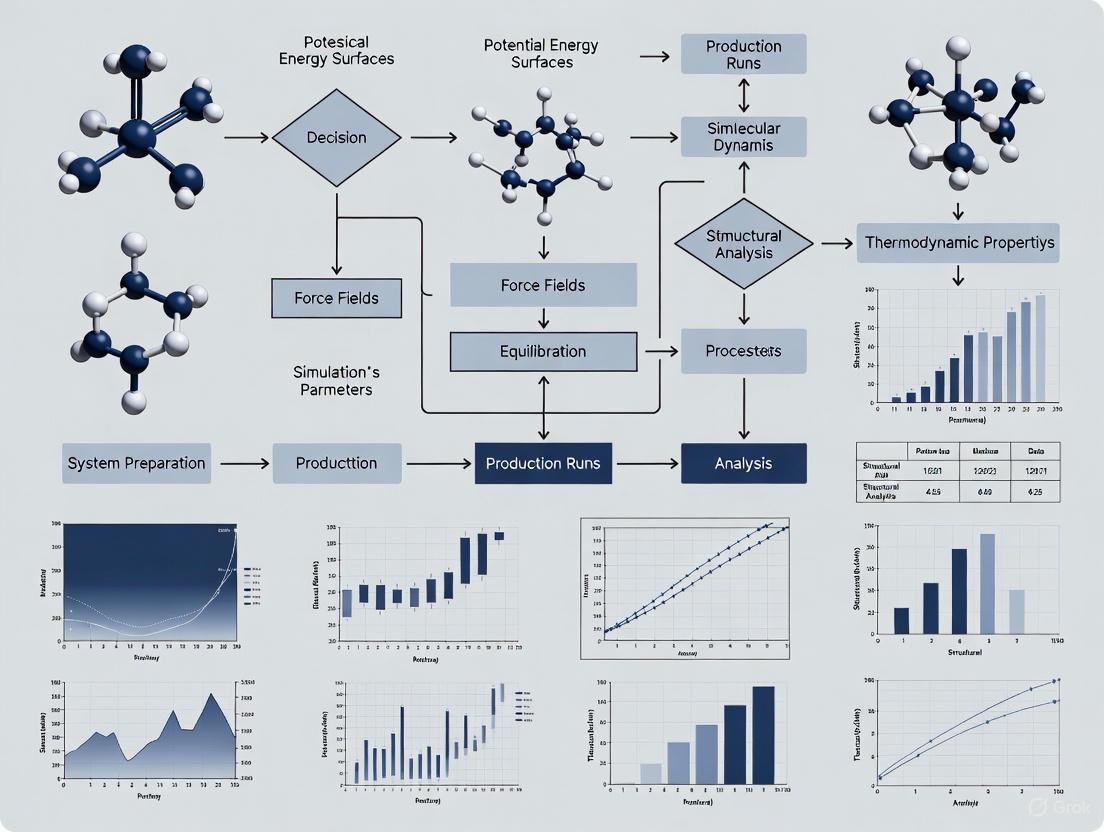
This guide provides a comprehensive roadmap for researchers, scientists, and drug development professionals to master classical Molecular Dynamics (MD) simulations.
A Practitioner's Guide to Classical Molecular Dynamics: From Core Concepts to Advanced Applications in Biomedical Research
Abstract
This guide provides a comprehensive roadmap for researchers, scientists, and drug development professionals to master classical Molecular Dynamics (MD) simulations. It systematically covers foundational theory, practical software implementation, performance optimization, and critical validation techniques. By synthesizing current best practices, software comparisons, and real-world workflow examples, this resource empowers users to design, execute, and analyze robust and reliable MD simulations for biomedical applications, from understanding protein dynamics to informing drug discovery.
Understanding the Pillars of Molecular Dynamics Simulation
Classical Molecular Dynamics (MD) simulation is a powerful computational technique that provides a particle-based description of molecular systems, enabling researchers to study the properties, structure, and function of complex systems that are too complicated for theoretical analysis alone [1]. At its core, MD relies on the numerical integration of the equations of motion from classical mechanics to generate dynamical trajectories of atoms and molecules [1]. This approach allows scientists to interpret experimental data in terms of molecular motions and enables quantitative prediction of properties useful in applications ranging from materials science to drug development [1]. The fundamental idea is straightforward: a system is defined by the positions and velocities of its constituent particles, and this system is then propagated through time using deterministic rules based on classical mechanics [1]. Understanding the direct linkage between classical mechanical principles and molecular behavior is essential for the correct execution and meaningful interpretation of MD simulations.
Fundamental Concepts in Classical Mechanics
The theoretical foundation of molecular dynamics simulations rests upon several key concepts from classical mechanics. These principles provide the mathematical framework for describing how molecular systems evolve over time.
Newtonian Formulation
MD simulations primarily utilize Newton's equations of motion, particularly Newton's second law (F = ma), to calculate the motion of particles in the system [1]. For each atom i with mass mᵢ at position rᵢ, the force Fᵢ acting on it is determined by the negative gradient of the potential energy function U with respect to its position: Fᵢ = -∇ᵢU [1]. This force is then related to the acceleration through the second law: Fᵢ = mᵢ(d²rᵢ/dt²). Numerical integration of these equations yields trajectories describing the system's evolution over time [1].
Hamiltonian Mechanics
The Hamiltonian formulation of classical mechanics provides a more comprehensive framework for MD simulations [1]. The Hamiltonian function H represents the total energy of the system as the sum of kinetic energy K and potential energy U:
H(p,q) = K(p) + U(q)
where q represents the generalized coordinates (positions) and p represents the generalized momenta [1]. Hamilton's equations then describe the time evolution of the system:
dq/dt = ∂H/∂p dp/dt = -∂H/∂q
This formulation is particularly valuable in MD for understanding conserved quantities and implementing various thermodynamic ensembles.
Constrained Dynamics
Holonomic constraints are frequently applied in MD simulations to freeze the fastest vibrational degrees of freedom, such as bond lengths involving hydrogen atoms [1]. This approach allows for larger integration time steps, significantly improving computational efficiency [1]. For example, rigid water models constrain bond lengths and angles, enabling time steps of approximately 2 femtoseconds instead of the 0.5-1 femtosecond required for unconstrained simulations [1].
Table 1: Key Classical Mechanics Concepts in Molecular Dynamics
| Concept | Mathematical Expression | Role in MD Simulations |
|---|---|---|
| Newton's Second Law | Fᵢ = -∇ᵢU = mᵢ(d²rᵢ/dt²) | Fundamental equation of motion for particles |
| Hamiltonian | H(p,q) = K(p) + U(q) | Represents total energy of the system |
| Hamilton's Equations | dq/dt = ∂H/∂p, dp/dt = -∂H/∂q | Govern time evolution in phase space |
| Holonomic Constraints | σ(q) = 0 | Freeze fastest vibrations to enable larger timesteps |
From Mathematical Formulations to Molecular Models
The connection between classical mechanics and molecular behavior is established through potential energy functions that translate mechanical concepts into chemically meaningful interactions.
Molecular Mechanics Force Fields
In classical MD, molecular mechanics (MM) descriptions represent molecules as collections of charged particles (atoms or groups of atoms) interacting through empirical potential energy functions with parameters fitted to experimental or quantum mechanical data [1]. These potentials calculate both non-bonded interactions (electrostatics and van der Waals forces) and bonded interactions (bond stretching, angle bending, and torsional rotations) [1]. The functional form of a typical force field includes:
Utotal = Σbonds kb(r - r₀)² + Σangles kθ(θ - θ₀)² + Σdihedrals kφ[1 + cos(nφ - δ)] + Σnonbonded { (qiqj)/(4πε₀rij) + 4εij[(σij/rij)¹² - (σij/rij)⁶] }
This mathematical representation directly links the classical concepts of harmonic oscillators (bonds and angles) and central force potentials (non-bonded interactions) to molecular behavior.
Practical Implementation and Sampling
The connection between mechanics and molecular behavior has important practical implications. MD simulations generate trajectories by numerically integrating the equations of motion, and relevant properties are calculated as averages over these trajectories [1]. This approach naturally incorporates fluctuations and correlations that affect thermodynamic properties, making MD particularly valuable for studying biomolecular systems at finite temperatures where entropic contributions are significant [1]. However, this also presents a fundamental challenge: many biomolecular processes occur on timescales much longer than what can be directly simulated, requiring enhanced sampling methods or careful interpretation of results [1].
Figure 1: The conceptual workflow linking classical mechanics principles to molecular behavior through MD simulations. Each level builds upon the theoretical foundation of the previous one.
Best Practices for Reliable Simulations
Convergence and Reproducibility
To ensure molecular behavior accurately reflects the underlying mechanical principles rather than computational artifacts, rigorous convergence analysis must be performed [2]. Without such analysis, simulation results are compromised [2]. Recommended practices include:
- Performing at least three independent simulations starting from different configurations with statistical analysis to demonstrate property convergence [2]
- Conducting time-course analyses to detect lack of convergence [2]
- Providing simulation input files and final coordinate files in supplementary materials or public repositories to enable reproducibility [2]
- Depositing custom code and parameters central to the manuscript in public repositories upon publication [2]
Method Selection and Validation
The choice of simulation methodology significantly impacts how accurately classical mechanics translates to meaningful molecular behavior. Key considerations include:
- Force field selection: Justifying that the chosen model, resolution, and force field are accurate enough for the specific research question [2]
- Sampling adequacy: Ensuring sufficient configuration space sampling, potentially using enhanced sampling methods for slow transitions [2]
- Experimental connection: Discussing physiological relevance in connection with published experimental data, even when new experimental validation is not provided [2]
Table 2: Essential Research Reagents and Computational Tools
| Tool/Component | Function/Role | Implementation Examples |
|---|---|---|
| Potential Energy Functions | Define interactions between atoms; translate structure to energy/forces | Bond stretching: k_b(r - r₀)²; Lennard-Jones: 4ε[(σ/r)¹² - (σ/r)⁶] [1] |
| Integration Algorithms | Numerically solve equations of motion to propagate system through time | Verlet, Leap-frog, Velocity Verlet methods [1] |
| Thermodynamic Ensembles | Maintain appropriate environmental conditions during simulation | NVE (microcanonical), NVT (canonical), NPT (isothermal-isobaric) [1] |
| Constraint Algorithms | Freeze fastest vibrations to enable practical timesteps | SHAKE, LINCS, RATTLE for bond constraints [1] |
| Force Field Parameters | Empirical parameters defining interaction strengths and geometries | CHARMM, AMBER, OPLS parameter sets [1] |
| Simulation Software | Implement numerical methods and force calculations | LAMMPS, GROMACS, AMBER, NAMD [3] |
Applications and Protocol Implementation
Representative Simulation Protocol
The following detailed methodology illustrates how classical mechanics principles are implemented in practice to study molecular behavior, using oxide glass formation as an exemplary application [4]:
System Preparation:
Energy Minimization:
- Use steepest descent or conjugate gradient algorithm to remove bad contacts
- Minimize until maximum force falls below specified tolerance (typically 100-1000 kJ/mol/nm)
Equilibration Protocol:
- Heat system gradually from 0K to target temperature (e.g., 300K) over 100-500 ps using velocity rescaling or Nosé-Hoover thermostat
- Apply pressure coupling (e.g., Parrinello-Rahman barostat) for NPT simulations
- Equilibrate until density and potential energy stabilize
Production Simulation:
- Run extended simulation (typically nanoseconds to microseconds) with saved trajectory frames
- Use appropriate timestep (0.5-2 fs) depending on constraint algorithms employed
- Maintain constant temperature and pressure using appropriate thermostats and barostats
Property Calculation:
Interpretation and Validation
When analyzing results, researchers should connect simulation outcomes back to the fundamental mechanical principles:
- Statistical uncertainty: Estimate errors using block averaging or bootstrap methods across independent replicates [2]
- Mechanical properties: Rel elastic moduli and stress-strain behavior to the second derivative of the potential energy function [4]
- Dynamic properties: Connect diffusion coefficients and correlation functions to the time evolution governed by Hamilton's equations
- Experimental validation: Compare computed properties (densities, structural parameters) with available experimental data to validate the force field's accuracy [4]
The successful application of MD simulations requires maintaining this continuous connection between the classical mechanical foundation and the emergent molecular behavior throughout the research process.
In the context of classical molecular dynamics (MD) simulation research, a force field is a computational model that describes the forces between atoms within molecules or between molecules, enabling the calculation of a system's potential energy at the atomistic level [5]. Force fields are the cornerstone of MD simulations, providing the empirical energy functions and parameters needed to compute how atoms interact over time. The fundamental concept relies on the Born-Oppenheimer approximation, which allows for the separation of nuclear and electronic motion, treating nuclei as classical particles moving on a potential energy surface (PES) calculated from the electronic energy [6].
The potential energy function allows calculating forces acting on each particle (( \vec{F} )) as the negative gradient of the potential energy (( U )) with respect to particle coordinates: ( \vec{F}=-\nabla{U}(\vec{r}) ) [7]. With knowledge of these forces, one can calculate how the position of each atom changes over time by integrating Newton's equations of motion: ( \vec{F}=\frac{d\vec{p}}{dt} ), advancing the system with very small time steps (typically femtoseconds) [7].
Core Components of a Force Field
The total potential energy in an additive force field is conventionally decomposed into bonded and non-bonded interaction terms [5]: (E{\text{total}}=E{\text{bonded}}+E{\text{bonded}}) where (E{\text{bonded}}=E{\text{bond}}+E{\text{angle}}+E{\text{dihedral}}) and (E{\text{nonbonded}}=E{\text{electrostatic}}+E{\text{van der Waals}}) [5].
Bonded Interactions
Bonded interactions describe the potential energy associated with covalent bonds that connect atoms within molecules.
Bond Stretching
The bond stretching energy describes the energy cost associated with deviating a covalent bond from its equilibrium length. The most simplistic approach utilizes a Hooke's law formula [5]: (E{\text{bond}}=\frac{k{ij}}{2}(l{ij}-l{0,ij})^{2}) where (k{ij}) is the force constant for the bond between atoms i and j, (l{ij}) is the actual bond length, and (l_{0,ij}) is the equilibrium bond length [5]. This harmonic potential provides a reasonable level of accuracy near equilibrium distances, though more complex potentials like the Morse potential can model bond breaking at the cost of computational efficiency [5].
Angle Bending
The angle bending potential describes the energy required to deform the angle between three connected atoms from its equilibrium value [7]: (V{\text{Angle}}=k\theta(\theta{ijk}-\theta0)^2) where (k\theta) is the angle force constant, (\theta{ijk}) is the actual angle between atoms i-j-k, and (\theta_0) is the equilibrium angle [7]. The force constants for angle bending are typically about five times smaller than those for bond stretching [7].
Torsional Dihedral Angles
The torsion (dihedral) potential describes the energy associated with rotation around a bond between four connected atoms [7]: (V{\text{Dihed}}=k\phi(1+\cos(n\phi-\delta)) + \ldots) where (k_\phi) is the force constant, (n) is the periodicity (number of potential minima in a 360° rotation), (\phi) is the torsional angle, and (\delta) is the phase shift angle [7]. This potential is crucial for capturing conformational preferences in molecules.
Improper Torsions
The improper torsion potential, also known as 'out-of-plane bending,' is used to enforce planarity in certain molecular arrangements (e.g., aromatic rings) and is given by a harmonic function [7]: (V{\text{Improper}}=k\phi(\phi-\phi_0)^2) where the dihedral angle (\phi) is the angle between planes ijk and ijl for a central atom i connected to three peripheral atoms j, k, and l [7].
Non-Bonded Interactions
Non-bonded interactions capture the potential energy between atoms not connected by covalent bonds, including both van der Waals forces and electrostatic interactions.
Van der Waals Interactions
Van der Waals interactions are most commonly described by the Lennard-Jones (LJ) potential, which approximates the non-elecrostatic interaction between a pair of non-bonded atoms [7]: (V_{LJ}(r)=4\epsilon\left[\left(\frac{\sigma}{r}\right)^{12}-\left(\frac{\sigma}{r}\right)^{6}\right]) The (r^{-12}) term describes the strong Pauli repulsion originating from overlap of electron orbitals at short distances, while the (r^{-6}) term describes the weaker attractive forces (London dispersion) arising from induced dipole-induced dipole interactions [7] [6]. In this equation, (\epsilon) represents the depth of the potential well, and (\sigma) is the finite distance at which the inter-particle potential is zero [7].
An alternative to the LJ potential is the Buckingham potential, which replaces the repulsive (r^{-12}) term with an exponential function [7]: (V_{B}(r)=A\exp(-Br) -\frac{C}{r^{6}}) The exponential function describes electron density more realistically but is computationally more expensive and carries a risk of "Buckingham catastrophe" at very short distances where the exponential term becomes unphysically attractive [7].
Electrostatic Interactions
Electrostatic interactions are represented by Coulomb's law, which describes the energy between point charges assigned to atomic positions [7] [6]: (V{\text{Elec}}=\frac{q{i}q{j}}{4\pi\epsilon{0}\epsilon{r}r{ij}}) where (qi) and (qj) are the partial atomic charges, (r{ij}) is the distance between atoms, (\epsilon0) is the vacuum permittivity, and (\epsilon_r) is the relative dielectric constant [7]. These interactions are long-ranged ((r^{-1})) and play a crucial role in determining the structure and interactions of polar and charged molecules [7] [6].
Table 1: Summary of Force Field Energy Components
| Interaction Type | Mathematical Form | Key Parameters | Physical Description |
|---|---|---|---|
| Bond Stretching | (E{\text{bond}}=\frac{k{ij}}{2}(l{ij}-l{0,ij})^{2}) | (k{ij}) (force constant), (l{0,ij}) (equilibrium length) | Energetic cost of stretching/compressing covalent bonds |
| Angle Bending | (V{\text{Angle}}=k\theta(\theta{ijk}-\theta0)^2) | (k\theta) (force constant), (\theta0) (equilibrium angle) | Energetic cost of bending bond angles from equilibrium |
| Dihedral Torsion | (V{\text{Dihed}}=k\phi(1+\cos(n\phi-\delta))) | (k_\phi) (force constant), (n) (periodicity), (\delta) (phase) | Energy barrier for bond rotation; governs conformation |
| Improper Torsion | (V{\text{Improper}}=k\phi(\phi-\phi_0)^2) | (k\phi) (force constant), (\phi0) (equilibrium angle) | Enforces planarity in aromatic rings and other systems |
| van der Waals (LJ) | (V_{LJ}(r)=4\epsilon\left[\left(\frac{\sigma}{r}\right)^{12}-\left(\frac{\sigma}{r}\right)^{6}\right]) | (\epsilon) (well depth), (\sigma) (vdW radius) | Pauli repulsion + London dispersion attraction |
| Electrostatics | (V{\text{Elec}}=\frac{q{i}q{j}}{4\pi\epsilon{0}\epsilon{r}r{ij}}) | (qi, qj) (partial atomic charges) | Coulomb interaction between charged particles |
Combining Rules for Non-Bonded Interactions
To avoid defining parameters for every possible pair of atom types, force fields use combining rules to calculate the LJ parameters between different atom types [7]. The most common combining rules include:
- Lorentz-Berthelot: (\sigma{ij}=\frac{\sigma{ii}+\sigma{jj}}{2},\qquad \epsilon{ij}=\sqrt{\epsilon{ii}\times\epsilon{jj}}) (Used in CHARMM, AMBER) [7]
- Geometric Mean: (\sigma{ij}=\sqrt{\sigma{ii}\times\sigma{jj}}\qquad \epsilon{ij}=\sqrt{\epsilon{ii}\times\epsilon{jj}}) (Used in OPLS) [7]
- GROMOS: (C12{ij}=\sqrt{C12{ii}\times{C12{jj}}}\qquad C6{ij}=\sqrt{C6{ii}\times{C6{jj}}}) [7]
The specific combining rule used is specified in the force field definition files. For example, in GROMACS, the combining rule is specified in the [defaults] section of the forcefield.itp file in the 'comb-rule' column [7].
Force Field Classification and Parameterization
Force Field Classes
Force fields are commonly categorized into three classes based on their complexity and treatment of molecular interactions:
- Class 1 Force Fields: Describe dynamics of bond stretching and angle bending with simple harmonic motion (quadratic approximation) and omit correlations between bond stretching and angle bending. Examples include AMBER, CHARMM, GROMOS, and OPLS [7].
- Class 2 Force Fields: Include anharmonic cubic and/or quartic terms to the potential energy for bonds and angles, and contain cross-terms describing the coupling between adjacent bonds, angles, and dihedrals. Examples include MMFF94 and UFF [7].
- Class 3 Force Fields: Explicitly incorporate special effects of organic chemistry such as polarization, stereoelectronic effects, electronegativity effects, and the Jahn-Teller effect. Examples include AMOEBA and DRUDE [7].
Polarizable Force Fields
Traditional fixed-charge force fields have limitations in describing molecular polarization effects. Several approaches exist for polarizable force fields [7]:
- Drude Oscillators: Massless charged particles attached to atoms via harmonic springs (used in CHARMM-Drude, OPLS5) [7]
- Inducible Point Dipoles: Used in the AMOEBA force field [7]
- Fluctuating Charges: Polarization modeled as a charge transfer process between atoms (less actively developed in recent years) [7]
- Gaussian Electrostatic Model (GEM): Uses Gaussian charge density plus AMOEBA polarization [7]
- Polarizable Gaussian Multipole (pGM): Combines permanent Gaussian multipoles with inducible Gaussian dipoles [7]
Force Field Parameterization
Parameterization involves determining numerical values for force field parameters to accurately reproduce experimental or high-level quantum mechanical data [6]. Parameters include equilibrium bond lengths, angles, force constants, and non-bonded interaction parameters (Lennard-Jones parameters and partial charges) [6].
Parameterization strategies include [5]:
- Using data from quantum mechanical calculations (ab initio or density functional theory)
- Fitting to experimental data such as crystal structures, vibrational spectra, and thermodynamic properties
- Combining both approaches for different parameter types
Atom types are defined for different elements as well as for the same elements in different chemical environments (e.g., oxygen atoms in water versus oxygen atoms in carbonyl groups have different force field types) [5]. This allows for transferability of parameters across different molecules.
Table 2: Common Biomolecular Force Fields and Their Characteristics
| Force Field | Class | Combining Rules | Common Applications | Special Features |
|---|---|---|---|---|
| AMBER | Class 1 | Lorentz-Berthelot | Proteins, nucleic acids, carbohydrates | Optimized for biochemical systems |
| CHARMM | Class 1 | Lorentz-Berthelot | Proteins, lipids, nucleic acids | Extensive parameter set for biomolecules |
| GROMOS | Class 1 | Geometric Mean | Biomolecules in aqueous solution | Unified atom approach |
| OPLS | Class 1 | Geometric Mean | Organic liquids, biomolecules | Optimized for liquid properties |
| MMFF94 | Class 2 | Specific to MMFF94 | Drug-like small molecules | Broad coverage of organic chemistry |
| AMOEBA | Class 3 | Varies | Polarizable systems | Inducible point dipoles for polarization |
Experimental Protocols: Force Field Application Case Study
To illustrate the practical application of force fields in molecular dynamics research, we examine a recent study investigating atomic structure transitions in FeSiCuMgAl high-entropy alloys under biaxial stretching [8].
Methodology
System Preparation: The study focused on FeSiCuMgAl high-entropy alloy with a near-equal molar ratio of elements. The initial configuration was created with a face-centered cubic (fcc) structure [8].
Simulation Protocol:
- Software: LAMMPS package was used for all molecular dynamics simulations [8]
- Potential Function: The Modified Embedded Atom Method (MEAM) potential developed by B. Jelinek et al. was employed, which is particularly suitable for modeling metals and alloys [8]
- Deformation Method: Biaxial tensile deformation was applied at various strain rates (0.5×10^9 s^(-1) to 10^10 s^(-1)) [8]
- Analysis Techniques: Co-neighborhood analysis, stress-strain analysis, and dislocation analysis were utilized to characterize the tensile behavior [8]
Key Findings
The MD simulation revealed three distinct stages of atomic structure transformation during biaxial stretching at a strain rate of 10^10 s^(-1) [8]:
- First Stage: Transition from face-centered cubic (fcc) to body-centered cubic (bcc), hexagonal close-packed (hcp), and disordered structures
- Second Stage: Transition from bcc, hcp, and disordered structures back to fcc
- Third Stage: Transition from fcc, bcc, and hcp to disordered structure
At lower strain rates (0.5×10^9 s^(-1) and below), there was minimal involvement of the bcc phase in the tensile process [8]. The stress-strain curves displayed jagged fluctuations with localized deformation bands, characteristic of plastic deformation in metallic systems [8].
Diagram 1: Force Field Energy Hierarchy
Research Reagent Solutions
Table 3: Essential Software Tools for Molecular Dynamics Simulations
| Software Tool | Primary Function | Key Features | Force Field Compatibility |
|---|---|---|---|
| GROMACS | MD Simulation Engine | High performance, excellent GPU acceleration, free/open-source | AMBER, CHARMM, OPLS, GROMOS [9] |
| AMBER | MD Suite | Optimized PMEMD engine, well-validated biomolecular force fields | Native AMBER, others via conversion [9] |
| CHARMM | MD Program | Versatile simulation capabilities, scriptable control language | Native CHARMM, others via conversion [9] |
| LAMMPS | MD Simulator | General-purpose, great for materials science | Wide variety including MEAM for metals [8] |
| CHARMM-GUI | Web-Based System Preparation | Streamlined interface for building complex systems | CHARMM, AMBER, GROMACS, NAMD, others [10] |
Practical Implementation Considerations
When working with force fields in molecular dynamics research, several practical aspects require attention:
Combining Rule Specification: In GROMACS, the combining rule is specified in the [defaults] section of the forcefield.itp file in the 'comb-rule' column [7]:
- Rule 1 and 3: Geometric mean
- Rule 2: Lorentz-Berthelot rules
Long-Range Electrostatics: The particle mesh Ewald (PME) method is commonly used to handle long-range electrostatic interactions efficiently in periodic systems [9].
Constraint Algorithms: Algorithms like SHAKE are used to constrain bond lengths involving hydrogen atoms, allowing for longer time steps in integration [9].
Diagram 2: Molecular Dynamics Simulation Workflow
Force fields provide the fundamental mathematical framework that enables molecular dynamics simulations by describing how atoms interact through various energy functions. The decomposition of total potential energy into bonded terms (bond stretching, angle bending, torsional dihedrals) and non-bonded terms (van der Waals, electrostatic interactions) creates a computationally tractable model that captures the essential physics of atomic interactions [7] [5].
Understanding the components, parameterization approaches, and limitations of force fields is crucial for researchers conducting MD simulations. The choice of force field significantly impacts simulation results, with different force fields optimized for specific classes of materials and properties. As MD simulations continue to address increasingly complex scientific questions, ongoing developments in polarizable force fields and more sophisticated parameterization methods will further enhance the accuracy and applicability of computational molecular modeling.
For researchers embarking on MD simulations, careful attention to force field selection, parameter compatibility, and appropriate application to the scientific question at hand remains essential for generating reliable, reproducible results that can meaningfully complement experimental investigations.
Molecular dynamics (MD) simulation has become an indispensable tool in computational chemistry, biophysics, and materials science, enabling researchers to study the physical movements of atoms and molecules over time. As the complexity and size of molecular systems increase, selecting appropriate simulation software becomes critical for achieving accurate results with computational efficiency. This technical guide provides an in-depth comparison of four cornerstone MD software packages—GROMACS, AMBER, CHARMM, and LAMMPS—framed within the context of building effective learning resources for classical molecular dynamics simulation research. Each package embodies distinct philosophical approaches, optimization strategies, and application domains that researchers must navigate to align software capabilities with their specific scientific questions, system characteristics, and available computational resources [11] [12].
The growing importance of MD is reflected in market analyses projecting the molecular dynamics simulation software market to reach approximately $550 million in 2025 with a compound annual growth rate of 9.7%, potentially expanding to $1.39 billion by 2035 [13]. This growth is largely driven by increasing adoption in pharmaceutical labs, research institutes, and academic settings, particularly for drug discovery applications where MD simulations offer cost-effective means to screen compounds and predict materials properties [14]. Understanding the core characteristics, strengths, and limitations of these fundamental software tools provides researchers with the foundational knowledge required to select appropriate platforms for their specific research domains, which range from drug-receptor interactions and protein folding to nanomaterials development and coarse-grained systems modeling.
Comparative Analysis of MD Software Packages
Core Characteristics and Historical Context
The four software packages represent different historical and philosophical approaches to molecular simulations. GROMACS (GROningen MAchine for Chemical Simulations) originated in the University of Groningen and has evolved into a versatile, high-performance MD package optimized for both biomolecular and non-biological systems. AMBER (Assisted Model Building with Energy Refinement) emerged from UCSF with a primary focus on biomolecular systems, particularly proteins and nucleic acids, and is distinguished by its associated force fields. CHARMM (Chemistry at HARvard Macromolecular Mechanics) was developed at Harvard University and shares AMBER's biological focus but with different force field parameterizations and algorithmic implementations. LAMMPS (Large-scale Atomic/Molecular Massively Parallel Simulator) originated from Sandia National Laboratories with a broader materials science orientation, designed for simulating diverse atomic, polymeric, biological, metallic, and granular systems [15].
Each package maintains distinct development philosophies. GROMACS prioritizes raw performance and efficiency for biomolecular simulations. AMBER and CHARMM emphasize methodological sophistication for biological systems, with AMBER particularly noted for its advanced sampling techniques and CHARMM for its comprehensive force field coverage. LAMMPS focuses on extensibility and flexibility across diverse material types and simulation paradigms. These philosophical differences manifest in their code architectures, user interfaces, and target application domains, creating complementary strengths that researchers can leverage for different aspects of their work [12] [15].
Technical Specifications and Feature Comparison
Table 1: Core Feature Comparison of MD Software Packages
| Feature | GROMACS | AMBER | CHARMM | LAMMPS |
|---|---|---|---|---|
| Primary Focus | Biomolecular & materials systems | Biomolecular systems | Biomolecular systems | Materials science & soft matter |
| GPU Support | Excellent [11] | Good [15] | Good [15] | Good [15] |
| License | Free open source (GNU GPL) [15] | Proprietary, free open source components [15] | Proprietary, commercial [15] | Free open source (GNU GPL) [15] |
| Force Fields | GROMOS, AMBER, CHARMM, OPLS, Martini [12] [15] | AMBER force fields [12] | CHARMM force fields [12] | Wide variety including custom potentials [12] |
| Learning Curve | Moderate | Steep | Steep | Moderate to steep |
| Performance | Extremely fast for biomolecules [12] | Good, excellent with GPUs [11] | Good, improving GPU support [15] | Excellent for materials, highly scalable [12] |
| Key Strength | Raw speed & efficiency [12] | Biomolecular accuracy & enhanced sampling [12] | Comprehensive force field coverage [12] | Flexibility & material diversity [12] |
Performance and Hardware Considerations
Hardware selection significantly impacts MD simulation efficiency. For CPU-bound workloads, processors with higher clock speeds often outperform those with extremely high core counts for typical simulation sizes, making mid-tier workstation CPUs like the AMD Threadripper PRO 5995WX often more suitable than 96-core alternatives for many research scenarios [11]. Memory requirements scale with system size, with typical biomolecular simulations requiring 32-128GB of RAM, while larger systems may need 256GB or more.
GPU acceleration has dramatically transformed MD performance, with NVIDIA's Ada Lovelace architecture GPUs demonstrating exceptional capabilities. The RTX 4090 offers a favorable price-to-performance ratio with 16,384 CUDA cores and 24GB of GDDR6X VRAM, while the professional-grade RTX 6000 Ada provides 18,176 CUDA cores and 48GB of GDDR6 VRAM for memory-intensive simulations [11]. Multi-GPU configurations can further accelerate simulations, with AMBER, GROMACS, and NAMD all supporting parallel execution across multiple GPUs to dramatically reduce simulation times for complex systems [11].
Table 2: Recommended GPU Configurations for Different Research Scenarios
| Research Scenario | Recommended GPU | VRAM Requirement | Key Considerations |
|---|---|---|---|
| General biomolecular MD | NVIDIA RTX 4090 | 24 GB | Optimal price-to-performance [11] |
| Large-scale systems (AMBER) | NVIDIA RTX 6000 Ada | 48 GB | Handles extensive particle counts [11] |
| Complex setups (GROMACS) | NVIDIA RTX 4090 or RTX 6000 Ada | 24-48 GB | High CUDA core count beneficial [11] |
| Standard simulations | NVIDIA RTX 5000 Ada | 24 GB | Balanced performance for typical workloads [11] |
| Multi-GPU setups | Multiple RTX 4090 or RTX 6000 Ada | 24-48 GB per GPU | Increases throughput for parallelizable workloads [11] |
Methodological Considerations and Experimental Protocols
Software Selection Framework
Choosing the appropriate MD software requires careful consideration of multiple factors. Researchers should begin by defining their scientific objectives, system characteristics, and available computational resources. The workflow diagram below illustrates the decision-making process for selecting between these four major MD packages:
Diagram 1: MD software selection workflow. This decision tree illustrates key considerations when choosing between major molecular dynamics packages.
Force field compatibility represents a primary selection criterion. AMBER and CHARMM each have their own highly optimized biomolecular force fields, while GROMACS supports multiple force fields including GROMOS, AMBER, CHARMM, and OPLS. LAMMPS offers the broadest range of potentials, including custom implementations for specialized materials [12] [15]. Enhanced sampling requirements often favor AMBER, while raw simulation speed for standard biomolecular systems typically leads toward GROMACS. For non-biological systems or multiscale modeling, LAMMPS provides unparalleled flexibility [12].
Conversion and Validation Protocols
Comparative studies reveal that while different MD programs should theoretically yield identical results for equivalent systems, practical implementation differences can introduce statistically significant variations. Researchers conducting cross-platform validation should implement rigorous conversion and verification protocols [16].
The conversion workflow typically begins with structure and topology files generated in one package (e.g., AMBER format), which are then translated using tools like ParmEd and InterMol. ParmEd provides program-agnostic molecular topology representation and converts between GROMACS, AMBER, CHARMM, and OpenMM formats, while InterMol handles GROMACS, LAMMPS, and DESMOND conversions [16]. After conversion, single-configuration potential energy comparisons should show better than 0.1% relative absolute energy agreement for all energy components when consistent cutoff parameters and Coulomb's constants are applied [16].
Energy validation should address subtle discrepancies arising from different default simulation parameters across programs. As identified in SAMPL5 challenge preparations, even theoretically identical models can produce divergent results due to differing program defaults for non-bonded interaction cutoffs, long-range electrostatics treatments, and numerical constants [16]. Researchers should explicitly standardize these parameters rather than relying on program defaults when comparing results across different software platforms.
The Scientist's Toolkit: Essential Research Reagents
Table 3: Essential Computational Resources for Molecular Dynamics Research
| Resource Category | Specific Tools | Function/Purpose |
|---|---|---|
| Structure Preparation | CHARMM-GUI, AmberTools, Avogadro | Molecular building, editing, and initial structure optimization [15] |
| File Conversion | ParmEd, InterMol, CHAMBER | Converting molecular topologies and parameters between different MD software formats [16] |
| Visualization | VMD, YASARA, UCSF Chimera | System setup, simulation monitoring, and trajectory analysis [15] |
| Force Field Tools | Antechamber, ACPYPE, SwissParam | Generating force field parameters for small molecules and non-standard residues [15] |
| Analysis Packages | MDTraj, CPPTRAJ, GROMACS analysis tools | Processing simulation trajectories to extract structural and dynamic properties [15] |
| Specialized Hardware | NVIDIA RTX 4090/6000 Ada GPUs, AMD Threadripper PRO CPUs | Accelerating simulation throughput and enabling larger system sizes [11] |
Application Domains and Research Implications
Biomolecular Simulations
For protein simulations, GROMACS excels in straightforward dynamics due to its exceptional performance, while AMBER offers sophisticated enhanced sampling methods crucial for studying rare events like protein folding or ligand binding [12]. CHARMM provides comprehensive coverage of biological molecules with its continuously refined force fields. Recent studies evaluating short peptide structural dynamics have demonstrated how different algorithms complement each other, with AlphaFold and threading approaches performing better for hydrophobic peptides, while PEP-FOLD and homology modeling excel with hydrophilic peptides [17].
In drug discovery, MD simulations help researchers understand drug-receptor interactions, binding kinetics, and mechanisms of action. The growing prevalence of CNS disorders and cardiovascular diseases has increased demand for efficient drug development pipelines, with the pharmaceutical labs segment expected to register a 10.65% CAGR during 2026-2035 [13]. AMBER's specializations for binding free energy calculations make it particularly valuable for these applications, though GROMACS's speed provides advantages for high-throughput screening scenarios.
Materials Science and Nanomedicine
LAMMPS dominates materials science applications with its extensive library of potentials for metals, ceramics, polymers, and coarse-grained systems. Its flexibility enables simulations of nanomaterials, interfaces, and mechanical properties across multiple scales. GROMACS has also gained traction in materials research, particularly for soft matter and biomaterials [18].
In nanomedicine, MD simulations help optimize self-assembled nanocarriers for drug delivery by modeling interactions between therapeutic compounds and carrier materials. These simulations visualize assembly processes at atomic resolution, explaining experimental observations and guiding synthesis optimization [18]. The carrier-free strategy of using drugs themselves as building blocks for self-assembly has particularly benefited from MD simulations that model π-π stacking, electrostatic interactions, and hydrogen bonding driving the assembly process [18].
Future Directions and Concluding Remarks
The molecular dynamics software landscape continues evolving with several convergent trends. GPU acceleration is becoming standard across all major packages, with performance improvements enabling larger systems and longer timescales [11] [14]. Integration of artificial intelligence and machine learning methods promises to enhance both sampling efficiency and predictive accuracy [14] [13]. Open-source packages like GROMACS and LAMMPS are gaining market share through their flexibility and cost-effectiveness, though commercial packages maintain strong positions in specific domains [14].
Geographically, North America currently dominates MD software usage (projected 47% share by 2035) due to extensive research funding and pharmaceutical industry concentration, but the Asia-Pacific region represents the fastest-growing market [13]. Cloud-based solutions are democratizing access to high-performance computing resources, potentially expanding the user base to smaller research groups and educational institutions [14].
For researchers navigating this landscape, proficiency across multiple MD platforms increasingly becomes valuable as different tools offer complementary capabilities. The future points toward integrated workflows that leverage the strengths of different packages—perhaps using AMBER for parameterization, GROMACS for production dynamics, and LAMMPS for specialized materials properties. As MD simulations continue bridging microscopic mechanisms with macroscopic observables, these software tools will remain fundamental to scientific discovery across chemistry, biology, and materials science.
Molecular Dynamics (MD) simulations have become an indispensable tool for researching and developing new materials, chemicals, and drugs by providing atomic-scale insight into the dynamics and interactions of molecular systems [19]. The basic idea of any MD method is to construct a particle-based description of a system and propagate it using deterministic or probabilistic rules to generate a trajectory describing its evolution [1]. However, the accurate execution and meaningful interpretation of these simulations rest upon a solid foundation in statistical mechanics and thermodynamics.
These foundational disciplines provide the critical theoretical framework that connects the microscopic behavior of individual atoms and molecules—what we simulate—to the macroscopic thermodynamic properties we wish to understand and predict [20]. Macroscopic properties are always ensemble averages over a representative statistical ensemble, and the knowledge of a single structure, even the global energy minimum, is insufficient for computing these properties [20]. This review delineates the essential concepts from statistical mechanics and thermodynamics required to correctly perform and analyze classical MD simulations, framed within the context of a broader thesis on learning resources for MD research.
Statistical Mechanics: Bridging the Micro and Macro Worlds
Statistical mechanics provides the formal connection between the deterministic equations of motion solved in MD and the thermodynamic properties of simulated systems. It treats systems at equilibrium using probability functions, connecting microstates to macroscopic quantities [21].
Fundamental Ensembles in Molecular Simulations
The concept of a statistical ensemble is central to understanding what a MD simulation actually represents. An ensemble is a collection of all possible systems that have different microscopic states but have identical macroscopic or thermodynamic properties [21].
Table 1: Key Statistical Ensembles in Molecular Dynamics Simulations
| Ensemble Name | Fixed Quantities | Primary Applications | Molecular Dynamics Equivalent |
|---|---|---|---|
| Microcanonical (NVE) | Number of particles (N), Volume (V), Energy (E) | Isolated systems; fundamental equations of motion | Standard MD with no thermostating |
| Canonical (NVT) | Number of particles (N), Volume (V), Temperature (T) | Most common experimental conditions; constant temperature studies | MD coupled to a thermostat (e.g., Nosé-Hoover) |
| Isothermal-Isobaric (NPT) | Number of particles (N), Pressure (P), Temperature (T) | Standard laboratory conditions; studying phase transitions | MD coupled to thermostat and barostat |
| Grand Canonical (μVT) | Chemical potential (μ), Volume (V), Temperature (T) | Open systems; adsorption, phase equilibria | Specialized MD methods |
The Microcanonical (NVE) Ensemble
The microcanonical ensemble describes a system completely isolated from its environment, with constant particle number (N), volume (V), and total energy (E) [21]. In this system, if Ω represents the number of accessible microstates, the entropy S is given by Boltzmann's fundamental equation:
$$S = k \log Ω$$
where k is the Boltzmann constant [21]. This equation directly links the microscopic number of states to the macroscopic thermodynamic property of entropy. The NVE ensemble forms the basis for the most fundamental MD simulations where Newton's equations of motion are integrated without temperature or pressure control, conserving the total energy of the system [1].
The Canonical (NVT) Ensemble
Most laboratory experiments and many MD simulations are performed under conditions of constant temperature rather than constant energy. The canonical ensemble describes systems with constant particle number (N), volume (V), and temperature (T) [21]. This can be conceptualized as a system of interest (system I) in thermal contact with a much larger heat bath (system II) [21]. The most probable energy distribution between the two systems corresponds to the value that maximizes the total number of states, which also corresponds to the maximum entropy of the combined system [21].
In MD simulations, the NVT ensemble is implemented using thermostating algorithms that maintain constant temperature by exchanging heat with an external bath. This matches common experimental conditions where temperature is controlled, making NVT simulations highly relevant for comparing computational results with experimental data.
Core Thermodynamic Concepts for Molecular Simulations
Free Energy and Its Central Importance
In biomolecular recognition and many other processes, the free energy change—not just the potential energy—determines the spontaneity and equilibrium of a process [21]. The computation of free energies and thermodynamic potentials requires special extensions of molecular simulation techniques [20]. While a MD simulation can provide the potential energy of a system, the crucial thermodynamic quantity that determines stability and binding is the Helmholtz free energy (A) or Gibbs free energy (G), which includes both energetic and entropic contributions [21].
For the canonical (NVT) ensemble, the Helmholtz free energy is defined as:
$$A = -kT \ln Q$$
where Q is the canonical partition function, which encapsulates how the system's energy is distributed among all possible states [21]. The difficulty in calculating free energies directly from standard MD simulations arises from the fact that simulations sample according to probability, and the most probable states dominate the sampling, while free energy depends on the entire ensemble of states [21].
Entropy: Configurational and Thermodynamic
Entropy represents the degree of disorder or randomness in a system and plays a crucial role in biomolecular recognition and other processes [21]. In statistical mechanics, entropy is fundamentally defined as:
$$S = -k \sum{states} pi \log p_i$$
where pi is the probability of the system being in microstate i [21]. In the special case of the microcanonical ensemble where all Ω states are equally probable, this reduces to S = k log Ω [21].
In MD simulations, entropy can be decomposed into various contributions. Configurational entropy, associated with the number of different structural arrangements a molecule can adopt, is particularly important for understanding phenomena like molecular recognition, where the loss of configurational entropy upon binding can significantly impact the free energy of binding [21].
Table 2: Key Thermodynamic Potentials and Their Significance in MD Simulations
| Thermodynamic Potential | Definition | Natural Variables | Relevance in MD Simulations |
|---|---|---|---|
| Internal Energy (U) | Total energy | S, V, N | Directly obtained from MD as sum of kinetic and potential energy |
| Helmholtz Free Energy (A) | A = U - TS | T, V, N | Spontaneity at constant T and V; NVT ensemble |
| Gibbs Free Energy (G) | G = U + PV - TS | T, P, N | Spontaneity at constant T and P; NPT ensemble; most relevant for experiments |
| Entropy (S) | S = -∂A/∂T | T, V, N | Measure of disorder; challenging to compute directly |
Practical Implementation in Molecular Dynamics
From Newton's Equations to Statistical Ensembles
MD simulations solve Newton's equations of motion for a system of N interacting atoms:
$$mi \frac{\partial^2 \mathbf{r}i}{\partial t^2} = \mathbf{F}_i, \;i=1 \ldots N$$
where the forces are derived from a potential energy function, $\mathbf{F}i = - \frac{\partial V}{\partial \mathbf{r}i}$ [20]. While this fundamental equation naturally conserves energy (corresponding to the NVE ensemble), most biological and materials processes occur under constant temperature or pressure conditions. To simulate these conditions, extended algorithms are used that introduce modified equations of motion to maintain constant temperature (e.g., Nosé-Hoover thermostat) or pressure (e.g., Parrinello-Rahman barostat), effectively generating NVT or NPT ensembles respectively.
Free Energy Calculation Methods
Several specialized methods have been developed to compute free energies from MD simulations, as standard MD alone is insufficient for directly calculating these crucial quantities [21]:
- Thermodynamic Integration/Alchemical Transformation: These methods compute free energy differences by defining a pathway between two states and integrating the free energy derivative along this pathway [21].
- Potential of Mean Force (PMF) Calculations: PMF methods compute the free energy as a function of a reaction coordinate, revealing energy barriers and stable states along a particular pathway [21].
- End-Point Calculations: These methods use only the initial and final states of a process to estimate free energy differences, though they often include significant approximations [21].
Experimental Protocols: Calculating Binding Free Energy
Protocol: Absolute Binding Free Energy Calculation Using Double Decoupling Method
System Preparation:
- Obtain the 3D structure of the protein-ligand complex from databases such as the Protein Data Bank [19].
- Solvate the system in an appropriate water model and add ions to achieve physiological concentration and neutralize the system charge.
Equilibration:
- Perform energy minimization to remove steric clashes.
- Conduct NVT equilibration to stabilize the temperature (typically 100 ps).
- Perform NPT equilibration to stabilize the pressure (typically 100 ps).
Decoupling in Bound State:
- Gradually decouple the ligand from its environment while it is bound to the protein.
- Use multiple λ windows (typically 12-20) to slowly turn off the electrostatic and van der Waals interactions between the ligand and its environment.
- At each λ window, run sufficient simulation time (typically 1-5 ns) to ensure proper sampling.
Decoupling in Unbound State:
- Repeat the decoupling process for the ligand in solution (unbound state).
- Use the same number of λ windows and simulation parameters.
Free Energy Analysis:
- Calculate the free energy difference for each transformation using methods such as the Multistate Bennett Acceptance Ratio (MBAR) or the Weighted Histogram Analysis Method (WHAM).
- The absolute binding free energy is calculated as: ΔGbind = ΔGunbound - ΔGbound + ΔGrestraint - kT ln(V₀/V_ref)
Convergence Assessment:
- Check for convergence by analyzing the free energy as a function of simulation time.
- Repeat calculations with different initial conditions if possible to estimate uncertainties.
The Scientist's Toolkit: Essential Research Reagents
Table 3: Essential Computational Tools and Their Functions in MD Research
| Tool/Category | Function/Purpose | Representative Examples |
|---|---|---|
| Force Fields | Mathematical functions and parameters describing interatomic interactions | CHARMM, AMBER, OPLS, GROMOS [1] |
| Simulation Software | Engines to perform MD simulations and energy minimization | GROMACS [20], NAMD, AMBER, OpenMM |
| Enhanced Sampling Methods | Accelerate rare events and improve conformational sampling | Umbrella Sampling [22], Metadynamics [22], Replica Exchange [22] |
| Analysis Tools | Extract physical insights from simulation trajectories | MDAnalysis, VMD, GROMACS analysis suite [19] |
| Visualization Software | Visual inspection of molecular structures and dynamics | PyMOL, VMD, ChimeraX |
| Quantum Chemistry Codes | Generate reference data for force field parameterization | Gaussian, ORCA, Q-Chem |
Advanced Concepts and Current Frontiers
Machine Learning and Enhanced Sampling
Recent advances integrate machine learning with statistical mechanics to improve MD simulations. Autoencoders and other neural network architectures can map molecular systems to low-dimensional spaces where progress coordinates better capture complex rare events [22]. Machine-learning approaches can also learn arbitrary potential energy surfaces, with general-purpose machine-learning force fields trained on millions of small-molecule quantum calculations enabling more accurate simulations [22].
Entropy Calculations: Harmonic and Quasi-Harmonic Analysis
Computing entropy remains challenging in MD simulations. Harmonic and quasi-harmonic analysis are methods used to determine conformational entropies from simulations [21]. The quasi-harmonic approximation attempts to improve upon the standard harmonic approach by deriving effective vibrational frequencies from the covariance matrix of atomic fluctuations observed in the simulation, thus accounting for some anharmonicity in the potential [21].
A firm grasp of statistical mechanics and thermodynamics is not merely beneficial but essential for the correct execution and meaningful interpretation of molecular dynamics simulations. These foundational disciplines provide the crucial link between the microscopic world of atoms and molecules tracked in simulations and the macroscopic thermodynamic properties measured in experiments. Understanding statistical ensembles, free energy calculation methods, and entropy quantification enables researchers to design better simulations, avoid common pitfalls, and extract physically meaningful insights from their computational studies. As MD simulations continue to evolve with advanced hardware and machine learning approaches, these core theoretical principles remain the constant foundation upon which reliable and insightful simulations are built.
Implementing a Robust MD Workflow: From System Setup to Analysis
Molecular dynamics (MD) simulations provide a powerful computational framework for investigating the structural and dynamic properties of electrolyte systems at the atomic level, with applications spanning battery design, biological systems, and pharmaceutical development. For researchers embarking on classical MD simulations, constructing a realistic electrolyte system from scratch presents significant challenges, including software integration, force field parameterization, and system equilibration. This tutorial provides a comprehensive, step-by-step guide for building electrolyte systems and running classical MD simulations, framed within the broader context of creating effective learning resources for computational research. The protocol covers the complete workflow from environment setup and molecular modeling to simulation execution and data analysis, specifically designed for researchers, scientists, and drug development professionals seeking to implement MD simulations in their investigative work.
Environment Setup and Software Installation
Python Environment Configuration
A controlled computational environment ensures reproducibility and dependency management. Follow this sequence to establish your foundational workspace:
- Load Miniconda: Begin by loading Miniconda, a lightweight package manager, using the command:
module load miniconda/3[23]. - Create Python Environment: Establish a dedicated Python environment with a specific version to isolate project dependencies:
conda create --name py311 python=3.11[23]. - Activate Environment: Activate the newly created environment with:
conda activate py311[23]. - Install Essential Packages: Install critical Python packages for molecular modeling and analysis:
Troubleshooting Tip: If network issues interrupt installations, configure Conda to use Tsinghua mirrors by modifying the ~/.condarc file with the specified channels [23].
Essential MD Software Installation
The MD workflow relies on several specialized software tools for system preparation, simulation, and analysis. Install these prerequisite packages:
- Packmol: For building initial molecular configurations by packing molecules into defined simulation boxes [23].
- Gnuplot: For generating scientific graphs and visualizing simulation data [23].
- Travis: For analyzing trajectory files and computing transport properties [23].
- Singularity: For containerized execution of software like LigParGen, ensuring consistency across computational environments [23].
Critical Practice: Always consult the official README documentation for each software package before installation to understand specific compilation requirements and dependencies [23].
Auxiliary Scripts Setup
Copy essential helper scripts to your working directory to streamline the force field generation process:
For improved workflow efficiency, define permanent aliases in your ~/.bashrc file:
Activate these aliases by running source ~/.bashrc [23].
Molecular Modeling and Force Field Generation
Generating SMILES Representations
Accurate molecular representation begins with Simplified Molecular-Input Line-Entry System (SMILES) strings, which provide a text-based description of molecular structure.
- Manual Drawing Tools: Use web-based tools like Marvin JS to draw molecular structures and automatically generate corresponding SMILES strings [23].
- Database Resources: Retrieve SMILES representations from chemical databases such as PubChem using identifiers, names, or structural descriptors [24].
- SMILES Interpretation: Understand that SMILES strings encode molecular topology, including atomic connectivity, branching, and ring structures, which force field generators interpret to assign potential energy parameters [23].
Force Field Parameterization with LigParGen
The LigParGen server provides OPLS-AA force field parameters for organic molecules with automatic charge derivation.
- Load Singularity: Execute
module load singularity/3.9.2to enable container operations [23]. Generate Force Field: Run LigParGen via Singularity to produce molecular parameters:
Key parameters include:
Convert Output Format: Use the conversion script to generate LAMMPS-compatible files:
This produces both GROMACS (.itp) and LAMMPS (.lmp) force field files from LigParGen's output [23].
Table: Critical LigParGen Parameters for Electrolyte Components
| Parameter | Description | Example Value |
|---|---|---|
-s |
SMILES string defining molecular structure | O (water) |
-n |
Prefix for output files | H2O |
-c |
Total molecular charge | 0 (neutral water) |
-o |
Optimization level | 3 |
-cgen |
Charge derivation method | CM1A |
Alternative Parameterization Tools
While LigParGen serves as an excellent starting point, several complementary tools expand force field capabilities:
- mdgo Python Toolkit: This specialized package supports electrolyte systems by retrieving compound information from PubChem, implementing various water and ion models, and writing OPLS-AA force field files compatible with LAMMPS and GROMACS formats [24].
- Polyply Software Suite: A graph-based parameter generation tool particularly valuable for complex macromolecules and nanomaterials, supporting multiple force fields and both all-atom and coarse-grained resolutions through a multi-scale graph matching algorithm [25].
System Assembly and Simulation Setup
Building the Simulation Box
Create a three-dimensional periodic system containing your electrolyte components through sequential packing and configuration.
- Generate Initial Coordinates: Produce an XYZ coordinate file for your molecule using the force field generation tools [23].
- Create Packing Script: Use fftool to prepare input for Packmol, which defines the simulation box dimensions and molecular placement: This command prepares a system with 128 water molecules in a 15Å cubic box [23].
- Execute Molecular Packing: Run Packmol to generate the initial molecular coordinates:
- Generate LAMMPS Input Files: Create the necessary simulation configuration files:
This produces
input.lammps(simulation parameters) anddata.lmp(molecular structure and force field) [23].
Simulation Protocol Configuration
MD simulations require careful parameter selection to reproduce realistic physical behavior.
- Ensemble Selection: Choose appropriate thermodynamic ensembles:
- NVT ensemble for constant number of particles, volume, and temperature
- NPT ensemble for constant number of particles, pressure, and temperature [26]
- Thermostat and Barostat: Implement the Nosé-Hoover thermostat and barostat to maintain temperature at 293 K and pressure at 1 atm, characteristic of standard experimental conditions [26].
- Electrostatics Treatment: Apply particle-particle particle-mesh (PPPM) or Ewald summation methods with a relative force error of 1×10⁻⁵ for accurate long-range Coulombic interactions [26].
- Integration Parameters: Use a 1-2 fs timestep with the SHAKE algorithm to constrain bond lengths involving hydrogen atoms, permitting efficient trajectory propagation [26].
Advanced Electrolyte Modeling Considerations
For biologically relevant or battery electrolyte systems, incorporate these specialized protocols:
- Ion Model Selection: Choose from established ion parameters including alkali and halide monovalent ions by Jensen and Jorgensen or Joung and Cheatham, and alkaline-earth metal cations by Åqvist [24].
- Polarizable Force Fields: Implement polarizable models like SWM4-NDP for water when simulating high electric field conditions or interface phenomena [26].
- Electrical Double Layer Characterization: Model electrode-electrolyte interfaces using specific wall potentials and applied electric fields to capture nanoscale structuring and capacitance behavior [27].
Simulation Execution and Job Management
Job Submission Script
Prepare and submit simulation jobs to high-performance computing clusters using SLURM workload managers.
- Copy Template Script: Use an existing LAMMPS submission template:
- Modify Script Parameters: Ensure the
-inargument in the job script matches your LAMMPS input file name (input.lammps) [23]. - Sample SLURM Script: This script requests exclusive access to 24 cores on a single node for running LAMMPS in parallel [23].
Job Monitoring and Management
Once submitted, actively monitor simulation progress and resource utilization:
- Queue Status: Check job status with
squeue -u username[23]. - Process Termination: Cancel jobs if necessary using
scancel JOBID[23]. - Real-time Monitoring: Follow simulation progress with
tail -f log.lammpsto identify initialization errors or stability issues [23]. - Early Termination: Consider stopping simulations prematurely if energy convergence occurs ahead of schedule, optimizing computational resource usage [23].
Data Analysis and Property Calculation
Transport Property Computation
Calculate key electrolyte transport properties from MD trajectories using both equilibrium and non-equilibrium methods.
Table: Transport Property Calculation Methods for Electrolyte Systems
| Property | Method | Equation/Relation | Application Context |
|---|---|---|---|
| Self-Diffusion Coefficient (Dᵢ) | Mean Square Displacement (MSD) | $Di = \frac{1}{6Ni} \lim{t \to \infty} \frac{d}{dt} \left\langle \sum{j=1}^{Ni} \left[\mathbf{r}j(t) - \mathbf{r}_j(0)\right]^2 \right\rangle$ [26] | Dilute to concentrated solutions |
| Ionic Conductivity (σ) | Nernst-Einstein Approximation | $\sigma^{NE} = \frac{e^2}{V kB T} \left( N+ z+^2 D+ + N- z-^2 D_- \right)$ [26] | Ideal/dilute electrolytes |
| Ionic Conductivity (σ) | Onsager Coefficients | $\sigma = \frac{1}{V kB T} \sum{i,j} zi zj e^2 L_{ij}$ [26] | Concentrated electrolytes with ion correlations |
| Transport Number (tᵢ) | Current Fraction | $ti = \frac{\sumj \sigma{ij}}{\sum{i,j} \sigma_{ij}}$ [26] | Battery electrolyte characterization |
Structural Analysis Techniques
Characterize the microscopic organization of electrolyte solutions through correlation functions:
- Radial Distribution Function (RDF): Compute
g(r)to quantify the probability of finding particle pairs at specific distances, revealing solvation shell structure and ion pairing behavior [28]. - Coordination Number Analysis: Integrate RDFs to determine the average number of surrounding species within defined cutoffs, identifying preferred ion solvation environments [24] [28].
- Residence Time Calculation: Analyze ligand exchange kinetics by tracking how long specific molecules remain in the first solvation shell of ions [24].
Integration of Machine Learning Approaches
Implement machine learning frameworks to accelerate electrolyte screening and prediction:
- Descriptor Identification: Extract key molecular features including binding energy (Eᵢ), elemental composition (aC, aO, aF), and structural characteristics (sC, sO) that govern solvation structure and transport behavior [29].
- Gaussian Process Regression: Employ GPR models to predict coordination numbers and diffusion coefficients from molecular descriptors, enabling rapid virtual screening of electrolyte formulations [29].
- Feature Selection: Apply multi-metric approaches combining Pearson correlation and recursive feature elimination (RFE) to identify the most relevant descriptors for predicting target properties [29].
Visualization and Trajectory Analysis
Effective visualization provides critical intuition for molecular-level processes in electrolyte systems.
- Trajectory Processing: Convert LAMMPS trajectory files to compatible formats for analysis tools, typically creating symbolic links:
ln -s name.lammpstrj name.lmp[23]. - Comprehensive Analysis: Use the Travis analyzer to compute various structural and dynamic properties: Select appropriate analysis types (e.g., RDF, MSD) based on research objectives [23].
- Molecular Visualization: Employ Visual Molecular Dynamics (VMD) to render molecular trajectories, identify structural features, and create publication-quality renderings of ion solvation environments and interface phenomena [23].
Workflow Integration and Optimization
The complete electrolyte system construction and simulation process integrates multiple computational stages, represented in the following workflow diagram:
Workflow Title: Electrolyte MD Process
The Scientist's Toolkit: Essential Research Reagents and Software
Table: Critical Resources for Electrolyte MD Simulations
| Category | Tool/Resource | Primary Function | Application Note |
|---|---|---|---|
| Environment Management | Miniconda | Python environment isolation | Ensures reproducible dependency management [23] |
| Force Field Generation | LigParGen | OPLS-AA parameter derivation | Web server with CM1A charge calculation [23] |
| System Building | Packmol | Initial configuration generation | Pack molecules into defined simulation boxes [23] [26] |
| Simulation Engine | LAMMPS | Classical MD simulation | Highly scalable, extensible MD code [23] [26] |
| Trajectory Analysis | Travis | Transport property calculation | Computes diffusion, conductivity from trajectories [23] |
| Visualization | VMD | Molecular trajectory rendering | Interactive 3D graphics and analysis [23] |
| Python Toolkit | mdgo | Electrolyte-specific analysis | Specialized for battery electrolyte screening [24] |
| System Building | Polyply | Complex polymer parameterization | Graph-based approach for macromolecules [25] |
This tutorial has presented a comprehensive framework for constructing electrolyte systems from fundamental components and executing classical molecular dynamics simulations to extract experimentally relevant transport and structural properties. The step-by-step protocol—spanning environment configuration, force field parameterization, system assembly, simulation execution, and data analysis—provides researchers with a foundational workflow adaptable to various electrolyte compositions and conditions. By integrating traditional simulation approaches with emerging machine learning methodologies, this guide supports the broader thesis that effective learning resources must bridge theoretical concepts with practical implementation, enabling researchers to systematically investigate electrolyte behavior across pharmaceutical, energy storage, and biological contexts. The structured workflow and tool documentation offer a reproducible template that researchers can extend to increasingly complex multi-component systems and interface phenomena.
The reliability of a classical Molecular Dynamics (MD) simulation is fundamentally determined by the initial steps of system preparation. A well-constructed model is a prerequisite for obtaining physically meaningful results, whether the goal is to study protein-ligand interactions, material properties, or drug delivery mechanisms. This guide details the three foundational pillars of system setup: solvation, which embeds the solute in a realistic environment; ion placement, which controls the system's electrostatic environment; and force field parameterization, which defines the potential energy surface governing atomic interactions. These steps are critical for ensuring the stability of the simulation and the accuracy of its predictions, forming the core of any MD-based research workflow.
Solvation: Embedding the Solute in a Biological Environment
Solvation involves placing the molecule of interest, such as a protein or a drug candidate, into a box of solvent molecules to mimic a physiological or experimental aqueous environment. This step is crucial for simulating biological processes accurately.
Methodologies and Tools
The primary tool for solvation within the GROMACS ecosystem is the gmx solvate command. A standard protocol involves first centering the solute in a simulation box with sufficient padding. A typical command is gmx editconf -f protein.pdb -bt cubic -d 1.5 -c -o protein_centered.gro, which centers the molecule in a cubic box with a 1.5 nm distance between the solute and the box edge [30]. Following this, the system is solvated using a command such as gmx solvate -cp protein_centered.gro -cs water.gro -radius 0.21 -o solvated.gro -p system.top. The -radius parameter defines the minimum distance between solute and solvent atoms, preventing initial overlaps and ensuring proper hydration [30]. The choice of water model (e.g., SPC, TIP3P, TIP4P) must align with the selected force field.
Quantitative Parameters for Solvation
Table 1: Key parameters for system solvation and ion placement.
| Parameter | Typical Value / Choice | Functional Impact |
|---|---|---|
| Box Type | Cubic, Rhombic Dodecahedron | Affects computational efficiency; rhombic dodecahedron can reduce solvent count for globular proteins. |
| Box Padding | 1.0 - 2.0 nm | Ensures solute does not interact with its periodic image; 1.2 nm is often a minimum. |
| Water Model | SPC, SPC/E, TIP3P, TIP4P | Must be consistent with the force field; influences liquid water properties and solute-solvent interactions. |
| Ionic Strength | 0.15 M for physiological | Mimics salt concentration in cellular environments, screening electrostatic interactions. |
Ion Placement: Neutralization and Physiological Conditions
The addition of ions serves two primary purposes: neutralizing the net charge of the system and replicating a specific ionic strength, such as physiological saline conditions (~150 mM NaCl).
Neutralization and Ionic Strength
After solvation, the system's net charge must be neutralized by adding counter-ions. For a protein with a net charge of +4, this would require adding four Cl⁻ ions. Subsequently, additional salt pairs (e.g., Na⁺ and Cl⁻) can be added to achieve a desired ionic strength, which is critical for screening electrostatic interactions in a biologically realistic manner [31]. The effective ionic strength in a periodic simulation box is calculated as ( I = \frac{1}{2} \sum{i} ci zi^2 ), where ( ci ) is the concentration of ion ( i ) and ( z_i ) is its charge [31]. For a box with a side length ( L ) (in Å) containing ( n ) ions of unitary charge, the ionic strength in molarity (M) is given by ( I = \frac{n}{2 \times 1661} \times \frac{1000}{L^3} ), where 1661 ų is a standard conversion volume [31].
Protocol for Ion Placement
The process requires generating a binary input file (.tpr) using gmx grompp with a parameter file (ions.mdp) that defines basic settings for ion placement [30]. The command gmx genion is then used to replace solvent molecules with ions. For example, gmx genion -s ions.tpr -p system.top -neutral -conc 0.15 -pname NA -nname CL -o system_ions.gro would neutralize the system and add NaCl to a concentration of 0.15 M [30]. It is critical to choose the -pname and -nname that match the residue names for ions defined in your chosen force field.
Force Field Parameterization: The Foundation of Interatomic Interactions
The force field is a mathematical model that describes the potential energy of a system as a function of its atomic coordinates. Its accuracy is paramount for the predictive power of the simulation.
Classical Force Field Formulation
Most classical force fields, such as OPLS-AA, AMBER, and CHARMM, use a similar functional form that separates the potential energy into bonded and non-bonded terms [32]:
[ E{\text{total}} = E{\text{bonds}} + E{\text{angles}} + E{\text{torsions}} + E{\text{improper}} + E{\text{vdW}} + E_{\text{ele}} ]
The terms are defined as follows [32]:
- ( E{\text{bonds}} = \sum{\text{bonds}} Kr(r - r0)^2 ) (bond stretching)
- ( E{\text{angles}} = \sum{\text{angles}} K\theta(\theta - \theta0)^2 ) (angle bending)
- ( E{\text{torsions}} = \sum{\text{torsions}} \frac{V_n}{2} [1 + \cos(n\phi - \gamma)] ) (dihedral rotations)
- ( E{\text{vdW}} = \sum{i
- ( E{\text{ele}} = \sum{i
The parameters for these equations (e.g., ( Kr ), ( r0 ), ( q_i )) are derived from quantum mechanical calculations and experimental data, and are specific to atom types and their chemical environments.
Addressing Challenges with Metal Ions and Polarizability
A significant challenge in force field parameterization arises with metal ions (e.g., Zn²⁺ in zinc-finger proteins) and systems where electronic polarization is critical [32]. Classical fixed-charge force fields often fail to accurately capture the strong electrostatic and induction effects in these systems. Advanced solutions include polarizable force fields and the CTPOL model, which incorporates charge transfer and polarization effects explicitly [32]. The CTPOL model, for instance, allows charge to flow from a ligand atom (L) to a metal cation (Me) based on their distance: ( \Delta q{L-Me} = aL r{L-Me} + bL ), where ( aL ) and ( bL ) are optimized parameters [32]. For novel molecules, automated parametrization tools like FFAFFURR, CHARMM General Force Field (CGenFF), and LigParGen can generate missing parameters, though their accuracy must be carefully evaluated [32].
Table 2: Comparison of force field types and parametrization resources.
| Force Field Type / Tool | Key Characteristics | Best Suited For |
|---|---|---|
| Classical (OPLS-AA, AMBER) | Fixed atomic charges; computationally efficient. | Standard biomolecular systems (proteins, DNA, lipids). |
| Polarizable (AMOEBA, Drude) | Explicit modeling of electronic polarization; more accurate but computationally expensive. | Systems with metal ions, ions in channels, and interfacial phenomena. |
| CTPOL Model | Includes charge transfer and polarization; implemented in OpenMM. | Metalloproteins where charge transfer is significant (e.g., Cys-coordinated Zn²⁺). |
| Automated Tools (FFAFFURR) | System-specific parameter optimization using regularized regression. | Rapid parametrization of troublesome metal centers in peptides [32]. |
Integrated Workflow for System Preparation
The following diagram illustrates the logical sequence of steps for preparing a system for a classical MD simulation, integrating solvation, ion placement, and force field parameterization.
The Scientist's Toolkit: Essential Research Reagents and Software
This section catalogs the key software tools and "reagents" required for the system preparation workflow, as cited in the literature.
Table 3: Essential software and resources for MD system preparation.
| Tool / Resource | Function | Application Note |
|---|---|---|
| GROMACS | MD simulation engine. | Used for editconf, solvate, genion, grompp, and mdrun [30] [33]. |
| martinize2 | Coarse-grained topology builder. | Used with -dssp for secondary structure assignment; Python 3.9+ required [30]. |
| DSSP | Assigns secondary structure. | Must be version 3.1.4 or earlier for compatibility with martinize2 [30]. |
| OpenMM | High-performance simulation toolkit. | Platform for implementing advanced models like CTPOL [32]. |
| FFAFFURR | Force field parametrization tool. | Enables system-specific optimization for OPLS-AA and CTPOL models [32]. |
| CHARMM-GUI | Web-based system builder. | Alternative for generating input files for complex systems like membrane proteins [33]. |
Molecular Dynamics (MD) simulation is a computational technique based on classical Newtonian mechanics that allows researchers to track the evolution of a system of atoms by numerically solving their equations of motion [34]. The core equation governing these simulations is Newton's second law: ( mi \frac{d^2ri}{dt^2} = Fi = -\nabla V(ri) ), where ( mi ) represents atomic mass, ( ri ) is the position vector, and ( V ) is the potential energy function [34]. In practical terms, MD simulations treat atoms as spheres connected by virtual springs, with meticulously parameterized stiffnesses, equilibrium lengths, masses, radii, and partial electric charges that enable atomic motions to evolve realistically under Newton's laws [22]. This powerful approach enables the investigation of molecular behavior at atomic scales that cannot be duplicated through experimental tests, providing deep insights into complex reaction mechanisms and dynamic processes in systems ranging from proteins and polymers to inorganic materials [35].
The accuracy and physical meaningfulness of MD simulations depend critically on three foundational concepts: ensembles, which define the thermodynamic conditions of the system; integrators, which solve the equations of motion; and boundary conditions, which manage the finite simulation volume. These elements form the core framework that determines what properties can be studied and how reliably the simulation represents real physical systems. For researchers in drug discovery and materials science, understanding these components is essential for designing simulations that can capture biologically relevant conformational changes, allosteric mechanisms, and binding-pocket dynamics that inform rational drug design [22]. This guide provides an in-depth technical examination of these critical components within the broader context of creating effective learning resources for classical molecular dynamics simulation research.
Theoretical Foundations: Ensembles, Integrators, and Boundaries
Thermodynamic Ensembles: Defining the System's Environment
In molecular dynamics, an ensemble describes a specific set of circumstances that isolate the simulation system by controlling thermodynamic variables such as temperature, pressure, volume, and energy [35]. Every ensemble essentially determines which thermodynamic quantities remain constant during the simulation, effectively defining how the system interacts with its environment. The choice of ensemble directly controls what macroscopic properties can be calculated and determines the physical relevance of the simulation to experimental conditions.
Table 1: Characteristics of Primary MD Ensembles
| Ensemble | Constant Parameters | Physical Interpretation | Common Applications |
|---|---|---|---|
| NVE | Number of atoms (N), Volume (V), Energy (E) | Isolated system with no energy exchange | Microcanonical studies, fundamental dynamics without thermal or pressure control |
| NVT | Number of atoms (N), Volume (V), Temperature (T) | System in contact with a heat bath at fixed temperature | Studying systems at known temperature with fixed density |
| NPT | Number of atoms (N), Pressure (P), Temperature (T) | System in contact with both heat and pressure baths | Simulating realistic laboratory conditions with controlled T and P |
The NVE ensemble, also known as the microcanonical ensemble, maintains a constant number of molecules, fixed volume, and constant internal energy due to the absence of heat transfer with the external surroundings [35]. In this ensemble, the MD trajectory is established through exchanges between potential and kinetic energy without external intervention. While conceptually fundamental, the NVE ensemble has limited practical application for simulating real-world conditions where temperature and pressure fluctuations occur.
The NVT ensemble, or canonical ensemble, maintains constant particle number, volume, and temperature. To maintain the target temperature, NVT simulations employ thermostats—algorithms that regulate the kinetic energy distribution of atoms. Common thermostats include Nose–Hoover, Berendsen, Anderson, and velocity scaling [35]. The NVT ensemble is particularly valuable for studying systems at known temperatures with fixed density, such as protein folding in a confined volume or materials characterization under controlled thermal conditions.
The NPT ensemble maintains constant particle number, pressure, and temperature, making it the most relevant for simulating realistic laboratory and physiological conditions. In addition to thermostats for temperature control, NPT simulations employ barostats like Parinello–Rahman and Berendsen to maintain the target pressure [35]. This ensemble is essential for studying processes where volume changes are physically significant, such as phase transitions, biomolecular simulations in aqueous environments, and materials under mechanical stress.
Integrators: Solving the Equations of Motion
Integrators are numerical algorithms that solve Newton's equations of motion by advancing the system in discrete time steps. These algorithms calculate new positions and velocities for all atoms in the system based on the forces acting upon them. The choice of integrator significantly impacts the stability, accuracy, and energy conservation properties of the simulation.
Common MD numerical integration methods include the Verlet algorithm, the predictive correction algorithm, and their derivatives like the frog-jump method and velocity Verlet method [34]. The velocity Verlet method is particularly widely used as it provides numerically stable trajectories while conserving energy well over long simulation times. More recently, De et al. proposed an implicit integration scheme based on variational integrators for the Discrete Element Method (DEM) that handles dynamic problems and degrades into an energy minimization scheme under quasi-static conditions [34].
The selection of an appropriate time step is critical for integration stability. Typically ranging from 0.5 to 2 femtoseconds, the time step must be short enough to capture the fastest atomic vibrations (typically bond stretching involving hydrogen atoms) while being long enough to make the simulation computationally feasible. Many simulations employ constraint algorithms like SHAKE or LINCS to freeze the fastest bond vibrations, enabling longer time steps without sacrificing stability.
Boundary Conditions: Managing Finite Simulation Size
The simulation box represents the boundary that separates the built system from its surroundings in molecular dynamics [35]. To simulate a macroscopic system using a limited number of atoms, MD employs periodic boundary conditions (PBC), which effectively create an infinite lattice of identical simulation boxes. When a particle exits through one face of the box, it immediately re-enters through the opposite face, maintaining a constant number of particles.
Simulation boxes can have different shapes, including cubes, rectangular cuboids, trapezoids, and cylinders, with different software packages supporting different box modes [35]. The choice of box shape and size depends on the system being simulated—for instance, rectangular boxes are common for solution simulations, while hexagonal prisms might be used for membrane systems.
A critical parameter in periodic systems is the cutoff radius, which defines a spherical boundary around each atom within which interactions are calculated explicitly [35]. Interactions beyond this radius are typically neglected or approximated using methods like Particle–Mesh Ewald (PME) for long-range electrostatic forces. The cutoff radius is generally set to around 2.5 times the sigma (σ) value from the Lennard–Jones potential, and must be less than half the size of the simulation box to avoid atoms interacting with their own images [35].
Practical Implementation: Protocols and Methodologies
Standard Protocol for MD Simulation Setup
Implementing a molecular dynamics simulation requires a systematic approach to ensure physical relevance and computational efficiency. The following workflow represents a standard methodology for establishing robust MD simulations:
Table 2: Molecular Dynamics Simulation Setup Protocol
| Step | Procedure | Technical Considerations |
|---|---|---|
| 1. System Preparation | Build initial atomic coordinates; define simulation box size and shape; add solvent molecules; neutralize system with ions | Box size must accommodate molecular dimensions plus sufficient padding; ion concentration should match experimental conditions |
| 2. Force Field Selection | Choose appropriate potential functions; assign atomic parameters; validate against known properties | EAM potential for metals; Tersoff for covalent systems; AMBER/CHARMM for biomolecules; validate with literature data [34] |
| 3. Energy Minimization | Remove steric clashes and high-energy configurations using steepest descent or conjugate gradient methods | Continue until maximum force falls below tolerance threshold (typically 10-1000 kJ/mol/nm) |
| 4. System Equilibration | Perform NVT equilibration to stabilize temperature; follow with NPT equilibration to stabilize density | Monitor temperature, pressure, and energy fluctuations for stability; ensure proper thermostat/barostat coupling |
| 5. Production Run | Execute extended simulation in desired ensemble; save trajectory data at regular intervals | Use appropriate time step (1-2 fs); ensure trajectory sampling frequency captures relevant dynamics |
| 6. Analysis | Process trajectory data to calculate thermodynamic, structural, and dynamic properties | Remove equilibration period from analysis; use multiple independent runs for statistical significance |
This methodology ensures that the system evolves from an initial configuration to a thermally equilibrated state before production data collection begins. The equilibration phases are particularly critical for establishing proper thermodynamic sampling before analyzing system properties.
Advanced Sampling Methodologies
For systems with rare events or high energy barriers, standard MD simulations may be insufficient to adequately sample conformational space. Enhanced sampling techniques algorithmically improve sampling efficiency by bypassing substantial energy barriers [22]. These methods include:
- Umbrella Sampling: Enhances sampling along a predefined reaction coordinate using biasing potentials [22]
- Metadynamics: Uses history-dependent potentials to discourage the system from revisiting sampled states [22]
- Replica Exchange (Parallel Tempering): Runs multiple simulations at different temperatures and exchanges configurations between them [22]
- Accelerated MD (Hyperdynamics): Modifies the potential energy surface to reduce energy barriers [22]
These advanced methodologies enable researchers to access biologically relevant timescales and conformational changes that would be computationally prohibitive with standard MD approaches, making them particularly valuable for studying protein folding, ligand binding, and conformational transitions in drug discovery applications [22].
Visualization of Molecular Dynamics Workflows
Molecular Dynamics Simulation Setup Procedure
Thermodynamic Ensembles and Control Mechanisms
The Scientist's Toolkit: Essential Research Reagents and Software
Table 3: Essential Tools for Molecular Dynamics Simulations
| Tool Category | Specific Solutions | Function and Application |
|---|---|---|
| MD Simulation Software | LAMMPS, GROMACS, AMBER, CHARMM | Core simulation engines with optimized algorithms for different system types [34] [9] |
| Force Fields | AMBER, CHARMM, OPLS-AA, COMPASS, EAM, Tersoff | Parameter sets defining interatomic interactions for specific material classes [34] [35] |
| Analysis Tools | CPPTRAJ, VMD, PyMOL, PLUMED | Trajectory analysis, visualization, and enhanced sampling implementation [9] |
| Specialized Hardware | GPUs, Anton ASICs, FPGAs | Acceleration hardware for computationally intensive simulations [22] |
| System Preparation | CHARMM-GUI, LEaP, PACKMOL | Tools for building initial structures, adding solvent, and ion concentration matching [9] |
The selection of appropriate software depends on the specific research application. LAMMPS (Large-scale Atomic/Molecular Massively Parallel Simulator) is highly regarded for its excellent parallel computing efficiency and flexibility, making it particularly suitable for simulating large-scale metallic and alloy systems [34]. GROMACS (GROningen MAchine for Chemical Simulations) is optimized for biomolecular simulations and offers high performance in simulating proteins, lipids, and polymers [34] [9]. AMBER (Assisted Model Building with Energy Refinement) is a de facto standard in academic biochemistry for simulating proteins, nucleic acids, and complexes, with particularly strong optimization for GPU acceleration [9].
Hardware advancements have dramatically accelerated MD simulations. Graphics processing units (GPUs) have revolutionized the field by dramatically accelerating calculations, while purpose-built supercomputers like the Anton series achieve remarkable speedups—the latest Anton 3 system achieves a 460-fold speedup compared to general-purpose supercomputers when simulating a 2.2 million atom system [22]. These advancements have enabled simulations to extend from picosecond timescales in the 1970s to millisecond regimes today, representing a million-fold increase in accessible simulation times [22].
Mastering ensembles, integrators, and boundary conditions provides researchers with a foundation for designing physically meaningful molecular dynamics simulations. The NPT ensemble most closely replicates experimental conditions for most biological and materials science applications, while the choice of integrator and time step balances numerical stability with computational efficiency. Periodic boundary conditions with appropriate cutoff radii enable finite simulations to approximate bulk behavior while managing computational costs.
Future advancements in MD methodology will likely focus on improved sampling techniques, more accurate force fields, and continued hardware acceleration. Machine learning approaches show particular promise, with methods such as autoencoders and other neural network architectures being used to map molecular systems onto low-dimensional spaces where progress coordinates can better capture complex rare events [22]. Additionally, machine-learning force fields like ANI-2x, trained on millions of small-molecule DFT calculations, offer the potential to incorporate quantum mechanical accuracy into larger-scale simulations [22].
For researchers in drug discovery and materials science, a solid understanding of these core MD components enables the design of simulations that can capture biologically relevant conformational changes, allosteric mechanisms, and binding-pocket dynamics that inform rational design processes. As these methodologies continue to evolve, they will further bridge the gap between computational predictions and experimental observations, enhancing the role of molecular dynamics as an indispensable tool in scientific research.
Trajectory analysis is a critical component of molecular dynamics (MD) simulations, enabling researchers to extract meaningful structural and dynamic information from the complex time-dependent data of atomic positions. Within the broader thesis on learning resources for classical MD simulation research, this guide details three foundational analysis techniques: Root Mean Square Deviation (RMSD), Radial Distribution Function (RDF), and Hydrogen Bonding analysis. These methods provide quantitative measures of structural stability, local atomic organization, and specific molecular interactions, respectively. Mastery of these techniques is indispensable for researchers and drug development professionals working in computational structural biology and materials science.
Core Analytical Methods
Root Mean Square Deviation (RMSD)
2.1.1 Definition and Mathematical Formulation The Root Mean Square Deviation (RMSD) is the measure of the average distance between the atoms (usually the backbone atoms) of superimposed molecules [36]. It is a standard measure of structural distance between coordinates [37]. After optimal rigid body superposition of two structures, the RMSD is calculated as:
$$RMSD = \sqrt{\frac{1}{N}\sum{i=1}^{N}\deltai^2}$$
In Cartesian coordinates, for two sets of $n$ atoms, vectors $\mathbf{v}$ and $\mathbf{w}$, the RMSD is given by [36]:
$$RMSD(\mathbf{v},\mathbf{w}) = \sqrt{\frac{1}{n}\sum{i=1}^{n}\|vi - wi\|^2} = \sqrt{\frac{1}{n}\sum{i=1}^{n}((v{ix} - w{ix})^2 + (v{iy} - w{iy})^2 + (v{iz} - w{iz})^2)}$$
An alternative, fit-free method calculates RMSD using interatomic distances without superposition [38]:
$$RMSD(t) = \left[\frac{1}{N^2}\sum{i=1}^N \sum{j=1}^N \|{\bf r}{ij}(t) - {\bf r}{ij}(0)\|^2\right]^{\frac{1}{2}}$$
2.1.2 Applications and Interpretation RMSD is typically calculated after least-squares fitting the structure to a reference frame to remove global translation and rotation [38]. In protein studies, fitting is often performed on backbone atoms (N, Cα, C), while the RMSD calculation itself can include either just the backbone or the entire protein [36] [38].
A time-series RMSD plot provides a measure of how much a structure deviates from a reference (often the initial frame) over the simulation trajectory. A steady increase in RMSD indicates the protein is steadily deviating from its original conformation, while plateau regions may suggest stability [37]. It is commonly used as a reaction coordinate in protein folding simulations to quantify the progression between folded and unfolded states [36].
Table 1: Common Applications of RMSD in MD Analysis
| Application Domain | Typical Atoms Used | Information Gained |
|---|---|---|
| Protein Structure Validation | Cα atoms or backbone (N, Cα, C) | Quantitative similarity to known target structure [36] |
| Protein Folding Studies | Backbone or all protein atoms | Progression between folded and unfolded states (as a reaction coordinate) [36] |
| Ligand Binding Studies | Heavy atoms of the ligand | Conformational changes of ligands upon binding [36] |
| Equilibration Monitoring | Protein backbone | Simulation stability and convergence to an equilibrium state [39] |
2.1.3 Practical Considerations While intuitive, using RMSD to determine equilibrium has limitations. Visual inspection of RMSD plots can be subjective and unreliable for defining convergence, as decisions on equilibrium points vary significantly between researchers and are influenced by plot scaling and color [39]. RMSD is a global measure and may mask local fluctuations. It is most powerful when used with other metrics like RMSF (Root Mean Square Fluctuation) and hydrogen bonding analysis [39] [37].
Radial Distribution Function (RDF)
2.2.1 Fundamental Principles The Radial Distribution Function (RDF), denoted as ( g(r) ), defines the probability of finding a particle at a distance ( r ) from another tagged particle, relative to a uniform distribution [40]. It is a metric of local structure, ideal for characterizing materials that lack long-range order [41]. The RDF is computed by calculating the density within a spherical shell of radius ( r ) and width ( dr ), normalized by the bulk density [40] [41]:
$$g(r) = \frac{dnr}{dVr \cdot \rho} \approx \frac{dn_r}{4\pi r^2 dr \cdot \rho}$$
Here, ( dnr ) is the number of atoms in the spherical shell, ( dVr ) is its volume, and ( \rho ) is the bulk number density of the system [40]. The local density ( \rho(r) ) can be obtained from the RDF: ( \rho(r) = \rho^{bulk} g(r) ) [40].
2.2.2 RDFs for Different States of Matter The RDF is strongly dependent on the type of matter and reveals key structural differences.
- Solids: Exhibit regular, periodic structures with discrete peaks at specific distances (e.g., ( \sigma, \sqrt{2}\sigma, \sqrt{3}\sigma )) that persist over long ranges, indicating a well-defined lattice [40].
- Liquids: Show short-range order but lose all long-range structure. The first coordination sphere appears as a sharp peak at approximately ( \sigma ) (the atomic diameter), with subsequent, smaller peaks at roughly integer multiples of ( \sigma ) that rapidly decay to the bulk density (( g(r)=1 )) [40] [42].
- Gases: Have a simple RDF profile: ( g(r) = 0 ) for ( r < \sigma ) (due to hard-sphere repulsion), a single peak for ( \sigma < r < 2\sigma ) (first coordination sphere), and ( g(r) = 1 ) for ( r > 2\sigma ) (random distribution) [40].
2.2.3 Coordination Numbers The coordination number, representing the average number of neighbors within a specific distance, is obtained by integrating the RDF [40] [41]:
$$n(r') = 4\pi\rho \int_0^{r'} g(r) r^2 dr$$
In practice, integration up to the first minimum, ( r_{min} ), after the first peak gives the number of atoms in the first coordination sphere [41]:
$$N{coord} = 4\pi\rho \int0^{r_{min}} g(r) r^2 dr$$
Simple liquids with weak, isotropic forces and strong, short-range repulsion often have a coordination number of ~12, reflecting efficient packing. In contrast, liquids with directional interactions like hydrogen bonding (e.g., water) have lower coordination numbers (4-5), indicating less efficient but more energetically favorable packing [40].
Table 2: Characteristics of Radial Distribution Functions
| State of Matter | Short-Range Order | Long-Range Order | Typical Coordination Number |
|---|---|---|---|
| Solid | Very high, specific peaks | Periodic structure maintained | Definite, system-dependent |
| Liquid | High first peak, subsequent smaller peaks | None (( g(r) \to 1 )) | ~12 (simple liquids); 4-5 (water) |
| Gas | Single peak | None beyond first shell | Not typically defined |
Hydrogen Bond Analysis
2.3.1 Geometric Criteria and Identification A hydrogen bond (H-bond) forms when a hydrogen atom (H), covalently bonded to a donor heavy atom (D), interacts with an acceptor heavy atom (A) [43]. The bond is characterized by its distance and angle. The MDTraj Python package, for instance, implements the Baker-Hubbard algorithm to detect H-bonds based on cutoffs for the D-A distance and the D-H-A angle [43]. Electronegative atoms like fluorine (F), oxygen (O), and nitrogen (N) are common participants, summarized by the mnemonic "H-bonding is FON!" [43].
2.3.2 Biological Significance and Analysis Hydrogen bonds are ubiquitous and critical in biological systems. They stabilize protein secondary structures (alpha helices, beta sheets), facilitate ligand-protein interactions in drug discovery, and are responsible for the cohesive properties of water [43]. Analysis involves identifying the donor, proton, and acceptor atoms and tracking these pairs over a simulation trajectory [43]. The lifetime or persistence of a hydrogen bond can be a key indicator of its stability and functional importance [44]. Three-center hydrogen bonds, where a single hydrogen is shared between two acceptors, can be stable in-plane states or transient intermediate states in "flip-flop" bonding systems [44].
Computational Protocols and Workflows
Workflow for Comprehensive Trajectory Analysis
The following diagram illustrates a logical workflow for performing the core analyses described in this guide, showing how RMSD, RDF, and hydrogen bond analyses can be integrated to provide a multi-faceted view of a molecular dynamics trajectory.
Detailed Methodologies
3.2.1 Protocol for RMSD Calculation A standard protocol for calculating RMSD using tools like GROMACS or Bio3D involves [38] [37]:
- Trajectory Preparation: Align the trajectory to a reference frame (e.g., the initial structure or an average structure) to remove global rotation and translation.
- Atom Selection: Choose the group of atoms for fitting (e.g., protein backbone) and the group for the RMSD calculation (which can be the same set, or different, such as the entire protein).
- Calculation: For each frame, perform a least-squares fit of the selected fitting group to the reference structure, then apply the resulting rotation/translation matrix to the RMSD group before calculating the RMSD value.
- Visualization and Analysis: Plot RMSD as a function of time to assess structural stability and conformational changes.
3.2.2 Protocol for RDF Calculation For systems with periodic boundary conditions (PBC), the RDF calculation is straightforward [40] [41]. For non-periodic systems (e.g., a droplet in vacuum), one workaround is to define an artificial cell large enough to prevent double-counting of atoms [45]:
- Determine System Span: Calculate the largest distance between any two atoms in the system: ( d = \max(\text{positions}) - \min(\text{positions}) ).
- Set Artificial Cell: Define unit cell dimensions as
[2*d, 2*d, 2*d, 90, 90, 90]. - Calculate RDF: Proceed with standard RDF algorithms, which will use this cell for density normalization. Note that the absolute value of the RDF will be arbitrary, but the shape and relative heights are meaningful. The RDF can be re-normalized using the known number of atoms and the volume of the artificial cell [45].
3.2.3 Protocol for Hydrogen Bond Analysis A typical workflow for analyzing hydrogen bonds in a protein-ligand system using Python and MDTraj is as follows [43]:
- Load Trajectory and Topology.
- Define Selections: Specify the atoms/residues for the ligand and protein.
- Iterate Over Frames: For each frame in the trajectory:
- Use a function like
md.baker_hubbard()to detect all hydrogen bonds based on geometric criteria. - Filter the list to keep only those where the donor is in the protein and the acceptor is in the ligand, or vice versa.
- Store the unique hydrogen bonds (donor, hydrogen, acceptor) for the frame.
- Use a function like
- Time-Series Analysis: Calculate and plot the total number of protein-ligand hydrogen bonds per frame to observe dynamics.
- Identify Persistent H-Bonds: Analyze which specific hydrogen bonds persist throughout the simulation, as these are often critical for stability and binding.
Table 3: Key Software Tools for Trajectory Analysis
| Tool Name | Type/Environment | Primary Function in Analysis |
|---|---|---|
| GROMACS [38] [39] | MD Simulation Suite | Built-in tools for calculating RMSD (gmx rms), RDF (gmx rdf), and H-bonds (gmx hbond). |
| NAMD [37] | MD Simulation Suite | Production of MD trajectories for subsequent analysis. |
| VMD [43] | Visualization & Analysis | Visual inspection of H-bonds; includes plugins for RDF and other analyses. |
| MDAnalysis [45] [37] | Python Library | A flexible library for analyzing MD trajectories, including RMSD, RDF, and H-bond modules. |
| MDTraj [43] | Python Library | A high-performance library for analyzing MD trajectories, includes Baker-Hubbard H-bond detection. |
| Bio3D [37] | R Package | A suite of tools for comparative structural analysis, including RMSD, RMSF, and PCA. |
Proficiency in calculating and interpreting RMSD, RDF, and hydrogen bonds is fundamental for extracting scientific insight from molecular dynamics simulations. RMSD provides a global measure of structural change, RDF reveals the local ordering of atoms in a system, and hydrogen bond analysis details specific, often functionally critical, interactions. While each method is powerful individually, they are most informative when used together as part of a comprehensive analytical workflow. The protocols and tools outlined in this guide provide a foundation for researchers in drug development and materials science to rigorously characterize the structural and dynamic properties of their molecular systems.
Molecular dynamics (MD) simulation research generates complex, multi-dimensional data, making effective visualization and interpretation critical for extracting scientific insights. Within the context of classical MD, visualization tools are not merely for presentation but function as essential analytical instruments that bridge raw simulation data and theoretical understanding. These tools enable researchers to observe atomic-level interactions, thermodynamic behavior, and dynamic processes that are impossible to capture through numerical data alone. This technical guide examines the capabilities of specialized visualization software, with particular emphasis on Visual Molecular Dynamics (VMD), and frameworks its application within rigorous research methodologies for researchers, scientists, and drug development professionals.
The fundamental challenge in computational biology and chemistry lies in interpreting the massive topological and quantitative datasets produced by simulations. Effective visualization addresses this by transforming abstract coordinates into spatially intuitive models, facilitating the analysis of binding events, conformational changes, and free energy landscapes. This guide provides a detailed examination of molecular visualization tools, standardized protocols for their application, and visual frameworks for integrating these techniques into a coherent research workflow, thereby enhancing the reproducibility and depth of molecular dynamics research.
Molecular visualization software encompasses both standalone applications and web-based platforms, each designed to handle specific data types and analytical challenges. These tools allow researchers to load molecular structures from standard formats such as the Protein Data Bank (PDB), apply various rendering and coloring schemes, and analyze dynamic trajectories. Their primary function is to provide an interactive visual interface for exploring three-dimensional molecular geometry and dynamics.
VMD (Visual Molecular Dynamics) is a comprehensive, standalone application specifically designed for the visualization and analysis of biological systems, including proteins, nucleic acids, and lipid bilayer assemblies [46]. It supports a wide range of rendering styles and can animate molecular dynamics trajectories, often acting as a graphical front end for simulations running on remote computers [46]. Developed by the Theoretical and Computational Biophysics Group at the University of Illinois at Urbana-Champaign, VMD is particularly well-suited for handling large-scale simulations and provides extensive analytical capabilities beyond basic visualization [46].
Mol* represents the modern evolution of molecular visualization as a web-based, open-source toolkit [47]. It offers high-performance graphics capable of visualizing hundreds of superimposed protein structures, playing molecular dynamics trajectories, and rendering massive cell-level models with tens of millions of atoms [47]. Its web-based nature facilitates easier sharing and collaboration, making it increasingly embedded in structural biology resources such as the PDBe and RCSB PDB databases [47].
Other notable tools include PyMOL, a standalone molecular visualization system frequently used for creating high-quality publication images, and NGL Viewer, a web-based tool optimized for speed and integration into web services [48]. The choice between these tools often depends on the specific research requirements, including data size, need for trajectory analysis, collaboration demands, and publication needs.
Table 1: Comparison of Major Molecular Visualization Tools
| Tool | Platform | Primary Strengths | Typical Applications |
|---|---|---|---|
| VMD | Standalone | Extensive analysis features, MD trajectory animation, custom scripting | Simulation analysis, complex biomolecular systems [46] |
| Mol* | Web-based | High performance in browser, handles huge models, easy sharing | Database integration, education, collaborative analysis [47] |
| PyMOL | Standalone | High-quality rendering, publication-ready images, ligand analysis | Structural biology, drug design, figure generation [48] |
| NGL Viewer | Web-based | Fast visualization, easy embedding in websites, no installation required | Web applications, quick structure viewing [48] |
Key Features and Experimental Protocols in VMD
VMD provides a sophisticated environment for molecular visualization through its Graphical Representations menu, which allows users to define and manipulate how different parts of a molecule are displayed [49]. This menu controls three core aspects: the Drawing Method (representation style), the Coloring Method (color scheme), and the Material (surface properties) [49]. Mastering these controls is fundamental to creating informative visualizations.
Drawing Methods and Representations
The Drawing Method dictates the molecular representation style. VMD offers numerous options, each highlighting different structural features [49]. Selecting an appropriate representation is crucial for answering specific research questions.
Table 2: Common VMD Drawing Methods and Their Applications
| Representation | Description | Research Application |
|---|---|---|
| Lines | Simple lines for bonds. | Quick overview of connectivity, minimal computational cost. |
| CPK | Scaled Van der Waals spheres for atoms. | Analyzing steric occupancy and atomic packing [49]. |
| VDW | Solid Van der Waals spheres. | Visualizing molecular surfaces and solvation [49]. |
| Licorice | Spheres for atoms and cylinders for bonds, with equal radius. | Highlighting all atoms, especially in ligands and small molecules [49]. |
| NewCartoon | Ribbon diagram based on secondary structure. | Identifying protein secondary structure elements (helices, sheets, loops) [49]. |
| Surface | Molecular surface (e.g., MSMS, Surf). | Studying substrate binding channels and protein-protein interfaces [49]. |
Coloring Methods and Customization
The Coloring Method assigns colors to atoms based on selected properties, providing an additional dimension of information [49]. Key coloring options include:
- Secondary Structure: Colors helices, sheets, and loops differently for quick structural assessment.
- Residue Name: Distinguishes between different amino acid or nucleotide types.
- Residue Type: Groups residues by physical properties (e.g., acidic, basic, hydrophobic).
- Chain: Differentiates between polypeptide or polynucleotide chains in a complex.
- ColorID: Allows manual selection from a palette of 32 distinct colors for full customizability [49].
Protocol for Visualizing a Protein-Ligand Complex
A common task in drug discovery is analyzing a protein-ligand complex to understand binding interactions. The following detailed protocol in VMD facilitates this analysis [49]:
- Load the Structure: Open VMD and use the
File -> New Moleculedialog to load your protein-ligand structure file (e.g., a PDB file). - Represent the Protein Backbone:
- Open the
Graphical Representationsmenu (Graphics -> Representations). - Ensure the
Selected Atomsfield is set to "all". - Set the
Drawing MethodtoNewCartoonto visualize the protein's secondary structure. - Set the
Coloring MethodtoSecondary Structure.
- Open the
- Represent the Binding Pocket:
- Create a new representation by clicking
Create Rep. - In the
Selected Atomsfield, enter a selection around the ligand, e.g.,within 5 of resname [LIGAND_NAME]. - Set the
Drawing MethodtoLicorice. - Set the
Coloring MethodtoResNameto distinguish different residue types.
- Create a new representation by clicking
- Represent and Highlight the Ligand:
- Create another new representation.
- Enter the ligand's residue name or ID in the
Selected Atomsfield, e.g.,resname LIG. - Set the
Drawing MethodtoCPKorLicorice. - Set the
Coloring MethodtoColorIDand choose a bright, contrasting color (e.g., red,ColorID 1).
- Adjust Materials and Perspective:
- In the
Graphical Representationsmenu, you can modify theMaterialfor each representation (e.g., toOpaqueorTransparent) to improve clarity. - Use the mouse to rotate, zoom, and translate the view to focus on the binding site.
- In the
This multi-representation approach allows a researcher to simultaneously see the overall protein fold, the detailed atomic structure of the binding pocket, and the precise position and orientation of the ligand.
Visualization Workflow for a Protein-Ligand Complex
Advanced Analysis and Integration with Simulation Data
Beyond visualizing static structures, VMD excels at analyzing molecular dynamics (MD) trajectories. It can read trajectory files in various formats (e.g., DCD, XTC), allowing researchers to animate and scrutinize the time-dependent evolution of a system. This is vital for studying conformational changes, ligand binding pathways, and allosteric mechanisms.
Protocol for Analyzing an MD Trajectory
- Load the Trajectory: After loading the initial structure (e.g.,
simulation.pdb), use theFile -> Load Data into Moleculedialog in VMD to load the corresponding trajectory file (e.g.,simulation.dcd). - Create Informative Representations: Set up representations that highlight the features of interest, such as a
NewCartoonfor the protein andLicoricefor a ligand or key residues. - Animate and Scrub: Use the VMD
Mainwindow playbar to play, pause, and scrub through the trajectory frames to observe dynamics. - Utilize Analysis Tools: Leverage VMD's built-in analysis plugins and Tcl scripting interface for quantitative measures:
- RMSD Calculation: Use the
RMSD Trajectory Tool(Extensions -> Analysis -> RMSD Trajectory Tool) to calculate the root-mean-square deviation of the protein backbone relative to a reference structure, quantifying structural stability. - Hydrogen Bonds: Use the
Hydrogen Bondsplugin (Extensions -> Analysis -> Hydrogen Bonds) to compute and display hydrogen bonds that form, break, or persist during the simulation. - Distance Monitoring: Use the
Label -> Bondsfeature to monitor the distance between two specific atoms (e.g., between a ligand atom and a protein residue) over the course of the trajectory.
- RMSD Calculation: Use the
The Scientist's Toolkit: Essential Research Reagents and Materials
Successful molecular dynamics research relies on a digital toolkit of software and data resources. The following table details key "research reagents" for a typical computational study.
Table 3: Essential Digital Research Reagents for Molecular Dynamics Simulation and Visualization
| Item Name | Type | Function/Purpose |
|---|---|---|
| VMD Software | Visualization/Analysis Tool | Primary platform for visualizing structures, animating trajectories, and conducting spatial analysis [46]. |
| Molecular Structure File (PDB) | Data Input | Standard format file containing the initial 3D atomic coordinates of the system to be simulated or visualized [46]. |
| Trajectory File (DCD/XTC) | Data Input | Output from an MD simulation containing the time-series of atomic coordinates, enabling animation of dynamics [46]. |
| Force Field (e.g., CHARMM, AMBER) | Parameter Set | Defines the potential energy function and associated parameters (masses, charges, bond strengths) for the atoms in a simulation. |
| Topology File | Parameter Input | Defines the chemical makeup (molecular identity, connectivity) of the molecules in the system for the simulation software. |
MD Simulation and Analysis Data Pipeline
Molecular visualization tools like VMD are indispensable for interpreting the complex data generated by classical molecular dynamics simulations. They transform numerical coordinates into visually intuitive models, enabling researchers to formulate hypotheses, identify key interactions, and communicate findings effectively. Mastery of these tools—from basic representation and coloring to advanced trajectory analysis—is a core competency in computational structural biology and drug discovery.
The field continues to evolve with emerging web-based platforms like Mol* facilitating greater collaboration and accessibility [47]. The integration of visualization with quantitative analysis ensures that these tools will remain at the forefront of scientific discovery, providing the critical link between computational models and biological meaning. For drug development professionals and researchers, proficiency in these visualization platforms is not ancillary but central to the process of gaining profound insights from molecular simulations.
Optimizing for Performance and Accuracy: Best Practices and Common Pitfalls
This guide provides a comprehensive framework for deploying high-performance Classical Molecular Dynamics (MD) simulations on Amazon Web Services (AWS). It is designed as a foundational learning resource for researchers and drug development professionals, detailing how to leverage AWS's scalable cloud infrastructure to accelerate discovery. The content covers the selection of optimal compute instances, deployment of managed HPC clusters, implementation of cost-saving strategies, and application of software-specific optimizations to maximize simulation throughput and efficiency for research.
AWS Infrastructure for MD Simulations
Selecting the right compute instance is critical for performance and cost-efficiency. AWS offers a range of instances optimized for HPC workloads, from CPU-based to GPU-accelerated options.
HPC-Optimized EC2 Instances
For tightly-coupled MD workloads, AWS provides specialized HPC instance families [50]. The following table summarizes key instance types suitable for molecular dynamics:
Table 1: HPC-Optimized Amazon EC2 Instance Types for MD Simulations
| Instance Type | Physical Cores | Memory (GiB) | EFA Network Bandwidth (Gbps) | Key Features and Use Cases |
|---|---|---|---|---|
| hpc7g.16xlarge | 64 | 128 | 200 | AWS Graviton3E processors; ideal for CPU-based MD software like GROMACS and LAMMPS [51] [50]. |
| hpc7a.96xlarge | 192 | 768 | 300 | 4th Gen AMD EPYC; high core count and memory for large-scale plane-wave DFT and MD [50] [52]. |
| hpc6a.48xlarge | 96 | 384 | 100 | 3rd Gen AMD EPYC; cost-effective option for smaller or cost-bound MD jobs [50] [52]. |
| g6e.16xlarge | 64 | 256 | 25 | 2x NVIDIA L40S GPUs; balanced GPU option for smaller MD workloads [52]. |
| g6e.48xlarge | 192 | 768 | 50 | 8x NVIDIA L40S GPUs; high GPU density for large-scale, GPU-accelerated MD [52]. |
GPU Acceleration and Benchmarking
GPU acceleration is transformative for MD simulations, offering order-of-magnitude speedups. Independent benchmarks provide crucial insights for selecting cost-effective GPUs.
Table 2: GPU Performance and Cost-Efficiency for MD Simulations (OpenMM, ~44k atoms) [53]
| GPU Type | Provider | Performance (ns/day) | Cost per 100 ns (Indexed to AWS T4) | Best For |
|---|---|---|---|---|
| H200 | Nebius | 555 | 0.87 (13% reduction) | Peak performance; AI-enhanced workflows (e.g., machine-learned force fields) [53]. |
| L40S | Nebius/Scaleway | 536 | ~0.4 (60% reduction) | Best value overall for traditional MD workloads [53] [52]. |
| H100 | Scaleway | 450 | Data Not Specified | Heavy-duty workloads requiring large VRAM and local storage [53]. |
| A100 | Hyperstack | 250 | More efficient than T4/V100 | Users seeking a balanced and budget-friendly high-end GPU [53]. |
| V100 | AWS | 237 | 1.33 (33% increase) | Legacy applications; offers limited value in current landscape [53]. |
| T4 | AWS | 103 | 1.0 (Baseline) | Budget option for long, non-time-sensitive simulation queues [53]. |
A key finding from benchmarks is the impact of I/O frequency on performance. Saving trajectory data too often creates a bottleneck as data transfers from GPU to CPU memory, leaving the GPU idle. Optimizing save intervals is critical; one study showed that reducing save frequency significantly improved GPU utilization and simulation throughput, especially for short runs [53].
HPC Deployment and Management on AWS
AWS offers tools to deploy and manage HPC clusters quickly, abstracting away infrastructure complexity.
Deployment Architectures
Researchers can choose from multiple cluster management solutions. AWS ParallelCluster is an open-source tool, while AWS Parallel Computing Service (PCS) is a fully managed service that simplifies operations [54] [52].
Diagram 1: HPC Cluster Architecture on AWS PCS.
The workflow, as shown in Diagram 1, involves a user submitting a job from a login node to a managed Slurm scheduler. The scheduler then allocates the required compute resources from one or more queues, each configured with a specific instance type (e.g., Hpc7g for CPU workloads, G6e for GPU workloads). All compute nodes access a shared file system, such as Amazon EFS or the high-performance FSx for Lustre, for simulation data and results [52].
Case studies demonstrate this architecture in production. Aionics, for example, runs separate CPU and GPU clusters on AWS PCS for battery electrolyte research. Their CPU cluster uses Hpc6a and Hpc7a instances for plane-wave DFT, while their GPU cluster uses G6e instances with NVIDIA L40S GPUs for molecular dynamics with machine-learned interatomic potentials [52]. This multi-queue strategy allows researchers to match instance types to specific workload demands.
The Scientist's Toolkit: Essential AWS Services for MD
Table 3: Key AWS Services for Molecular Dynamics Research
| Service Name | Category | Function in MD Workflow |
|---|---|---|
| AWS ParallelCluster | Cluster Management | Open-source tool for building and managing HPC clusters on AWS [51]. |
| AWS Parallel Computing Service (PCS) | Cluster Management | Fully managed service for HPC clusters using a familiar Slurm interface [54] [52]. |
| Elastic Fabric Adapter (EFA) | Networking | Provides low-latency, high-bandwidth networking essential for tightly-coupled simulations [50]. |
| FSx for Lustre | Storage | Fully managed, high-performance parallel file system optimized for fast I/O [51]. |
| AWS Batch | Compute Orchestration | Fully managed batch computing service for running jobs at any scale [54]. |
| EC2 Spot Instances | Cost Optimization | Spare compute capacity offering up to 90% savings, ideal for fault-tolerant workloads [55]. |
Cost Optimization and Resilience Strategies
Leveraging cloud economics is essential for scaling research computations sustainably.
Leveraging EC2 Spot Instances with Checkpointing
Amazon EC2 Spot Instances allow you to tap into unused EC2 capacity at discounts of up to 90% compared to On-Demand prices [55]. The challenge for long-running MD simulations is that AWS can reclaim these instances with a two-minute warning. Without mitigation, this results in lost computational progress.
The solution is to implement checkpoint/restart capabilities. This involves periodically saving the simulation's state (memory, open files, etc.) to persistent storage. If a Spot interruption occurs, the job can be restarted on a new instance from the last checkpoint instead of from scratch [55] [56].
Diagram 2: Checkpoint/Restart Workflow for Spot Instances.
As shown in Diagram 2, this process can be automated. Solutions like MemVerge Memory Machine Batch (MMBatch) integrate with AWS Batch to provide transparent, container-level checkpointing. When AWS Batch retries an interrupted job, MMBatch automatically restores it from the last snapshot, making the Spot interruption nearly seamless to the researcher [56].
Operational Best Practices
- Instance Diversification: When requesting Spot Instances, specify multiple instance types across different Availability Zones to increase the pool of available capacity and reduce the likelihood of simultaneous interruptions [55].
- Incremental Checkpoints: For large-memory jobs, use incremental checkpoints that only save the changed memory pages since the last snapshot. This reduces the amount of data written during the two-minute warning window, increasing the likelihood of a successful capture [55].
- Queue Management for Cost vs. Speed: Follow the example of Aionics by creating multiple cluster queues. Use cost-optimized instances (e.g., Hpc6a) or Spot Instances for less time-sensitive work, and higher-performing instances (e.g., Hpc7a) for deadline-driven projects [52].
Experimental Protocols and Software Optimization
Achieving peak performance requires careful configuration of both the HPC environment and the MD software itself.
Environment and Software Stack Configuration
A robust software environment is foundational. For CPU-based workloads on AWS Graviton3E (Hpc7g) instances, the following toolchain is recommended for building popular MD packages like GROMACS and LAMMPS [51]:
- Compiler: Arm Compiler for Linux (ACfL) version 23.04 or later.
- Math Libraries: Arm Performance Libraries (ArmPL), included with ACfL.
- MPI: Open MPI version 4.1.5 or later, linked with Libfabric for EFA support.
Using the Environment Modules system helps manage multiple versions of compiled software and their dependencies. The EasyBuild framework can further automate the compilation of complex HPC packages. For example, building Quantum ESPRESSO becomes a single command, which handles all dependencies like OpenMPI and FFTW [52].
Protocol: Building GROMACS for Graviton3E
This protocol outlines the steps to build a high-performance GROMACS binary for Hpc7g instances.
- Prerequisite Setup: Launch an Hpc7g instance with AWS ParallelCluster. Install Arm Compiler for Linux and a compatible version of Open MPI compiled with ACfL support [51].
- Source Code and Configuration: Download the GROMACS 2022.5 source code. Use CMake with specific flags to enable Arm SVE support and link against the optimal libraries.
The critical flag is
-DGMX_SIMD=ARM_SVE, which enables the Scalable Vector Extension instructions for Graviton3E, yielding a 19-28% performance gain over the NEON/ASIMD instruction set [51]. - Compilation and Installation: Run
make -j $(nproc)andmake installto build the binary. - Performance Validation: Test the compiled binary using standard benchmarks like the Unified European Application Benchmark Suite (UEABS) to verify performance against known results [51].
Protocol: Benchmarking GPU Instances for OpenMM
This methodology describes how to evaluate different EC2 GPU instances for cost-efficiency.
- Benchmark Setup: Select a representative molecular system (e.g., T4 Lysozyme, PDB ID: 4W52, ~44k atoms). Use a standardized tool like UnoMD to ensure consistent setup and execution across all tested instances [53].
- I/O Optimization: Conduct a preliminary test to determine the optimal trajectory save interval. The goal is to minimize I/O overhead that leaves the GPU idle. Start with a high interval (e.g., every 10,000 steps) and adjust based on observed GPU utilization [53].
- Execution and Data Collection: Run the simulation for a fixed number of steps (e.g., 50,000 steps). Record the simulation throughput in nanoseconds-per-day (ns/day) for each GPU instance type.
- Cost-Calculation: Using the AWS pricing for the tested instances, calculate the cost to simulate a fixed amount of time, for example, 100 nanoseconds. The formula is:
(Cost per instance hour) * (100 ns / Throughput in ns/day) * (24 hours / 1 day). - Analysis: Compare the normalized cost per 100 ns across all tested GPUs to identify the most cost-effective option for your specific workload, as shown in Table 2 [53].
Deploying classical molecular dynamics simulations on AWS allows researchers to leverage unprecedented scale and flexibility. The path to maximizing computational efficiency involves a holistic strategy: selecting instance types based on clear performance and cost benchmarks, utilizing managed HPC services like AWS PCS to reduce operational overhead, implementing robust cost-control mechanisms such as Spot Instances with checkpointing, and meticulously optimizing the software stack for the underlying hardware. By adopting the protocols and best practices outlined in this guide, research teams in drug development and beyond can accelerate their time to scientific discovery while effectively managing computational resources.
For researchers in classical molecular dynamics (MD), the selection of compilers and mathematical libraries is a critical determinant of simulation performance and scientific throughput. This technical guide demonstrates how the Arm Compiler for Linux (ACfL) and Arm Performance Libraries (ArmPL), when deployed on modern Arm-based architectures like AWS Graviton3E, can significantly accelerate pivotal MD applications like GROMACS and LAMMPS. Empirical data reveals that this toolchain, particularly when leveraging the Scalable Vector Extension (SVE), delivers performance gains of up to 28% compared to other configurations, enabling faster time-to-solution in drug discovery and materials science research [51].
Classical Molecular Dynamics simulations are indispensable in modern computational biology and drug development, modeling the time-dependent behavior of biomolecular systems to uncover insights into protein function, ligand binding, and cellular processes [57]. The computational cost of these simulations is immense, often requiring weeks of computation on high-performance computing (HPC) clusters to simulate microsecond-scale biological events. The choice of compiler and mathematical library directly influences how efficiently the underlying hardware executes the billions of calculations involved in solving the equations of motion for all atoms in the system. Optimized toolchains are thus not merely a convenience but a necessity for maximizing research productivity and enabling the study of larger, more biologically relevant systems over longer timescales.
The Arm Toolchain Ecosystem for HPC
The Arm ecosystem offers a suite of tools designed to unlock the full potential of AArch64 processors for scientific workloads.
Arm Compiler for Linux (ACfL) and its Evolution
Arm Compiler for Linux (ACfL) is a complete, LLVM-based compiling environment tailored for building scientific computing and HPC workloads on Arm AArch64 systems. It includes the Arm C/C++ Compiler (armclang) and Arm Fortran Compiler (armflang) [58]. ACfL has historically been the recommended compiler for achieving peak performance on Arm Neoverse platforms.
It is important to note that Arm Toolchain for Linux (ATfL) is the modern, open-source successor to ACfL, built closely on upstream LLVM. While ACfL remains a stable and high-performing choice, ATfL represents the future of Arm's compiler strategy, offering a more transparent development model and access to the latest LLVM features. For new projects, evaluating ATfL 20.1 or later is recommended, as it has shown comparable or better performance on key HPC workloads like GROMACS and LAMMPS while being more aligned with current LLVM development [59].
Arm Performance Libraries (ArmPL)
Arm Performance Libraries (ArmPL) provides highly optimized implementations of standard core math libraries essential for numerical applications. For MD simulations, the following components are particularly critical:
- BLAS and LAPACK: Optimized dense linear algebra routines used extensively in force calculation and matrix operations.
- Fast Fourier Transforms (FFT): Accelerate the computation of long-range electrostatic interactions, a cornerstone of MD force fields.
- Random Number Generators (RNG): Crucial for stochastic dynamics and Monte Carlo simulations.
ArmPL is tuned for Arm's AArch64 implementations, including those featuring SVE, and is built with OpenMP parallelism for optimal performance on multi-core processors [58] [59].
Quantitative Performance Analysis
Testing on AWS's HPC-focused Graviton3E processors demonstrates the tangible performance advantages of the ACfL and ArmPL toolchain.
GROMACS Performance Benchmarks
The following table summarizes performance results for GROMACS 2022.5 across different test cases from the Unified European Application Benchmark Suite (UEABS), comparing compiler and SIMD configurations on a single Hpc7g.16xlarge instance [51].
Table 1: GROMACS Performance (ns/day) on AWS Graviton3E (Hpc7g)
| Test Case | System Size (Atoms) | ACfL with SVE | ACfL with NEON | GNU with SVE | Performance Gain (SVE vs. NEON) |
|---|---|---|---|---|---|
| Case A: Ion Channel | 142,000 | 87.4 | 79.5 | 82.5 | +9.9% |
| Case B: Cellulose | 3,300,000 | 30.1 | 23.5 | 28.4 | +28.0% |
| Case C: STMV | 28,000,000 | 13.5 | 11.3 | 12.7 | +19.5% |
The data consistently shows that the ACfL with SVE configuration generates the highest-performing binary across molecular systems of varying sizes. The performance advantage of SVE is more pronounced for larger systems (over 3 million atoms), where the superior vectorization capabilities have a greater impact. Furthermore, ACfL-produced binaries were ~6% faster than those built with the GNU compiler, even when both used SVE [51].
Cross-Application HPC Performance
The benefits of ACfL extend across a wider set of HPC applications. The geomean performance improvement of ACfL 23.04 over GCC 12.2.0 is 8.2% across a diverse benchmark suite, with significant gains in domains like materials science (QMCPack) and geophysics (SW4Lite) [60].
Table 2: Relative Performance of ACfL vs. GCC Across HPC Workloads (Higher is Better)
| Application / Workload | Domain | Relative Performance (ACfL vs. GCC) |
|---|---|---|
| GROMACS (BenchPEP) | Molecular Dynamics | >+5% |
| LAMMPS | Molecular Dynamics | -3% to +8.5% (Case Dependent) |
| OpenFOAM | Computational Fluid Dynamics | +9% |
| WRF | Weather Forecasting | +5% |
| Black-Scholes | Computational Finance | ~+200% |
| QMcPack | Materials Science | Solid Gain |
| SW4Lite | Geophysics | Solid Gain |
The table illustrates that while gains are widespread, they are not universal. Performance is workload-dependent, as seen with LAMMPS, where the best compiler choice can vary with the specific simulation setup. The outlier performance in Black-Scholes is attributed to ACfL's advanced SIMD math library, which allows vectorization of transcendental functions like exp and log—a feature not yet fully available in open-source compilers [60].
Experimental Protocols for Building and Optimizing MD Applications
To replicate the performance results described, researchers must follow a precise methodology for building MD software and its dependencies.
Build System Configuration
1. Environment Setup The first step is to establish the foundational HPC environment. We recommend using AWS ParallelCluster to deploy a scalable HPC cluster, which simplifies the management of Hpc7g instances, the Elastic Fabric Adapter (EFA) for low-latency networking, and a high-performance parallel filesystem like Amazon FSx for Lustre [51] [61].
2. Toolchain Installation Install the necessary compilers and libraries on the cluster's head node.
- Arm Compiler for Linux (ACfL): Download and install ACfL 23.04 or later. The installation will include the Arm Performance Libraries [61].
- Open MPI: While ParallelCluster includes a default Open MPI, it must be recompiled with ACfL for optimal performance. Use Open MPI 4.1.5 or later, configured with Libfabric for EFA support [51]. The installation script should set environment variables to point to the ACfL-compiled Open MPI:
Application-Specific Build Procedures
GROMACS The build process for GROMACS is managed via CMake, with critical flags to enable SVE and link against the optimal libraries.
- Source Code: Download GROMACS 2022.5 [61].
- CMake Configuration: The key configuration parameter is
-DGMX_SIMD=ARM_SVEto enable SVE vectorization. The build should be linked against ArmPL and the ACfL-compiled Open MPI [51]. - Sample Build Script:
LAMMPS LAMMPS provides specific Makefiles for Arm architecture that can be customized for SVE.
- Source Code: Download the LAMMPS source from its GitHub repository [51].
- Makefile Configuration: Use the provided
Makefile.aarch64_arm_openmpi_armplas a starting point. Ensure the following flags are set [51]:- CCFLAGS and LINKFLAGS: Add
-march=armv8-a+sveto enable SVE instructions and-fopenmpfor OpenMP support. - USRLIBS: Link against ArmPL and the ACfL-compiled Open MPI.
- CCFLAGS and LINKFLAGS: Add
Visualization of the Performance Optimization Workflow
The following diagram illustrates the end-to-end workflow for building and running optimized MD simulations on the Arm architecture, from environment setup to performance analysis.
The Scientist's Toolkit: Essential Research Reagents
This table details the key software "reagents" required to establish a high-performance MD research environment on Arm.
Table 3: Essential Software Tools for High-Performance MD on Arm
| Tool / Component | Version & Source | Function in Research Workflow |
|---|---|---|
| AWS ParallelCluster | v3.6.0+ (AWS) | Cluster management tool to deploy and scale HPC infrastructure with Graviton3E instances [61]. |
| Arm Compiler for Linux (ACfL) | 23.04+ (Arm Developer) | LLVM-based compiler suite (armclang, armflang) to generate SVE-optimized binaries for MD codes [51] [58]. |
| Arm Performance Libraries (ArmPL) | 23.04+ (Included with ACfL) | Provides optimized math kernels (BLAS, FFT) that are critical for the computational core of MD applications [51] [58]. |
| Open MPI | 4.1.5+ (Open MPI Project) | Message Passing Interface library, compiled with ACfL and EFA support, for multi-node parallel execution [51]. |
| GROMACS | 2022.5 (gromacs.org) | Widely-used MD simulation software package for simulating biochemical molecules [51]. |
| LAMMPS | Stable Release (lammps.org) | Classical molecular dynamics simulator for particle-based modeling of materials [51]. |
The strategic selection of the Arm compiler and library ecosystem, specifically ACfL and ArmPL, provides researchers in classical molecular dynamics with a definitive performance advantage. By leveraging the SVE capability of modern Arm-based processors like AWS Graviton3E, scientists can achieve performance improvements of over 28% for substantial molecular systems, directly accelerating the pace of discovery in drug development and pharmaceutical research. The documented protocols and workflows provide a clear roadmap for research teams to deploy this optimized toolchain, maximizing the return on investment in HPC infrastructure and enabling the simulation of more complex biological phenomena.
Stable molecular dynamics (MD) simulations are fundamental to producing reliable, scientifically valuable data in computational research. For professionals in drug discovery and materials science, simulation instability—often manifesting as a sudden crash or unrealistic energy divergence—represents a significant bottleneck, wasting computational resources and time. This guide provides a structured approach to managing simulation stability, focusing on robust energy minimization protocols and effective strategies for crash recovery, framed within the context of classical MD simulation research. By adopting these best practices, researchers can enhance the robustness of their computational workflows and improve the efficiency of their projects.
Foundational Principles of Simulation Stability
The stability of an MD simulation is primarily governed by the initial configuration of the system and the accuracy of the force field used to describe atomic interactions. An improperly prepared system can contain high-energy local states, such as atomic clashes or incorrect bond geometries, which cause instability when the simulation begins. The energy minimization process is designed to relax the system into the nearest local minimum on the potential energy surface, thereby removing these strains before dynamics commence.
Furthermore, the choice of the force field itself is critical. Traditional molecular mechanics (MM) force fields, while fast, can lack quantum chemical accuracy, potentially leading to unrealistic dynamics. The emergence of machine learning force fields (MLFFs) trained on ab initio data offers a path to greater accuracy and stability. For instance, one study demonstrated that an MLFF could reduce the force mean absolute error (MAE) to 0.078 kcal mol⁻¹ Å⁻¹ compared to 8.125 kcal mol⁻¹ Å⁻¹ for a conventional MM force field, a dramatic improvement that directly impacts simulation robustness [62]. However, the stability of MLFFs is contingent on the quality and breadth of their training data; a model trained only on room-temperature data may fail to capture rare events essential for long-term stability, a problem mitigated by training on a "temperature ensemble" of data from various temperatures [63].
Table 1: Key Error Metrics for Force Field Types
| Force Field Type | Energy Mean Absolute Error (MAE) per Atom | Force Mean Absolute Error (MAE) | Inherent Stability Challenges |
|---|---|---|---|
| Classical MM | ~3.198 kcal mol⁻¹ [62] | ~8.125 kcal mol⁻¹ Å⁻¹ [62] | Missing chemical accuracy; poor treatment of dispersion |
| Machine Learning (MLFF) | ~0.045 kcal mol⁻¹ [62] | ~0.078 kcal mol⁻¹ Å⁻¹ [62] | Dependency on training data quality and coverage |
| Ab Initio (DFT) | Reference Value | Reference Value | Prohibitively high computational cost for large systems [62] |
Pre-Simulation System Preparation: Energy Minimization
Energy minimization is a critical, non-negotiable step before initiating production MD. Its purpose is to find a stable, low-energy starting configuration by systematically adjusting atomic coordinates to reduce the total potential energy of the system.
Best Practices for Robust Minimization
A robust minimization protocol involves a two-stage process of initial steepest descent followed by a more refined conjugate gradient algorithm. The Steepest Descent method is highly robust for relieving severe steric clashes and other large distortions in the initial structure, making it ideal for the first stage. This should be followed by the Conjugate Gradient algorithm, which is more efficient at finding the true local energy minimum once the major strains have been relieved.
The minimization should be considered complete only when the maximum force on any atom in the system falls below a defined tolerance. A common target for this is < 1000 kJ mol⁻¹ nm⁻¹ (or equivalently, ~0.2 kcal mol⁻¹ Å⁻¹). Monitoring the evolution of the potential energy and the maximum force throughout the process is essential. A successful minimization will show a steady, asymptotic decrease in energy until the convergence criteria are met. The following workflow diagram outlines a reliable protocol for system preparation and minimization.
Figure 1: A sequential workflow for stable system preparation through energy minimization.
Method Selection and Protocol
Table 2: Energy Minimization Algorithms and Protocols
| Algorithm | Key Principle | Strengths | Weaknesses | Recommended Use |
|---|---|---|---|---|
| Steepest Descent | Moves atoms in the direction of the negative energy gradient | Highly robust; effective at relieving severe steric clashes | Converges slowly near the energy minimum | Initial minimization of poorly structured systems |
| Conjugate Gradient Uses conjugate directions for search, avoiding previous search directions | Faster convergence than Steepest Descent near a minimum | Can be less effective with severe initial strain | Secondary minimization after Steepest Descent |
Diagnosing and Recovering from Simulation Crashes
When a simulation crashes, a systematic approach to diagnosis and recovery is required. The first step is to inspect the simulation log and output files for error messages. Common culprits include:
- "Velocity of particle X is too high": This often indicates an atomic clash that was not properly resolved during minimization or an instability in the force field.
- "Bond/angle constraint failure": This can point to a problem with the topology, such as a missing bond parameter, or an instability that has distorted a bond beyond what the integrator can handle.
A Structured Recovery Workflow
Upon identifying a crash, a structured recovery process should be initiated. The first action is to return to the last known stable configuration, which is typically a checkpoint or restart file from a few steps before the crash occurred. If the system was not sufficiently minimized, it is prudent to return to the original structure and repeat the minimization protocol with stricter convergence criteria or a different algorithm.
If minimization was adequate, the instability may be due to the initial velocities assigned to the atoms. In this case, generating a new set of random velocities from a Maxwell-Boltzmann distribution at the target temperature for the stable configuration can often resolve the issue. For persistent crashes, a multi-step equilibration protocol—gradually coupling the system to the thermostat and barostat—is far more stable than immediately initiating production dynamics at the target conditions. The following diagram provides a logical pathway for diagnosing and recovering from a simulation crash.
Figure 2: A diagnostic and recovery workflow for handling simulation crashes.
Advanced Strategies for Enhanced Stability
For simulations that remain unstable despite standard recovery efforts, more advanced strategies are necessary.
Leveraging Machine Learning Force Fields
MLFFs represent a paradigm shift, offering a way to perform simulations with ab initio accuracy at a fraction of the computational cost. Systems like AI2BMD use a protein fragmentation scheme, breaking large proteins into manageable dipeptide units for which extensive Density Functional Theory (DFT) data can be generated and used to train a highly accurate MLFF [62]. This approach has been shown to enable efficient exploration of conformational space and accurate free-energy calculations for protein folding, which are challenging for classical force fields.
A key to stability with MLFFs is the comprehensiveness of the training data. As demonstrated in work on halide perovskites, an MLFF trained only on room-temperature DFT data failed to produce stable MD trajectories because it lacked sampling of rare events. This was solved by employing a "temperature ensemble" (TE) method, which combines training data from MD trajectories at a variety of temperatures, ensuring the model learns a wider range of possible atomic configurations [63].
Utilizing Enhanced Sampling Techniques
When instability is linked to the system being trapped in high-energy states or struggling to cross significant energy barriers, enhanced sampling techniques can be invaluable. Methods like metadynamics and umbrella sampling help the system explore conformational space more efficiently by adding a bias potential along predefined collective variables (CVs) [22]. Parallel tempering (replica exchange), another powerful method, runs multiple copies of the system at different temperatures and allows them to exchange configurations, ensuring better sampling of diverse states [22]. These techniques not only improve sampling for analysis but can also guide the system away from unstable configurations that lead to crashes.
The Scientist's Toolkit: Essential Research Reagents
Table 3: Key Software and Computational Tools for Stable MD
| Tool Category / Name | Primary Function | Application Note |
|---|---|---|
| Classical MD Engines(e.g., GROMACS, AMBER, NAMD) | Performing MD simulations, energy minimization, and analysis | Use multi-stage minimization protocols; leverage GPU acceleration for faster performance [22]. |
| Machine Learning Force Fields(e.g., AI2BMD, ANI-2x) | Providing ab initio-level accuracy for energy/force calculations | Ensure the training data encompasses a wide conformational and temperature range for stability [63] [62]. |
| Enhanced Sampling Suites(e.g., PLUMED) | Implementing metadynamics, umbrella sampling, etc. | Use to overcome high energy barriers and explore relevant states, preventing "quasi-stable" traps [22]. |
| Quantum Chemistry Software(e.g., for DFT) | Generating reference data for training MLFFs | Functionals like M06-2X with 6-31g* basis sets are recommended for biomolecules [62]. |
| Specialized Hardware(e.g., Anton, GPUs) | Drastically accelerating MD simulation timescale | Purpose-built hardware like Anton supercomputers can achieve orders-of-magnitude speedups [22]. |
In classical molecular dynamics (MD) research, the physical realism of a simulation is paramount for obtaining scientifically valid results that can reliably predict experimental outcomes. This realism hinges on two foundational principles: energy conservation in closed systems, which validates the dynamics, and the correct sampling from a thermodynamic equilibrium ensemble, which ensures statistical mechanical validity. Framed within a broader thesis on learning resources for MD, this guide provides researchers and drug development professionals with in-depth methodologies to quantitatively assess these critical aspects. The failure to maintain physical realism introduces pathological artifacts that can compromise the entire simulation, making the checks and protocols outlined herein essential components of any rigorous MD workflow [64].
Molecular dynamics simulations solve Newton's equations of motion for a system of N interacting atoms [65]. The core equation is: ( mi \frac{\partial^2 \mathbf{r}i}{\partial t^2} = \mathbf{F}i, \;i=1 \ldots N ) where ( \mathbf{F}i = - \frac{\partial V}{\partial \mathbf{r}i} ) is the force on atom *i* derived from the potential function ( V(\mathbf{r}1, \mathbf{r}2, \ldots, \mathbf{r}N) ) [65]. The accurate numerical integration of these equations is a long-standing challenge, as it requires small time steps to maintain stability, limiting computational efficiency [64]. This is particularly critical in systems like proteins in solution, where the time scales of bond vibrations and slow collective transitions differ by orders of magnitude.
Recent machine learning (ML) approaches that predict trajectories with long time steps can introduce violations of physical laws, such as non-conservation of energy and a lack of equipartition between different degrees of freedom [64]. These issues highlight the necessity of the structure-preserving checks detailed in this guide. Furthermore, macroscopic properties are always ensemble averages; therefore, achieving a representative equilibrium ensemble is a prerequisite for computing meaningful thermodynamic properties [65]. The following sections provide a detailed technical guide to the protocols, metrics, and tools for ensuring energy conservation and thermodynamic equilibrium.
Theoretical Foundation: The Hamiltonian Framework and its Geometric Structure
The time evolution of a classical mechanical system is governed by Hamilton’s equations [64]: [ \frac{d\boldsymbol{p}}{dt}=-\frac{\partial H}{\partial\boldsymbol{q}},\quad\frac{d\boldsymbol{q}}{dt}=\frac{\partial H}{\partial\boldsymbol{p}} ] Here, ( \boldsymbol{q} ) and ( \boldsymbol{p} ) are the position and momentum vectors, respectively, and ( H ) is the Hamiltonian. For a closed system, the Hamiltonian is typically time-independent and often takes the form [64]: [ H(\boldsymbol{p},\boldsymbol{q})=\sum{i=1}^{F}\frac{p{i}^{2}}{2m_{i}}+V(\boldsymbol{q}) ] This equation represents the total energy of the system, which is the sum of kinetic and potential energy terms.
The Critical Importance of Structure-Preserving Integrators
The exact flow defined by Hamilton's equations possesses inherent geometric properties: it is symplectic (preserving area in phase space) and time-reversible. These properties are intimately connected to the conservation of energy. Standard numerical integrators and many ML-based trajectory predictors do not preserve this geometric structure, leading to energy drift and incorrect long-time behavior [64].
In contrast, symplectic integrators preserve a geometric term corresponding to a phase space area element for any time step. This guarantees the existence of a "shadow" or modified Hamiltonian, which the numerical solution follows almost exactly over very long times. This results in near-conservation of energy, as the modified Hamiltonian is close to the true one [64]. Time-reversible methods further improve accuracy and energy conservation. Therefore, using structure-preserving integrators is a foundational strategy for ensuring physical realism.
A Protocol for Validating Energy Conservation
Energy conservation must be checked for a closed (NVE: constant Number of particles, Volume, and Energy) system. The following protocol provides a step-by-step methodology.
Experimental Protocol: NVE Energy Drift Measurement
Objective: To quantify the stability of total energy in a microcanonical ensemble simulation. Procedure:
- Equilibration: Begin with a thoroughly equilibrated system at the target temperature using an NVT (canonical) or NPT (isothermal-isobaric) ensemble.
- Initialization: Switch to the NVE ensemble, ensuring no thermostats or barostats are active. Record the initial total energy ( E_0 ).
- Production Run: Run a sufficiently long simulation to observe statistical trends. The required duration depends on the system size and properties but should encompass the slowest relevant processes.
- Data Collection: Record the total energy ( E(t) ) (kinetic + potential) at frequent intervals throughout the production run.
Validation Metrics: The primary metric is the normalized energy drift, calculated as [64]: [ \text{Drift} = \frac{\langle E(t) \rangle - E0}{E0} ] where ( \langle E(t) \rangle ) is the average total energy over a specified time window. For a well-behaved, conservative system, this drift should be negligible and non-systematic.
The following workflow diagram illustrates the logical sequence for performing these checks:
Advanced Considerations: Machine Learning and Shadow Hamiltonians
As noted in recent research, ML models that directly predict ( (\boldsymbol{p}', \boldsymbol{q}') ) from ( (\boldsymbol{p}, \boldsymbol{q}) ) can cause unstable, non-Hamiltonian dynamics, leading to a loss of equipartition [64]. An advanced solution is to learn a structure-preserving map derived from a generating function, ( S^3(\bar{\boldsymbol{p}}, \bar{\boldsymbol{q}}) ), where ( \bar{\boldsymbol{p}}=(\boldsymbol{p}+\boldsymbol{p}')/2 ) and ( \bar{\boldsymbol{q}}=(\boldsymbol{q}+\boldsymbol{q}')/2 ). This function defines a symplectic and time-reversible map via [64]: [ \Delta\boldsymbol{p}=-\frac{\partial S^{3}}{\partial\bar{\boldsymbol{q}}},\quad\Delta\boldsymbol{q}=\frac{\partial S^{3}}{\partial\bar{\boldsymbol{p}}} ] This approach is equivalent to learning the mechanical action of the system and eliminates pathological behaviors observed in non-structure-preserving predictors [64]. The conceptual relationship between this method and standard MD is shown below:
A Protocol for Assessing Thermodynamic Equilibrium
A system at thermodynamic equilibrium exhibits stable, stationary averages of its macroscopic properties. The following protocol and quantitative checks are used to verify this state.
Key Properties and Metrics for Equilibrium
1. Stationarity of Averages (Ergodicity): The average of any property (e.g., potential energy, pressure, density) must be independent of the origin of time and the length of the simulation (after a sufficient equilibration period). This is tested by checking the cumulative average of key properties as a function of simulation time. The cumulative average should converge to a stable value.
2. Equipartition: The principle of equipartition states that each quadratic degree of freedom has an average kinetic energy of ( \frac{1}{2}kB T ). For a system with ( N ) atoms, the total kinetic energy should be ( \frac{3N-Nc}{2} kB T ), where ( Nc ) is the number of constraints. This can be checked by verifying that the temperature calculated from the kinetic energy, ( T = \frac{2 \langle E{kin} \rangle}{(3N-Nc)k_B} ), matches the target temperature.
3. Stability of Root-Mean-Square Deviations (RMSD): For biomolecular systems, the backbone RMSD of a protein should fluctuate around a stable average, indicating the structure is sampling a stable basin in the energy landscape without undergoing systematic drift.
4. Efficient Equilibration Algorithms: Achieving equilibrium, particularly for complex polymers like ion exchange membranes, can be computationally intensive. Conventional methods like annealing involve iterative cycles of NVT and NPT ensembles over a wide temperature range (e.g., 300 K to 1000 K) [66]. Recent research proposes an ultrafast equilibration method for perfluorinated sulfonic acid (PFSA) polymers, which is reported to be ~200% more efficient than conventional annealing and ~600% more efficient than the "lean method" [66]. This highlights the importance of selecting an appropriate equilibration protocol for the system of interest.
The table below summarizes the key properties to monitor and their expected behavior at equilibrium.
Table 1: Key Metrics for Assessing Thermodynamic Equilibrium
| Property | Measurement | Expected Behavior at Equilibrium |
|---|---|---|
| Potential Energy | Cumulative average over time | Converges to a stable value with small fluctuations. |
| Temperature | Calculated from kinetic energy | Fluctuates around the target value (NVT/NPT). |
| Pressure (NPT) | Instantaneous value | Fluctuates around the target value. |
| System Density (NPT) | Average over trajectory | Remains constant at the target density. |
| Root-Mean-Square Deviation (RMSD) | Relative to initial structure | Fluctuates around a stable average. |
The Scientist's Toolkit: Research Reagent Solutions
This section details the essential computational tools and protocols used in rigorous MD research, focusing on energy and equilibrium checks.
Table 2: Essential Research Reagents for Physical Realism Checks
| Reagent / Tool | Function / Purpose | Technical Specification |
|---|---|---|
| NVE Integrator | Generates microcanonical dynamics for energy conservation tests. | Velocity Verlet is a common symplectic, time-reversible choice. |
| Thermostat (Nose-Hoover) | Maintains target temperature during equilibration (NVT ensemble). | Generates a canonical distribution. Critical for pre-equilibration before NVE tests. |
| Barostat (Parrinello-Rahman) | Maintains target pressure during equilibration (NPT ensemble). | Allows system size and shape to fluctuate to achieve correct density. |
| Energy Drift Metric | Quantifies non-conservation of energy in NVE simulations. | Normalized drift: ( \frac{\langle E(t) \rangle - E0}{E0} ). Should be negligible [64]. |
| Radial Distribution Function (RDF) | Probes local structure and order; stable RDF indicates equilibrium. | ( g(r) ) measures atomic density as a function of distance from a reference atom [66]. |
| Mean Square Displacement (MSD) | Quantifies diffusivity and transport properties. | Linear MSD over time indicates Fickian diffusion. Stable slope confirms equilibrium dynamics [66]. |
Ensuring energy conservation and thermodynamic equilibrium is not a mere formality but a fundamental requirement for the physical realism of molecular dynamics simulations. As MD continues to evolve, particularly with the integration of machine learning methods for accelerated dynamics, adhering to the geometric principles of Hamiltonian mechanics becomes even more critical. The protocols and metrics outlined in this guide—from basic energy drift checks to advanced structure-preserving integrators—provide a robust framework for researchers, especially in drug development, to validate their simulations. By systematically implementing these checks, scientists can confidently use MD as a powerful tool to uncover accurate, reliable insights into molecular behavior, secure in the knowledge that their in-silico experiments are grounded in sound physical principles.
Flags and Settings for GROMACS and LAMMPS
Within the broader thesis of developing effective learning resources for classical molecular dynamics (MD) simulation research, understanding software-specific optimization is a critical competency. This guide provides an in-depth technical analysis of performance flags and settings for two widely used MD software packages, GROMACS and LAMMPS. The content is structured to enable researchers, scientists, and drug development professionals to make informed decisions when configuring their simulations for optimal performance on available computational hardware, balancing between computational efficiency and scientific requirements.
GROMACS Performance Optimization
Core Architecture and Parallelization Strategies
GROMACS employs sophisticated parallelization schemes to achieve high performance on modern hardware. Its architecture is built upon several foundational algorithms that distribute computational workload efficiently [67].
The Domain Decomposition (DD) algorithm partitions the simulation box into spatial domains, each assigned to a single MPI rank for calculating short-ranged non-bonded particle-particle (PP) interactions. Within each PP rank, OpenMP threads can share workload, and calculations can be offloaded to GPUs. For optimal performance, a single PP rank per GPU with thousands of particles is recommended [67].
The Particle-Mesh Ewald (PME) algorithm handles long-ranged electrostatic interactions. This algorithm can be computed by all ranks or a dedicated subset of PME ranks. Since the 3D FFT requires global communication, parallel efficiency decreases with more participating ranks. Typically, dedicating one-quarter to one-half of ranks to PME duties provides optimal balance [67].
Table: GROMACS Parallelization Schemes
| Parallelization Type | Implementation | Performance Benefit |
|---|---|---|
| SIMD (Single Instruction Multiple Data) | CPU-specific vector instructions (SSE, AVX, AVX512) | Accelerates force calculations, PME, and neighbor searching via hardware-specific kernels |
| OpenMP Multithreading | Work sharing across multiple CPU cores within a node | Default enabled; controlled at runtime with -ntomp option |
| MPI (Message Passing Interface) | Distributed memory parallelization across nodes | Essential for multi-node execution; mapped to domain decomposition |
| GPU Offloading | Offload PP, PME, and bonded calculations to accelerators | Significant speedup, especially when using -nstlist 300 to reduce CPU-side neighbor search frequency |
CPU-Specific Optimizations
SIMD Intrinsics: GROMACS achieves significant performance gains through SIMD instructions that process multiple floating-point operations per cycle. The software must be compiled for specific SIMD capabilities of the target CPU architecture (e.g., AVX2, AVX512) [67]. For Intel Xeon SP processors, building with GMX_SIMD=AVX2_256 often outperforms AVX512 in GPU-accelerated or highly parallel MPI runs due to better clock frequencies [67]. On AMD Zen architectures, using 128-bit AVX2 instructions provides roughly 10% improvement over 256-bit implementations due to internal execution unit organization [68].
Thread Affinity and Hyper-Threading: Setting thread affinity (pinning) is crucial for performance, as allowing OS thread migration can cause dramatic performance degradation [67]. Simultaneous Multi-Threading (e.g., Intel Hyper-Threading) typically provides moderate performance improvements and should be enabled unless disabled by system administrators [67].
GPU Acceleration and Advanced Settings
Modern GROMACS versions efficiently leverage GPU hardware for multiple computation types. The recommended configuration uses -ntmpi 1 (one MPI rank per GPU) with -ntomp set to the number of CPU cores when using GPU acceleration [69]. For powerful GPUs, maximizing GPU workload by offloading PP, PME, and bonded interactions (-bonded gpu) while accepting CPU underutilization often yields best performance [69].
Key GPU optimization settings include:
- GPU Task Offloading: Use
-nb gpu -pme gpu -bonded gpu -update gputo maximize GPU utilization - Neighbor Search Frequency: Increase
-nstlistto 300 reduces CPU-side work frequency - CUDA Graph Optimization: Set
export GMX_CUDA_GRAPH=1to reduce GPU kernel launch overhead [69] - Multi-GPU FFT: For multi-GPU setups using HeFFTe, environment variables like
GMX_HEFFTE_USE_GPU_AWAREenable performance tuning [70]
Hydrogen Mass Repartitioning: This technique, now available through grompp via the mass-repartition-factor option, can nearly double performance by allowing longer integration time steps [70].
LAMMPS Performance Optimization
Build Configuration and Accelerator Packages
LAMMPS performance heavily depends on build-time configuration, with different accelerator packages targetting specific hardware architectures [71] [72].
Table: LAMMPS Accelerator Packages
| Package | Target Hardware | Key Features | Performance Benefit |
|---|---|---|---|
| OPENMP | Multicore CPUs | OpenMP threading for supported force fields | Good scaling on multi-core processors |
| INTEL | Intel CPUs & GPUs | Optimized with SIMD vectorization, mixed precision | Superior performance on Intel hardware, especially with Intel compilers |
| KOKKOS | GPUs, Multicore CPUs, Many-core | Single codebase for multiple architectures | Portable performance across NVIDIA/AMD GPUs and CPUs |
| OPT | x86 CPUs | Optimized pair styles | Faster CPU execution for specific interactions |
The build system can be configured using CMake or traditional makefiles. Critical build options include:
-D BUILD_MPI=value(enables/disables MPI parallelization)-D BUILD_OMP=value(enables/disables OpenMP support)-D LAMMPS_MACHINE=name(creates machine-specific executable) [71]
For CPU performance, the INTEL package provides significant advantages when compiled with Intel compilers due to improved vectorization through SSE and AVX instructions [71]. The KOKKOS package offers portable performance across architectures, supporting OpenMP threading for CPUs, and CUDA/HIP for NVIDIA/AMD GPUs [71].
FFT Library Optimization
Long-range electrostatic calculations using kspace_style pppm require Fast Fourier Transforms (FFT), and FFT library selection significantly impacts performance [73].
FFTW3 is generally recommended for CPU computations, with threaded FFTW3 (-lfftw3 -lfftw3_omp) providing better performance on multi-core systems [73]. For NVIDIA Grace ARM architecture, the NVPL library offers optimized performance [73]. GPU-accelerated FFTs are available through cuFFT (NVIDIA), hipFFT (AMD), and oneMKL (Intel) when using the KOKKOS package with corresponding backends [73].
The heFFTe library with GPU-aware MPI can optimize parallel FFT communication patterns. This requires linking against heFFTe with an appropriate backend (FFTW, MKL) rather than using the stock backend intended only for testing [73].
Run-Time Configuration and Tuning
LAMMPS offers several run-time performance optimizations:
- PPPM Tuning: Use
fix tune/kspaceto automatically optimize PPPM parameters for speed [74] - Mixed Precision: Recompiling with single-precision FFTs or using the INTEL package (which uses mixed precision by default) can improve performance [74]
- Neighbor List Settings: Adjusting
neigh_modifyparameters based on system characteristics - Communication Optimizations: For multi-node execution, ensuring efficient core allocation to minimize communication overhead (evident when neighbor and communication times exceed ~16% of total runtime) [74]
LAMMPS performance varies significantly based on the specific force fields, integrators, and features used, as different components have been contributed by various developers with varying optimization levels [75]. For smaller systems (~32,000 atoms), GPU acceleration may provide limited benefit compared to optimized CPU settings using the INTEL package [75].
Comparative Performance Analysis
Performance Philosophy and Trade-offs
GROMACS and LAMMPS embrace different performance philosophies reflecting their design goals and target applications. Understanding these fundamental differences is essential for selecting the appropriate tool and optimization strategy for specific research needs.
GROMACS employs aggressive default optimizations that prioritize simulation speed for biomolecular systems, implementing automated tuning that sometimes sacrifices precise energy conservation for performance [74]. Its architecture is highly specialized for molecular dynamics, with extensive use of SIMD intrinsics and sophisticated GPU offloading capabilities [67] [68].
LAMMPS prioritizes flexibility and extensibility, supporting an extremely wide range of simulation styles (1858 different style combinations) [74]. This flexibility comes at the cost of some optimizations, as noted in community discussions: "standard compute kernels in Gromacs are much faster than those in LAMMPS" [74]. However, LAMMPS excels at scaling across thousands of nodes and supports specialized potentials not available in GROMACS [74].
Experimental Performance Assessment Methodologies
Proper performance evaluation requires systematic benchmarking approaches for both software packages:
GROMACS Performance Assessment:
- Analyze the performance table at the end of
md.logfile, which breaks down time spent in different code sections [69] - Monitor GPU and CPU utilization percentages, though high CPU utilization doesn't necessarily indicate better performance if the CPU is performing inefficient work [69]
- Use
gmx benchmarkutilities for systematic hardware comparison - Compare achieved ns/day metrics against similar hardware and system sizes
LAMMPS Performance Assessment:
- Examine the "MPI task timing breakdown" provided at the end of each run, identifying bottlenecks in Pair, Kspace, Neigh, or Comm sections [74]
- Use
kspace_modify fftbench yesfor detailed FFT performance analysis [73] - Benchmark with the
-sf optor-sf intelflags to test different accelerator packages - Compare performance across different system partitions using the
balancecommand
For valid comparisons, researchers should compile both packages with similar optimization levels, use equivalent physical models, and ensure comparable simulation box sizes and time steps. Performance tests should run for sufficient time to account for initialization overhead and periodic costly operations like neighbor list rebuilding.
The Scientist's Toolkit: Essential Optimization Components
Table: Critical Research Reagents for MD Performance Optimization
| Component | Function | Implementation Examples |
|---|---|---|
| SIMD Instruction Sets | Enables parallel floating-point operations in CPU cores | AVX2, AVX512 for x86; SVE for ARM architectures [67] |
| Threaded FFT Libraries | Accelerates long-range electrostatic calculations | FFTW3 with OpenMP, Intel MKL, cuFFT, hipFFT [73] |
| GPU-Aware MPI | Enables direct GPU-GPU communication in multi-node setups | Required for optimal HeFFTe performance in multi-GPU PME [70] |
| Hydrogen Mass Repartitioning | Allows longer integration time steps | GROMACS: mass-repartition-factor; LAMMPS: fix dt/respawn [70] |
| Thread Affinity/Pinning | Prevents OS thread migration between cores | Critical for GROMACS OpenMP performance; set automatically by default [67] |
Performance Optimization Workflow
The following diagram illustrates the systematic approach to optimizing MD simulation performance:
Optimizing GROMACS and LAMMPS performance requires understanding their distinct architectural approaches and methodically applying appropriate build-time and run-time configurations. GROMACS offers highly optimized performance for biomolecular simulations through aggressive defaults and sophisticated acceleration techniques, while LAMMPS provides exceptional flexibility across diverse simulation types with configurable acceleration packages. Researchers should select optimization strategies based on their specific system characteristics, available hardware, and scientific requirements, following systematic benchmarking methodologies to validate performance improvements. As both packages continue evolving, maintaining current knowledge of performance features remains essential for maximizing scientific throughput in molecular dynamics research.
Benchmarking and Validating Your Simulations Against Experimental Data
Classical Molecular Dynamics (MD) simulation has become an indispensable tool in computational materials science and drug development, enabling the study of biomolecular behavior at atomistic resolution. However, the predictive power and scientific value of any simulation are contingent upon one critical practice: rigorous validation. Moving beyond anecdotal evidence or single-outcome studies to a framework of systematic, quantitative validation is what separates scientifically robust research from mere computational exercises. For researchers relying on MD simulations to understand protein dynamics, predict material properties, or guide experimental work, establishing that simulation results accurately reflect real-world behavior is not merely beneficial—it is fundamental to producing meaningful science.
This guide examines the principles and practices of validation specific to classical MD simulations, providing researchers with a structured approach to verify that their computational models and results are physically meaningful, reliable, and suitable for drawing scientific conclusions.
Foundational Concepts: The Relationship Between Simulation and Reality
At its core, validation in MD represents the process of demonstrating that a simulation's outputs correspond to physical reality within acceptable uncertainty bounds. MD simulations generate detailed trajectories by numerically solving equations of motion for particles under a predefined force field [1]. These trajectories provide profound physical insights into the behavior and properties of the system under study, but only if the simulation has been properly validated against known experimental data or theoretical expectations [1].
A critical conceptual framework recognizes that simulation-derived properties differ from real-world conditions, making validation essential even when using consistent simulation protocols [76]. The key insight is that MD serves not as a replacement for experimentation but as a complementary approach that can provide molecular-level insights difficult to obtain through experiments alone. When properly validated, MD simulations can accurately capture experimental trends and provide physical insight into underlying mechanisms [76].
Quantitative Validation in Practice: Establishing Correspondence with Experimental Data
Correlation with Experimental Properties
Quantitative validation requires comparing simulation outputs with experimentally measurable properties. Strong correlation between simulation-derived and experimental properties provides evidence that the force field and simulation parameters appropriately capture the system's physical behavior.
Table 1: Validation of Simulation-Derived Properties Against Experimental Data
| Property | Number of Test Systems | Correlation Coefficient (R²) | Root-Mean-Squared Error (RMSE) | Experimental Reference |
|---|---|---|---|---|
| Density | 11 pure solvents | 0.98 | ~15.4 g/cm³ | [76] |
| Heat of Vaporization (ΔHvap) | 34 pure solvents | 0.97 | 3.4 kcal/mol | [76] |
| Enthalpy of Mixing (ΔHm) | 53 binary mixtures | 0.84 | Not specified | [76] |
These validation metrics demonstrate that MD simulations can achieve remarkable accuracy in predicting experimental measurements when properly configured and validated [76]. Notably, the strong correlation for enthalpy of mixing is particularly significant as this property is not typically used in force field parameterization, suggesting the simulation captures underlying physics beyond its training data [76].
Validation Through Force Field Parameterization
Understanding which properties are used in force field parameterization is crucial for appropriate validation strategy. Force fields like OPLS4 are parameterized to accurately predict specific properties such as density and heat of vaporization [76]. Successful prediction of non-parameterized properties like enthalpy of mixing provides stronger evidence of the force field's general applicability [76].
A Validated Protocol for Protein MD Simulations
A peer-reviewed protocol for molecular dynamics simulations of proteins illustrates how validation is integrated throughout a typical workflow [77]. The protocol emphasizes that "the protein model and the chosen environment for the simulations should mimic the native environment as close as possible" to ensure biological relevance [77].
The following diagram illustrates the key stages in a validated MD simulation workflow:
Detailed Methodologies and Validation Checkpoints
The protocol establishes specific validation checkpoints throughout the simulation process [77]:
Structure Preparation and Validation
- Obtain protein coordinates from the Protein Data Bank (http://www.rcsb.org/pdb/)
- Visually inspect the protein structure using molecular visualization tools like RasMol
- Pre-format the PDB file depending on the presence of ligands or water molecules
- Remove external water molecules present in the PDB file to avoid conflicts with solvation
- Convert PDB to GROMACS format using:
pdb2gmx -f protein.pdb -p protein.top -o protein.gro - Select appropriate force field when prompted (e.g., 'ffG53A7' for proteins with explicit solvent)
System Setup and Solvation
- Define periodic boundary conditions using editconf:
editconf -f protein.gro -o protein_editconf.gro -bt cubic -d 1.4 -c - Solvate the system using:
gmx solvate -cp protein_editconf.gro -p protein.top -o protein_water.gro - Neutralize the system using genion with appropriate counter ions based on system charge
Energy Minimization and Equilibration
- Preprocess with grompp:
grompp -f em.mdp -c protein_water -p protein.top -o protein_b4em.tpr - Perform energy minimization to remove steric clashes and inappropriate geometry
- Conduct equilibration runs to stabilize temperature and pressure
Production MD and Analysis
- Run production MD simulation for data collection (typically nanoseconds to microseconds)
- Analyze trajectories for structural and dynamic properties
- Validate results against experimental data or known theoretical expectations
Essential Research Reagents and Computational Tools
A validated MD simulation requires specific software tools and input files, each serving a distinct function in the workflow.
Table 2: Essential Research Reagents and Computational Tools for MD Simulations
| Item Name | Type | Function/Purpose | Example/Format |
|---|---|---|---|
| Protein Structure Coordinates | Input Data | Initial atomic positions for the simulation | PDB file from RCSB [77] |
| Force Field | Parameters | Describes physical systems as collections of atoms with interatomic forces | GROMACS format (e.g., ffG53A7) [77] |
| Molecular Geometry File | Input Data | Contains molecular structure coordinates with continuous atom numbering | .gro file [77] |
| Molecular Topology File | Input Data | Contains molecular description including parameters, bonding, and charges | .top file [77] |
| Parameter Files | Input Data | Simulation parameters for different stages (minimization, equilibration, production) | .mdp files [77] |
| GROMACS MD Suite | Software | Robust MD simulation software supporting major force fields | Version 5.1 or later [77] |
| RasMol | Software | Molecular visualization for structure inspection and graphics rendering | [77] |
| Molecular Dynamics Simulations | Equipment | Parallel computing resources for running longer simulations | Computer cluster with CentOS [77] |
Advanced Validation: Addressing Timescale Limitations with Accelerated MD
Conventional MD faces significant timescale limitations, particularly for studying rare events or slow structural transitions in materials [78]. Advanced methods like accelerated MD require their own specialized validation approaches to ensure they maintain physical accuracy while enhancing sampling efficiency.
The SAMD Method: Case Study in Method Validation
The Shuffling Accelerated Molecular Dynamics (SAMD) method illustrates rigorous validation of an enhanced sampling technique [78]. This empirical formulation adapts temperature accelerated molecular dynamics (TAMD) to enable simulation of microstructure evolution [78].
Validation Methodology:
- Perform simulations using both conventional MD and SAMD under identical thermodynamic conditions
- Compare results from both methods to verify consistency
- Apply the SAMD method to well-characterized benchmark systems
- Use established parameter ranges for the equations in the method [78]
Key Validation Parameters:
- Time step (δt) comparable to or slightly smaller than conventional MD
- Appropriate temperature (T) setting for the Nosé-Hoover thermostat
- Careful tuning of five additional parameters: rD, κ, γx, γs and Ts [78]
This comparative validation approach ensures that accelerated methods produce physically meaningful results consistent with conventional MD while achieving the promised computational efficiency [78].
Validation must be an integral, non-negotiable component of any molecular dynamics research program. From initial system setup through final analysis, each stage of simulation work requires appropriate validation checkpoints to ensure physical relevance and reliability. The practices outlined in this guide—quantitative comparison with experimental data, careful protocol implementation, and method-specific verification—provide researchers with a framework for moving beyond anecdotal evidence to produce robust, scientifically valid computational results.
As MD simulations continue to grow in complexity and application scope, maintaining rigorous validation standards becomes increasingly critical. Proper validation transforms molecular dynamics from a computational exercise into a genuine scientific tool that can reliably predict properties, guide experimental work, and provide molecular-level insights across materials science and drug development.
Molecular dynamics (MD) simulations serve as a cornerstone in computational chemistry, biophysics, and drug development, providing atomistic insights into the physical movements and interactions of biological molecules over time. The selection of an appropriate MD software package and force field is a critical decision that directly impacts the accuracy, efficiency, and scientific validity of simulation research. This technical guide presents a comparative analysis of three leading MD packages—AMBER, GROMACS, and NAMD—framed within the context of creating learning resources for classical molecular dynamics simulation research. Each package offers distinct algorithmic approaches, performance characteristics, and specialization features that researchers must consider when designing computational studies.
Table 1: High-Level Comparison of MD Packages
| Feature | AMBER | GROMACS | NAMD |
|---|---|---|---|
| Primary Strength | Accurate force fields, biomolecular specialization | Raw speed & computational efficiency | Scalability to massive parallel systems |
| Licensing | Proprietary (pmemd); Free open-source tools (AmberTools) | Free open source (GPL) | Free for academic use |
| GPU Support | NVIDIA & AMD GPUs (via pmemd.cuda) | NVIDIA GPUs | NVIDIA GPUs (CUDA) |
| Best For | Drug discovery, constant pH simulations, advanced sampling | High-throughput simulation, standard MD on limited hardware | Large biomolecular complexes, massive parallelism |
| Visualization Integration | Various third-party tools | Third-party tools | Tight integration with VMD |
| Force Field Management | Integrated AMBER force fields | Supports multiple force fields | Supports multiple force fields |
Package Origins and Philosophical Approaches
AMBER
AMBER (Assisted Model Building with Energy Refinement) originated in Peter Kollman's group at the University of California, San Francisco in 1981, with the first version written by Paul Weiner [79]. The package has evolved through multiple academic collaborations and currently maintains a dual-software structure. The core AMBER product (primarily the pmemd molecular dynamics engine) is proprietary with various licensing tiers, while AmberTools provides a comprehensive suite of open-source preparation and analysis utilities [80] [79]. AMBER's development philosophy emphasizes accuracy, rigorous force field parameterization, and specialized capabilities for biomolecular systems, particularly proteins and nucleic acids.
GROMACS
GROMACS (GROningen MAchine for Chemical Simulations) emerged from academic development at the University of Groningen and has maintained a strong focus on raw computational performance and efficiency. As a free open-source package distributed under the GNU GPL license, it has gained widespread adoption in both academic and industrial settings [15]. The software's design philosophy prioritizes extreme speed for standard molecular dynamics simulations through highly optimized algorithms, making it particularly suitable for high-throughput simulations on everything from laptops to supercomputers.
NAMD
NAMD (Nanoscale Molecular Dynamics) was developed at the University of Illinois at Urbana-Champaign's Beckman Institute with a specific focus on parallel scalability for large biomolecular systems [81]. The package is built upon the Charm++ parallel objects framework, enabling exceptional scaling from desktop workstations to supercomputers with hundreds of thousands of cores. NAMD is free for academic use and features tight integration with the visualization program VMD (Visual Molecular Dynamics), creating a cohesive simulation and analysis workflow [15].
Performance and Hardware Considerations
Hardware Selection Guidelines
Table 2: Hardware Recommendations for MD Simulations (2024-2025)
| Component | Recommendation | Rationale |
|---|---|---|
| CPU | AMD Threadripper PRO (e.g., 5995WX) or Intel Xeon Scalable | Balance of high clock speeds and sufficient core count; prioritizes clock speed over excessive core count [82] |
| GPU (General MD) | NVIDIA RTX 4090 (24 GB) | Best price/performance balance for most simulations [82] |
| GPU (Large Systems) | NVIDIA RTX 6000 Ada (48 GB) | Extensive VRAM for memory-intensive simulations [82] |
| GPU (Balanced) | NVIDIA RTX 5000 Ada (24 GB) | Balanced performance for standard simulations [82] |
| RAM | 128-512 GB+ | Dependent on system size; typically 1.5-2x system size in memory |
Performance Characteristics
AMBER demonstrates exceptional performance on GPU architectures, particularly with NVIDIA hardware. Benchmark results show Amber 2024 achieving approximately 1.7 microseconds per day for the 23,000-atom DHFR system and over 82 ns/day for the 1.07 million-atom STMV system on a single RTX 4090 GPU [80]. Recent developments have expanded support to AMD GPUs using the ROCm and HIP frameworks, compatible with AMD Instinct MI100, MI210, MI250(X), and MI300A architectures [80].
GROMACS is renowned for its exceptional computational speed, particularly on CPU-based architectures. The 2025 release candidate includes significant improvements in thread management, now supporting up to 128 OpenMP threads by default and adapting to containerized and Slurm-allocated environments [83]. Performance optimizations include enhanced hardware detection that automatically adapts to permitted processing units in HPC environments.
NAMD excels in massively parallel simulations, scaling efficiently to over 500,000 cores for the largest biomolecular systems [81]. The software employs sophisticated load-balancing algorithms through the Charm++ parallel runtime system. Performance tuning recommendations from TACC suggest experimenting with 4 or 8 tasks per node to identify optimal configurations for specific hardware architectures [81].
Multi-GPU Configurations
All three packages support multi-GPU setups that can dramatically accelerate simulation times. AMBER shows particularly good optimization for multiple NVIDIA GPUs, with the RTX 6000 Ada being recommended for extensive and complex simulations requiring maximum accuracy [82]. GROMACS and NAMD also benefit significantly from multi-GPU execution, enabling larger system sizes and faster time-to-solution for production simulations [82].
Force Fields and Methodologies
AMBER Force Fields
The AMBER suite provides a family of specialized force fields with the general functional form:
The current primary force fields include:
- ff19SB: Recommended for proteins with OPC water model [79]
- ff14SBonlysc: Optimized for OPC3 or implicit solvent [79]
- lipid21: For lipid simulations [79]
- GAFF/GAFF2: General Amber Force Field for small organic molecules [79]
- GLYCAM-06j: For carbohydrates [79]
- OL3/OL24: For DNA and RNA simulations [79]
GROMACS and NAMD Force Field Compatibility
While GROMACS and NAMD do not have native force fields to the same extent as AMBER, they support a wide range of established force fields including CHARMM36, Martini, GROMOS, and others [15]. This flexibility allows researchers to select force fields based on their specific scientific requirements rather than software limitations. NAMD's file compatibility with AMBER, CHARMM, and X-PLOR facilitates force field exchange between different simulation platforms [81].
Specialized Features and Capabilities
Enhanced Sampling Methods
Table 3: Advanced Sampling Capabilities
| Method | AMBER | GROMACS | NAMD |
|---|---|---|---|
| Replica Exchange | NPT REMD, H-REMD | Replica-exchange with GPU update [83] | Tcl-based scripting |
| Free Energy | Thermodynamic integration, FEP | Soft-core interactions for free energy calculations [83] | Chemical and conformational free energy |
| Accelerated MD | Multiple aMD variants | Accelerated Weight Histogram (AWH) [83] | Collective variables |
| Constant pH | Monte Carlo & continuous CpHMD | - | - |
| QM/MM | Interface with sander/QM | CP2K interface for QM/MM [83] | - |
Unique Implementations
AMBER features specialized constant pH molecular dynamics (CpHMD) implementations, including both Metropolis Monte Carlo methods (sampling discrete protonation states) and continuous constant pH MD (propagating fictitious lambda particles) [80]. The software also includes constant redox potential MD capabilities for electrochemical simulations, leveraging mathematical similarities between the Henderson-Hasselbalch and Nernst equations [80].
GROMACS has introduced a new transformation pull coordinate that enables mathematical transformations of previously defined pull coordinates using user-supplied formulas [83]. This powerful feature allows for non-linear transformation of distances and complex combinations of multiple pull coordinates, greatly enhancing the flexibility of defining reaction coordinates for enhanced sampling.
NAMD provides extensive Tcl-based scripting capabilities for implementing steering forces and custom simulation protocols [81]. The tight integration with VMD enables sophisticated visualization and analysis workflows, particularly beneficial for complex systems such as membrane proteins and large macromolecular complexes.
System Setup and Workflow
Experimental Setup Protocols
AMBER Workflow:
- System Preparation: Use
tleapfrom AmberTools to load force fields, build molecular structures, solvate systems, and add counterions [79] - Parameterization: Employ
antechamberandparmedfor generating parameters for small molecules and metal centers [84] - Minimization: Perform energy minimization to remove steric clashes
- Equilibration: Gradually heat system and equilibrate density under NVT and NPT ensembles
- Production: Run extended MD simulations using
pmemd.cudafor GPU acceleration
GROMACS Workflow:
- System Preparation: Use
pdb2gmxto generate topology and coordinate files - Solvation: Employ
editconfandsolvateto define simulation box and add solvent - Ionization: Use
genionto add ions for charge neutralization - Energy Minimization: Run
mdrunwith steepest descent or conjugate gradient algorithms - Equilibration: Perform NVT and NPT equilibration with position restraints
- Production: Execute final MD simulation with
mdrunleveraging GPU acceleration
NAMD Workflow:
- System Preparation: Use VMD for structure building and visualization [85]
- Configuration: Prepare NAMD configuration file with all simulation parameters
- Minimization and Equilibration: Implement through NAMD configuration scripting
- Production Run: Execute with
namd3binary using MPI parallelism for large-scale systems [81]
Example Job Submission Scripts
NAMD on GPU Nodes (Vista System):
This example demonstrates NAMD configuration for Grace-Hopper nodes using 1 task per node [81].
GROMACS with OpenMP Threading: The 2025 version of GROMACS includes improved OpenMP support, allowing up to 128 OpenMP threads by default and better adaptation to containerized environments and Slurm allocations [83].
Visualization and Analysis
Diagram 1: Molecular dynamics simulation workflow
AMBER analysis relies heavily on cpptraj and pytraj for processing trajectory data, with MMPBSA.py for binding free energy calculations and the fe-toolkit for analyzing alchemical free energy simulations [84]. Visualization typically requires third-party software such as VMD or PyMol.
GROMACS includes a comprehensive suite of built-in analysis tools including gmx rms, gmx rmsf, gmx gyrate, gmx hbond, and gmx energy. The gmx cluster tool has been updated in recent versions to write correct PDB files with CRYST headers and index files with cluster frames [86].
NAMD benefits from seamless integration with VMD, which provides capabilities for simulation setup, trajectory analysis, and visualization in a single environment [85] [81]. This tight integration simplifies the workflow from simulation setup to result interpretation.
The Scientist's Toolkit
Table 4: Essential Research Reagent Solutions
| Tool Name | Function | Software Context |
|---|---|---|
| AmberTools | Biomolecular simulation preparation & analysis | AMBER [79] |
| VMD | Visualization, simulation setup, and analysis | NAMD (tight integration) [81] |
| CPPTRAJ | Trajectory analysis and processing | AMBER [84] |
| AWH | Accelerated Weight Histogram method | GROMACS [83] |
| Charm++ | Parallel runtime system | NAMD [81] |
| CP2K | Quantum chemistry package for QM/MM | GROMACS interface [83] |
| parmed | Parameter editor for molecular systems | AMBER [84] |
| tleap | System building and preparation | AMBER [79] |
The selection between AMBER, GROMACS, and NAMD represents a strategic decision that should align with specific research goals, available computational resources, and technical expertise. AMBER excels in biomolecular simulations with sophisticated force fields and specialized sampling algorithms, making it ideal for drug discovery and mechanistic studies. GROMACS offers exceptional computational performance for high-throughput simulations and is particularly accessible due to its open-source nature. NAMD provides unparalleled scalability for massive parallel systems and benefits from tight integration with VMD for visualization and analysis.
For researchers developing learning resources in classical molecular dynamics, this comparative analysis highlights the importance of matching software capabilities to scientific objectives. The ongoing development of all three packages ensures continuous improvement in performance, features, and usability, further enhancing their value to the scientific community.
Quantitative benchmarking is the cornerstone of reliable molecular dynamics (MD) simulation research. It establishes a critical bridge between computational models and experimental reality, ensuring that simulated observables accurately reflect physicochemical truths. Within the broader thesis of learning resources for classical MD, benchmarking provides the essential framework for validation and methodological improvement. The core challenge lies in the fact that classical force fields, while computationally efficient, often struggle to capture complex chemical interactions or generalize beyond their parametrized systems [87]. Consequently, a rigorous, protocol-driven approach to benchmarking is not merely beneficial—it is fundamental to producing scientifically valid and reproducible results. This guide provides researchers with the methodologies and tools to implement such robust benchmarking practices, with a particular focus on applications in drug development and materials science.
Core Principles of Quantitative Benchmarking
Effective benchmarking in MD moves beyond simple qualitative comparisons. It is a systematic process designed to quantify a simulation's predictive power and identify its limitations. The following principles are foundational:
- Define Clear Observables: Benchmarking must focus on specific, experimentally measurable properties. These can be structural (e.g., radial distribution functions), dynamic (e.g., diffusion coefficients), or thermodynamic (e.g., free energy differences) [88] [87].
- Assess Transferability: A model's performance should be evaluated on systems or conditions not present in its training data to test its generalizability [87].
- Evaluate Convergence: Key properties, such as diffusivities and conductivities, must be monitored as a function of simulation time to ensure they have reached stable, statistically meaningful values [88].
- Quantify Discrepancies: Differences between simulation and experiment must be quantified using robust statistical metrics, such as root-mean-square error (RMSE) or mean-absolute-error (MAE), to provide an objective performance measure [87].
- Ensure Reproducibility: The entire benchmarking workflow—including simulation parameters, analysis scripts, and dataset versions—must be documented and shared to allow other researchers to reproduce the results [89] [90].
Key Benchmarking Datasets and Experimental Protocols
A successful benchmarking study relies on high-quality reference data from experiments or high-fidelity computational methods. The following table summarizes essential datasets and properties used for validating MD simulations of biomolecules and materials.
Table 1: Key Experimental Observables and Benchmarking Datasets for MD Simulations
| Observable Category | Specific Measurable Properties | Example Benchmarking Systems | Data Source |
|---|---|---|---|
| Structural Properties | Radial distribution functions, Bond lengths/angles, Secondary structure populations [90] | Ubiquitin, Trp-cage miniprotein, BPTI [90] [91] | MDAnalysisData [91] |
| Dynamic Properties | Diffusion coefficients, Ionic conductivity, Residue root-mean-square fluctuation (RMSF) [88] [90] | Lithium polymer electrolytes, Proteins in solvent [88] | Published experimental data & pre-computed trajectories [88] [91] |
| Thermodynamic Properties | Glass transition temperature (Tg), Solvation free energies, Interaction energies [88] [87] | Polymer electrolytes, Small organic compounds [88] [87] | Pre-computed results from reference models (e.g., in MLIPAudit) [87] |
To obtain reliable results, specific experimental protocols must be followed. For example, when benchmarking ion transport in polymer electrolytes, as detailed in a recent study of 19 polymers [88]:
- System Preparation: Construct polymer chains with a defined degree of polymerization and a specific Li+ salt concentration to match experimental conditions.
- Equilibration: Perform extensive NPT (constant Number of particles, Pressure, and Temperature) simulations to equilibrate the density of the system at the target temperature and pressure.
- Production Run: Conduct a long NVT (constant Number of particles, Volume, and Temperature) simulation, ensuring the simulation length is sufficient for key transport properties (e.g., ion diffusivity) to converge. The study highlights that the required length depends on polymer chain mobility and ion pairing [88].
- Trajectory Analysis: Calculate the Mean-Squared Displacement (MSD) of ions over time. The diffusion coefficient (D) is derived from the slope of the MSD versus time plot at long time scales using the Einstein relation. The ionic conductivity (σ) can then be calculated from the diffusion coefficients using the Nernst-Einstein equation [88].
A critical consideration is the propagation of error. For instance, inaccuracies in a force field's prediction of a polymer's glass transition temperature (Tg) will directly and significantly impact its ability to predict ion transport properties correctly at operational temperatures [88].
Workflow for Benchmarking MD Simulations
The following diagram illustrates the iterative, cyclical process of benchmarking and validating a molecular dynamics simulation.
The Scientist's Toolkit: Essential Research Reagents and Software
A well-equipped computational toolkit is vital for efficient and reproducible benchmarking. The table below lists key software solutions that automate various stages of the MD workflow, from running simulations to analyzing trajectories.
Table 2: Essential Software Tools for MD Simulation and Benchmarking
| Tool Name | Primary Function | Key Features for Benchmarking |
|---|---|---|
| drMD [89] | Automated MD Simulation Pipeline | User-friendly interface, single configuration file for reproducibility, automated "first-aid" for failed simulations. |
| FastMDAnalysis [90] | Unified Trajectory Analysis | Automated, end-to-end analysis (RMSD, RMSF, Rg, Hbonds, etc.); >90% reduction in required code; ensures reproducibility. |
| MLIPAudit [87] | Benchmarking ML Interatomic Potentials | Standardized framework for validating MLIPs against diverse systems (proteins, liquids); includes a public leaderboard. |
| MDAnalysisData [91] | Reference Datasets | Curated collection of MD trajectories and structures for testing and validation; promotes the use of standard benchmarks. |
| MDBenchmark [92] | Performance Benchmarking | Quickly generate, start, and analyze performance benchmarks for MD simulations on different computing hardware. |
Advanced Topics: Benchmarking Machine-Learned Interatomic Potentials
The emergence of machine-learned interatomic potentials (MLIPs) offers quantum-level accuracy at a fraction of the computational cost but introduces new benchmarking challenges [87]. Static error metrics like force RMSE are necessary but insufficient; models with similar training errors can perform very differently in actual simulations [87]. A robust MLIP benchmarking framework must therefore evaluate:
- Physical and Chemical Behavior: Performance on dihedral scans, conformer selection, and interaction energies [87].
- Dynamic Stability: Ability to produce stable, physically realistic molecular dynamics over long timescales without unphysical energy drift or structural collapse [87].
- Transferability: Robustness when simulating systems or conditions not explicitly included in the training data [87].
Frameworks like MLIPAudit address this by providing a diverse set of benchmark systems (organic molecules, flexible peptides, folded proteins) and a standardized pipeline for evaluation, moving the field beyond static error metrics toward validation on real-world simulation tasks [87].
The following diagram outlines the specialized workflow for benchmarking a Machine-Learned Interatomic Potential, which emphasizes assessing model behavior on downstream tasks beyond simple validation errors.
This guide is a foundational resource for the molecular dynamics (MD) simulation community, created to help researchers and drug development professionals navigate one of the field's most persistent questions: how to determine when a simulation has run long enough to produce reliable, converged results.
In molecular dynamics, the "length" of a simulation is not merely a measure of chronological time but a question of sufficient sampling. The core challenge is that biologically critical processes—such as protein folding, ligand binding, and conformational changes—often depend on rare events that occur on timescales much longer than the typical simulation [93]. Consequently, a simulation that is too short may provide an incomplete or misleading picture of the system's true behavior, failing to capture these essential phenomena.
The question of "how long is long enough" lacks a universal answer. It is deeply intertwined with the specific research question, the system under study, and the properties of interest [94]. A simulation might be sufficiently long to converge the average structure but far too short to observe a rare but functionally crucial transition. This guide provides a structured approach to assessing convergence and sampling, moving beyond rule-of-thumb estimates to evidence-based evaluation.
Theoretical Framework: Defining Convergence and Equilibrium
What Are We Assessing?
In the context of MD, "convergence" and "equilibrium" have specific, nuanced meanings. A practical working definition is as follows: a property derived from a simulation trajectory is considered equilibrated when its running average stabilizes and fluctuates within a small, acceptable margin for a significant portion of the trajectory [95].
It is critical to distinguish between:
- Partial Equilibrium: When some, but not all, properties of the system have reached their converged values. For instance, local backbone motions may be well-sampled while global domain movements are not.
- Full Equilibrium: When the system has thoroughly explored all relevant regions of its conformational space, and all properties of interest have converged. Achieving full equilibrium for complex biomolecules can require prohibitively long simulation times [95].
The Critical Distinction Between Properties
The type of property being measured dictates the required sampling effort:
- Average Properties: Quantities like the average root-mean-square deviation (RMSD) or the number of hydrogen bonds are often dominated by high-probability regions of conformational space. These can often converge within manageable simulation times [95].
- Properties Dependent on Rare Events: Quantities like transition rates between states or the absolute free energy depend explicitly on low-probability regions. These require a much more exhaustive exploration of conformational space and are therefore far more demanding in terms of simulation length [95].
The following diagram illustrates the logical workflow for assessing convergence, emphasizing the need to monitor multiple metrics.
Convergence Assessment Workflow
Quantitative Guidelines and Timescales
The required simulation time is highly system- and question-dependent. The following table summarizes general guidelines for different research applications in drug design [94].
Table 1: Recommended Simulation Durations for Drug Design Applications
| Research Application | Recommended Duration | Key Objectives |
|---|---|---|
| Conformational Analysis & Refinement | Nanoseconds (ns) to tens of ns | Relax and optimize structures; explore local conformational space. |
| Docking & Scoring | Tens to hundreds of ns | Evaluate binding energetics/kinetics; sample relevant binding modes. |
| Free Energy Calculations | Hundreds of ns to microseconds (µs) | Estimate free energy changes of binding; account for entropy/enthalpy. |
| Mechanistic & Functional Studies | Microseconds (µs) to milliseconds (ms) | Elucidate biochemical processes; capture slow, rare events. |
Evidence from the literature underscores the importance of longer simulations. For example, a study on the small NEMO zinc finger protein (only 28 residues) found that while nanosecond-scale simulations appeared to converge, microsecond-scale simulations revealed significantly greater flexibility and sampled conformational space that was inaccessible on shorter timescales [93]. Similarly, simulations of hydrated amorphous xylan required up to a microsecond to reach an equilibrated state, even though standard metrics like density and energy appeared stable much earlier [96].
Experimental Protocols for Assessing Convergence
Relying on a single metric, particularly the visual inspection of the Root Mean Square Deviation (RMSD) plot, is a proven and unreliable method. A formal survey demonstrated that scientists show poor agreement and are significantly biased by plot presentation when determining convergence from RMSD plots alone [39]. A robust assessment requires a multi-faceted approach.
Essential Methodologies and Metrics
Researchers should employ a combination of the following protocols:
Protocol 1: Monitoring Cumulative and Running Averages
- Objective: To determine if a property has reached a stable value.
- Method: Calculate the running average of a key property (e.g., potential energy, radius of gyration, specific distance) as a function of simulation time. The property is considered converged when the running average plateaus and fluctuates around a stable mean [95].
- Implementation: Tools like
gmx analyzein GROMACS or custom scripts in Python/MATLAB can be used to perform this analysis.
Protocol 2: Examining Root Mean Square Fluctuation (RMSF)
- Objective: To assess whether the flexibility of different regions of the biomolecule has been adequately sampled.
- Method: Calculate the RMSF for each residue (for proteins) or atom over the production trajectory. Compare the RMSF profile from the first and second halves of the simulation. A converged simulation will show a consistent RMSF profile across both halves [93].
- Implementation: Standard MD analysis packages (e.g., GROMACS, AMBER, NAMD) include built-in commands for calculating RMSF.
Protocol 3: Clustering and State Population Analysis
- Objective: To verify that the simulation has sampled the major conformational states multiple times.
- Method: Perform clustering (e.g., using a quality threshold algorithm) on the structural snapshots of the trajectory. A well-sampled simulation will show that the populations of the major conformational clusters are stable over time. If the populations of clusters continue to change significantly, sampling is likely incomplete [93].
- Implementation: Tools like VMD's
measure clustercommand or MDTraj in Python can be used for this analysis.
Protocol 4: Enhanced Sampling for Rare Events
- Objective: To accelerate the sampling of slow processes that are intractable with standard MD.
- Method: Employ methods like Metadynamics or On-the-fly Probability Enhanced Sampling (OPES). These methods apply a bias potential along predefined Collective Variables (CVs) to encourage the system to escape free energy minima. A key consideration is the exploration-convergence trade-off: a rapidly changing bias explores quickly but converges slowly, and vice versa [97].
- Implementation: Plumed is a widely used plugin that provides these enhanced sampling algorithms.
The table below outlines key "research reagents" – the software and analytical tools – essential for conducting these assessments.
Table 2: The Scientist's Toolkit: Essential Software and Analytical Tools
| Tool Name | Type | Primary Function in Convergence Analysis |
|---|---|---|
| GROMACS | MD Engine | Runs high-performance simulations; includes basic analysis tools for RMSD, RMSF, and more. |
| AMBER | MD Engine | Suite for simulating biomolecules; includes extensive analysis tools for thermodynamics and kinetics. |
| NAMD | MD Engine | Designed for parallel simulation of large systems; often used with VMD. |
| PLUMED | Plugin | Enhances MD engines with capabilities for free energy calculations, metadynamics, and other advanced sampling methods. |
| VMD | Analysis/Visualization | Visualizes trajectories; performs structural analysis, clustering, and hydrogen bonding analysis. |
| MDTraj | Python Library | Provides fast, versatile tools for analyzing MD simulation data programmatically. |
The Exploration-Convergence Trade-off in Enhanced Sampling
When using adaptive-bias enhanced sampling methods like Metadynamics or OPES with suboptimal collective variables (CVs), a fundamental trade-off emerges. The diagram below conceptualizes this relationship.
Exploration-Convergence Trade-off
This trade-off means the researcher must strategically choose a method based on the primary goal: whether it is to rapidly discover new metastable states (favoring exploration) or to precisely calculate a free energy surface (favoring convergence) [97].
Determining the appropriate length for an MD simulation is not about finding a magic number but about systematically verifying that the simulation has adequately addressed the scientific question. There is no substitute for a rigorous, multi-metric approach to assessing convergence. The following synthesized best practices provide a path forward:
- Define the Property of Interest First: The required simulation length is entirely dependent on what you are measuring. Clearly define your key metrics at the outset.
- Embrace a Multi-Metric Approach: Never rely on a single metric like RMSD. Use a combination of running averages, RMSF, cluster analysis, and other relevant observables.
- When Possible, Simulate for Longer: Evidence consistently shows that longer simulations, even for small systems, can uncover conformational dynamics and rare events invisible to shorter simulations [93] [95].
- Use Enhanced Sampling Wisely: For processes with high energy barriers, employ enhanced sampling methods with a clear understanding of the exploration-convergence trade-off inherent in your choice of algorithm and collective variables [97].
- Validate with Experiment: The most powerful confirmation of sufficient sampling is the consistency of simulation results with available experimental data.
In the realm of classical molecular dynamics (MD) simulations, force fields serve as the fundamental mathematical framework that defines the potential energy surface of a system based on its atomic coordinates. The accuracy and reliability of any MD simulation are intrinsically tied to the choice and parameterization of the force field employed. As MD simulations have expanded from biological systems to materials science, combustion research, and drug development, understanding the limitations and potential discrepancies inherent in force fields has become increasingly critical. This guide provides a comprehensive technical examination of force field limitations, validation methodologies, and research tools essential for researchers, scientists, and drug development professionals working with molecular dynamics simulations.
Force fields are computational models that describe the forces between atoms within molecules or between molecules in crystals [5]. They consist of a specific functional form for the potential energy and associated parameter sets used to calculate this energy at the atomistic level. The transferability of force fields—their ability to produce reliable results when simulating conditions different from those used in their parameterization—remains a significant challenge [98]. Similarly, version control issues, where the implemented potential form in simulation codes may not exactly match the originally distributed form, further complicate their application [98]. This guide systematically addresses these challenges, providing frameworks for evaluating force field performance within the context of broader molecular dynamics research.
Theoretical Framework of Force Fields
Fundamental Components and Functional Forms
The basic functional form of potential energy for modeling molecular systems typically includes both intramolecular (bonded) and intermolecular (nonbonded) interaction terms. The general expression for the total energy in an additive force field can be represented as:
E_total = E_bonded + E_nonbonded [5]
Where the bonded terms are further decomposed as:
E_bonded = E_bond + E_angle + E_dihedral
And the nonbonded terms include:
E_nonbonded = E_electrostatic + E_van der Waals
The bond stretching energy is most commonly modeled using a harmonic potential approximating Hooke's law: E_bond = k_ij/2 (l_ij - l_0,ij)^2, where k_ij is the force constant, l_ij is the current bond length, and l_0,ij is the equilibrium bond length [5]. While this approach provides reasonable accuracy near equilibrium distances, it becomes less accurate as bonds stretch significantly away from equilibrium and does not permit bond breaking. More sophisticated approaches employ Morse potentials for better accuracy at larger displacements or reactive force fields like ReaxFF that explicitly handle bond formation and breaking [99] [5].
Angle bending energies typically follow a similar harmonic formulation around equilibrium angle values, while dihedral energies employ periodic functions to describe rotation around bonds. The nonbonded terms, comprising van der Waals interactions (usually modeled with Lennard-Jones potentials) and electrostatic interactions (described by Coulomb's law), represent the computationally most intensive components of the calculation [5].
Classification of Force Field Types
Force fields can be categorized along several dimensions, each with implications for their accuracy and limitations:
All-atom vs. United-atom vs. Coarse-grained: All-atom force fields provide parameters for every atom, including hydrogen, offering higher precision but at greater computational cost. United-atom potentials treat hydrogen and carbon atoms in methyl groups and methylene bridges as single interaction centers, while coarse-grained potentials sacrifice chemical details for computational efficiency in long-time simulations of macromolecules [5].
Component-specific vs. Transferable: Component-specific parametrization focuses on describing a single substance (e.g., water), while transferable force fields design parameters as building blocks applicable to different substances (e.g., methyl groups in alkanes) [5].
Reactive vs. Non-reactive: Traditional force fields maintain fixed bond connectivity, while reactive force fields like ReaxFF enable bond formation and breaking during simulations, making them particularly valuable for combustion and catalysis studies [99].
Table 1: Major Force Field Types and Their Characteristics
| Force Field Type | Representative Examples | Key Applications | Limitations |
|---|---|---|---|
| Classical Molecular | MMFF94 [100], AIREBO [98] | Organic molecules, drug-like molecules | Fixed bonds, limited transferability |
| Reactive | ReaxFF [99], COMB [98] | Combustion, catalytic reactions, materials failure | High computational cost, complex parameterization |
| Metal | EAM [98] [5], MEAM [98] | Metallic systems, alloys | Limited to specific metallic elements |
| Coarse-grained | MS CG [101] | Large biomolecules, polymers | Loss of atomic detail |
Parametrization Challenges
The accuracy and reliability of force fields are fundamentally constrained by their parameterization processes. Most force field parameters are derived through empirical fitting to either quantum mechanical calculations or experimental data, or a combination of both [5]. This empirical foundation introduces several inherent limitations:
Training Data Limitations: Force fields can only be as accurate as the data used to parameterize them. A potential parameterized solely against quantum mechanical calculations in the gas phase may perform poorly in simulating condensed phases, while one fit exclusively to bulk properties might inaccurately represent molecular geometries or interaction energies [98] [5].
Atom Type Assignments: Force fields classify atoms into types based on element and chemical environment, with oxygen atoms in water and carbonyl groups, for example, treated as distinct types [5]. This categorization inherently limits the ability to model unusual bonding environments or transition states not represented in the original parameterization.
Heuristic Approaches: Traditional parameterization often relies on chemical intuition and heuristic procedures, introducing subjectivity and potential inconsistencies, particularly in atomic charge assignment [5]. As noted in recent critiques, this subjectivity challenges the reproducibility of parameterization procedures [5].
Electrostatic Treatments: The assignment of atomic charges, often based on quantum mechanical calculations with heuristic adjustments, can vary significantly between force fields and represents a major source of discrepancy, especially for polar molecules and ionic compounds [5].
Functional Form Limitations
The mathematical representation of interactions within force fields imposes fundamental constraints on their ability to accurately describe molecular systems:
Fixed Bond Connectivity: Most traditional force fields do not allow bond formation or breaking during simulations, limiting their application to non-reactive systems [5]. This restriction makes them unsuitable for studying chemical reactions, combustion processes, or catalytic mechanisms.
Approximate Potential Forms: The use of harmonic potentials for bond and angle terms provides computational efficiency but fails to accurately capture energy landscapes far from equilibrium geometries [5]. Similarly, the common use of fixed partial charges in electrostatic calculations neglects electronic polarization effects, which can be significant in condensed phases or heterogeneous environments.
Pairwise Additivity: Most force fields assume that nonbonded interactions are pairwise additive, neglecting multi-body effects that can be important in dense systems or those with delocalized electrons [5].
Transferability Gaps: Force fields parameterized for specific classes of compounds (e.g., proteins) often perform poorly when applied to different material systems (e.g., polymers or inorganic interfaces) [98]. This lack of transferability remains a significant challenge in multi-component systems.
Quantitative Evaluation of Force Field Accuracy
Benchmarking Against Reference Data
Systematic evaluation of force field performance against reliable reference data, whether from high-quality quantum mechanical calculations or experimental measurements, provides critical insights into their limitations and applicable domains. Large-scale benchmarking studies have revealed substantial variations in force field accuracy across different material classes and properties.
Table 2: Representative Force Field Accuracy Across Material Classes
| Material Class | Force Field | Lattice Constant Error (%) | Cohesive Energy Error (%) | Elastic Constant Error (%) |
|---|---|---|---|---|
| Metals (Cu) | EAM-1 | 0.5-1.2 | 2-5 | 5-15 |
| Metals (Cu) | EAM-2 | 0.3-0.8 | 1-3 | 3-8 |
| Semiconductors (Si) | Tersoff-1 | 0.8-1.5 | 3-6 | 10-20 |
| Semiconductors (Si) | SW | 1.0-2.0 | 4-8 | 15-25 |
| Ceramics (SiO₂) | ReaxFF | 1.5-3.0 | 5-10 | 20-30 |
| Carbon Systems | AIREBO | 0.5-1.5 | 2-4 | 8-15 |
Data derived from high-throughput evaluations as described in [98]
The data in Table 2 illustrates how force field accuracy varies significantly not only between different material classes but also between different potentials for the same material. These variations highlight the importance of potential selection for specific applications and the inherent trade-offs between different accuracy metrics.
Principal Component Analysis of Errors
Multivariate statistical analysis of force field errors reveals important correlations and patterns in performance limitations. A principal component analysis (PCA) applied to the relative errors of predicted elastic constants compared to experimental data has shown that errors in different elastic constants are often correlated [98]. For example, in many force fields, the error in c₄₄ is approximately 2.5 times the sum of the errors in c₁₁ and c₁₂ [98]. Such correlations indicate systematic rather than random errors in how force fields represent specific aspects of bonding and response to deformation.
Experimental Protocols for Force Field Validation
High-Throughput Evaluation Framework
Rigorous validation of force fields requires systematic, high-throughput evaluation across diverse chemical spaces. The following protocol, adapted from large-scale benchmarking efforts, provides a comprehensive approach for assessing force field performance:
Step 1: Obtain Structural Data
- Download crystal structures for all materials of interest from databases such as the Materials Project using RESTful API [98].
- Include diverse structure types to comprehensively test transferability.
Step 2: Acquire Force Field Parameters
- Obtain potential parameters from repositories such as the NIST Interatomic Potential Repository (IPR) or LAMMPS distribution [98].
- Document potential versions and implementation details to address version control concerns.
Step 3: Set Up High-Throughput Framework
- Implement automated workflow using tools like MPInterfaces code to generate input files and manage simulations [98].
- Use LAMMPS for molecular dynamics calculations with consistent settings: 10⁻⁶ strain, 10⁻¹⁰ eV/Å force convergence, and 1000 maximum iterations for structure optimization [98].
Step 4: Calculate Energetic Properties
- Compute formation energies and cohesive energies for all structures.
- Optimize geometries to obtain relaxed structures for further analysis.
Step 5: Determine Mechanical Properties
- Calculate full elastic constant tensors using the LAMMPS
compute elasticcommand or similar approaches [98]. - Test sensitivity to computational parameters (e.g., strain values of 10⁻⁴, 10⁻⁶, and 10⁻⁸) for critical systems.
Step 6: Generate Phase Stability Data
- Construct convex hull plots using pymatgen's PDPlotter tool [98].
- Compare phase stability predictions with DFT-computed hulls from Materials Project.
Step 7: Statistical Analysis
- Perform principal component analysis (PCA) on error matrices to identify correlated deficiencies [98].
- Quantify transferability across chemical spaces and structure types.
Specialized Validation for Reactive Force Fields
For reactive force fields like ReaxFF, additional validation protocols are necessary:
Reaction Pathway Validation:
- Simulate small molecule decomposition pathways relevant to target applications (e.g., fuel pyrolysis for combustion systems) [99].
- Compare activation barriers and reaction rates with experimental data or high-level quantum calculations.
- Analyze intermediate species and product distributions.
Catalytic System Validation:
- Model adsorption energies on catalyst surfaces compared to DFT references [99].
- Validate surface reconstruction and binding site preferences.
- Test charge transfer in electrochemical systems.
Force Field Databases and Repositories
Table 3: Essential Databases and Tools for Force Field Research
| Resource Name | Type | Key Features | Application Context |
|---|---|---|---|
| NIST IPR [98] | Potential Repository | Curated interatomic potentials, mostly metallic systems (EAM) | Initial potential selection, parameter files |
| OpenKIM [98] | Framework & Database | Standardized APIs, potential testing, comparison frameworks | Systematic potential evaluation, compatibility |
| Materials Project [98] | DFT Database | Energetics, elastic properties, structural data for thousands of materials | Reference data for validation |
| MPInterfaces [98] | Software Tool | High-throughput LAMMPS setup, automated workflow management | Large-scale force field benchmarking |
| MolMod Database [5] | Force Field Database | Molecular and ionic force fields, both component-specific and transferable | Molecular system parameterization |
| Force Field Builder [101] | Parametrization Tool | Custom torsion parameter optimization, OPLS4 integration | Drug discovery, molecular design |
Specialized Software Tools
LAMMPS: A versatile molecular dynamics simulator with extensive force field support, used for high-throughput evaluation of energetics and elastic properties [98].
CHARMM: A program for atomic-level simulation of many-particle systems, particularly macromolecules of biological interest, with support for force fields like MMFF94 [102].
Open Babel: Provides implementation of MMFF94 with automatic atom typing for organic molecules and drug-like compounds [100].
Schrödinger Force Field Builder: Enables optimization of custom torsion parameters for the OPLS4 force field through fitting to quantum mechanical calculations [101].
Emerging Approaches and Future Directions
Machine Learning Force Fields
Recent advances in machine learning have enabled the development of neural network potentials that promise to bridge the accuracy gap between classical force fields and quantum mechanical calculations while maintaining computational efficiency. These approaches typically use neural networks to represent the potential energy surface, trained on extensive DFT datasets. Although not covered in depth in the search results, these methods represent a growing area of force field development that may address many current limitations.
Automated Parametrization Frameworks
To address the subjectivity and reproducibility issues in traditional force field development, automated parametrization workflows are emerging. These systems leverage optimization algorithms to fit parameters directly to reference data with minimal human intervention [5]. The Schrödinger Force Field Builder exemplifies this approach for torsion parameter development [101], but similar strategies are being extended to comprehensive parameterization.
Multiscale Modeling Integration
Force fields are increasingly being designed as components in multiscale modeling frameworks rather than standalone solutions. The integration of atomistic simulations with mesoscale methods and continuum models provides a pathway to address systems across multiple length and time scales while mitigating individual force field limitations [99].
Understanding the limits and accuracy of force fields is not merely an academic exercise but a practical necessity for researchers relying on molecular dynamics simulations. The discrepancies observed between force field predictions and reference data stem from fundamental limitations in functional forms, parameterization strategies, and transferability constraints. Through systematic validation protocols, comprehensive benchmarking across chemical spaces, and thoughtful selection of force fields for specific applications, researchers can more effectively interpret and anticipate these discrepancies. The continued development of force field databases, validation methodologies, and automated parametrization tools promises to enhance the reliability and applicability of molecular simulations across diverse scientific domains, from drug development to materials design and energy systems.
Conclusion
Mastering classical Molecular Dynamics requires a solid grasp of foundational theory, meticulous application of methodological workflows, strategic optimization for performance, and rigorous validation against experimental data. This holistic approach ensures that simulations produce reliable, reproducible, and biologically meaningful results. For biomedical and clinical research, the future of MD lies in its increasing integration with machine learning for enhanced sampling, the development of more accurate polarizable force fields, and the growing capability to simulate massive, multi-scale systems like entire viral particles. These advancements will further solidify MD's role as an indispensable 'virtual molecular microscope' for driving discovery in drug development and understanding complex disease mechanisms.
References
- 1. Best Practices for Foundations in Molecular Simulations ... [https://pmc.ncbi.nlm.nih.gov/articles/PMC6884151/]
- 2. Reliability and reproducibility checklist for molecular ... [https://www.nature.com/articles/s42003-023-04653-0]
- 3. LAMMPS Molecular Dynamics Simulator [https://www.lammps.org/]
- 4. Data Article Molecular dynamics simulation dataset for xSiO 2 [https://www.sciencedirect.com/science/article/pii/S2352340924011806]
- 5. Force field (chemistry) [https://en.wikipedia.org/wiki/Force_field_(chemistry)]
- 6. 10.2 Force fields and potential energy surfaces [https://fiveable.me/theoretical-chemistry/unit-10/force-fields-potential-energy-surfaces/study-guide/xNywKxcybp0iY91S]
- 7. Force Fields and Interactions - GitHub Pages [https://computecanada.github.io/molmodsim-md-theory-lesson-novice/01-Force_Fields_and_Interactions/index.html]
- 8. Classical molecular dynamics simulation of atomic ... [https://www.sciencedirect.com/science/article/abs/pii/S2352492824016970]
- 9. A Technical Overview of Molecular Simulation Software [https://intuitionlabs.ai/articles/molecular-modeling-simulation-software]
- 10. CHARMM-GUI [https://www.charmm-gui.org/]
- 11. Best CPU, GPU, RAM for Molecular Dynamics in 2024 ... [https://bizon-tech.com/blog/best-cpu-gpu-ram-for-molecular-dynamics?srsltid=AfmBOorhkhFsUMcrX4zXl8sceFuCdEal9k3IvMbNeB01sybKCYTxatSf]
- 12. Which MD software is preferable for protein simulation? [https://mattermodeling.stackexchange.com/questions/11701/which-md-software-is-preferable-for-protein-simulation]
- 13. Molecular Dynamics Simulation Software Market Analysis [https://www.researchnester.com/reports/molecular-dynamics-simulation-software-market/3795]
- 14. Molecular Dynamics Simulation Software Market Size and ... [https://www.datainsightsmarket.com/reports/molecular-dynamics-simulation-software-1394007]
- 15. Comparison of software for molecular mechanics modeling [https://en.wikipedia.org/wiki/Comparison_of_software_for_molecular_mechanics_modeling]
- 16. Lessons learned from comparing molecular dynamics ... [https://pmc.ncbi.nlm.nih.gov/articles/PMC5581938/]
- 17. A comparative study of computational modeling ... [https://www.nature.com/articles/s41598-025-16866-w]
- 18. Application of molecular dynamics simulation in self ... [https://pmc.ncbi.nlm.nih.gov/articles/PMC10161522/]
- 19. Molecular Dynamics Simulations for Materials and ... [https://matlantis.com/en/resources/blog/md-intro/]
- 20. Introduction - GROMACS 2025.2 documentation [https://manual.gromacs.org/documentation/2025.2/reference-manual/introduction.html]
- 21. Statistical mechanics and molecular dynamics in evaluating ... [https://pmc.ncbi.nlm.nih.gov/articles/PMC3291752/]
- 22. Molecular Dynamics Simulations and Drug Discovery [https://pmc.ncbi.nlm.nih.gov/articles/PMC10705576/]
- 23. Electrolyte System Modeling and Classical MD Workflow [https://wiki.cheng-group.net/wiki/new_comers/md/2025-cmd/]
- 24. Introduction — mdgo 0.1.0 documentation [https://mdgo.readthedocs.io/en/latest/introduction.html]
- 25. Polyply; a python suite for facilitating simulations of ... [https://www.nature.com/articles/s41467-021-27627-4]
- 26. Charge Transport in Water–NaCl Electrolytes with ... [https://pmc.ncbi.nlm.nih.gov/articles/PMC10068734/]
- 27. Using molecular dynamics to quantify the electrical double ... [https://ascimaging.springeropen.com/articles/10.1186/s40679-014-0002-2]
- 28. Unveiling Li-ions migration mechanism in Li 6 PS 5 Cl ... [https://www.nature.com/articles/s41524-025-01832-x]
- 29. Integrating Molecular Dynamics and Machine Learning for ... [https://pmc.ncbi.nlm.nih.gov/articles/PMC12462972/]
- 30. Protein complex models [https://cgmartini.nl/docs/tutorials/Martini3/ProteinsIIb/index.html]
- 31. Methodological and force field effects in the molecular ... [https://pubs.rsc.org/en/content/articlehtml/2024/cp/d4cp01804d]
- 32. System-Specific Parameter Optimization for ... [https://pmc.ncbi.nlm.nih.gov/articles/PMC10867808/]
- 33. System preparation - GROMACS 2026.0-dev-20251031- ... [https://gromacs-manual.biophysics.kth.se/nightly/user-guide/system-preparation.html]
- 34. Research Status of Molecular Dynamics Simulation ... [https://pmc.ncbi.nlm.nih.gov/articles/PMC12565893/]
- 35. Experimental and Molecular Dynamics Simulation of ... [https://www.mdpi.com/2673-5628/5/4/23]
- 36. Root mean square deviation of atomic positions [https://en.wikipedia.org/wiki/Root_mean_square_deviation_of_atomic_positions]
- 37. Analysis of molecular dynamics simulations [https://training.galaxyproject.org/training-material/topics/computational-chemistry/tutorials/analysis-md-simulations/tutorial.html]
- 38. Root mean square deviations in structure [https://manual.gromacs.org/2024.0/reference-manual/analysis/rmsd.html]
- 39. Is an Intuitive Convergence Definition of Molecular ... [https://pmc.ncbi.nlm.nih.gov/articles/PMC3145956/]
- 40. Molecular Simulation/Radial Distribution Functions [https://en.wikibooks.org/wiki/Molecular_Simulation/Radial_Distribution_Functions]
- 41. 6. The Radial Distribution Function [https://www.glennklockwood.com/materials-science/molecular-dynamics/6-rdf.html]
- 42. Radial Distribution Function (RDF) [https://lammpstube.com/2023/11/05/radial-distribution-function-rdf/]
- 43. Hydrogen Bond Analysis Tutorial | BioChemCoRe 2018 [https://ctlee.github.io/BioChemCoRe-2018/h-bond/]
- 44. Computer graphics presentations and analysis of hydrogen ... [https://pubmed.ncbi.nlm.nih.gov/1637752/]
- 45. How should I generate a radial distribution function (RDF) ... [https://mattermodeling.stackexchange.com/questions/6291/how-should-i-generate-a-radial-distribution-function-rdf-for-an-md-trajectory]
- 46. VMD - | HPC @ LLNL [https://hpc.llnl.gov/software/visualization-software/vmd]
- 47. Mol* [https://molstar.org/]
- 48. A comprehensive review on structural insights through ... [https://pubmed.ncbi.nlm.nih.gov/40423839/]
- 49. VMD Representations and Color Schemes [https://www.compchems.com/vmd-representations-and-color-schemes/]
- 50. HPC optimized - Instance types [https://aws.amazon.com/ec2/instance-types/hpc-optimized/]
- 51. Best practices for running molecular dynamics simulations on ... [https://aws.amazon.com/blogs/hpc/best-practices-for-running-molecular-dynamics-simulations-on-aws-graviton3e/]
- 52. How Aionics accelerates chemical formulation and ... [https://aws.amazon.com/blogs/hpc/how-aionics-accelerates-chemical-formulation-and-discovery-with-aws-parallel-computing-service/]
- 53. Benchmarking GPUs for MD Simulations [https://www.linkedin.com/pulse/benchmarking-gpus-md-simulations-speed-cost-insights-barbosa-farias-ynoke]
- 54. AWS re:Invent 2025: Your Complete Guide to High ... [https://aws.amazon.com/blogs/hpc/aws-reinvent-2025-your-complete-guide-to-high-performance-computing-sessions/]
- 55. Save up to 90% using EC2 Spot, even for long-running HPC ... [https://aws.amazon.com/blogs/hpc/save-up-to-90-using-ec2-spot-even-for-long-running-hpc-jobs/]
- 56. Maximizing EC2 Spot Instance reliability for Nextflow on ... [https://aws.amazon.com/blogs/publicsector/maximizing-ec2-spot-instance-reliability-for-nextflow-on-aws-batch-with-memory-machine-batch/]
- 57. Molecular Dynamics Simulations in Drug Discovery and ... [https://www.mdpi.com/2227-9717/9/1/71]
- 58. Arm Compiler for Linux and Arm Performance Libraries 23.04 [https://developer.arm.com/community/arm-community-blogs/b/servers-and-cloud-computing-blog/posts/arm-compiler-for-linux-23-04]
- 59. Arm Performance Libraries 25.04 and Arm Toolchain ... [https://developer.arm.com/community/arm-community-blogs/b/servers-and-cloud-computing-blog/posts/arm-performance-libraries-25-04-and-arm-toolchain-for-linux-20-release]
- 60. Choosing Compilers for HPC on Arm [https://developer.arm.com/community/arm-community-blogs/b/servers-and-cloud-computing-blog/posts/choosing-compilers-for-arm-hpc]
- 61. Molecular Dynamics on Amazon EC2 hpc7g instances [https://github.com/aws-samples/aws-graviton-md-example]
- 62. Ab initio characterization of protein molecular dynamics ... [https://www.nature.com/articles/s41586-024-08127-z]
- 63. Stable molecular dynamics simulations of halide ... [https://www.sciencedirect.com/science/article/pii/S0009261425001046]
- 64. Learning the action for long-time-step simulations of ... [https://arxiv.org/html/2508.01068v1]
- 65. Introduction - GROMACS 2025-rc documentation [https://manual.gromacs.org/documentation/2025-rc/reference-manual/introduction.html]
- 66. Ultrafast molecular dynamics approach to quantify structural ... [https://pubs.rsc.org/en/content/articlehtml/2025/ra/d5ra05434f]
- 67. Getting good performance from mdrun [https://manual.gromacs.org/current/user-guide/mdrun-performance.html]
- 68. Performance improvements [https://manual.gromacs.org/documentation/2025.0/release-notes/2018/major/performance.html]
- 69. Optimizing CPU/GPU efficiency and performance in ... [https://gromacs.bioexcel.eu/t/optimizing-cpu-gpu-efficiency-and-performance-in-gromacs-simulations/11509]
- 70. Performance improvements - GROMACS 2025.4 ... [https://manual.gromacs.org/documentation/2025.4/release-notes/2024/major/performance.html]
- 71. 3.5. Basic build options [https://docs.lammps.org/Build_basics.html]
- 72. 9. Accelerate performance [https://docs.lammps.org/Speed.html]
- 73. 3.6. Optional build settings [https://docs.lammps.org/Build_settings.html]
- 74. LAMMPS considerably slower than GROMACS [https://matsci.org/t/lammps-considerably-slower-than-gromacs/57859]
- 75. Inquiry Regarding LAMMPS Performance Optimization and ... [https://matsci.org/t/inquiry-regarding-lammps-performance-optimization-and-update/66140]
- 76. Leveraging high-throughput molecular simulations and ... [https://www.nature.com/articles/s41524-025-01552-2]
- 77. Protocol for Molecular Dynamics Simulations of Proteins [https://en.bio-protocol.org/en/bpdetail?id=2051&type=0]
- 78. An empirical formulation of accelerated molecular ... [https://www.sciencedirect.com/science/article/abs/pii/S0010465525004448]
- 79. AMBER [https://en.wikipedia.org/wiki/AMBER]
- 80. Recent Developments in Amber Biomolecular Simulations [https://pmc.ncbi.nlm.nih.gov/articles/PMC12344759/]
- 81. NAMD at TACC [https://docs.tacc.utexas.edu/software/namd/]
- 82. Best CPU, GPU, RAM for Molecular Dynamics in 2024 ... [https://bizon-tech.com/blog/best-cpu-gpu-ram-for-molecular-dynamics?srsltid=AfmBOopvimQom2oInKgGMoxevCminOf_DJtH1Bnyk6fY7qRkeD6rmx5-]
- 83. New and improved features - GROMACS 2025-rc ... [https://manual.gromacs.org/2025-rc/release-notes/2022/major/features.html]
- 84. AMBER Molecular Dynamics | NVIDIA GPUs [https://www.linuxvixion.com/software/amber/]
- 85. Choosing the best tool for MD simulations: GROMACS ... [https://www.linkedin.com/posts/omarariasgaguancela_gromacs-vs-amber-vs-namd-which-one-do-you-activity-7339451262129606656-xgBd]
- 86. New and improved features - GROMACS 2025.1 ... [https://manual.gromacs.org/2025.1/release-notes/2019/major/features.html]
- 87. MLIPAudit: A benchmarking tool for Machine Learned ... [https://arxiv.org/html/2511.20487v1]
- 88. Benchmarking Classical Molecular Dynamics Simulations ... [https://chemrxiv.org/engage/chemrxiv/article-details/67f445e1fa469535b92cad31]
- 89. drMD: Molecular Dynamics for Experimentalists [https://www.sciencedirect.com/science/article/pii/S0022283624005485]
- 90. FastMDAnalysis: Software for Automated Analysis of ... [https://chemrxiv.org/engage/chemrxiv/article-details/69097c5aef936fb4a23023b0]
- 91. MDAnalysisData: MD for testing, learning, and data ... benchmarking [https://www.mdanalysis.org/MDAnalysisData/]
- 92. bio-phys repositories [https://github.com/orgs/bio-phys/repositories]
- 93. Importance of long-time simulations for rare event sampling ... [https://pmc.ncbi.nlm.nih.gov/articles/PMC4600012/]
- 94. How Long Should You Run Molecular Dynamics ... [https://parssilico.com/blogs/67-how-long-should-you-run-molecular-dynamics-simulations-for-drug-design]
- 95. Convergence and equilibrium in molecular dynamics ... [https://www.nature.com/articles/s42004-024-01114-5]
- 96. Timescales for convergence in all-atom molecular ... [https://www.sciencedirect.com/science/article/pii/S0144861722001679]
- 97. Exploration vs Convergence Speed in Adaptive-Bias ... [https://pmc.ncbi.nlm.nih.gov/articles/PMC9202311/]
- 98. Evaluation and comparison of classical interatomic ... [https://www.nature.com/articles/sdata2016125]
- 99. Classical and reactive molecular dynamics: Principles and ... [https://www.sciencedirect.com/science/article/pii/S036012852300014X]
- 100. MMFF94 Force Field (mmff94) - Open Babel - Read the Docs [https://open-babel.readthedocs.io/en/latest/Forcefields/mmff94.html]
- 101. Force Field Builder | Schrödinger Materials Science [https://www.schrodinger.com/platform/products/ms-force-field-builder/]
- 102. Merck Molecular Force Field (MMFF94) [https://www.charmm-gui.org/charmmdoc/mmff.html]